Tesla Flying Roadster: Real Car or Elaborate Stunt?
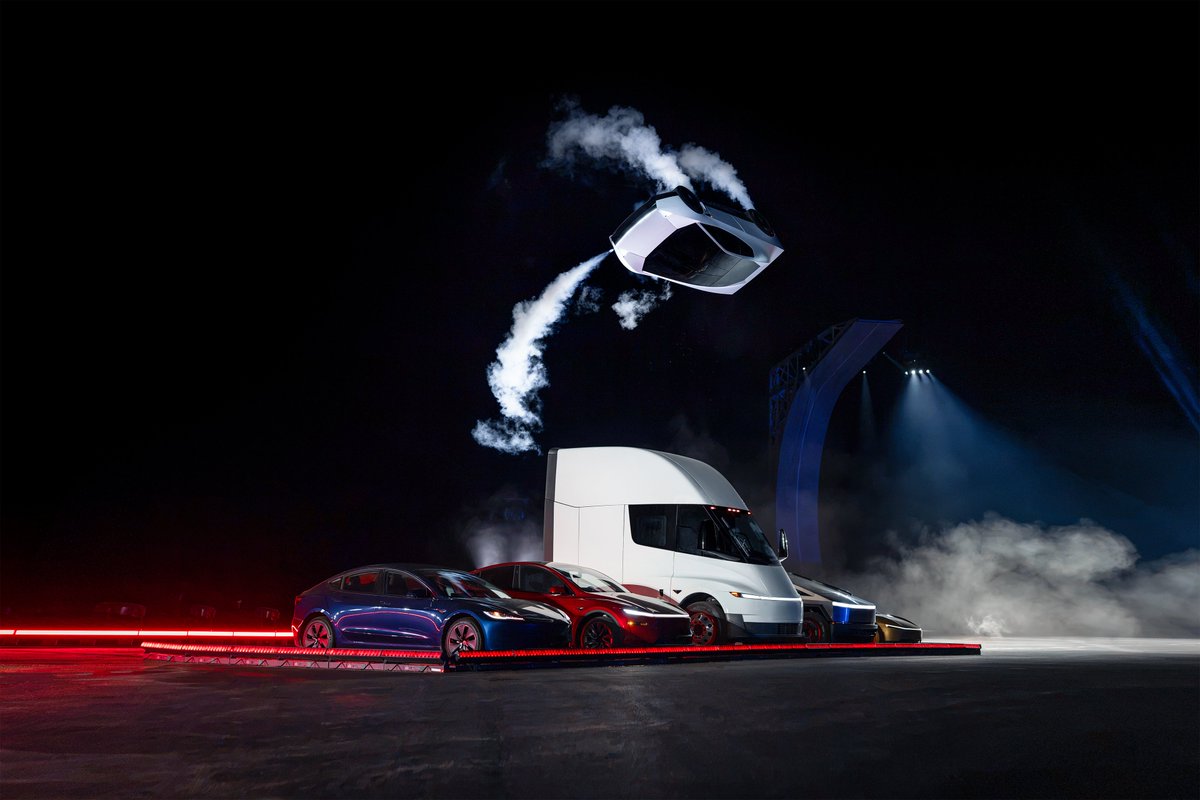
The Tesla flying Roadster has performed an extraordinary stunt, but getting the rocket-assisted electric sports car onto American roads is another matter.
What Tesla actually proved
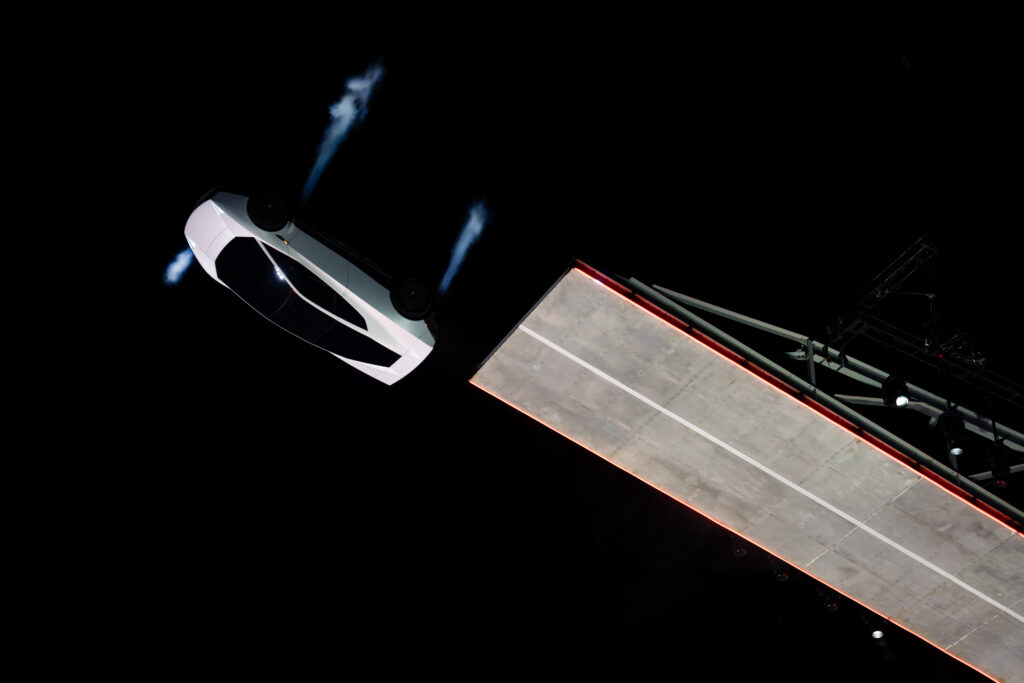
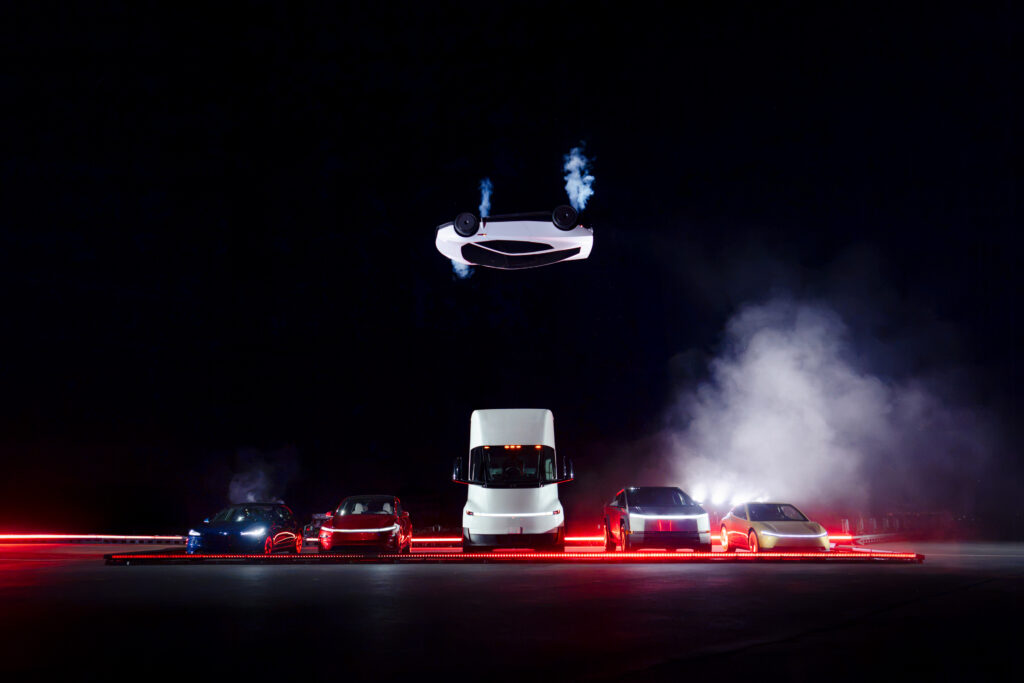
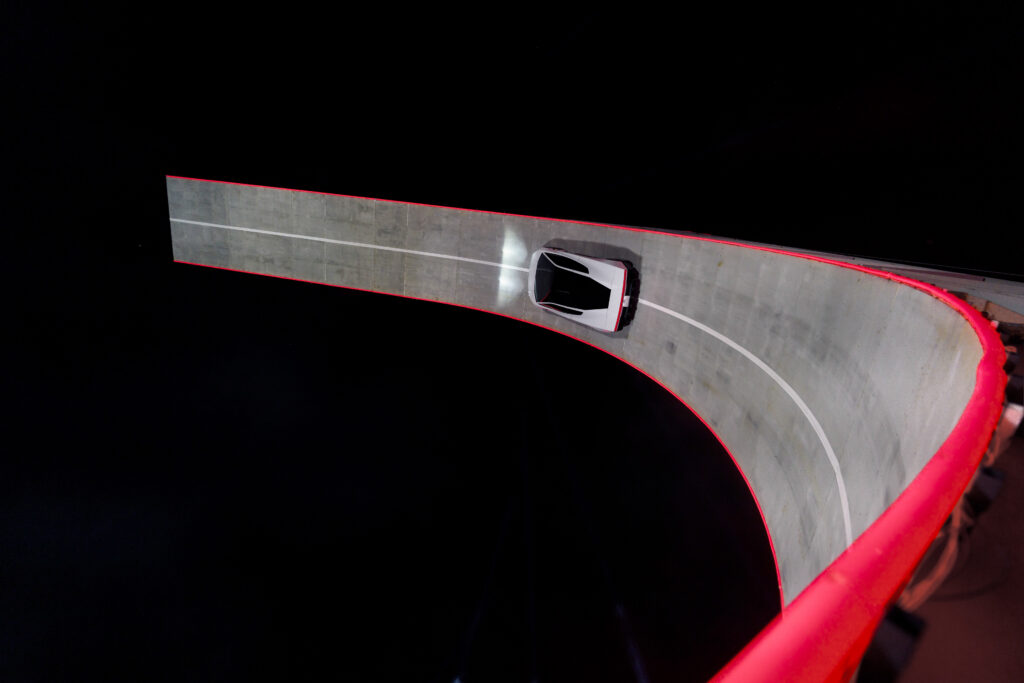
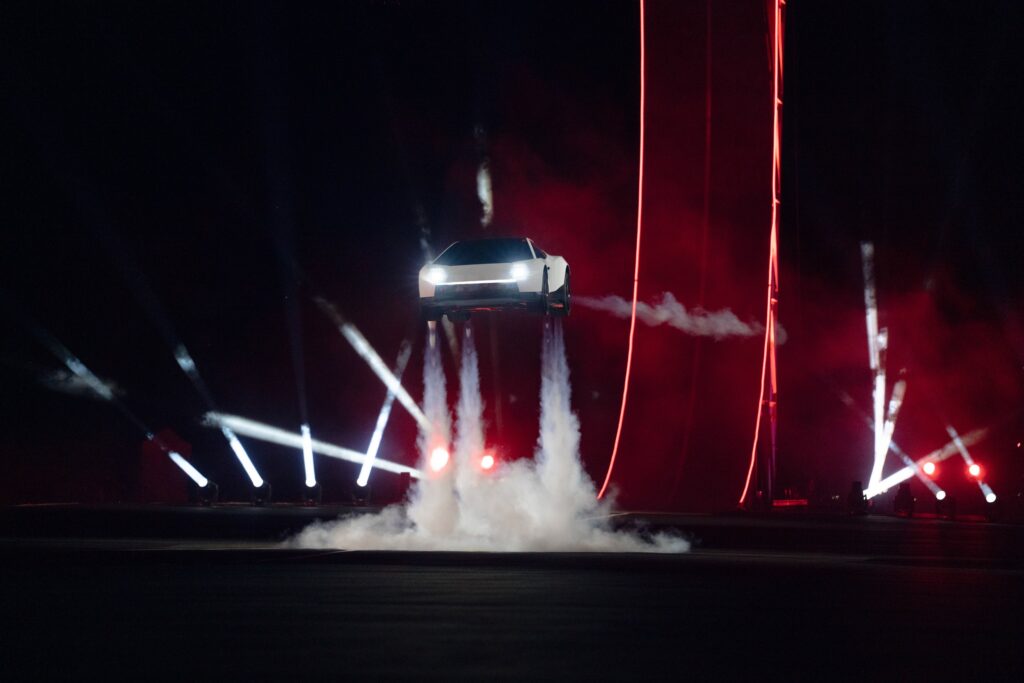
A car launched from a ramp, rotated in the air and returned to the ground at Tesla’s October 15 event at SpaceX’s McGregor, Texas, facility. It looked like the sort of effect usually reserved for an expensive action film. Tesla executives presented the maneuver as a demonstration of propulsion technology developed with SpaceX. That is meaningful. It does not establish that ordinary owners will be permitted to repeat the maneuver outside a test facility.
The sensible question is whether the Tesla flying Roadster is real. The demonstration showed a physical machine performing a controlled maneuver before an audience. There is no good basis for declaring the entire event fake. Equally, an event demonstration alone cannot independently establish the engineering limits, repeatability or road-readiness of every claim Tesla has made.
Elon Musk described an arrangement of rear propulsion and attitude-control thrusters. Engineers also discussed a fan-driven suction system beneath the vehicle, intended to generate downforce even at very low speeds. Those are different mechanisms. One pushes the car; the other pulls it toward a surface. Neither should be confused with ordinary battery-powered driving.
You may also enjoy: Tesla Price Cuts, Cybertruck Shifts & Roadster Hype
You may also like this video:
The catch behind the flying-car headline
For an electric sports car, traction is the ordinary limiting factor when engineers chase spectacular acceleration. The tires can only transfer so much force to pavement. Thrusters could add force without depending entirely on tire grip, while fans might improve grip by increasing the load on the tires. Yet a demonstration does not tell buyers how those systems behave on wet pavement, broken asphalt or a street with people standing nearby.
The driver also needs predictable steering, stopping and recovery when anything goes wrong. A jet of compressed gas brings packaging, pressure-vessel maintenance, exhaust-direction and bystander questions. A suction system introduces debris, clearance, noise, power consumption and potential surface-damage concerns. Those are engineering questions that matter considerably more in a neighborhood than at an isolated demonstration site.
There is an additional issue. Calling a machine a flying car invites an image of commuting over traffic. A brief propelled jump does not prove controlled, sustained flight, navigation around buildings or the ability to take off and land anywhere safely.
You may also enjoy: Flying Cars by 2030? The Fare Could Surprise You
What would make a Tesla Roadster street legal?
On American roads, a new passenger car generally has to be manufactured and certified to comply with applicable federal motor vehicle safety standards. That process addresses the complete vehicle, not merely how quickly it accelerates. A novel propulsion system could create difficult questions about crash protection, occupant restraint, external hazards and the operation of safety equipment.
Federal regulators offer a temporary exemption process in limited circumstances, but an exemption is neither automatic nor blanket approval for unusual capabilities. State registration and operating rules are separate considerations. A vehicle can be impressive at a closed course without being permissible on the street.
Nor is an aircraft approval a shortcut. If Tesla sought to market sustained, controlled flight as part of normal operation, the aircraft certification process would become central. The FAA evaluates the proposed design, testing and production controls of aircraft. Its framework for advanced air mobility already illustrates how much oversight goes into new kinds of flying machines. The relevant regulatory classification of a short rocket-assisted hop would require a case-specific determination; it cannot be settled by a catchy description.
You may also enjoy: Tesla Cybercab Launch: Can You Actually Ride One?
A prototype is not a delivery schedule
Tesla is aiming for Roadster production in 2028, years after the model’s earlier targets. Its public Roadster page still shows historic promotional figures, including an estimated 620-mile range and 1.9-second acceleration. Those figures should not be casually combined with the revised prototype’s more extreme claims as though they describe one finalized production specification.
The buyer should ask Tesla which model and equipment package any headline number applies to, whether the thruster equipment is optional, how frequently it can be used, what consumables or service it needs, and whether that configuration can actually be registered. Until that information is settled, sending a deposit would be a wager on future product details rather than a conventional vehicle purchase.
The airworthiness review required for certified aircraft underscores the distinction between a convincing demonstration and a product allowed to operate routinely. Automotive homologation has its own standards, and neither regulatory system is replaced by a viral video.
You may also enjoy: Robotaxi Privacy: What Waymo and Tesla Record
What matters to someone shopping for an EV
Tesla deserves credit for exploring an unusual engineering idea in public. Still, buyers seeking a quick electric car have more grounded questions: delivery date, warranty, braking, charging, service network, usable range and whether the car remains comfortable over a rough road. Rocket thrust may win a demonstration. It does not improve the average commute simply because it is spectacular.
The 2026 Tesla Model 3 is a better reminder of what purchasing decisions normally involve: choosing actual equipment and assessing day-to-day value. That difference matters when a concept’s promises threaten to overwhelm the practical details.
Shopping note: For everyday cabin protection, Shop OEDRO directly or Shop OEDRO on Amazon. Use code NIKM20 at the OEDRO official store. Check vehicle fitment and the current offer before ordering. Test Miles may earn a commission from purchases made through these affiliate links.
The question Tesla still has to answer
The Roadster’s stunt appears to be a genuine demonstration of remarkable prototype capability. What has not been established is that its airborne trick can be sold, insured, maintained and legally exercised by a regular American driver. Tesla has shown what engineers can make a car do under controlled conditions. Now it must show which of those abilities belong on a production vehicle, and which should remain at the rocket test center.