Audi Nuvolari: 182 U.S. Cars, $700,000 Starting Price
Audi Nuvolari brings an estimated 987 horsepower and a $700,000 starting price to America, with 182 cars planned and deliveries in early 2028.
By Nik J. Miles
America will receive 182 examples of the Audi Nuvolari, giving U.S. buyers approximately 36.5% of the supercar’s planned 499-car worldwide production run. Audi of America’s November 11 announcement also puts a $700,000 starting MSRP on the car, before destination, taxes, title, options and dealer charges. Actual selling prices are set by dealers. Even before personalization, this is an Audi requiring a rather different conversation with the household accountant.
Orders remain open through authorized U.S. Audi dealerships for a limited time, with customer deliveries expected in the first half of 2028. That is the relevant date for American buyers. Audi’s earlier global announcement targeted first deliveries in the first half of 2027; it should not be mistaken for the newly announced U.S. schedule.
You may also enjoy: Audi Nuvolari Brings 987 HP to Monterey Car Week
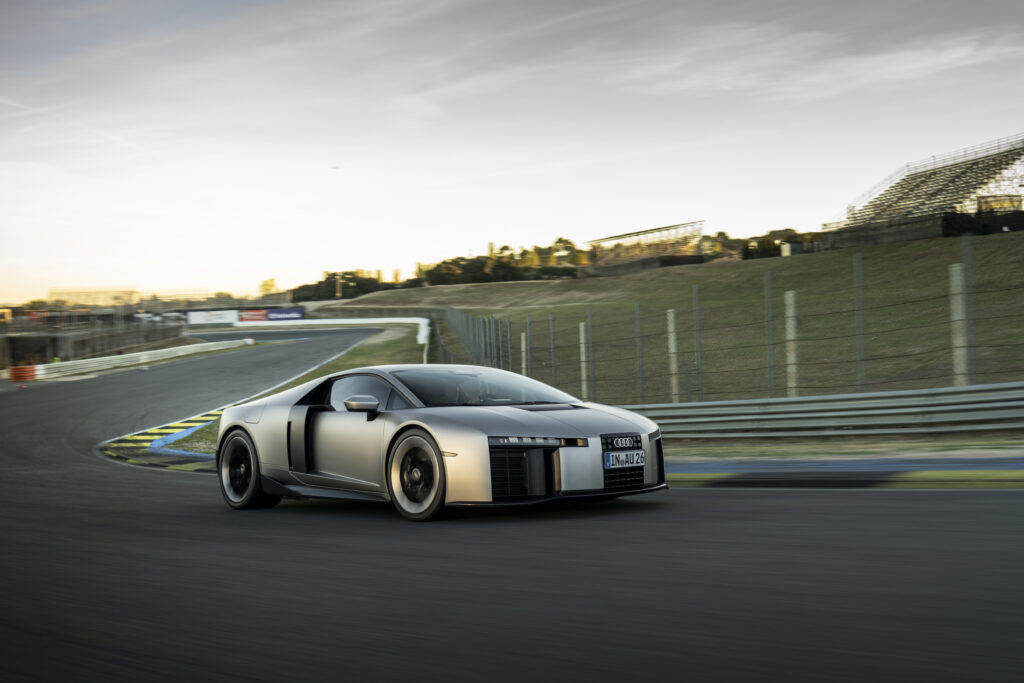
Audi Nuvolari turns hybrid power into a performance tool
Audi estimates maximum combined output at 987 horsepower from a twin-turbocharged V8 and three axial-flux electric motors. Two motors serve the front axle, with the third at the rear. The U.S. release lists 789 horsepower from the engine at 9,000–9,750 rpm and 198 horsepower from the electric motors. These are preliminary manufacturer figures, and the combined rating is explicitly not SAE Net.
The distinction matters because hybrid component ratings do not always add neatly into a usable system maximum. Peak outputs can occur under different operating conditions, while battery energy and temperature influence electric assistance. Here Audi supplies its own combined estimate. Independent acceleration testing and sustained track performance will provide a more useful picture than arithmetic alone.
Audi’s global material identifies the car as a plug-in hybrid. The Department of Energy’s explanation of plug-in hybrid operation describes how batteries and a combustion engine share propulsion duties. In this application, electrification also gives engineers additional ways to manage traction. The November U.S. release does not provide an EPA electric-range or fuel-economy rating, so buyers should not infer either from the hybrid badge.
You may also like this video:
The speed claims need context
Audi estimates zero to 60 mph in 2.5 seconds and a top speed above 217 mph, describing Nuvolari as its fastest and most powerful production vehicle. Those remain manufacturer claims rather than results from a Test Miles instrumented test. Tire condition, surface grip and operating conditions matter enormously when a launch is measured in fractions of a second.
The more interesting engineering question is how consistently the car delivers its performance. A single launch says little about repeated braking, battery temperature or power delivery after several demanding laps. Audi’s Formula 1-inspired energy management and launch-control strategies are relevant, but motorsport inspiration does not establish road-car endurance by itself.
You may also enjoy: Audi Nuvolari Makes The R8 Look Sensible
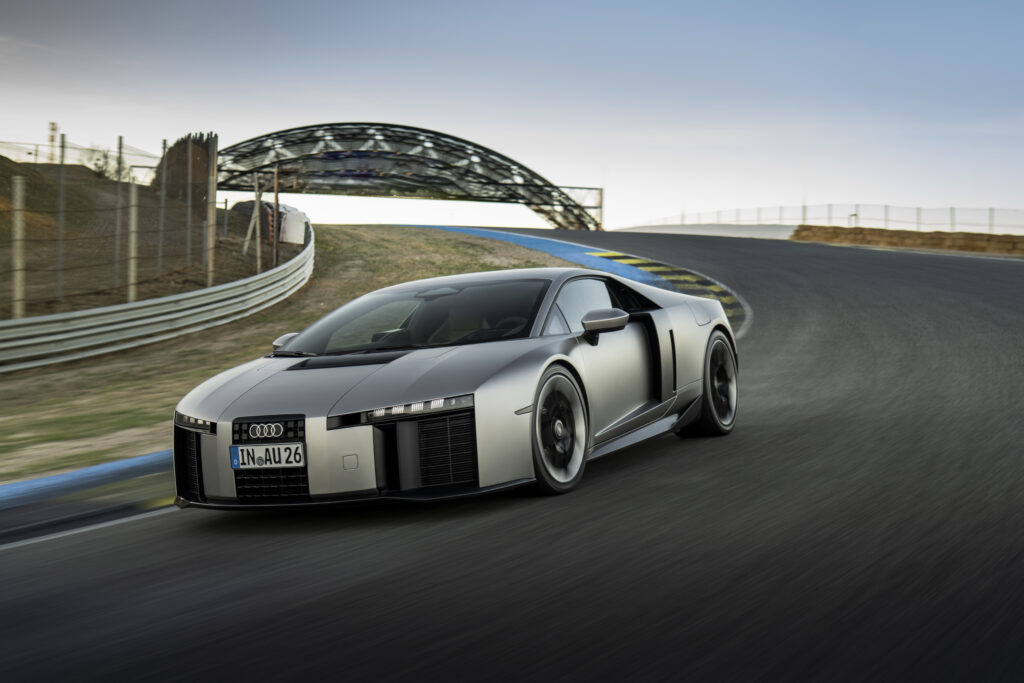
Quattro becomes a coordinated control system
Audi calls its new dynamics system quattro predictive ride. Sensors and real-time vehicle modeling analyze grip, steering inputs, acceleration and vehicle behavior, coordinating torque distribution, braking interventions and aerodynamic balance. Separate front electric drive units give the system additional control over how propulsion reaches the front wheels.
The suspension provides four-way adjustment covering compression and rebound at low and high damper speeds. Those terms concern suspension movement, rather than simply whether the speedometer reads 20 or 120 mph. The practical aim is control across different bumps and body movements. Whether the result also feels communicative and comfortable requires driving assessment.
You may also enjoy: Audi RS 5 Plug-In Hybrid: The Quattro Reinvention
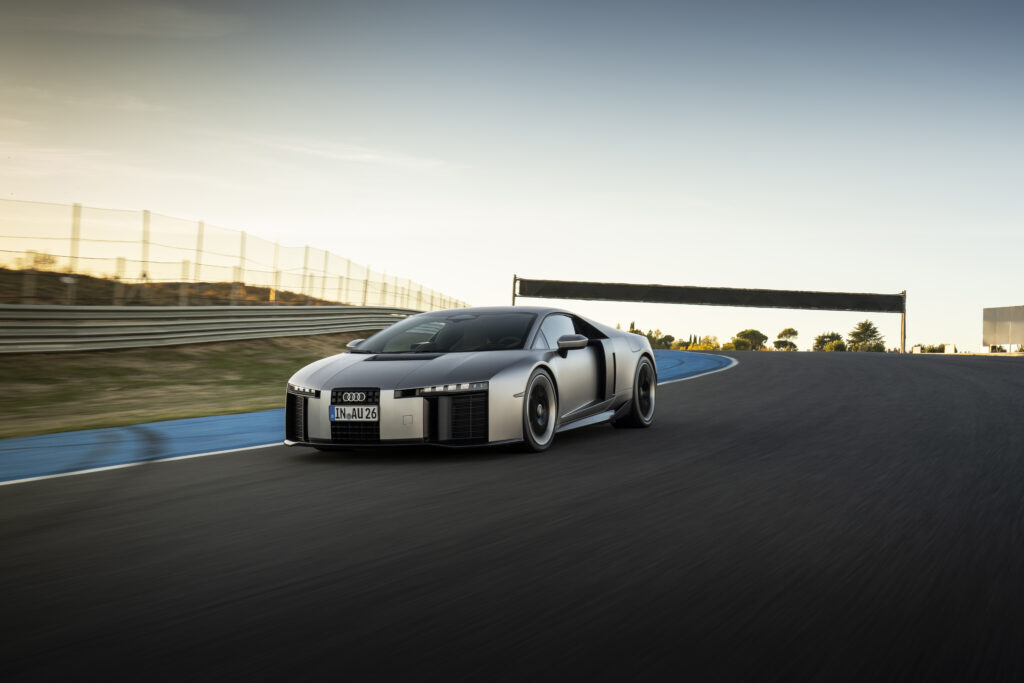
Carbon fiber, movable wings and demanding braking
A new Audi Space Frame structure supports a carbon-fiber exterior. Audi describes nearly every exterior panel as carbon-fiber reinforced polymer, but the supplied U.S. announcement gives no final curb weight. Lightweight construction is a design approach; a verified weight is the number needed to judge its outcome.
The active aerodynamic package includes a three-stage deployable rear wing and a drag reduction system. NASA’s explanation of aerodynamic drag helps explain the tradeoff: pushing through air consumes power. Changing the wing position lets engineers trade aerodynamic loading against resistance as conditions change.
Audi claims more than 880 pounds of downforce, but its U.S. release does not specify the corresponding speed. That omission matters because aerodynamic forces depend on speed. The quoted maximum is not extra grip available while creeping out of a parking garage. Audi also claims its long-fiber ceramic pro brake discs dissipate 21% more heat than standard ceramic brakes; the release does not detail the comparison protocol.
You may also enjoy: Audi EV Patent: Fake Turbo Lag, Real Sparks and Scents
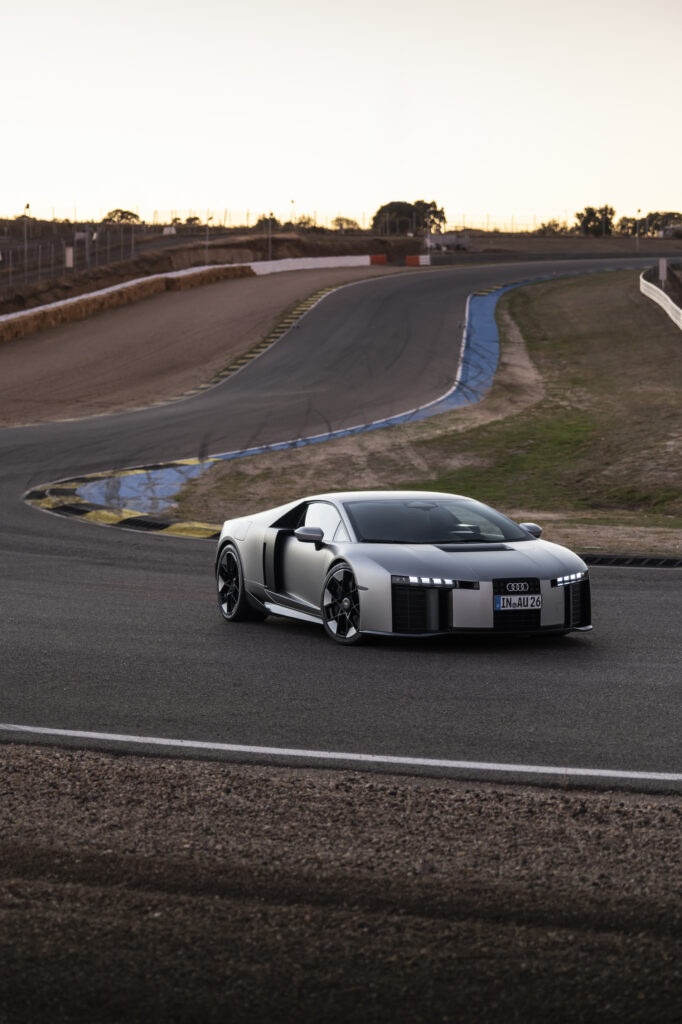
Personalization is extensive; ownership questions remain
Buyers can choose from more than 50 gloss and more than 10 matte exterior colors, plus Audi Exclusive selections and an exposed-carbon exterior option. There are 13 brake-caliper colors, three primary Dinamica selections, 33 leather colors, 12 seat-belt colors and two switchgear colors. Choosing the car may take less time than choosing its stitching.
Before committing, buyers should obtain written allocation, deposit and cancellation terms, along with the final specification and complete price. They should also ask about servicing, replacement carbon panels, brake costs and approved tires. NHTSA’s tire guidance explains why pressure, condition and correct fitment matter; sophisticated torque control still depends on the rubber meeting the road.
You may also enjoy: Best New Cars of 2026: Five We Saw Up Close
Nor should electrification be read as an environmental verdict. The federal emissions calculator distinguishes tailpipe emissions from those associated with producing fuel and electricity. Final U.S. ratings will be needed for meaningful comparisons.
Nuvolari gives Audi a spectacular engineering showcase and America a substantial share of an exceptionally small production run. For the few considering an order, the sensible next step is confirming the purchase terms and support behind the spectacle. For everyone else, the lasting question is whether its coordinated motors, brakes and aerodynamics eventually improve Audis built in numbers larger than 499.