Audi EV Patent: Fake Turbo Lag, Real Sparks and Scents
By Robert R Guio
The Audi EV patent explores fake turbo lag, real sparks and changing scents. But would any of these extraordinary features improve electric cars?
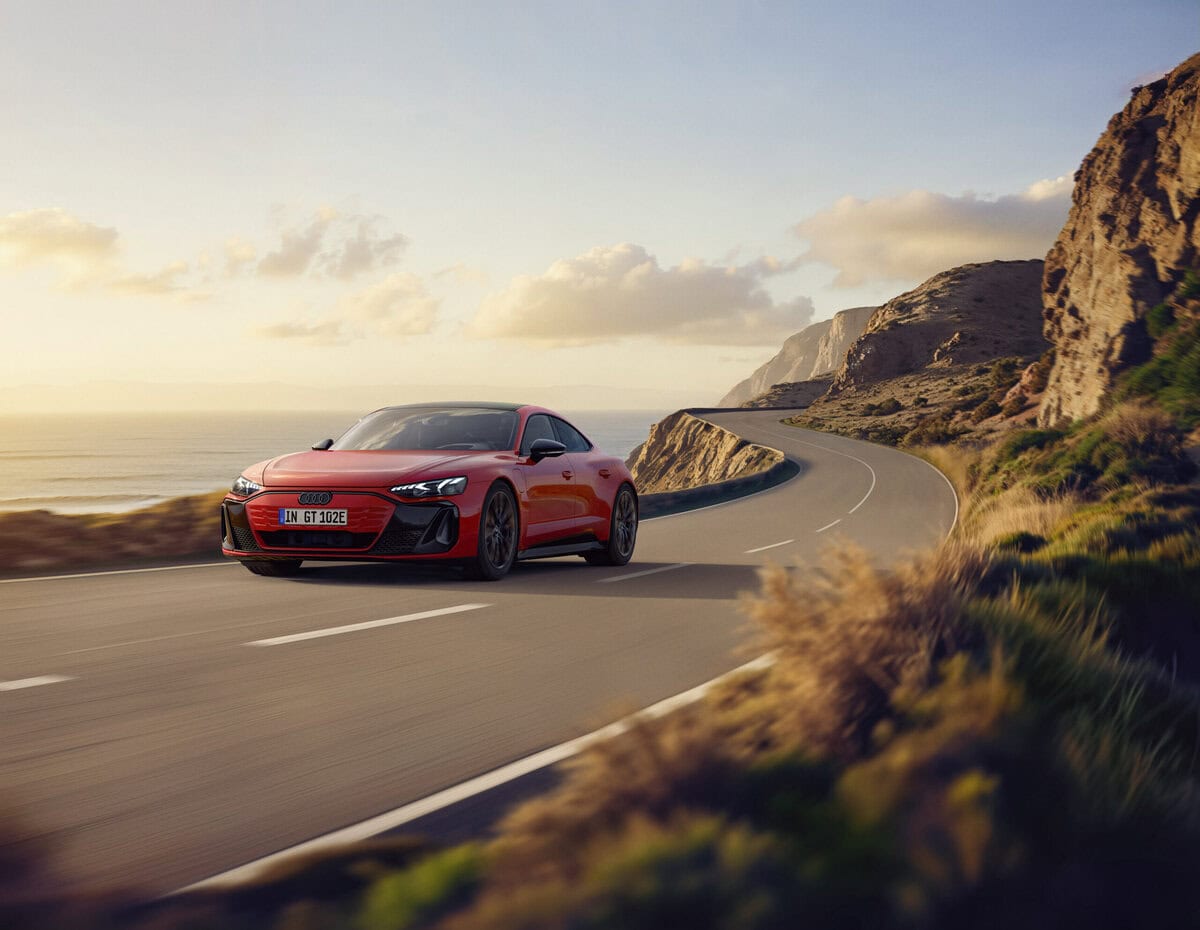
Audi has produced one of the most entertaining electric-vehicle patent applications I’ve encountered. It proposes a luxury EV that could make its own sparks, deliberately delay its acceleration, transmit mechanical vibrations into the cabin and release fragrances based on how enthusiastically the driver is behaving.
There is even a proposal to let owners rev an electric motor while the car is standing still.
The instinctive response might be that Audi’s engineers have spent too much time watching science-fiction films. Yet beneath the theatrical engineering is a serious question facing every luxury performance brand: what makes a fast electric car genuinely exciting?
The answer matters because simply delivering more acceleration is becoming an increasingly limited way to distinguish expensive EVs.
What the Audi EV Patent Actually Proposes
Audi’s published German patent application, identified as DE 10 2025 107 436 A1, was filed on February 27, 2025, and published August 27, 2026. The published patent document describes systems that add sound, vibration, visual effects and fragrances to vehicles powered by electric motors.
There is a critical detail worth understanding before getting carried away. This is an unexamined application, not a granted patent, and Audi has not committed to installing these devices in production cars.
Individual ideas could be developed, modified, abandoned or never receive regulatory approval. There is no named model, production timetable or announced equipment price.
Even so, the filing offers a revealing look at how engineers are approaching the emotional character of future electric vehicles.
You may also enjoy: BMW’s Electric M3 Has to Prove It Has a Soul
Why Would Audi Deliberately Add Turbo Lag?
This is arguably the strangest engineering decision in the entire document. Electric propulsion delivers almost immediate accelerator response, one of the principal advantages over traditional combustion engines.
The U.S. Department of Energy’s electric vehicle guide identifies smooth, quiet driving and immediate motor response as defining EV characteristics. Audi is considering ways to disguise some of those strengths.
Software could simulate traditional gear ratios, interrupt or reshape acceleration during imaginary shifts and recreate the response delay associated with a turbocharged engine.
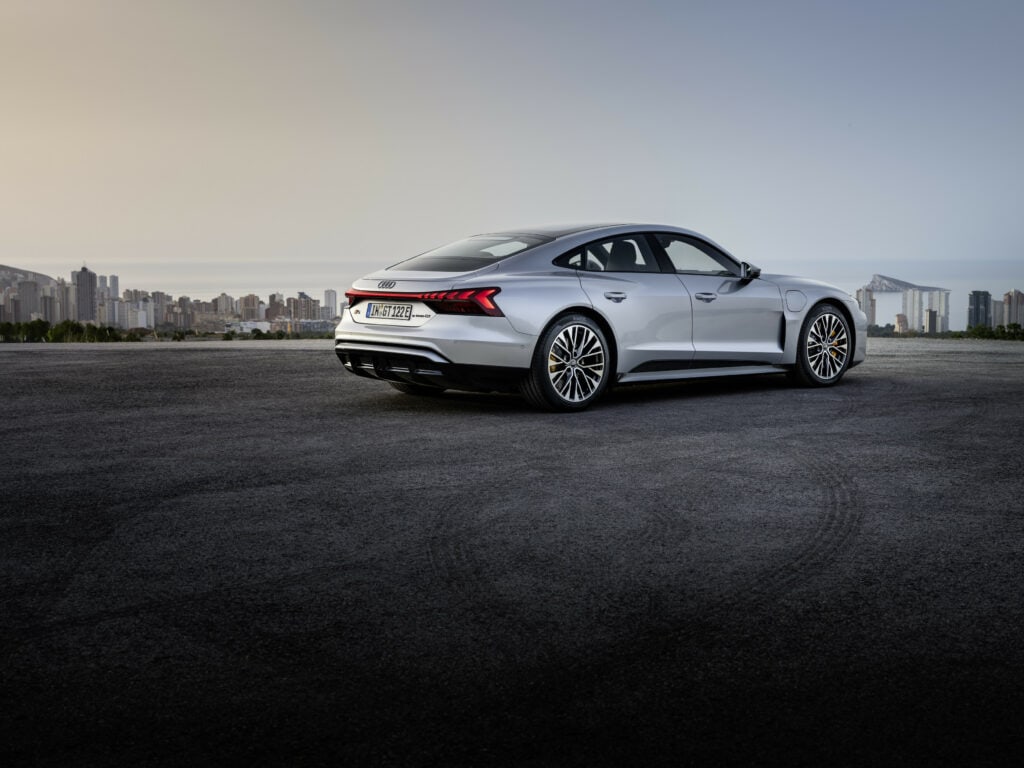
Audi Files Patent for Fake Turbo Lag, Sparks, and Scents
Drivers could potentially use paddle shifters despite the absence of conventional multiple gears.
It sounds absurd until you consider what happens when an enthusiast moves from a gasoline performance car to an EV. The electric car may be considerably quicker but offers fewer cues about what its drivetrain is doing.
Hyundai has already demonstrated the appeal of simulated shifting with its Ioniq 5 N, while Mercedes-AMG is experimenting with electronically recreated engine character. Audi’s proposal explores a much broader collection of sensations.
You may also enjoy: Mercedes-AMG Gives the GT 53 a Voice
Real Vibrations Could Replace Fake Engine Sounds
One proposal involves using rigid structural components to carry vibrations produced by the electric motor into the body and passenger compartment. Rather than relying exclusively on recorded sounds, the vehicle could communicate what its electric drivetrain is doing through mechanical movement. The filing even considers removing sound insulation around the motor to make the effects more noticeable.
That raises an uncomfortable question for a premium manufacturer. Audi buyers traditionally expect substantial refinement, particularly during long highway journeys. Motor whine and vibration might be amusing for twenty minutes on a winding road. After three hours with the family, the novelty could wear thin.
There’s also an efficiency consideration. The Department of Energy has highlighted how effectively EVs use stored energy compared with gasoline vehicles. Running a disconnected motor simply to imitate idling would consume energy without moving the car, although Audi has not provided a figure for that consumption.
If physical effects ever reach production, owners should be able to select them rather than having them permanently imposed.
You may also enjoy: 2026 Hyundai Ioniq 5 Review: The Value Is Back
Actual Sparks May Be Audi’s Most Difficult Idea
The patent proposes controlled electrical arcs and sparks produced through friction, potentially including a metallic component contacting the road surface.
In other words, a future electric Audi could theoretically create its own little pyrotechnic display without burning gasoline.
That might be entertaining at a carefully controlled motorsport event. On a public road, the questions become considerably less amusing.
How would such a system behave near dry roadside vegetation? What happens when pedestrians or cyclists are close to the vehicle? Would the hardware become a maintenance item, and what prevents the effects from distracting nearby motorists?
None of those questions is resolved by the existence of the application.
There is a legitimate reason to make quiet EVs easier to notice. The National Highway Traffic Safety Administration publishes vehicle sound test procedures, including those associated with Federal Motor Vehicle Safety Standard 141.
However, the agency’s interpretation of pedestrian-alert requirements makes clear that vehicle warning sounds operate within a specific regulatory framework. Audi cannot assume that an entertaining effect automatically qualifies as a useful safety feature.
The safest feature in an automobile is rarely the most spectacular one.
You may also enjoy: Rolls-Royce Spectre Series II Gets More Range
A Car That Smells Different When You Drive Faster
Audi also proposes scent dispensers tied to vehicle operating conditions.
Calming fragrances could accompany congested traffic, while more stimulating aromas could appear when the driver selects an enthusiastic driving style.
The application goes further by discussing odors reminiscent of electrical phenomena or simulated engine misfires.
Quite what the neighbors would think of an electric Audi that smells like a model railway is open to debate.
For everyday owners, the practical questions are straightforward. Can the system be disabled? Would replacement fragrance cartridges cost extra? Could the fragrances irritate sensitive occupants?
Those details matter more to a buyer than the novelty of an automatic perfume dispenser.
There are also proposals for animated headlights, changes in exterior coloring and visual distortions near the windshield edges intended to exaggerate the sensation of speed.
None of these concepts should be confused with equipment available on today’s e-tron vehicles.
What This Means for Future Electric Performance Cars
My concern isn’t that engineers want electric cars to feel more engaging. It’s that manufacturers could mistake additional effects for a better driving experience.
A good performance car communicates naturally through steering, braking, balance and accelerator response. Software can certainly add enjoyment, but it should not conceal weaknesses in those fundamentals.
The strongest feature in Audi’s filing could ultimately be something much less spectacular than sparks: adjustable, believable feedback that helps a driver understand the car without compromising the quiet ride everyone else appreciates.
You may also enjoy: 2027 Mercedes-Benz EQS Raises the Luxury EV Bar
If Audi can deliver more personality while preserving the refinement expected of a luxury vehicle, this experimentation might produce something genuinely worthwhile.
For anyone shopping for an electric Audi today, however, the patent changes nothing about equipment or buying decisions. There is no confirmed production car, no option package and no indication of what these systems might cost.
Perhaps the most revealing part of the Audi EV patent is what it tells us about the industry. Electric cars have become extraordinarily capable at accelerating without fuss. Now manufacturers are trying to work out how much fuss buyers actually want back.
Personally, I’d start with a great steering wheel and a beautifully calibrated accelerator. We can discuss the fireworks afterward.