AI in Cars Is Getting Clever. Can We Trust Its Judgment?
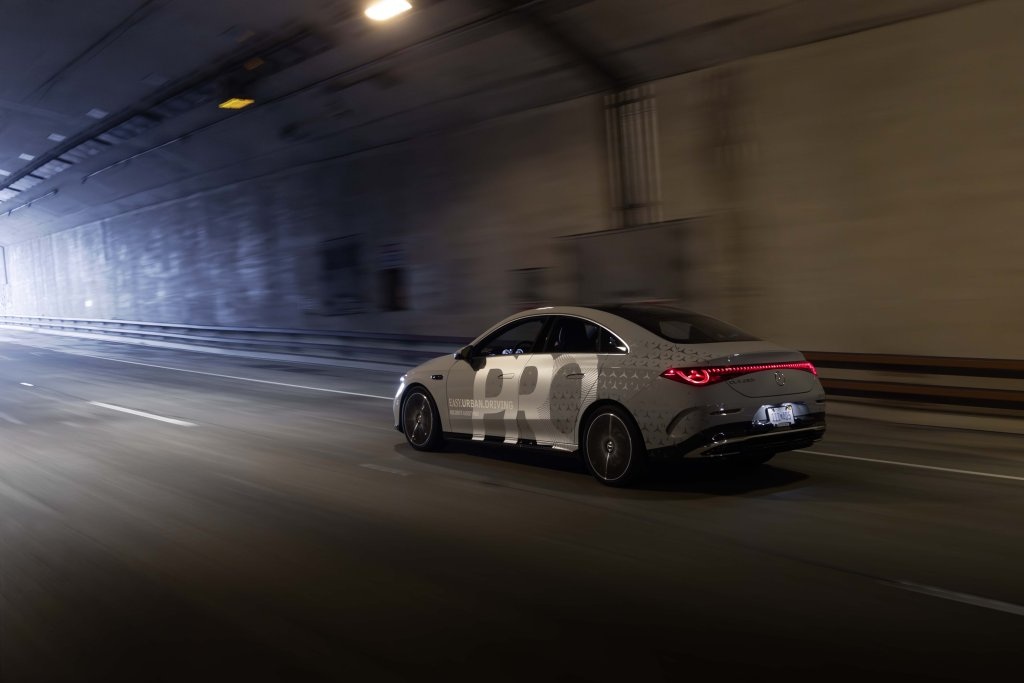
AI in cars could anticipate hidden hazards and navigate unfamiliar situations, but a new NVIDIA-linked announcement raises questions about proof.
By Nik J. Miles
A ball rolls between two parked cars. An experienced driver slows because a child might follow. That small leap, from seeing an object to anticipating a possible danger, captures what developers want the next generation of driving artificial intelligence to accomplish. The unsettling question is how reliably a machine can make that judgment when the street refuses to follow the script.
On November 10, Autobrains announced an expanded NVIDIA collaboration intended to bring advanced AI reasoning into vehicle systems. There is a compelling consumer story here, provided we keep the distinction between engineering ambition and demonstrated safety firmly in view.
You may also like this video:
Why AI in cars needs a smaller brain
Autobrains says it distills knowledge from NVIDIA’s Alpamayo 2 Super into specialized driving agents, activating those relevant to a particular situation. NVIDIA describes Alpamayo 2 Super as a 34-billion-parameter reasoning model. Parameters are learned numerical values within a model; their number alone tells a buyer little about whether a car will brake correctly.
The practical challenge is getting useful intelligence into hardware with finite electrical power, cooling and processing capacity. A driving system also has to respond promptly. Autobrains’ proposed approach avoids running the complete foundation model inside the vehicle. Its announcement does not establish a named U.S. retail vehicle, a customer delivery date or independently verified safety results.
You may also enjoy: Stellantis AI Driving Technology Targets 2028 Launch
What could a cleverer car actually do?
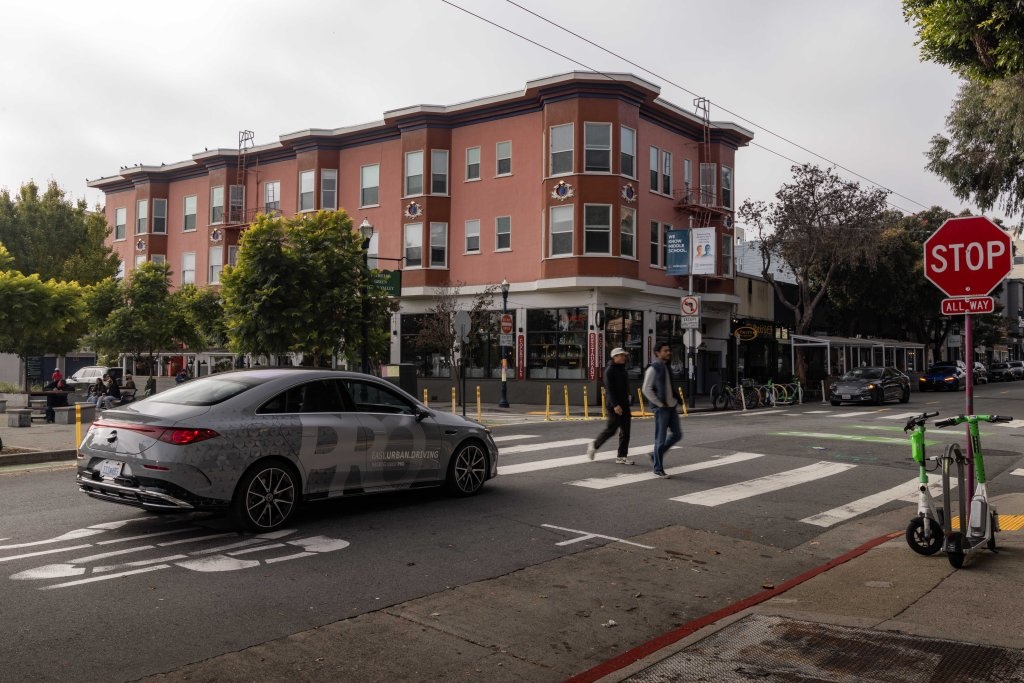
The following situations illustrate the goal, rather than capabilities independently demonstrated by today’s announcement. Start with that rolling ball: a useful system would treat it as evidence of a possible hidden pedestrian and reduce speed appropriately. It cannot see through the parked car. Its advantage would have to come from handling uncertainty sensibly, without braking unnecessarily for every harmless object.
Consider a delivery van blocking the lane. A capable vehicle would need to assess approaching traffic, sightlines and available space before deciding whether to wait or pass where permitted. At a construction zone, it might need to follow a temporary cone corridor when old lane markings point elsewhere. Both situations demand more than identifying a van or recognizing a painted line.
There is precedent for research into these problems. MIT researchers have studied occluded intersections, where a vehicle can cautiously move forward to improve its view. Separate MIT work examines planning under uncertainty. Anticipation has a substantial research history; attaching a new AI label does not make the underlying problem newly discovered.
You may also enjoy: Hyundai driving AI in 2028: What Will Drivers Get?
Learning from situations nobody wants to encounter
Autobrains says foundation-model reasoning can help generate challenging scenarios and improve specialized agents. The appeal is straightforward: developers want to prepare for unusual hazards without waiting for a test vehicle to encounter every dangerous combination on public roads. The company acknowledges that real-world data and validation remain essential.
Driving simulation provides a way to train and test systems in reconstructed environments. MIT’s VISTA research illustrates how real-world data can support virtual driving and sensor simulation. However, a simulated pedestrian behaves according to a model. An actual pedestrian is under no obligation to cooperate, particularly when distracted by a phone and carrying three coffees.
You may also enjoy: Toyota Waymo Robotaxi: The Next Driverless Revolution
A smarter assistant still needs supervision
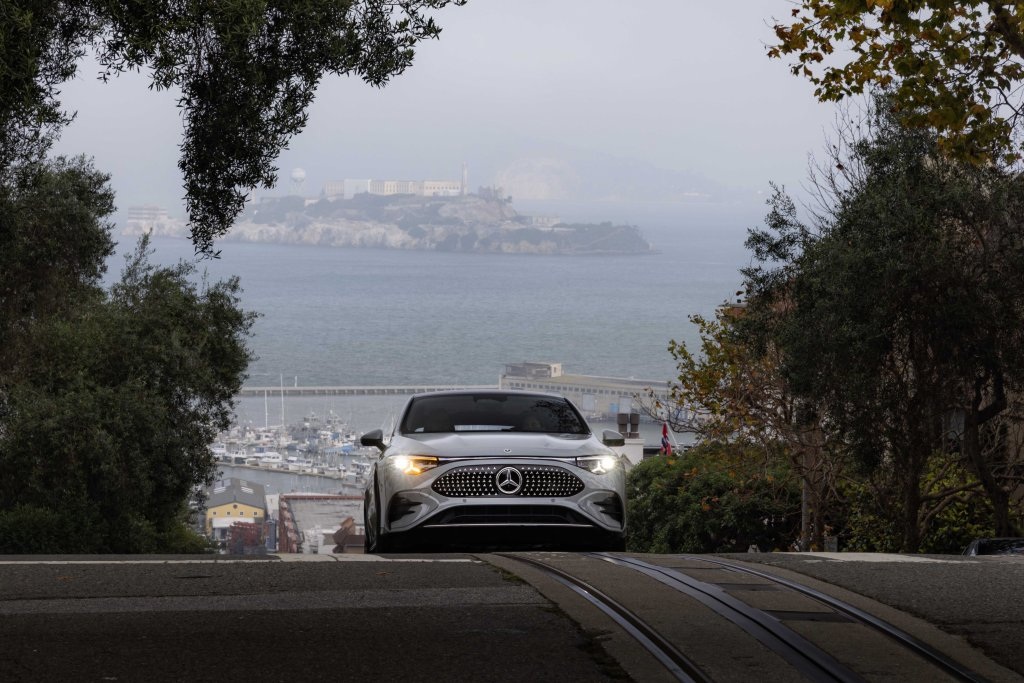
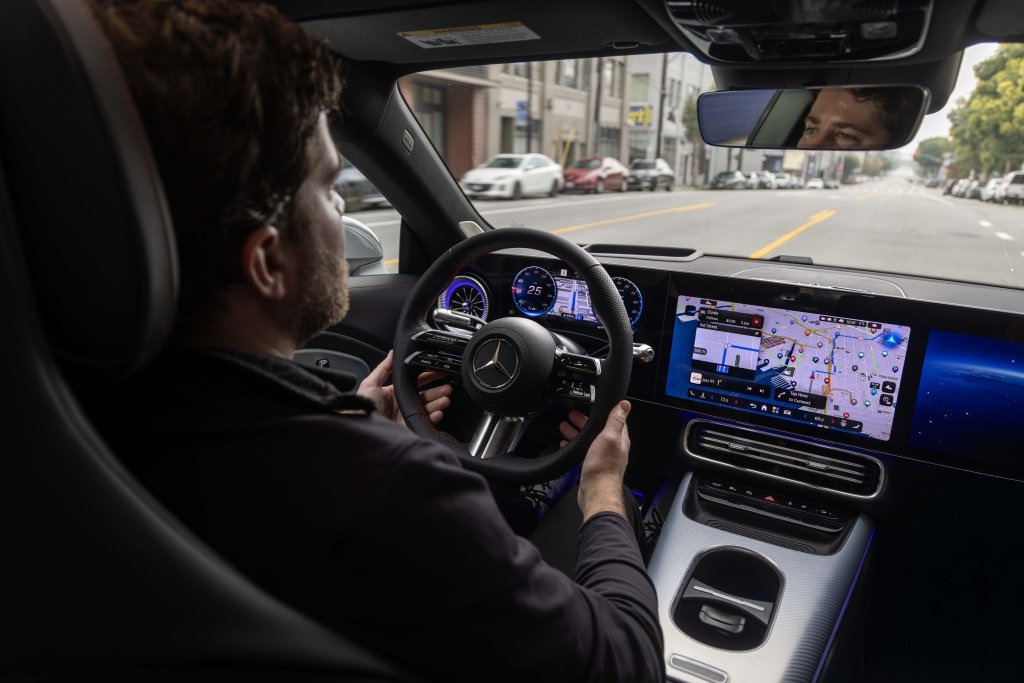
There is already a practical comparison. Mercedes-Benz describes MB.DRIVE ASSIST PRO as providing navigation-linked urban driving assistance at SAE Level 2. Its January announcement described a U.S. introduction planned for 2026. That is a separate program, not evidence that Mercedes uses the Autobrains system announced today.
NHTSA’s automation levels explain the distinction: Level 2 can assist with steering and acceleration or braking together while the driver remains attentive and responsible. Level 4 performs the driving task within specified operating conditions. A more sophisticated AI model does not, by itself, change which responsibilities belong to the person behind the wheel.
You may also enjoy: Hyundai Robotaxis: Why Waymo and Motional Both Matter
What buyers should demand before paying
Ask what the specific vehicle does, where it works and what happens when it reaches its limits. Establish whether driver monitoring is required, whether the feature costs extra and whether the advertised capability is actually delivered. NHTSA’s guide to driver-assistance technologies helps distinguish functions such as emergency braking from systems that provide sustained driving support.
For safety claims, demand the conditions behind the numbers: road type, weather, miles traveled and the events being counted. A polished demonstration answers fewer questions than consistent performance across difficult situations. A convincing explanation of a driving decision also leaves a separate question: was that decision safe?
You may also enjoy: Waymo Airport Rides: Las Vegas Goes Driverless
The exciting prospect is a vehicle that handles uncertainty with better judgment. Today’s announcement offers an approach to fitting advanced reasoning within automotive constraints. Buyers should judge the resulting product by verified behavior, clear operating limits and delivered capability. The most reassuring clever car will be the one that recognizes when to wait.