2027 Hyundai Santa Fe XRT: Can It Carry Your Weekend?
The 2027 Hyundai Santa Fe XRT makes most sense when you start with the luggage, passengers and route, then work backward to the vehicle.
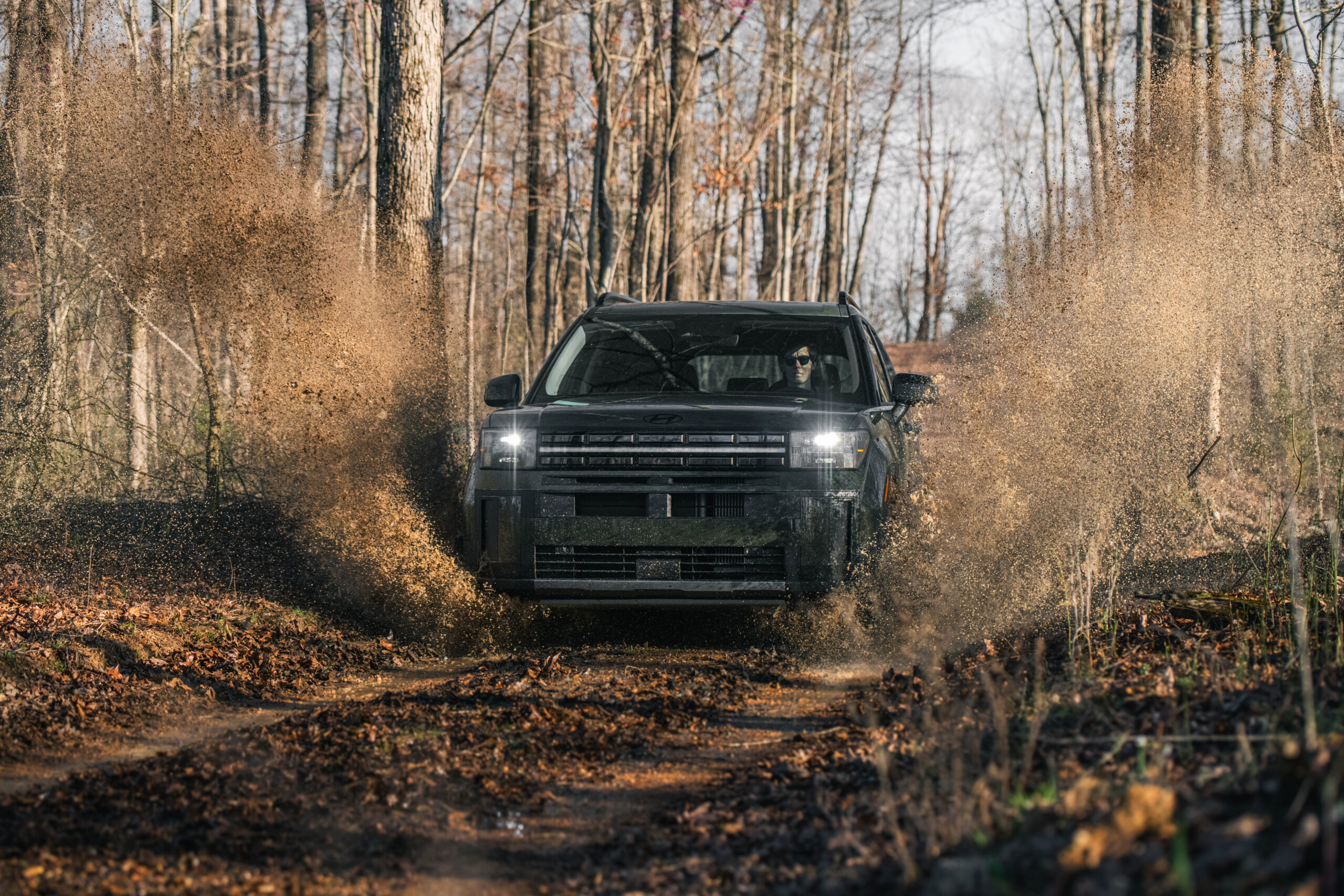
Hyundai Santa Fe XRT’s extra clearance and all-terrain tires can serve a real purpose on rough access roads. They cannot solve a family packing problem, reduce the fuel bill or make every trail suitable. My buying advice is to choose XRT when its equipment answers a recurring need; otherwise, begin with an SEL AWD or investigate the hybrid.
That is a more useful distinction than deciding whether the black trim looks sufficiently outdoorsy. Hyundai identifies the 2027 Santa Fe as a carryover model, so these capabilities should not be mistaken for an entirely new mechanical package introduced this year. The question is how the existing combination fits your household.
You may also enjoy: 2026 Hyundai Santa Fe Review: The SEL Is the Smart Buy
What the 2027 Hyundai Santa Fe XRT Gives You
Hyundai’s U.S. specifications list 8.3 inches of ground clearance, versus 7.0 inches for other trims. The XRT pairs standard HTRAC all-wheel drive with 245/60R18 Continental all-terrain tires. Those are substantive differences when the driveway becomes a rutted track, although an extra 1.3 inches does not make the underside invulnerable.
Snow, Mud and Sand modes adapt traction management to the selected surface. Choose the appropriate setting before the difficult section and keep the pace slow enough to inspect your line. Watch the front overhang on the way into a slope, the rear on the way out, and the space beneath the middle over a crest. Momentum is a poor substitute for knowing what is on the other side.
Use NHTSA’s tire guidance to understand pressure, condition and load information. An all-terrain description does not remove the need to follow the vehicle’s tire label. Nor should buyers transfer assumptions from the larger Palisade XRT Pro: this Santa Fe has its own equipment specification.
Pack With the Seats You Will Actually Use
Seven seats sound reassuring until seven people’s belongings arrive. The XRT has a second-row bench, while the third row folds into the floor. Here is the cargo-space progression Hyundai publishes:
| Configuration | Cargo volume |
|---|---|
| All three rows upright | 14.6 cubic feet |
| Third row folded | 40.5 cubic feet |
| Second and third rows folded | 79.6 cubic feet |
The second row offers 42.3 inches of legroom; the third has 30.0 inches. Try the rear seats with the front seats positioned for your normal occupants. Check child-restraint fit and installation, and make sure older passengers can achieve a proper seat-belt fit. A seating count alone cannot answer those questions.
For a household with dogs, I would bring the actual crate to the dealership. Check its path through the opening and its footprint with the second row occupied. Secure animals using suitable restraints or a secured crate, and consider a ramp for a dog that struggles with the climb. Published cargo volume does not tell you whether your particular crate fits, and a Labrador is unlikely to have read its own dimensions.
You may also enjoy: 2026 Hyundai Tucson PHEV Review: Smart Buy Before Redesign?
Comfort Equipment Requires a Close Read
The XRT includes heated front seats, black H-Tex seating surfaces and air vents for the second and third rows. It does not have ventilated front seats or second-row captain’s chairs. If those features are essential, compare the Limited and its seating configurations rather than expecting the outdoor trim to include everything.
Two wireless phone chargers, wireless Apple CarPlay and Android Auto, and a 12.3-inch navigation touchscreen make the cabin useful on ordinary journeys. Storage beneath the center armrest opens from the front or rear. The C-pillar assist handle can help you reach roof equipment while parked, but a convenient handhold does not increase roof-load limits.
You may also enjoy: Hyundai physical buttons: What buyers should test
The missing feature I would most like to see is a surround-view camera. Hyundai offers it higher in the range, yet clearer views around the vehicle would be especially welcome on awkward ground. Its collision-avoidance systems remain aids with limitations, as NHTSA’s driver-assistance explanations make clear. Around a campsite, check for children and obstacles before reversing; the agency’s backover-prevention advice applies just as much away from home.
The Price Includes More Than the Window Sticker
Hyundai’s 2027 pricing sheet lists XRT at $42,290 plus $1,650 freight, totaling $43,940 before options, tax and fees. SEL AWD is $39,640 before the same freight charge, leaving a $2,650 trim difference. Compare complete written offers and financing costs, because a comfortable monthly payment can conceal a less comfortable total.
The turbocharged 2.5-liter gasoline engine delivers 277 horsepower and 311 pound-feet through an eight-speed automatic. Hyundai lists EPA-estimated economy at 19 city, 25 highway and 21 combined, versus 23 combined for other gasoline AWD versions. At an assumed 12,000 miles annually and $3.50 per gallon, choosing 21 rather than 23 mpg adds about $174 in yearly fuel costs. This is arithmetic using stated assumptions, not my measured consumption.
Actual mileage varies with conditions and use. Roof cargo and aggressive acceleration can hurt efficiency, as federal driving-efficiency guidance explains. Follow recommended maintenance and tire-pressure practices, and allow for cold-weather fuel-economy losses when estimating winter running costs.
You may also enjoy: Hybrid Sales Rise: What Toyota and Hyundai Buyers Should Pay
Check the Trailer Before Choosing the Trim
XRT’s maximum towing capacity is 4,500 pounds with the specified equipment and trailer brakes, compared with 3,500 for other gasoline Santa Fe trims. Without trailer brakes, Hyundai lists 1,650 pounds. Include the trailer’s contents in its weight, account for tongue load and passengers, and consult the vehicle’s loading label and manual. Towing capacity and payload are different limits.
A Santa Fe Hybrid deserves consideration when commuting efficiency matters more than that towing allowance. A conventional hybrid recovers braking energy and uses electric assistance without requiring an external charging connection. Compare the exact drivetrain and trim rather than treating every Santa Fe as mechanically interchangeable.
You may also enjoy: Hyundai Santa Fe EREV: What 600 Miles Really Means
Affiliate shopping: If you are shopping for all-weather floor mats, Shop OEDRO directly or Shop OEDRO on Amazon. Use code NIKM20 at the OEDRO official store. Check current code terms and vehicle fitment before ordering. Test Miles may earn a commission from purchases made through these affiliate links.
The Verdict: Buy for the Route, Then Test for Monday
Cross-shop the Kia Sorento X-Pro for a similar family-and-outdoors brief. Compare seating, tires, towing requirements and camera equipment individually. During your own Santa Fe test drive, assess low-speed response, highway noise and seat support; the supplied specifications cannot establish those subjective results. Hyundai’s warranty terms include five-year/60,000-mile new-vehicle coverage and ten-year/100,000-mile powertrain coverage for eligible original owners. Check exclusions and use the VIN recall lookup for the particular vehicle.
My choice would be XRT for buyers whose regular trips justify the clearance, tires or towing headroom. SEL AWD is the more sensible starting point when the roughest surface is a maintained gravel parking area. Spend on the equipment that makes your weekend possible, after confirming the passengers and luggage can come too.