2026 Hyundai Santa Fe Review: The SEL Is the Smart Buy
Our 2026 Hyundai Santa Fe review explains the smoother transmission, family-friendly cabin, hybrid savings and why the SEL deserves a closer look.
By Nik J. Miles
Hyundai has done something rather unusual with the 2026 Santa Fe. Instead of adding another enormous screen or inventing a new name for a cupholder, it has fixed something that affects how the vehicle drives.
The gasoline Santa Fe now has a conventional eight-speed automatic transmission in place of the previous dual-clutch gearbox. It is a sensible mechanical decision, and one that makes this already practical family SUV more appealing.
My buying recommendation is to start with the SEL, consider the Hybrid SEL if you cover plenty of miles, and resist the temptation to head straight for the luxurious Calligraphy.
The Santa Fe is a surprisingly clever family vehicle. It also has limitations. Its third row is better for occasional passengers than regular adult transportation, and its driving character is more comfortable than entertaining.
You may also enjoy this video:
2026 Hyundai Santa Fe Review: Which Trim Should You Buy?
Best for: Families that want a comfortable, well-equipped SUV with a useful cargo area and the flexibility of occasional third-row seating.
Skip if: You need substantial luggage space with all seven seats occupied, or consider responsive, engaging steering a priority.
Pros
- New conventional automatic improves the gasoline model’s drivability.
- Practical, squared-off cabin and broad rear opening.
- Useful technology with several physical controls.
- Available hybrid with up to 36 mpg combined.
- 2026 IIHS Top Safety Pick+ award.
Cons
- Third-row space is limited for adults.
- Steering is light and offers little feedback.
- Gasoline fuel economy is relatively modest.
- Higher trims become considerably more expensive.
The gasoline SEL starts at $37,590 before freight and other charges, while the Hybrid SEL starts at $38,690. That makes the hybrid’s initial premium relatively modest compared with the potential fuel savings.
The Biggest Improvement Is Underneath the Vehicle
The gasoline Santa Fe uses a turbocharged 2.5-liter four-cylinder engine producing 277 horsepower. That is plenty of power for the sort of driving this SUV will spend most of its life doing.
The important change for 2026 is the transmission.
The previous dual-clutch unit could feel less natural during stop-and-go driving. A conventional automatic generally delivers a more progressive response when pulling away, particularly during slow maneuvers.
The updated arrangement changes the Santa Fe’s character in a useful direction. It still has more than enough performance for a family SUV, but the emphasis is on smoothness rather than making every acceleration feel dramatic.
The engine has substantial midrange strength. That is valuable when joining a busy highway or accelerating with several passengers on board.
There is little reason to chase more power for ordinary family duties. The Santa Fe already has sufficient output for the job, and paying for performance you rarely use is a rather expensive hobby.
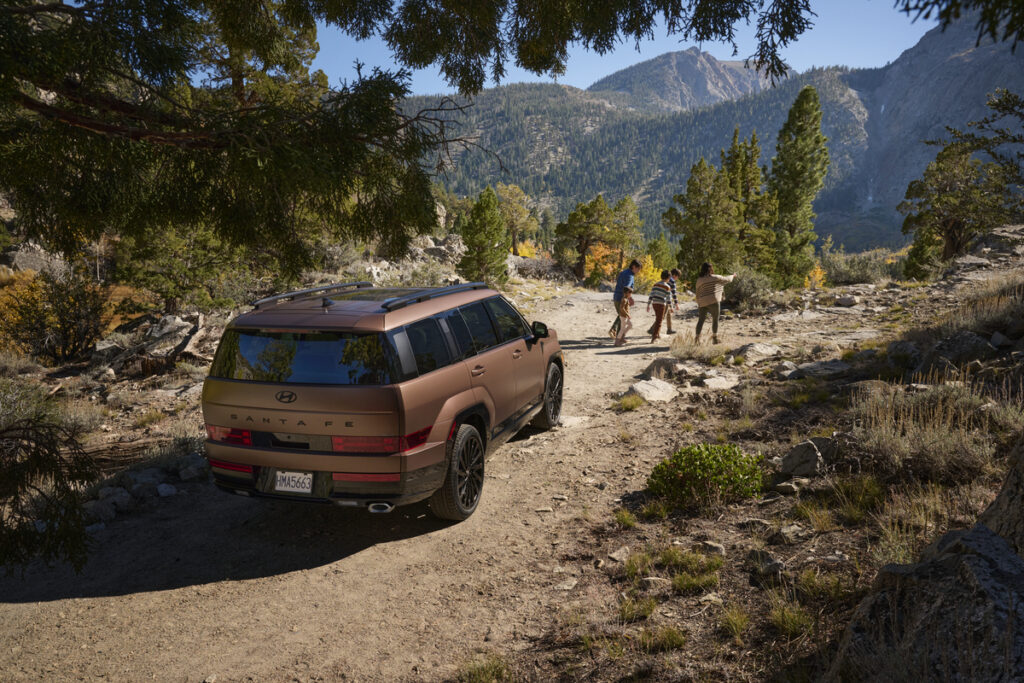
Driving Dynamics: Comfort Wins Over Cornering
The Santa Fe’s driving character suits its shape and purpose. It is a tall, substantial family crossover designed to cover miles comfortably rather than attack mountain roads.
The steering is relatively light. That makes the vehicle easier to maneuver during parking and suburban driving, particularly when navigating spaces that seem to have been designed when cars were approximately the width of a garden chair.
The compromise is feedback. The steering communicates relatively little about the road surface, so drivers who enjoy a precise connection between the front wheels and their hands may find the experience rather distant.
The suspension has a comfort-oriented tune, but it is not excessively soft. Everyday surface imperfections are generally dealt with competently, while sharper impacts can still be felt inside the cabin.
In bends, the Santa Fe remains reasonably controlled, although its tall body naturally introduces some lean when cornering harder. This is not an SUV that encourages aggressive changes of direction. It is more interested in keeping its occupants comfortable.
The brake pedal has a relatively soft initial feel. That characteristic can make gradual braking straightforward, although drivers who prefer a firmer pedal should pay attention to the response during their own test drive.
Highway refinement is another important part of the equation. The Santa Fe is designed for relaxed cruising, and its noise isolation generally supports that purpose. Wind and road noise will vary with speed, tire choice and pavement.
The 2026 transmission improves the overall power delivery without changing the vehicle’s basic personality. There is no sudden transformation into a sporting SUV, nor should there be.
For family transportation, predictable acceleration, calm highway behavior and manageable controls are far more important than setting an impressive time around a racetrack.
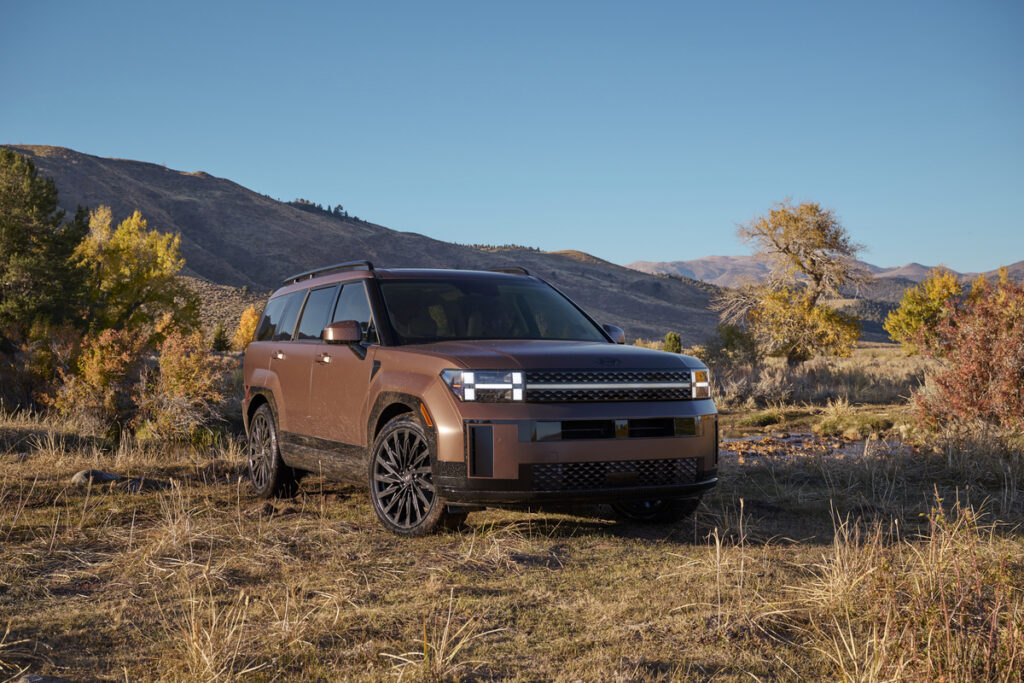
Why the Boxy Interior Makes Sense
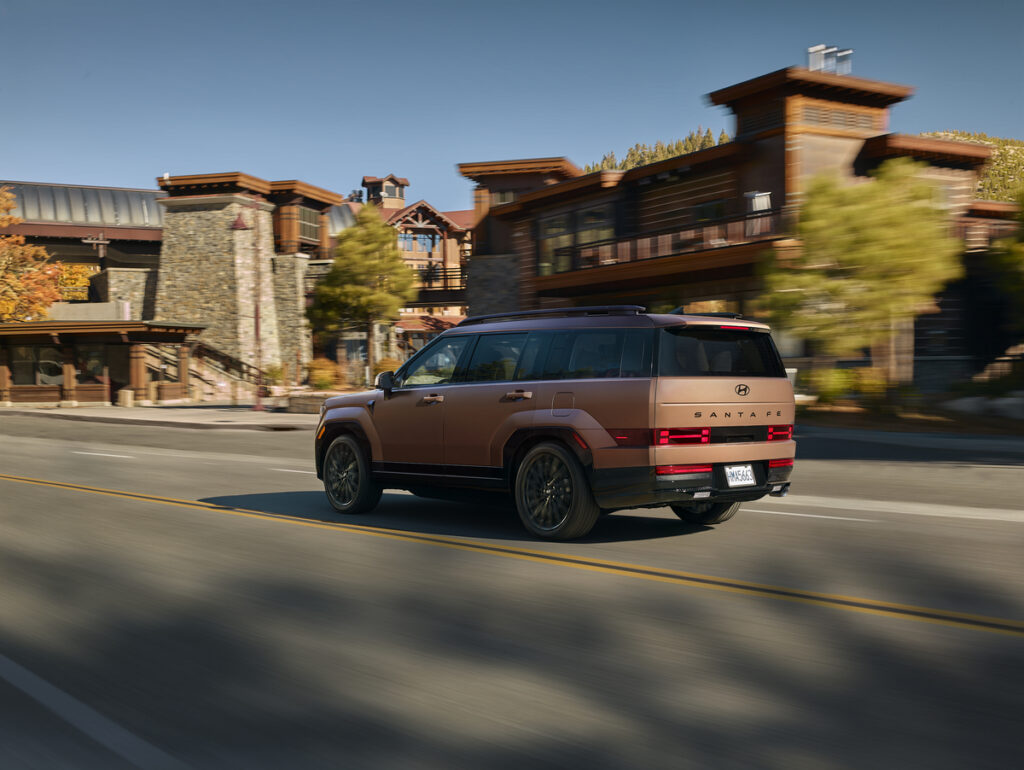
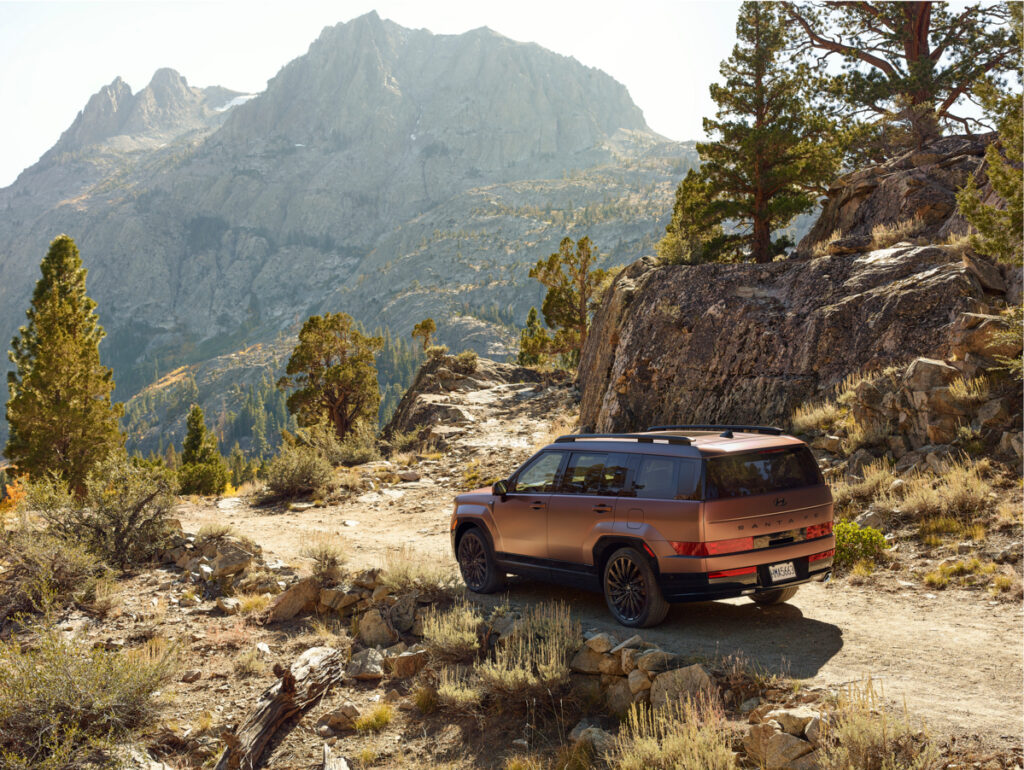
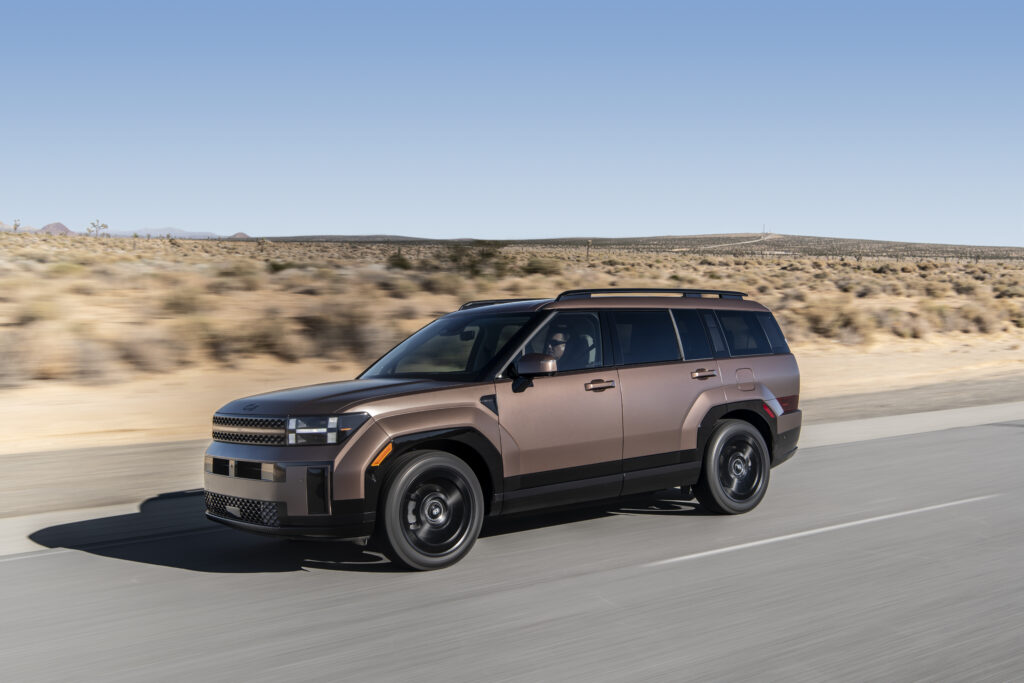
The Santa Fe’s exterior is likely to divide opinion. Its upright shape, distinctive lighting and unusually squared-off rear end give it a character unlike most crossovers.
That rear end may not win everybody over. It does, however, help create a very useful cargo opening.
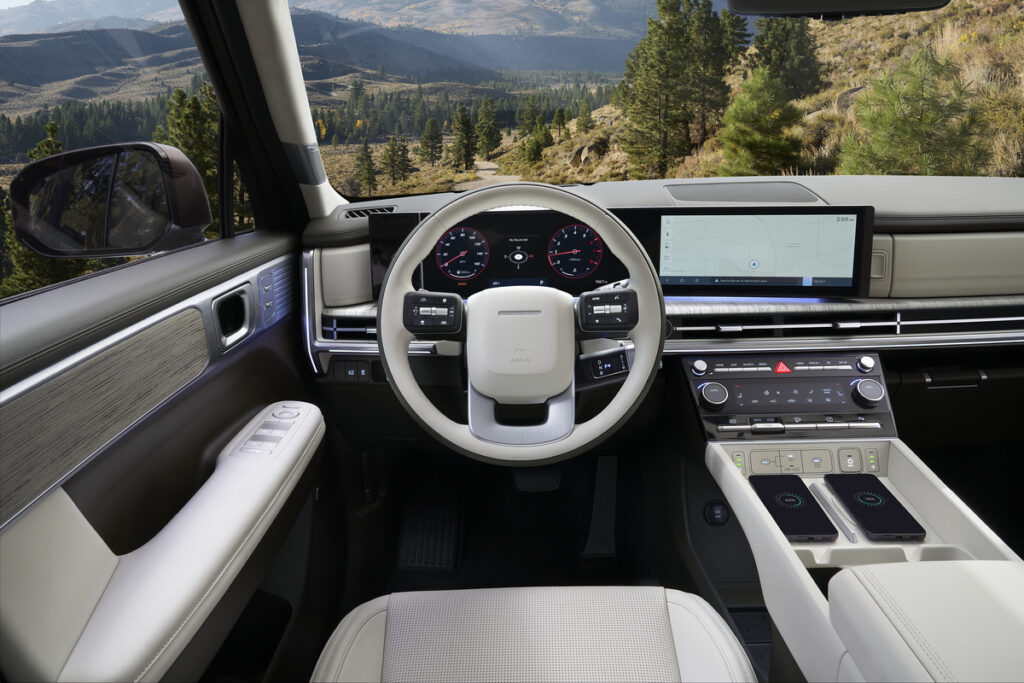
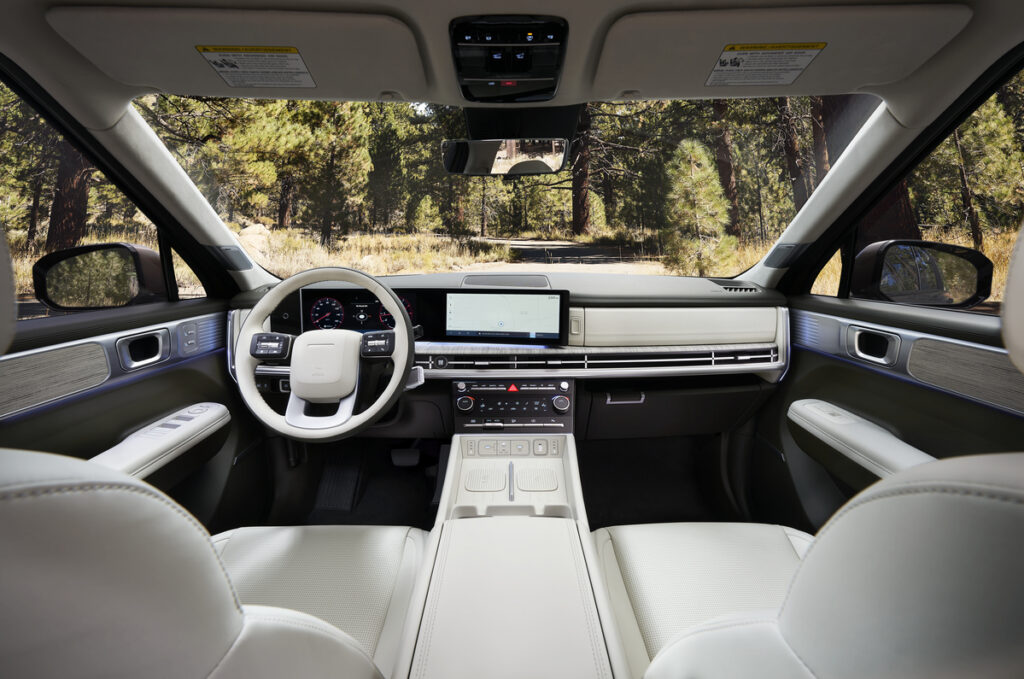
The cabin has an open, horizontal dashboard layout. Rather than surrounding the driver with unnecessary shapes and decorative clutter, Hyundai has concentrated on storage and usable surfaces.
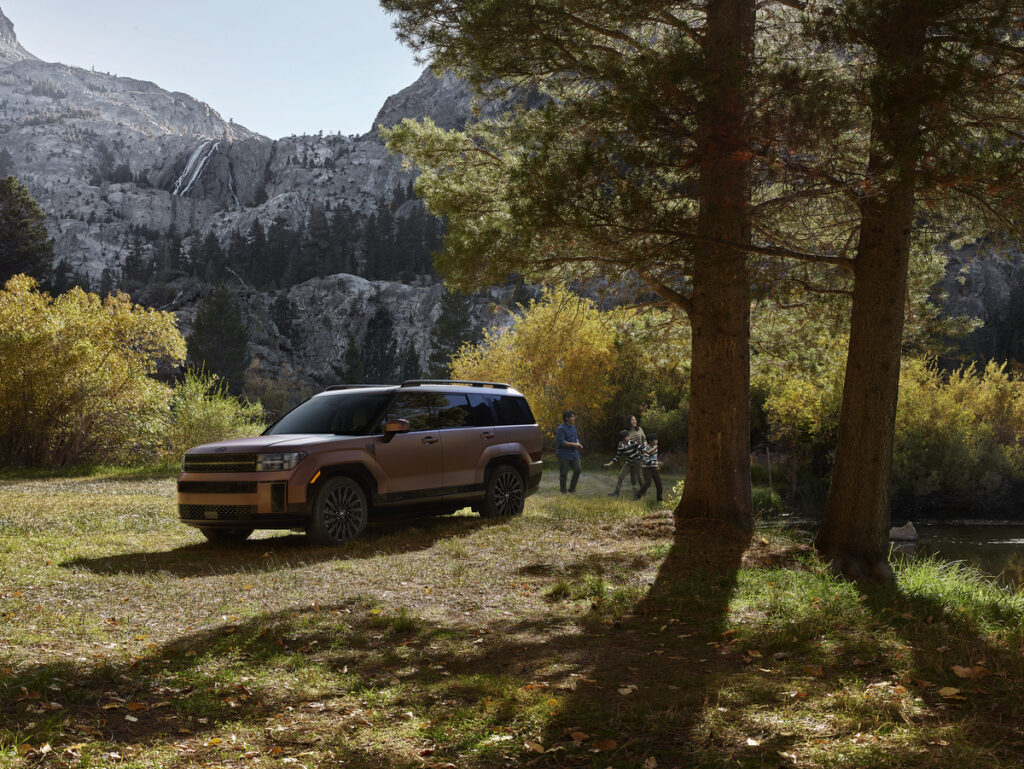
Families will appreciate the second row, where there is generous room for passengers. Depending on trim, the Santa Fe offers a bench seat or individual captain’s chairs.
The center console storage arrangement is particularly clever. Its compartment can be accessed from the front or rear, allowing second-row passengers to reach shared storage without requiring the driver to act as cabin butler.
The third row tells a different story.
It provides useful occasional seating, particularly for children, but adults may find legroom and access less accommodating during longer journeys.
If you regularly carry six or seven people, bring the entire family to the dealership and have everyone occupy their normal seat. Then check how much luggage space remains.
This is especially important for households with dogs. A large crate, several suitcases and an occupied third row can quickly exceed what looks like an enormous cargo compartment in photographs.
You may also enjoy: 2027 Kia Telluride Hybrid Review: Family Tested With Ben the Labrador.
Does the Hybrid Make More Sense?
For many buyers, the most interesting decision is not which gasoline trim to purchase. It is whether to buy the hybrid instead.
The 2026 Santa Fe Hybrid combines a 1.6-liter turbocharged gasoline engine with electric assistance, producing a total of 232 horsepower.
Unlike a plug-in hybrid, it does not require an external charging connection. The gasoline engine and regenerative braking replenish the hybrid battery during normal operation.
The most economical front-wheel-drive Hybrid SE achieves an EPA-estimated 36 mpg combined, compared with 24 mpg combined for the front-wheel-drive gasoline Santa Fe.
That is a substantial difference for drivers who cover plenty of miles.
Assuming 12,000 miles per year and gasoline costing $3.50 per gallon, the 36-mpg hybrid would use approximately 333 gallons annually, compared with 500 gallons for the 24-mpg gasoline model.
The calculated saving is around $583 per year, before accounting for differences in purchase price, insurance, maintenance or individual driving conditions.
The hybrid’s electric assistance also provides a different power delivery character, particularly at low speeds. It is less powerful overall than the gasoline model but makes a persuasive case for drivers who value efficiency and smooth urban operation.
Buyers should compare the exact trim and drivetrain using FuelEconomy.gov, rather than relying on the most favorable figure advertised for the entire model range.
My preference would be to compare the gasoline SEL with the Hybrid SEL first. That is where the price and efficiency discussion becomes especially interesting.
Technology That Earns Its Place
The Santa Fe has a modern dashboard built around available 12.3-inch instrument and infotainment displays. Wireless Apple CarPlay and Android Auto make smartphone integration more convenient.
But Hyundai deserves credit for something less glamorous: retaining physical controls for commonly used features.
Touchscreens are useful for navigation, entertainment and camera displays. They are not always the most appropriate place to hide climate settings or other controls needed while driving.
The Santa Fe provides a practical balance between digital displays and dedicated interfaces.
Higher trims can add conveniences such as dual wireless smartphone charging pads, a surround-view camera system and Remote Smart Parking Assist.
Remote parking technology can help in tight spaces, but it still requires appropriate supervision. It is a convenience system, not permission for the driver to ignore the vehicle.
Hyundai’s Highway Driving Assist technology can support steering, speed and following-distance control under appropriate conditions. The driver must remain attentive and responsible.
The most valuable technology is not necessarily the most complicated. Good camera visibility, sensible storage for a phone, conveniently located charging ports and controls that can be used without distraction will usually contribute more to daily satisfaction.
For more on Hyundai’s interface philosophy, read Hyundai Physical Buttons: What Buyers Should Test.
The XRT Looks Tough, But Do You Need It?
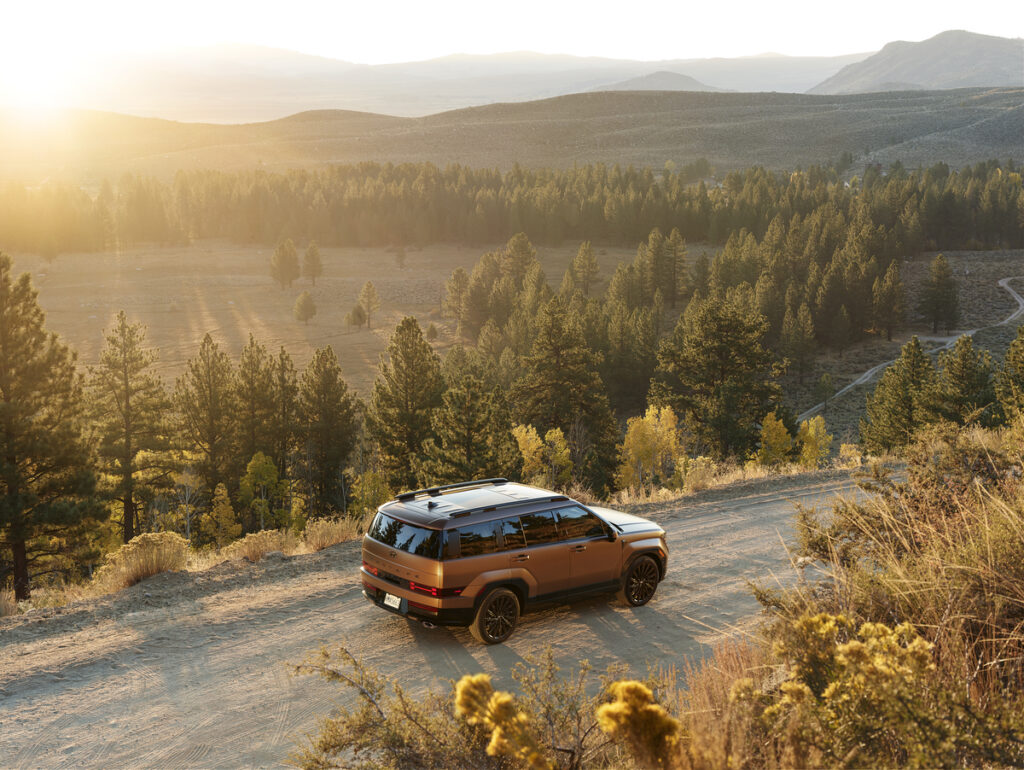
The Santa Fe XRT introduces a more adventurous appearance, all-wheel drive, all-terrain tires and additional ground clearance.
Hyundai also gives the properly equipped XRT a towing capacity of up to 4,500 pounds, compared with 3,500 pounds for the other gasoline versions.
That may be useful for owners with a small camper or trailer, provided the loaded trailer and vehicle remain within all applicable weight limits.
Yet the XRT is not automatically the best choice for somebody who enjoys the outdoors.
Its all-terrain tires and off-road-oriented equipment can introduce compromises in efficiency and highway comfort. The EPA rates the XRT at 21 mpg combined.
For somebody who regularly drives on unpaved roads or needs the additional rated towing capacity, those compromises may be worthwhile.
For a family whose greatest off-road challenge is a gravel parking lot at a football field, the standard SEL with available all-wheel drive is worth considering first.
Safety Should Be More Than a Long Feature List
The Insurance Institute for Highway Safety recognizes the 2026 Santa Fe as a Top Safety Pick+.
The Santa Fe offers standard driver-assistance features including forward collision avoidance, lane-keeping assistance and blind-spot monitoring.
Higher trims provide additional camera and driver-support technology.
It is important to understand the limitations. Automatic emergency braking does not prevent every collision. Adaptive cruise control does not make the vehicle autonomous. Lane assistance cannot replace the driver’s attention.
Parents should also check child-restraint installation in the second and third rows rather than assuming every seating position is equally convenient.
The safest family vehicle is one that performs well in independent crash evaluations, carries its passengers appropriately and allows its driver to operate it without unnecessary distraction.
Santa Fe vs. Telluride, Grand Highlander and Tucson
The Santa Fe occupies an interesting position in Hyundai’s lineup and the wider SUV market.
The Hyundai Tucson is smaller and makes sense for households that do not require a third row. Its more compact dimensions can be an advantage in crowded urban areas.
The Kia Telluride offers a larger family-oriented package. Buyers who regularly use all three seating rows should consider its additional passenger and cargo accommodation.
The Toyota Grand Highlander is another important alternative. It provides a bigger three-row cabin and a range of hybrid options, making it particularly relevant to families prioritizing passenger space.
The Santa Fe counters with a useful middle ground. It has occasional third-row seating without requiring buyers to purchase a considerably larger vehicle.
Its interior design, available hybrid and strong equipment levels also make it worth comparing against more expensive rivals.
Read the 2026 Toyota Grand Highlander Review for a closer look at Toyota’s approach to three-row family transportation.
Buyers who do not need seven seats may also want to examine the 2026 Hyundai Tucson PHEV before paying for space they will rarely use.
2026 Hyundai Santa Fe Review: My Final Verdict
Start with the SEL.
It provides a sensible entry point into the more desirable equipment without immediately pushing the purchase into luxury-SUV territory.
Then drive the Hybrid SEL. If your annual mileage is substantial, the savings on fuel and the hybrid’s different driving character may justify the additional initial cost.
The Calligraphy is the version to choose if premium materials and luxury equipment genuinely matter to you. It is not necessarily the strongest value.
The XRT makes sense when its additional ground clearance, tires and towing capacity serve a real purpose. Otherwise, it is an expensive way to obtain a more adventurous appearance.
The Santa Fe’s greatest strength is its approach to family practicality. It has a roomy second row, unusually useful cargo packaging and technology designed around ordinary activities.
Its limitations are clear. The third row cannot match a larger SUV, and drivers seeking crisp steering and eager handling should look elsewhere.
But the change to a conventional automatic makes the gasoline version a better proposition for 2026. Sometimes the smartest improvement is the one that makes an ordinary journey easier.
I would put the Santa Fe SEL and Hybrid SEL on the shopping list, then spend the test drive examining the third-row space, brake pedal feel and low-speed transmission response.
Those are the details that will matter long after the novelty of the dashboard has worn off.
2026 Hyundai Santa Fe Frequently Asked Questions
Is the 2026 Hyundai Santa Fe better than the 2025 model?
The most important change is the gasoline model’s switch from an eight-speed dual-clutch gearbox to a conventional eight-speed automatic. The change improves the appeal of the gasoline powertrain for everyday driving. The fundamental cabin design, passenger packaging and distinctive exterior remain similar.
Is the 2026 Santa Fe big enough for seven people?
It can seat seven in appropriately configured versions, but that does not mean seven adults will be equally comfortable on a long journey. The third row is better suited to occasional passengers. Families that regularly fill every seat should evaluate the larger Hyundai Palisade, Kia Telluride or Toyota Grand Highlander.
Should I buy the Santa Fe Hybrid or gasoline version?
The hybrid is especially appealing to drivers who cover substantial annual mileage or regularly encounter urban traffic. The gasoline version produces more horsepower and, depending on specification, can offer greater towing capacity. Compare the exact purchase prices and fuel-economy ratings before deciding.
How much can the 2026 Hyundai Santa Fe tow?
Hyundai rates properly equipped gasoline versions at up to 3,500 pounds, with the XRT rated at up to 4,500 pounds. Actual usable towing capacity depends on vehicle configuration, occupants, cargo, trailer weight and other restrictions. Check the owner’s manual and the specific vehicle’s ratings before towing.
Is the 2026 Hyundai Santa Fe a safe family SUV?
The 2026 Santa Fe earned an IIHS Top Safety Pick+ award. It also offers a range of active safety and driver-assistance features. No rating or system guarantees protection in every crash. Buyers should consider correct restraint use, child-seat compatibility, visibility and the limitations of electronic assistance.