2026 Hyundai Tucson PHEV Review: Smart Buy Before Redesign?
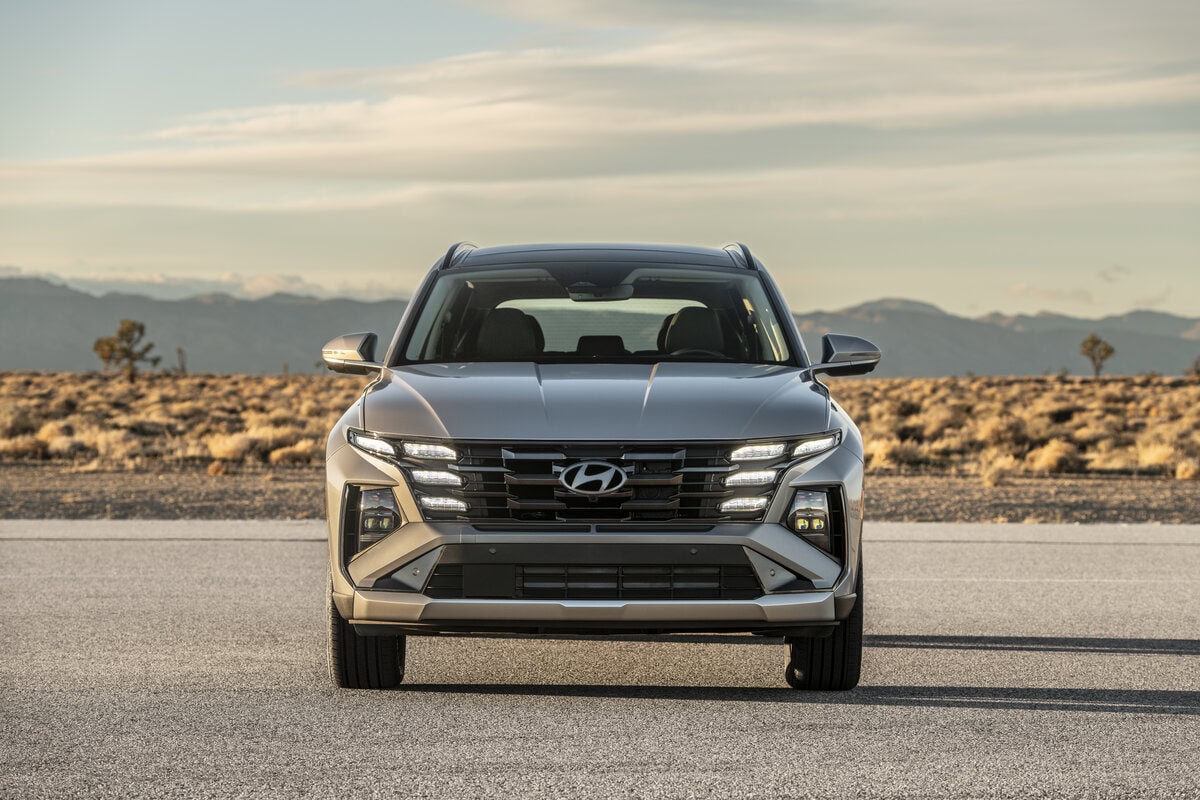
The 2026 Hyundai Tucson PHEV combines 32 electric miles, standard AWD, and intuitive tech, offering impressive value ahead of its redesign.
Hyundai’s best-selling vehicle worldwide is on the verge of a major generation change, but the 2026 Hyundai Tucson PHEV continues to deliver a remarkably balanced ownership experience. With global sales exceeding 10 million units, the Tucson line has earned its reputation as a benchmark for family transport. Even with a next-generation model scheduled for its official debut soon in New York, the current plug-in hybrid crossover makes a surprisingly persuasive case for taking delivery right now rather than waiting for an unpriced newcomer.
The core appeal of any plug-in hybrid lies in its dual-personality powertrain, and the Tucson PHEV executes this strategy with refined consistency. Under the hood, a turbocharged 1.6-liter gasoline engine pairs with an electric motor to generate a combined 268 horsepower. Power is routed through a traditional six-speed automatic transmission and standard all-wheel drive. During initial acceleration around town, the instant torque from the electric motor provides crisp responsiveness, making low-speed maneuvering and highway merging smooth and predictable.
You may also enjoy this video:
You may also enjoy: 2025 Hyundai Tucson Hybrid First Drive Review
Electric Commuting Range and Charging Capabilities
Equipped with a full battery charge, the Tucson PHEV delivers an EPA-estimated 32 miles of pure electric driving. For many suburban drivers, this battery range covers daily school runs and office commutes without burning a single drop of gasoline. Replenishing the battery takes under two hours when using a 240-volt Level 2 charging setup, while Hyundai includes a standard cable for ordinary household wall outlets. While direct-current fast charging is not supported, home charging routines easily maintain daily electric efficiency.
Once the initial battery energy is depleted, the Tucson operates as a conventional hybrid, returning approximately 35 mpg combined. Driver-selectable paddle shifters allow adjustment of regenerative braking intensity to capture kinetic energy during deceleration. Drivers who regularly plug in overnight will maximize the crossover’s efficiency. However, shoppers without access to dedicated home charging may find the less expensive, non-plug-in Tucson Hybrid a more practical financial choice.
You may also enjoy: 2024 Hyundai Santa Fe PHEV Tech and Specs Guide
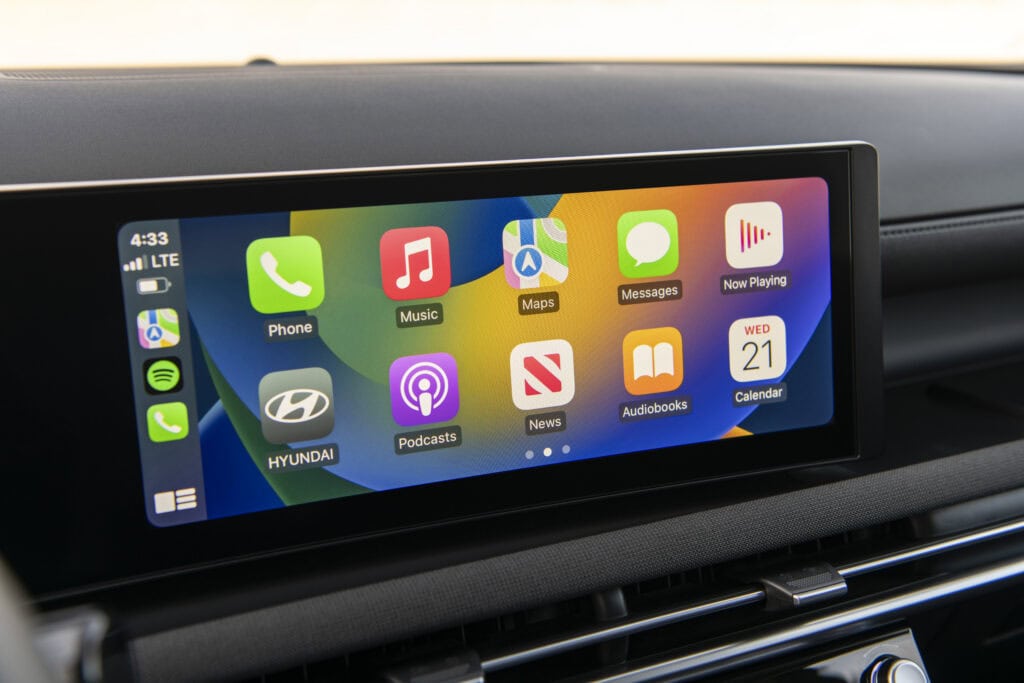
Cabin Ergonomics, Technology, and Rear-Seat Utility
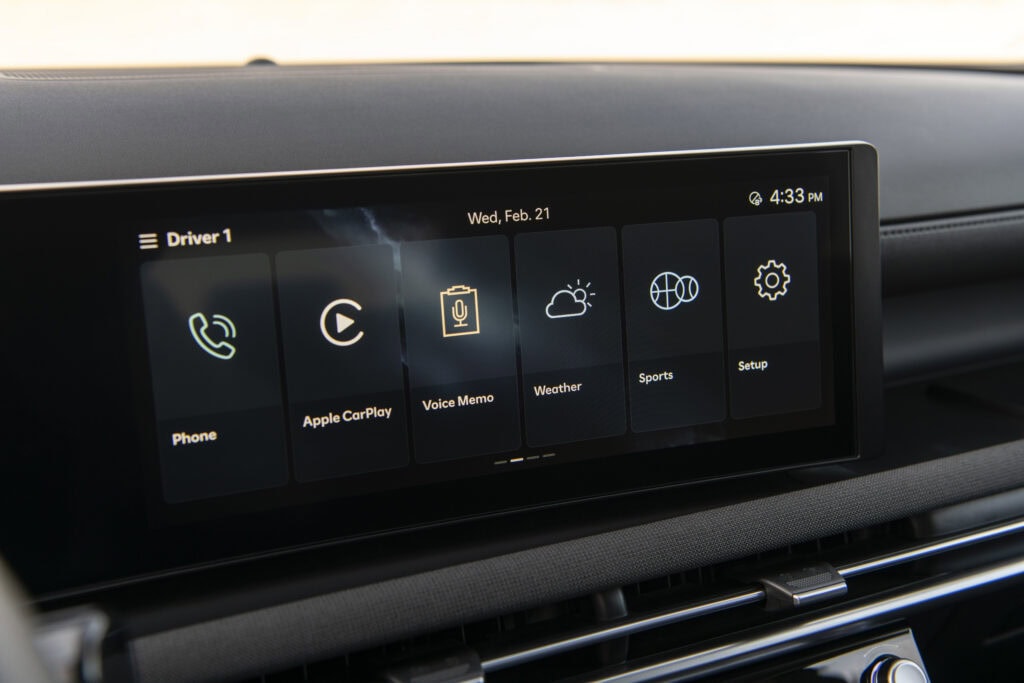
Stepping inside reveals an interior layout that remains distinctly modern despite the incoming redesign. The dashboard features a clean, dual-screen display setup anchored by a 12.3-inch infotainment touchscreen. Crucially, Hyundai preserved physical tactile buttons for primary climate and audio controls. Wireless Apple CarPlay and Android Auto are standard, supported by high-speed USB-C ports throughout the cabin. The Limited trim upgrades the experience with a full digital instrument cluster, color head-up display, navigation, and a Bose audio system.
Passenger space remains a clear strength for family duties. Rear doors open exceptionally wide, easing the installation of bulky child safety seats. Rear passengers benefit from reclining seatbacks, generous legroom, dedicated HVAC vents, and twin USB-C charging ports. In the cargo hold, you will find 31.9 cubic feet of usable space behind the second row. Low liftover height, a flat cargo floor, remote seat-release levers, and a hands-free power liftgate make loading heavy gear or accommodating pets effortless.
You may also enjoy: Hyundai PHEV vs HEV Buying Guide and Total Cost
Safety Systems and Driving Dynamics
On the road, the Tucson PHEV prioritizes ride comfort over aggressive handling, utilizing a soft suspension tune that irons out rough road surfaces smoothly. Light steering calibration reduces parking effort, while 8.3 inches of ground clearance and a selectable Snow mode deliver all-weather confidence. When properly equipped, the Tucson PHEV can tow up to 2,000 pounds. Advanced safety technology is comprehensive, including automatic emergency braking with pedestrian and cyclist detection, lane-keeping assistance, rear cross-traffic alert, and adaptive cruise control.
On the top-tier Limited trim, active driver assistance expands significantly. Activating a turn signal prompts a real-time blind-spot camera feed directly in the instrument display. The Limited also includes a 360-degree surround-view monitor, front and rear parking sensors, Hyundai Digital Key capability, and Remote Smart Parking Assist, which allows the vehicle to navigate tightly confined parking spots autonomously while the driver stands outside.
You may also enjoy: Top 10 Plug-In Hybrid SUVs for Families
Pricing, Warranty, and Competitive Market Position
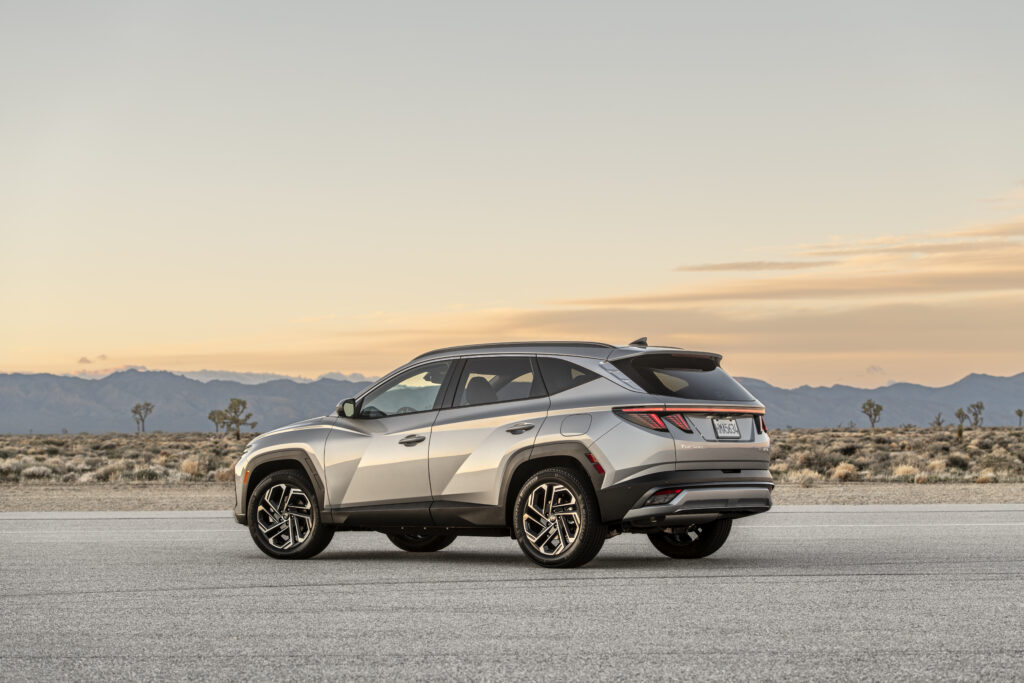
Starting around $40,675 before destination charges, the Tucson PHEV faces stiff competition in the compact plug-in segment. While its 32-mile electric range is functional, rival crossovers like the Kia Sportage PHEV (34 miles) and Toyota RAV4 Plug-in Hybrid (up to 54 miles) offer longer all-electric endurance. Hyundai counters this range gap with a comprehensive ownership package highlighted by a 5-year/60,000-mile basic warranty and a 10-year/100,000-mile powertrain and hybrid battery warranty.
With an updated replacement model approaching, prospective buyers face a strategic choice between proven equipment and incoming technology. Potential outgoing model discounts and long-term warranty protection make the 2026 Hyundai Tucson PHEV a very practical purchase for drivers seeking immediate electric efficiency.
You may also enjoy: 2025 Kia Sportage PHEV vs Hyundai Tucson PHEV Comparison