American Auto Manufacturing Jobs: Is Hyundai Delivering More Than Detroit?
American auto manufacturing jobs are attracting billions of dollars in fresh investment, and some of the biggest checks are coming from companies headquartered thousands of miles away.
Hyundai Motor Group has committed $26 billion to the United States between 2025 and 2028, with plans covering automobiles, steel, robotics and approximately 25,000 additional direct jobs. Meanwhile, Ford, General Motors, Toyota, Honda and Stellantis are pursuing their own American manufacturing expansions. The question is no longer whether international automakers build cars in America. It is whether their investments produce more lasting economic value than the impressive numbers suggest.
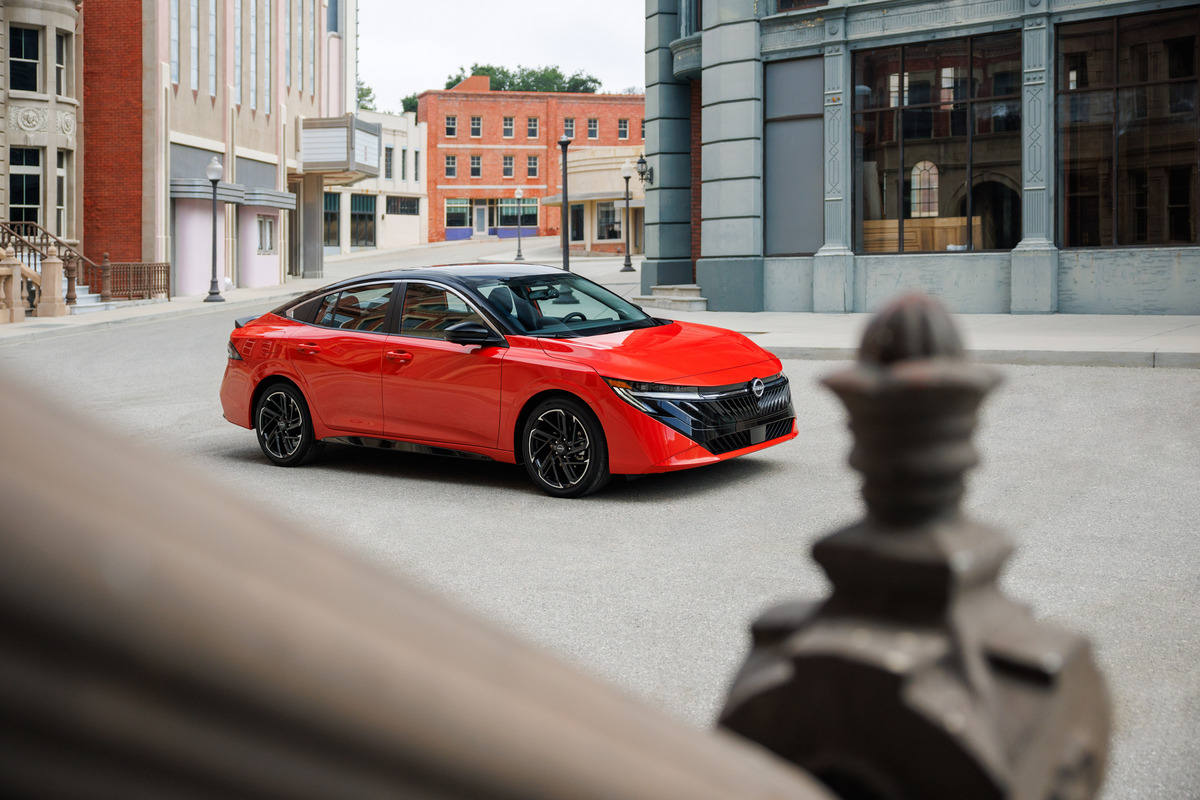
Hyundai’s position is particularly interesting because its American operation extends across three automotive brands: Hyundai, Kia and Genesis. Their products compete in everything from inexpensive sedans to electric SUVs and luxury vehicles. But the company’s investments now reach well beyond vehicle assembly. Steel mills, battery production and robots are becoming part of its American strategy. That makes the employment question more complicated, and considerably more important, than another announcement about a new factory.
American Auto Manufacturing Jobs: The $26 Billion Hyundai Commitment
In August 2025, Hyundai Motor Group increased its U.S. investment commitment from $21 billion to $26 billion for the 2025–2028 period. The additional $5 billion was an expansion of the existing plan, not a separate investment that should be added to the $26 billion total. Hyundai says the program will support automotive manufacturing, a new steel operation in Louisiana and American robotics production capacity of up to 30,000 robots annually.
The company expects approximately 25,000 additional direct job opportunities by 2028. These positions should not be confused with indirect jobs attributed to suppliers or with employment already existing at Hyundai facilities. The Bureau of Economic Analysis’ foreign direct investment statistics explain how foreign ownership contributes to American industrial activity. The Commerce Department’s 2026 automotive manufacturing investment report puts the industry-wide contribution of majority foreign-owned automotive manufacturers at 574,600 directly supported U.S. jobs in 2024.
Those numbers represent different measures. One is Hyundai’s prediction about future hiring. The other describes existing employment across foreign-owned automotive manufacturers generally. Treating them as equivalent would be rather like comparing the number of people invited to dinner with the number who actually turned up.
You may also enjoy: U.S. Auto Market: Why José Muñoz Is Betting on America
Georgia Provides Evidence Beyond the Press Release
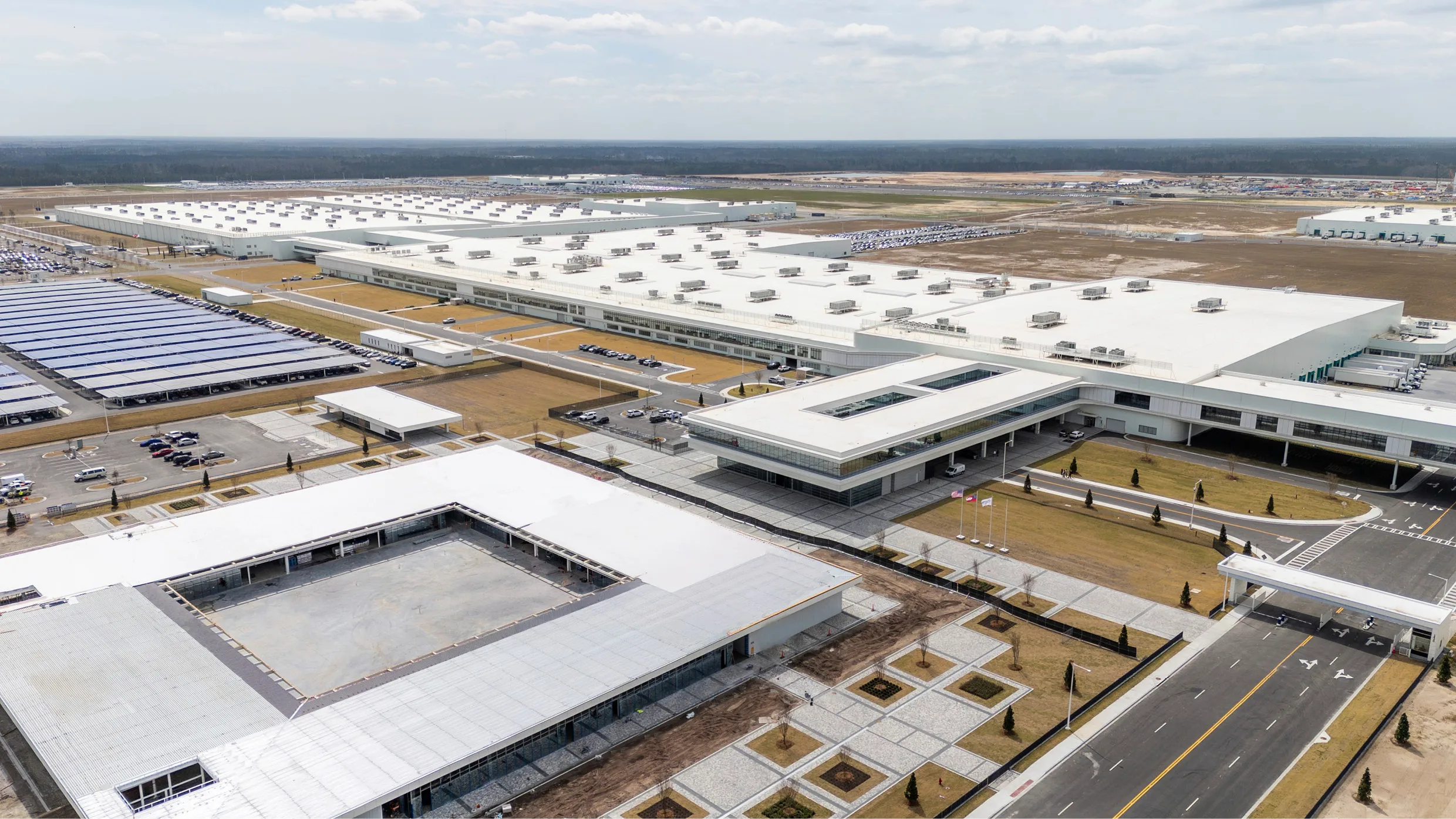
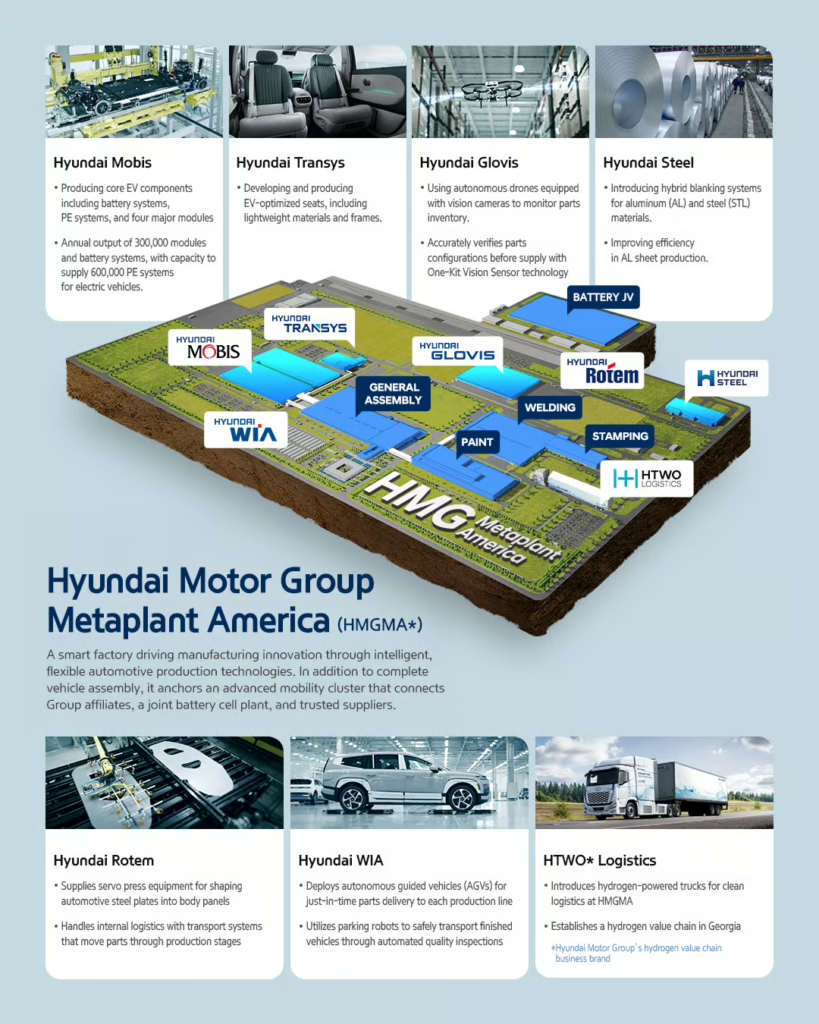
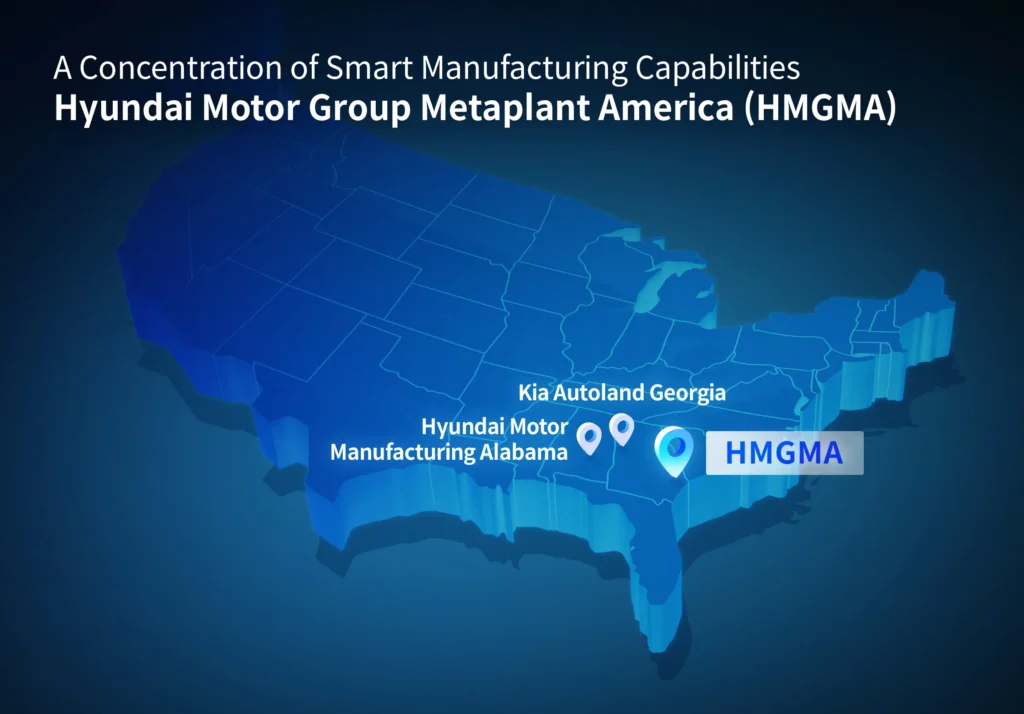
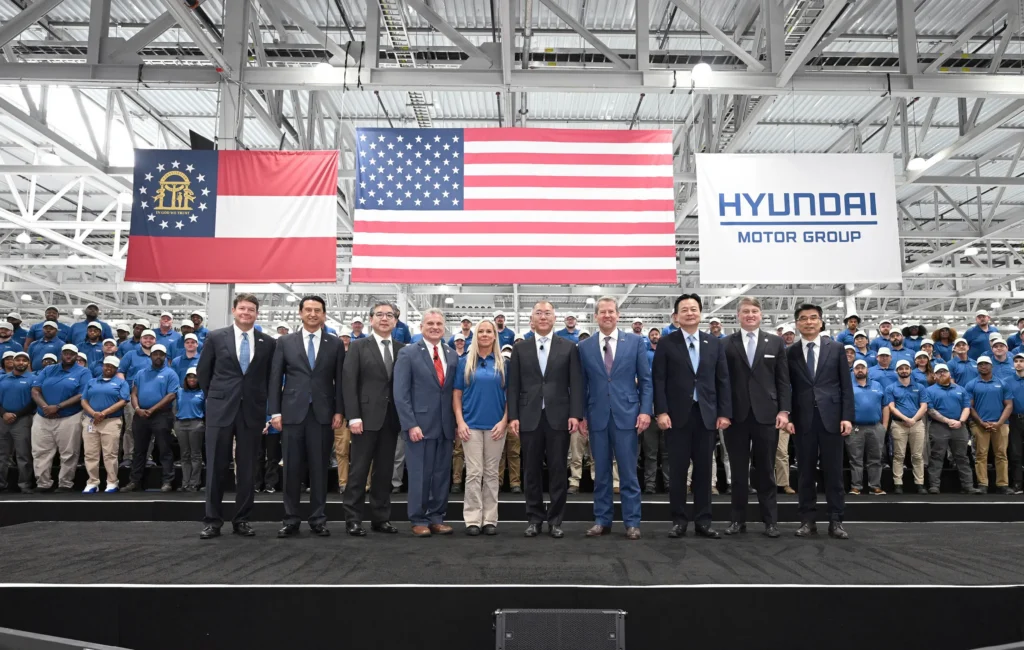
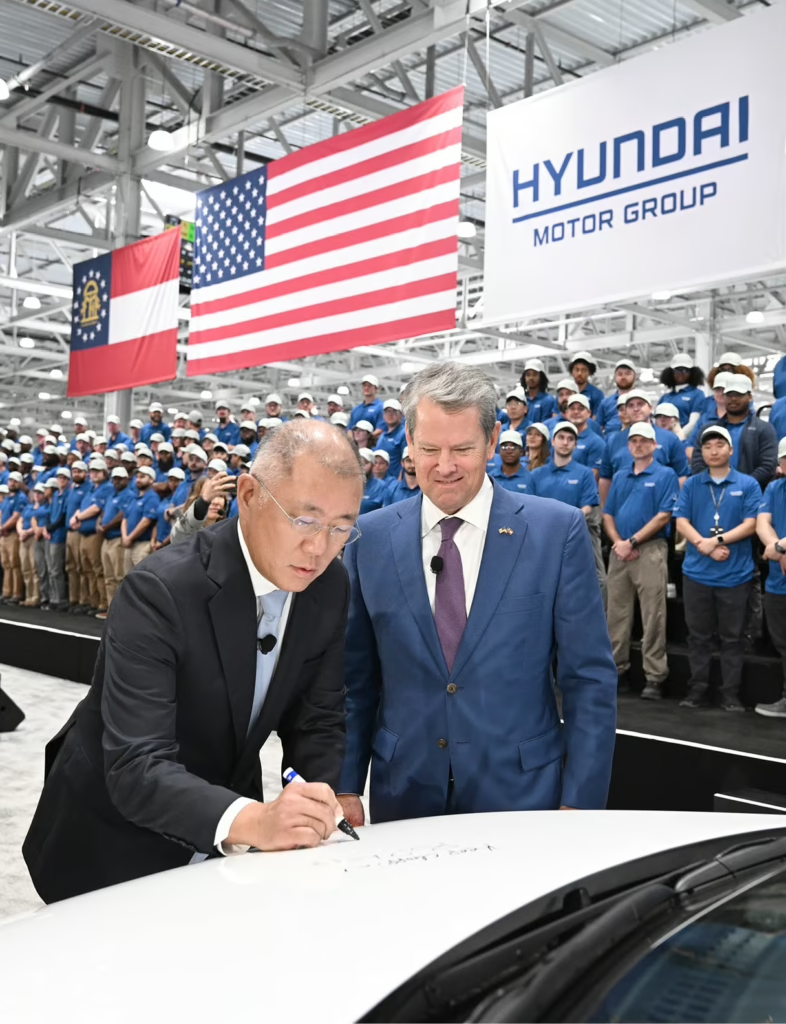
The most convincing part of Hyundai’s American expansion is already operating near Savannah. Hyundai Motor Group Metaplant America began producing the IONIQ 5 in October 2024 and celebrated its official opening in March 2025. The facility was established with an initial annual capacity of 300,000 vehicles, with plans to increase that capacity to 500,000 by 2028. The wider Georgia development, including battery-related investments, amounts to approximately $12.6 billion.
Hyundai projects 8,500 on-site jobs by 2031. Supplier projects add thousands of potential positions outside the main campus. But the difference between an announced job and an occupied position deserves attention. The Atlanta Journal-Constitution reported that official compliance records showed more than 3,800 Metaplant employees at the end of 2025. That is meaningful progress, although it remains below the project’s longer-term staffing commitments.
Production capacity is equally easy to misunderstand. A factory designed to manufacture 500,000 vehicles annually does not automatically manufacture that number every year. Actual output depends on consumer demand, component availability, production schedules and operating conditions. The Census Bureau’s explanation of manufacturing statistics demonstrates why factory employment, output, capital spending and productivity must be considered separately.
Hyundai’s ability to assemble different types of vehicles could become valuable as the market changes. Its Georgia facilities are positioned to support both electric and hybrid-electric vehicles. A hybrid combines a gasoline engine with electrical propulsion, while a battery-electric vehicle uses energy stored in a rechargeable battery without a gasoline engine. The Department of Energy provides a useful technical explanation of hybrid systems and a separate overview of plug-in hybrids.
You may also enjoy: Hyundai Georgia Robot Factory: The Future Is Here
Alabama Shows Why Investment Dollars Do Not Equal Jobs
Hyundai’s October 2026 announcement concerning its Montgomery, Alabama, factory offers an unusually revealing case study. The manufacturer described an investment approaching $450 million to prepare for updated vehicles and electrified powertrains. Alabama’s economic development documentation identified $412,885,541 in project capital investment and 53 new full-time positions, with an average hourly wage of $30.03.
Neither figure is inherently contradictory. The larger number describes Hyundai’s overall announcement, while the state figure represents the documented project investment. But the employment number illustrates an essential point: a substantial capital investment can modernize equipment, increase flexibility and protect an existing factory’s future without adding a huge number of workers.
For perspective, the Bureau of Labor Statistics’ automotive employment and earnings data separates vehicle manufacturing from parts manufacturing and other industry categories. Its occupational outlook for assemblers and fabricators also explains how automation and productivity improvements affect future employment. Job counts alone reveal neither the value nor the durability of an industrial investment.
You may also enjoy: Hyundai Alabama Plant Investment: $450M SUV Expansion
Ford and GM Still Have Enormous American Manufacturing Operations
Hyundai’s growth should not obscure how much vehicle manufacturing remains in American-owned hands. Ford reported approximately 56,500 U.S. hourly autoworkers in 2025. Its new electric vehicle manufacturing program includes roughly $5 billion in investment across Kentucky and Michigan, with nearly 4,000 jobs expected to be created or secured. Ford also announced a $1 billion paint-shop modernization at its Kentucky Truck Plant in 2026.
General Motors announced approximately $4 billion in domestic factory investment in June 2025, involving production changes in Michigan, Kansas and Tennessee. GM expects its U.S. facilities to have the capability to assemble more than two million vehicles annually. These investments involve different manufacturing technologies and product categories, but they represent substantial commitments to American industrial production.
For a fair comparison, existing employees must be distinguished from promised hires, and jobs preserved through retooling must be separated from genuinely new positions. The BLS industry payroll tables provide a broader industry benchmark that does not depend on how an individual manufacturer chooses to describe its investment announcements.
Stellantis deserves similar consideration. Its October 2025 announcement of $13 billion in American investment included plans for more than 5,000 additional jobs, production changes at existing facilities and reopening the Belvidere assembly plant in Illinois. Whether the company achieves those milestones will be clearer as the projects advance through their announced timelines.
Toyota and Honda Make This a Global Competition
Toyota’s American manufacturing history is substantial. The Japanese company reports approximately 50,000 U.S. employees and 11 manufacturing facilities. Its nearly $14 billion North Carolina battery operation started production in 2025 and is associated with a planned workforce of up to 5,100. Toyota also announced up to $10 billion in additional American investment over five years, beginning in 2025.
On November 10, 2026, Honda announced plans for a $3 billion vehicle assembly plant in central Ohio, targeting more than 2,000 additional jobs. Production is expected in 2029, pending final approvals. The facility is intended to support gasoline, hybrid and electric vehicle manufacturing as customer preferences change. Honda is also upgrading facilities elsewhere in the United States to increase hybrid powertrain production.
These investments matter because American manufacturing is not a contest involving only Detroit and Seoul. Japanese, German and other international manufacturers have established major U.S. production networks. The BEA’s investment-by-country data helps distinguish the nationality of investment capital from the location where economic activity takes place.
Robots Could Change What a Factory Job Looks Like
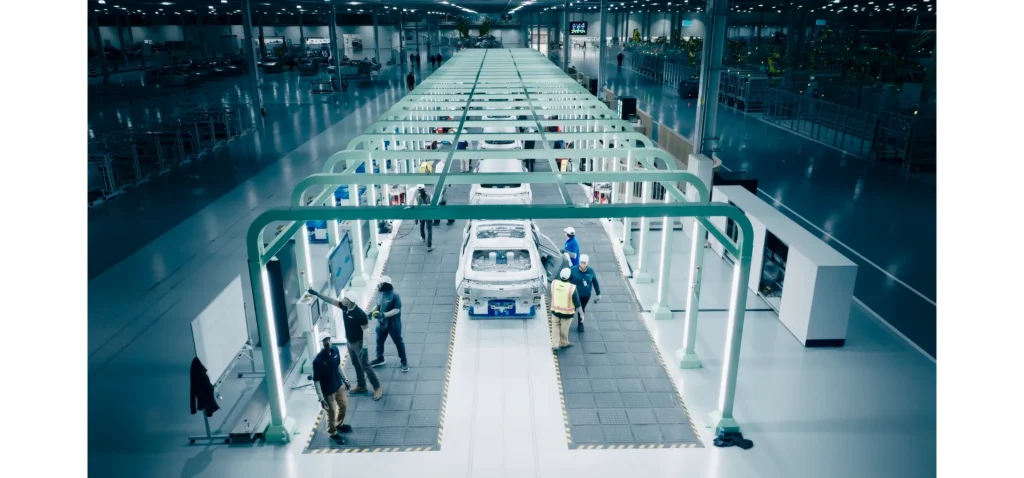
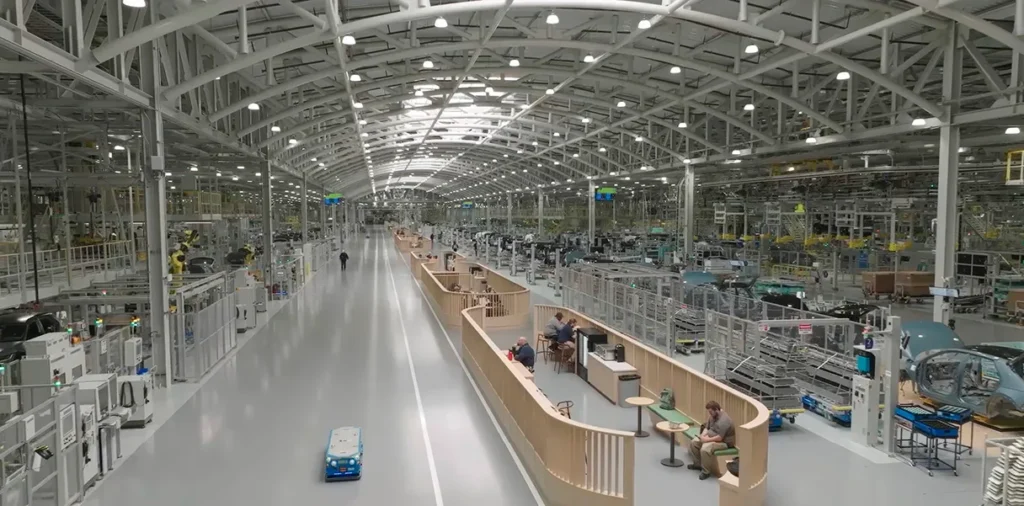
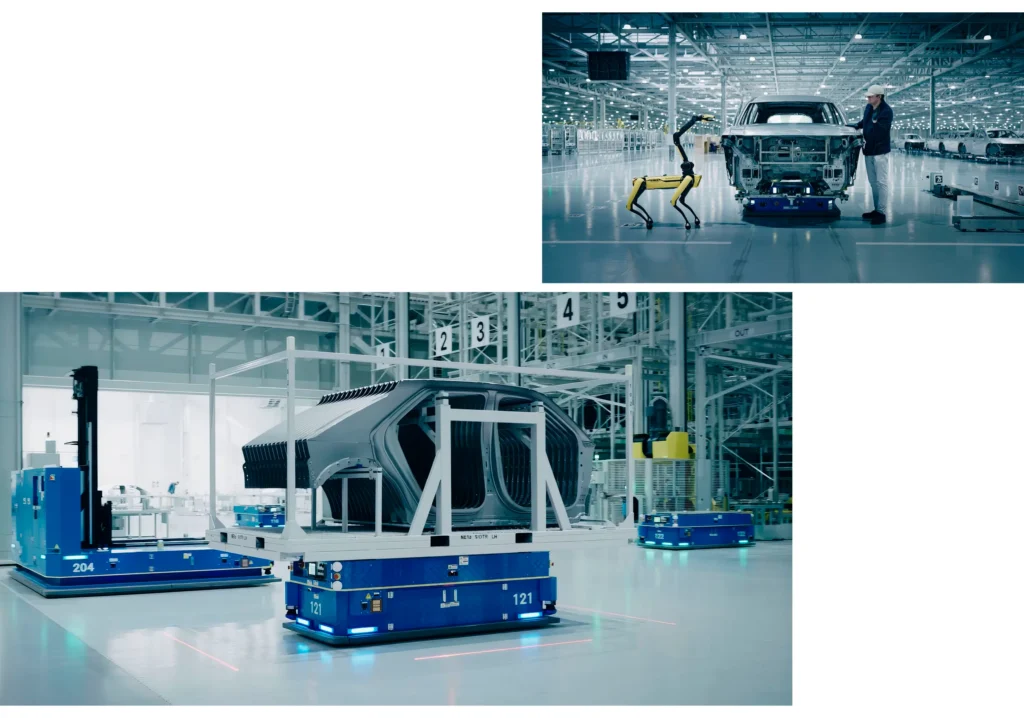
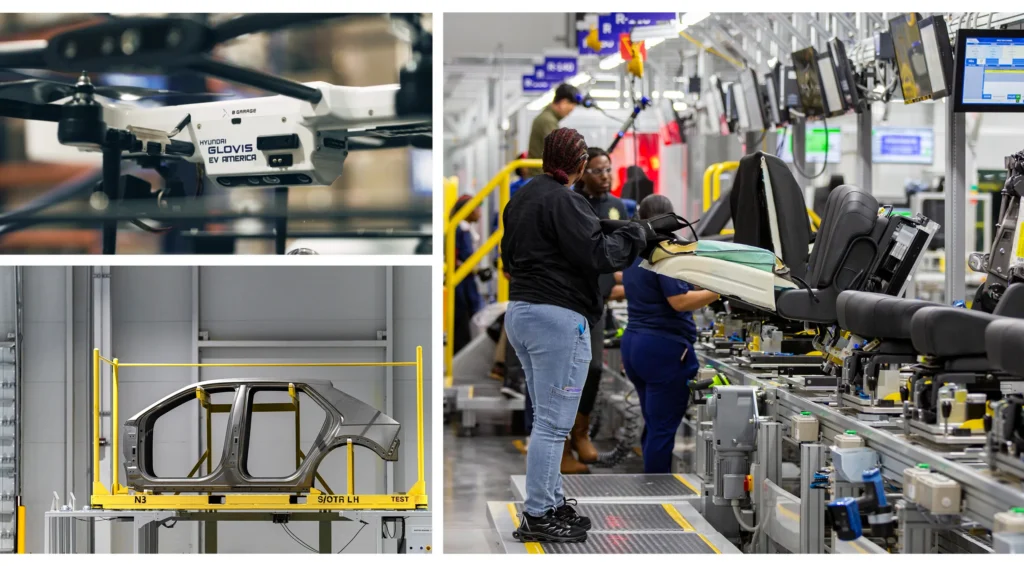
One of the more intriguing aspects of Hyundai’s Georgia operation is its extensive automation. Industrial robots already move components, perform welding operations and support inspections. The company plans to introduce Boston Dynamics’ Atlas humanoid robots for selected manufacturing tasks beginning in 2028, with more advanced applications potentially following around 2030.
This creates a question that manufacturers should answer without resorting to cheerful photographs of robots waving at employees. Will automation help existing workers by reducing dangerous and repetitive tasks, or will some positions disappear as new equipment takes over? The answer could vary from one factory and occupation to another.
The Occupational Safety and Health Administration’s robotics guidance identifies hazards associated with automated machinery and worker access during maintenance or adjustment. Its related standards guidance explains workplace safeguards. Meanwhile, federal employment projections anticipate limited growth for many traditional assembly occupations as manufacturing systems become more efficient.
You may also enjoy: Stellantis AI Driving Technology Targets 2028 Launch
Taxpayer Incentives Must Be Part of the Accounting
Large manufacturing facilities frequently benefit from state and local economic development agreements. These can involve tax advantages, infrastructure improvements, workforce training and financial support tied to promised investment or employment. The Georgia Hyundai project has attracted scrutiny because its incentive arrangement was estimated at approximately $2.1 billion, according to reporting by The Atlanta Journal-Constitution.
An estimated incentive package is not necessarily equivalent to money already spent. Governments may condition benefits on investment and hiring requirements. Those distinctions matter when evaluating what taxpayers receive in exchange. A credible assessment should examine actual public expenditures, jobs created, wages paid, employment retained and whether companies fulfill their contractual obligations.
There is also the broader issue of industrial supply chains. A factory may assemble a vehicle in America while importing substantial quantities of components. The National Highway Traffic Safety Administration’s VIN decoder lets consumers identify the assembly location of a specific vehicle, which may differ from that of another model sold under the same brand. Assembly location alone does not establish the domestic percentage of its components.
At the consumer level, government policy has also changed. The Internal Revenue Service confirms that federal new, used and commercial clean-vehicle purchase credits generally ended for vehicles acquired after September 30, 2025. A company’s decision to build an electric vehicle domestically therefore does not automatically mean buyers can claim the former federal purchase incentive.
Why American Car Buyers Should Pay Attention
More vehicle production inside the United States can potentially shorten some supply routes, reduce certain import exposure and give automakers greater flexibility to respond to local demand. However, domestic assembly does not guarantee lower retail prices, superior reliability or immediate availability. Those results depend on manufacturing costs, supplier networks, distribution expenses and business decisions.
Consumers should check where the particular vehicle they intend to buy was built, rather than assume every model from Hyundai, Kia, Ford or Toyota shares one manufacturing location. They should also evaluate final transaction prices, safety information and ownership costs independently of a manufacturer’s employment commitments.
The distinction becomes especially relevant as Hyundai broadens the range of vehicles it builds and develops for Americans. Its growing selection of SUVs and electrified powertrains makes manufacturing flexibility an important competitive advantage, although the value to buyers must still be demonstrated through finished products.
You may also enjoy: Hyundai Santa Fe XRT: Is the Off-Road Upgrade Worth It?
The Test Miles Verdict: Count the Jobs, Not the Announcements
Hyundai Motor Group is putting serious money into the United States. Its Georgia complex is producing vehicles, its Alabama factory is being upgraded, and its investment plans reach into industries that could influence American vehicle production for decades. The announced $26 billion program makes Hyundai a major participant in the country’s next manufacturing chapter.
But Ford, GM, Toyota, Honda and Stellantis are also investing in American factories. Each brings a different combination of existing employment, planned spending and future hiring. The information currently available does not support declaring any one of them the undisputed champion of new American automotive jobs.
The decisive evidence will come from completed projects, documented hiring, competitive wages, durable production and economic returns for the communities involved. Hyundai deserves credit for factories already operating and people already working. Its remaining employment promises deserve continued scrutiny, just like those of every competitor.
American auto manufacturing is changing, and South Korea is helping drive that change. Whether the investment produces an enduring employment revival will be decided on factory floors, not conference stages.