Audi Nuvolari Brings 987 HP to Monterey Car Week
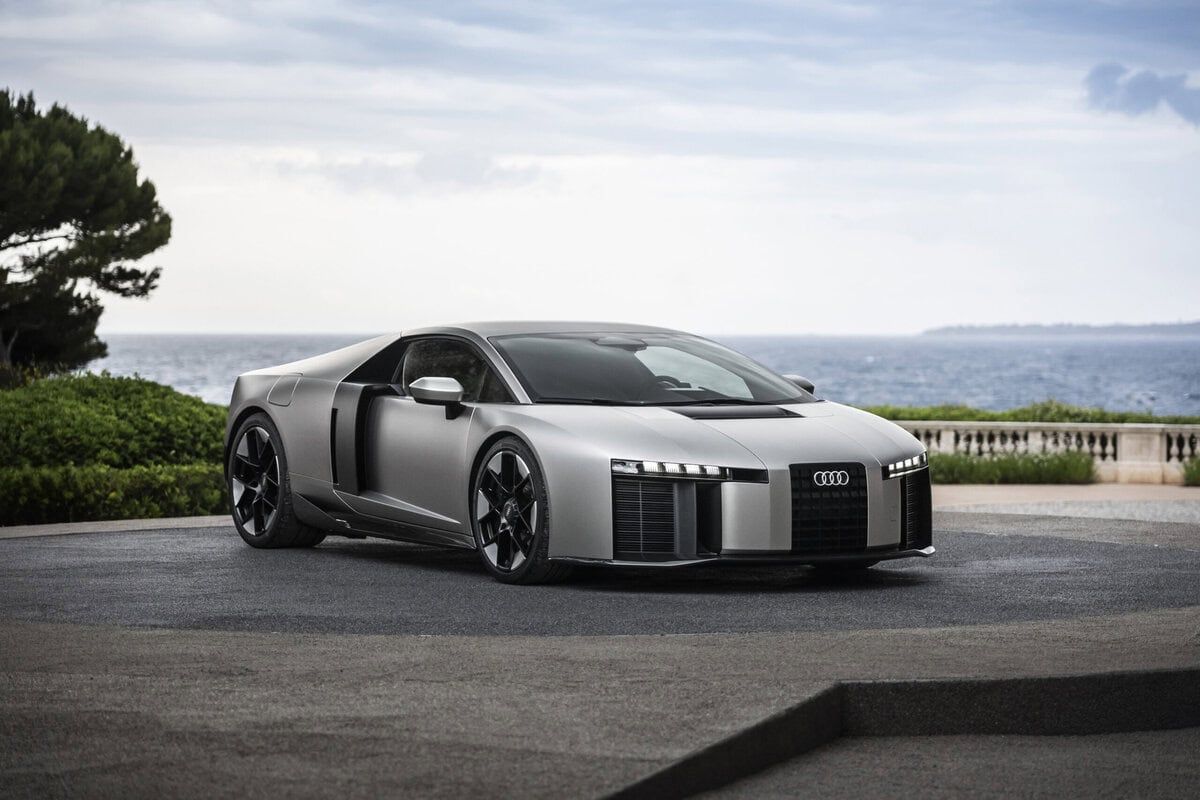
The Audi Nuvolari arrives at Monterey Car Week with 987 horsepower, Formula 1-inspired technology and just 499 build slots.
Audi Nuvolari Makes Its American Entrance
Monterey Car Week has never suffered from a shortage of expensive machinery. Yet the Audi Nuvolari should still be difficult to ignore when it makes its first U.S. appearance on the Monterey Peninsula. Audi plans to display the limited-production plug-in-hybrid supercar at The Quail, A Motorsports Gathering on Friday, Aug. 14, and the 75th Pebble Beach Concours d’Elegance on Sunday, Aug. 16.
The location is as strategic as it is scenic. Audi is putting its fastest and most powerful production vehicle in front of collectors who understand limited production, engineering significance and future provenance. The company also plans private events and appointments for interested buyers throughout the weekend. This is a public debut with a sales room discreetly attached.
Only 499 examples are planned worldwide, with deliveries scheduled to begin during the first half of 2027. Audi has not announced U.S. pricing, allocation or final market specifications. The car appearing in California is described as a near-production prototype, an important distinction when discussing figures that have not yet completed American certification.
You may also enjoy: How Lamborghini Conquered Monterey Car Week
You may also enjoy this video from Audi:
A V8, Three Motors and a Very Small Battery
The Nuvolari’s high-performance plug-in-hybrid system combines a 4.0-liter twin-turbocharged V8 with three axial-flux electric motors. The engine produces 800 horsepower on its own and can spin to 10,000 rpm. Two electric motors drive the front axle, while a third sits between the mid-mounted V8 and transmission.
Total system output is 1,001 metric horsepower, or approximately 987 mechanical horsepower. Audi claims the Nuvolari can accelerate from zero to 62 mph in 2.6 seconds, reach 124 mph in 6.8 seconds and exceed 217 mph. Those acceleration results require a battery temperature above 82 degrees Fahrenheit and a state of charge greater than 80 percent, according to Audi’s footnote.
The 7.3-kWh gross battery is tiny beside the packs in mainstream plug-in hybrids. That reveals the mission. Electricity is being used primarily to sharpen response, fill torque, manage traction and recover braking energy, not to turn the Nuvolari into a long-range electric commuter. Audi lists an E-Hybrid mode for short all-electric operation but has not published a certified electric range.
You may also enjoy: Audi Nuvolari Makes the R8 Look Sensible
Formula 1 Ideas Move Onto the Road
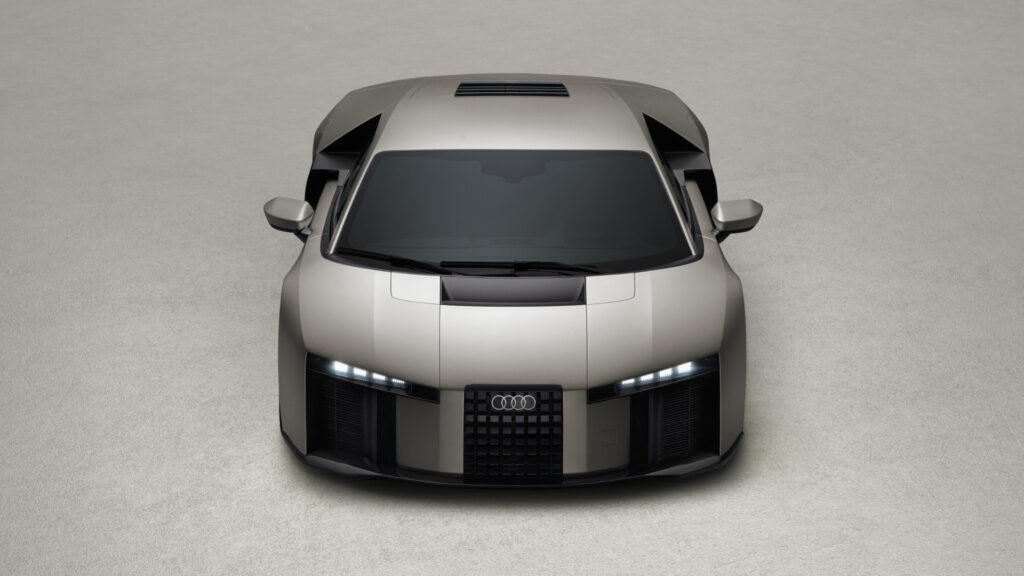
Audi’s Formula 1 connection is woven through the Nuvolari’s engineering story. The quattro predictive ride system uses steering angle, acceleration, yaw rate and available grip to anticipate instability. It can coordinate the front motors, brakes and active aerodynamics before a developing slide becomes an expensive conversation with an insurance company.
The active rear wing has closed, low-downforce and high-downforce positions. In performance modes, it reduces drag on straights and adds downforce for braking and cornering. A driver-operated drag-reduction function borrows both its initials and basic purpose from Formula 1. Audi says the complete aerodynamic package can generate more than 882 pounds of downforce, depending on conditions.
Regenerative braking is equally serious. The system can provide up to 0.3 g of electric deceleration, allowing many everyday and dynamic braking events to return energy to the battery. When more stopping power is required, a brake-by-wire system blends regeneration with enormous carbon-ceramic hardware: 16.5-inch front discs with 10-piston calipers and 16.1-inch rear discs with four-piston calipers.
You may also enjoy: Aston Martin Valhalla Review: 1,064 HP Hybrid Supercar
Carbon Construction Without the Costume
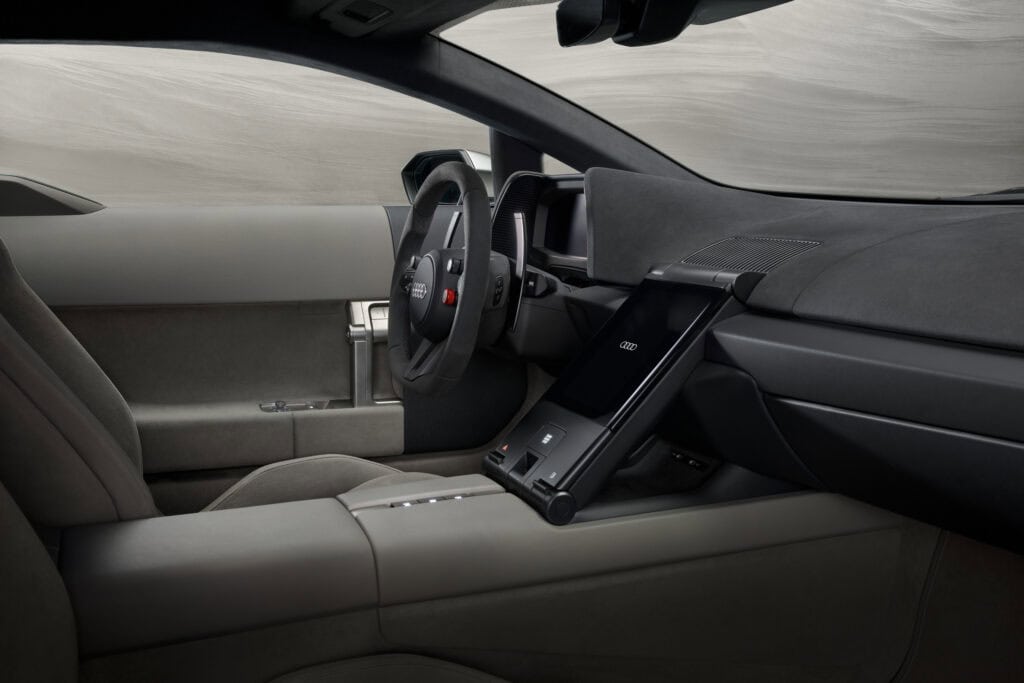
The Nuvolari introduces an Audi Space Frame combined with a full carbon-fiber exterior. Almost every exterior panel is made from carbon-fiber-reinforced polymer, using Formula 1-informed prepreg and autoclave production. Composite materials are valued for combining strength with low weight. Forged center-lock wheels also make their first appearance on a production Audi.
This is not carbon trim applied for parking-lot theater. Lightweight construction and torsional rigidity establish the foundation for predictable steering, braking and aerodynamic control at extraordinary speeds. The concealed S-duct, front intakes, splitter, diffuser and rear wing each perform a defined job.
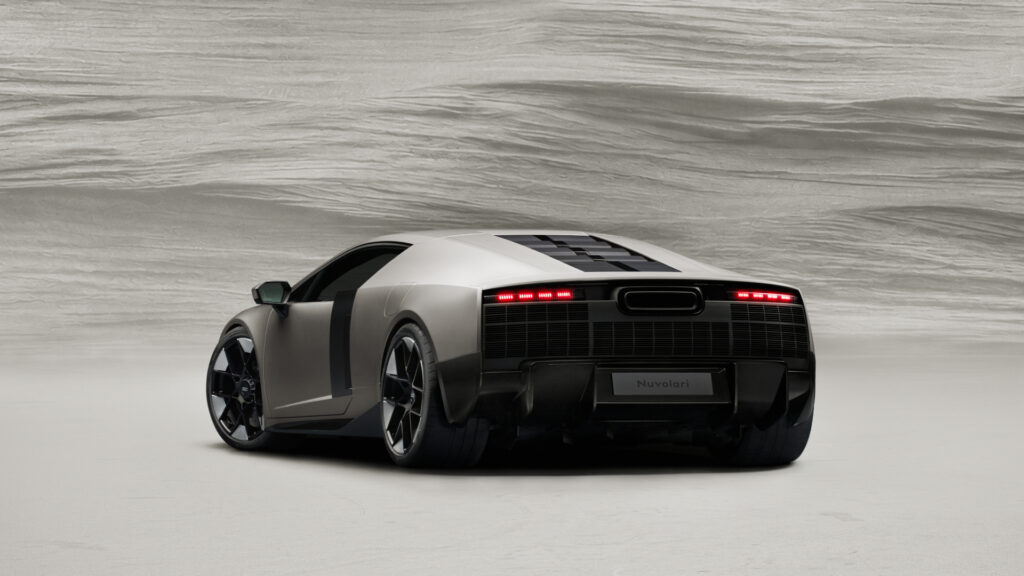
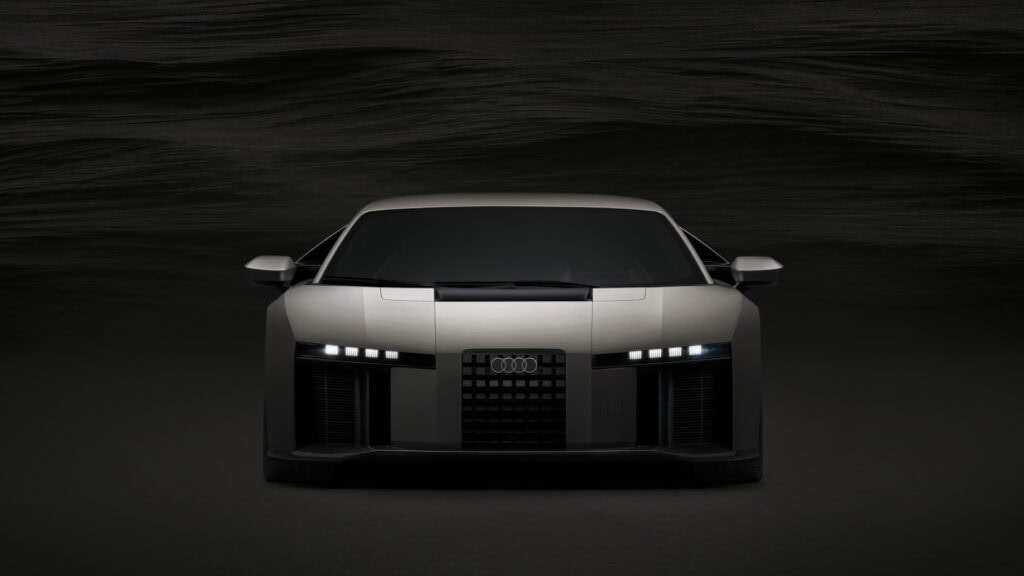
Audi’s Titanium paint links the Nuvolari visually with the Concept C and the company’s Formula 1 car. The mid-engine proportions are intentionally monolithic, with tight surfaces and relatively little decorative fuss. It looks less like an R8 tribute than an argument that Audi’s next design era should be recognized without reading the badge.
You may also enjoy: McLaren 788HS Is the Final V8 Supercar Send-Off
Why Monterey Is the Right Audience
The Quail places new supercars beside established collector icons, while Pebble Beach tests contemporary design against some of history’s most important automobiles. That makes Monterey a ruthless but useful setting. Horsepower can attract a crowd; scarcity, technical relevance and visual staying power are what persuade collectors to remain interested.
Naming the car after Tazio Nuvolari adds historical weight. The Italian driver became famous for courage, mechanical sympathy and an ability to make difficult racing cars perform beyond expectation. Audi is using that legacy to frame a supercar intended to connect its Auto Union history, Formula 1 investment and electrified future.
The private appointments may ultimately matter more commercially than the public display. With 499 cars for the world, Audi does not need mass-market awareness. It needs a relatively small number of qualified collectors to believe the Nuvolari belongs beside established halo cars from Ferrari, McLaren, Lamborghini and Porsche.
You may also enjoy: Lamborghini Miura Tribute: Only 99 Will Ever Exist
What the Audi Nuvolari Still Has to Prove
The specifications are spectacular, but important questions remain. Audi has not announced the Nuvolari’s price, U.S. allocation, curb weight, EPA electric range or final American fuel-economy figures. Buyers should use FuelEconomy.gov once U.S. certification is published. Preliminary European consumption and emissions data should not be treated as American ratings.
There is also the matter of character. Predictive software, active aerodynamics and electric torque vectoring can make a car devastatingly capable, but buyers at this level expect personality as well as speed. The discontinued R8 earned loyalty by pairing serious performance with unusual approachability. The Nuvolari must feel like more than a technology demonstrator wearing a famous driver’s name.
Monterey will not answer every question because visitors will initially be looking rather than driving. It will establish whether Audi’s most ambitious road car has the presence to stop a crowd surrounded by priceless machinery. If it succeeds there, the Nuvolari will have completed its first American test before turning a wheel in public.