Could Protecting Your Car’s Carpet Save Thousands at Trade-In?
Could the cheapest part of your car protect its trade-in value? The carpet beneath your feet rarely gets a second thought until somebody at a dealership opens the door, looks down and begins calculating what it will cost to put the car back on the lot.
Proper floor protection can help preserve an interior, particularly in cars carrying children, dogs, muddy boots and the occasional coffee that takes a wrong turn. But let’s be clear about the money: there is no credible universal figure showing that floor mats alone add $1,000 or $2,500 to a trade-in offer. Clean, well-kept interiors can support a better condition assessment; the payoff for any one vehicle depends on its age, mileage, market and overall condition.
You may also like this video:
Why a dealer notices your carpet
A trade-in appraisal is not just a look at the odometer. A dealer considers mechanical condition, damage, wear and the work needed before resale. Kelley Blue Book explains that trade-in value depends on the vehicle’s condition and that dealers typically incur reconditioning costs. It is the cost of making a used car presentable again—not an automatic floor-mat bonus—that matters.
That makes a clean footwell surprisingly important. Ground-in grit abrades carpet fibers. Salt and winter slush can leave deposits and stains. Sugary drinks and pet accidents can soak into the underlying padding, where a quick vacuum does very little. If moisture lingers, odor becomes a bigger concern than the visible mark.
There is a practical distinction here: removable dirt is not the same as permanent damage. An ordinary dirty mat can be pulled out, washed or replaced; ruined carpeting may call for deep cleaning, odor treatment or replacement. The first is an afternoon job. The second is a reconditioning line item.
I want 3-D floor mats that are on sale
Carpet mats, rubber mats or fitted liners?
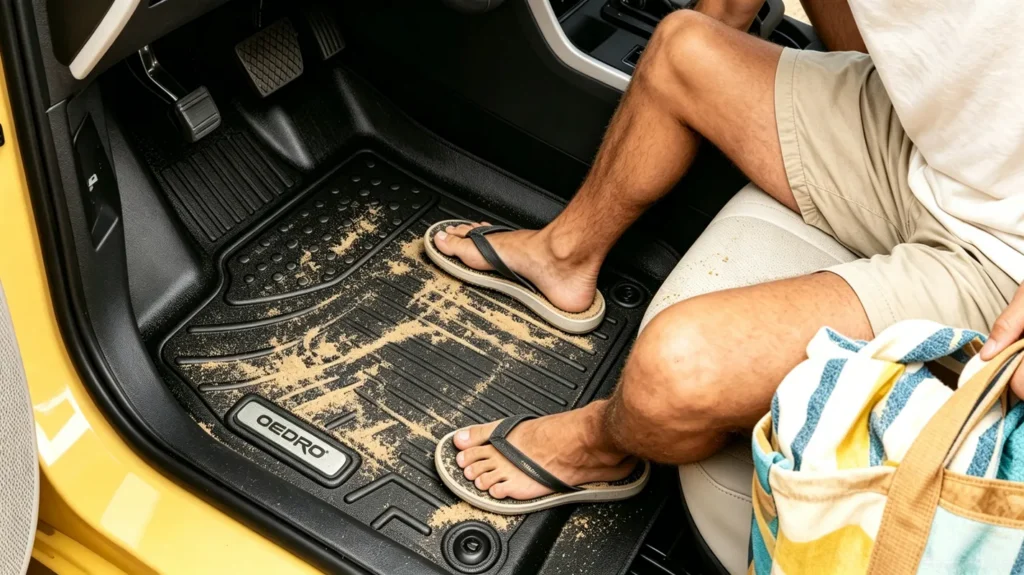
Traditional carpet mats look tidy when new and are often perfectly reasonable for light-duty use. They are less persuasive when the vehicle regularly carries wet shoes or muddy paws. Flat rubber mats make cleaning easier, but water and grit can roll off their edges and reach the carpet below.
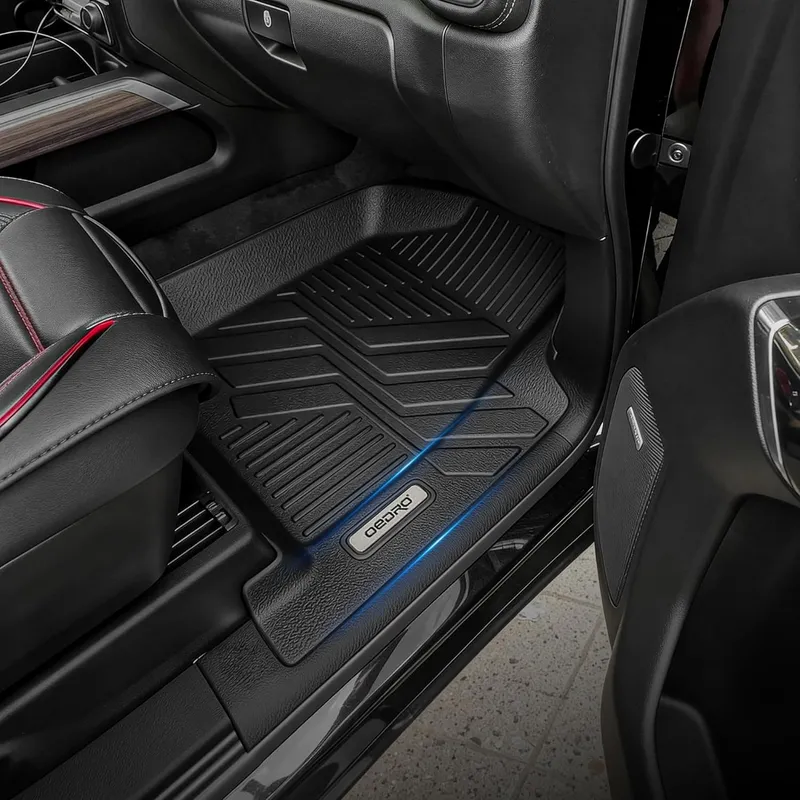
Vehicle-specific molded liners add raised edges that can contain more of the mess. Some extend farther up the footwell or cover cargo-area carpeting. The precise fit matters more than the marketing language: look for coverage where feet actually land, compatible attachment points, edges that do not curl, and a surface you can remove and clean. Rear-seat and cargo liners can be especially useful for dog owners, families and anyone who hauls equipment.
Buying the most expensive liner is not necessarily the clever choice. A properly fitted, secure mat that you actually clean will do more good than a premium set that sits full of trapped grit for three years.
Buy the best 3-D floor mats for my car
One safety rule is not negotiable
Never stack a rubber mat on top of a carpet mat in the driver’s footwell. Never use a mat that can slide forward or interfere with the accelerator or brake. The U.S. Department of Transportation documented the serious consequences of accelerator-pedal entrapment, and a GM safety bulletin filed with NHTSA reinforces the need for model-specific mats and correct retainers.
Check the vehicle owner’s manual, remove the original driver’s mat before fitting a replacement if instructed, engage every factory retainer and test that both pedals move freely with the car parked. A pristine carpet is worth precisely nothing if its protection creates a driving hazard. Federal testimony on floor-mat interference makes that point rather emphatically.
What do 3-D floor mats look like for my car?
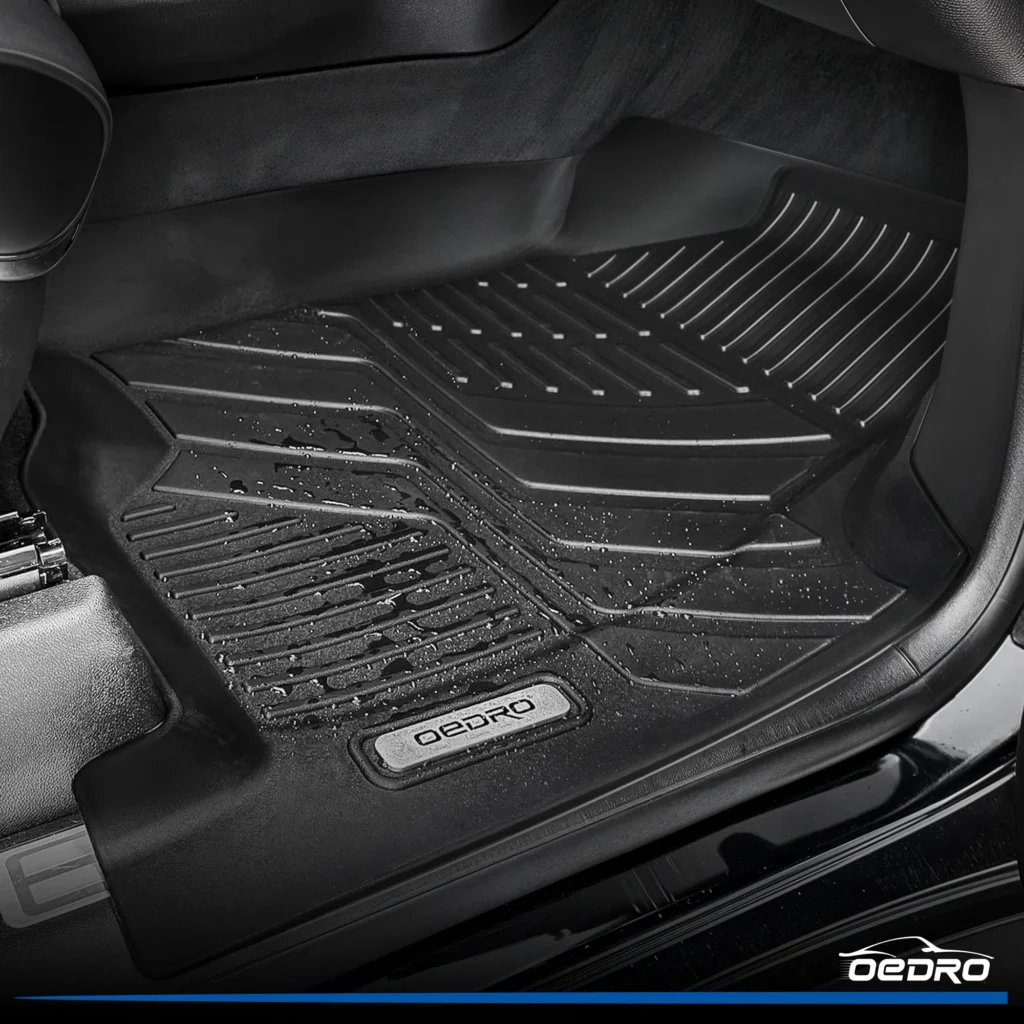
Can protecting your carpet really save thousands?
Sometimes the combined difference between a neglected vehicle and a well-kept one can run into substantial money. But attributing thousands of dollars specifically to floor mats would be misleading. Kelley Blue Book’s used-car guidance reflects broader differences in condition and reconditioning, not a published dollar guarantee for clean carpet.
Here is a more useful way to think about it: a liner is inexpensive insurance against one category of avoidable interior damage. It helps preserve what you already own. It does not magically turn a heavily worn car into an excellent-condition trade.
And don’t spend hundreds on a last-minute accessory set expecting the dealership to reimburse you. The greatest benefit comes from protecting the carpeting from the beginning, long before the trade-in conversation.
Check out the Price of new floor mats
Five things to do before your next appraisal
- Lift every mat. Check the original carpet for damp spots, sticky residue, salt and discoloration; don’t assume a tidy top surface means a tidy floor.
- Remove moisture promptly. Dry affected areas thoroughly and investigate persistent smells rather than masking them with fragrance.
- Clean the liners themselves. Trapped grit should not be allowed to grind against the carpet underneath.
- Photograph the clean interior. Good records and clear pictures can help when you compare offers, particularly from online buyers.
- Get more than one appraisal. Dealers price reconditioning differently, so compare real offers rather than assuming an online estimate is guaranteed.
Fit 3-D floor mats to your car
What I would buy—and what I would skip
For a daily commuter in a dry climate, secure original-equipment mats may be perfectly adequate. If your life includes kids, dogs, rain, snow or weekend outdoor adventures, I would favor tailored all-weather liners with raised edges, along with cargo protection. I would skip universal mats that bunch up or cover pedal travel, regardless of the price.
There are larger ownership choices to consider too. Read our advice on long-lasting affordable cars, the 2026 Toyota 4Runner for owners who actually use their SUV, and the family-focused 2027 VW Atlas. We have also looked at the 2026 Nissan Rogue and the 2026 VW Tiguan Turbo for buyers balancing everyday usefulness and long-term cost.
The Test Miles takeaway: Your car’s carpet won’t determine its entire resale value, but neglected floors can become expensive evidence of a hard life. Protect them early, choose safe vehicle-specific mats, keep the space below them dry, and let the condition of the whole car—not a miraculous mat-savings claim—do the talking when it is time to trade.