2027 VW Atlas Review: Three Rows Done Properly
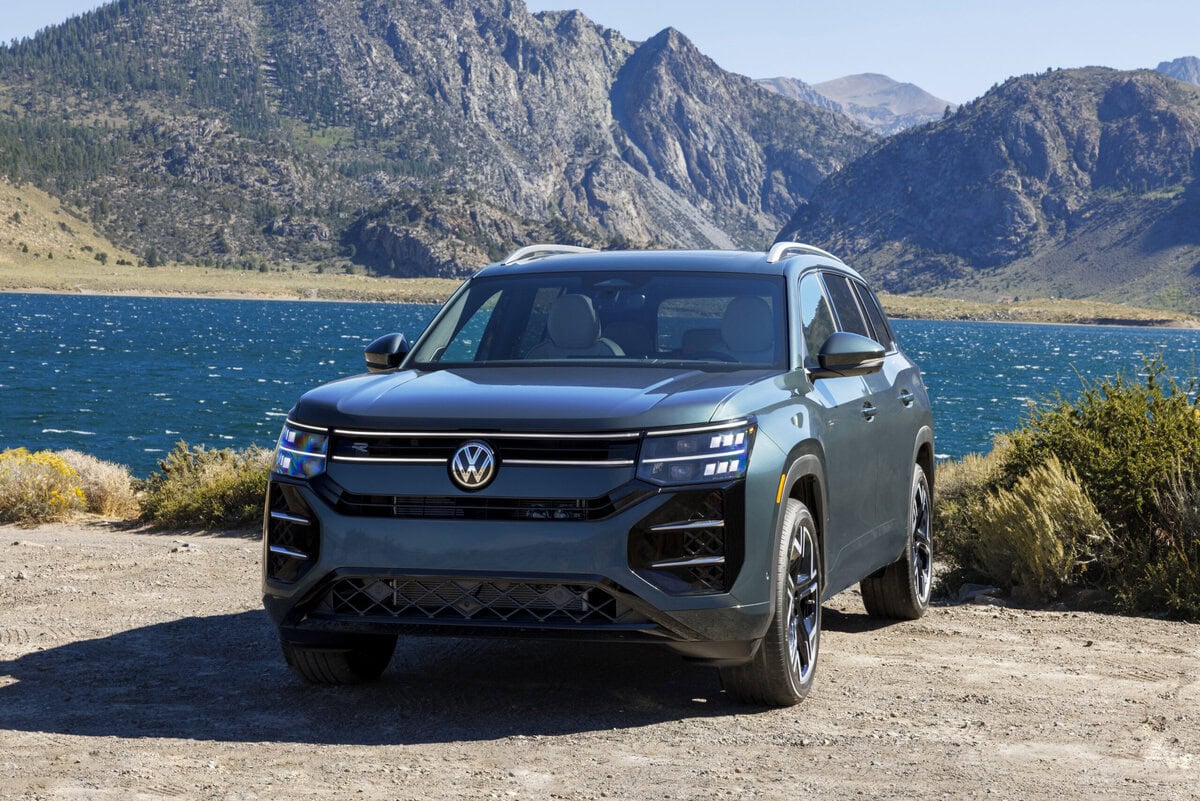
Our 2027 VW Atlas review finds a more useful three-row SUV with real family space, smarter safety tech and a cabin that finally feels upscale.
Large family SUVs have become extraordinarily good at producing impressive specification sheets. The harder trick is making those features useful when there are children in the second row, a dog behind them, two phones demanding electricity and somebody asking where the missing shoe went. After driving the new Atlas, what stands out is that VW appears to have spent considerable time thinking about those ordinary moments.
You may also enjoy this video
2027 VW Atlas Review: Start With the Three Rows
The Atlas remains a proper seven-passenger SUV with a standard 2-3-2 seating layout. Optional second-row captain’s chairs reduce capacity to six in exchange for easier access between the seats. VW says second-row comfort has improved, but the more important point is that the third row is still designed as passenger space rather than a pair of seats included mainly to satisfy a brochure.
That gives the Atlas a meaningful advantage for buyers who routinely use all three rows. The distinction is worth testing in person. Sit adults in the back, move the second row into a realistic position and see whether everyone still has somewhere sensible to put their feet.
You may also enjoy: How the Volkswagen Atlas Made VW More American
VW also makes rear sunshades standard. Families may appreciate them for children, while dog owners will immediately understand their value for keeping direct sun off an animal riding in back. Our guide to the best cars for dogs explains why access, usable cargo space and rear-seat comfort often matter more than decorative pet accessories.
The Best Changes Aren’t the Flashiest Ones
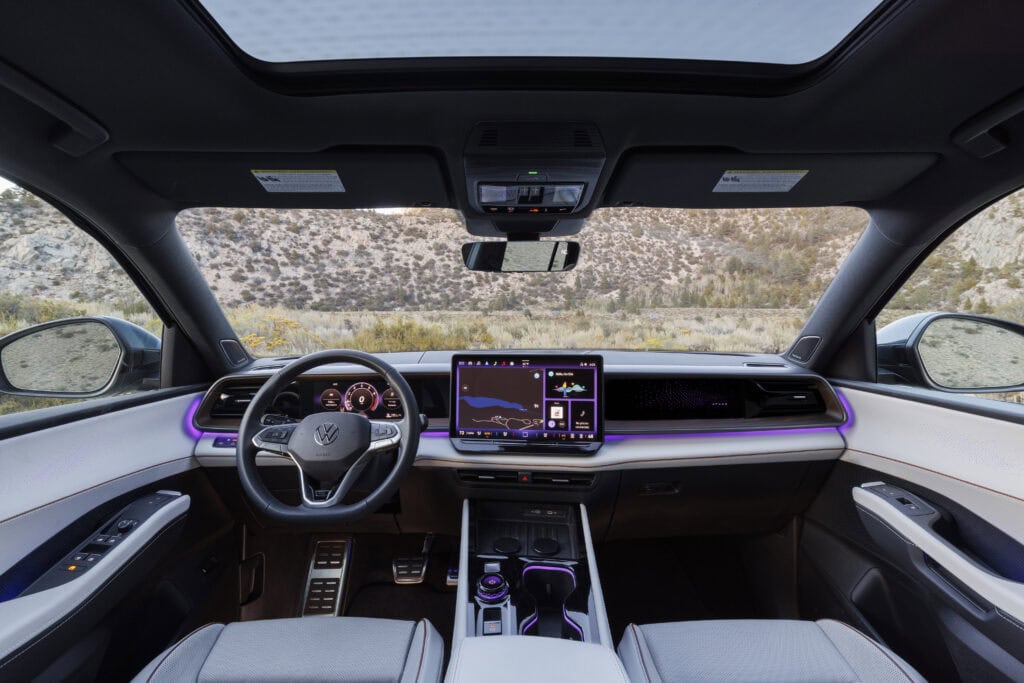
The redesigned interior moves noticeably upscale. Real wood is standard, leatherette replaces cloth at the entry point, and Nappa leather is available on upper trims. There are softer surfaces, better stitching and stronger color choices, including Garnet Red.
Those upgrades help because this class has become fiercely competitive. The Kia Telluride and Hyundai Palisade have taught shoppers that a mainstream badge no longer requires a bargain-basement interior. Our comparison of the Telluride and Palisade shows how sophisticated the three-row segment has become.
Then there are the less glamorous details. Two lights illuminate the cargo opening instead of one. That makes a real difference when loading a dog after dark or hunting for something that has rolled into a corner. The power liftgate helps when your hands are occupied, while folding the third row creates room for crates and luggage.
The National Highway Traffic Safety Administration also advises drivers to secure cargo properly, an important reminder when using the Atlas for large loads rather than passengers.
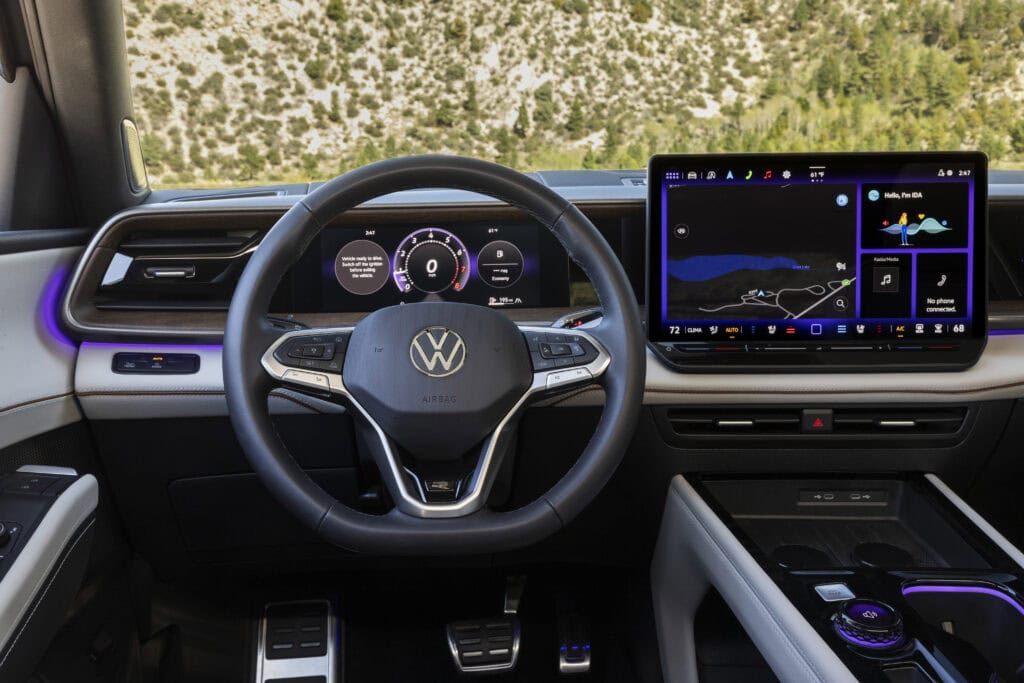
A 15-Inch Screen Is Not Automatically Better
Most 2027 VW Atlas trims receive a 15-inch touchscreen, while the entry version uses a 12.9-inch display. The larger screen makes navigation and camera images easier to read, and the latest electronic architecture gives the interface a more contemporary appearance.
There is still a tradeoff. The Atlas depends heavily on its touchscreen, and I would prefer several more permanent controls for functions owners use repeatedly. Our reporting on physical buttons and cabin usability explains why control placement deserves as much attention during a test drive as screen size.
VW does retain a multifunction rotary dial, primarily for volume, and moving the gear selector to the steering column creates considerably more storage in the center console. That is a good trade. Families are far more likely to need space for phones, cups and miscellaneous clutter than they are to admire a large gear lever.
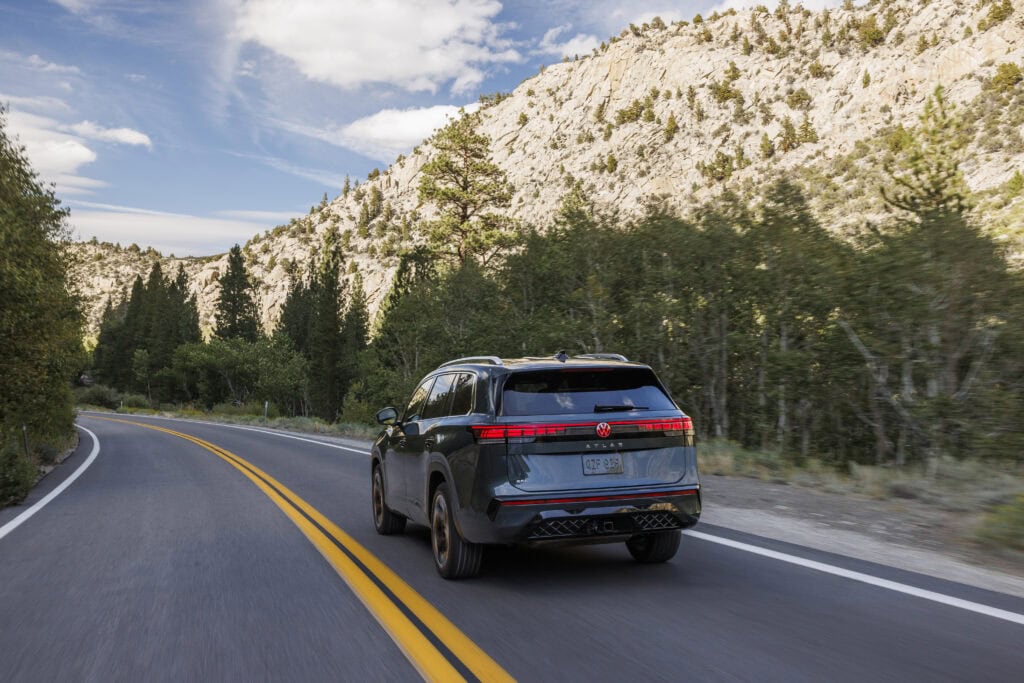
The Atlas Can Respond If the Driver Cannot
The most significant technology is Emergency Assist. When Travel Assist is active, VW says the system monitors whether the driver continues responding. If escalating warnings produce no reaction, it can reduce speed, turn on the hazard lights and help guide the Atlas toward a stop.
That could be valuable if a driver suffers a sudden medical problem. It should not be mistaken for autonomous driving. NHTSA’s explanation of driving automation levels makes clear that systems assisting with steering, acceleration or braking can still require the driver to remain engaged and responsible.
Travel Assist can help manage speed and lane position and now supports driver-initiated lane changes. NHTSA separately explains how driver-assistance technologies such as adaptive cruise control and lane-centering assistance operate.
You may also enjoy: 2026 Honda Pilot Review: The Calm Family SUV
The Atlas also includes a center airbag between the front occupants. VW says it is intended to reduce contact between them in certain side impacts. Federal guidance emphasizes that airbags supplement seat belts rather than replace them, which is worth remembering whenever a manufacturer introduces another restraint technology.
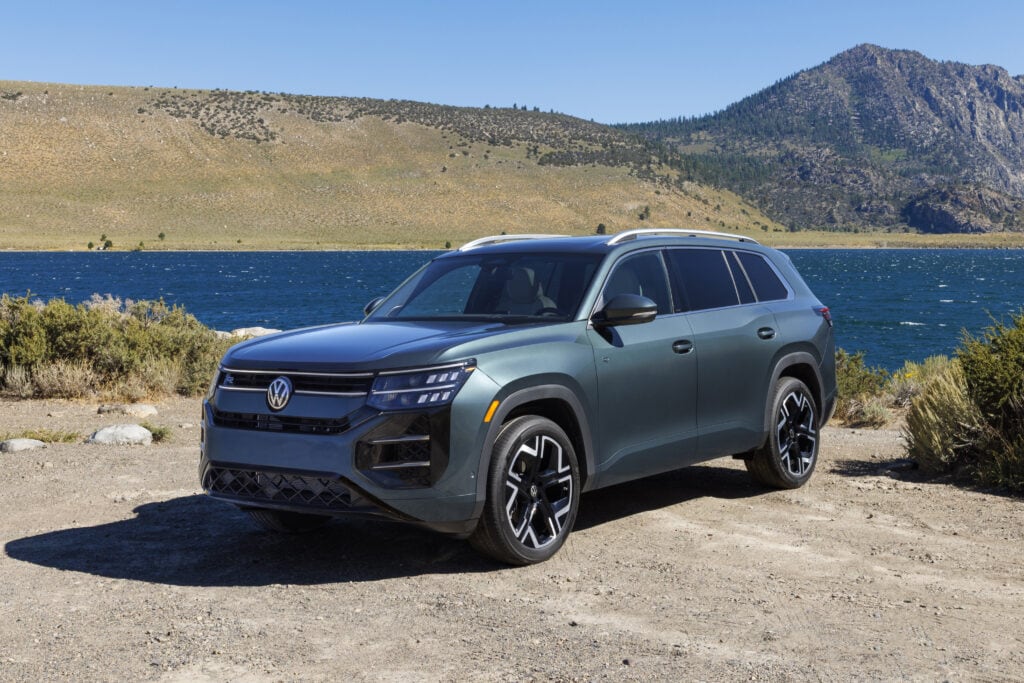
One Engine Makes Shopping Easier
The latest Atlas uses a turbocharged 2.0-liter four-cylinder producing 282 horsepower through an eight-speed automatic transmission. Front-wheel drive is offered, with all-wheel drive available for buyers who want additional traction.
VW has eliminated the old six-cylinder decision, which makes configuring the Atlas considerably simpler. Properly equipped, it can tow up to 5,000 pounds, enough to make the rating relevant for boats and recreational trailers without pretending this is a heavy-duty tow vehicle.
The front-wheel-drive Atlas carries an EPA-estimated 25 mpg combined figure. EPA explains that official fuel-economy testing uses standardized laboratory procedures, so the number is most useful for comparing vehicles rather than predicting exactly what one owner will achieve.
You may also enjoy: 2026 VW Tiguan Review: Is the Turbo Worth $43,085?
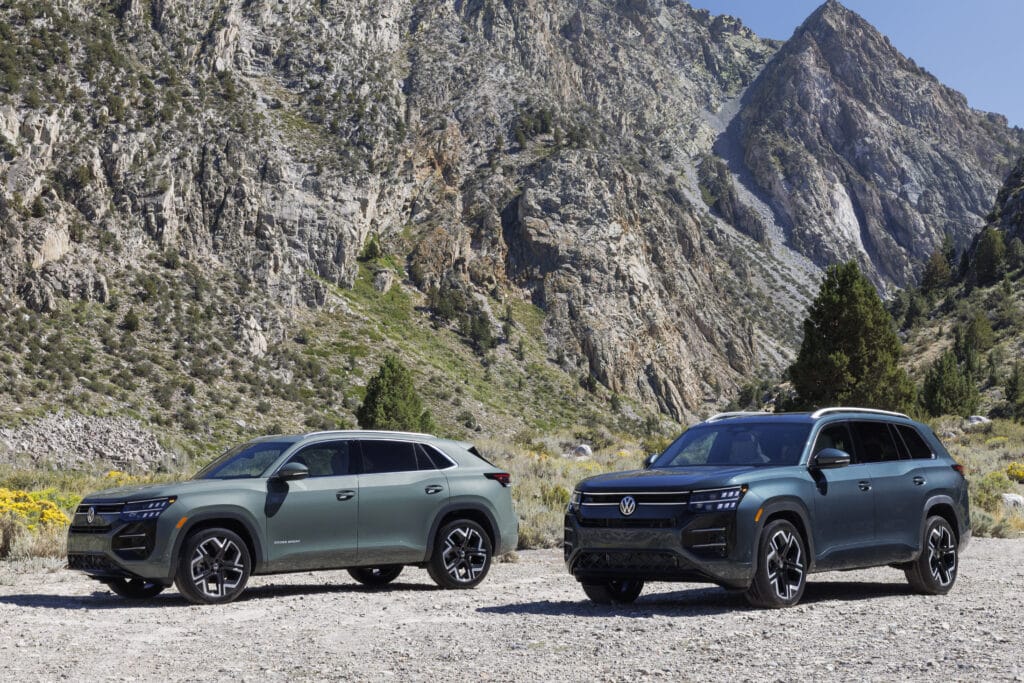
Choose the Wheels With Your Head as Well as Your Eyes
Wheel sizes range from 18 inches on entry versions to 20- and 21-inch designs farther up the range. The largest wheels look excellent. They also deserve a practical test because tire prices, sidewall depth and ride comfort are part of the ownership experience long after the showroom lighting has stopped flattering them.
That is especially important because the Atlas competes with the Telluride, Palisade, Pilot, Toyota Grand Highlander, Ford Explorer and Chevrolet Traverse. A buyer has too many strong alternatives to accept compromises simply because a wheel design photographs well.
You may also enjoy: 2027 Kia Telluride Hybrid Is Big, Bold, and Family Ready
Who Should Buy the 2027 VW Atlas?
The Atlas makes the strongest case for families who genuinely need three rows rather than people who merely like the idea of owning them. It also works particularly well for households carrying dogs, grandparents, sports equipment or enough luggage to make airport departures resemble a military operation.
My buying advice is straightforward: test the third row with real passengers, compare the wheel sizes on imperfect pavement and spend time operating the touchscreen before signing anything. Those three checks will tell you more about living with the Atlas than another ten minutes studying the equipment list.
VW has given the Atlas a more expensive-looking interior, useful driver assistance and plenty of technology. Yet the best parts of this 2027 VW Atlas review are simpler: better storage, standard sunshades, useful cargo lighting and three rows that appear to have been designed for the people who will actually occupy them.
For a busy family, that is exactly where VW needed to concentrate.