How the Volkswagen Atlas Made VW More American
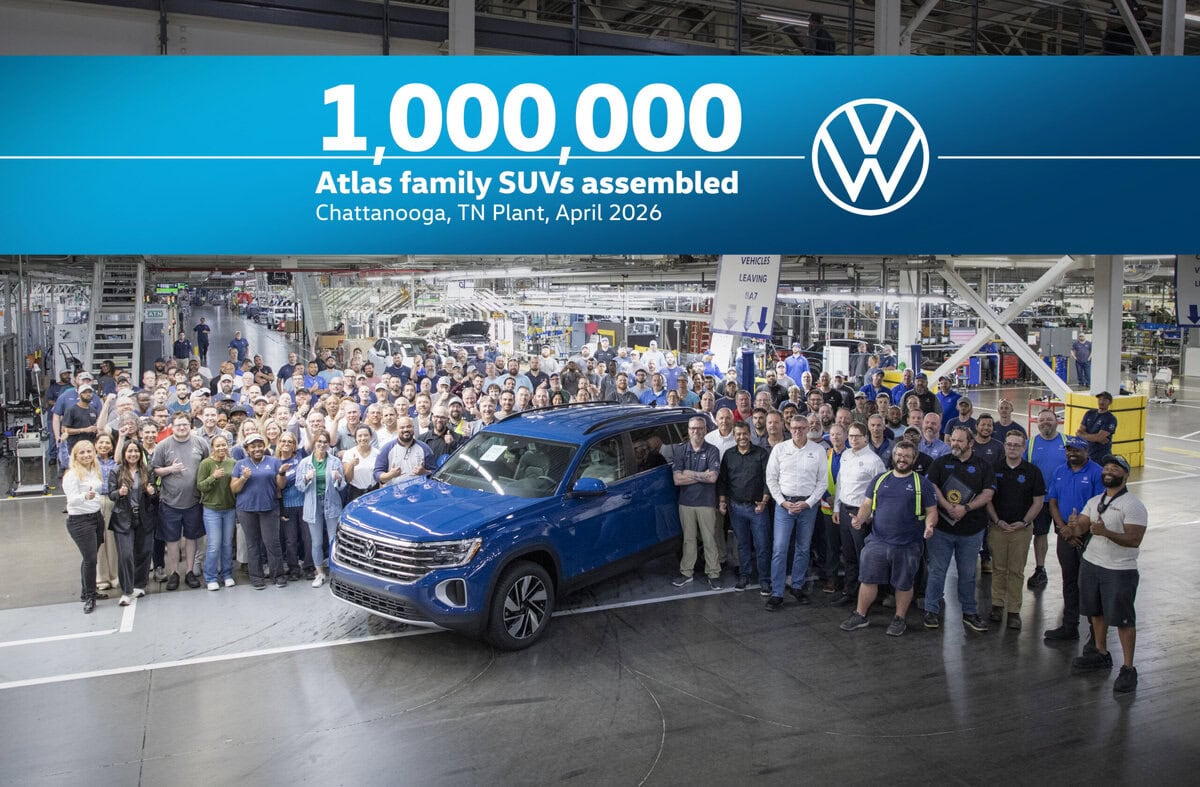
The Volkswagen Atlas transformed VW’s U.S. strategy by giving American families the space, practicality and local production they wanted.
A Volkswagen Designed Around America
For much of its history, Volkswagen’s American identity was defined by vehicles conceived primarily through a European lens. Cars such as the Beetle, Golf and Jetta built loyal followings, but the company’s U.S. lineup looked increasingly disconnected from a market rapidly moving toward larger SUVs. The EPA’s Automotive Trends Report documents the broader industry shift from sedans and wagons toward SUVs.
Volkswagen needed more than another imported utility vehicle. It needed a model developed around how Americans carry children, luggage, pets and the accumulated equipment of daily life. That led to the Volkswagen Atlas, a three-row SUV created from the beginning for the United States.
A senior Volkswagen product-development executive told me the Atlas represented a significant philosophical change. Even its taller front end reflected research into what American SUV buyers expected. Volkswagen was learning to speak with an American accent, although thankfully nobody fitted the Atlas with a belt buckle the size of a dinner plate.
The company still wanted the Atlas to feel unmistakably like a Volkswagen. The goal was to combine the space and visual strength American shoppers favored with the disciplined road manners and approachable character associated with the brand.
You may also enjoy: The Most American Cars? Not Who You Think
You may also like this video:
The Atlas Arrived at the Right Moment
When the Atlas launched in 2017, Volkswagen was not entering an empty category. The midsize SUV segment was already occupied by deeply established competitors from Ford, Toyota, Honda and other manufacturers with years of family-vehicle experience.
Volkswagen also faced a broader shift in customer demand. According to the company, SUVs represented approximately 14 percent of its American sales a decade ago. Today, they account for roughly 80 percent, making utility vehicles the foundation of Volkswagen’s U.S. business rather than a supporting act.
The Atlas helped initiate that change. Volkswagen followed it with a long-wheelbase Tiguan suited to American expectations and continued expanding its SUV portfolio. What began as a response to one missing product became a restructuring of the showroom.
Volkswagen says it sold more than 100,000 Atlas vehicles in the United States during 2025. The Atlas and two-row Atlas Cross Sport together now represent approximately one out of every three Volkswagen vehicles sold here. Few individual models carry that much responsibility for a major automaker, especially within a manufacturing industry whose economic contribution is tracked through the Bureau of Economic Analysis.
You may also enjoy: 2027 Volkswagen Atlas Gets More Tech, Power, and Style
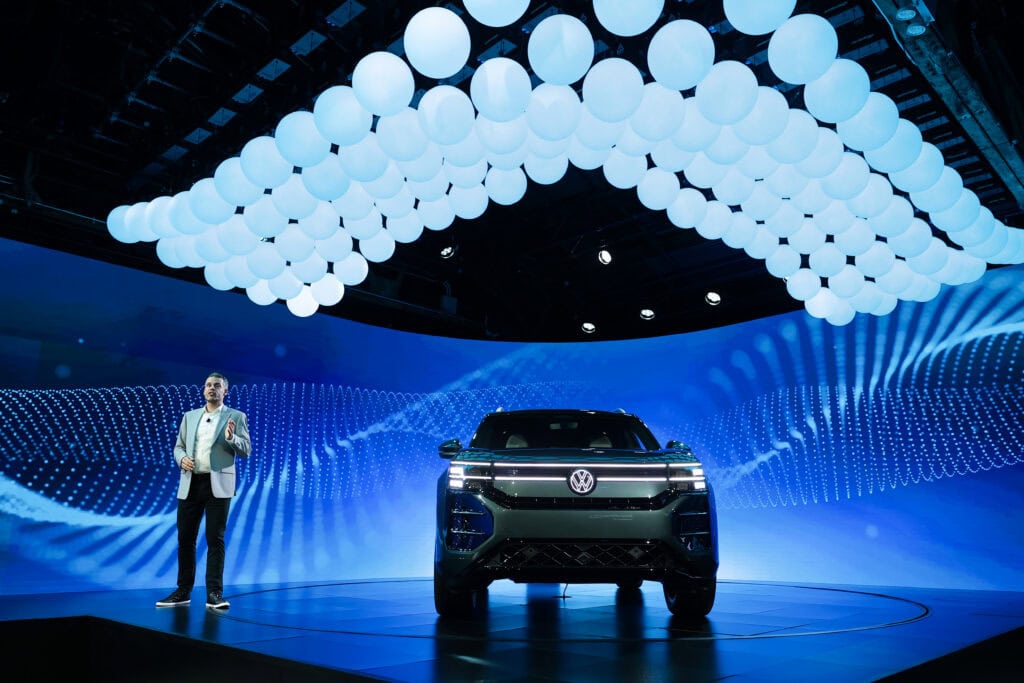
Volkswagen of America, Inc Product Marketing speaks onstage at the 2027 Volkswagen Atlas Reveal on March 31, 2026 in New York City. (Photo by Dimitrios Kambouris/Getty Images for Volkswagen of America)
Practicality Became the Competitive Advantage
Volkswagen could not win merely by producing another large SUV. The Atlas needed a reason to exist, and the company concentrated on one of the least glamorous but most important subjects in the family-vehicle business: usable interior space.
The Atlas was engineered with particular attention paid to its second and third rows. Those areas determine whether a three-row SUV genuinely supports a family or merely provides two additional seats for passengers who have annoyed the driver.
Access, headroom, legroom and the ability to manage child seats all influence daily ownership. The National Highway Traffic Safety Administration’s car-seat guidance explains how vehicle seating positions, anchors and tethers affect safe child-seat installation. A generous specification sheet means little if reaching the third row requires the flexibility of a gymnast or if using every seat eliminates the cargo area.
That practical thinking also allowed Volkswagen customers to remain with the brand as their lives changed. Someone who previously owned a Golf, Jetta or Tiguan no longer had to leave Volkswagen when children, dogs or aging parents created a need for more room. Shoppers should still compare independent NHTSA vehicle-safety ratings when evaluating any family vehicle.
The Atlas Cross Sport subsequently gave Volkswagen a related option for customers who wanted two rows, more cargo flexibility and a sportier profile. Separating the two models allowed the regular Atlas to remain focused on family capacity instead of compromising its shape to chase style.
You may also enjoy: Best SUVs for 3 Car Seats and 2 Big Dogs
Chattanooga Made the Strategy Tangible
Volkswagen’s commitment extended beyond designing an SUV for Americans. The company chose to build the Atlas in Chattanooga, Tennessee, turning the vehicle into both a product strategy and an American manufacturing program.
Volkswagen says approximately 4,000 team members work at its Chattanooga operation. The factory has now produced more than one million Atlas family SUVs, a milestone that gives the nameplate an industrial significance beyond its sales figures.
That production footprint matters because automotive assembly supports a network of suppliers, logistics operations and local services. The U.S. Census Bureau’s industry classifications distinguish automobile manufacturing from light-truck and utility-vehicle production, illustrating how manufacturing activity is measured across the economy. A successful model provides greater stability for those relationships, while a weak one can leave an expensive factory searching for additional work.
Building the Atlas in Tennessee also gave Volkswagen a closer connection to its intended customer. The vehicle was not simply engineered to approximate American needs from a distance. It was developed for the market, assembled within the market and refined through several updates based on customer feedback.
The millionth Atlas has reportedly been retained by Volkswagen while the company determines what to do with it. That seems appropriate. It represents the moment a German automaker’s American experiment became an established piece of its identity.
You may also enjoy: 2026 Hyundai Palisade Is the Family SUV to Beat
Why the 2027 Volkswagen Atlas Matters
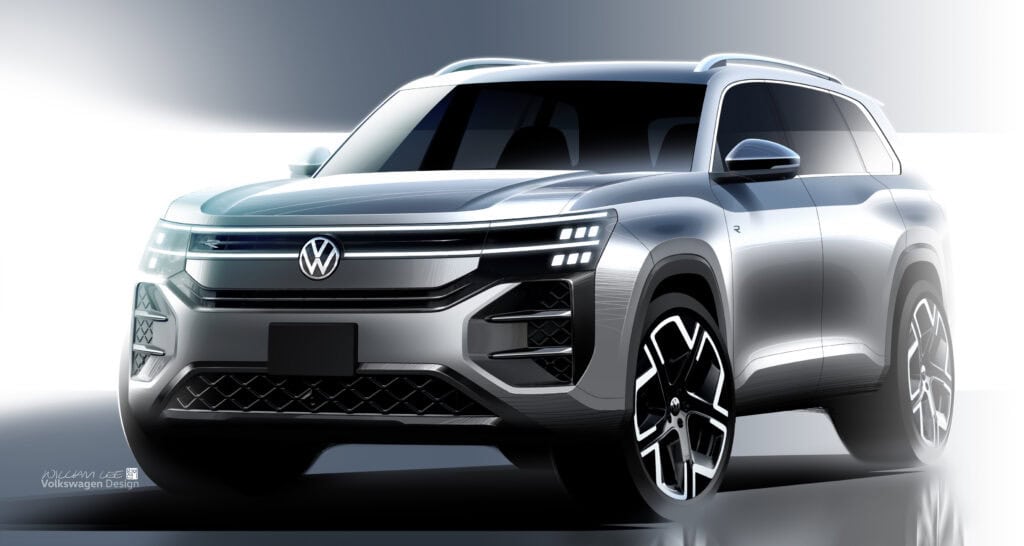
The importance of the coming 2027 Volkswagen Atlas is clearer when viewed against this history. This is not a routine redesign of a marginal model. Volkswagen is updating a vehicle family responsible for approximately one-third of its American sales.
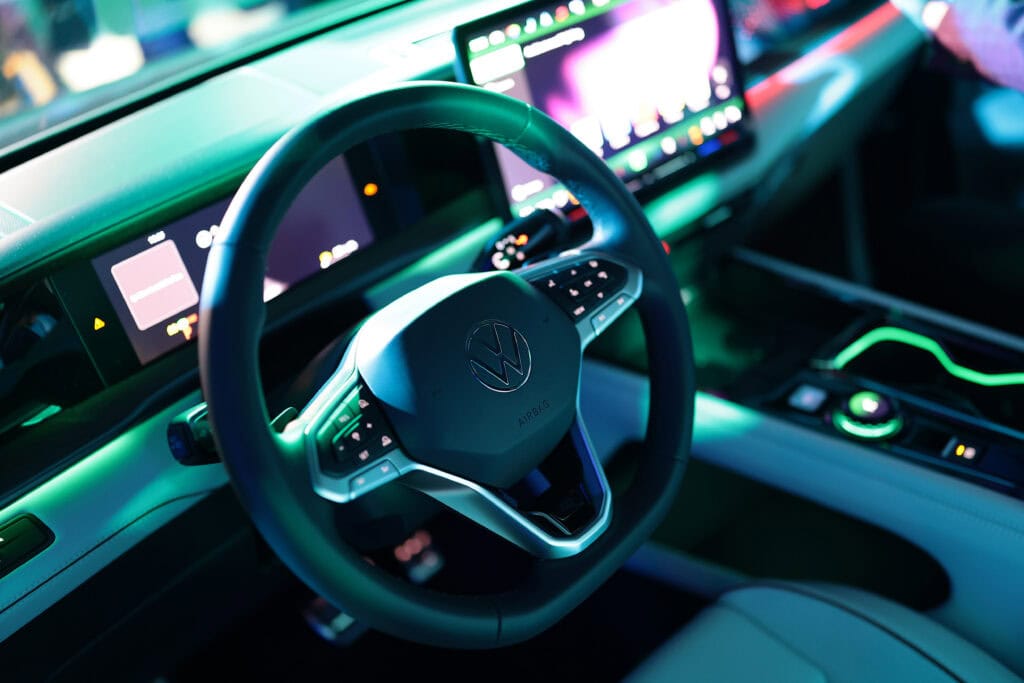
The company says the new generation will continue emphasizing everyday practicality while introducing technology that is easier to use. That distinction matters. Families rarely need technology simply because it photographs well in a brochure. They need features that reduce effort, make the cabin easier to manage and improve confidence during ordinary journeys.
The challenge is to modernize the Atlas without discarding the qualities that created its success. Its second and third rows must remain genuinely useful, its cabin must withstand family life, and its driving character must continue to feel like a Volkswagen. Buyers assessing new safety features can also review NHTSA’s explanation of how vehicle safety has advanced through regulation, crash testing and new technology.
Atlas demonstrated that listening to American buyers did not require Volkswagen to abandon its identity. It required the company to understand that brand character and customer needs are not competing ideas.
Volkswagen was once known in America primarily as a car company that also sold a few SUVs. The Atlas helped reverse that description. It gave the company the right vehicle at the right moment, provided Chattanooga with a flagship product and gave American families a Volkswagen designed around the way they actually live.
You may also enjoy: 2026 INFINITI QX60 Makes Calm Feel Luxurious