2026 Volkswagen Tiguan Review: Is the Turbo Worth $43,085?
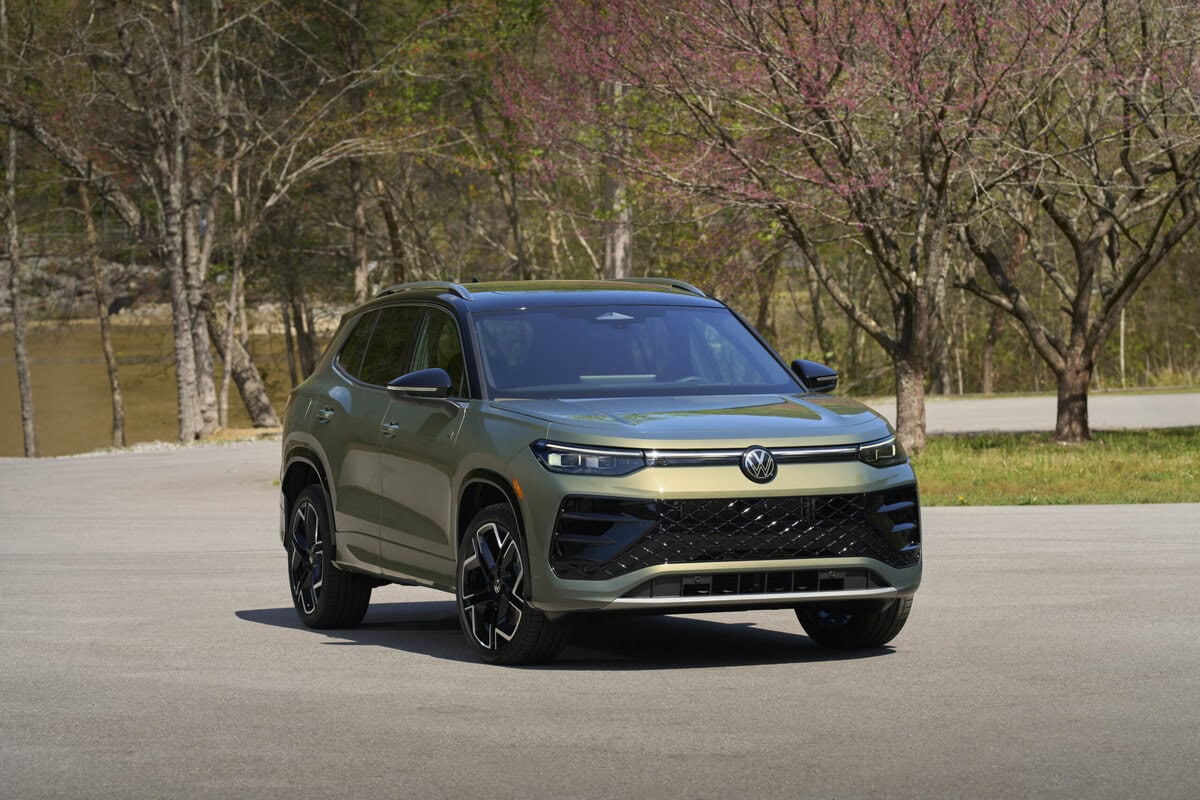
2026 Volkswagen Tiguan Review: Is the Turbo Worth $43,085?
First look: This 2026 Volkswagen Tiguan review weighs the Turbo’s extra power, family space, fuel costs and crash-test results against its premium price.
By Nik J. Miles
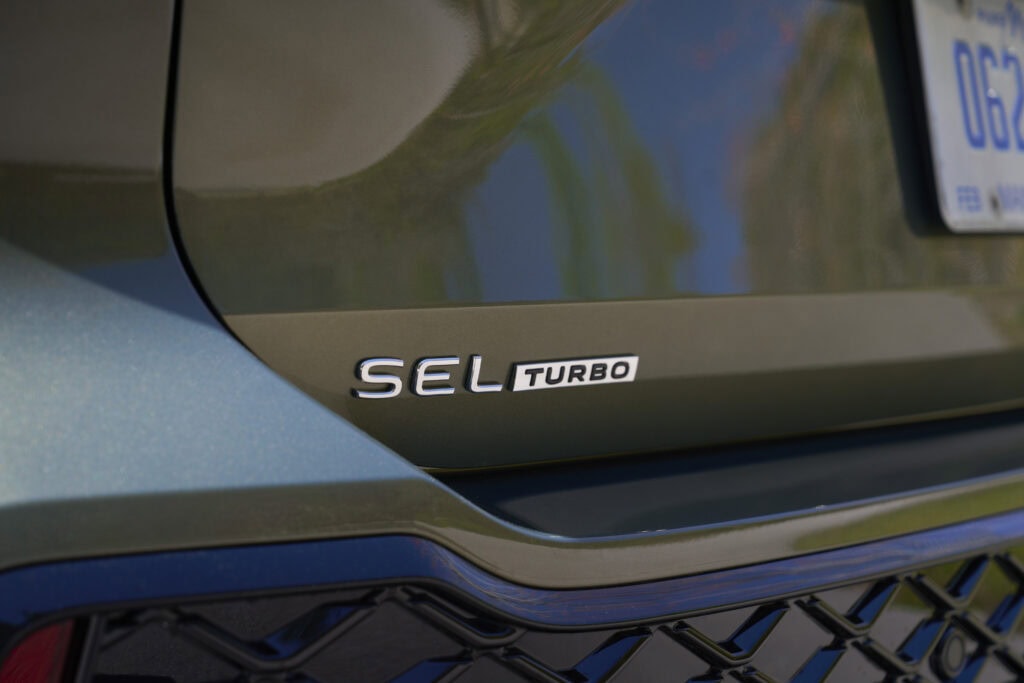
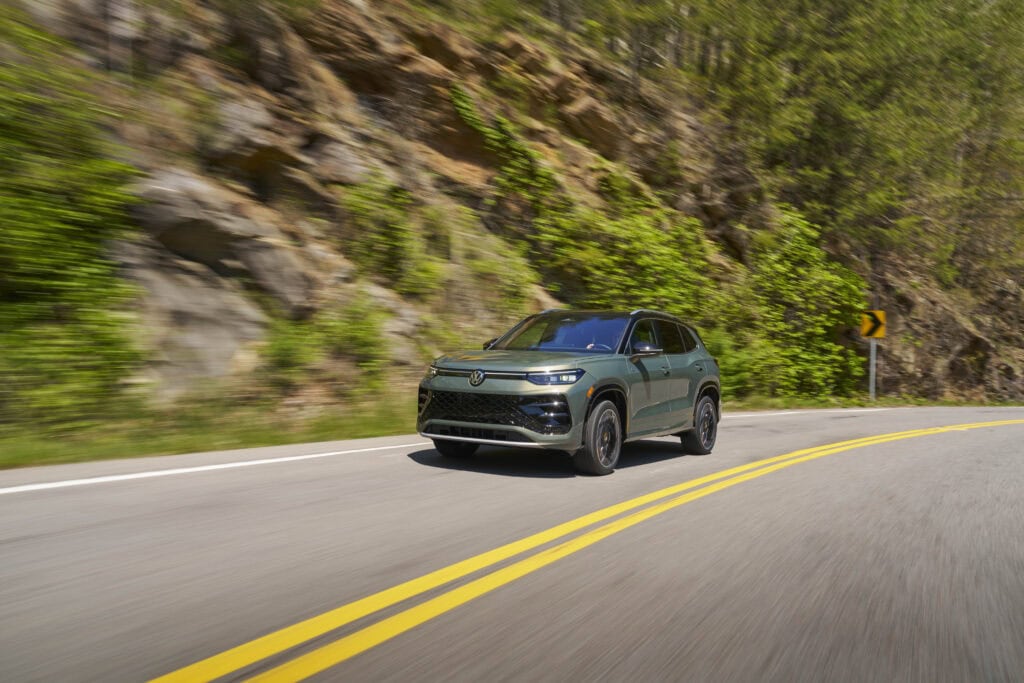
The most expensive 2026 Tiguan asks a deceptively simple question: how much would you pay to make a sensible family SUV more interesting? The SEL R-Line Turbo starts at $43,085, before Volkswagen’s $1,475 destination charge. That makes the minimum $44,560 before taxes and any additional equipment. In return, it adds 67 horsepower over the standard Tiguan, standard all-wheel drive and a notably generous equipment list. It also retains the same basic family duties as the less expensive models.
Editorial note: This is a researched first look. Test Miles has not yet logged a drive or measured fuel economy in the SEL R-Line Turbo, so driving impressions and an as-tested price await a test vehicle.
You may also like this Video:
2026 Volkswagen Tiguan review: the buying verdict
The Turbo belongs on the list if you want a compact SUV with strong published power, a useful cargo area and comfort features typically reserved for more expensive vehicles. The harder question is whether the higher-output engine matters enough to justify this trim. A regular Tiguan starts at $30,805 before destination, a $12,280 gap in base MSRP, although that compares the entry S with the fully equipped flagship rather than otherwise identical vehicles.
Best for: Buyers who want all-wheel drive, the Tiguan’s two-row packaging and a well-equipped cabin, and who are willing to pay for the stronger engine.
Skip if: Fuel efficiency, a third row, or the strongest possible result in every independent crash test matters more than performance and cabin equipment.
Pros
- 268 horsepower, 67 more than the standard engine.
- Standard 4MOTION all-wheel drive and an eight-speed automatic.
- 33.8 cubic feet of cargo room behind the rear seats.
- Available comfort and display equipment is standard on this flagship trim.
Cons
- $44,560 including destination before options and taxes.
- EPA-rated 25 mpg combined, with no hybrid version of this trim.
- IIHS rates the Tiguan poor in its updated moderate-overlap front crash test.
- No third row in the current U.S. Tiguan.
What the Turbo actually changes
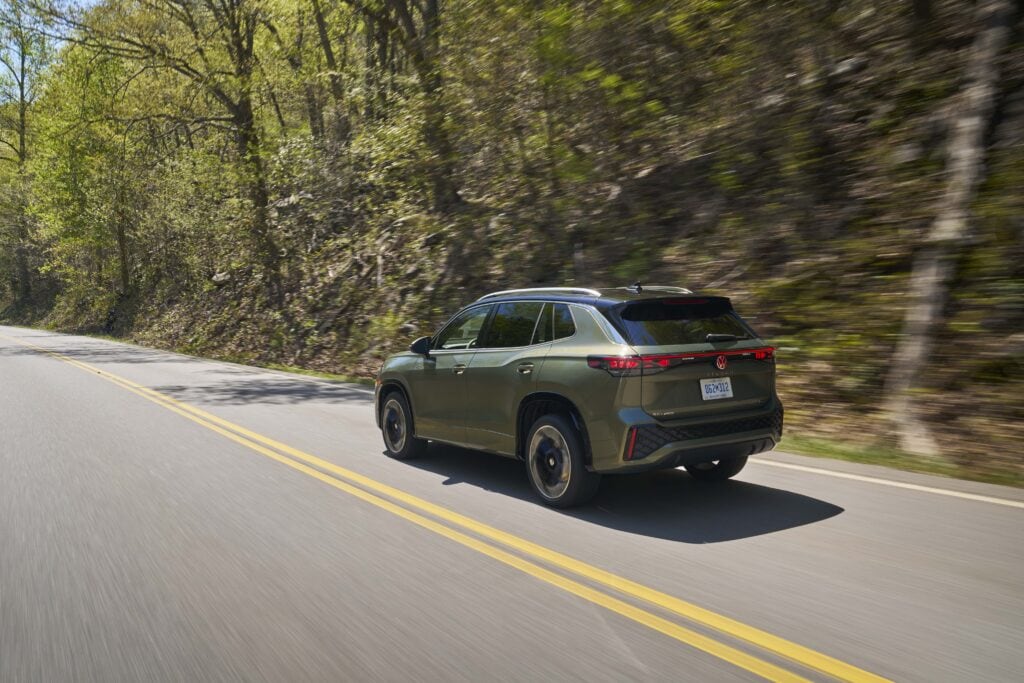
Volkswagen redesigned the U.S. Tiguan for 2025 and added the SEL R-Line Turbo for 2026. The regular 2.0-liter turbocharged four-cylinder makes 201 horsepower; the flagship version makes 268 horsepower and 258 pound-feet of torque. Both use an eight-speed automatic. The Turbo has standard 4MOTION all-wheel drive.
On paper, that extra power promises a more relaxed highway merge with a full load. The promise needs testing: output alone cannot tell us how promptly the transmission responds or whether the extra weight and wheel choice change the ride. The Turbo is still a family SUV, not a substitute for a purpose-built performance model. Bring passengers on a test drive, try a highway merge, and see whether the extra response earns its price.
The engine runs on regular unleaded, according to Volkswagen. That is a useful detail when comparing premium-looking SUVs: the choice of a more powerful trim does not automatically require premium fuel. The EPA figures still impose a running-cost decision.
Five seats and a cargo area with a real job
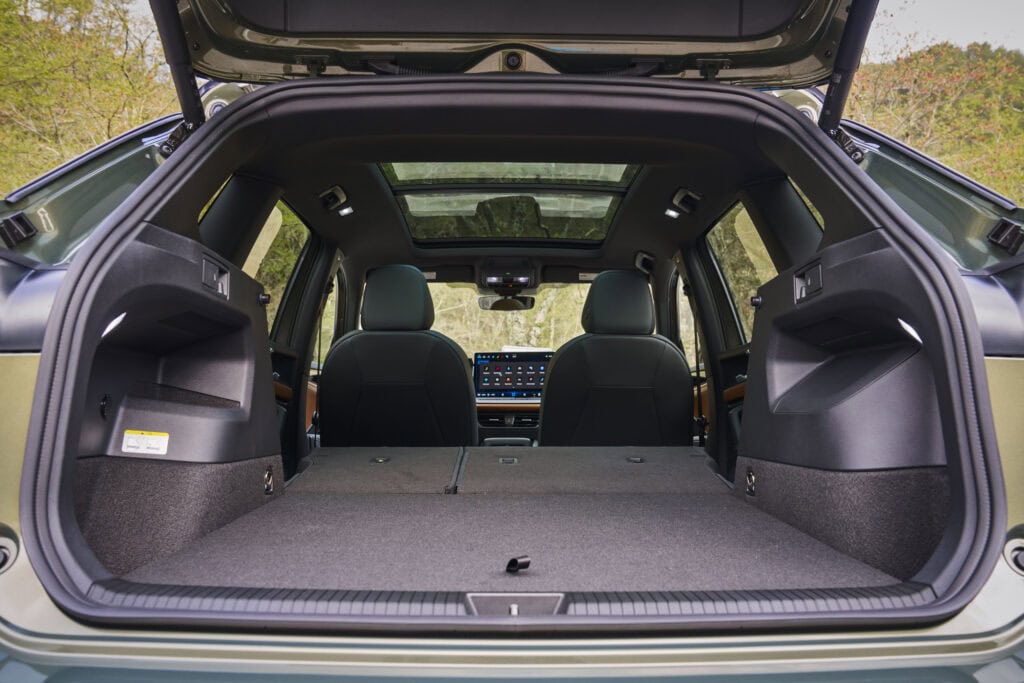
Volkswagen quotes 33.8 cubic feet of space behind the second row and 69.8 cubic feet with it folded. With the rear seats in use, the Tiguan offers a meaningful luggage area for a two-row SUV; with them down, it can take on bulkier errands. Neither number tells you whether your specific dog crate, stroller or camera case fits through the opening. Measure that item and the cargo opening before ordering.
There are five seats. Anyone expecting the old U.S. Tiguan’s optional third row should pay particular attention: the latest version is a two-row vehicle. For the occasional extra passenger, consider a three-row alternative, including the larger Volkswagen Atlas. For daily use with two children and luggage, the lack of a cramped emergency row may be of little concern.
IIHS gives the Tiguan’s child-seat anchor system a good ease-of-use rating and identifies two rear positions with complete LATCH hardware plus a center tether anchor. That helps narrow a family’s shortlist, but it does not confirm that three particular child seats will fit together. Take the seats to the dealership and install them before signing.
Cabin equipment: luxury touches, ordinary questions
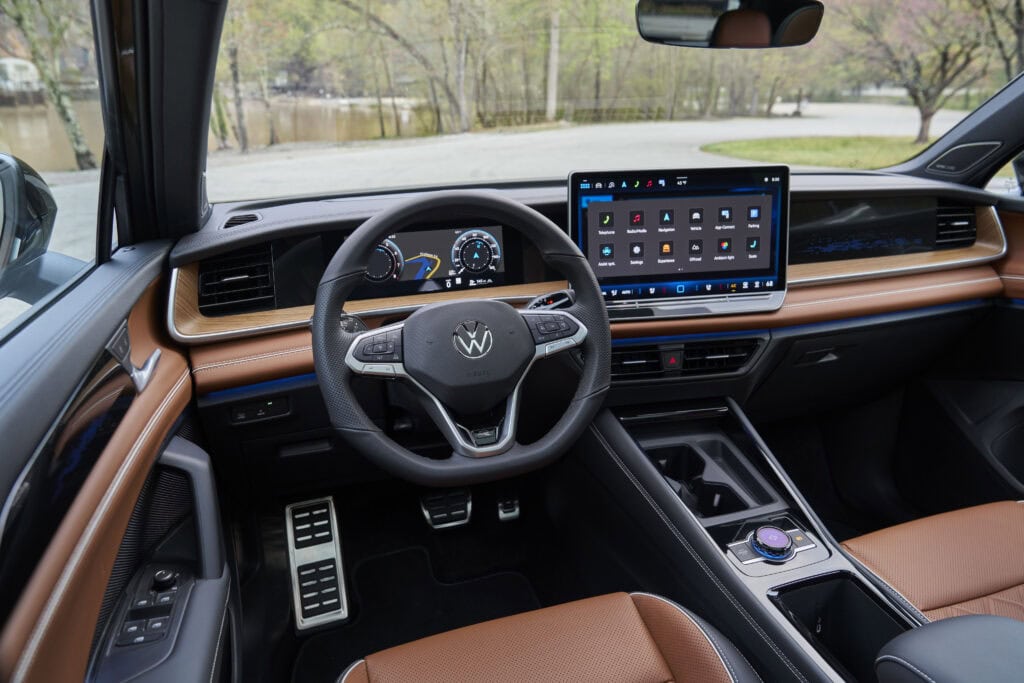
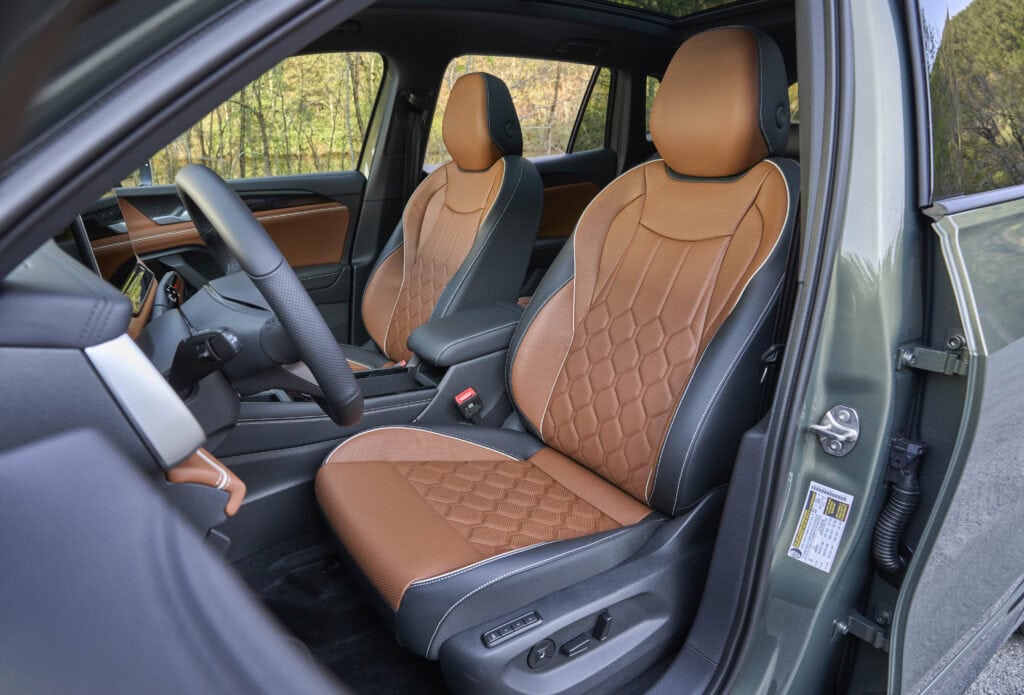
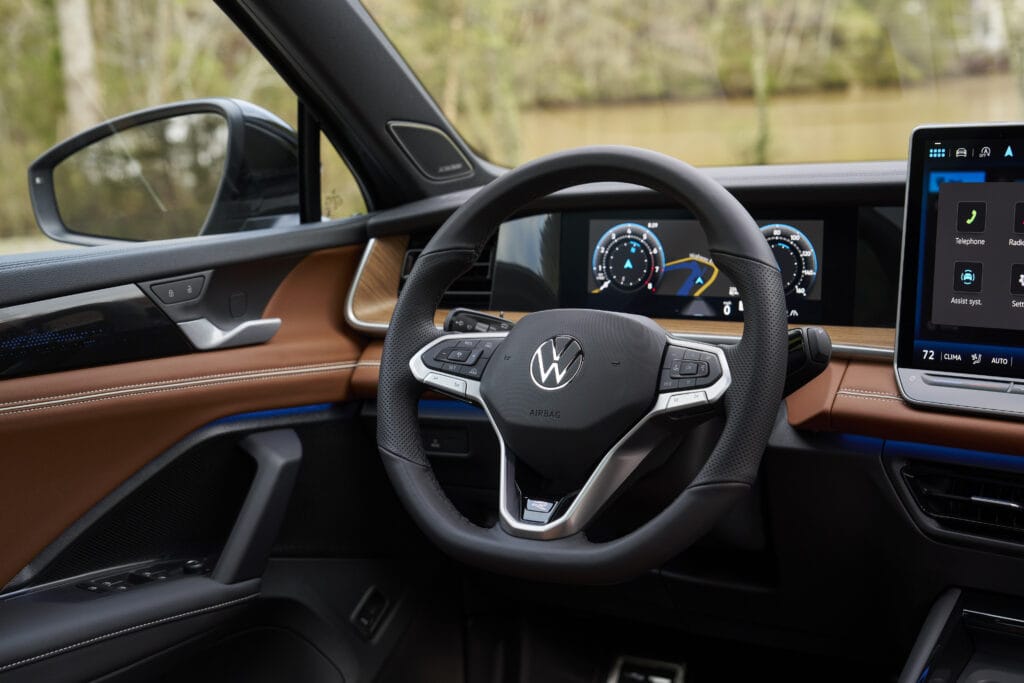
The flagship gets diamond-stitched leather seating surfaces, ventilated and massaging front seats, and a 15-inch center touchscreen, according to Volkswagen’s Tiguan product page. There is also an emphasis on illuminated exterior details. The massaging and ventilated seats could be much more useful on a long trip than an illuminated logo, although whether the seats are genuinely comfortable needs a proper drive.
A large display also needs scrutiny. Spend ten minutes setting a route, changing climate settings and connecting your phone while parked. Check the most common tasks again on the move with a passenger operating the screen. A 15-inch rectangle is a specification, not a usability rating. Our reporting on automakers bringing physical buttons back explains why convenient controls matter after the novelty of a big screen has worn off.
Confirm the exact equipment and any subscriptions on the vehicle’s window sticker. Marketing pages show representative equipment, while availability and optional accessories can vary by vehicle.
Fuel economy: the bill behind the badge
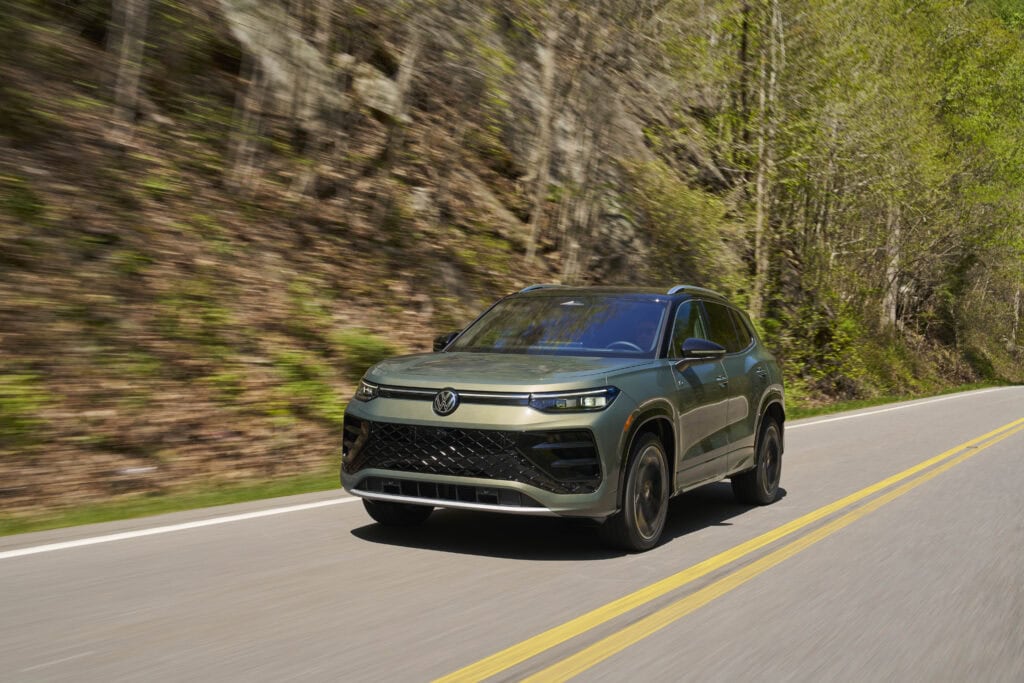
The EPA rates the Turbo at 22 mpg city, 29 highway and 25 combined. These are official estimates, not a Test Miles measured result. At 12,000 miles a year, 25 mpg corresponds to about 480 gallons; your actual use, weather, speed and fuel price will change the bill. Volkswagen says regular unleaded is suitable.
If mileage is the top priority, compare this gas-only SUV with the hybrid alternatives on your local shopping list. The Turbo’s extra output is the reason to investigate it, while a hybrid may better reward a long, stop-and-go commute. Volkswagen’s broader efficiency strategy is relevant, but no current hybrid Tiguan Turbo is offered in the U.S. lineup described here.
The independent safety result buyers should read
The Insurance Institute for Highway Safety’s 2026 Tiguan results are mixed, and flattening them into one reassuring label would be a disservice. The SUV earns good ratings in the small-overlap front and updated side tests, and its standard front crash-prevention systems receive good marks in IIHS vehicle-to-vehicle and pedestrian evaluations.
Its overall rating in the updated moderate-overlap front test is poor. IIHS records good measures for the driver and the structure, but a poor rating for rear-passenger restraint and dummy movement, with a marginal rear-passenger chest measure. The tested vehicle was a 2025 Tiguan S, and IIHS says the rating applies to 2025–26 models. This does not mean every collision will have the same outcome; it does mean a buyer who regularly carries family in back should examine the actual test report.
Driver-assistance functions can help with certain situations, but they still require an attentive driver. A parking-lot demonstration cannot replace reading the safety evidence.
Price: what the extra $12,280 buys
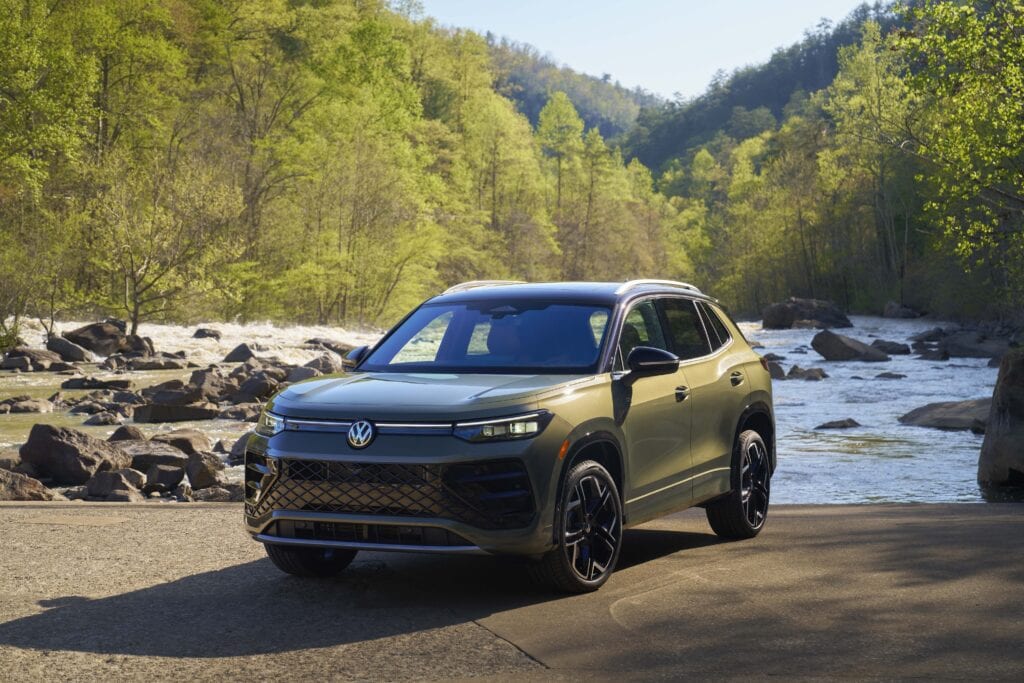
Volkswagen’s current U.S. builder lists the S at $30,805, SE at $33,605, SE R-Line Black at $37,245 and SEL R-Line Turbo at $43,085, all before destination. Volkswagen states destination is $1,475. The Turbo therefore begins at $44,560 delivered, before tax, registration, dealer charges or accessories. No as-tested price is available because no specific vehicle or Monroney label was provided.
The $5,840 jump from the SE R-Line Black’s base MSRP is a more relevant showroom conversation than the full $12,280 climb from the stripped-down S, though differences in equipment and drivetrain still need a line-by-line comparison. Ask the salesperson to print both window stickers. If the additional horsepower and flagship comforts do not feel worth that gap to you, the lower trims keep the basic Tiguan body and cargo usefulness.
Where it sits against other SUVs
Put a Hyundai Tucson Hybrid or Kia Sportage Hybrid alongside it if you drive enough city miles to prioritize fuel use. Put a Mazda CX-50 Turbo on the same route if the attraction is a stronger gas engine and all-wheel drive. These are shopping alternatives, not an assertion that they match the Tiguan’s equipment or price; compare current stickers, EPA entries and the way your own family fits.
For readers balancing cabin room against everyday ease, our family SUV guide shows why measuring child seats and dog crates matters more than brochure classifications. There is also an internal Volkswagen comparison. The Tiguan’s move upmarket makes this version appealing, but at more than $44,000 delivered its buyer should also sit in an Atlas if occasional third-row flexibility matters. A bigger vehicle brings its own parking and fuel compromises. The correct answer depends on your passengers rather than the badges.
Final verdict and the test drive that still matters
The 2026 Tiguan SEL R-Line Turbo presents a coherent proposition on paper: a strong engine, standard all-wheel drive, proper two-row cargo space and desirable front-seat equipment. Its $44,560 delivered starting price and the IIHS moderate-overlap finding both deserve equal billing with that 268-horsepower headline.
I would shortlist it for buyers who want a well-equipped, briskly specified gas SUV and do not need a third row. I would insist on a back-to-back drive before paying the premium. Drive it against a less expensive Tiguan and at least one hybrid rival, put your usual passengers in back, and decide whether the cabin and power merit the premium. A proper Test Miles road test can then answer the questions the specification sheet cannot.
2026 Tiguan Turbo: buyer questions
Is the 2026 Tiguan Turbo a separate engine from the regular Tiguan?
Yes. Both are turbocharged 2.0-liter four-cylinder models, but Volkswagen rates the SEL R-Line Turbo at 268 horsepower and the regular version at 201. The 67-horsepower difference is a verified specification; it does not by itself establish a measured 0–60 mph time or tell us how the vehicle feels on a particular road.
How much does the Tiguan SEL R-Line Turbo cost?
Volkswagen currently lists a $43,085 starting MSRP. Add its stated $1,475 destination charge for $44,560 before tax, dealer charges or accessories. No price as tested is quoted here because no particular test vehicle or window sticker was supplied. Check the sticker on the actual SUV you intend to buy.
Does the 2026 Tiguan Turbo need premium gasoline?
Volkswagen advertises the Turbo’s EPA-estimated 29 highway mpg on regular unleaded fuel. The EPA estimates 22 mpg city and 25 combined. Those figures are standardized estimates for comparison, not a prediction of your own commute or an original Test Miles fuel-economy measurement.
Does the latest Tiguan have a third row?
No. The current U.S. Tiguan seats five in two rows. Buyers who remember the older model’s optional third row should verify the change before visiting a dealership. The payoff is a quoted 33.8 cubic feet of luggage room with the second row raised; if you need six or seven seats, look at a larger SUV.
Is the 2026 Tiguan a Top Safety Pick?
Do not assume an award from the presence of driver-assistance features. IIHS gives the 2026 Tiguan good marks in several tests but a poor overall score in its updated moderate-overlap front test, a rating it says applies to 2025–26 models. Read the detailed IIHS report, especially the rear-passenger findings, before deciding how it fits your safety priorities.