Hyundai Wants 60% of Its Cars Electrified by 2030
Hyundai Wants 60% of Its Cars Electrified by 2030, but its strategy mixes hybrids, EVs and EREVs instead of forcing one answer on buyers.
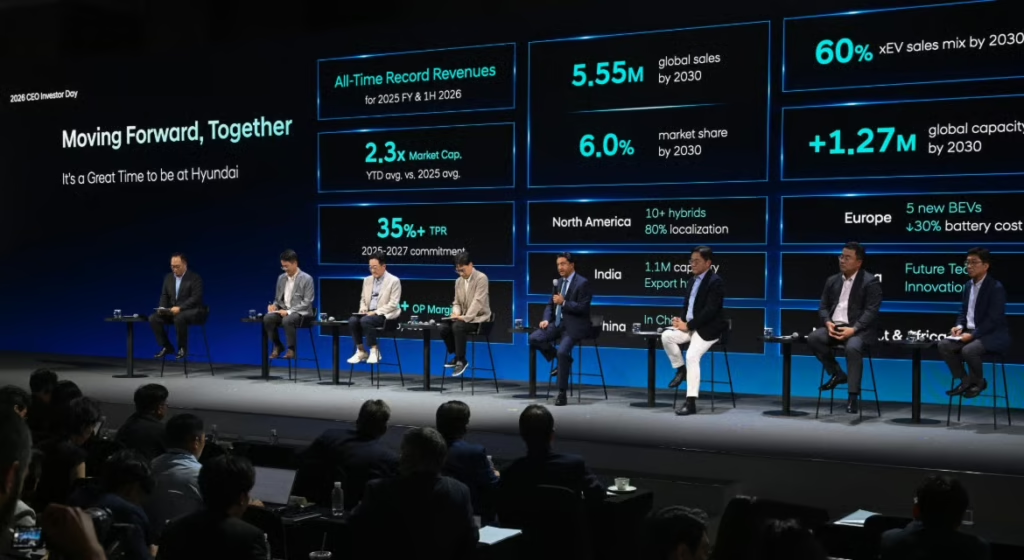
SEOUL, South Korea. I was inside the hall when Hyundai Motor Company laid out a product plan large enough to make almost any single slide disappear into the noise. More than 100 global launches and major updates by 2030 will do that. The number I would keep, however, is 60%.
Hyundai says electrified vehicles should account for 60% of its global sales mix in 2030, up from 23% in 2025. Read that carefully. “Electrified” is not a synonym for “battery electric.” For a shopper, the useful story is that Hyundai intends to sell far more vehicles with some form of electric propulsion while refusing to make every customer solve transportation in exactly the same way.
You may also like:
Hyundai Wants 60% of Its Cars Electrified by 2030, So Read the Fine Print
Hyundai is also targeting 5.55 million global vehicle sales by 2030. Sixty percent of that is about 3.3 million electrified vehicles a year. The scale is ambitious, but the definition is what changes the shopping conversation.
A conventional hybrid uses an engine and electric motor without asking the owner to plug it in. Hyundai expects hybrids to reach 50% of its North American sales by 2030, supported by more than 10 models in the region. That alone tells you why the global 60% figure cannot be read as an EV-only target.
You may also enjoy: Hyundai Wants Hybrids to Be Half Its North American Sales
At the other end, a battery EV stores its driving energy in a large traction battery and relies on external charging. Hyundai is still investing heavily there, including new battery cells, dedicated EV products and the IONIQ family. The company has not announced an abandonment of EVs. It has announced a refusal to depend on EVs alone.
A Hybrid, EREV and EV Solve Different Problems
The most interesting new middle ground is Hyundai’s extended-range electric vehicle. The U.S. Department of Energy describes a series plug-in hybrid as a layout in which the electric motor drives the wheels while an engine generates electricity, a configuration often called an extended-range EV. Hyundai plans to begin launching its first EREV products during 2027’s first half.
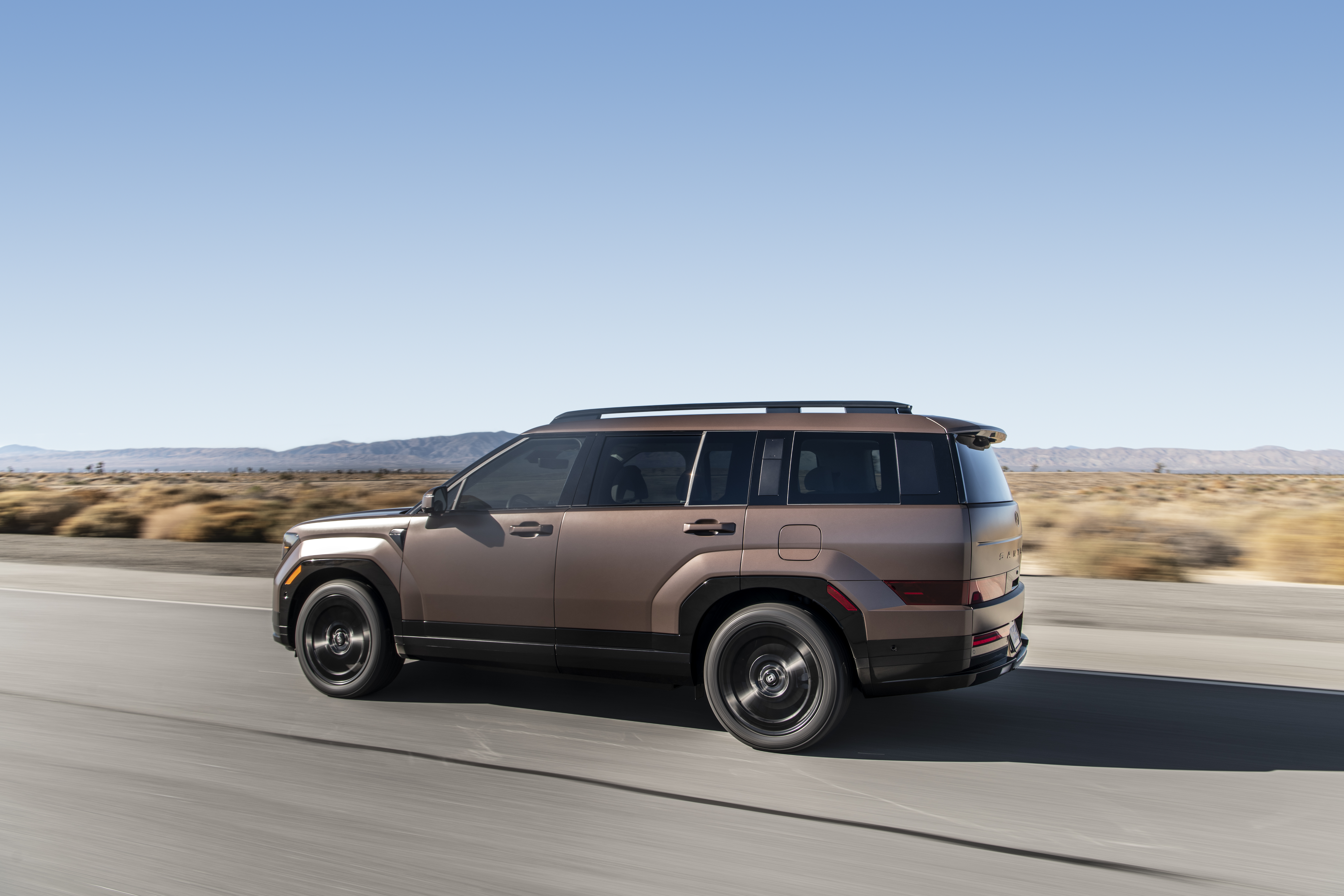
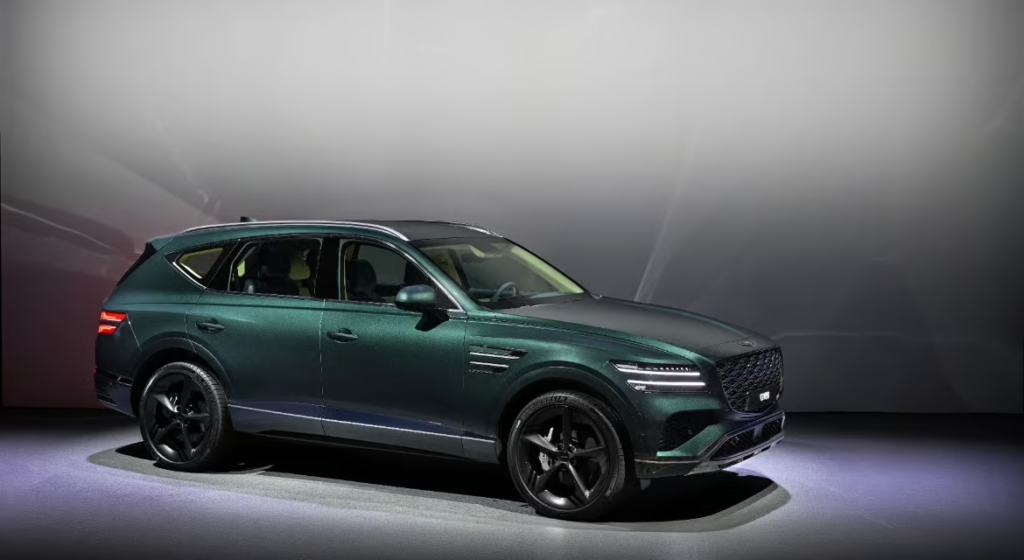
American families should pay particular attention to the Santa Fe EREV. Its Hyundai-stated target exceeds 600 miles of combined driving range, and Alabama is slated to handle production. That number includes the onboard range extender. It does not mean the Santa Fe will travel 600 miles on battery power before the engine-generator is needed.
You may also enjoy: Hyundai Santa Fe EREV: What 600 Miles Really Means
This matters because “electrified” can describe vehicles with very different ownership patterns. Hyundai also continues to develop fuel-cell vehicles. A buyer should care less about which corporate bucket a model occupies and more about where it gets energy, how often it needs charging or fuel, and what happens on the longest regular journey.
Genesis is already making the same philosophy explicit. In my conversation with Tedros “Ted” Mengist, the head of Genesis in the United States, he described customers as being at different points in their electrified journey and said, “And we’ll meet them on their journey.” That is a much more useful premise than pretending one drivetrain fits every driveway.
You may also enjoy: Genesis Powertrain Strategy Lets Buyers Choose
North America Will Not Look Like Europe
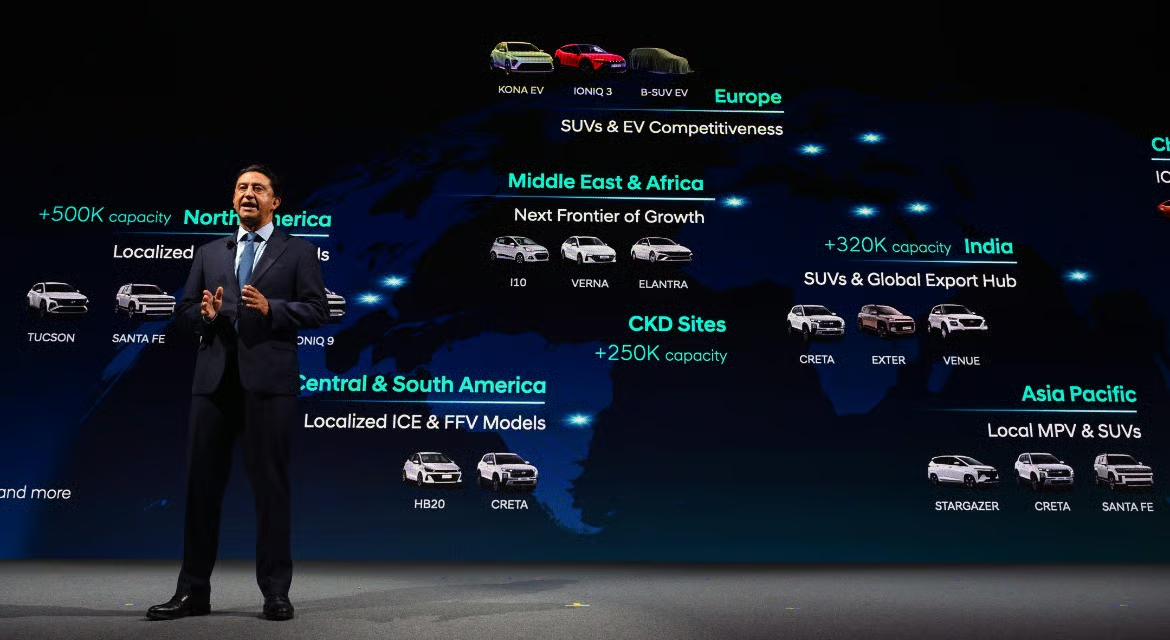
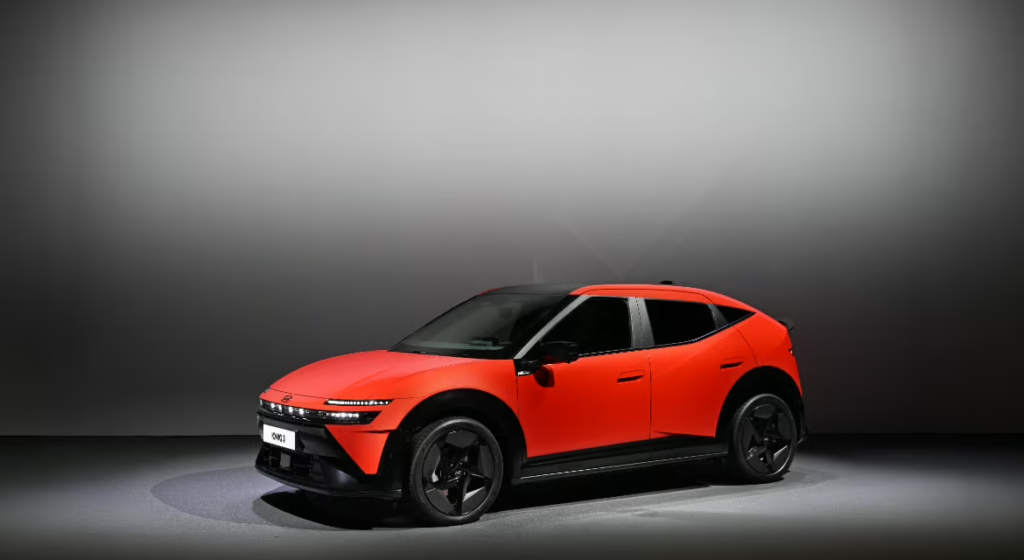
Hyundai’s regional plan makes the flexibility visible. North America is leaning hard into hybrids, with local production planned in Alabama and Georgia. Europe is getting a heavier EV push, with Hyundai targeting more than 420,000 European EV sales in 2030 compared with 116,000 in 2025. India is receiving a locally designed electric SUV while Hyundai continues to offer combustion vehicles there.
That is sensible industrial strategy. Charging infrastructure, regulation, fuel prices and consumer habits differ by market. It also means two Hyundai shoppers reading the same 60% headline in different countries may encounter very different showroom mixes.
Cost will decide how much of the strategy customers actually embrace. For EVs arriving in 2027, Hyundai plans mid-nickel cells that it says can cut battery expense by roughly 30%. That does not mean a future Hyundai EV will be 30% cheaper. Cell cost is one component of a vehicle, and Hyundai has not promised to pass the entire saving into MSRP.
You may also enjoy: Hyundai Battery Cost Drops 30%: Who Gets the Savings?
The eventual window sticker still needs context. For EV shoppers, the EPA’s MPGe figure helps compare energy use, while range, charging speed and local electricity prices determine how useful the vehicle feels in daily life. A headline percentage from Investor Day cannot answer any of those household questions.
What Shoppers Should Demand Before Calling This Progress
Choice is valuable, but choice can also become a dealership vocabulary test. Hyundai and Genesis will need salespeople who can explain the difference among hybrid, plug-in hybrid, EREV, battery EV and hydrogen without turning a family-car purchase into an electrical-engineering examination.
Buyers should ask for certified efficiency and range numbers, the price difference between powertrains, realistic charging requirements, warranty details and expected maintenance. On battery EVs, safety and durability matter alongside range. Hyundai is adding battery monitoring and Thermal Runaway Protection technology, but those systems should be judged in production vehicles rather than treated as automatic proof of superiority.
You may also enjoy: Genesis GV90 Will Debut Hyundai’s Battery Fire Defense
The 60% target is therefore encouraging for a reason that has little to do with winning an EV argument. Hyundai is building enough propulsion choices that customers may be able to choose the least disruptive form of electrification for their own lives. That could be a hybrid with no plug, an EV charged at home, or an EREV that covers routine driving electrically and keeps a longer-distance backup onboard.
The target itself remains a corporate goal, not a guaranteed outcome. But if Hyundai reaches it by making electrification easier to buy rather than harder to understand, the most important part of 60% will not be the percentage. It will be how little compromise a customer had to accept to become part of it.