Genesis GV90 Will Debut Hyundai’s Battery Fire Defense
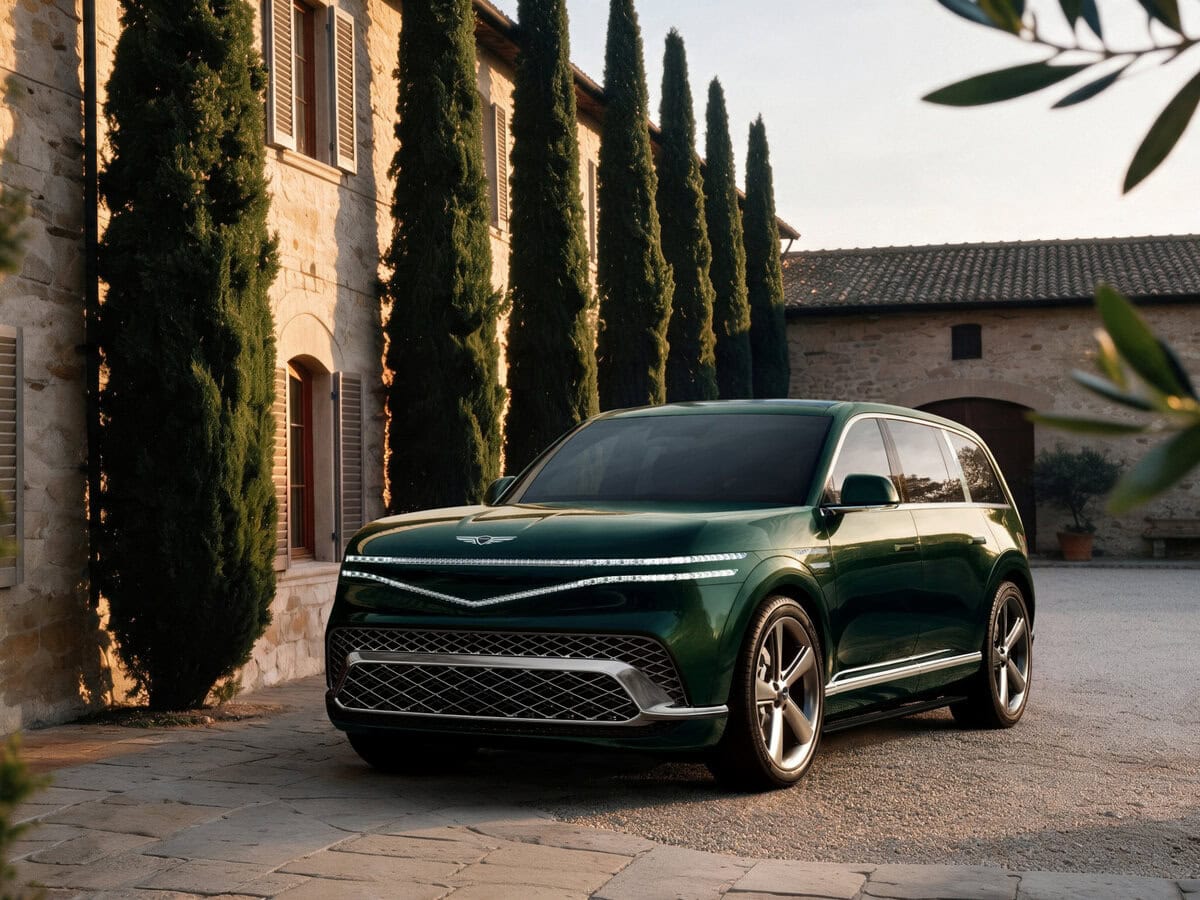
Genesis GV90 will debut Hyundai’s new Thermal Runaway Protection technology designed to prevent EV battery fires from spreading between cells.
Hyundai has developed a new battery safety system designed to stop thermal runaway from spreading between cells, and its most expensive Genesis will be the first production vehicle to get it.
SEOUL, South Korea — Electric vehicle battery fires are rare, but when one happens, they have a talent for becoming spectacularly difficult to ignore.
Hyundai Motor Company believes it has developed a better way to keep one failing battery cell from turning into a much larger problem.
At its 2026 CEO Investor Day, Hyundai revealed a new technology called Thermal Runaway Protection, or TRP. The system will make its production debut in the new Genesis GV90 flagship electric SUV.
That makes one of Genesis’s most important new vehicles more than just a luxury statement. It will also become a rolling test case for Hyundai’s next generation of EV battery safety.
You may also enjoy: Genesis GV90 Takes Aim at Rolls-Royce and Range Rover
You may also like this video about the GV90:
What Thermal Runaway Actually Means
Thermal runaway happens when a battery cell enters an uncontrollable cycle of increasing temperature. If enough heat reaches neighboring cells, those cells can also fail, allowing the event to propagate through a battery pack.
The distinction is important because Hyundai is not claiming it has somehow created a battery that can never fail.
Instead, its new technology is designed to prevent heat from a problem cell from spreading to the cells beside it.
Hyundai says the battery system combines improved heat dissipation with physical barriers between individual cells. The company says previous systems could delay the transfer of heat, while TRP is designed to structurally block that propagation.
Think of it less like preventing the first match from ever being struck and more like building fire doors between every room.
You may also enjoy: Genesis EREV: What Its 640+ Mile Range Really Means
Genesis GV90 Gets It First
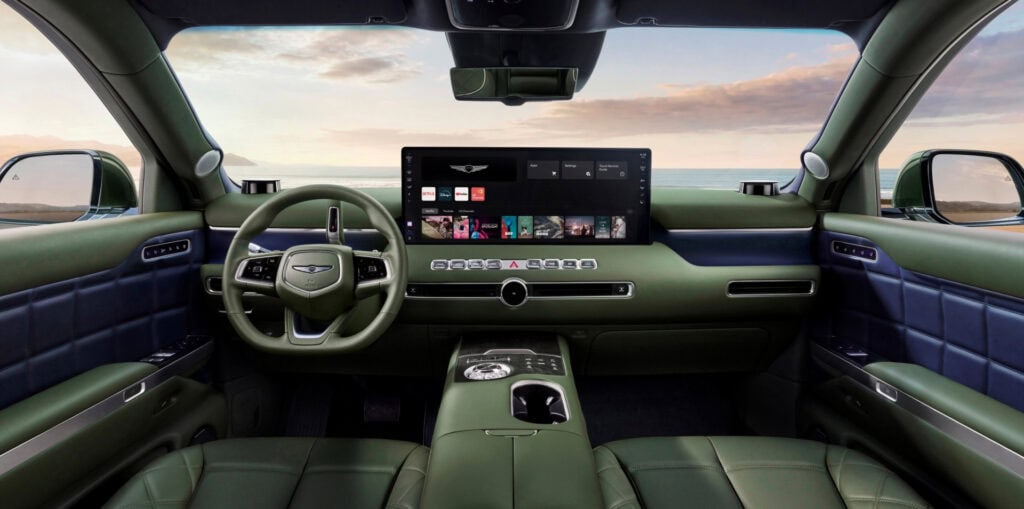
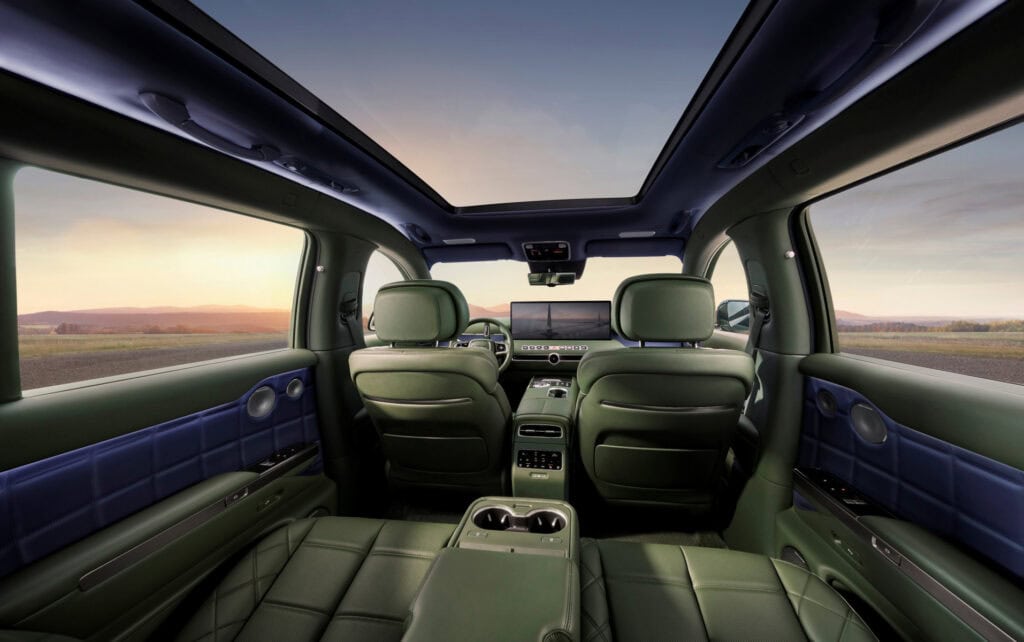
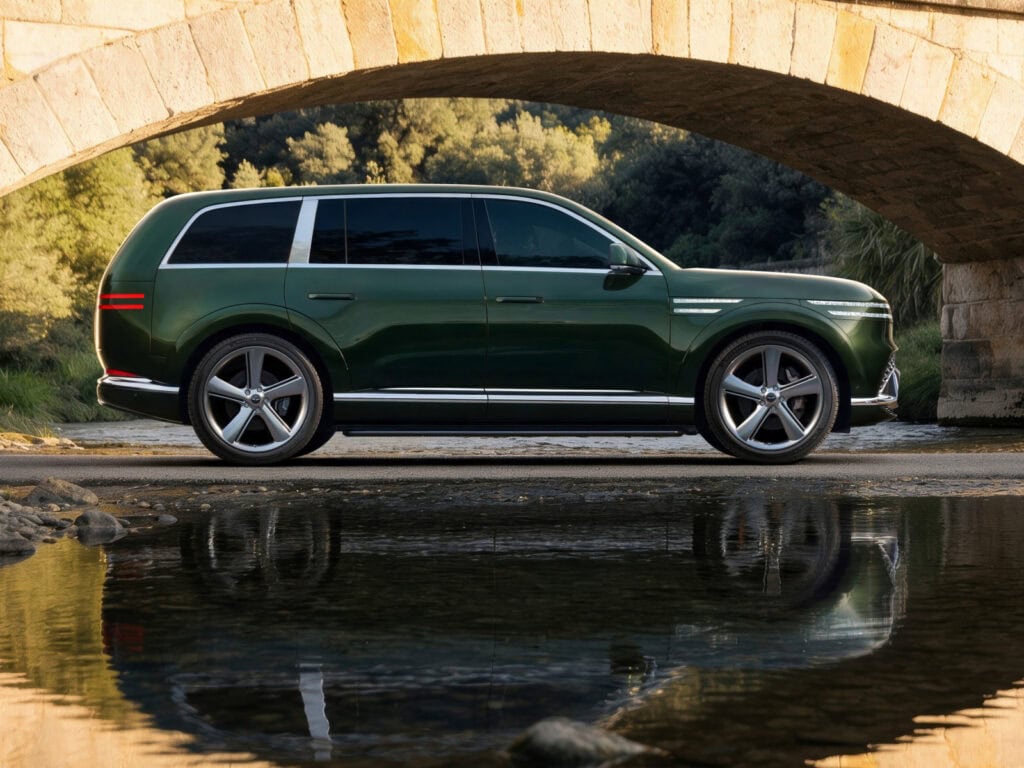
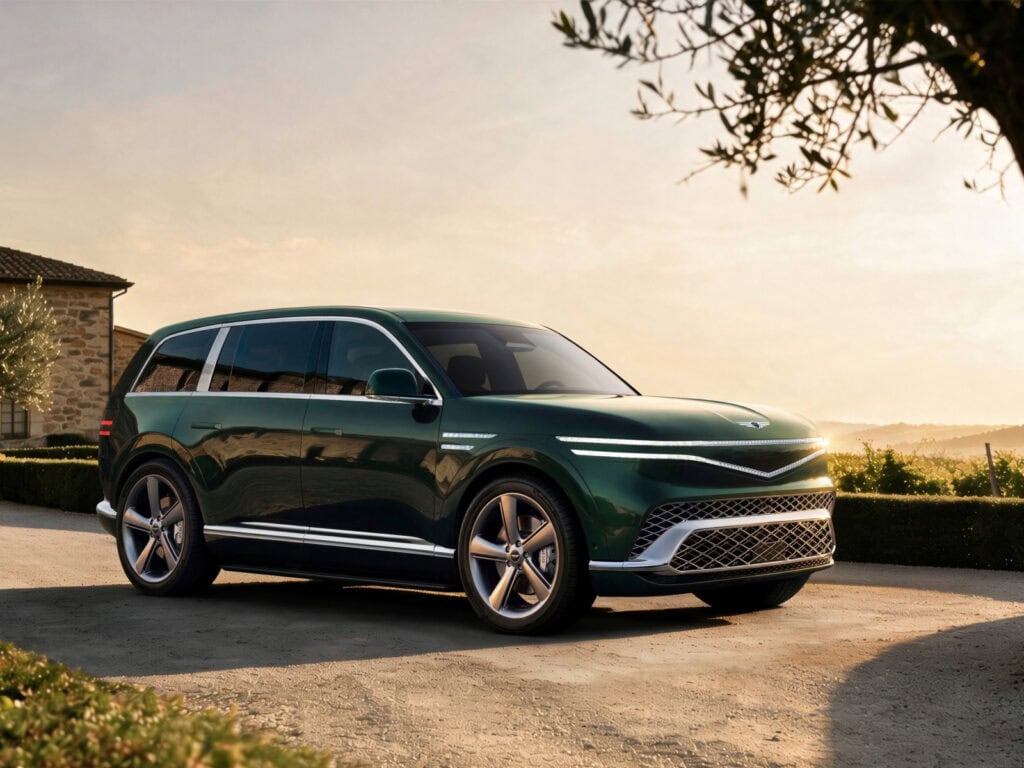
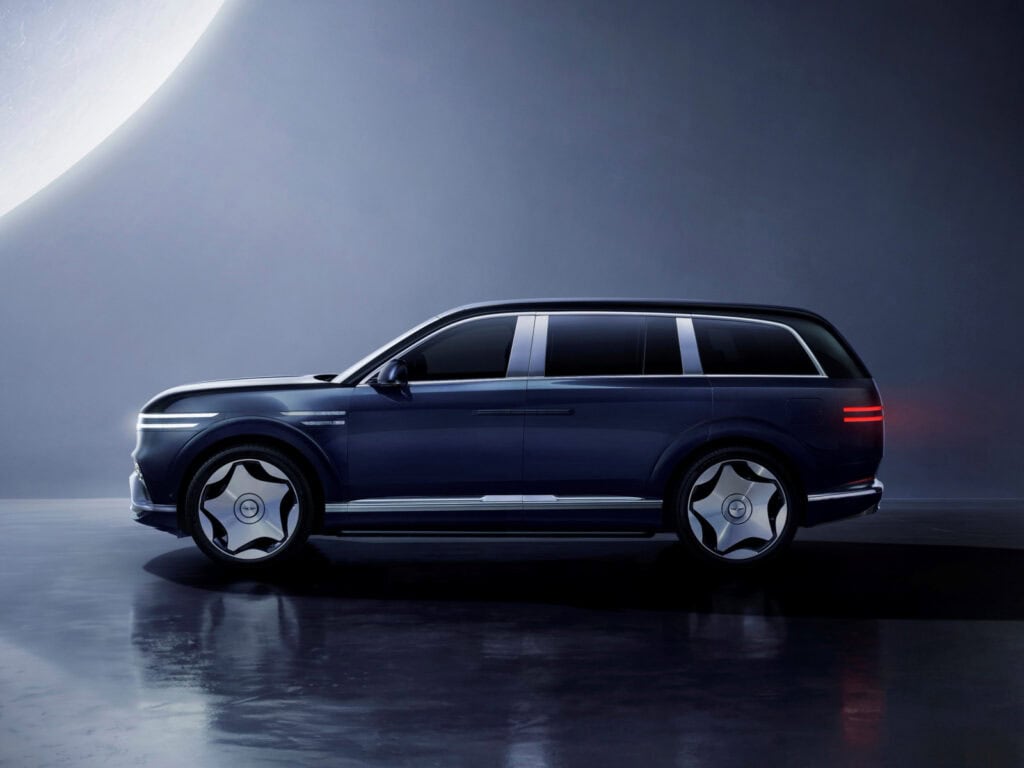
The first production application will be the Genesis GV90, the brand’s new full-size electric flagship SUV.
That is a significant choice.
Genesis is positioning the GV90 above its existing GV60, Electrified GV70 and Electrified G80 products, with the new SUV intended to compete at the upper end of the global luxury market.
The GV90 already includes an unusually extensive safety package. Genesis says the SUV has enhanced battery protection built into its body structure, including ultra-high-strength steel along the sides and a structure designed to redirect major components away from the battery during certain frontal crashes.
TRP adds another layer inside the battery itself.
You may also enjoy: Genesis Powertrain Strategy Lets Buyers Choose
Hyundai Says It Has Tested TRP More Than 200 Times
Hyundai says it has performed more than 200 repeated tests of the system using both prismatic and pouch-style NCM battery cells.
That matters because battery architecture varies considerably between EVs. A technology that works with more than one cell format could potentially be spread across a much broader range of Hyundai, Kia and Genesis vehicles.
Hyundai has not yet announced exactly which models will receive TRP after the GV90.
That may ultimately be the bigger story.
Flagship vehicles frequently introduce technology that becomes cheaper and more widespread later. Anti-lock brakes, airbags, adaptive cruise control and advanced lighting systems all followed versions of that path.
If TRP works as intended and can be manufactured economically, today’s GV90 technology could eventually become tomorrow’s Hyundai or Kia technology.
You may also enjoy: Genesis Wants to Scare BMW With 22 New Vehicles
There Is a Second Layer of Protection
Hyundai is pairing the physical TRP system with increasingly sophisticated battery software.
The company describes its cloud-connected battery management system as the first line of defense. It monitors individual battery cells for abnormal behavior and is designed to identify potential problems early enough for preventative action.
TRP becomes the second line of defense if a cell nevertheless enters thermal runaway.
In other words, one system is supposed to identify trouble before it becomes serious. The other is intended to contain the problem if prevention fails.
That combination is arguably more significant than either technology by itself.
You may also enjoy: Best New Cars of 2026: Five We Saw Up Close
Battery Fires Need Some Perspective
Battery fires have become one of the most emotionally charged subjects surrounding EV ownership.
Videos of burning electric vehicles travel quickly online, partly because lithium-ion battery fires can be difficult for emergency crews to extinguish and can require different firefighting strategies than gasoline vehicle fires.
But the existence of a dramatic fire video does not automatically tell consumers how frequently EVs catch fire compared with other vehicles.
The more useful question for buyers is how automakers are reducing the probability of a battery failure and limiting the consequences when something goes wrong.
Hyundai’s TRP technology addresses the second part of that equation directly.
Why Put This Technology in a Genesis?
There is also a business reason the GV90 makes sense as the launch vehicle.
New technology tends to be expensive before production scales up. Luxury vehicles give manufacturers more room to introduce costly components without destroying the economics of the vehicle.
Genesis also has something else to prove.
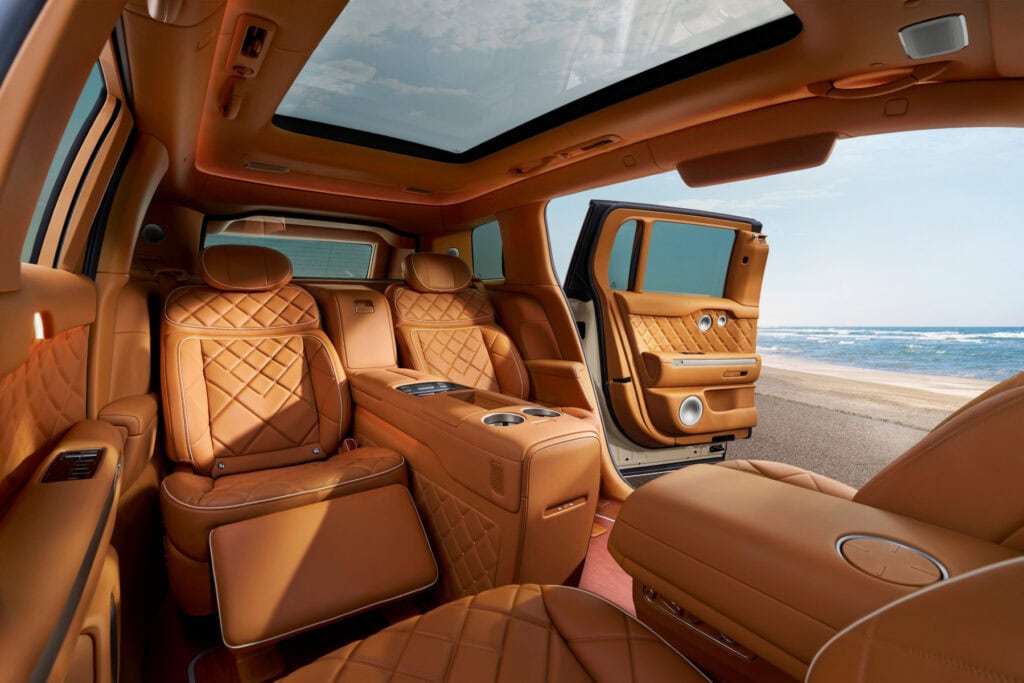
The GV90 is intended to establish the Korean brand as a genuine flagship-luxury manufacturer. That means customers will judge it against vehicles costing substantial sums from established premium brands.
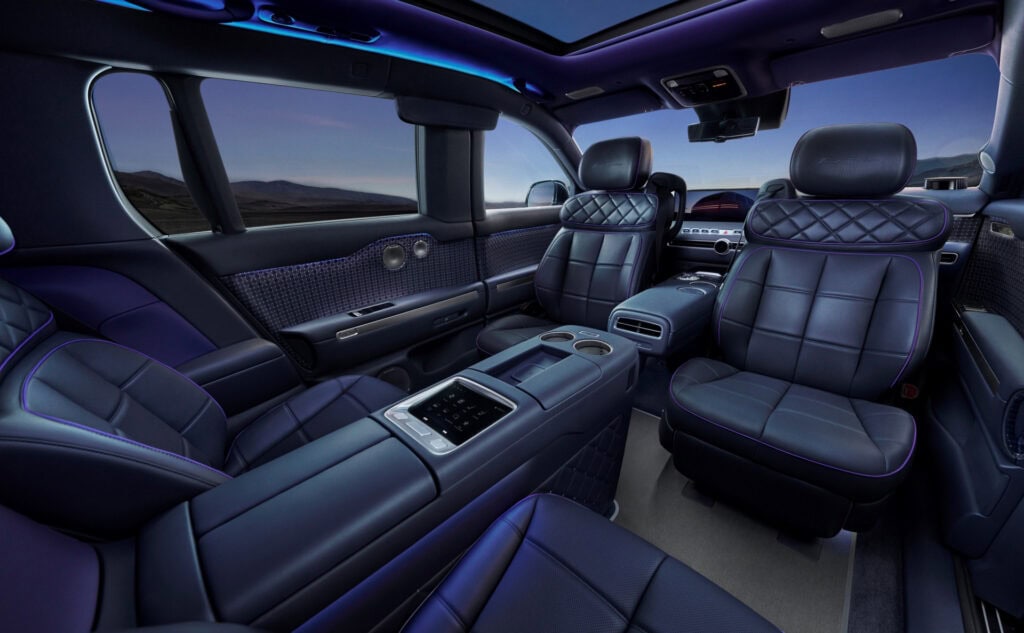
A dramatic interior, enormous screens and clever doors may bring customers into a showroom. Engineering they cannot see may ultimately do more to establish credibility.
The Question We Still Need Answered
Hyundai’s announcement gives us the engineering concept, but several important consumer questions remain.
We do not yet know what measurable reduction in propagation risk TRP provides in real-world crashes, how the system changes repair procedures after battery damage, whether it increases pack weight or cost, or how quickly Hyundai plans to deploy it across other vehicles.
Those are the details Test Miles will be watching as the GV90 reaches production.
What Hyundai has confirmed is significant: rather than simply improving the software watching the battery, it is redesigning the physical structure of the pack to contain a failing cell.
And Genesis buyers will get that technology first.
For a flagship SUV trying to prove Genesis belongs alongside the world’s established luxury brands, one of its most important features may be something owners hopefully never know they used.

What Buyers Should Know
- Technology: Hyundai Thermal Runaway Protection, or TRP
- First production vehicle: Genesis GV90
- Purpose: Prevent heat from a failing battery cell from propagating to neighboring cells
- How it works: Heat-dissipation engineering plus structural barriers between cells
- Testing: Hyundai says more than 200 repeated tests have been conducted
- Battery formats tested: Prismatic and pouch NCM cells
- Additional protection: Cloud-connected battery management designed to identify abnormal cell behavior before a serious event develops
NHTSA maintains dedicated emergency response guidance for electrified vehicles, reflecting the different procedures responders may need when battery systems are damaged.
The Test Miles Take
The interesting part of Hyundai’s announcement is not that the company says its newest EV is safe. Every manufacturer says that.
It is that Hyundai is attacking battery safety from both directions.
Software tries to identify a problem before it escalates. Physical engineering tries to stop it from spreading if it does.
If the technology proves effective at production scale, the real importance of the Genesis GV90 may extend far beyond one six-figure luxury SUV. The GV90 could become the first vehicle carrying a battery-safety system that eventually filters throughout Hyundai Motor Group’s enormous global EV portfolio.
That is worth watching.