Can Hyundai’s Cloud Make EV Batteries Last 20% Longer?
Hyundai says its cloud battery management system could extend average EV battery life by 20% by 2028. Here’s what owners should ask before celebrating.
Battery longevity is one of the quiet questions hanging over every electric vehicle purchase. Range gets the billboard. Charging speed gets the commercial. But if you plan to keep an EV for eight, ten or twelve years, the number that may matter most is how much useful battery capacity remains after thousands of charges, hot summers, cold mornings and ordinary commuting.
At Hyundai’s 2026 CEO Investor Day in South Korea, the company put a striking number on its next step: Hyundai says an enhanced cloud-connected battery management system could extend average battery life by 20 percent by 2028. That is a manufacturer target, not a guarantee that every Hyundai EV will suddenly last one-fifth longer. Still, if Hyundai can prove it in production vehicles, the ownership implications could be substantial.
Hyundai cloud BMS is trying to manage aging, not just failure
A modern battery management system already watches voltage, temperature, state of charge and other conditions inside a high-voltage pack. Hyundai’s new idea is to push more of that intelligence into the cloud, where data from vehicles can be analyzed over time rather than treated as isolated snapshots.
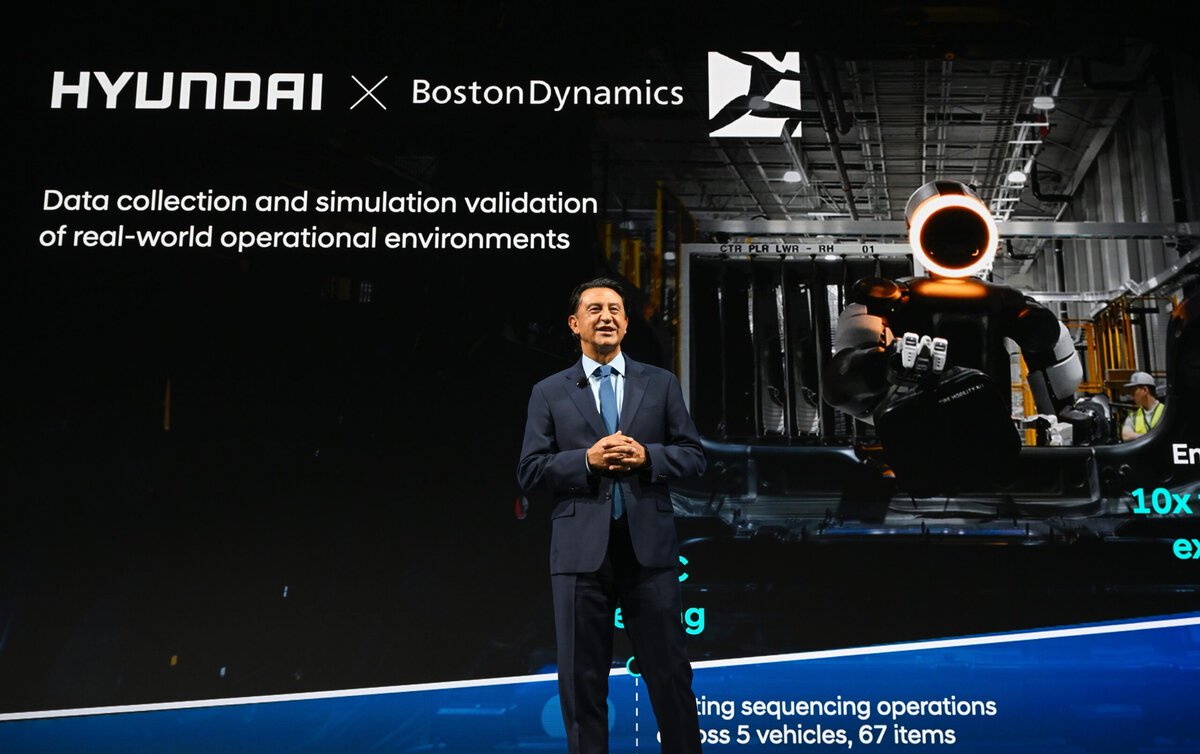
Hyundai says the cloud-based system will detect signs of abnormality in individual cells in real time and take preemptive measures. More interesting for long-term owners is the company’s claim that improved management can extend average battery life by 20 percent by 2028.
The key word is average. Hyundai has not said that an eight-year-old battery becomes equivalent to a ten-year-old battery, nor has it publicly defined the precise metric behind the 20 percent claim. Battery life can mean years in service, usable capacity, cycle count, energy throughput or the point at which degradation crosses a defined threshold. Until Hyundai publishes the measurement method, buyers should treat 20 percent as a target that needs a definition.
You may also enjoy: 2026 Hyundai IONIQ 5 Review: The Value Is Back
Why battery software can make a physical difference
Lithium-ion batteries age partly because of chemistry and partly because of how they are used. High temperatures, repeated operation at very high or very low states of charge, aggressive charging conditions and long periods spent at extremes can all influence degradation. The U.S. Department of Energy explains that battery life depends on chemistry, temperature, charging patterns and other operating conditions.
That gives software something meaningful to manage. A smarter system can alter charging power, thermal conditioning and usable limits when it detects conditions that could accelerate wear. Cloud analysis adds another layer because Hyundai can compare behavior across large numbers of vehicles instead of relying only on what one car has learned about itself.
There is a useful precedent in Hyundai’s own data. At its previous Investor Day, the company said it had analyzed durability information from more than 50,000 IONIQ 5 vehicles, including cars driven beyond 250,000 miles, and reported that most retained more than 90 percent battery performance. That is Hyundai’s own analysis, but it shows why fleet-scale data matters. The more vehicles Hyundai watches, the better chance it has of identifying patterns before an individual owner notices anything unusual.
You may also enjoy: Hyundai Battery Cost Drops 30%: Who Gets the Savings?
The unanswered question is what the cloud requires from you
The engineering story is attractive. The ownership story is where I want more answers.
Does the system need a continuous cellular connection? What happens when the car spends weeks without service? Is the battery-life function included for the life of the vehicle, or does it depend on a connected-services subscription? Can an owner opt out of vehicle-data sharing and still receive the same battery protection? And if Hyundai learns that a particular charging behavior is shortening battery life, will the car merely warn the driver or automatically change charging limits?
Privacy belongs in that conversation as well. Battery health data may seem harmless, but a connected vehicle can generate a broad record of charging, location and usage patterns. Hyundai has said in other discussions that consent and local data-handling rules matter, but buyers deserve a plain-language explanation of exactly what must leave the vehicle for this battery-life feature to work.
You may also enjoy: Hyundai Santa Fe EREV: What 600 Miles Really Means
Battery life and battery safety are two different jobs
Hyundai paired the cloud BMS announcement with its new Thermal Runaway Protection technology. The two systems are related, but they solve different problems.
Hyundai describes cloud BMS as its first line of defense, looking for abnormal cell behavior and taking preventative action. TRP is the second line, a physical battery structure intended to stop heat from a failed cell from propagating to neighboring cells. Hyundai says it has verified TRP through more than 200 repeated tests on prismatic and pouch NCM batteries, with the technology debuting on Genesis.
That distinction matters because extending battery life is not the same as preventing a fire, and preventing abnormal behavior is not the same as containing a failure after it begins. Hyundai’s approach is more credible when those claims stay separate.
You may also enjoy: Genesis EREV: What Its 640+ Mile Range Really Means
Could existing Hyundai EVs get the benefit?
This may be the question current owners care about most. Cloud-based software sounds inherently updateable, but Hyundai has not said that every existing IONIQ 5, IONIQ 6 or Kona Electric can receive the full 2028 battery-life system.
The limitation may not be software alone. Different generations of battery packs have different sensors, controllers, thermal systems and computing hardware. A useful over-the-air update still needs the vehicle underneath it to support the commands the software wants to make.
If Hyundai can extend some of the benefit to cars already on the road, that would be unusually valuable. EV shoppers worry about technological obsolescence almost as much as degradation. A vehicle that improves its battery management several years after purchase gives owners a reason to view software updates as ownership support rather than merely new infotainment features.
You may also enjoy: Hyundai N Performance Is Becoming a Full Lineup
The Test Miles take
A 20 percent improvement in average battery life could matter more to an owner than another 20 miles of advertised range. Longer useful life can support resale value, reduce the chance of expensive pack work and make an EV more attractive to its second and third owners.
But Hyundai has given us the destination before explaining the ruler. Before I call this a 20 percent win, I want to know how battery life is measured, which vehicles qualify, whether connectivity is mandatory, what data leaves the car, and whether owners pay anything to keep the service alive.
The good news is that this is exactly the kind of EV improvement automakers should be chasing. The next stage of the electric-car competition cannot be only bigger packs and faster acceleration. It also has to be making the expensive battery already in the car healthier for longer.
If Hyundai can prove its 20 percent claim under real ownership conditions, cloud software may become one of the least visible and most valuable features in its future EVs.