HRC Heritage Racing Program Sells More Than Old Cars
By Robert R Guio
The HRC Heritage Racing Program offers restored Honda and Acura race cars with factory records, track testing and technical support.
In the collector-car world, horsepower is not particularly rare. Certainty is.
A famous race car can have the right paint, the right chassis number and a glorious result in its history, yet still leave a serious buyer asking uncomfortable questions. Which parts are original? Which were replaced during its competition life? Has the engine been rebuilt to the correct specification? Are the electronics period-correct, merely functional, or quietly improvised? Can the car still enter the historic events an owner actually wants to run?
That is why Honda Racing Corporation USA’s new heritage effort is more interesting than a simple announcement that old race cars are for sale. HRC is trying to sell something much harder to manufacture than carbon fiber or a V8: provenance backed by the people, records and engineering knowledge that created the cars in the first place.
What the HRC Heritage Racing Program is really selling
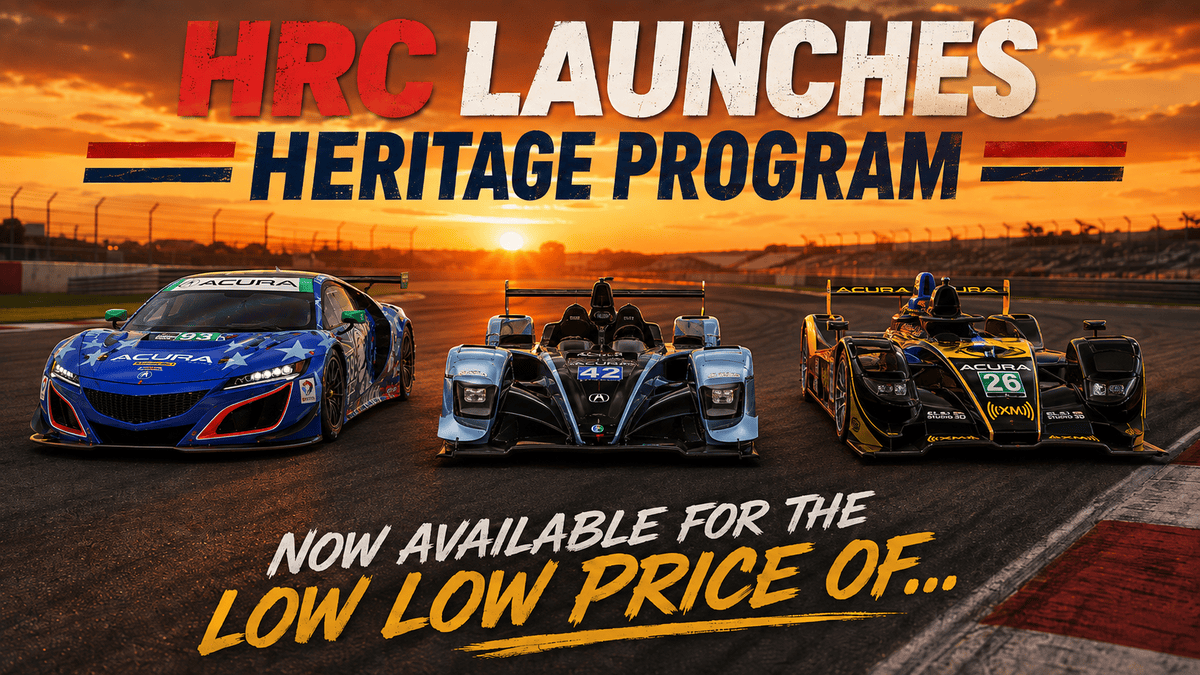
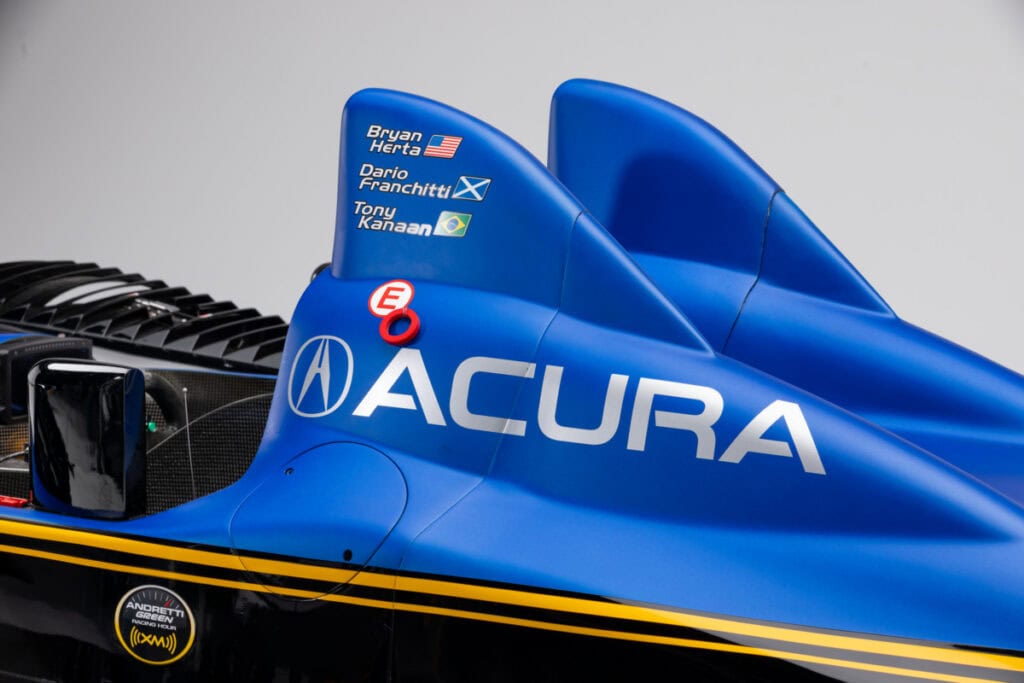
The HRC Heritage Racing Program launched during 2026 Monterey Car Week with restoration, sales, service and trackside support for selected historic Honda and Acura competition cars. The opening complete-car offering is the V8-powered Acura ARX-01a that carried No. 26 and XM Satellite Radio colors for Andretti Green Racing. Dario Franchitti, Bryan Herta and Tony Kanaan took it to an LMP2 class victory in the 2007 Twelve Hours of Sebring on the car’s first race weekend.
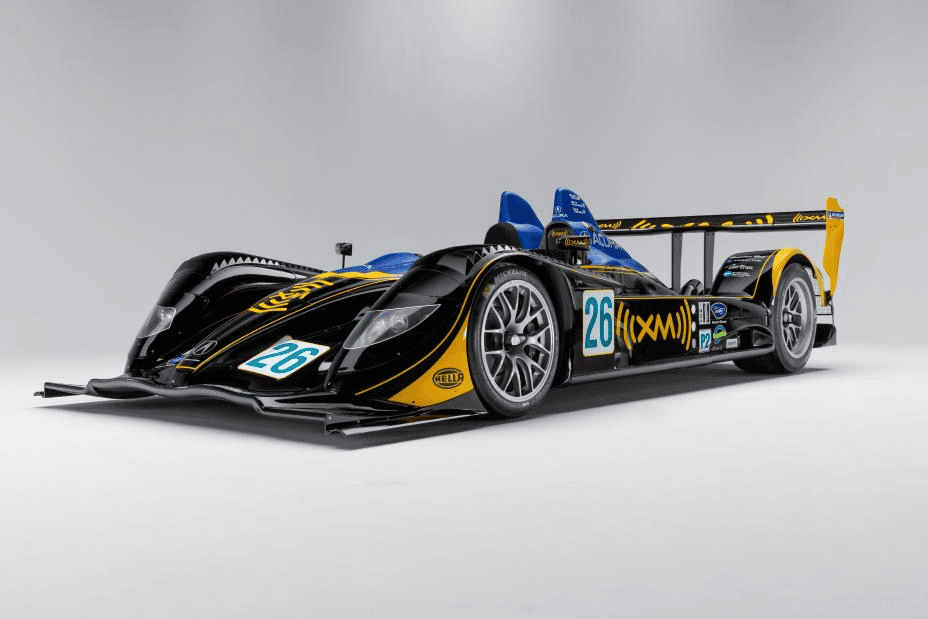
That history is important, but the service wrapped around it is the more valuable idea. HRC says its restoration teams work from period homologation paperwork and technical data, supported by archival notes and contemporary photographs created during the original programs. Cars are torn down, rebuilt with new or reconditioned parts, given selected safety-related updates and then track tested. Engines are rebuilt at HRC US headquarters in Santa Clarita, California.
For readers unfamiliar with the word homologation, the concept matters because historic competition is not simply a costume contest. Governing bodies use technical documentation to determine how a car was built and what specification is legitimate for a period or category. FIA Appendix K is one of the clearest examples of how historic competition tries to preserve period correctness while still addressing modern safety requirements.
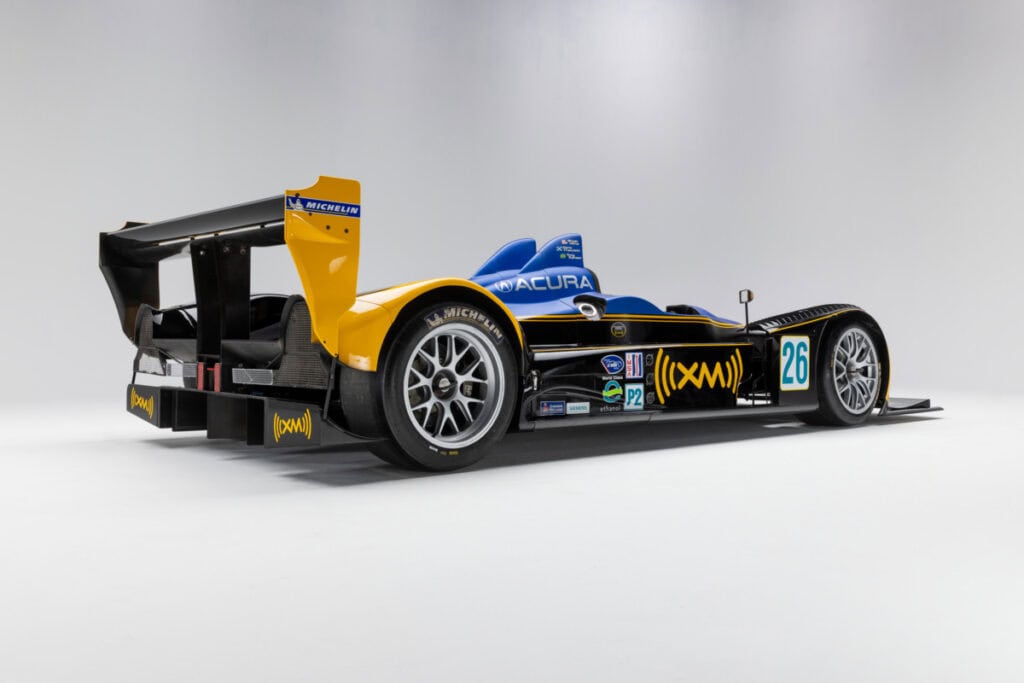
HRC Commercial Manager John Whiteman put the balancing act plainly: “HRC restores these historic Honda and Acura race cars to a level enabling them to be driven and feel as original as possible, while still making some updates ― especially with regards to electronics,” he said.
That sentence gets to the heart of the program. A museum wants preservation. A racer needs function. HRC is trying to provide both without allowing convenience to erase the character that made the machine significant.
You may also enjoy: Monterey Car Week Race Guide: Where Historic Motors Roar
Factory knowledge may be the most valuable spare part
Anyone can make an old race car shiny. Making it correct, usable and eligible is considerably harder.
Historic Sportscar Racing publishes detailed eligibility and safety rules for the cars it accepts, while the Sports Car Club of America maintains its own competition rules and homologation resources. The point is not that every HRC Heritage car will run under the same rulebook. It is that a serious historic race car exists inside a technical ecosystem. Owners need documentation, inspection, preparation, and an understanding of what a sanctioning body will permit.
This is where HRC has an advantage that an independent restoration shop cannot easily duplicate. The company controls extensive archives and retains institutional knowledge from programs that ran through Honda Performance Development and the current HRC US organization. When an unusual sensor, electronic control unit, engine component or setup question appears, the factory may be able to work backward from original engineering records rather than reverse-engineer the answer decades later.
That does not make every restoration decision automatically correct. Historic racing often involves competing definitions of originality. A component can be period-correct but not original to the chassis. A modern replacement may improve safety while reducing historical purity. A rebuilt engine may be far more usable than a sealed artifact, but rebuilding also means the car is no longer untouched.

For a buyer who wants to drive rather than simply display the car, those compromises can be entirely sensible. The important thing is documentation. HRC’s credibility will depend on showing exactly what was retained, what was replaced, what was upgraded and why.
You may also enjoy: How IndyCar Hybrid Tech Boosts Your Next Honda Hybrid
Collectors should ask these questions before buying
HRC has not published prices for the ARX-01a or the other cars highlighted through the program, so this is not conventional shopping advice. Anyone capable of buying and operating a prototype of this significance is already playing in a different financial universe. Even so, the questions that matter are surprisingly ordinary.
First, what exactly is included in the restoration and sale? A complete running car is only the beginning. Historic prototypes may require starter equipment, specialist diagnostic tools, wheel sets, bodywork, suspension pieces, brake components, engine spares and data systems. Transport, storage and track preparation can quickly become as important as the purchase itself.
Second, how long does factory support last? HRC says engineers can provide trackside help and assist owners in competition. A buyer should understand whether that support is included for a defined period, purchased event by event, or structured as an ongoing service relationship.
Third, where can the car run in its restored specification? Historic Sportscar Racing is the sanctioning body for the Rolex Monterey Motorsports Reunion, and IMSA confirmed HSR’s continuing role at the 2026 event in its official Monterey announcement. Eligibility can vary by event and class, so buyers should confirm the actual competitions they intend to enter before assuming a restoration certificate opens every paddock gate.
Fourth, what happens after damage? This is the question nobody enjoys asking while looking at a beautifully restored prototype, but racing creates wear and occasionally much worse. If a unique nose, suspension upright, gearbox component or electronic module is damaged, can HRC reproduce it? Does the replacement preserve eligibility and provenance? Is there a documented process for repairs?
Finally, how much of the car’s value depends on continuing to use it? Some collectors want untouched originality. Others believe a race car earns its meaning by racing. The HRC program is clearly aimed at the second group.
You may also enjoy: Ferrari Enzo Drives Broad Arrow to a $97.4M Record
Honda has already been rehearsing this business
The Heritage Racing Program did not arrive from nowhere. HRC has already restored and supported several important machines, and Monterey gave the company a chance to show the range of what it can handle.
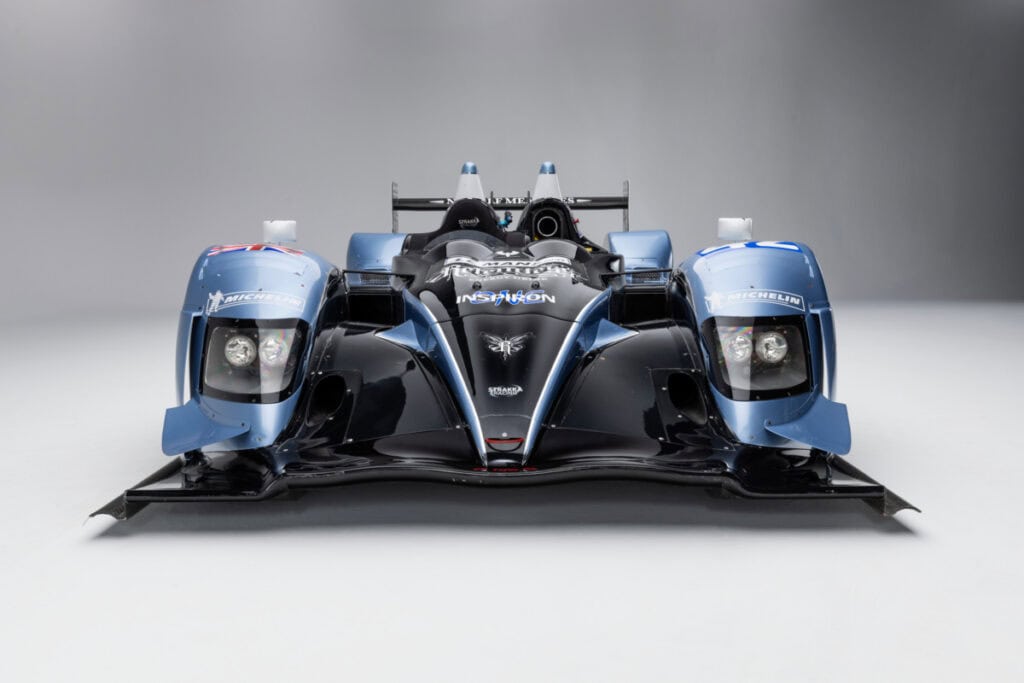
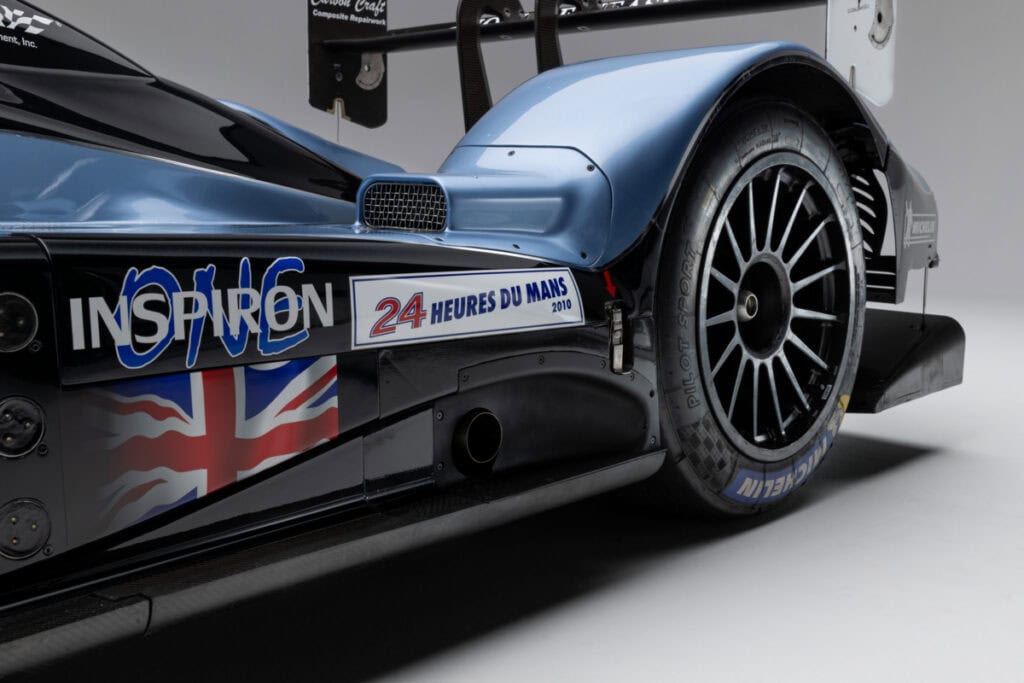
The 2010 Strakka Racing ARX-01c is one of the strongest examples. The car won LMP2 at the 24 Hours of Le Mans and, after HRC restoration and testing, returned to Laguna Seca for the 2026 Rolex Monterey Motorsports Reunion. That is precisely the use case the new program is selling: restore the car authentically enough to preserve its historical identity, then prepare it well enough to work under real track conditions.
HRC has also restored four Acura ARX-05 DPi prototypes. The ARX-05 won the 2019, 2020 and 2022 IMSA manufacturer, driver and team championships. The model also delivered Acura’s 2022 Rolex 24 at Daytona victory with Meyer Shank Racing.
The company helped bring Gil de Ferran’s 2001 Team Penske Reynard 01i back to running condition for current owner Zak Brown, supplying a period-correct Honda engine, assisting with the engine start and inspecting critical electronics. De Ferran’s history adds another level of importance. INDYCAR’s own record of his career notes the 241.428-mph closed-course qualifying record he set at California Speedway in 2000, a mark that still stands.
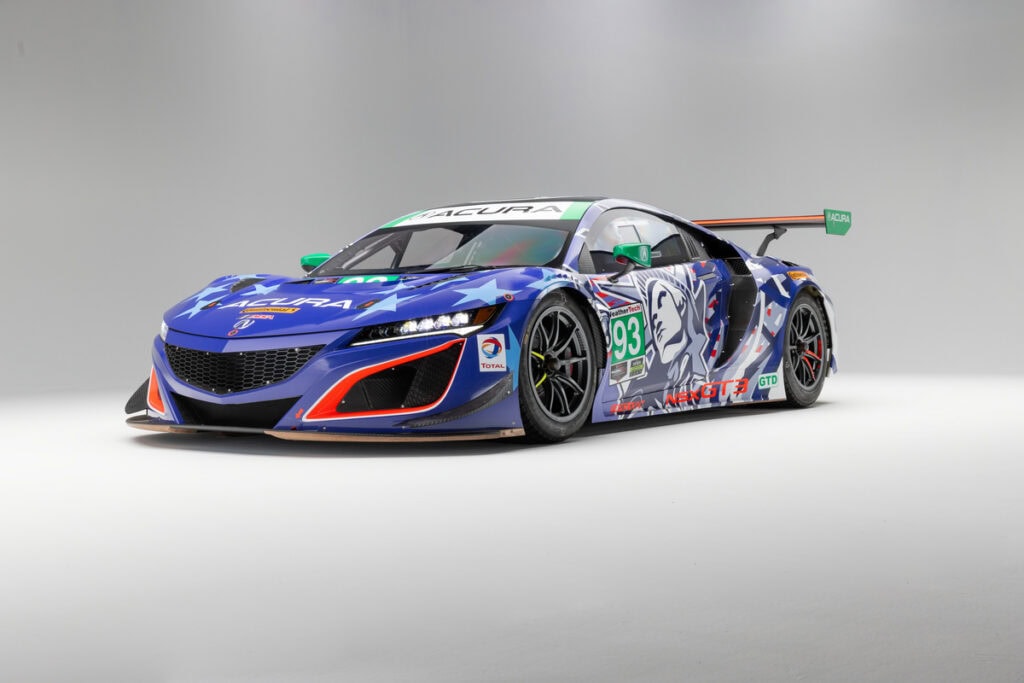
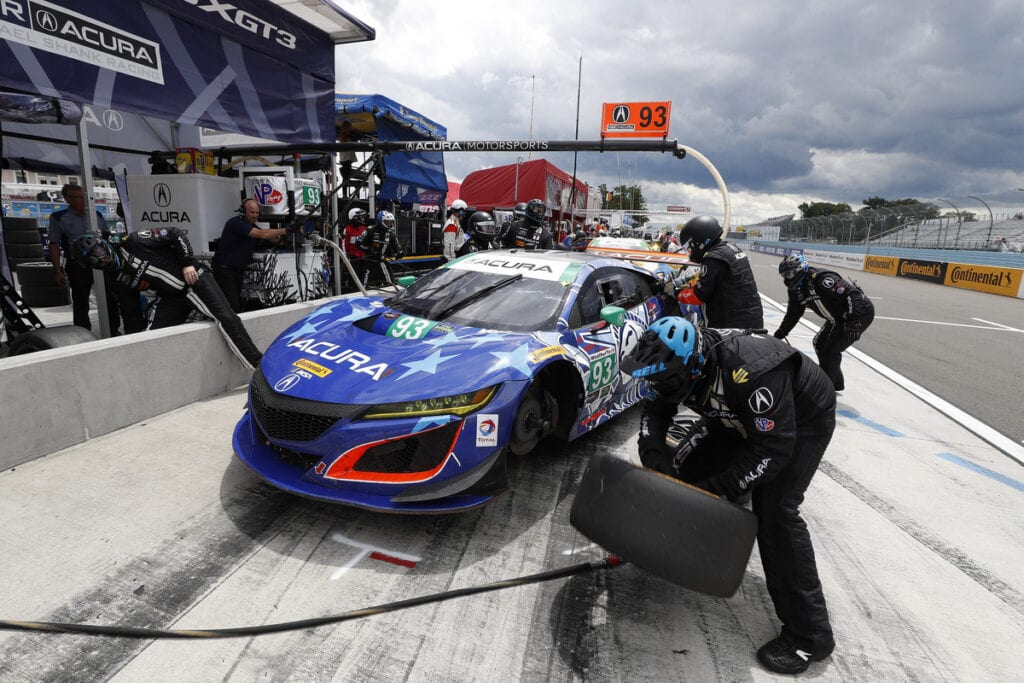
HRC is also selling Acura NSX GT3 Chassis No. 5, presented in its recognizable Lady Liberty colors. The company calls that specific chassis the most successful NSX GT3, while the overall program logged 38 class victories in IMSA and SRO from 2017 through 2023.
These examples matter because they show the program is not based on a single restored showpiece. HRC is building a repeatable service around different generations of race machinery, from early open prototypes to modern GT3 cars and IndyCar hardware.
You may also enjoy: Why Indy 500 Fans Still Say Carb Day
There is an irony in a program built around authenticity: one detail in HRC’s Heritage Racing press release is wrong.
The release says the Acura ARX-05 recorded a Rolex 24 at Daytona win in 2023. Honda’s separate 2026 Monterey heritage overview identifies the ARX-05 victory as 2022, which matches Honda’s contemporary race report from that event. The 2023 Rolex 24 winner was the succeeding Acura ARX-06, not the ARX-05.
This does not undermine the Heritage Racing Program, and it does not erase the ARX-05’s championships. It does illustrate why documentation deserves the same scrutiny as paint, carbon fiber and chassis plates. When a collector is buying history, dates and results are not decorative details. They are part of the asset.
The same principle applies to restoration records. Buyers should expect chassis histories, component logs, engine-build documentation and a clear explanation of updates. HRC is in an unusually strong position to provide that material because it is the custodian of the original engineering data, but the value comes from making that information transparent.
That transparency will become even more important if HRC expands the program into Honda-powered IndyCars as planned. Open-wheel cars can have complicated ownership, engine and chassis histories, especially when engines were leased, rebuilt or rotated through racing programs. The factory’s ability to reconstruct those histories could become a major part of the buying proposition.
You may also enjoy: Acura NEXERA Vision Makes Simplicity Feel Radical
Why the HRC Heritage Racing Program matters now
Monterey Car Week is full of cars that have become too valuable, too rare or too historically important to use casually. The HRC Heritage Racing Program pushes against that instinct without pretending these machines are ordinary toys.
Historic competition is still governed competition. The FIA’s historic rules emphasize technical authenticity, while HSR and SCCA maintain their own eligibility and safety standards. The common thread is that old racing cars are expected to represent their era while meeting the practical requirements of being operated today.
That makes HRC’s most important product a chain of trust. The car has a known competition identity. The factory can consult original documents. The restoration can be recorded. The engine can be rebuilt by the racing organization. The finished machine can be track tested, and support can follow it back into competition.
Honda is also extending the idea beyond complete cars. HRC has offered race-used Formula One engine components, certified memorabilia and detailed scale models. That creates a ladder of participation, from a collector who wants a piece of a famous V10 on a shelf to an owner prepared to run a Le Mans or Sebring winner at speed.
For Honda and Acura, the strategic benefit is obvious. Racing history becomes active brand equity rather than a museum expense. A 2007 prototype running hard at Laguna Seca can tell a performance story that no heritage display board can match. It also creates a bridge between past engineering and Acura’s current performance identity.
The buyer benefit is narrower but more meaningful. People shopping at this level are not simply looking for an old race car. They are looking for a car whose story can survive inspection and whose mechanical complexity does not become an archaeological project every time it needs to run.
That is the standard HRC now has to meet. If it can consistently deliver documented authenticity, sensible safety updates, parts knowledge and reliable track support, the Heritage Racing Program could become one of the most credible ways to own a significant Honda or Acura competition car.