Acura NEXERA Vision Makes Simplicity Feel Radical
By Nik J Miles
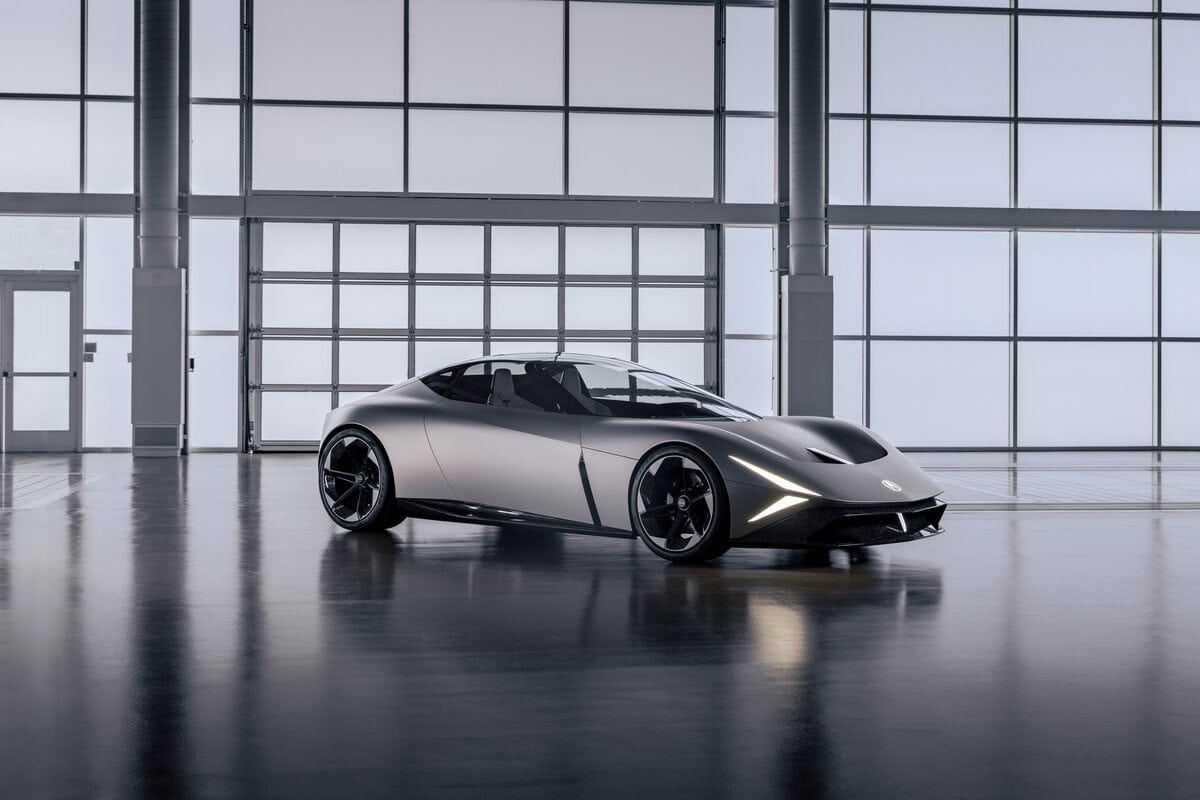
The Acura NEXERA Vision uses hidden lights, fixed seats, and clean surfacing to preview the design direction of future Acura models.
The sports car shape is the first distraction. Low, wide and wrapped around a glassy one-motion cabin, the Acura NEXERA Vision looks ready to become the company’s next great performance car. It has dual-hinge butterfly doors, an active rear spoiler, 22-inch center-lock wheels and enough forged carbon fiber to make subtlety nervous.
That is precisely why the important part is easy to miss. Acura is not presenting NEXERA as a preview of one production sports car. It is a design manifesto intended to establish the forms, materials, proportions and lighting that will shape the wider Acura range. The first showroom vehicle to draw from it will be the fourth-generation RDX Hybrid, due in the coming years.
Created at Acura Design California in Los Angeles, NEXERA arrives as Acura marks 40 years in the United States. It will make its world premiere at The Quail, A Motorsports Gathering, on August 14, 2026, before appearing on the Pebble Beach Concours d’Elegance Concept Lawn on August 16. The setting guarantees attention, but the concept’s real audience is anyone wondering whether future Acuras can be cleaner without becoming anonymous.
I sat down with Yasutake Tsuchida, Acura’s vice president of design and creative director, to ask what he wants this new era to represent. His answer was less about a particular grille or body line and more about rebuilding an emotional connection. “My goal is that Acura would be more like an emotional brand,” he said, describing a stronger bond between the customer and Acura.
What the Acura NEXERA Vision Is Really Saying
NEXERA’s most useful idea is discipline. Modern vehicles often wear their engineering on the outside through vents, creases, sensors and lighting elements. This concept attempts to absorb those functions into a few large, controlled forms. The body is muscular, but the surfaces are allowed to breathe. Its confidence comes from stance and proportion rather than a collection of decorative explanations.
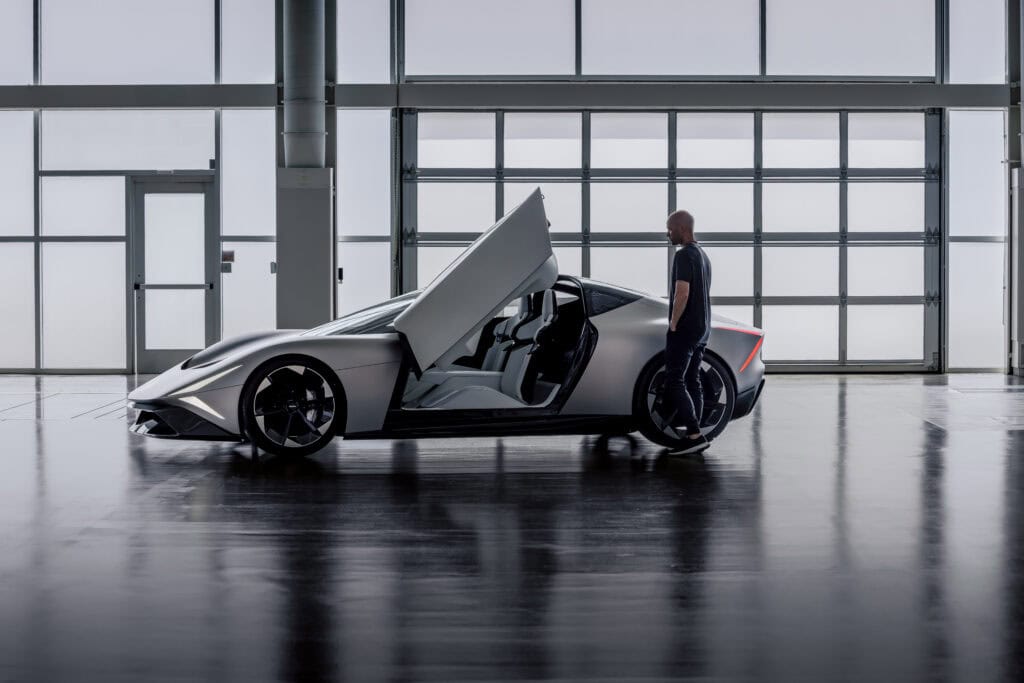
The long distance between the dashboard and front axle gives NEXERA classic performance-car proportions. Occupants sit extremely low, while the wide track and compact visual mass above the beltline make the car look planted. A single flowing roof form connects the windshield, cabin and rear deck. The effect is theatrical, but the basic geometry is remarkably easy to understand.
Acura has not announced a powertrain, performance figures or production program for the car itself. That distinction matters. A concept can suggest speed through proportion without promising horsepower, range or a 0-to-60-mph time. NEXERA’s job is to show what future Acuras should feel like before engineers decide how each individual model will deliver it.
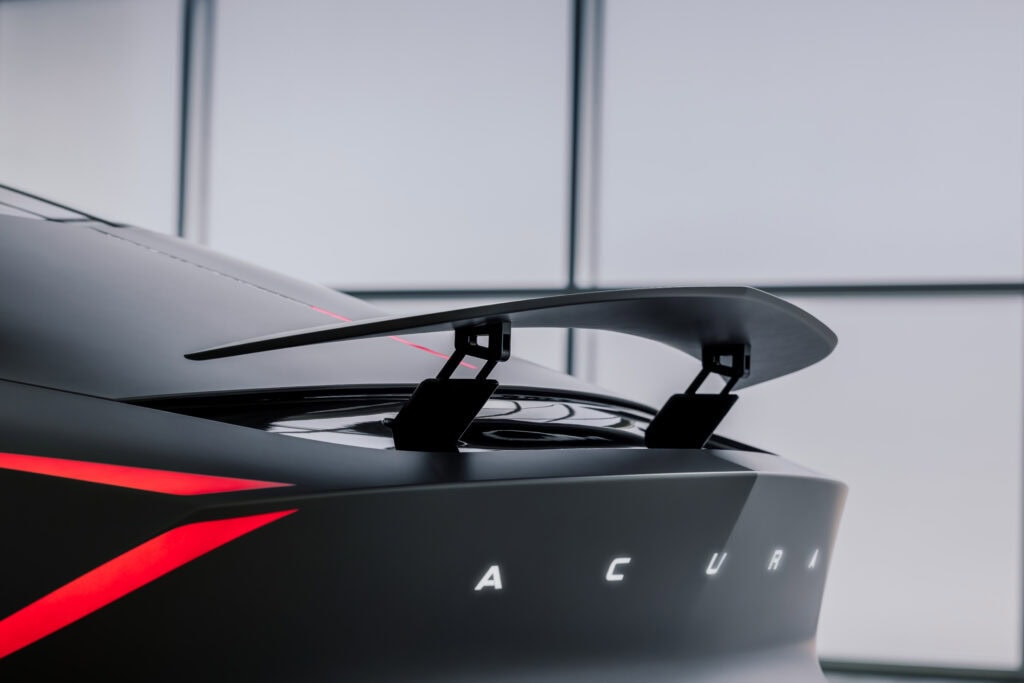
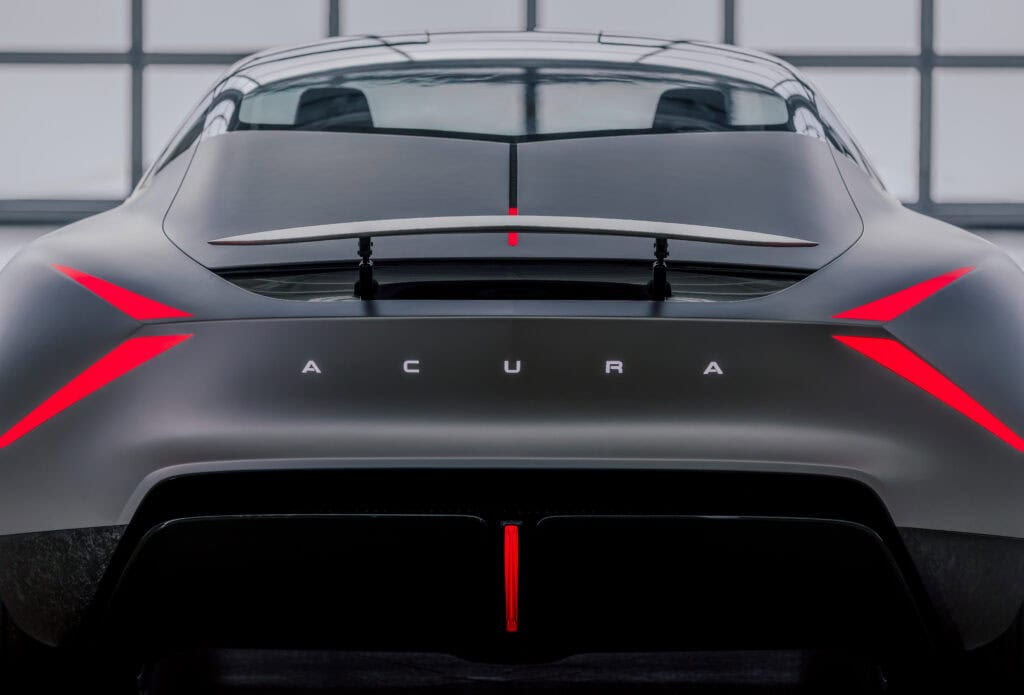
The active rear spoiler is one place where appearance and function meet. It rises to manage airflow across the rear deck, and Acura says the system is intended to improve aerodynamic efficiency, high-speed stability and braking performance. NASA’s explanation of aerodynamics shows why the shape of a moving object affects drag and airflow. Forged carbon fiber appears in the rear diffuser, lower bodywork, aero-channel fascia and other components, turning airflow management into part of the visual identity.
The challenge will be translating that clarity to an SUV. America buys practical vehicles, and Acura’s first application will be the RDX Hybrid rather than a low two-seat fantasy. Tsuchida believes the principle survives the change in category. “No matter what kind of category or body style, we can bring beautiful and simple design,” he told me. A sports car gives a designer freedom; a family crossover reveals whether the idea has substance.
You may also enjoy: Acura ADX vs BMW X1 and Audi Q3: Which SUV Wins?
Why Simplicity Is the New Performance
Tsuchida repeatedly returned to simplicity, although he does not mean deleting personality. He is arguing for fewer visual interruptions, clearer proportions and technology that performs its function without constantly demanding attention. “I think a car should be simpler than nowadays,” he said. “Let’s go back to the more pure, simple and yet beautiful car.”
That philosophy is especially clear inside. From the low front seat, NEXERA wraps around the occupants without burying them beneath switches or stacking displays across the dashboard. Acura calls the cabin spacious and intimate, two ideas that often work against each other. Here, the low seating position opens the sightlines while the narrow cockpit architecture keeps the driver connected to the machine.
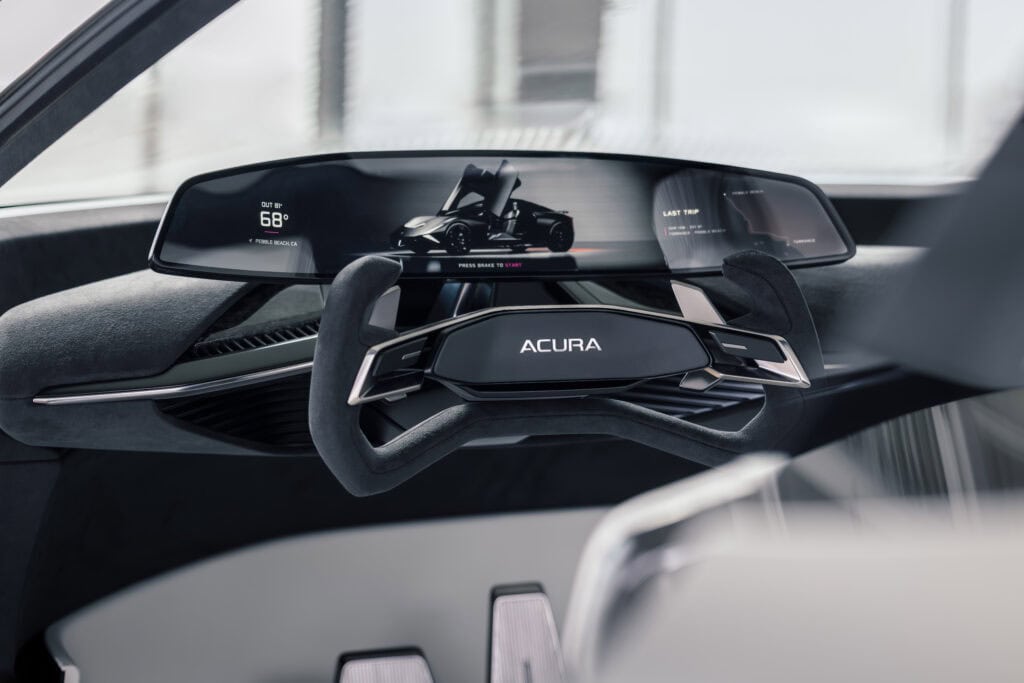
The concept is not promising a particular infotainment system, software suite or driver-assistance package. That restraint is refreshing. A clean dashboard can photograph beautifully, but the production test is whether ordinary controls remain easy to find and operate. The National Highway Traffic Safety Administration’s distracted-driving guidance includes entertainment and navigation systems among the things that can pull attention away from driving. Reducing visual clutter should reduce mental effort, not move every function into a digital menu that requires three taps and a small search party.
This is where NEXERA’s message becomes more than styling. Technology should support the experience without overwhelming it. Modern cars need screens, cameras, safety systems and connectivity, yet drivers should not feel as though they are managing a control room on the school run. Acura’s design team is proposing a hierarchy: driving first, essential information second and decorative technology somewhere below both.
The restraint does not make the cabin colorless. Black and white surfaces are punctuated by vivid pink accents in the belts, lighting and trim. As someone who is neurodivergent, I appreciate a cabin that can reduce visual noise without surrendering personality. Tsuchida sees color as a targeted instrument rather than an all-over theme, calling it “super effective” for bringing both exterior and interior design to life.
You may also enjoy: BMW Vision Alpina May Be Too Fancy for Its Badge
Fixed Seats Change the Relationship With the Car
Both front seats are fixed directly to the floor. Instead of sliding the seat toward the controls, the steering wheel and pedals move toward the driver. The arrangement lowers the occupants, creates a more connected sports-car posture and allows the cabin architecture to be built around a consistent seating position. Sitting there feels wonderfully important, as though the car has adjusted itself for your arrival.
There is genuine logic behind the theater. Fixed seating can help designers reduce the height of the cabin, simplify the structure around the seat and preserve a specific relationship between the driver and the exterior. It also lets the sculpted seat forms become part of the interior architecture instead of looking like furniture placed inside it.
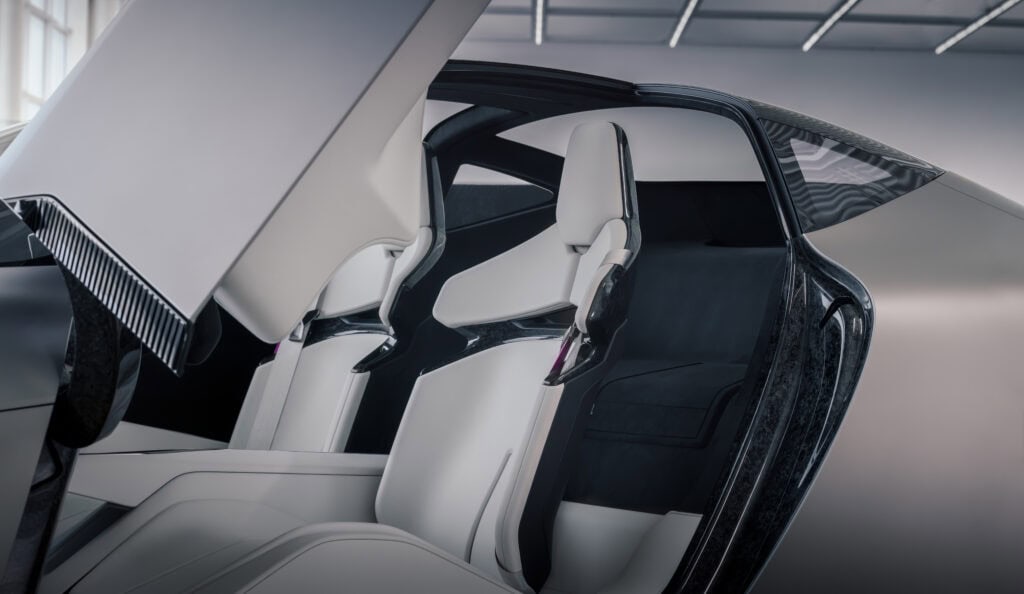
Acura has not confirmed the system for production, and reality will be less obliging. A road car must fit an enormous range of bodies, meet crash-protection requirements, provide comfortable ingress and work for owners wearing everything from driving shoes to winter boots. A fixed seat also raises practical questions about rear access, serviceability and whether the same architecture can work in a family SUV.
The materials carry a similar mixture of ambition and uncertainty. Recycled aluminum appears alongside forged carbon, gloss finishes and Alcantara containing certified post-consumer recycled polyester. The U.S. Department of Energy explains how lightweight materials, including aluminum and carbon-fiber composites, can reduce vehicle mass. Acura also uses CircuLeather, described as genuine leather developed around a more circular material lifecycle. The Environmental Protection Agency defines a circular economy as one that reduces material use and recaptures waste as a manufacturing resource. The point is to treat sustainability as a legitimate premium-design requirement rather than the automotive equivalent of eating your vegetables.
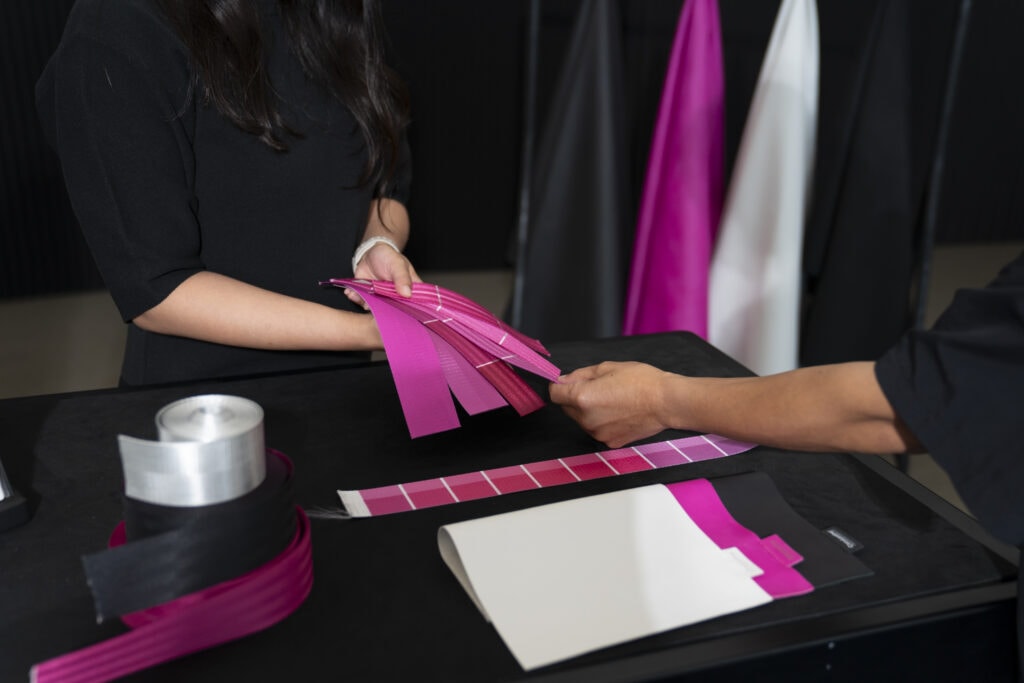
That approach is promising because premium materials are judged by more than their origin story. They must feel convincing, resist wear, tolerate heat and cold, and survive years of rings, zippers, spilled coffee and Labrador claws. A sustainable cabin earns credibility when it remains desirable after 80,000 miles. NEXERA shows the intent; production vehicles will have to prove the durability.
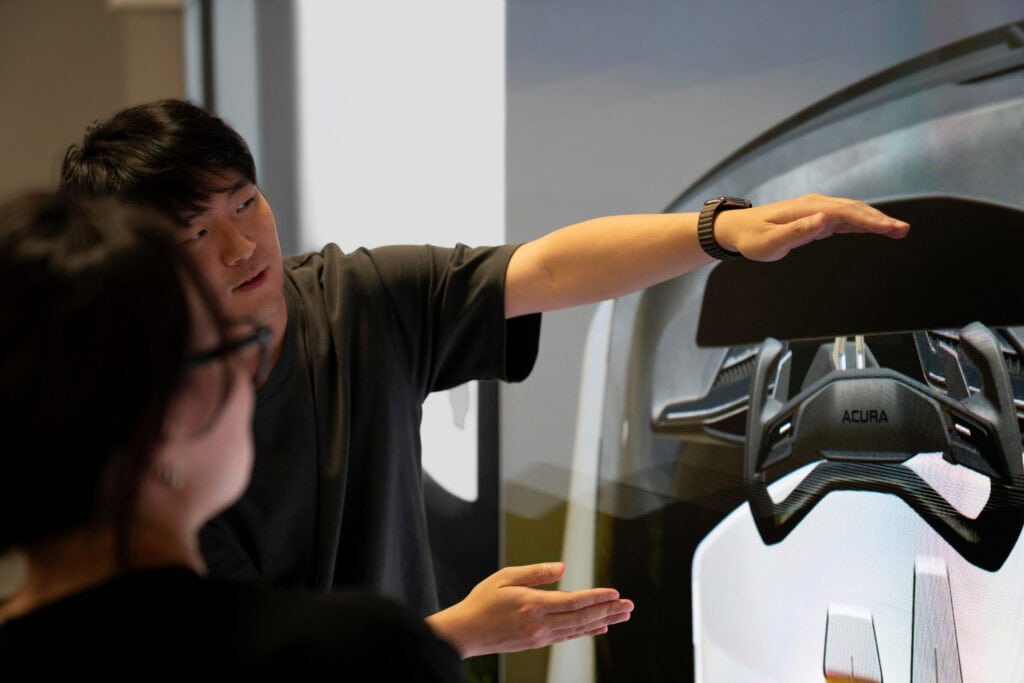
The design process itself mixes new and traditional tools. Acura uses virtual reality to evaluate ideas earlier and reduce its dependence on physical models, but Tsuchida does not see digital development as a replacement for touch. “We love to do hand sketch, or even shaping the clay,” he said. “That’s an important point for making emotional design.” The future, in other words, still gets fingerprints on it.
You may also enjoy: Is the 2026 Acura MDX Type S Worth It?
Phantom Lighting Gives Future Acuras a Face
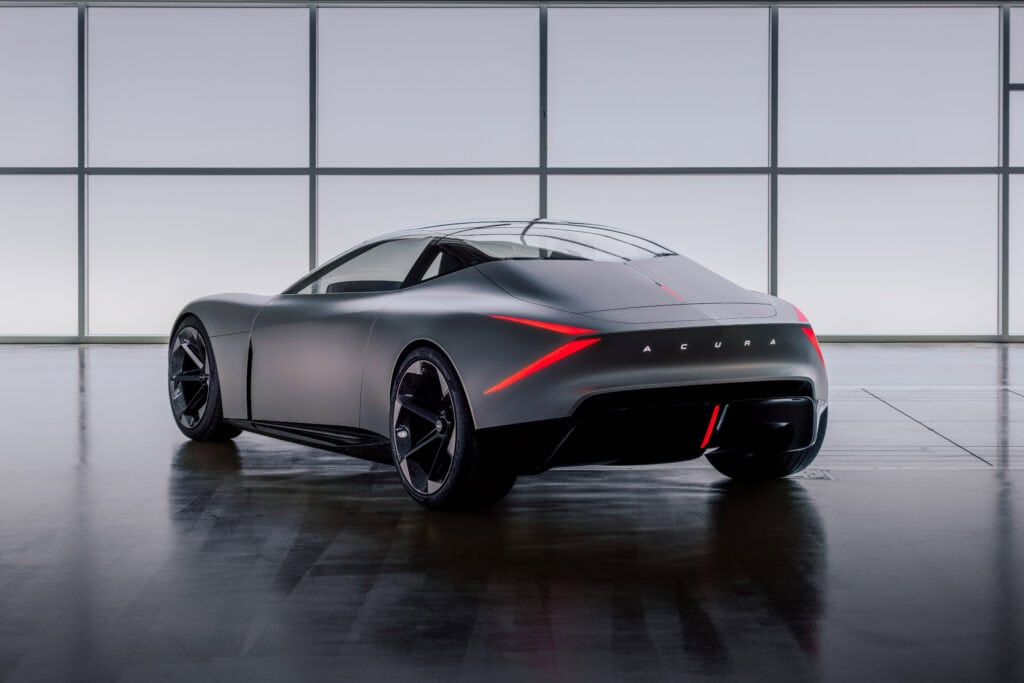
The feature most likely to change how future Acuras look is almost invisible when it is not working. Acura calls it phantom lighting. With the lamps switched off, the lighting elements disappear behind the bodywork, leaving the exterior surfaces uninterrupted. Turn them on and ultra-thin headlights and taillights create a graphic inspired by Acura’s pointed “A” emblem.
Unlike the fixed seats or butterfly doors, the lighting direction is confirmed for future production models, beginning with the next-generation RDX Hybrid. That makes it more than concept-car jewelry. Acura is using lighting as a form of recognition, allowing drivers to identify the brand at night, in a rearview mirror or across a crowded parking lot before they can read the badge.
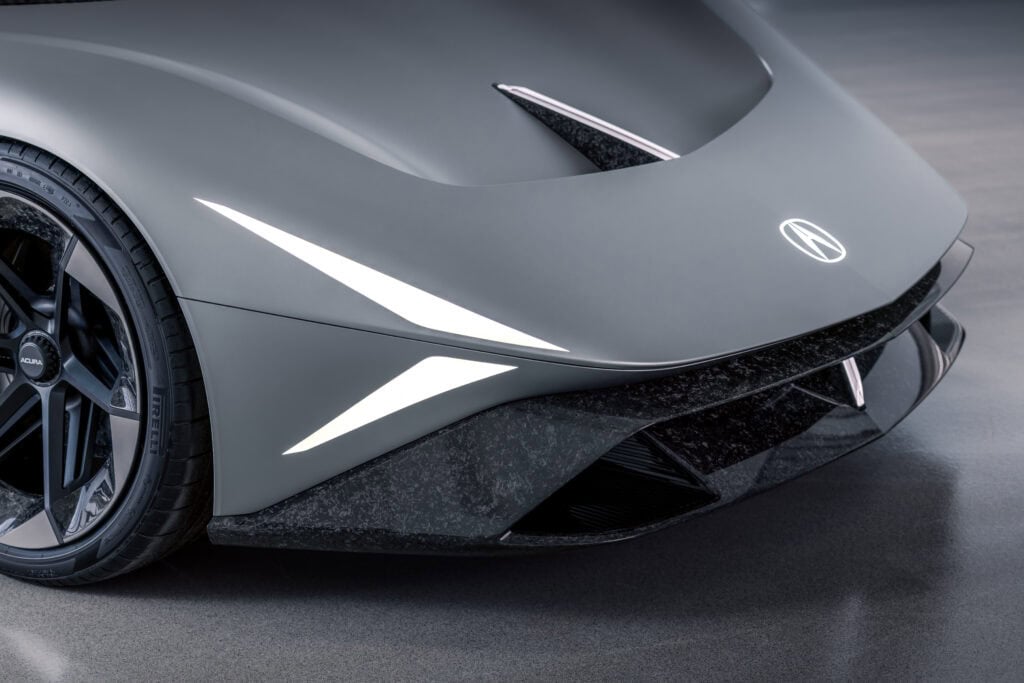
This is a clever response to a real design problem. Grilles once gave brands an unmistakable face, but electrification and changing cooling requirements have weakened the need for large traditional openings. Lighting can carry identity without adding another physical shape. When the car is off, the surface stays calm. When it is running, the “A” signature supplies the character. Federal rules still govern how production lamps perform, while the Department of Transportation’s adaptive-driving-beam rule illustrates how new lighting technology must be paired with specific safety requirements.
Tsuchida believes advanced technology should make the future visually simpler. “You see a hidden front and rear lamp,” he said. “That can be done in the future.” He reduced the goal to three words: “More subtle, simple, clean.” Achieving that on a production vehicle will require the lamps to satisfy visibility, durability, repair and regulatory requirements, but the concept is grounded in a feature Acura intends customers to see.
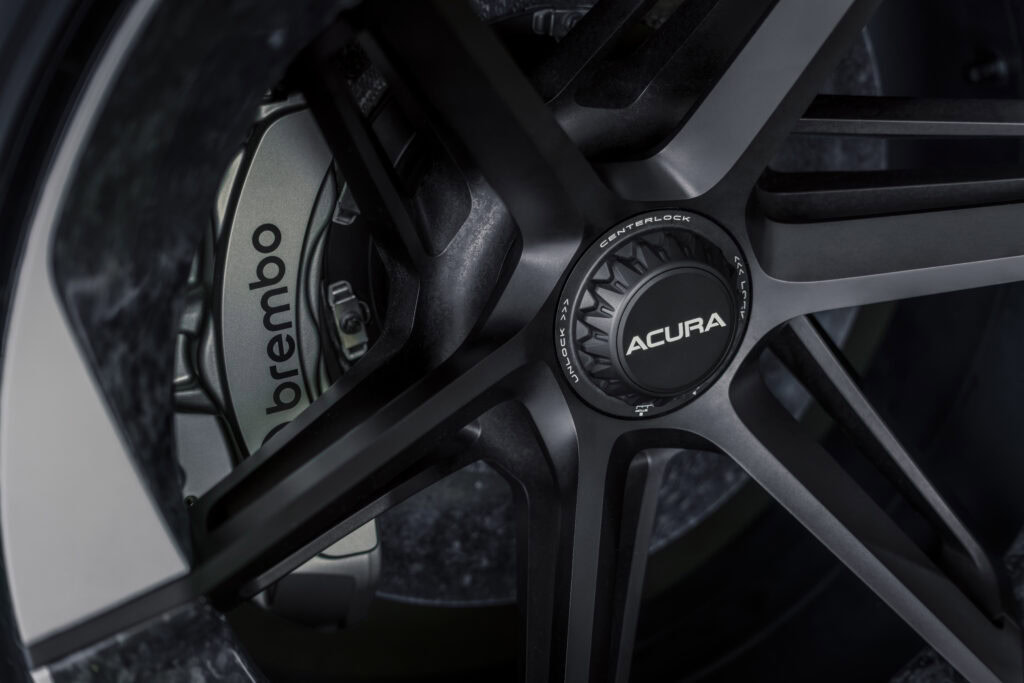
The same blend of visibility and function appears at the wheels. NEXERA uses Acura’s first center-lock wheel design, measuring 22 inches with a three-dimensional directional pattern, matte anodized surfaces and forged-carbon inserts. Carbon-ceramic Brembo brakes sit behind them to manage the heat created by repeated high-performance stops. Acura has not committed that hardware to production, but it keeps the performance message from becoming purely cosmetic.
You may also enjoy: Jaguar Type 01 Interior Turns Luxury Sideways
What Has to Survive the Real World
The honest criticism is simple: NEXERA’s best ideas still have to survive cost, weather and steep driveways. Concept cars can use fixed seats, exotic materials and spectacular doors without answering difficult questions about parking garages, child access, insurance repairs or what happens when someone opens a butterfly door in pouring rain.
The dual-hinge doors provide the concept’s largest piece of choreography. They lift and rotate, exposing forged-carbon inner structures and creating an entrance worthy of Monterey. If anything like them reaches production, engineers will have to control the opening arc, protect the seals, manage weight and make certain the driver can still escape a narrow garage without phoning the fire department.
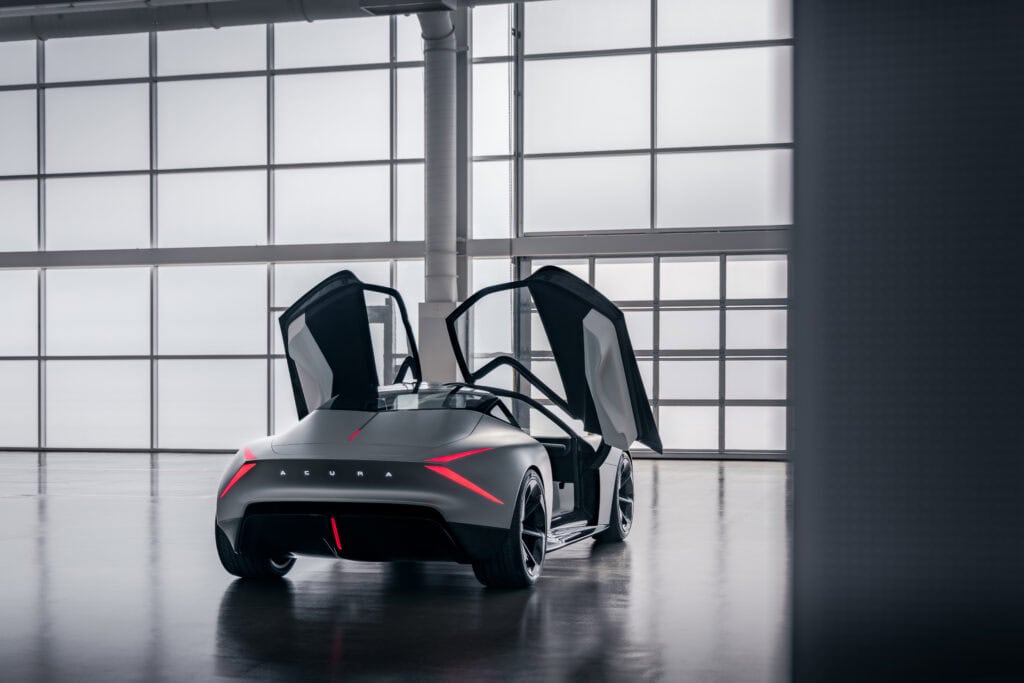
The clean body presents similar production work. Hidden lights must remain visible in poor weather. Low aero components must tolerate ramps and curbs. Gloss surfaces must resist scratches. Recycled and circular materials must meet durability and safety standards at a price customers will accept. In the United States, Federal Motor Vehicle Safety Standard No. 108 establishes requirements for lamps, reflective devices and associated equipment. None of these challenges invalidates the concept; they explain why a concept is the beginning of the design process rather than the end.
NEXERA also leaves the mechanical future deliberately open. There is no confirmed engine, motor, battery, output or drivetrain because Acura does not want the car read as a disguised production specification. That may frustrate anyone hoping for an immediate NSX successor, but it keeps attention on the broader question: can Acura build a recognizable family of vehicles without repeating the same shape at different sizes?
The fourth-generation RDX Hybrid will provide the first meaningful answer. An SUV cannot rely on a low roof, center-lock wheels or a dramatic seating position to create emotion. It must carry people and cargo, clear driveways and work in daily traffic. If Acura can preserve NEXERA’s lighting identity, controlled surfacing and driver-focused calm inside that practical shape, the concept will have done its job.
That is why the Acura NEXERA Vision matters. It is for anyone wondering what tomorrow’s Acura will look like and whether excitement still has a place in a practical, electrified future. The concept does not answer every engineering question, and it should not. It gives Acura something it needs first: a clear emotional direction, expressed with fewer lines and considerably more confidence.
You may also enjoy: Honda Passport and Acura Integra Type S Head to Japan from US