2027 Toyota Camry: The Sedan Comeback Is Real
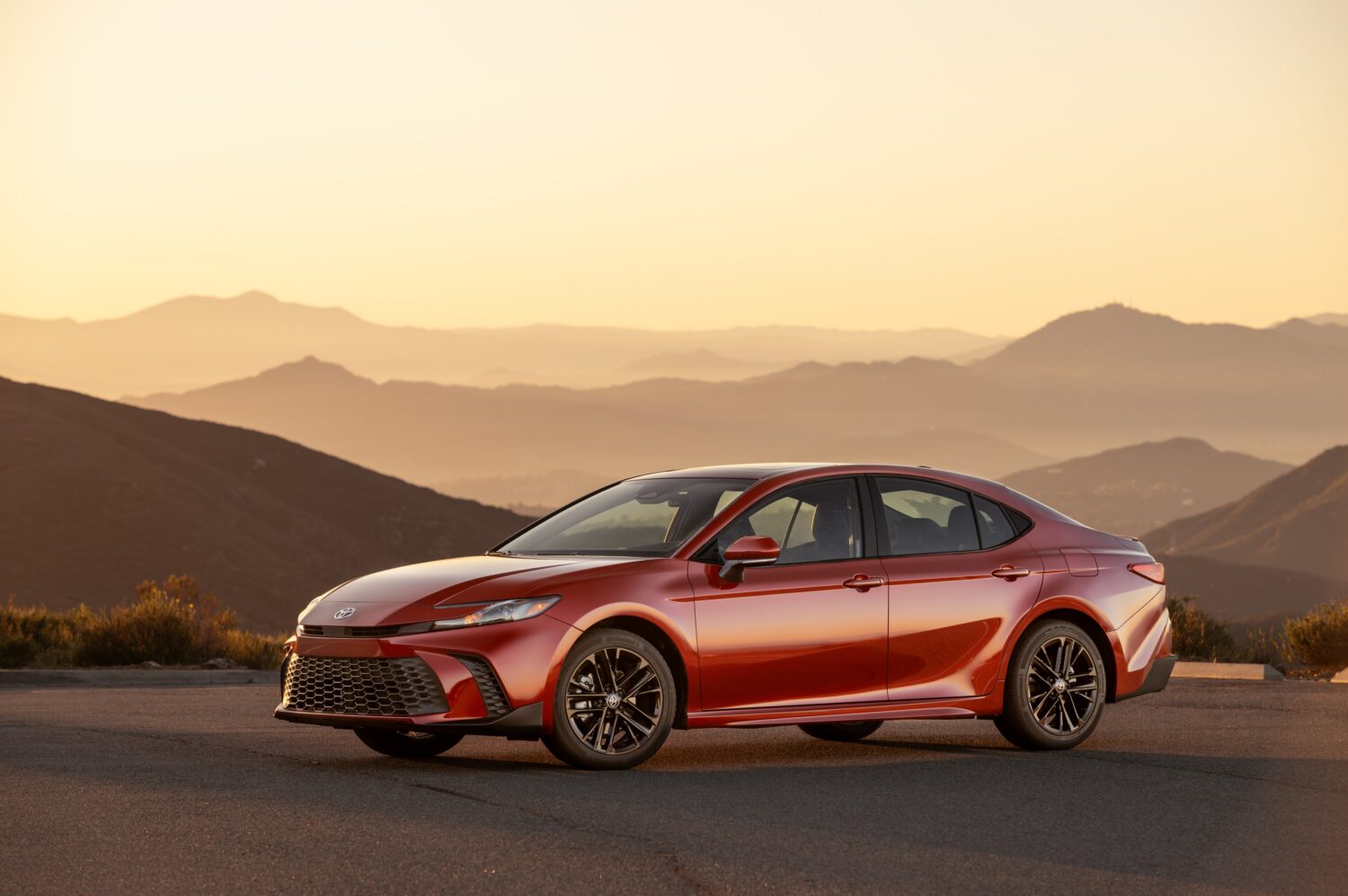
The 2027 Toyota Camry returns with up to 51 mpg, five hybrid trims and a powerful reminder that American buyers haven’t abandoned sedans.
The 2027 Toyota Camry is back, starting at $29,700, offering as much as 51 mpg combined, and producing up to 232 horsepower with available all-wheel drive. It arrives at dealerships this fall with five choices, from the economical LE to the blacked-out Nightshade and premium XSE.
Here’s the revealing part. Toyota hasn’t redesigned the Camry for 2027. The equipment and trim levels carry over. Yet this is arguably more interesting than another model-year makeover because the Camry’s existing formula is working rather well.
In 2025, Americans bought 316,185 Camrys. That’s more than 866 every day on average. For a vehicle type supposedly being swept aside by crossovers, those are remarkably healthy numbers.
You may also like this video:
Why the 2027 Toyota Camry matters right now
The strongest evidence of a sedan revival comes from Toyota’s own sales reports. Camry volume rose about 2% in 2025, compared with 2024, while Toyota division passenger-car sales increased approximately 3.9% to 646,176 vehicles.
The company also recorded its strongest year yet for the Camry Hybrid. That’s significant because Toyota made the entire Camry range hybrid-only with the ninth generation introduced for 2025.
According to Toyota’s 2025 sales report, electrified vehicles represented 47% of combined Toyota and Lexus U.S. sales. Hybrids have become mainstream transportation rather than an unusual alternative.
This doesn’t prove every sedan is enjoying a comeback. It does tell us something about customers who still prefer a lower vehicle with an ordinary trunk, good fuel economy and no requirement to install charging equipment.
You may also enjoy: 2026 Toyota Camry Nightshade: The Coolest Car You Might Actually Want
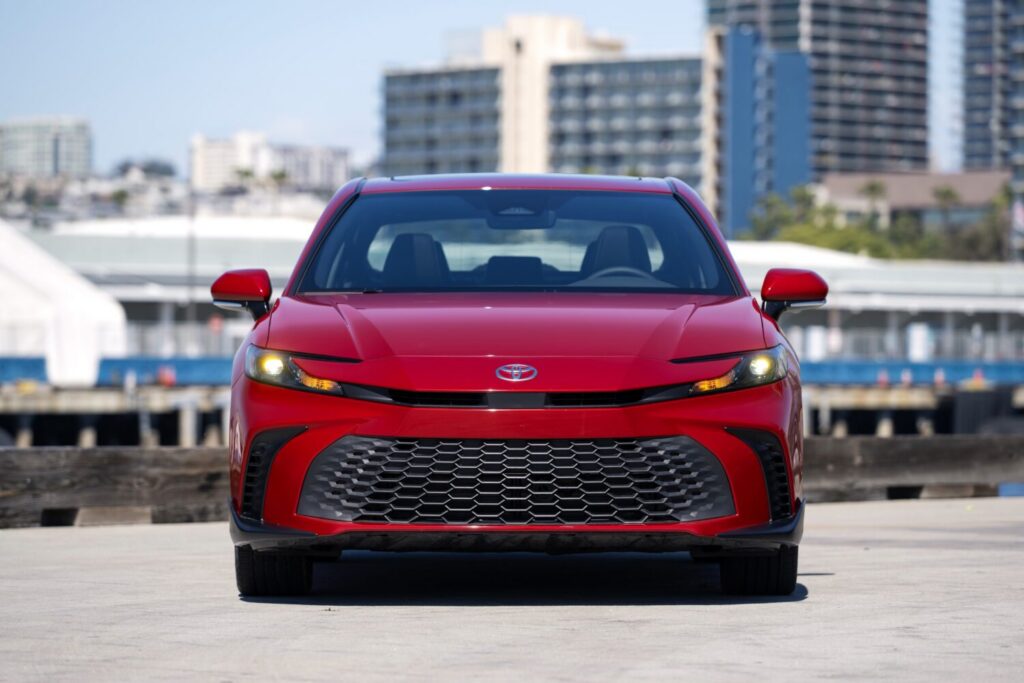
From a sensible family car to an American institution
The Camry arrived in America in 1983 after debuting in Japan the previous year. Toyota built its reputation around an uncomplicated proposition: comfortable transportation, dependable engineering and room for an ordinary family.
That strategy became extraordinarily successful. Toyota reported more than 10 million U.S. Camry sales by 2016 and celebrated its 10 millionth Kentucky-built Camry in 2021.
Today, the ninth-generation sedan is still manufactured in Georgetown, Kentucky. That’s an important detail when discussing the future of American automotive manufacturing.
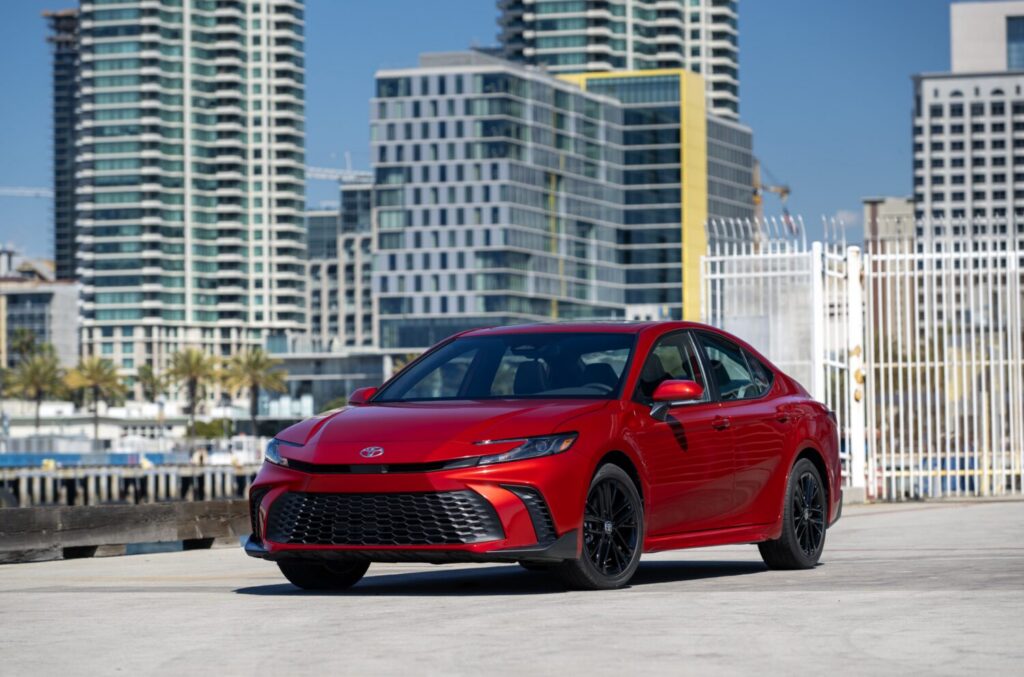
Of course, today’s Camry bears little resemblance to its boxy ancestors. The current design, created through Toyota’s CALTY studios in California and Michigan, has a low, wide appearance and the company’s distinctive hammerhead front end.
You may also enjoy: 2025 Toyota Camry Gets a Makeover: Same Sedan, Spicier
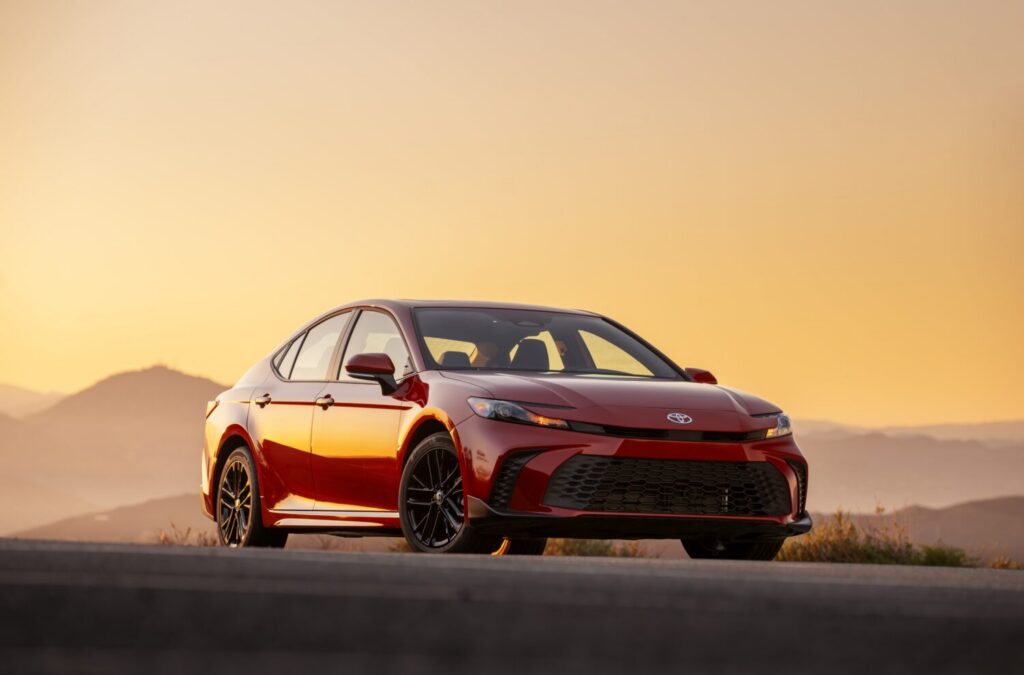
Hybrid power is now the Camry’s calling card
Every 2027 model combines Toyota’s fifth-generation hybrid technology, a 2.5-liter four-cylinder engine and a lithium-ion battery. Front-wheel-drive versions produce 225 combined horsepower. Electronic all-wheel-drive models deliver 232.
The headline figure is the LE front-wheel-drive model’s manufacturer-estimated 51 mpg combined. That’s the number I’d pay attention to if I were shopping for an economical family car.
The Department of Energy explains how a conventional hybrid automatically combines gasoline and electric propulsion. There’s no charging cable involved.
Regenerative braking captures some energy during deceleration, while an electronic continuously variable transmission manages power delivery. Drivers can choose Normal, Eco or Sport modes.
Toyota also gives every grade the option of all-wheel drive. An electric motor at the rear axle supplies additional traction when conditions require it. Don’t confuse that with an off-road system, but it could be attractive to buyers dealing with wet or snowy commutes.
MacPherson struts and a multi-link rear suspension underpin the range. SE, Nightshade and XSE receive specific sport suspension tuning, including different springs and shock absorbers.
The federal hybrid technology guide explains the efficiency advantages of this arrangement. Toyota’s 51-mpg figure remains a manufacturer estimate, however, rather than a Test Miles measured result. Shoppers should compare the final EPA fuel economy label before purchase.
You may also enjoy: 2026 Toyota Corolla Hybrid Review: The Sensible Choice
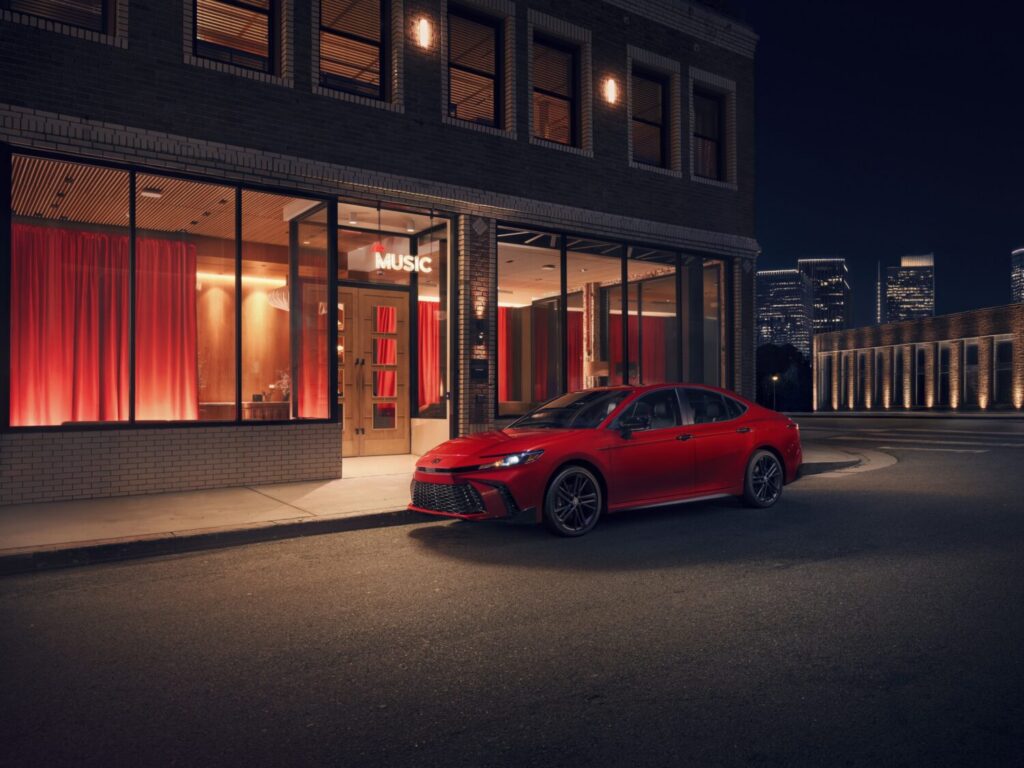
Five Camrys, five different priorities
The LE is the value-conscious choice, featuring 16-inch alloy wheels, fabric seating and the equipment most drivers will use every day.
SE introduces a more aggressive mesh grille, sport rockers, black accents and 18-inch wheels. Nightshade goes further with gloss-black trim, distinctive 19-inch wheels and Midnight Black Metallic exterior details.
XLE places comfort ahead of theater, with 18-inch wheels, leather and Dinamica microfiber upholstery, acoustic front-side glass and heated, power-adjustable front seats.
XSE combines a sportier appearance with leather seating, 19-inch wheels, additional exterior aero details and dual-tip exhaust outlets. SE, Nightshade and XSE also receive aluminum sport pedals, paddle shifters and leather-wrapped controls.
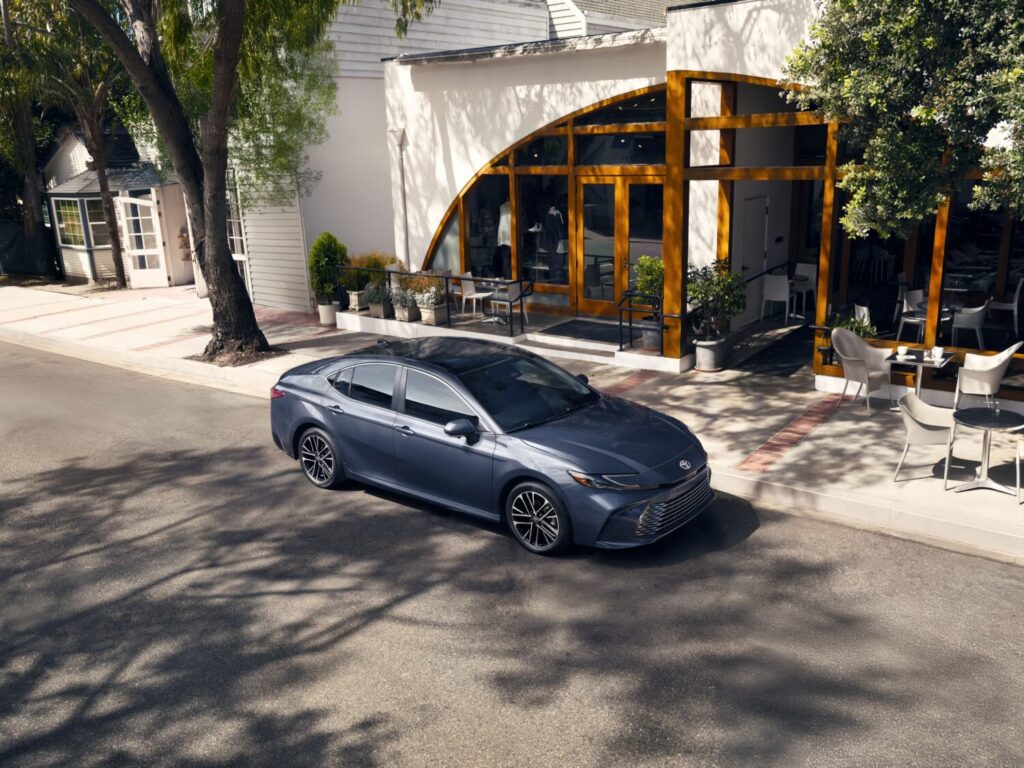
Exterior choices include Supersonic Red, Ocean Gem, Reservoir Blue, Heavy Metal, Underground and several white, silver and black finishes. The XSE offers selected combinations with a black roof.
My starting recommendation is the LE. If quieter highway travel and improved seat comfort matter more, compare the XLE. I would only pay extra for Nightshade or XSE after deciding that their appearance and equipment justify the expense.
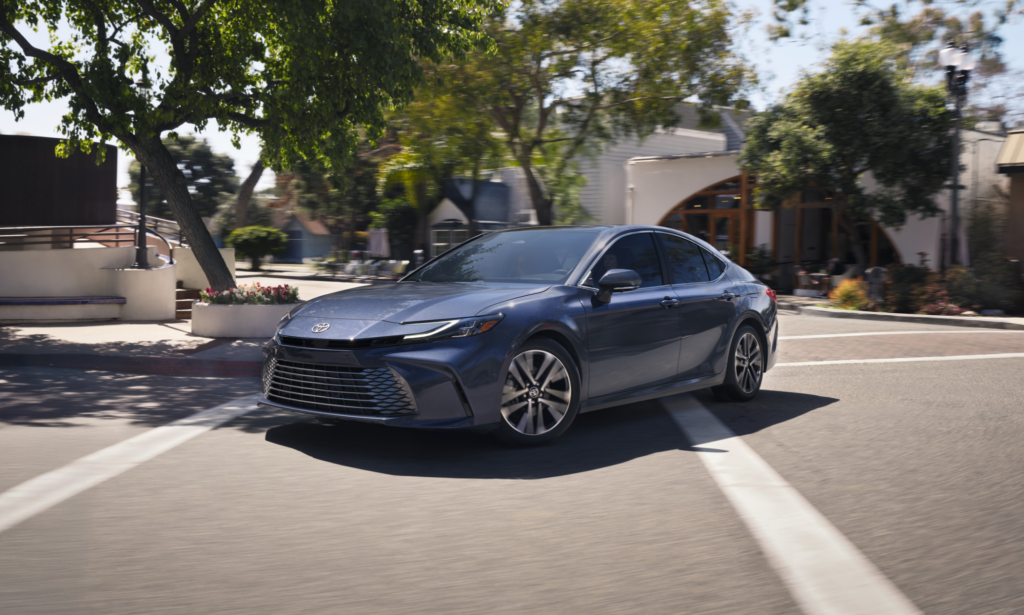
Technology that makes everyday driving easier
Wireless Apple CarPlay and Android Auto, a wireless phone charger, five USB ports, rear climate vents, dual-zone temperature control and push-button starting are standard.
The basic infotainment display measures eight inches. A 12.3-inch touchscreen is available on selected grades, while XLE and XSE receive standard 12.3-inch digital instrument panels. A 10-inch head-up display is also available on those upper trims.
Six-speaker audio is included, with a nine-speaker JBL system offered on XLE and XSE. These two grades can also be fitted with ventilated front seats, a panoramic roof, driver memory settings and a compatible smartphone Digital Key.
There is a catch worth understanding. Connected services include trial periods, and some features require subscriptions or an active 4G connection. Toyota includes five-year trials for selected services and a 30-day, 3GB Wi-Fi trial.
You may also enjoy: 2026 Toyota Lineup Preview: The Year the Camry Got a Sibling with a Socket
Safety equipment deserves as much attention as styling
Toyota Safety Sense 3.0 comes standard. Its features include pedestrian-detecting pre-collision assistance, adaptive cruise control, lane-departure warning with steering support, Lane Tracing Assist, road-sign recognition, automatic high beams and Proactive Driving Assist.
Blind-spot monitoring, rear cross-traffic alerts and Safe Exit Alert are standard as well.
The optional Premium Plus Package for XLE and XSE adds Traffic Jam Assist, Lane Change Assist, Front Cross-Traffic Alert, a panoramic camera system and parking assistance with automatic braking.
The National Highway Traffic Safety Administration expanded its evaluations for 2027 models, including pedestrian protection. Buyers should check the specific Camry’s published assessments rather than assuming that having driver-assistance features guarantees a top crash-test score.
Research from the Insurance Institute for Highway Safety also explains how crash-avoidance systems can reduce certain crashes. These are assistance systems, however, not substitutes for an attentive driver.
Toyota includes a three-year/36,000-mile basic warranty, five-year/60,000-mile powertrain coverage and a transferable 10-year/150,000-mile hybrid battery warranty. Other hybrid components receive eight-year/100,000-mile coverage.
Scheduled maintenance is covered for one year or 10,000 miles through ToyotaCare, with three years of roadside assistance.
You may also enjoy: Toyota Doubles Down on Hydrogen, Adds Style to Camry, and Bets Big on Bots
Protecting the interior of your new Camry
Owners who want to protect their carpets from wet shoes, dirt and daily family use may want to consider fitted all-weather floor mats. Confirm the correct fitment for your vehicle before buying.
OEDRO floor mat offer: Shop OEDRO directly or Shop OEDRO on Amazon. Use code NIKM20 at the OEDRO official store. Test Miles may earn a commission from purchases made through these affiliate links.
The verdict: America’s sedan still has plenty to offer
The most revealing thing about the 2027 Camry isn’t an enormous new screen or an extravagant performance figure. It’s Toyota’s confidence that buyers still want this kind of vehicle.
The Camry may not have the cargo access or elevated seating position of an SUV. It also hasn’t gained major new hardware for 2027. Anyone expecting a fresh redesign should understand that before visiting a showroom.
But look at the proposition: a family-sized hybrid sedan, available all-wheel drive, comprehensive standard safety equipment, up to 51 mpg estimated and a starting MSRP below $30,000 before fees.
That’s an appealing combination, backed by substantial recent sales. It suggests the sedan hasn’t become irrelevant. Customers are still buying them when the product makes sense.
The Camry has spent more than four decades proving that practical motoring can be a remarkably successful business. For 2027, Toyota appears quite happy to keep proving it.