2026 Toyota Corolla Hybrid Review: The Sensible Choice
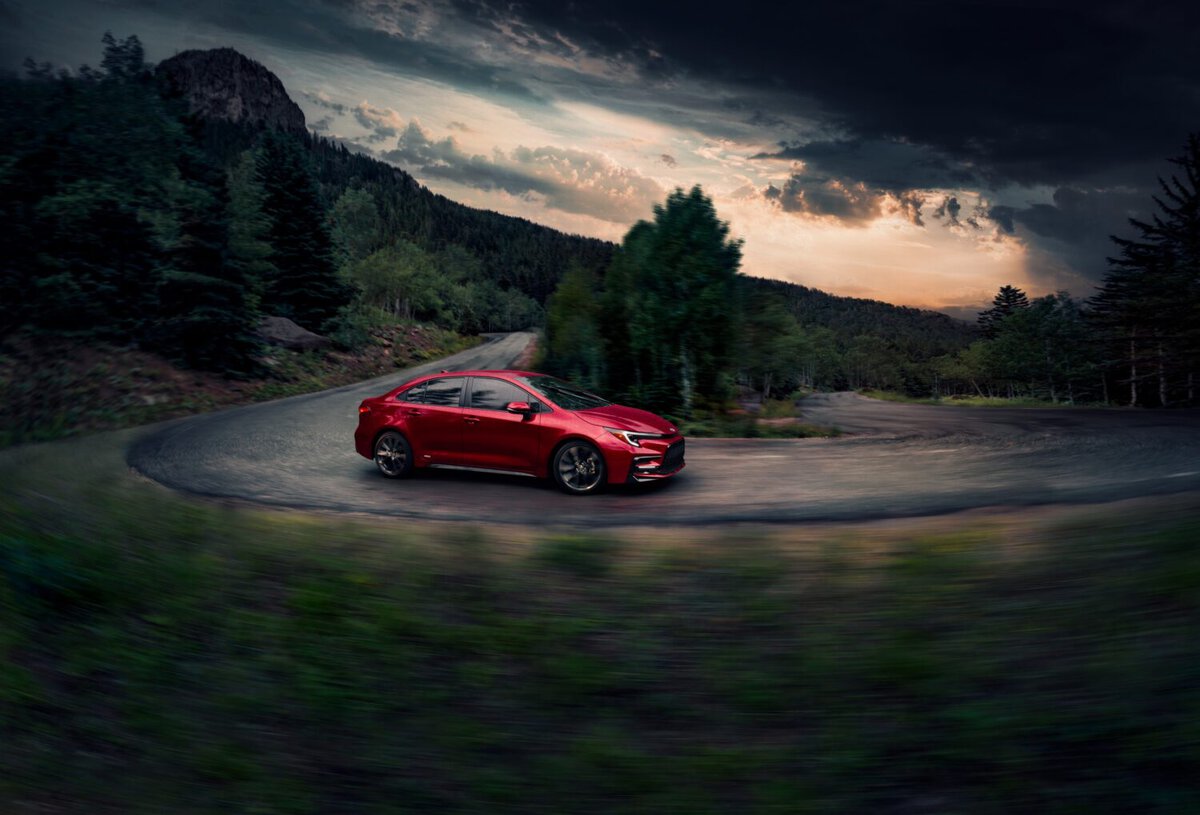
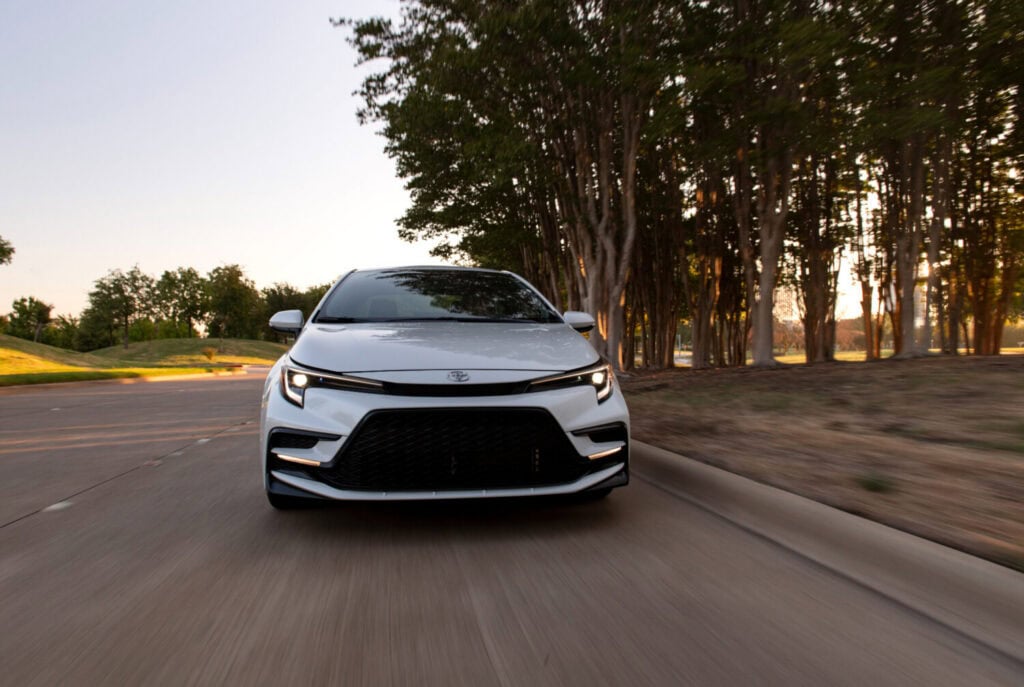
The 2026 Toyota Corolla Hybrid review finds a 50-mpg sedan with strong safety equipment, fair pricing and very little appetite for drama.
The most persuasive thing about the 2026 Toyota Corolla Hybrid is not a giant screen, a theatrical launch mode or a door handle that requires an instructional video. It is the ability to return an estimated 50 mpg combined while starting below $25,000 before delivery.
This is a vehicle analysis based on verified U.S. specifications, pricing and safety data. No road-test notes, mileage log or window sticker were supplied, so I will not pretend to have measured its economy or driven this particular test car. What the evidence does allow is a firm buying recommendation: start with the Hybrid LE, consider the XLE if heated seats and a more polished cabin matter, and choose the SE only if its appearance is worth lower fuel economy and more expensive tires.
Best for: Commuters and small households wanting excellent economy without charging an EV.
Skip if: You need generous rear-seat space, hatchback versatility or genuinely brisk acceleration.
Pros and cons
Pros
- Up to an EPA-estimated 50 mpg combined
- Hybrid LE starts at $24,975 before destination
- Standard blind-spot monitoring and Toyota Safety Sense 3.0
- Available all-wheel drive on LE and SE
- Wireless Apple CarPlay and Android Auto
Cons
- 138 horsepower is modest beside the Honda Civic Hybrid
- Rear-seat and trunk space are merely adequate
- SE wheels reduce efficiency and raise replacement-tire costs
- XLE pricing can overlap larger hybrid sedans
You may also enjoy this Toyota Video:
2026 Toyota Corolla Hybrid review snapshot
| Item | Verified specification |
|---|---|
| Body style | Five-seat compact sedan |
| Powertrain | 1.8-liter four-cylinder with electric motor system |
| Total system output | 138 horsepower |
| Transmission | Electronic continuously variable transmission |
| Drivetrain | Front-wheel drive; electronic on-demand AWD available on LE and SE |
| Official economy | Up to 53 city/46 highway/50 combined mpg |
| Cargo capacity | 13.1 cubic feet |
| Hybrid LE MSRP | $24,975 before destination |
| Hybrid SE MSRP | $27,415 before destination |
| Hybrid XLE MSRP | $29,340 before destination |
| Price as tested | Not supplied |
| Test Miles economy | Not measured for this assignment |
The LE is the one that makes the numbers work
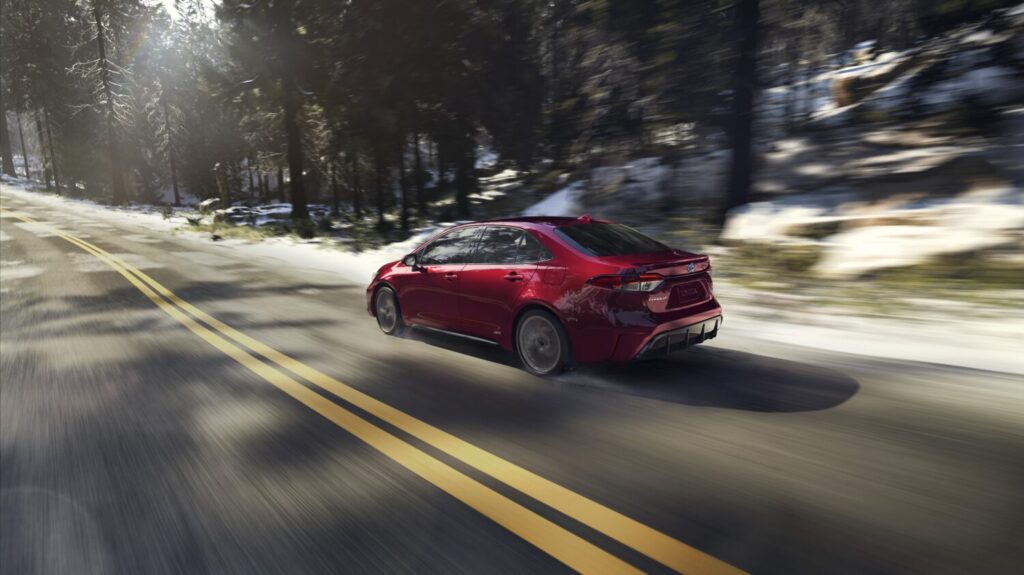
There are three front-wheel-drive trims. The LE is the honest one. It includes an 8-inch touchscreen, wireless smartphone integration, blind-spot monitoring, rear cross-traffic alert and the complete Toyota Safety Sense 3.0 suite. It also wears smaller wheels that help it achieve Toyota’s best fuel-economy estimate.
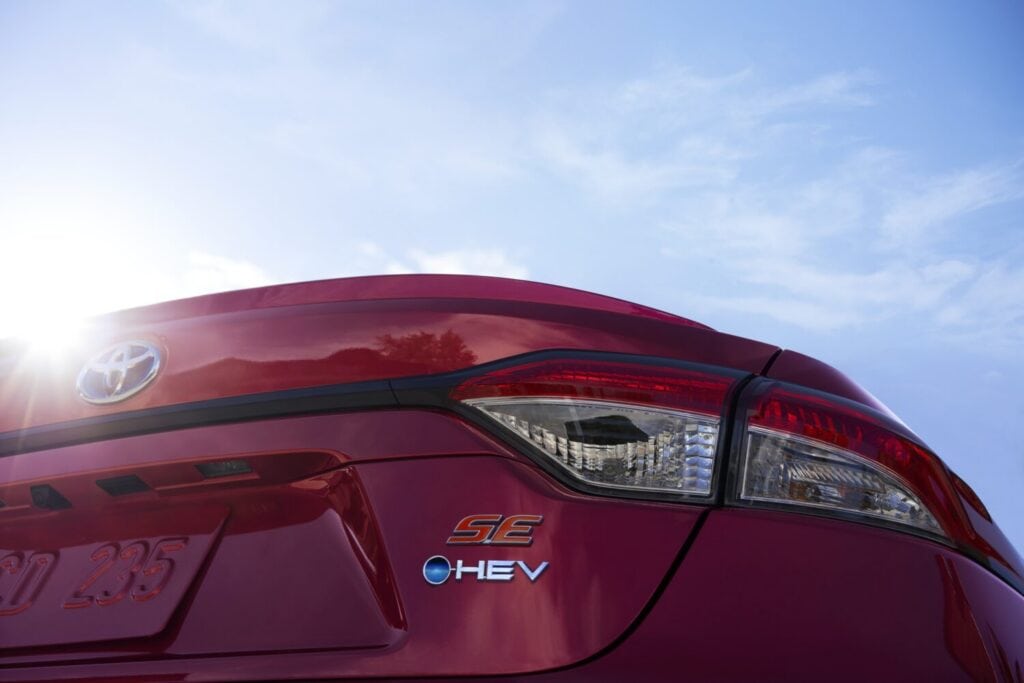
The SE asks $2,440 more for sport seats, three drive modes and 18-inch wheels, but the combined estimate falls from 50 to 47 mpg.
The XLE costs $29,340 and adds the things owners touch every day: heated SofTex-trimmed front seats, a power moonroof and a 12.3-inch digital gauge cluster. It returns to the smaller-wheel economy of 50 mpg combined. It is the trim to buy with your heart, although the LE remains the better spreadsheet.
You may also enjoy: 2026 Honda Civic Review: Hybrid Is the Smart Buy
Efficiency without reorganizing your life
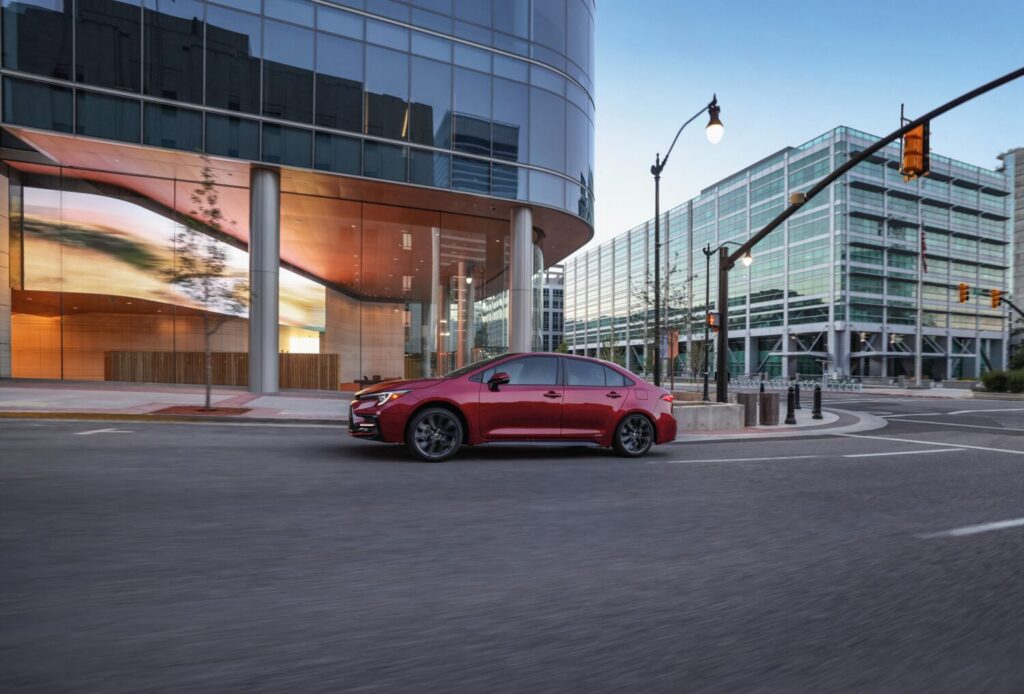
A conventional hybrid fills up at any gasoline station and never needs to be plugged in. The Corolla captures energy while slowing, stores it in its battery and uses its electric motors to reduce the engine’s workload. In low-speed situations it can move briefly on electric power, although this is not an EV mode intended for meaningful distances.
Official figure: Toyota lists the front-drive Hybrid LE and XLE at 53 mpg city, 46 highway and 50 combined. The front-drive SE is rated at 50 city, 43 highway and 47 combined.
Test Miles result: No original fuel-economy measurement was supplied. Real consumption will vary with temperature, trip length, speed, traffic, tires and driver behavior.
For a plain-language explanation of the technology, the U.S. Department of Energy explains how hybrid vehicles work.
You may also enjoy: Toyota’s Latest Move Suggests Hybrids Still Come First
Performance takes a supporting role
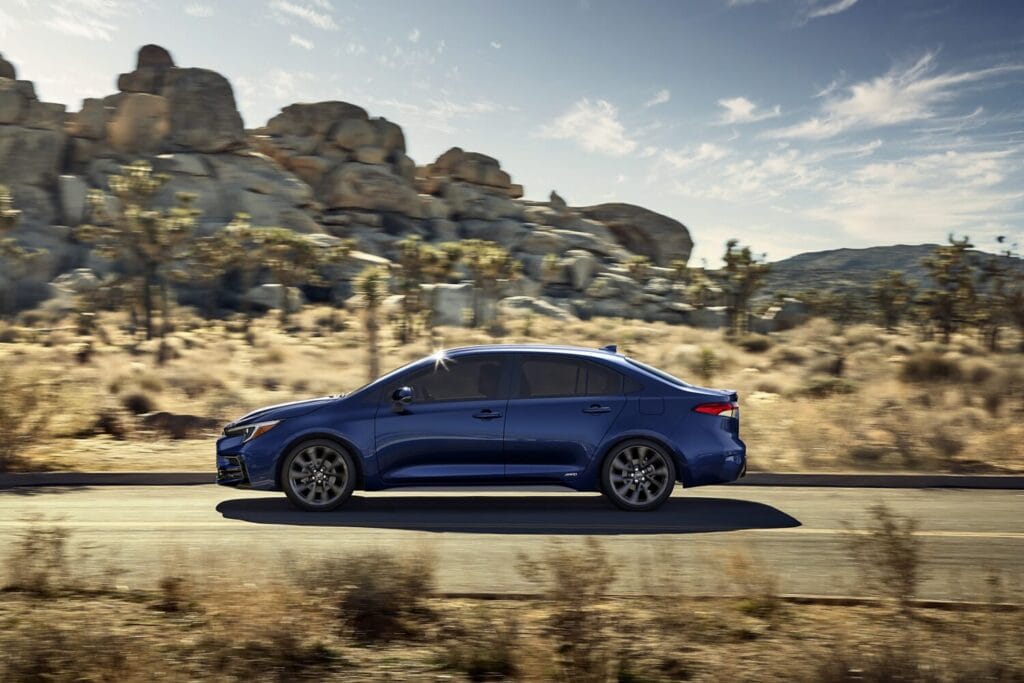
The hybrid system produces 138 horsepower. That number tells shoppers to expect adequate rather than athletic acceleration. Electric assistance should make the first step away from a traffic light feel responsive, while a hard request for speed will ask the gasoline engine to work audibly through the electronic continuously variable transmission.
Buyers who merge onto short, fast highways should drive the Corolla and Honda Civic Hybrid back to back. The Honda has substantially more power. The Corolla counters with a lower starting price, available all-wheel drive and stronger maximum fuel-economy figures.
Small outside means small in a few useful places
The Corolla is easy to place in a parking space and does not require the household to adopt an SUV merely to sit above everyone else. The price for that tidy footprint appears in the rear cabin. Two adults can use it, but taller passengers will prefer the front, and parents should take their actual child seats to the dealership before signing anything.
The 13.1-cubic-foot trunk is sensibly shaped for groceries and conventional luggage. Folding rear seatbacks add flexibility, but a Toyota Prius hatchback is far better for dog crates, bulky boxes or the sort of flat-pack furniture that looked smaller in the shop.
Seat comfort cannot be responsibly judged without drive notes. The XLE provides power adjustment, heat and SofTex upholstery.
The technology is useful rather than overwhelming
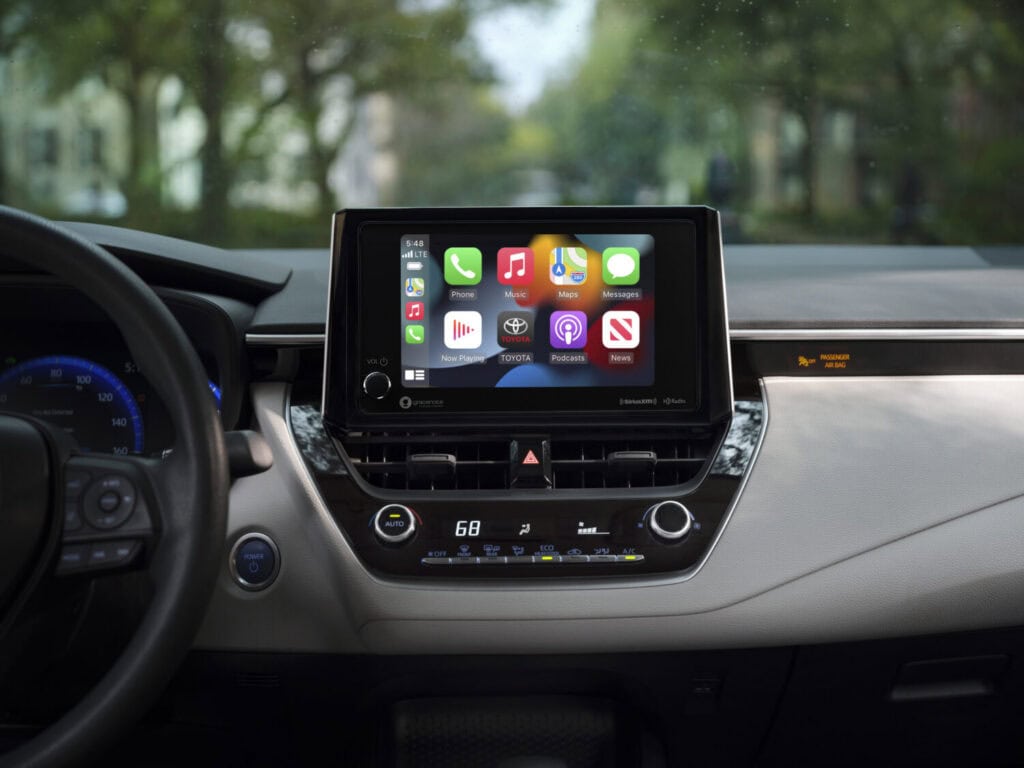
Wireless Apple CarPlay and Android Auto are standard, so most owners can leave Toyota’s native interface in the background. The standard 8-inch display is large enough for maps and audio without becoming the dashboard. A 10.5-inch screen is available.
The XLE’s 12.3-inch instrument cluster puts safety alerts and efficiency information ahead of the driver. Physical climate controls remain, so changing the temperature does not require three taps and a small prayer.
Check the connected-services fine print. Remote Connect, cloud navigation, Wi-Fi and assistance services may include different trial periods and later subscription charges. A feature is not free forever merely because the button remains in the car.
Safety scores need a little explanation
Toyota Safety Sense 3.0 includes forward-collision warning with automatic emergency braking, pedestrian detection, adaptive cruise control, lane-departure alert, lane-tracing assistance, road-sign assistance and automatic high beams. Blind-spot monitoring and rear cross-traffic alert are standard across the 2026 range.
The Insurance Institute for Highway Safety’s 2026 Corolla evaluation gives the car Good ratings in small-overlap front and updated side crashworthiness tests. The updated moderate-overlap front test is rated Marginal. Headlights, pedestrian crash prevention and vehicle-to-vehicle front crash prevention receive Good ratings.
Lane tracing and adaptive cruise control are driver aids, not autonomous driving. Hands stay on the wheel; eyes stay on the road. The car may be clever, but it has not offered to pay the insurance premium.
Corolla Hybrid versus Civic Hybrid and Prius
| Alternative | Reason to choose it | Reason to keep the Corolla |
|---|---|---|
| Honda Civic Hybrid | Stronger acceleration, polished road manners and a roomier-feeling cabin | Lower entry price, available AWD and higher maximum economy |
| Toyota Prius | Hatchback versatility, more power and a newer-feeling design | Lower price, more conventional controls and easier outward visibility for some drivers |
| Toyota Camry | More rear-seat room, more power and better long-distance comfort | Smaller footprint and lower starting price |
You may also enjoy: 2026 Toyota Camry Goes All-Hybrid, All-Attitude
Verdict: boring can be a compliment
The strongest reason to buy the 2026 Corolla Hybrid is that it concentrates money where an owner can use it: fuel economy, driver-assistance equipment and familiar controls. The strongest reason not to buy it is that the compact dimensions and modest output are impossible to disguise. A family carrying teenagers, dogs and luggage will outgrow it quickly.
For a solo commuter, couple or small household, the Hybrid LE is one of the clearest value arguments in the new-car market. The XLE is the pleasant version and probably the one owners will enjoy more each morning. Just compare its final window sticker with a Camry before committing.
The Corolla Hybrid does not try to turn the school run into qualifying at Silverstone. It simply uses less fuel while doing the ordinary work of a car. For a great many buyers, that is not faint praise. It is the entire point.
Frequently asked questions
Does the 2026 Toyota Corolla Hybrid need to be plugged in?
No. It is a conventional full hybrid, not a plug-in hybrid. The gasoline engine, electric motors and regenerative braking manage the battery automatically. Owners refuel it with gasoline in the same way as a conventional Corolla.
What is the 2026 Corolla Hybrid’s fuel economy?
Toyota lists front-wheel-drive LE and XLE models at 53 mpg city, 46 highway and 50 combined. The front-drive SE is listed at 50 city, 43 highway and 47 combined. AWD versions trade some economy for additional traction.
Is all-wheel drive available?
Yes, electronic on-demand all-wheel drive is available on the Hybrid LE and Hybrid SE. A separate electric motor powers the rear axle when extra traction is required. It is intended for on-road traction rather than off-road use.
Which Corolla Hybrid trim is the best value?
The LE makes the best financial case. It has the highest official economy, standard phone integration and the full driver-assistance suite. The XLE is worthwhile for buyers who value heated seats, power driver-seat adjustment, the digital gauge cluster and moonroof.
Is the Corolla Hybrid faster than the Honda Civic Hybrid?
No. The Corolla’s 138-horsepower system prioritizes efficiency. The Civic Hybrid offers substantially more power and is the better choice for drivers who value acceleration. The Corolla answers with a lower starting price, available AWD and up to 50 mpg combined.