2026 Jeep Wrangler Scrambler SRT Concept: First Look
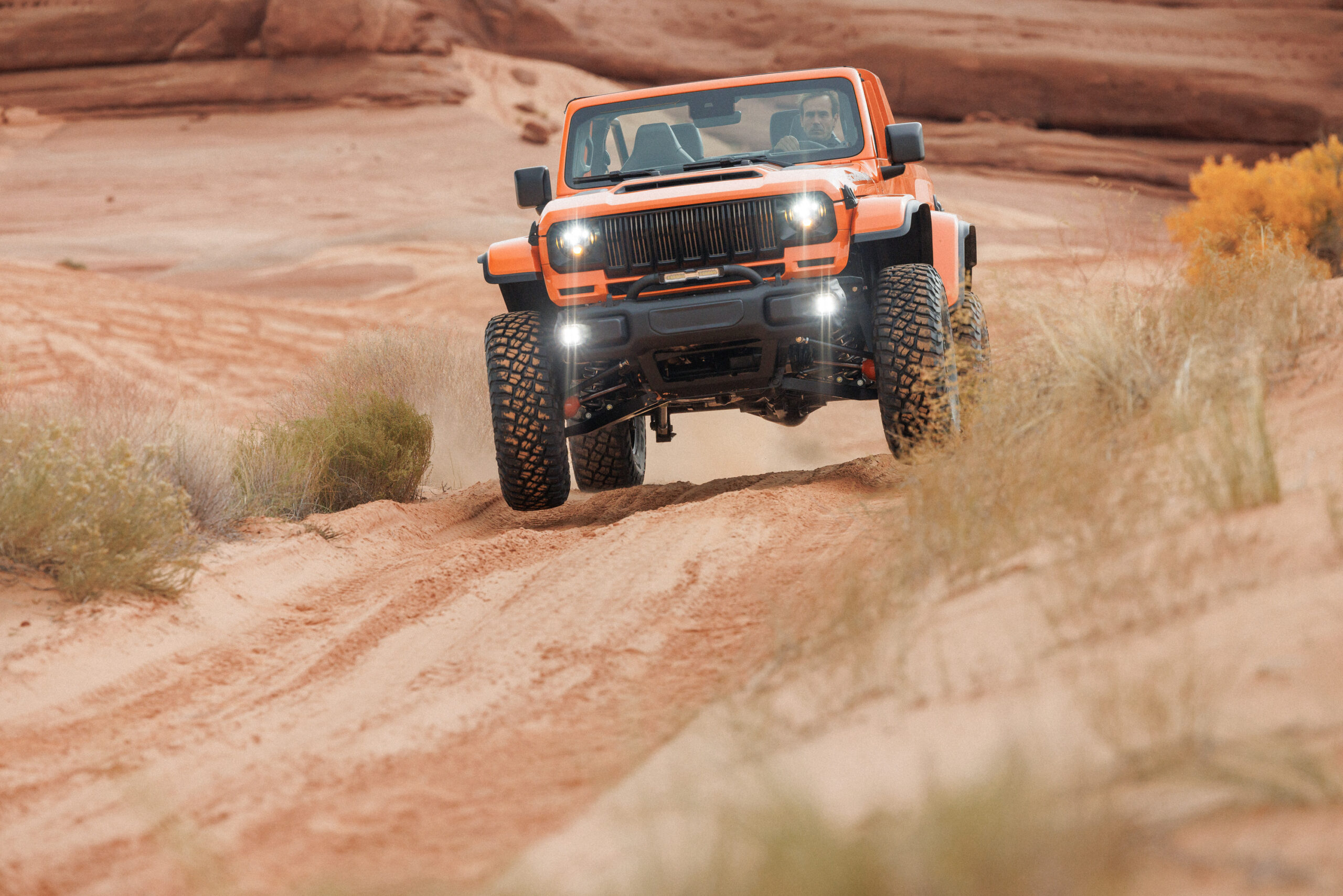
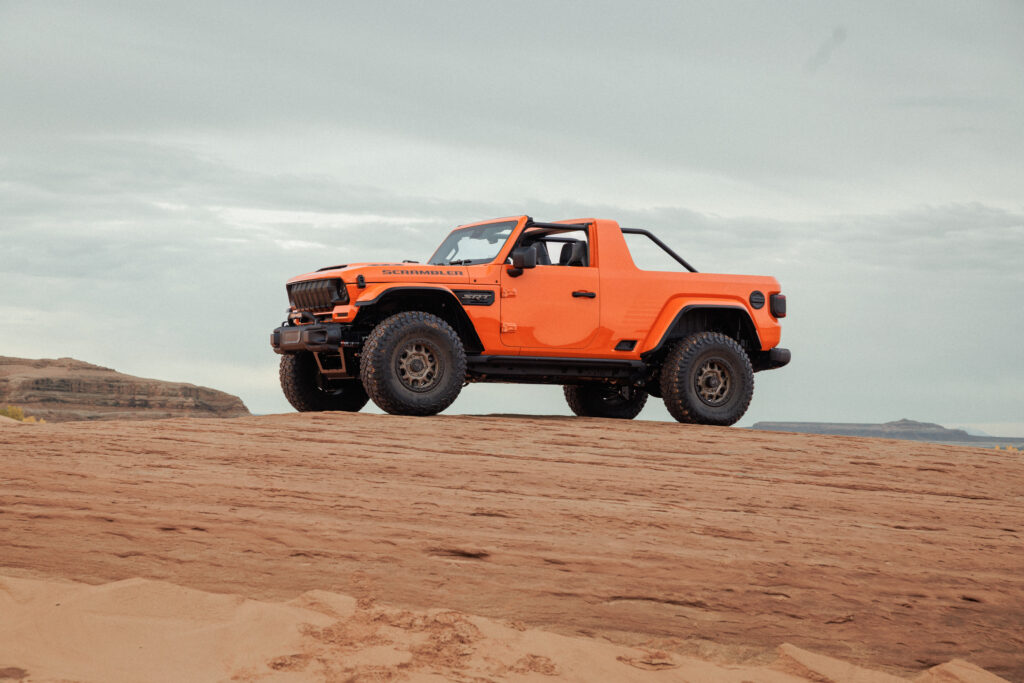
The 2026 Jeep Wrangler Scrambler SRT Concept has arrived at the SEMA Show in Las Vegas, and Jeep has finally built something many enthusiasts have wanted for years: a proper two-door, open-air pickup with serious horsepower. Better still, it comes with a piece of engineering that Wrangler traditionalists might consider borderline heresy.
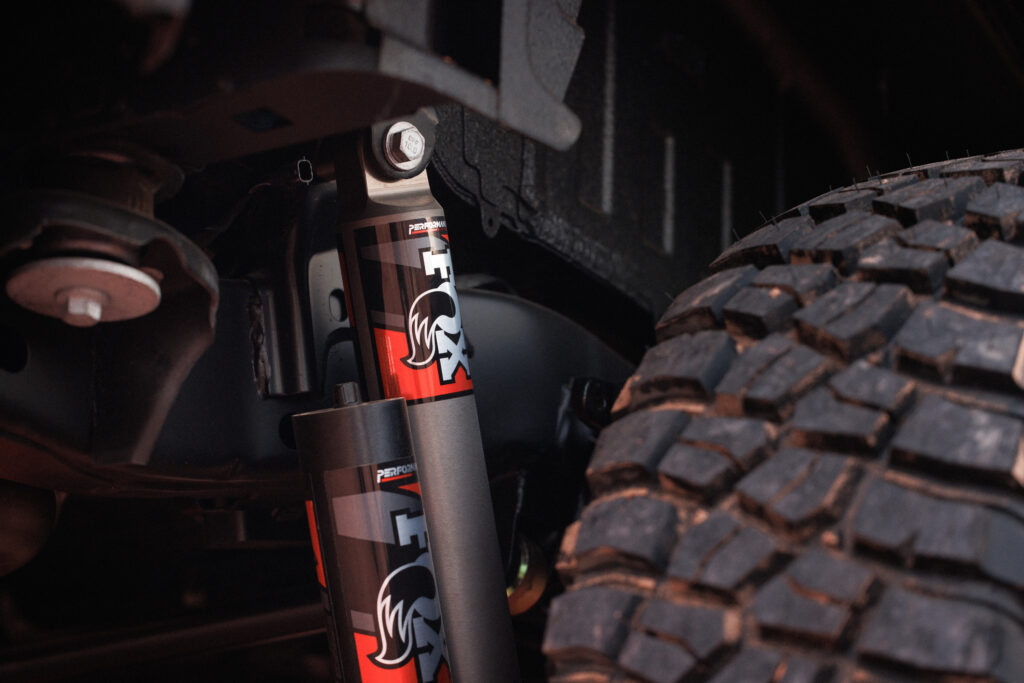
Jeep has replaced the familiar solid front axle with independent front suspension. That is a first for anything carrying the Wrangler name, and potentially a more important development than the return of the Scrambler badge itself.
Underneath the bright orange bodywork is a HEMI V8 producing 470 horsepower and 470 pound-feet of torque. Behind the cabin is a working pickup bed, complete with removable seats that can turn around to face backward. It is a rather extraordinary combination of ideas, although one suspects the people responsible for approving production vehicles may have a few questions about those seats.
There is also good reason to believe this is more than a one-off show vehicle. Jeep’s parent company, Stellantis, has listed the Wrangler Scrambler in its North American product plans through 2030, including an SRT variant.
The important distinction is that the vehicle displayed at SEMA is still a concept. Jeep has not announced its production price, final specifications or arrival date.
The Scrambler Is More Than Another Wrangler Special Edition
The original Jeep CJ-8 Scrambler arrived in 1981 and remained in production through 1986. It offered traditional Jeep off-road ability with a longer body and a small pickup bed. It was different, useful and rather charming in a way that modern trucks, with their enormous dimensions and increasingly complicated equipment, sometimes struggle to achieve.
The new Scrambler follows a similar philosophy, although nobody is likely to mistake it for an inexpensive little utility vehicle.
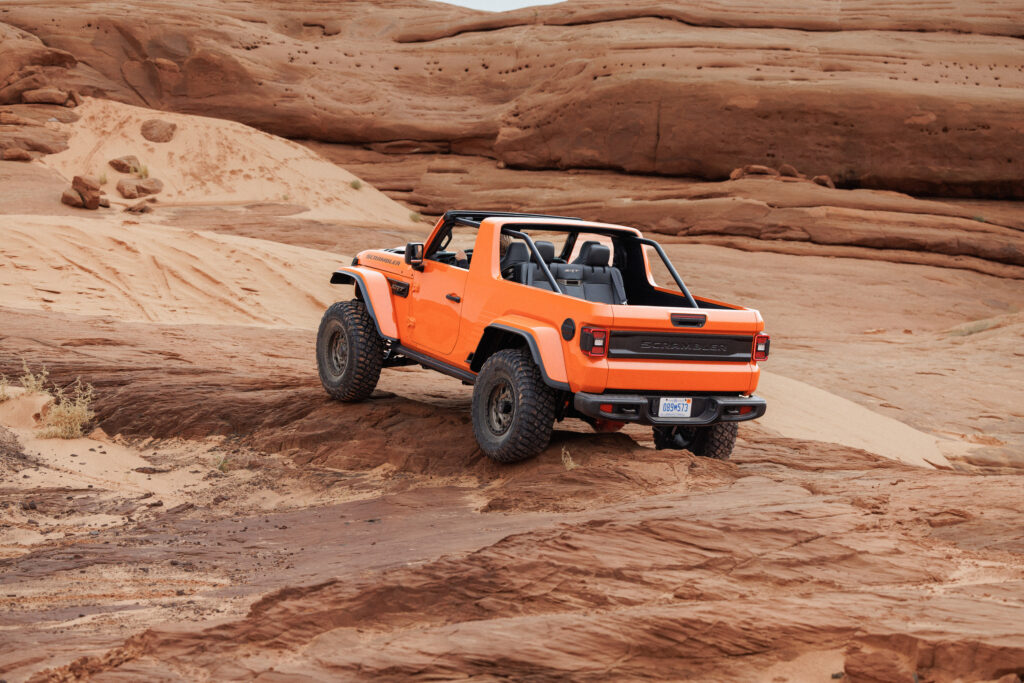
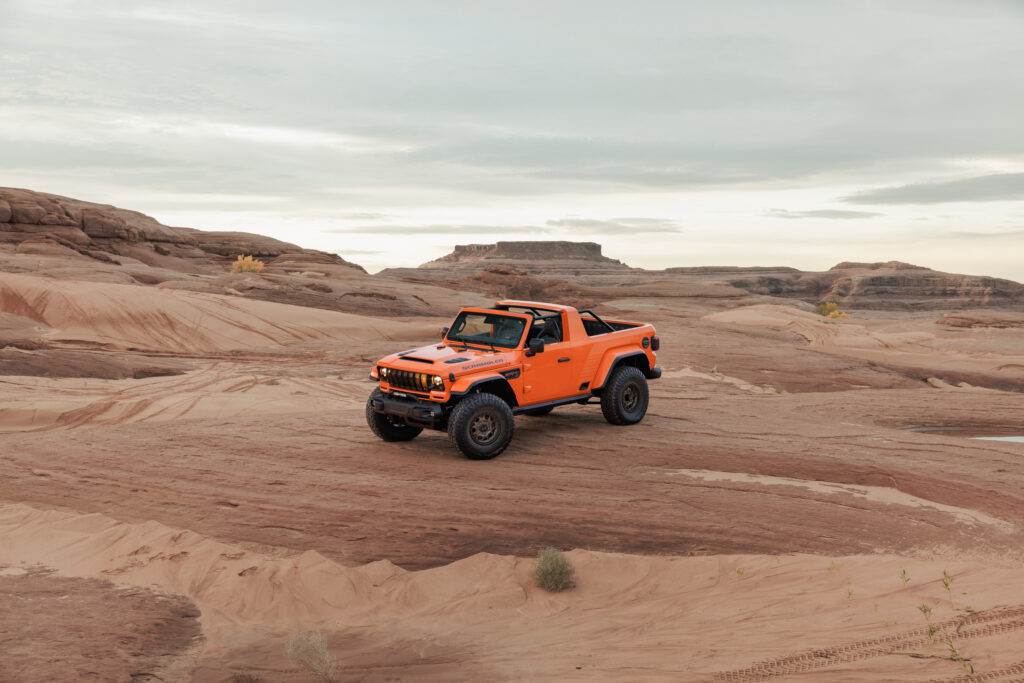
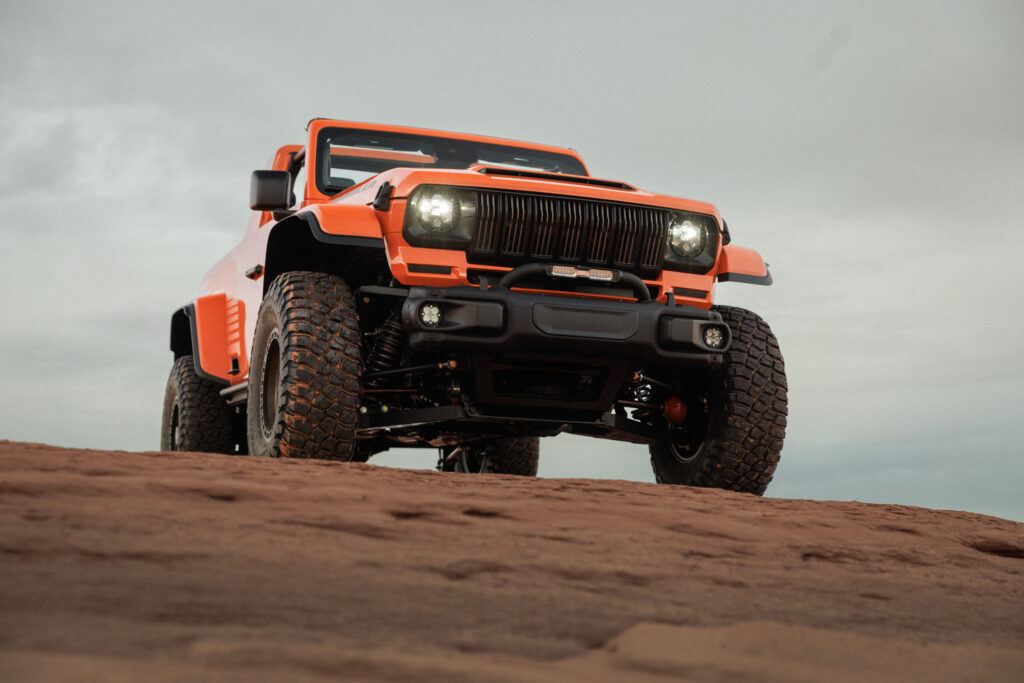
Jeep begins with a Wrangler chassis and changes much of the body behind the windshield. The doors are longer, the rear is reshaped into a proper pickup bed, and the wheel arches are enlarged to accommodate substantial off-road tires.
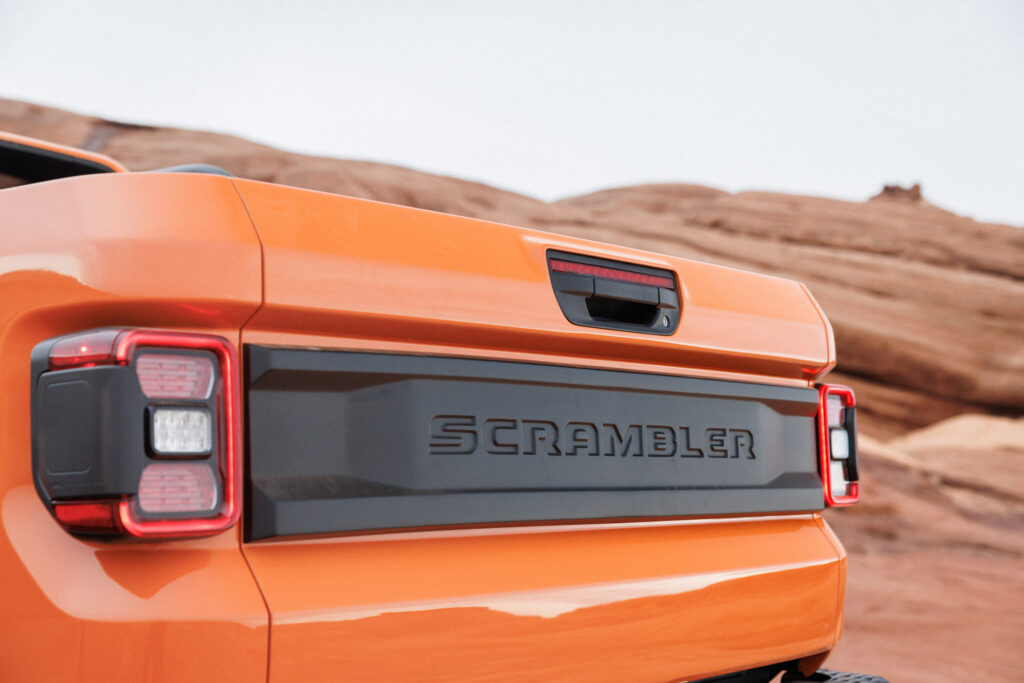
A structural roll cage helps define the open-air body, while the redesigned tailgate and spray-lined bed emphasize actual utility rather than decoration.
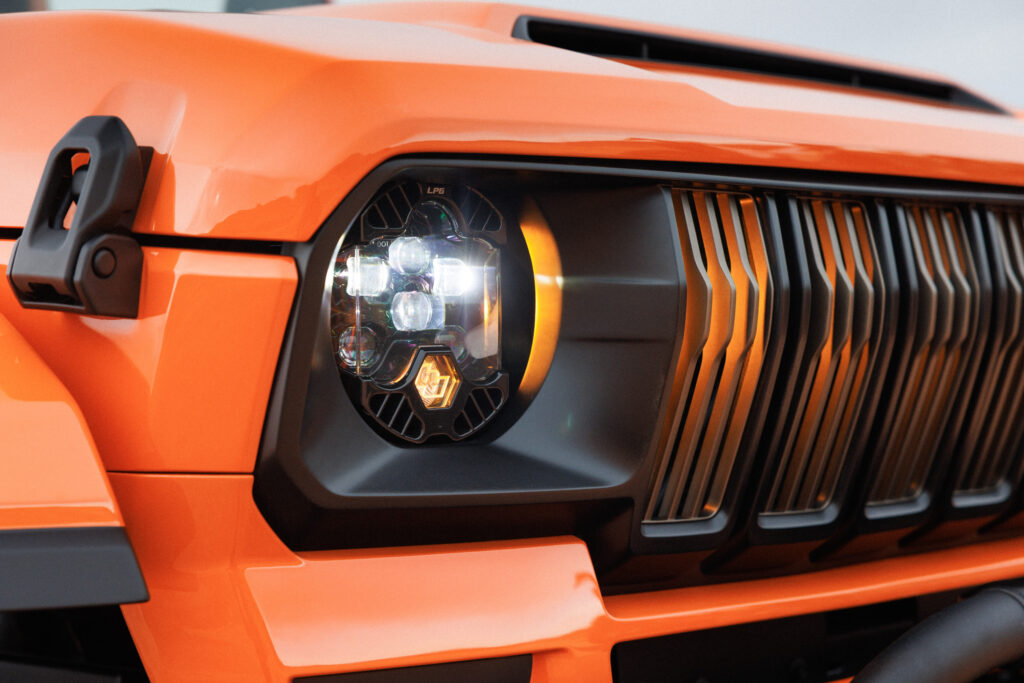
Jeep has also introduced its Sharknose front-end styling, combining classic truck influences with elements of the Gladiator. Finished in Punk’n orange with bronze-colored wheels, it looks sufficiently distinctive that even people who know very little about Jeeps will recognize it as something unusual.
For buyers, the most appealing part could be the proportions. A two-door pickup offers a different sort of vehicle from today’s familiar four-door midsize trucks. It could be easier to position on narrow trails and more enjoyable as a dedicated recreation vehicle, depending on its eventual dimensions.
However, Jeep has not published the final vehicle’s length, width, wheelbase or turning circle. Until those numbers arrive, claims that it will be easier to maneuver than a Gladiator remain assumptions.
You may also enjoy: Jeep Unveils Six Concepts at 60th Easter Jeep Safari in Moab
2026 Jeep Wrangler Scrambler SRT Concept Performance
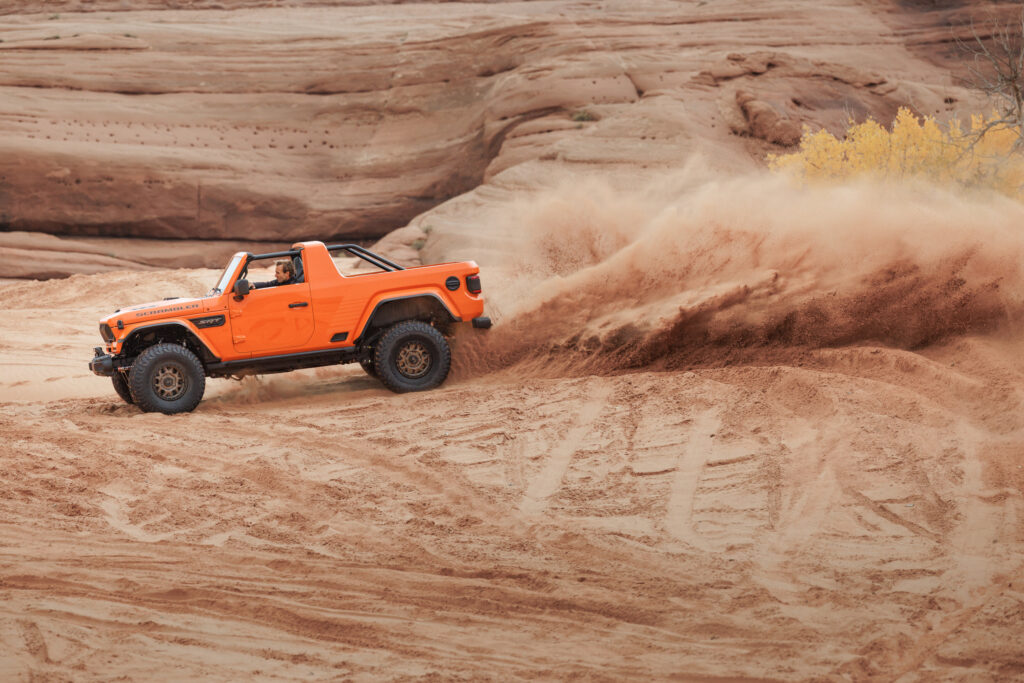
Jeep’s official concept website confirms that the HEMI V8 delivers 470 horsepower and 470 pound-feet of torque. That gives the Scrambler a substantial foundation for the kind of high-speed off-road performance its SRT badge promises.
It is important not to confuse those figures with the specifications of a confirmed production model. Jeep has not announced which engine versions buyers will eventually be able to order, or whether the Scrambler will be sold with a choice of powertrains.
Likewise, acceleration figures, transmission specifications, fuel tank capacity and EPA fuel economy ratings have not been released as a complete production specification package.
The V8 is undoubtedly part of this concept’s appeal, but there is a practical financial consequence to choosing a high-performance gasoline engine. Buyers should expect fuel consumption to be an important part of the ownership calculation. The actual expense will depend on the certified fuel economy, fuel requirements, local gasoline prices and annual mileage.
The government’s explanation of how vehicles are tested for fuel economy is useful when comparing final EPA results with manufacturers’ performance claims. The Scrambler has no published EPA-certified rating of its own.
There is also a broader question about whether drivers need this much performance for ordinary trails. A 470-horsepower desert machine makes sense for sustained high-speed use in suitable environments. For exploring forest roads at modest speeds, the additional power may offer very little practical advantage over a conventional Wrangler.
You may also enjoy: 2026 Jeep Wrangler Vehicle Analysis: Buy the Right Jeep
The Suspension Is the Real Headline
If I had to choose the most important engineering feature on this vehicle, it would not be the engine. It would be the independent front suspension.
Wrangler owners have traditionally valued a solid front axle because it is durable and particularly effective when negotiating difficult rocky terrain. Both front wheels are connected by a single assembly, helping provide predictable articulation under extreme conditions.
Independent suspension allows the two front wheels to move separately, giving engineers more control over how each wheel responds to bumps and changes in terrain.
For high-speed desert driving, that can offer significant benefits. The suspension must absorb repeated impacts while maintaining steering precision and stability. Instead of crawling across a large rock, imagine a vehicle crossing dozens of uneven ridges in quick succession.
The Scrambler’s suspension was developed with off-road racing champion Casey Currie. It builds on engineering demonstrated by Jeep’s Striker project, which subsequently achieved a class victory at the NORRA 500 off-road event.
The rear uses a trophy-truck-inspired axle system intended to handle demanding off-road conditions.
That racing involvement is encouraging, but Jeep has not supplied independent comparative results showing the Scrambler’s steering response, ride quality or durability against an ordinary Wrangler.
There are important compromises with either suspension design. Independent suspension introduces its own mechanical complexity and may not offer all the advantages of a solid axle during extreme rock crawling. A solid front axle, meanwhile, is not necessarily the ideal solution for every type of high-speed off-road driving.
For a future production Scrambler, the ideal customer may be somebody who spends more time crossing open desert than slowly climbing rocks.
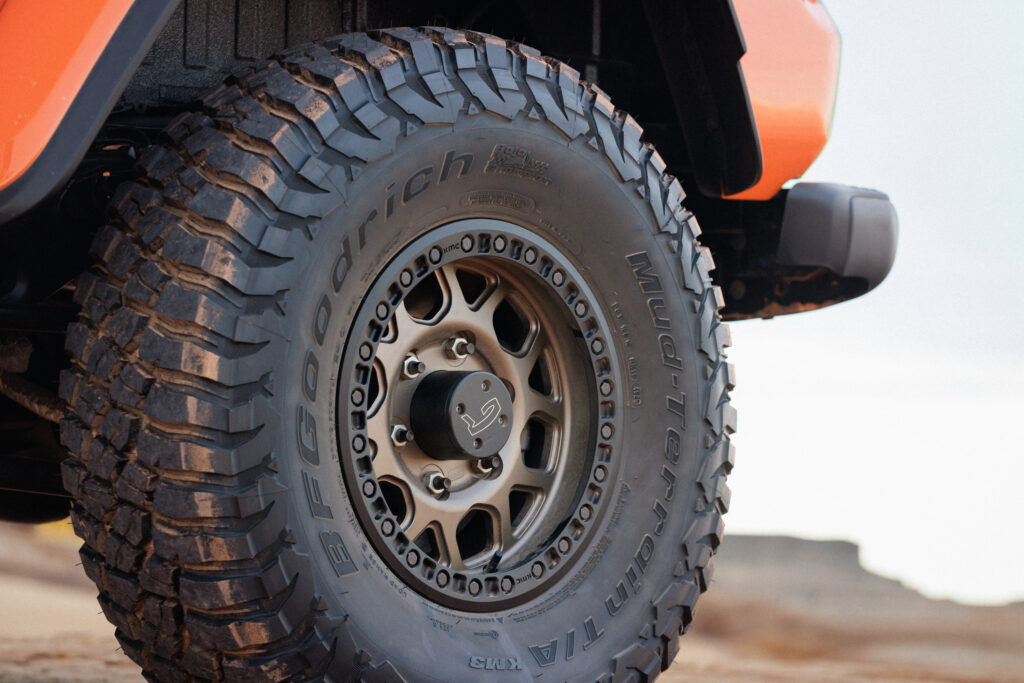
The large off-road tires will also require attention. The National Highway Traffic Safety Administration’s tire safety guidance explains why correct inflation, load ratings, tread condition and tire maintenance matter. Those considerations become particularly important with specialized off-road tires.
You may also enjoy: The Halo Car Didn’t Disappear. It Got Taller and Tougher.
A Pickup Bed With a Very Unusual Seating Arrangement
One of the most fascinating features of the Scrambler has nothing to do with driving quickly.
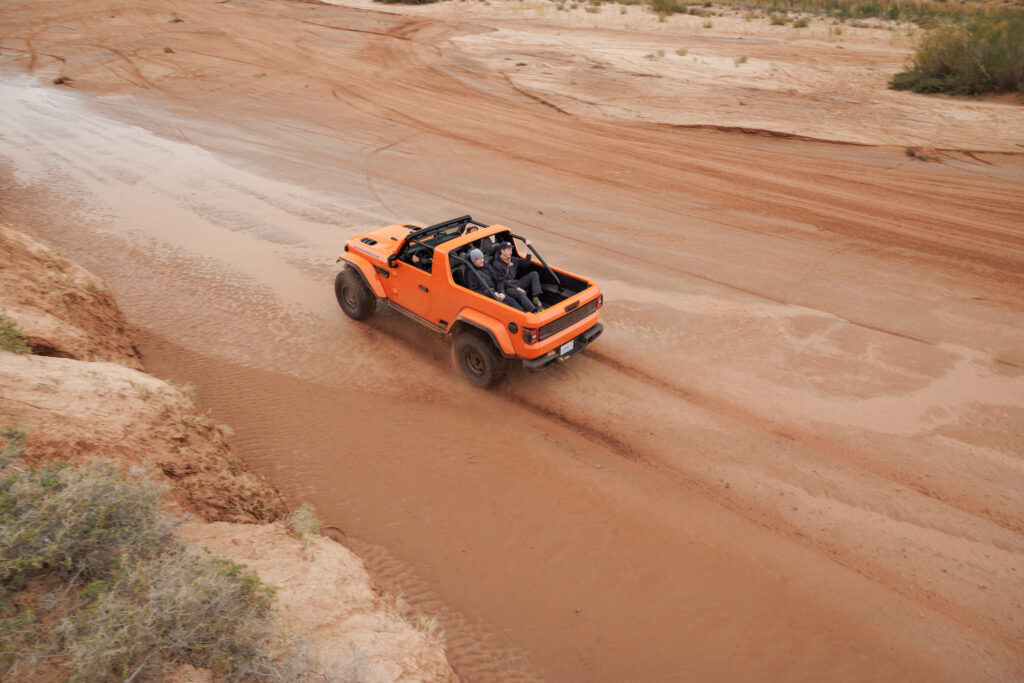
The rear seats can be removed or rotated 180 degrees, allowing passengers to face backward. They attach to hooks incorporated into the bed floor, and removing them creates more room for larger equipment.
It is a clever demonstration of how a small pickup might perform different duties without needing the permanent rear passenger compartment of a conventional four-door truck.
For someone carrying camping equipment, bicycles or tools, the idea of converting passenger space into additional cargo room has obvious appeal.
But the practical questions are substantial.
Jeep has not released a payload rating, bed length, bed width, towing capacity or rated passenger capacity for a production Scrambler. Nor has the company confirmed how the rotating seats would be approved for passenger use on public roads.
Families should pay particular attention to this last point. The concept’s ability to face its rear seats backward should not be confused with a safety-tested child restraint system. The NHTSA provides separate child car-seat installation and selection guidance, and no production compatibility information is available for the Scrambler concept.
Likewise, a pickup bed that can accommodate equipment does not automatically have the payload capacity to carry it. The manufacturer must establish the permissible load before owners can make those decisions safely.
Interior: Performance Before Luxury
The Scrambler’s cabin uses Dark Graphite leather, orange inserts, contrast stitching, bronze accents and SRT embroidery.
The front seats are designed to provide additional occupant support during energetic off-road driving. Grab handles and other details reinforce the idea that the vehicle is intended to be used in demanding conditions.
The interior looks more premium than one might expect from a simple recreational truck, but the finished cabin is not evidence of what a production vehicle will include as standard equipment.
Jeep has not released a finalized list of infotainment features, camera systems, connectivity services or driver-assistance equipment for a production Scrambler.
Nor has it provided final headroom, legroom or passenger comfort measurements.
Those details matter more than many concept designers seem to appreciate. A vehicle can look magnificent under the lights of an auto show and still be frustrating when you need to climb into the back, load luggage or spend three hours traveling on the interstate.
Safety and Everyday Ownership
It would be inappropriate to judge the Scrambler’s road safety from its appearance or racing connections.
The concept has not been announced as a certified production vehicle, and no Scrambler-specific federal crash-test rating has been published.
Consumers can investigate how the government evaluates vehicle crash performance through the NHTSA 5-Star Safety Ratings program. Those ratings assess important crash scenarios and are particularly relevant when comparing actual production vehicles.
Future Scrambler buyers will also need details on electronic stability control, airbags, occupant protection, automatic emergency braking and other driver-assistance technologies.
The structural roll cage displayed on the concept is not a substitute for the crash-test and occupant-protection information required when evaluating a road-going vehicle.
Maintenance and ownership costs deserve equal attention. Specialized suspension components, off-road tires and performance engines can introduce expenses that are absent from an ordinary family SUV.
Once a production Scrambler becomes available, buyers should also use the government’s vehicle recall lookup to identify applicable recalls or safety notices, rather than relying exclusively on dealership information.
For recreational use, owners should verify where motorized travel is permitted. The U.S. Forest Service explains designated motorized routes in its Motor Vehicle Use Map guidance. A capable vehicle does not automatically mean every trail or landscape is open to driving.
Jeep Scrambler SRT Versus the Competition
The closest comparison depends on what Jeep eventually decides to sell.
Ford Bronco Raptor
The Bronco Raptor already occupies the market for specialized high-performance off-road SUVs. It features independent front suspension and substantial desert-capable hardware. Buyers who prioritize high-speed off-road driving and want a vehicle available now should begin there.
The Scrambler’s potential advantage is its distinctive two-door pickup configuration and HEMI V8 character. Its potential disadvantage is that Jeep has not yet provided the production vehicle, price or durability data needed for a meaningful ownership comparison.
You may also enjoy: The Ford Bronco Filson Was Built For America’s Outdoor Boom
Jeep Gladiator
The Gladiator is the more obvious choice for buyers who need a practical four-door pickup today. It provides conventional passenger accommodation and an established range of truck equipment.
The Scrambler appears more focused on recreation, lighter-duty utility and performance, although its actual carrying and towing abilities are still unknown.
Someone who routinely carries four adults, work equipment or large loads should not assume the Scrambler will be a suitable replacement for a Gladiator.
Chevrolet Colorado ZR2
Chevrolet’s Colorado ZR2 offers off-road-oriented suspension and the practicality of an established midsize pickup. It is a rational alternative for buyers who need a truck capable of both daily transportation and demanding recreational use.
Jeep’s concept is considerably more theatrical, but theatrical does not necessarily mean more useful.
Another future competitor could come from outside the usual Jeep and Ford rivalry. Hyundai has already demonstrated its ambitions for a body-on-frame off-road vehicle with the Boulder Concept.
You may also enjoy: Hyundai Boulder Concept Takes Aim at Jeep Wrangler and Ford Bronco
Will Jeep Actually Build the Scrambler?
There is stronger evidence for a future production Scrambler than for the average concept vehicle.
Stellantis included the Wrangler Scrambler in its 2026 North American investor presentation, alongside other planned Jeep models through 2030. The presentation also identified a planned SRT version.
That demonstrates a declared product intention, not an unconditional guarantee that the final vehicle will match the SEMA concept.
Jeep has not announced a confirmed showroom arrival date, final production configuration or official MSRP.
Reports suggesting a possible 2028 introduction should be treated as reporting about expected timing, not an official on-sale date.
The distinction matters because manufacturers frequently change concept features before production. The rotating rear seats, substantial racing suspension and particular V8 configuration are among the details that will need confirmation.
Our Early Verdict: Who Should Be Excited?
The new Scrambler is one of the most interesting Jeep concepts in years because its underlying engineering is just as significant as its appearance.
The independent front suspension shows Jeep exploring a serious alternative to its long-established Wrangler formula. The pickup body gives the brand an opportunity to introduce a different kind of recreational vehicle. And the V8 engine demonstrates that high-performance gasoline power remains part of Jeep’s engineering ambitions.
The best potential customer is an enthusiast who enjoys open-air driving, high-speed off-road adventures and the flexibility of a pickup bed, but does not necessarily need a conventional four-door truck.
The biggest compromises are currently the unknowns. We do not know the production vehicle’s price, passenger safety configuration, towing ability, payload capacity, fuel economy or long-term ownership costs.
For shoppers who need transportation now, the sensible decision is to evaluate the existing Wrangler, Gladiator, Bronco Raptor or Colorado ZR2 rather than wait for an unpriced future model.
For Jeep enthusiasts willing to watch the next chapter unfold, however, the Scrambler could become one of the brand’s most desirable vehicles.
Jeep has spent decades insisting that certain elements of a Wrangler are essential to its identity. The Scrambler suggests that what matters most might not be the axle underneath, but what the vehicle can actually do.
Frequently Asked Questions About the Jeep Scrambler SRT
Is the 2026 Jeep Wrangler Scrambler SRT available to buy?
No. The vehicle unveiled at SEMA 2026 is a concept, not an available production model. Stellantis has included a future Wrangler Scrambler in its product plans through 2030.
How much horsepower does the Scrambler SRT have?
Jeep’s official concept website specifies 470 horsepower and 470 pound-feet of torque from a HEMI V8. Final production powertrain specifications have not been announced.
Does the Scrambler have independent front suspension?
Yes. The SEMA concept uses a bespoke long-travel independent front suspension developed with racing champion Casey Currie. Jeep describes this as a historic first for a Wrangler-branded vehicle.
Will the Jeep Scrambler replace the Gladiator?
Jeep has not announced that the Scrambler will replace the Gladiator. Stellantis’ product presentation lists both names, indicating that they are planned as distinct models.
When will the Jeep Scrambler go on sale?
No official on-sale date has been confirmed. Stellantis includes the Scrambler in its North American plans through 2030, while independent reports have suggested a possible 2028 introduction.
How much will the Jeep Scrambler cost?
Jeep has not announced an MSRP, destination charge or production trim pricing. Any specific retail price being circulated at this stage should be regarded as speculative.