2027 Nissan Rogue Hybrid Review: An EV Without a Plug?
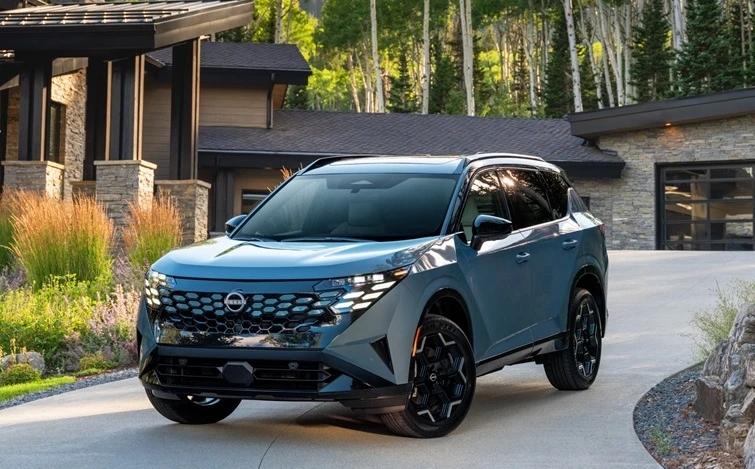
The 2027 Nissan Rogue Hybrid has a gasoline engine that never drives the wheels. Not once. Instead, Nissan has built a family SUV that moves entirely on electric motors.
It delivers up to 41 miles per gallon in the city and never requires plugging into a charger. In this 2027 Nissan Rogue Hybrid review, the big question isn’t whether Nissan has developed something technically interesting. It has. The question is whether this unusual approach actually makes life better for American families.
With 225 horsepower, standard all-wheel drive, seating for five and a starting price of $35,490, Nissan is taking direct aim at the Toyota RAV4 Hybrid and Honda CR-V Hybrid. But there’s an important complication. The least expensive Rogue Hybrid won’t arrive until January 2027, while the first version reaching dealers in limited numbers during late November costs $43,065 including destination.
That makes choosing the right trim almost as important as understanding the remarkable engineering beneath the hood.
2027 Nissan Rogue Hybrid Review: The Quick Verdict
Best for: Families who want electric-motor acceleration, good fuel economy, standard all-wheel drive and the convenience of traditional gasoline refueling.
Skip if: You need a third row, frequently tow large trailers, want a plug-in vehicle capable of commuting on electricity alone, or cannot justify the additional cost of Nissan’s more expensive launch configuration.
My recommendation: The Rogue Hybrid SV looks like the strongest value at $37,065 including destination. The SR adds useful styling and equipment, but the $43,065 SR Technology Package is a much harder financial decision unless its advanced cameras, displays and driver assistance matter to you.
What Works
- Electric motors drive all four wheels, with no conventional transmission shifting.
- EPA-estimated 41 mpg city and 38 mpg combined on the SR.
- Rear doors that open nearly 90 degrees and a practical cargo area.
- Standard magnetic wireless phone charging and physical climate controls.
- Available one-pedal driving, sophisticated parking cameras and upgraded ProPILOT Assist.
What Gives Me Pause
- The advertised $35,490 entry-level vehicle arrives after the more expensive launch model.
- Platinum pricing approaches $45,000 including destination.
- Useful advanced assistance and camera equipment requires higher trims.
- Long-term U.S. reliability and real-world operating costs for this generation still need establishing.
How Nissan Built a Hybrid That Drives Like an Electric Car
The first thing to understand is that the Rogue Hybrid is not a conventional hybrid with a slightly different badge.
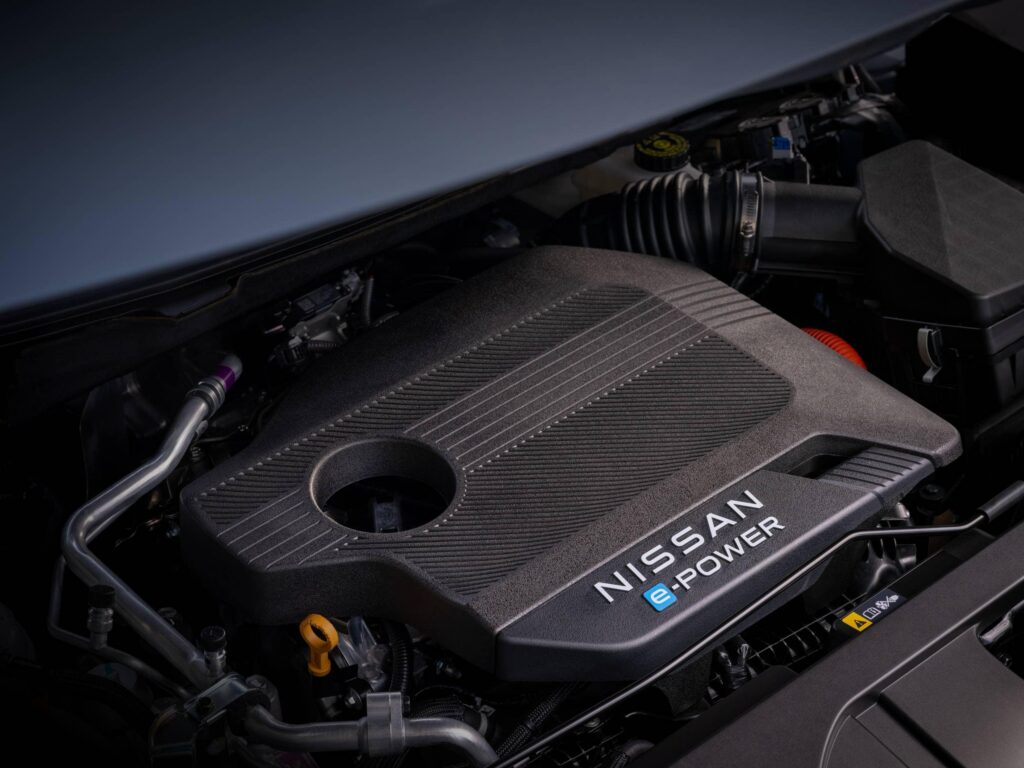
Underneath the hood sits a 1.5-liter turbocharged gasoline engine. However, unlike the engines in most conventional hybrid SUVs, this one never connects mechanically to the wheels. It operates as a generator, producing electricity for the vehicle’s electric drive system.
Two electric motors move the vehicle, one driving the front axle and another driving the rear. Together, they produce 225 horsepower and give every Rogue Hybrid standard all-wheel drive.
This arrangement is called a series hybrid. The Department of Energy explains the difference between series and parallel hybrid systems, including why some hybrids allow gasoline engines to drive the wheels while others rely entirely on electric motors.
The Rogue’s battery receives energy from the gasoline-powered generator and regenerative braking. The owner never needs to connect the vehicle to an electrical outlet.
In practical terms, that should mean acceleration without traditional gear changes and a more immediate response when pressing the accelerator.
Nissan also says its engine can shut down when the battery has sufficient charge, allowing the vehicle to move under electric power for limited periods without the engine operating.
There is a rather pleasing logic to the arrangement. The gasoline engine becomes a mobile electricity generator, leaving the electric motors to do the driving. It’s effectively a power station with cupholders, although considerably better upholstered.
Nissan has been developing e-POWER technology since 2016 and reports nearly two million vehicles sold globally. The 2027 Rogue Hybrid introduces its latest North American application.
You may also enjoy: Nissan Recovery: What the New Sales Growth Really Means
41 MPG City and a Theoretical 532-Mile Range
Efficiency is one of the strongest reasons to consider the Rogue Hybrid.
The SR carries EPA-estimated ratings of 41 mpg city, 36 mpg highway and 38 mpg combined. Nissan lists 41 city, 35 highway and 37 combined for the SV and Platinum.
These figures should be distinguished from a Test Miles observed fuel-economy result. The numbers represent official estimates, not measurements obtained during an independently documented Test Miles ownership test.
With its 14-gallon gasoline tank, the SR’s combined rating produces a theoretical 532-mile range. That calculation assumes all 14 gallons are used at the combined rating, which is not how most people actually operate a vehicle.
The Environmental Protection Agency’s explanation of why real-world fuel economy varies is worth understanding. Speed, weather, traffic, driving style and vehicle loading can all change consumption.
For commuters, the particularly attractive number is 41 mpg city. Hybrid systems can benefit from repeated braking because they recover some of the energy normally lost as heat.
The Department of Energy explains how regenerative braking and hybrid energy recovery operate.
The Rogue’s efficiency also eliminates one of the biggest practical concerns associated with battery-electric ownership. Drivers do not need a charging station, home installation or public charging account.
The trade-off is that the Rogue still consumes gasoline and produces tailpipe emissions. Its electric motors do not make it a zero-emissions vehicle.
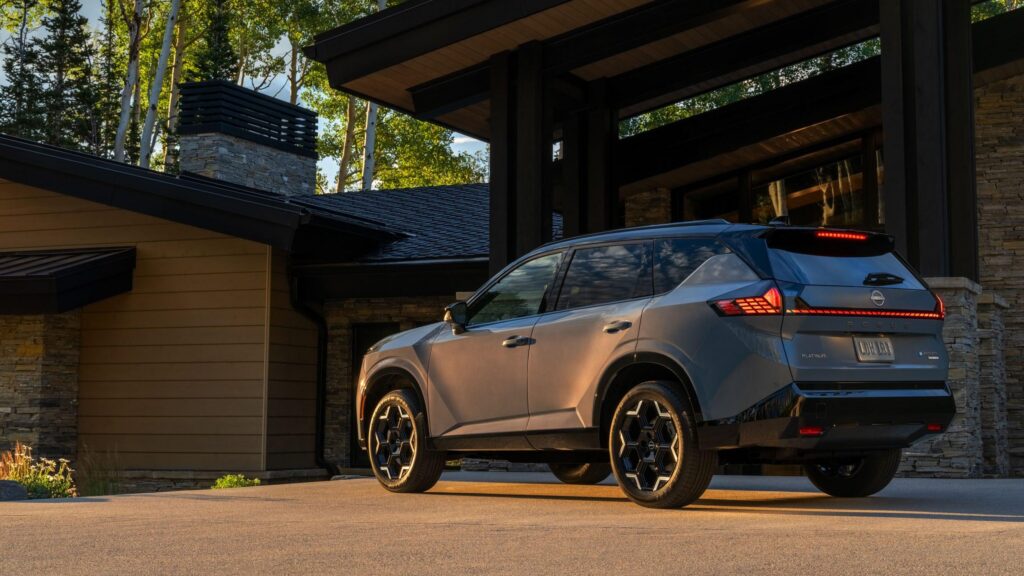
One-Pedal Driving in a Family Hybrid
One of Nissan’s cleverest additions is e-Pedal, a system that allows drivers to slow the vehicle by lifting their foot from the accelerator.
Unlike regenerative braking systems that merely reduce speed, Nissan says e-Pedal can bring the Rogue to a complete stop.
The conventional brake pedal remains available and necessary for situations requiring additional stopping power. One-pedal operation is a convenience feature, not a substitute for proper braking or attentive driving.
The benefit becomes apparent in slow traffic. Rather than constantly moving between accelerator and brake, the driver can use accelerator position to manage much of the vehicle’s movement.
There is also Smooth Stop, a system intended to soften the final movement as the Rogue comes to rest.
Anyone who has spent time in a car that gives passengers a final little nod every time it stops will appreciate the idea. Your morning coffee may appreciate it even more.
Whether Nissan has achieved a consistently natural pedal feel will require evaluation in everyday traffic. The hardware is promising, but driving behavior matters more than the feature’s name.
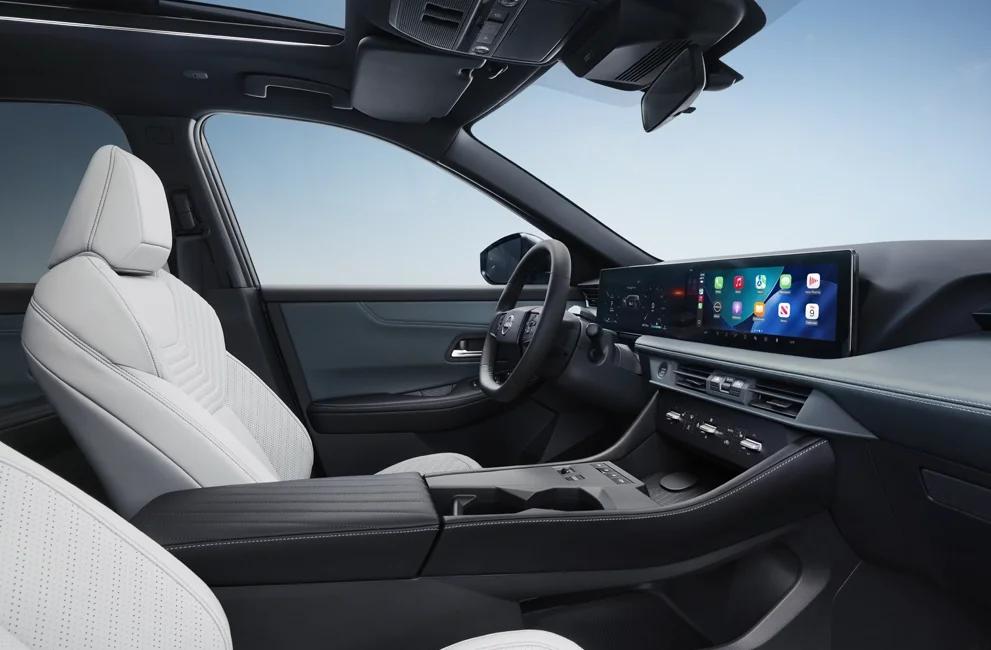
Rear Doors That Make Family Life Easier
The Rogue Hybrid’s rear doors open nearly 90 degrees, creating an unusually large opening for passengers and luggage.
This matters enormously when installing child seats, helping older passengers enter the vehicle or placing a dog on the rear bench.
Nissan includes five LATCH anchors, allowing compatible child-seat arrangements including a center rear position. As always, parents should consult the vehicle and child-seat manuals for the approved installation method and weight limits.
The National Highway Traffic Safety Administration provides detailed child-seat installation and selection guidance, which is particularly helpful when accommodating several young passengers.
Rear-seat legroom measures 36.2 inches. The rear backrests recline, and passengers receive dedicated air vents.
Up front, Nissan provides its Zero Gravity seating design, intended to help distribute pressure and reduce fatigue during long journeys.
Platinum adds ventilated front seats and heated outboard rear seats.
For buyers who regularly transport children, relatives or dogs, the Rogue’s thoughtful access arrangements may make a greater difference than another few horsepower.
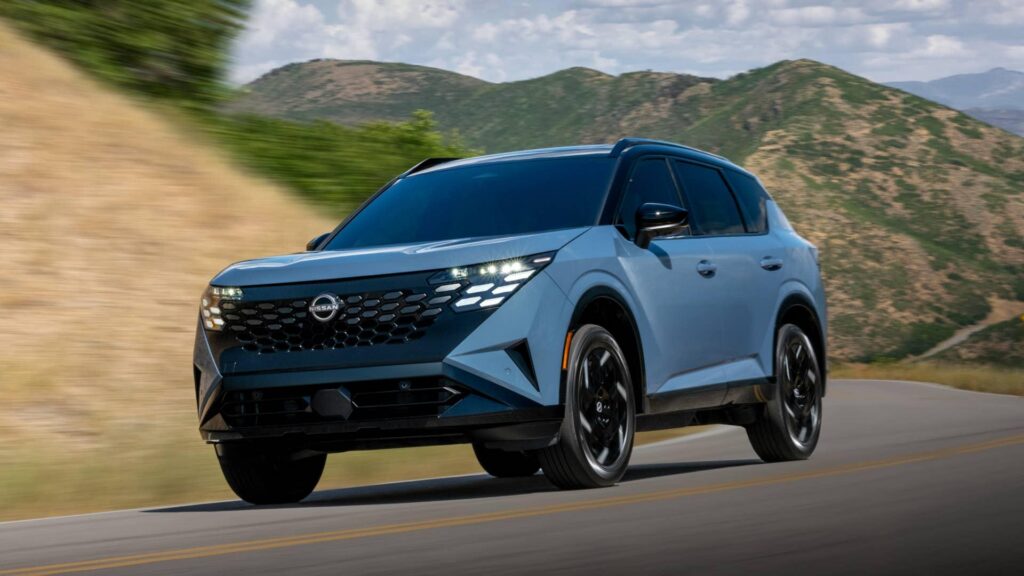
Will the Rogue Carry Your Dogs, Luggage and Shopping?
Behind the second row, the Rogue Hybrid provides 31.1 cubic feet of cargo capacity. Folding the rear seats expands the space to 65.9 cubic feet.
For an SUV intended to serve families, those are useful figures, although the exact shape of the opening and usable floor dimensions remain important.
Nissan says the rear cargo area can accommodate three large suitcases positioned side by side. There is an adjustable cargo floor, four tie-down points and a molded storage compartment intended to keep items such as a gallon of milk from rolling around.
There is also a redesigned tailgate interior that provides almost two additional inches of useful cargo length.
That extra length could matter when carrying larger dog crates or bulky equipment. However, owners should measure the crate and cargo opening rather than assuming that advertised cubic feet guarantee a suitable fit.
A large dog does not care how impressive the volume specification looks on a brochure. It cares whether it can stand, turn around and travel safely.
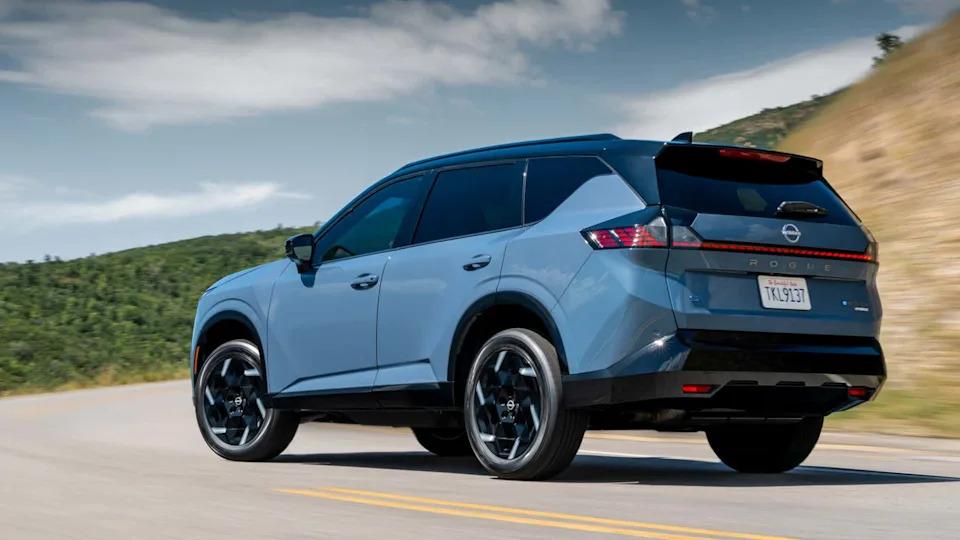
Nissan’s Invisible Hood Camera Is Genuinely Useful
Nissan has packed the Rogue Hybrid with technology, but its most interesting features are not necessarily the largest screens.
The available Invisible Hood View uses the vehicle’s camera system to construct a virtual perspective of the area near and beneath the front of the SUV.
That can help drivers judge the position of the front wheels near curbs, parking obstacles and car-wash tracks.
Front Wide View provides a broader perspective around obstructions at difficult intersections, while the available 3D HD Enhanced Intelligent Around View Monitor creates multiple exterior perspectives for parking and maneuvering.
These are driver aids, and the displayed images are electronically generated representations. Drivers must still check their surroundings rather than relying exclusively on the cameras.
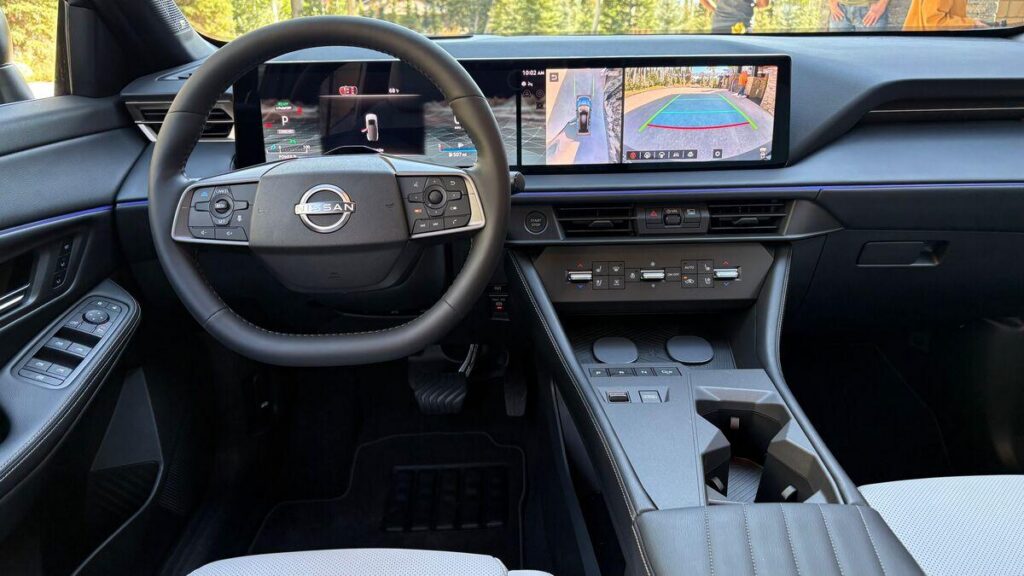
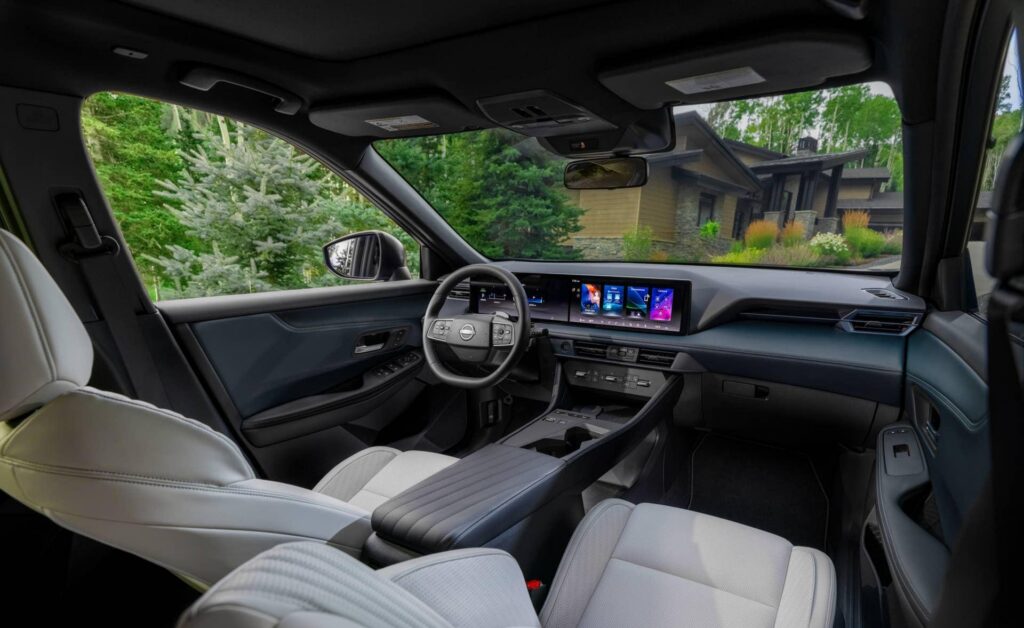
Inside, the SV and SR receive a 12.3-inch center touchscreen and wireless Apple CarPlay and Android Auto.
The SR Technology Package introduces a 14.3-inch center screen with Google built-in, including Google Maps and Gemini voice assistance.
Platinum gets dual 14.3-inch displays, a head-up display and a 10-speaker Bose audio system.
Every Rogue Hybrid receives a 15-watt Qi2 magnetic wireless phone charger, while Platinum provides two.
Nissan also includes four USB-C ports, with two serving rear passengers.
Perhaps the most encouraging detail is that Nissan has retained physical climate controls. Adjusting cabin temperature should not require negotiating several touchscreen menus. Civilization has survived another model year.
ProPILOT Assist Helps, but the Driver Is Still in Charge
The latest Rogue Hybrid includes an upgraded version of Nissan’s ProPILOT Assist technology.
A new front-facing camera provides a 20% wider field of view than the previous Rogue system, while revised software improves the assistance provided during lane centering and changing traffic conditions.
The available Auto Lane Change feature can steer the vehicle into an adjacent lane after the driver signals, provided the vehicle is on an appropriate divided highway and the system determines conditions are suitable.
Hands-off Traffic Jam Support can allow temporary hands-free steering during specified low-speed highway congestion.
These functions are not autonomous driving. The driver must remain attentive, monitor traffic and take control when required.
NHTSA explains the capabilities and limitations of adaptive cruise control, lane centering and driver-assistance systems, including why assisted driving still requires active driver supervision.
The Rogue Hybrid also includes automatic emergency braking, blind-spot warning and intervention, lane-departure assistance and other standard features.
Lead Car Departure Notification alerts drivers when the vehicle ahead begins moving. It is a minor feature in engineering terms, but an amusingly appropriate response to modern traffic-light behavior.
Crash-test ratings specific to the new 2027 Rogue Hybrid should be verified separately as testing is completed. Ratings for an earlier Rogue or a different powertrain should not automatically be applied to this new model.
2027 Nissan Rogue Hybrid Pricing: The Surprise Is Availability
Nissan’s entry price of $35,490 sounds attractive for a 225-horsepower, all-wheel-drive hybrid family SUV. Unfortunately, customers looking for that price must wait.
The first Rogue Hybrid arriving in limited quantities during late November 2026 is the SR with Technology Package, priced at $41,490 before destination.
| 2027 Rogue Hybrid trim | MSRP | Including destination | Expected availability |
|---|---|---|---|
| SV AWD | $35,490 | $37,065 | January 2027 |
| SV Premium AWD | $37,590 | $39,165 | January 2027 |
| SR AWD | $37,490 | $39,065 | January 2027 |
| SR Technology AWD | $41,490 | $43,065 | Late November 2026 |
| Platinum AWD | $43,490 | $45,065 | January 2027 |
All prices exclude taxes, title, registration, dealer charges and additional accessories. Destination is $1,575.
The SV includes the fundamental technology that makes this Rogue interesting: standard dual-motor all-wheel drive, 225 horsepower, the hybrid e-POWER system and useful everyday comfort equipment.
The SR adds 19-inch wheels, sportier styling and upgraded interior materials. At $2,000 more than the SV, it may appeal to buyers who want the appearance and equipment without paying for the full Technology Package.
That package adds the larger screen, advanced cameras and available assistance features, but pushes the price beyond $43,000 delivered.
Platinum is particularly expensive for a mainstream compact SUV. Its richer interior, additional screens, sound system and heated and ventilated seating will appeal to some customers, but the SV delivers the same fundamental powertrain for $8,000 less.
The SV is the specification I would investigate first. Spend the money on the things your household uses every day, rather than assuming the most expensive version is automatically the best one.
You may also enjoy: 2026 Nissan Rogue Review: Which Trim Is Worth Buying?
Rogue Hybrid Versus Toyota RAV4 Hybrid
Toyota has established a formidable reputation for producing efficient hybrid vehicles, and the redesigned 2026 RAV4 brings considerable competition to Nissan’s doorstep.
The RAV4 Hybrid offers front- or all-wheel drive depending on trim, with a broader choice of configurations for customers balancing price, capability and equipment.
The Nissan’s distinctive advantage is its series-hybrid arrangement. Its gasoline engine never directly drives the wheels, whereas Toyota uses a different hybrid architecture.
For buyers who prioritize electric-style response and the absence of conventional gear changes, the Rogue may have a particularly attractive driving character.
For buyers who prioritize an established hybrid ownership history and a range of specialized configurations, the Toyota deserves serious consideration.
Neither vehicle should be declared the better purchase simply from its published horsepower and fuel-economy figures.
You may also enjoy: 2026 Toyota RAV4 Review: Which Trim Should You Buy?
How Does It Compare With the Honda CR-V Hybrid?
Honda’s CR-V Hybrid is another obvious rival. It combines established hybrid technology with a practical family interior and a range of equipment levels.
Honda’s conventional hybrid architecture differs from Nissan’s series-hybrid approach, including the way its powertrain operates at different vehicle speeds.
Buyers should compare rear-seat comfort, loading dimensions, equipment included at comparable transaction prices and the way both vehicles behave in everyday traffic.
The Rogue’s near-90-degree rear doors, one-pedal driving and available advanced camera perspectives give it distinctive features worth examining.
Honda’s established hybrid system and familiar ownership experience remain important counterarguments.
You may also enjoy: 2026 Honda CR-V Review: Which Trim Should You Buy?
The Hyundai Tucson Hybrid Is Another Serious Threat
Hyundai is also preparing a redesigned Tucson with greater emphasis on family space and hybrid technology.
The next-generation Tucson promises a more spacious cabin and a number of new convenience features, placing it directly in the Rogue’s competitive territory.
Nissan’s standard electric all-wheel-drive system and the ability to stop with one pedal give it an identifiable personality, while Hyundai emphasizes interior room, technology and flexibility.
The relevant comparison will ultimately be between specific models with similar equipment and realistic transaction prices.
You may also enjoy: 2027 Hyundai Tucson Adds Space and Smarter Hybrid Tech
What About Reliability and Long-Term Ownership?
Nissan reports nearly two million e-POWER vehicles sold around the world since the technology debuted in 2016.
That is meaningful experience, but it is not the same thing as demonstrating that the 2027 American Rogue Hybrid will be exceptionally reliable over ten years and 150,000 miles.
The North American model uses its own calibration and brings together a turbocharged engine, electric generator, battery, dual drive motors, electronics and advanced control software.
Buyers should review Nissan’s applicable new-vehicle, powertrain and hybrid-component warranty provisions rather than assuming every component has identical coverage.
Before purchasing, owners should also check the official NHTSA recall lookup for the individual vehicle and confirm that required software updates or repairs have been completed.
Actual maintenance requirements, insurance premiums, depreciation and long-term fuel consumption will determine the complete ownership picture.
Frequently Asked Questions About the 2027 Nissan Rogue Hybrid
Does the 2027 Nissan Rogue Hybrid need to be plugged in?
No. Its gasoline engine generates electricity for the electric drive system, while regenerative braking recovers additional energy. Owners fill the gasoline tank normally.
Does the gasoline engine ever drive the wheels?
No. The engine operates as a generator. Front and rear electric motors drive the wheels through Nissan’s series-hybrid e-POWER system.
How much horsepower does it have?
The 2027 Rogue Hybrid produces 225 combined horsepower and includes standard dual-motor all-wheel drive.
What is the fuel economy?
The SR has EPA-estimated ratings of 41 mpg city, 36 highway and 38 combined. Nissan lists 41 city, 35 highway and 37 combined for the SV and Platinum.
When can I buy the $35,490 version?
Nissan expects the entry-level SV to become available in January 2027. The first late-November 2026 arrivals are expected to be the more expensive SR Technology Package models.
Can I drive the Rogue Hybrid using one pedal?
Yes. Nissan’s e-Pedal system can slow the vehicle to a complete stop by releasing the accelerator. The conventional brake pedal remains essential when additional braking is necessary.
The Test Miles Verdict
Nissan has developed an unusually interesting hybrid, and its appeal extends beyond the powertrain.
The combination of electric-motor propulsion, standard all-wheel drive, excellent city fuel economy and conventional gasoline refueling addresses a genuine gap between traditional hybrids and fully electric vehicles.
The family details are equally encouraging. Wide-opening rear doors, practical cargo storage, good passenger accommodation, sensible climate controls and useful camera technology suggest Nissan understands what people actually need from a compact SUV.
The price is the biggest concern. At $37,065 including destination, the SV makes a persuasive case on paper. At $43,065 for the first available SR Technology Package, the argument becomes considerably more demanding.
The Rogue Hybrid has the ingredients to challenge Toyota, Honda and Hyundai, but final judgment must include documented real-world driving, comfort, fuel economy and long-term ownership evidence.
For now, the SV looks like the one worth waiting for, unless you specifically want the upgraded technology package.
An electric driving experience without plugging in is an appealing proposition. Nissan has delivered the engineering. The next challenge is convincing Americans that the price makes just as much sense.