2027 Volkswagen Atlas Cross Sport Goes Upscale
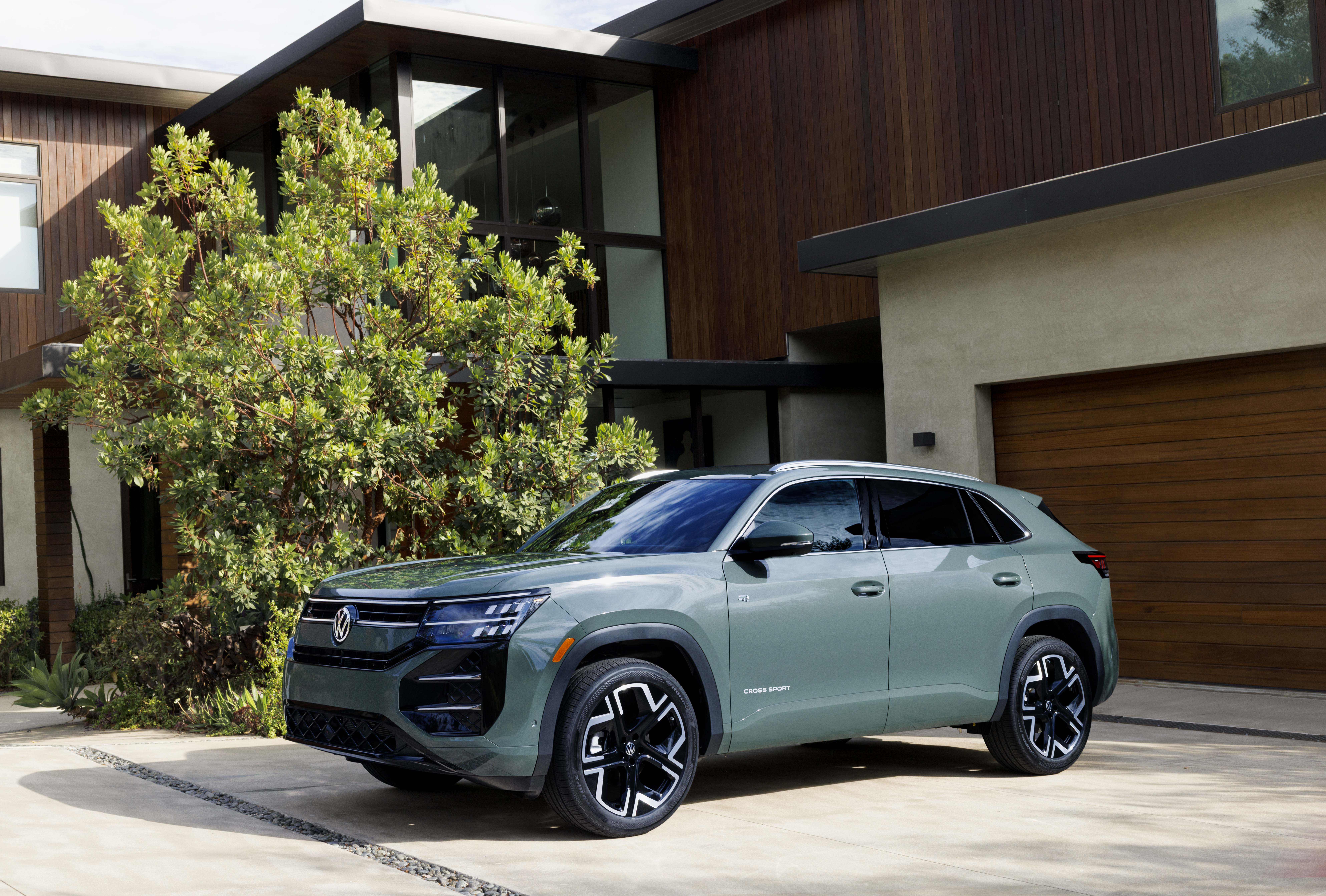
The 2027 Volkswagen Atlas Cross Sport adds dramatic styling, smarter technology, more power and practical two-row space.
2027 Volkswagen Atlas Cross Sport Changes the Formula
The all-new 2027 Volkswagen Atlas Cross Sport keeps the practical foundation that made the name useful, then gives the upper half of the vehicle its own identity. This is not simply a three-row Atlas with the roof pushed downward at the back. Volkswagen designed the upper doors, daylight openings, side glass, windows and roofline specifically for the Cross Sport, creating a five-seat, two-row SUV with a much more dramatic profile.
That distinction matters because the Cross Sport has a different job. Volkswagen says it attracts couples, empty nesters and more affluent buyers who want something sportier and more emotional than the family-focused Atlas. The original Atlas Cross Sport went on sale in 2020, and Volkswagen says more than 220,000 have been sold in the United States, enough to prove that fewer seats do not necessarily mean less demand.
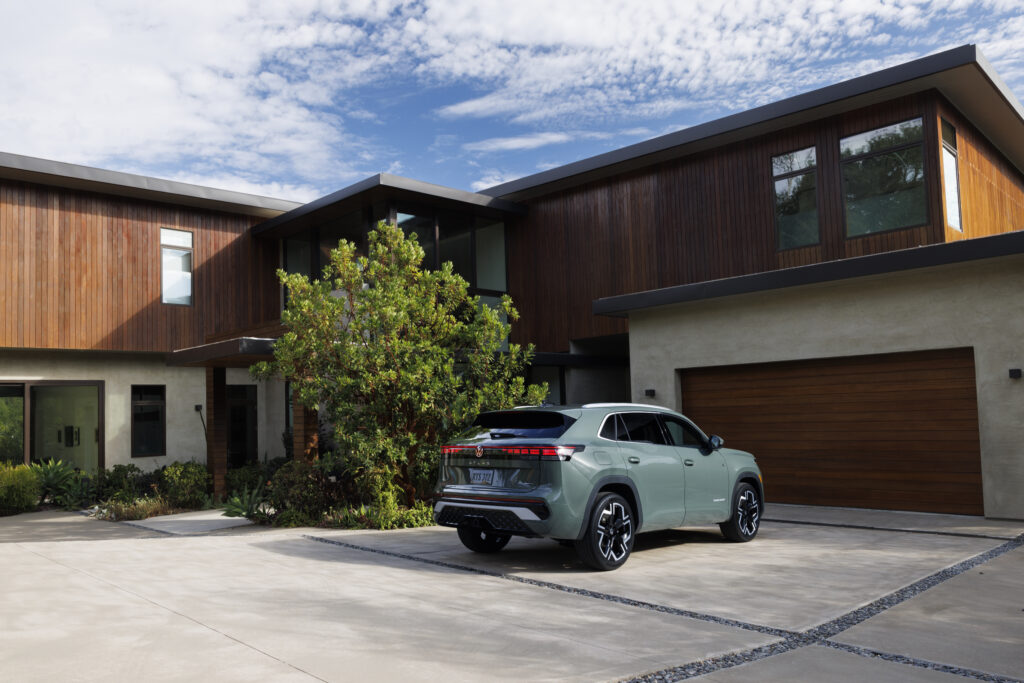
The new Cross Sport measures 195.6 inches long and sits 2.1 inches lower than the three-row Atlas. Volkswagen’s latest correction says it is 5.4 inches shorter than the Atlas, superseding an earlier 5.1-inch comparison. A low cabin, short rear overhang, strong fenders and body-color lower trim make it look planted, while most versions wear 20- or 21-inch wheels; the entry model stays with more sensible 18s.
You may also enjoy: How the Volkswagen Atlas Made VW More American
You may also enjoy this video:
Who This Two-Row SUV Is Really For
The regular Atlas remains the rational choice for buyers who need three rows and maximum family capacity. The Cross Sport is for people who still carry luggage, dogs, groceries and occasional relatives but no longer need to organize their lives around a third row. One carries more children; the other celebrates the blessed moment when they finally move out.
Volkswagen says the upgraded MQB Evo architecture preserves generous rear-seat legroom and useful cargo space. Standard rear sunshades should help children and dogs avoid direct sunlight, while the standard hands-free Easy Open power liftgate makes loading easier when both hands are occupied. Two lights inside the hatch area are also standard, a small improvement that becomes very useful when a black suitcase, a black Labrador and a dark parking lot meet at the same time.
The descending roofline deserves a practical inspection. Dog owners should bring the crate they intend to use and check its height beneath the rear glass, while taller passengers should sit in the back rather than trusting a photograph. Volkswagen has not published every final interior measurement, so a tape measure is more valuable than a heroic assumption about what will fit.
You may also enjoy: 2027 Volkswagen Atlas Gets More Tech, Power, and Style
A Cabin With a More Expensive Ambition
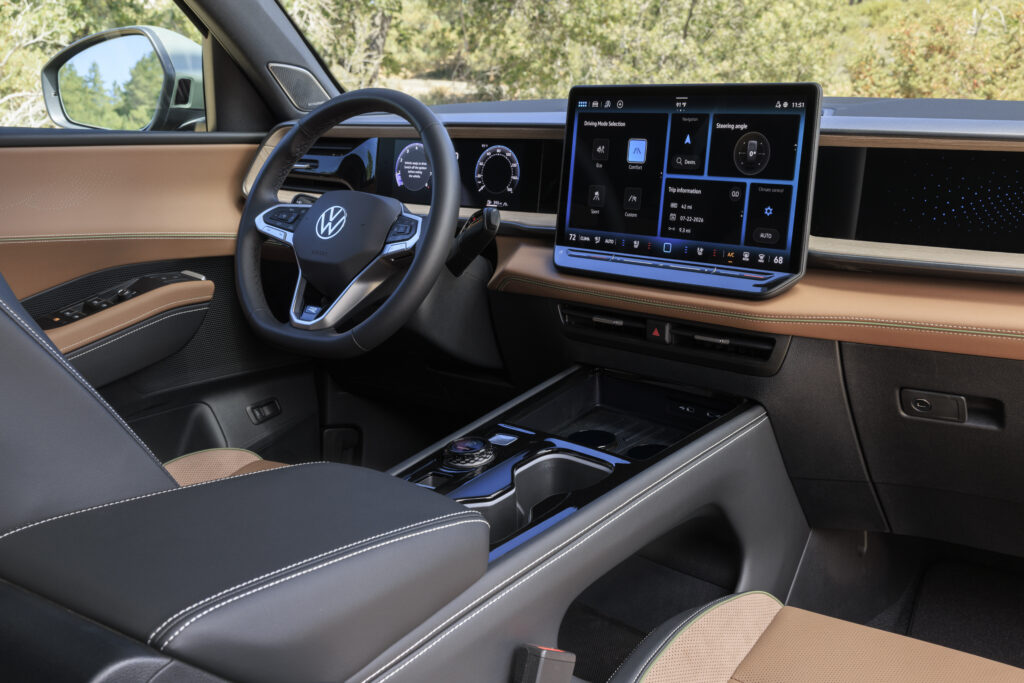
The cabin makes the clearest attempt to move the Cross Sport upmarket. A strong architectural loop spans the cockpit, soft-touch materials appear throughout, and standard gray wood brings some warmth to a design dominated by screens and lighting. Even the door-handle position has been revised to give the panels a cleaner, more considered appearance.
Three interior palettes shape the mood: airy pebble gray, moody black and medium brown. Available olive-green contrast stitching and a black headliner add some personality, while leatherette remains standard on the entry trims and the top two trims move to Varenna leather and Nappa leather. The material hierarchy should make the trim walk easy to understand, but buyers will need to decide how much of the premium effect is worth paying for once prices arrive.
Every Cross Sport receives a redesigned 12-way driver’s seat with improved four-way lumbar support. Upper trims add thigh support, enhanced full-back massage for both front occupants and passenger-seat memory, an overdue victory for anyone tired of being treated as secondary furniture. The cabin feels distinctly affluent, although Volkswagen wisely stopped short of including a small butler.
You may also enjoy: Best Family Road Trip Vehicles for 2025
Big Screens, Better Charging and One Useful Dial
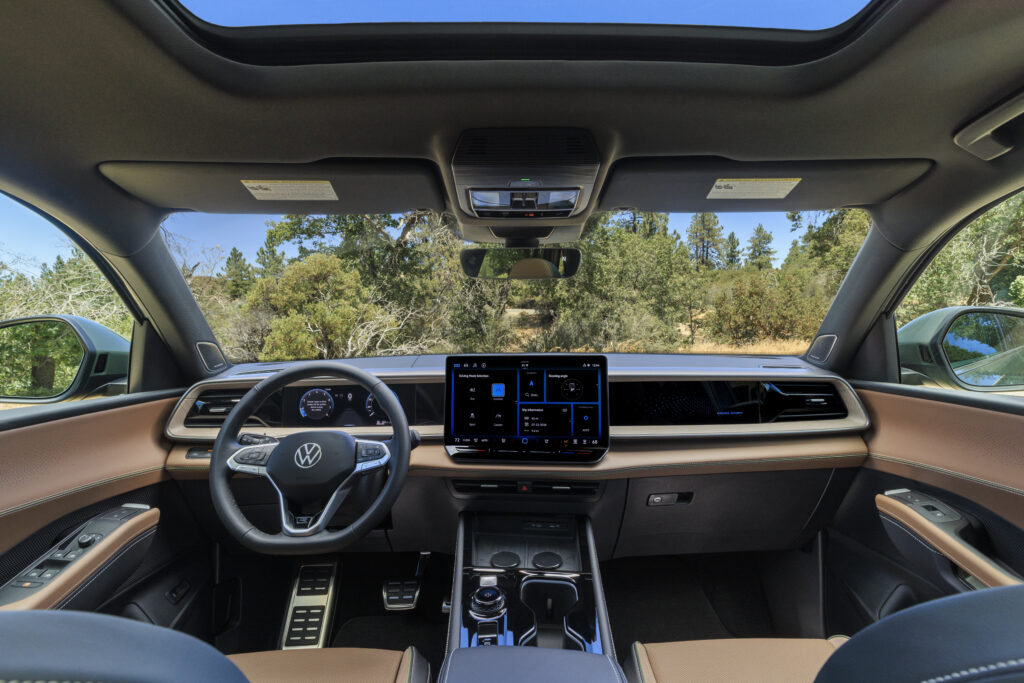
The entry model uses a 12.9-inch freestanding infotainment display, while Volkswagen expects about 90 percent of Cross Sports to receive the 15-inch screen. Every model includes a configurable 10.25-inch Digital Cockpit Pro in front of the driver. The presentation is clean and modern, but buyers should explore the menus themselves because a large display is only useful when routine functions do not require a minor archaeological expedition.
The new Driver Experience Dial provides a physical point of interaction for audio volume, drive modes and the Atmospheres feature. Atmospheres coordinates sound and ambient lighting, with 10 colors standard and 30 on the top two trims. Upper versions add an illuminated spiral across the dashboard that appears to twist through perforated, backlit panels in all four doors; at night, the cabin does not merely illuminate, it appears to breathe.
Two front occupants receive dedicated Qi2 wireless charging spaces, ending the domestic crisis of deciding whose battery matters more, and five USB-C ports are spread through the vehicle. Available connected services include real-time traffic, online destinations, generative-AI-supported speech functions, more than 30,000 radio stations and more than one million podcasts. A Wi-Fi hotspot can support four devices, while AirConsole gaming is intended for use when parked and myQ Connected Garage can add compatible garage access through the vehicle.
Those services sit within Volkswagen’s myVW+ system and may depend on compatible hardware, connectivity and an included or paid subscription. Buyers should check the included service period, renewal price and feature availability for the exact trim before treating any cloud-based function as permanent equipment. Screens and services can be helpful, but the best interface remains the one that keeps the driver’s attention on the road, a point reinforced by the National Highway Traffic Safety Administration’s distracted-driving guidance.
The Most Powerful Atlas Cross Sport Engine Yet
Volkswagen’s substantially revised EA888 evo5 2.0-liter turbocharged four-cylinder produces 282 horsepower and 258 pound-feet of torque. That is 13 horsepower more than the previous engine and the highest output yet offered in an Atlas Cross Sport. A variable-geometry turbocharger is part of the update, and the engine works with an eight-speed automatic transmission with manual shifting capability.
Front-wheel drive remains standard, while 4Motion all-wheel drive is available across the range. Properly equipped models retain a 5,000-pound towing rating with the factory-installed hitch, although trailer equipment, passenger load, cargo and accessories can reduce the amount a specific vehicle should pull. Anyone buying primarily for towing should work from the final owner documentation rather than the largest number in the brochure.
Volkswagen anticipates improved fuel economy despite the additional power, but official figures have not been released. That means the efficiency claim remains a company expectation until the government ratings appear; the EPA’s fuel-economy testing explanation shows how official estimates are produced. A hybrid is planned for the Cross Sport’s midcycle refresh, but Volkswagen has not announced its power, battery, fuel economy, timing or price, so there is not yet enough information to decide whether waiting will be worthwhile.
You may also enjoy: Volkswagen’s Hybrid Future & Platform Legacy
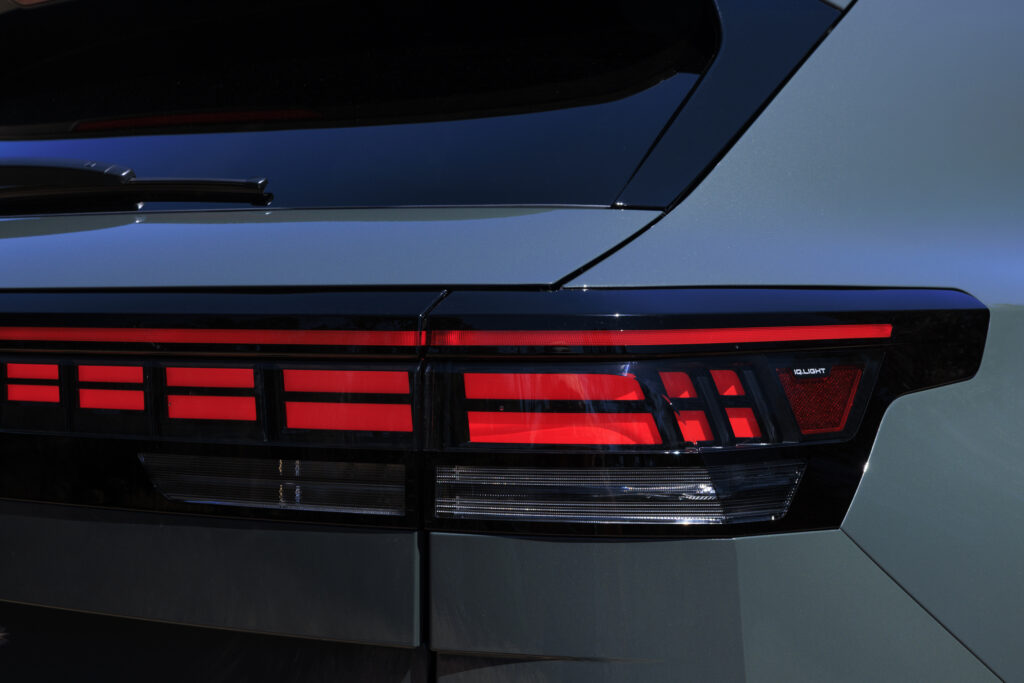
Lighting Turns Transportation Into Theater
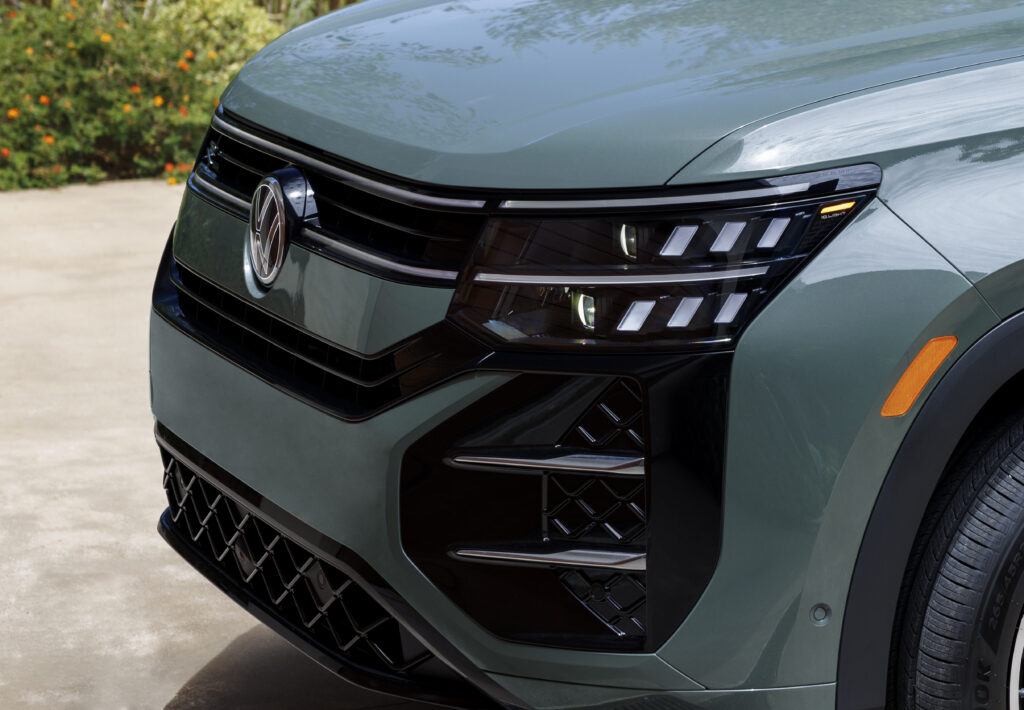
The Cross Sport’s front end uses double-stacked LED headlights, a masked upper grille and a stronger hood to create a wider, more assertive face. All but the base trim can display two lightlines and an illuminated Volkswagen badge. Available illuminated door handles and puddle lamps continue the show along the side, projecting a pattern onto the ground as occupants approach.
At the rear, a cross-body lighting treatment echoes the front signature, while standard dynamic turn signals and welcome-and-farewell animations add a little theater to otherwise sensible transportation. The tailgate now sits flush with the rear bumper, which makes the back look cleaner and more expensive. The dramatic rear pillars deliver the coupe-like silhouette, though buyers should personally check rearward visibility because fashion, even useful fashion, has consequences.
Dark Sage Metallic, Blackberry Metallic and Sandstone are the three new Cross Sport colors identified by Volkswagen. Blackberry is new to the broader 2027 Atlas family, while Dark Sage was selected specifically to support the Cross Sport’s more sophisticated character. The result is a vehicle that makes an entrance without abandoning the basic proportions of a useful midsize SUV.
Driver Assistance Gets Smarter, Not Autonomous
The 2027 Cross Sport adds a front-center airbag, bringing the total to seven. Front and rear parking sensors are standard, while the top trim receives the latest Park Assist Plus. These features broaden the safety equipment, but airbags remain supplemental restraints and parking automation does not remove the driver’s responsibility to watch the vehicle’s surroundings.
Standard Travel Assist can help manage steering and speed from zero to 95 mph and now supports driver-initiated lane changes. It remains a hands-on driver-assistance system, not autonomous driving. Emergency Assist Plus can help guide the vehicle toward the side of the road if the system detects a medical emergency, a feature whose value is easy to understand even if most owners hope it never has reason to operate.
The top two trims add predictive adaptive cruise control that can adjust speed for curves, roundabouts, exits and speed bumps when the native navigation and adaptive cruise control are working together. The capability could reduce workload on a long journey, but route data, road conditions and driver judgment still matter. Buyers should learn what every assistance feature can and cannot do before using it in traffic, because a confident name on a menu is not a substitute for attention.
You may also enjoy: Volkswagen’s American Reinvention Is Taking Shape

What Buyers Should Check Before Ordering
Pricing, final fuel-economy ratings and the complete trim-by-trim equipment list are still to come. Volkswagen says further specifications and prices will be announced before the Cross Sport launches in early 2027, and all preliminary details remain subject to change. Several of the most eye-catching features live on the upper trims, including the richest ambient lighting, upgraded leather, enhanced massage functions and predictive cruise capability.
That makes an in-person trim comparison important. Test the rearward view, navigate the infotainment menus, place two phones on the charging pads and confirm that the cargo opening works for the equipment or dog crate you actually own. If towing matters, verify the installed hitch and the vehicle-specific limits; if connected services matter, read the subscription terms rather than assuming they last forever.
The three-row Atlas carries more people, and that remains its central advantage. The 2027 Volkswagen Atlas Cross Sport is aimed at couples and empty nesters who want generous space without the family-bus silhouette, and who prefer their utility tailored. It keeps adults, dogs, luggage and lightly packed relatives in the plan, then dresses the top half for dinner.