Trump’s Chinese Car Gamble: Jobs or Detroit Devastation?
Trump’s Chinese Car Gamble could create U.S. factory jobs, but tariffs, data rules and industry opposition may keep Detroit protected.
President Donald Trump has just asked America to contemplate a Chinese car carrying a “Made in the USA” label. That sounds contradictory until you understand his priority: Trump appears less concerned about the nationality of the badge than the location of the factory and the people collecting the paychecks.
“If China wanted to come in and open a plant to build their cars here, I’d be okay with that,” Trump said during a September 11 appearance on Fox News’ “The Ingraham Angle.” He compared the possibility with Japanese automakers manufacturing in America and emphasized that those companies employ Americans.
This is not an approved policy. Trump simultaneously rejected reports that he was preparing to admit Chinese vehicles through a larger agreement with Beijing. What he revealed was a negotiating position: cars shipped from China or Chinese-owned plants in Mexico remain unwelcome, while production performed inside the United States might be considered.
You may also enjoy this video about Cars:
Trump’s Chinese Car Gamble Starts With American Jobs
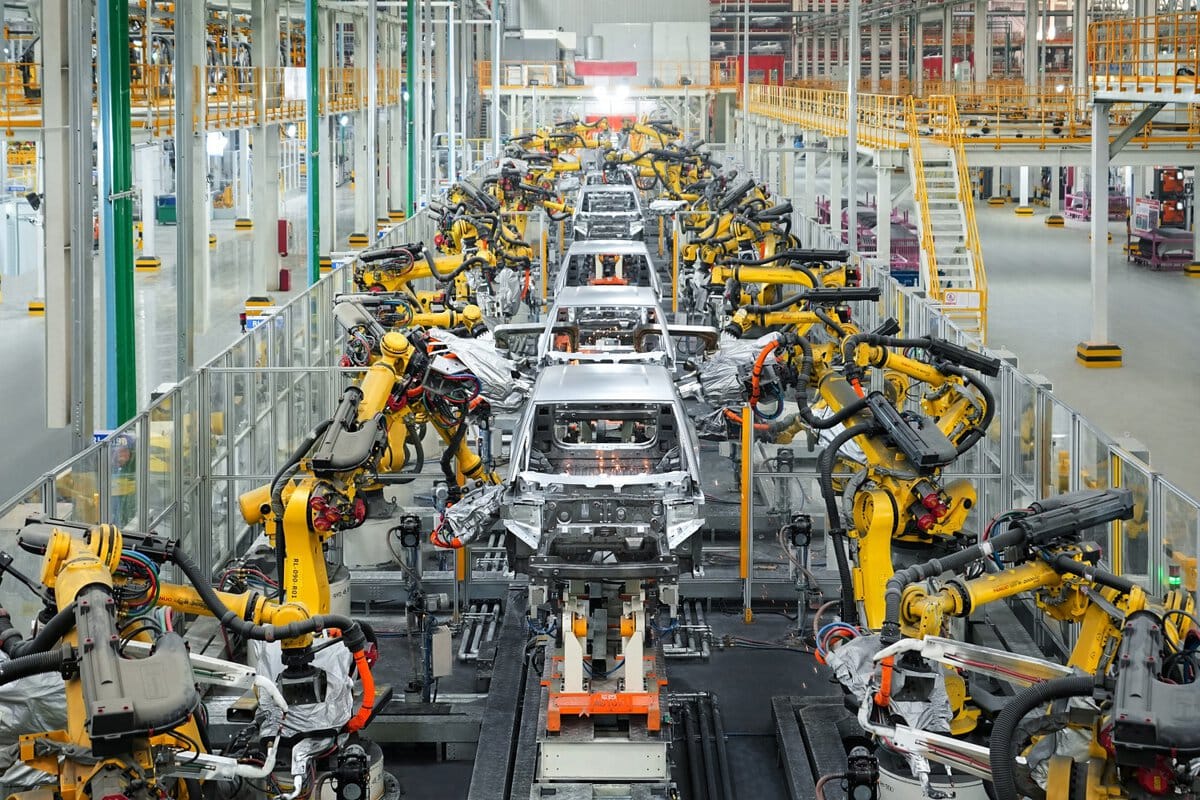
The attraction is easy to understand. A new assembly operation can represent billions of dollars in construction, equipment and supplier investment. It can support thousands of direct and indirect jobs, give a struggling industrial community a new tax base and generate the ribbon-cutting photographs politicians adore.
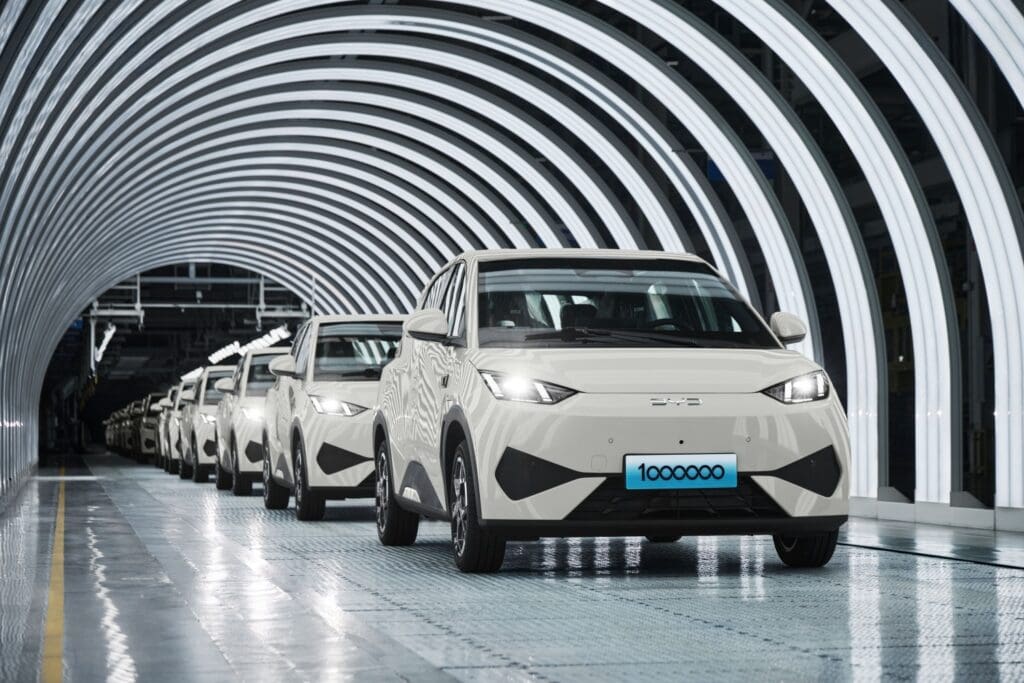
Chinese companies have already used localized production to expand elsewhere. BYD has established manufacturing operations outside China and pursued European production in Hungary. An American factory would follow the same broad strategy: build nearer the customer, reduce exposure to import barriers and present the company as a local employer rather than a distant exporter.
You may also enjoy: The New Auto Factories Rebuilding America
American regulators would examine far more than the factory’s employment announcement. A major Chinese investment could face a national-security review by CFIUS, the Treasury-led committee that reviews certain foreign investments. Land near military installations, access to sensitive technology and ownership of important American businesses can all complicate a proposed deal.
Local assembly would also have to mean more than fastening imported parts together. If the batteries, motors, software, electronics and tooling continued to arrive from China, America would receive some assembly employment without capturing the deeper engineering and supplier benefits.
The Legal Wall Is Bigger Than a Tariff
Imported Chinese electric vehicles face a 100% additional tariff under the Section 301 action. Including the ordinary passenger-car duty, the effective barrier is greater than 100%. Building locally could reduce exposure to an import tariff, but it would not resolve the more serious ownership and technology restrictions.
The Commerce Department’s Connected Vehicle Rule took effect in March 2025. Beginning with model year 2027, it prohibits covered sales by connected-vehicle manufacturers owned by, controlled by or subject to the jurisdiction of China or Russia. It also blocks covered Chinese or Russian connectivity and automated-driving software.
You may also enjoy: Should America Permanently Ban Chinese Cars?
This is why a factory in Tennessee or Michigan would not provide an automatic passport into American showrooms. The government is concerned about who wrote the code, where driver information travels and whether an outside actor could gain remote access. Today’s car knows where you sleep, where you work and which roads you travel. That makes its digital ancestry more consequential than the flag hanging over the assembly line.
Congress may reinforce that barrier. The proposed Connected Vehicle Security Act, sponsored by Republican Senator Bernie Moreno and Democratic Senator Elissa Slotkin, would restrict vehicles, hardware and software associated with designated foreign adversaries. It advanced unanimously through the Senate Commerce Committee but has not become law.
You may also enjoy: Is Polestar Finished in the United States?
Cheap Cars Are the Temptation Detroit Cannot Ignore
The consumer case for competition begins with a grim number. Kelley Blue Book says the average new-vehicle transaction price moved back above $50,000 in August 2026. America has lost most of its genuinely inexpensive new cars just as financing, insurance and household expenses have made affordability more important.
You may also enjoy: The $20,000 Car Is Dead: Cheap Options That Deliver
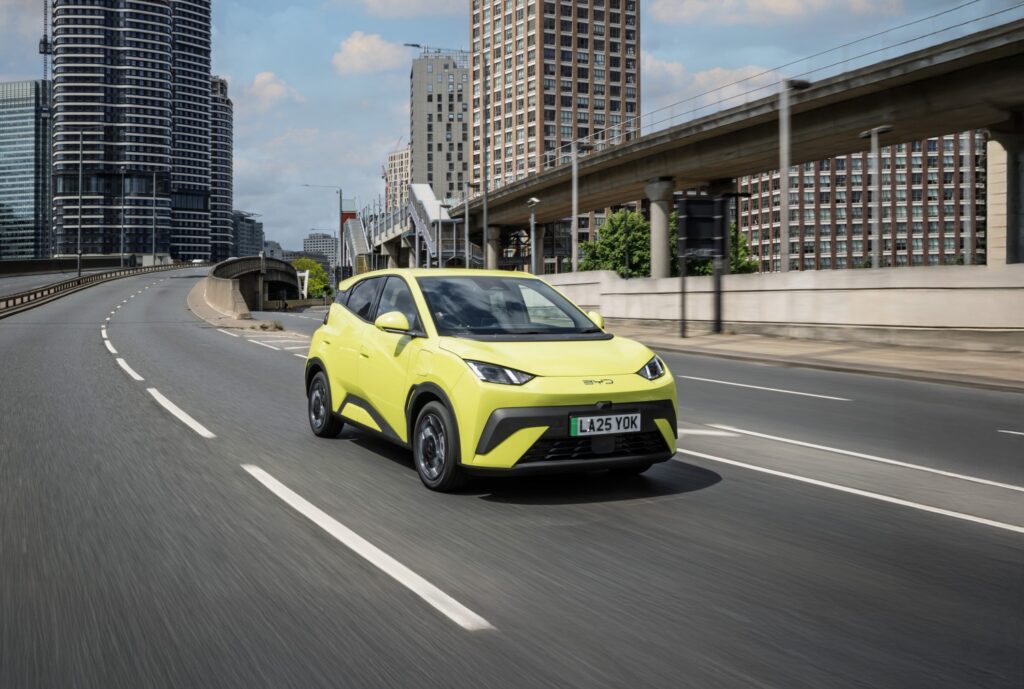
Chinese automakers could attack that opening. BYD, Geely, Chery, SAIC and others have learned to develop electric and plug-in models quickly, integrate batteries and electronics efficiently and offer equipment at prices that make established competitors perspire through their boardroom tailoring.
American production would erase some of the price advantage. U.S. labor, construction, compliance and parts costs mean a vehicle costing $12,000 in China would not necessarily cost $12,000 here. It could still force competitors to reconsider why a mainstream crossover so easily reaches $45,000.
You may also enjoy: BYD’s Five-Minute EV Battery Charge Is Detroit’s Problem
America also has strategic reasons to develop a domestic battery supply chain. A Chinese-owned factory relying on imported cells and materials might lower vehicle prices without reducing the country’s dependence on China. A credible agreement would need local sourcing targets, investment deadlines and consequences if promised factories became little more than final-assembly operations.
What an Acceptable Deal Would Have to Include
The sensible question is not whether every Chinese company should be admitted or banned. It is whether any company could satisfy standards tough enough to protect employment, data and industrial capacity without creating a disguised import channel.
At minimum, Washington would need enforceable requirements for American employment, meaningful local content, domestic data storage, independent cybersecurity oversight and separation from Chinese-controlled remote systems. Vehicles would still need to comply with applicable U.S. safety standards, and the manufacturer would need a credible dealer, service, parts and recall operation.
You may also enjoy: Chinese Connected Vehicle Ban Could Hit Mercedes
A joint venture could be one route, but the American participant would need real authority rather than a ceremonial shareholding. A separate U.S. subsidiary might be another, provided its software, data and management were genuinely insulated. Congress would almost certainly demand continuing audits instead of accepting a one-time promise.
Detroit’s objection deserves to be taken seriously. Chinese automakers developed their scale with government support, a protected home market and deep control over battery supply chains. Letting them enter after shielding their own development could expose American manufacturers to competition that is efficient but not entirely market-created.
Blanket protection carries a cost too. Keeping every Chinese competitor outside the gate removes pressure on established brands to build cheaper cars and improve their technology. Protection can buy time; it cannot manufacture competitiveness.
Trump’s Chinese Car Gamble is therefore not a simple jobs program. Done carefully, it could exchange limited market access for factories, technology investment and a broader choice of affordable cars. Done carelessly, it could give China the final foothold needed to move from global challenger to dominant automotive power.
The shopper should not expect a BYD showroom next month. Trump has floated a possibility, not signed an agreement. The important development is that the president no longer treats “Chinese automaker” and “American manufacturing” as mutually exclusive terms. Detroit now has to convince him that the distinction is either economically useful or dangerously naive.