Toyota Built a Pickup Truck Without a Pickup Bed
Toyota’s Hilux Hyper Z pickup truck swaps its cargo bed for an enormous rear wing, racing suspension and supercar-inspired styling. Could America be next?
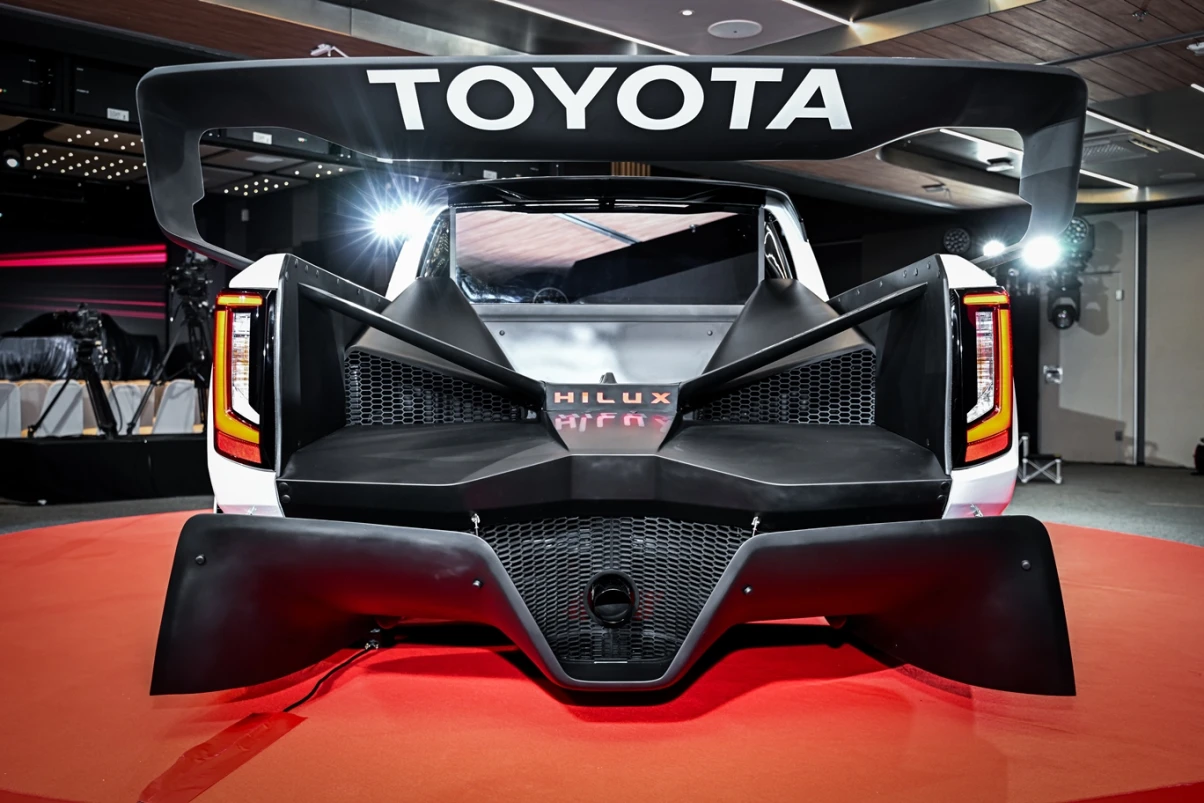
Someone at Toyota appears to have looked at a pickup truck and decided its most useful feature was getting in the way. The solution? Remove the cargo bed, dispense with the tailgate and install an enormous aerodynamic wing instead.
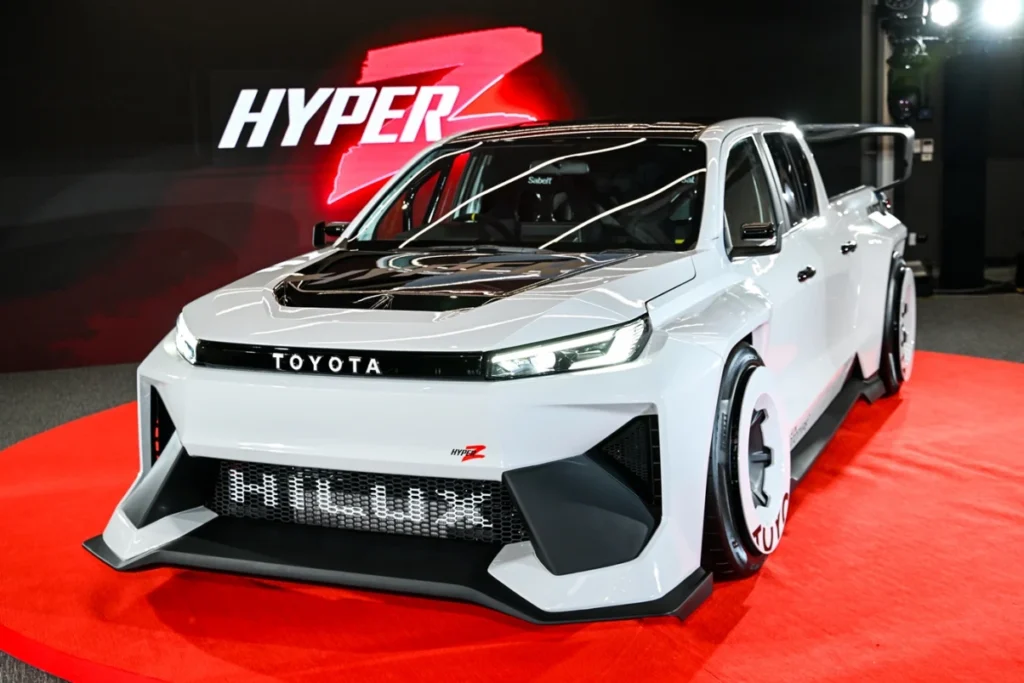
Meet the Toyota Hilux Hyper Z, an extraordinary prototype unveiled in Thailand on November 24, 2026. It looks like the result of an unfortunate parking incident involving a Toyota pickup and a Le Mans racing car, although the combination is considerably more deliberate than that.
Developed through a collaboration between Toyota Motor Thailand and Toyota Design Australia, the Hyper Z takes inspiration from Thailand’s enthusiastic pickup customization culture. Development began in 2024, resulting in a vehicle that challenges almost everything Americans traditionally associate with trucks.
And while this particular Toyota is unlikely to appear at your local dealership, the idea behind it deserves some attention.
You may also like this video:
A Pickup Truck That Thinks It’s a Supercar
The Hyper Z is based on the Thai-market Hilux Travo Z Edition, a production pickup designed to appeal to customers who prefer lowered street trucks over lifted off-road machines.
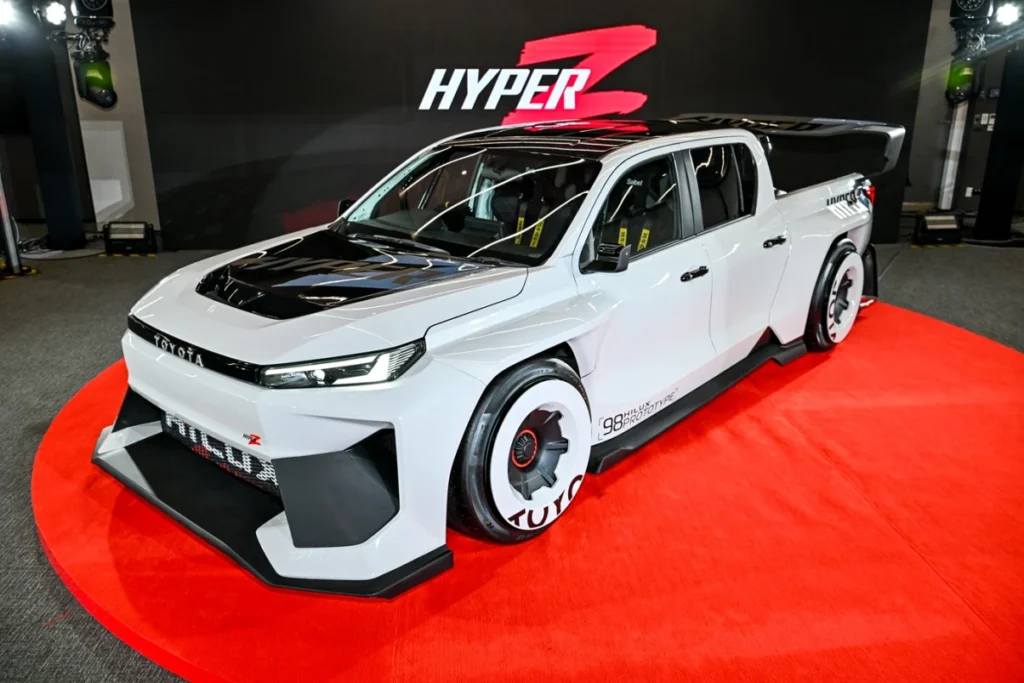
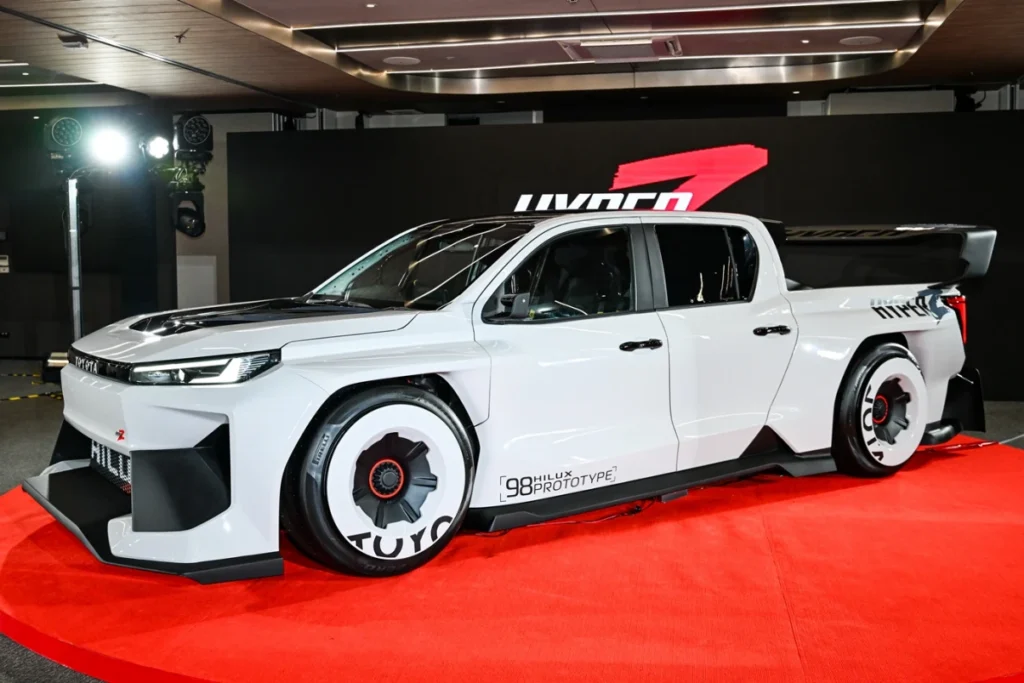
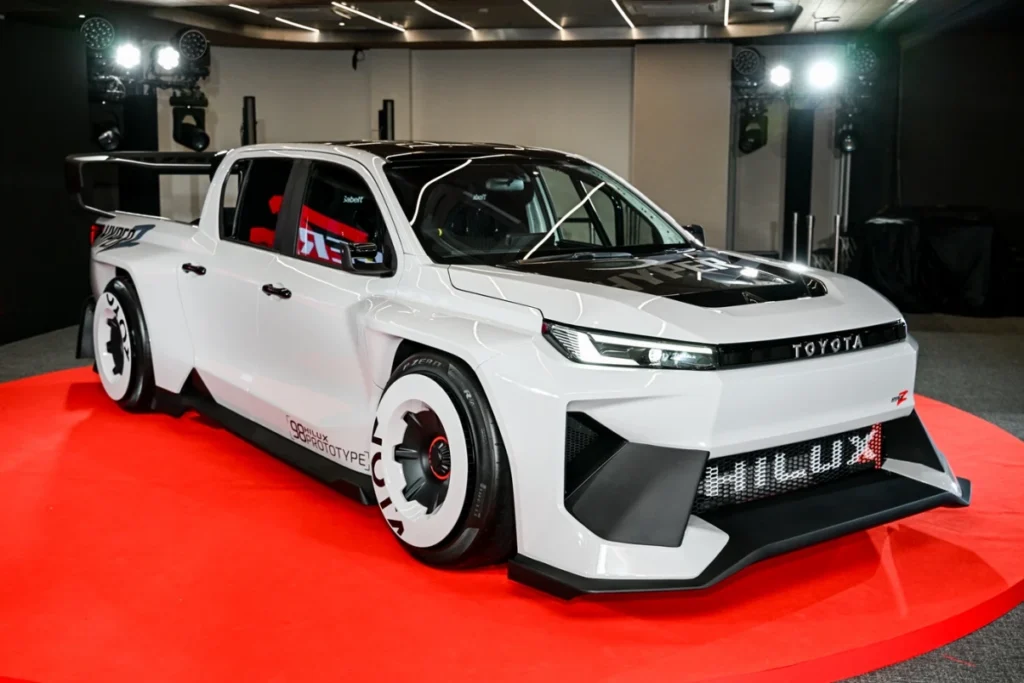
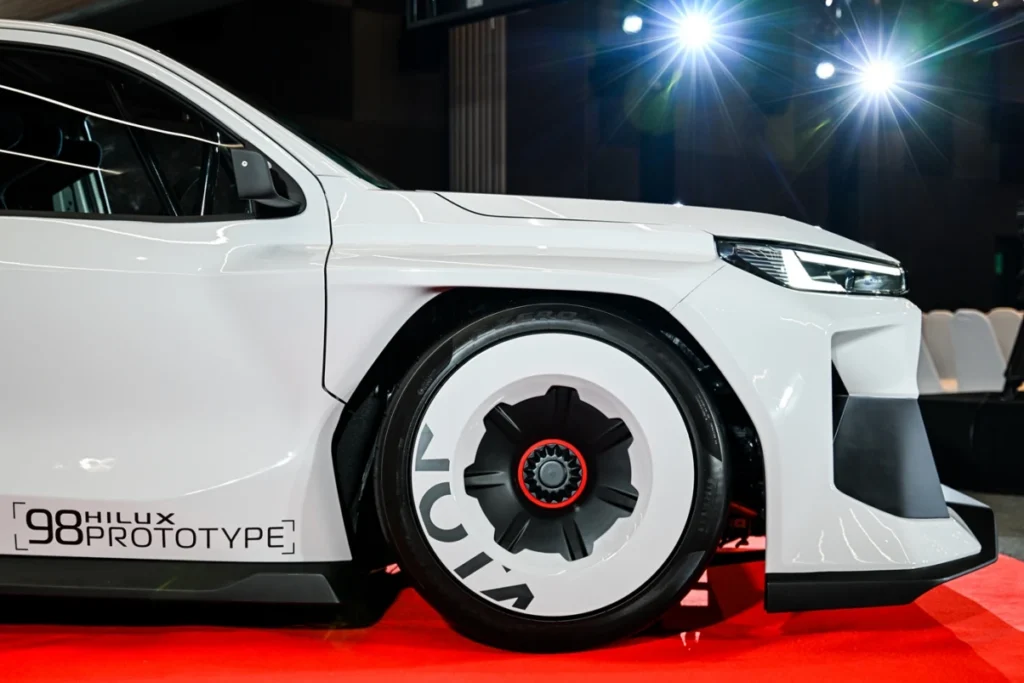
However, Toyota’s designers have taken that idea considerably further with the prototype. The body features dramatically widened wheel arches, an aggressive front splitter, extensive aerodynamic modifications and a rear wing that occupies the space where you’d normally expect to find a load bed.
There isn’t even a conventional tailgate. The truck’s rear structure has been repurposed to support its aerodynamic equipment, making a trip to Home Depot somewhat optimistic.
You may also enjoy: Toyota Tacoma Lassen: Robots Build Custom Truck in 21 Days
The proportions are remarkable. The Hyper Z measures approximately 211 inches long, 86.7 inches wide and just 59.6 inches tall. That’s a substantial footprint for a vehicle whose roof sits roughly five feet above the pavement.
Lowering a vehicle can reduce its center of gravity, potentially improving stability during cornering. Widening its track can also influence handling characteristics, although actual performance depends on suspension geometry, weight distribution and tire selection.
Why Would Toyota Remove the Cargo Bed?
On a conventional pickup, the cargo bed is central to the vehicle’s purpose. On a performance-focused prototype, however, designers have an opportunity to use that space differently.
The Hyper Z’s enormous rear wing illustrates how radically a truck’s body can be adapted for performance applications. Such aerodynamic devices are generally intended to generate downward force, helping increase the load on the tires as vehicle speed rises.
There are compromises. Creating downforce can increase aerodynamic drag, requiring additional engine power to maintain speed. The National Academies’ automotive engineering research explains how changes to body shape and aerodynamic devices influence vehicle efficiency.
You may also enjoy: SEMA 2026: Wild Concepts, Useful Parts and the Fine Print
Toyota has not published independently verified downforce measurements or aerodynamic performance figures for the Hyper Z. Its appearance certainly suggests serious performance ambitions, but an enormous wing alone does not establish how effectively the truck would perform on a racetrack.
Thailand Has a Very Different Idea of Pickup Culture
American pickup customization tends to revolve around off-road capability, larger tires, increased ground clearance and accessories that make weekend adventures more convenient.
Thailand has developed a substantial enthusiast culture around lowered pickups, street-performance styling and motorsport. Toyota’s Hyper Z acknowledges those customers and demonstrates what can happen when a manufacturer takes inspiration directly from the people modifying its products.
Thailand is also an important manufacturing and development center for Toyota’s international pickup business. The company introduced its latest-generation Hilux there in November 2025, as detailed in its official global pickup announcement.
You may also enjoy: Scion KEI-01: Toyota’s Mini Truck Has a 25-MPH Catch
The Hyper Z demonstrates how differently a familiar vehicle category can develop depending on local tastes. The same basic pickup philosophy can produce a practical commercial vehicle, an expedition truck or something that looks more comfortable outside a racing paddock than a hardware store.
Could Toyota Build an American Tacoma Street Truck?
This is where things become particularly interesting for American buyers. Toyota already offers multiple performance-oriented versions of the Tacoma, but much of that engineering is directed toward improving capability away from paved roads.
Imagine applying comparable development resources to a road-focused Tacoma instead. Lowered suspension, upgraded brakes, carefully selected performance tires and distinctive bodywork could create an entirely different interpretation of Toyota Racing Development.
America has embraced performance pickups before. The Ford F-150 SVT Lightning and Dodge Ram SRT-10 demonstrated that trucks could attract enthusiasts interested in acceleration and on-road performance.
You may also enjoy: 2027 Toyota Tacoma Review: Start With the SR5
A contemporary midsize street truck could offer similar entertainment in a more manageable package. Toyota would need to preserve enough everyday practicality to make it attractive beyond a relatively small group of enthusiasts.
Removing the cargo bed entirely might be taking things a little too far. Fortunately, the production Hilux Travo Z Edition retains conventional pickup functionality, offering a more realistic indication of how Toyota could approach this market.
What American Truck Owners Should Know Before Lowering Their Pickups
There is a considerable difference between buying a factory-engineered performance pickup and installing aftermarket components to achieve a similar appearance.
Suspension modifications can affect wheel alignment, available suspension travel, braking behavior and tire wear. Changing wheel and tire sizes also requires attention to load capacity and inflation requirements, as explained in NHTSA’s tire safety guidance.
Wider tires and additional aerodynamic equipment can influence real-world fuel economy. Changes that increase tire rolling resistance or air resistance may compromise efficiency, regardless of how attractive the finished vehicle looks.
The National Academies’ vehicle efficiency research also identifies vehicle mass, tire resistance and aerodynamic forces as important factors in energy consumption.
You may also enjoy: 2026 Toyota Tacoma Review: Which Trim Is Right for You?
Anyone considering extensive modifications should establish whether the proposed components are compatible with their particular truck and its intended use. Preserving predictable handling, safe braking and adequate carrying capacity should take priority over achieving an aggressive stance.
Will Toyota Actually Build the Hyper Z?
For now, the Hyper Z remains a one-off prototype. Toyota has not announced production pricing, horsepower figures, acceleration times or an American launch.
Its significance lies in demonstrating that a manufacturer known for dependable, practical pickups is willing to explore a rather less sensible side of the business.
There’s room in America’s automotive market for trucks that prioritize driving enjoyment alongside utility. A factory-developed street-performance Tacoma could provide an interesting alternative to the endless parade of increasingly tall off-road pickups.
Toyota has demonstrated that its designers are capable of imagining such a vehicle. Now, if somebody could persuade them to put the cargo bed back in, we might have something worth taking to an American dealership.