Porsche Electric Boxster Gets Fake Gears and Engine Sounds
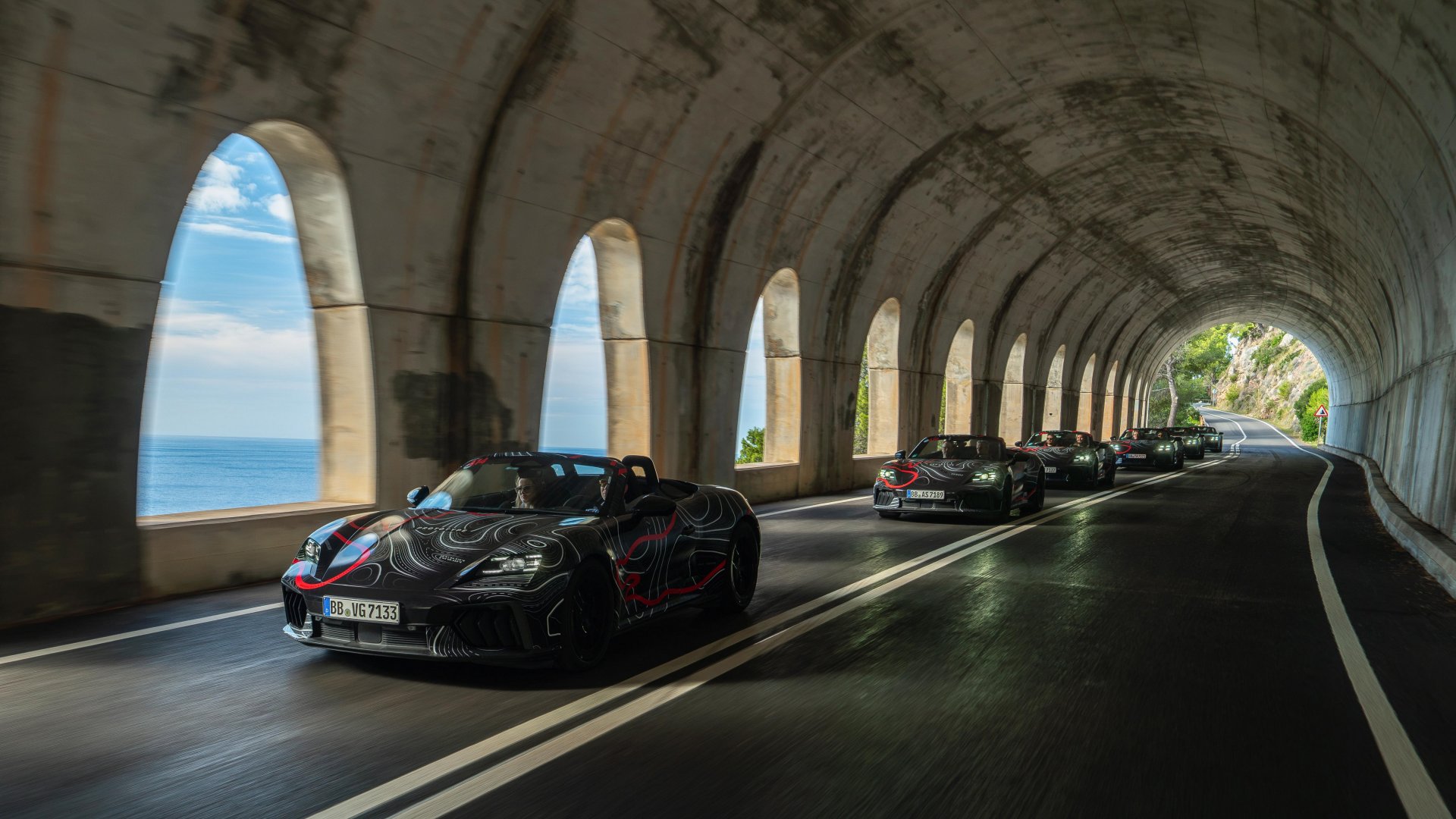
The Porsche electric Boxster gets simulated seven-speed gear changes and flat-six engine sounds as Porsche attempts to preserve sports car excitement.
Somewhere in Germany, Porsche engineers have spent considerable time teaching an electric car how to behave like a gasoline-powered one. They’ve given it imaginary gears, reproduced the sound of a six-cylinder engine and provided paddle shifters to operate a transmission that doesn’t physically exist.
Before the Porsche faithful reach for their pitchforks, there’s an interesting engineering argument behind all this. Electric cars have largely solved the problem of acceleration. Making that acceleration entertaining, involving and memorable is proving considerably more complicated.
On November 24, 2026, Porsche announced new development details about its forthcoming all-electric 718 Boxster, ahead of a world premiere in the first quarter of 2027. The company appears determined to preserve some of the sensations that made its gasoline-powered roadsters so appealing.
You may also like:
How the Porsche Electric Boxster Changes Imaginary Gears
Porsche calls its system E-Shift, and every version of the new electric Boxster will receive it as standard equipment. Drivers can activate a simulated seven-speed version of Porsche’s PDK dual-clutch transmission, allowing the car to reproduce the familiar experience of moving through individual gear ratios.
Drivers can leave the software to handle the simulated changes automatically or take control using steering-wheel paddles. Different driving modes alter the character of those shifts, much as they would in a conventional Porsche sports car.
Most battery-electric vehicles don’t require a conventional multi-speed gearbox. Their motors can operate across a broad range of speeds, delivering useful torque without the repeated gear changes necessary in many gasoline-powered vehicles.
What Porsche is attempting to reproduce is the interaction that accompanies acceleration. Rather than simply pressing the accelerator and watching the scenery disappear, drivers can participate in managing the delivery of power.
You may also enjoy: Audi EV Patent: Fake Turbo Lag, Real Sparks and Scents

Porsche Has Brought Back the Sound of a Flat-Six
Accompanying those simulated shifts is a soundtrack inspired by the six-cylinder engine from the previous 981-generation Boxster GTS. Porsche selected a familiar voice from its own history rather than inventing an entirely futuristic sound.
For enthusiasts, this may prove more controversial than the virtual transmission. A considerable part of the appeal of a traditional sports car comes from the relationship between mechanical activity and sound. Drivers learn to recognize engine speed, anticipate gear changes and judge acceleration without constantly looking at the instruments.
Because electric powertrains operate differently, some of those familiar signals disappear. A convincingly integrated soundtrack could restore useful feedback, even if its origins are electronic.
Of course, no collection of speakers can reproduce every mechanical sensation of a real flat-six engine. There will always be buyers who prefer the original, and that’s perfectly understandable.
You may also enjoy: Hyundai N Performance Is Becoming a Full Lineup
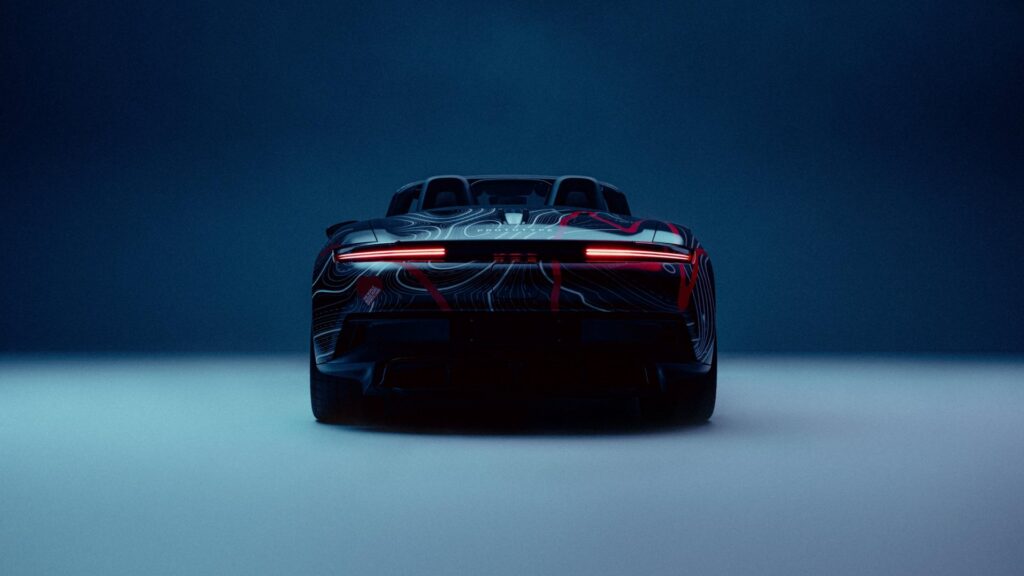
Will Fake Gear Changes Make the Electric Boxster Slower?
Porsche says acceleration performance remains unchanged regardless of whether E-Shift is active. Its engineers adjust torque delivery during the virtual shifts to compensate for the simulated gear-changing process.
That’s an important manufacturer claim, although independent testing of the finished production car will establish whether it holds up in practice. Deliberately sacrificing acceleration for nostalgia would be an awkward proposition in a Porsche.
The company has also confirmed that the system can be disengaged. When it is, the paddles control three selectable levels of regenerative braking, allowing drivers to adjust how strongly the vehicle slows while recovering energy.
Having that choice makes the technology considerably more appealing. Someone who enjoys the theater on a Sunday morning can still take advantage of the quiet operation and smooth acceleration associated with electric propulsion during the working week.
You may also enjoy: 2026 Chevrolet Corvette Review: Which One Should You Buy?
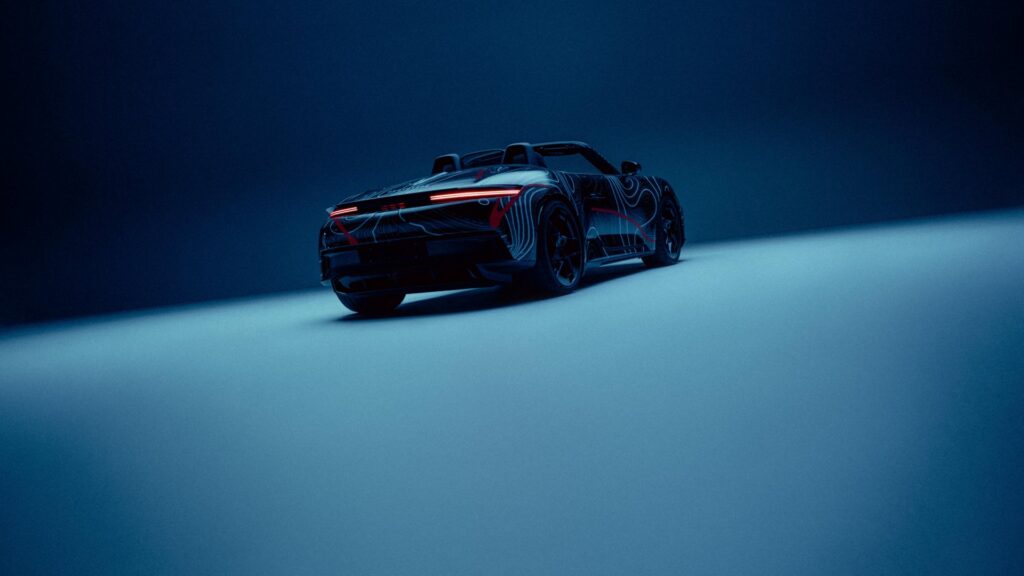
The Clever Engineering Is Behind the Seats
While imaginary gear changes will attract the headlines, Porsche’s battery placement deserves at least as much attention. Many electric vehicles locate their battery underneath the passenger compartment. That works well for SUVs, but raising the seating position in a small roadster risks compromising its fundamental character.
Porsche’s E-Core architecture positions the 800-volt battery behind the occupants, occupying the space traditionally associated with a mid-mounted engine. The arrangement helps retain a low driving position while concentrating substantial mass toward the middle of the vehicle.
Porsche is also borrowing chassis technology from the 911, including steering hardware and an electronically controlled limited-slip differential. Rear-axle steering will be available for the first time in a Boxster.
Every model will drive the rear wheels. For the most powerful version, Porsche is targeting a sprint to 62 mph in under three seconds and a maximum speed exceeding 155 mph.
You may also enjoy: Porsche Mission S: The Supercar That Moves Its Dashboard
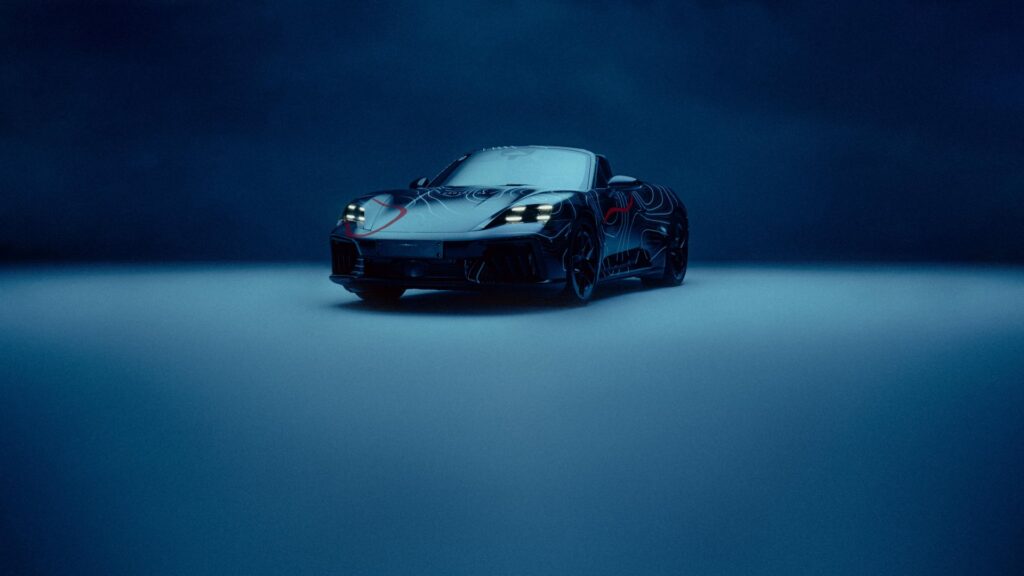
Porsche Isn’t Alone in Making Electric Cars Sound Like Gasoline Cars
Hyundai has already explored similar territory with its IONIQ 5 N, using simulated gear changes and selectable sound to make an electric performance vehicle more involving. Other manufacturers have experimented with artificial exhaust notes, motor sounds and electronic driving feedback.
There’s an amusing irony here. After decades spent engineering quicker automatic transmissions and eliminating unwanted engine noise, manufacturers are discovering that enthusiasts rather liked some of those mechanical interruptions.
The broader opportunity is to make enjoyable performance accessible at sensible road speeds. A sports car that requires extraordinary velocity before it becomes interesting presents an obvious problem. Steering feedback, sound and interaction can contribute to enjoyment without requiring drivers to explore the limits of acceleration on public roads.
You may also enjoy: Porsche 911 GT3 Bergsport Is Built for Mountain Roads
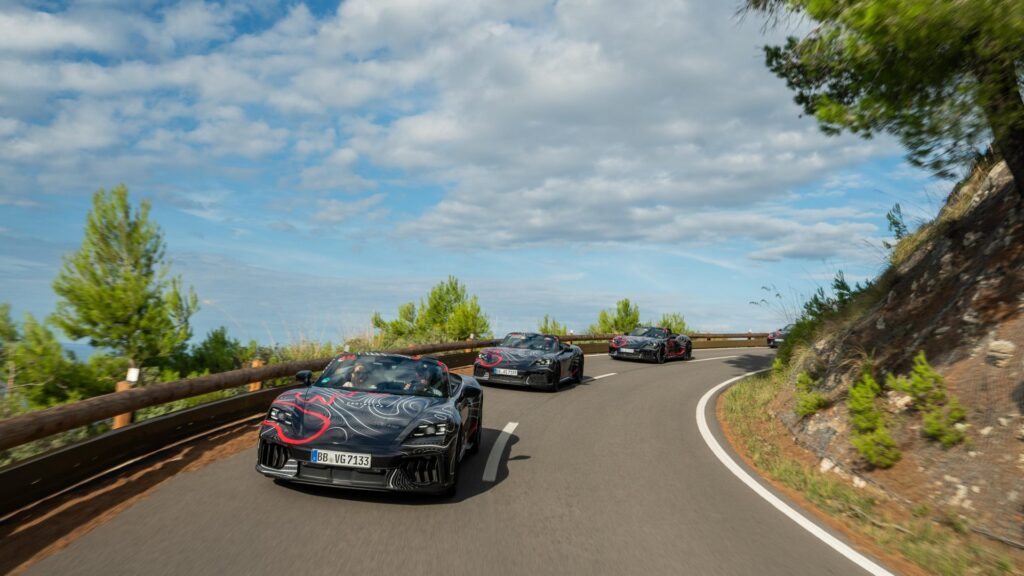
When Can Americans Buy the Electric Porsche Boxster?
Production is planned for Porsche’s Stuttgart-Zuffenhausen factory, with the global unveiling scheduled for early 2027. Final American pricing, EPA-rated driving range, battery capacity and U.S. dealership arrival dates remain unconfirmed.
Prospective buyers should pay particular attention to real-world range, repeated performance under demanding conditions and compatibility with public charging stations. An 800-volt electrical architecture offers potential charging advantages, but voltage alone doesn’t establish how quickly a particular vehicle can recharge.
My advice to existing Boxster owners is to reserve judgment until they’ve driven the production car in both configurations. Porsche has made an encouraging decision by keeping the simulated driving experience optional during operation while making the technology standard equipment.
The ultimate measure of success won’t be how convincingly Porsche reproduces the sound of its old gasoline engine. It’ll be whether owners still want to take the long way home, even when they’ve switched the imaginary gearbox off. That’s what a Boxster has always been about.