Stars, Stripes and 175 MPH: IndyCar’s Washington Spectacle
By Robert R Guio
The Freedom 250 Grand Prix gave IndyCar an unforgettable national stage, drawing 215,000 fans and offering a blueprint for American racing.
The Freedom 250 Grand Prix Solved a Visibility Problem
IndyCar has spent years proving that it can produce terrific racing. Washington proved something else: the series can make people stop and look before they know who is leading the championship.
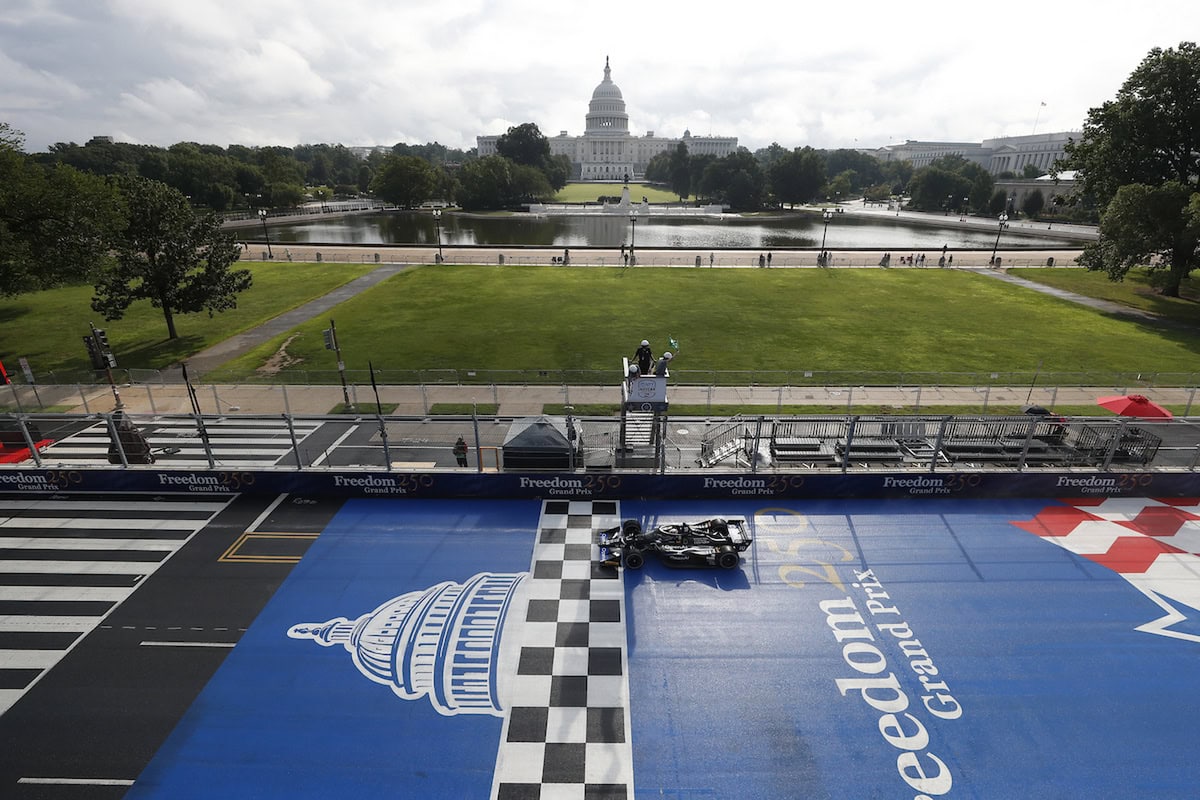
That is a bigger strategic breakthrough than it sounds. Motorsports competes for attention in an entertainment market where viewers can watch almost anything, anywhere, at any time. A race can be technically excellent and still disappear outside its established fan base. The Freedom 250 Grand Prix attacked that problem with geography. Instead of asking Washington to come to an IndyCar circuit, IndyCar brought a circuit into the civic imagery Washington already owns.
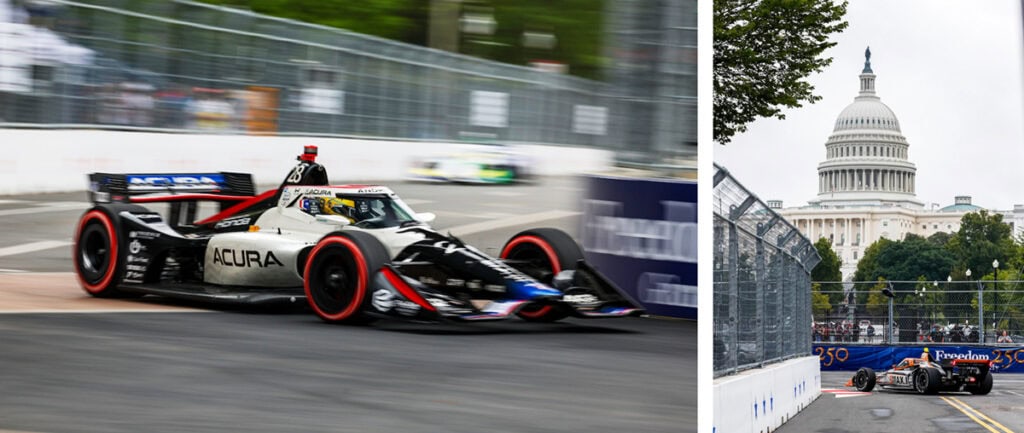
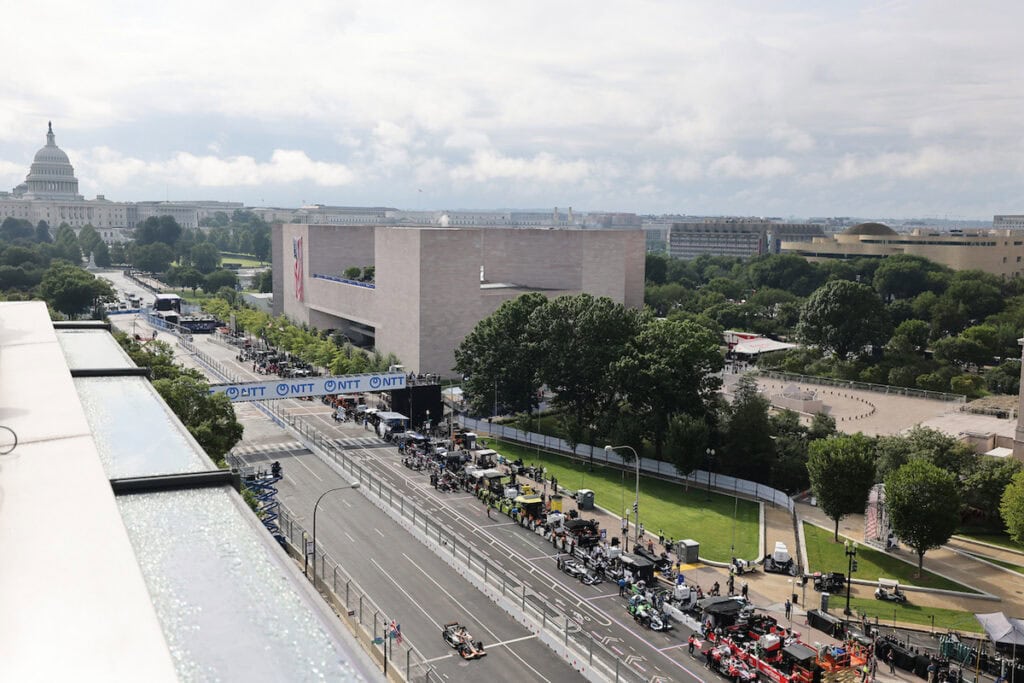
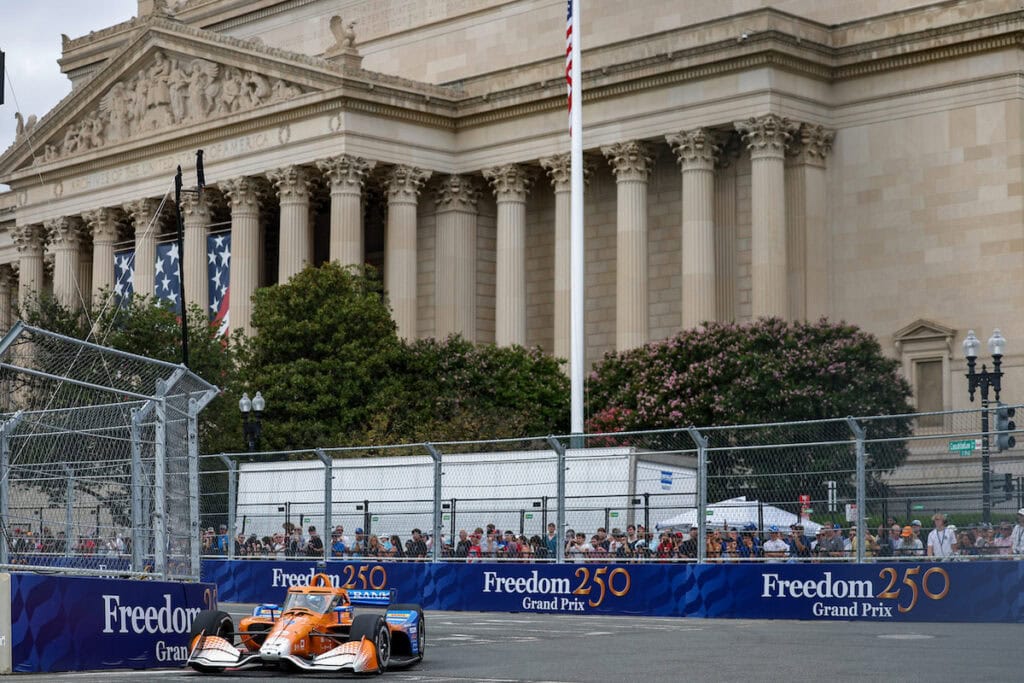
On August 23, 2026, the 1.7-mile, seven-turn course ran beside the National Mall and down Pennsylvania Avenue, with the U.S. Capitol and Washington Monument becoming part of the visual grammar of the race. The National Park Service describes the National Mall as “America’s Front Yard.” The Washington Monument rises 555 feet above the city, while the U.S. Capitol is both a working institution and a national symbol. Those are not generic city backdrops. They carry instant meaning.
The route also passed institutions that made the event feel almost absurdly concentrated with American history and technology. The Smithsonian National Air and Space Museum sits beside a course filled with another expression of engineering ambition, while the nearby National Archives is the permanent home of the Declaration of Independence. That setting gave a race celebrating the country’s 250th anniversary an authenticity a temporary festival site could never manufacture.
That was the strategic win. The series made the place explain the significance of the event before the broadcast had to explain the rules.
You may also enjoy: Why the Indy 500 Still Defines America’s Summer
The Monument Shot Was Part of the Product
Motorsport is visual, and Washington understood that at a level many race promoters never quite reach. FOX deployed 90 cameras across the street course and in the cars. One camera was mounted at the top observation level of the Washington Monument, which FOX said was a first for a sporting event. Another sat on a 70-foot crane. The point was not merely to record the cars. It was to keep reminding the audience where those cars were.
That distinction matters. Television coverage sometimes compresses street racing into anonymous concrete canyons. Washington did the opposite. The wider shots were the selling point. When a field of IndyCars appeared with the Capitol behind it, the viewer was getting two stories at once: an elite racing series was competing, and it had somehow been allowed to do so in one of the most symbolically loaded pieces of urban real estate in the United States.
The event added seven military flyovers, marching bands, a presidential motorcade lap and ceremonial involvement from federal and District officials. Some of that pageantry was unique to the country’s 250th anniversary. It should not all be treated as a template for every future race. The useful lesson is that IndyCar let the location have a starring role instead of treating it as scenery.
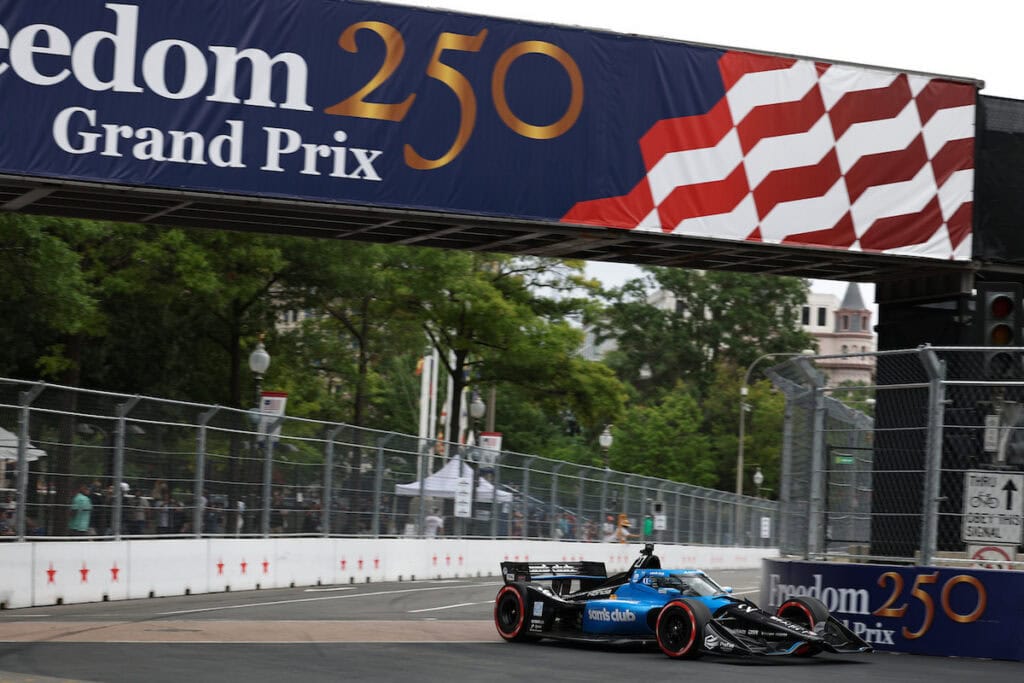
Kyle Kirkwood understood what that did to the emotional weight of the weekend. After winning, he said, “Outside of the Indy 500, I don’t think there’s another race that you’d want to win.” That is an extraordinary comparison from an IndyCar driver because Indianapolis is the series’ unquestioned center of gravity.
The competitive result supported the drama. Kirkwood beat Christian Lundgaard by 3.0906 seconds after controlling much of the 147-lap race. Will Power finished third and Marcus Ericsson fourth. Alex Palou’s difficult afternoon left him 20th and reduced his championship advantage over Kirkwood from 133 points to 91. Washington therefore managed to be both a made-for-television spectacle and a consequential sporting event.
You may also enjoy: Why Indy 500 Is Nothing Like F1, According to Takuma Sato
Washington Proved Street Racing Can Be a Civic Event
The crowd figure deserves attention. Organizers reported more than 215,000 spectators across the two-day weekend. General admission had been offered free through the event’s ticketing system, which lowered the barrier for people who might never buy a ticket to a conventional race.
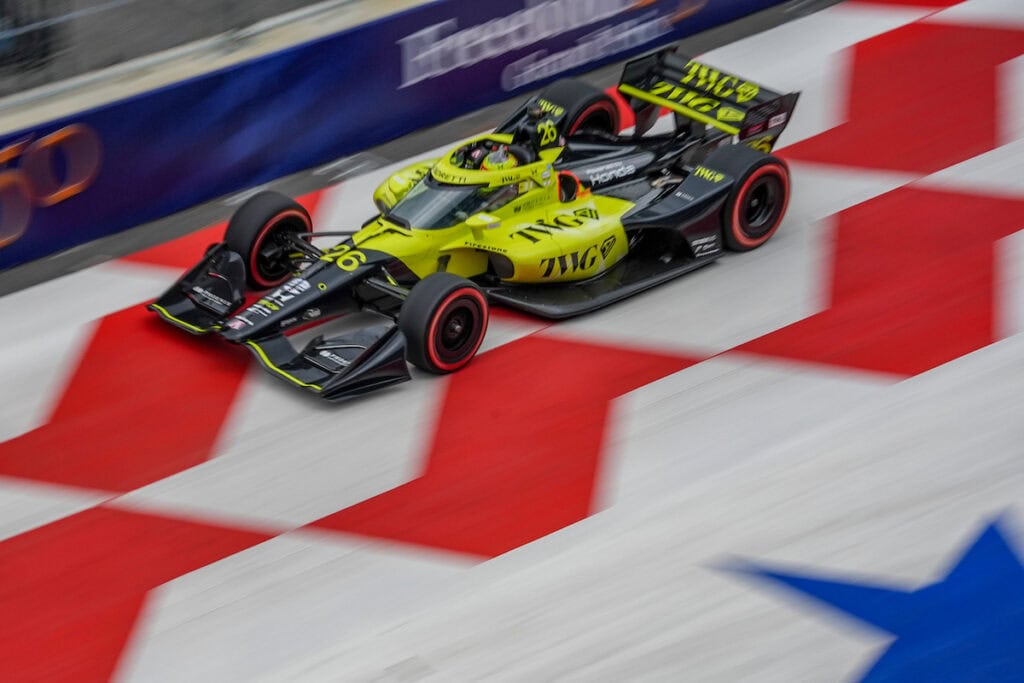
That approach changes what a promoter is trying to achieve. A traditional track sells a destination to racing fans. A public street event can sell racing to people who are already in the destination. Families, tourists, local residents and casual sports fans do not have to begin by identifying as motorsport enthusiasts. They can encounter the event, hear it, see it and decide whether they want more.
For IndyCar, that could be particularly valuable. The series has a product that often converts people once they watch it, but awareness has been the difficult first step. FOX’s audience was already moving in the right direction before Washington. Through the opening 14 races of 2026, the network’s IndyCar broadcasts averaged 1.731 million viewers, 16 percent higher than 2025 and 53 percent above 2024. The final Freedom 250 television number was not yet available when this story was prepared, so the D.C. weekend should not be credited with a ratings result that has not been published.
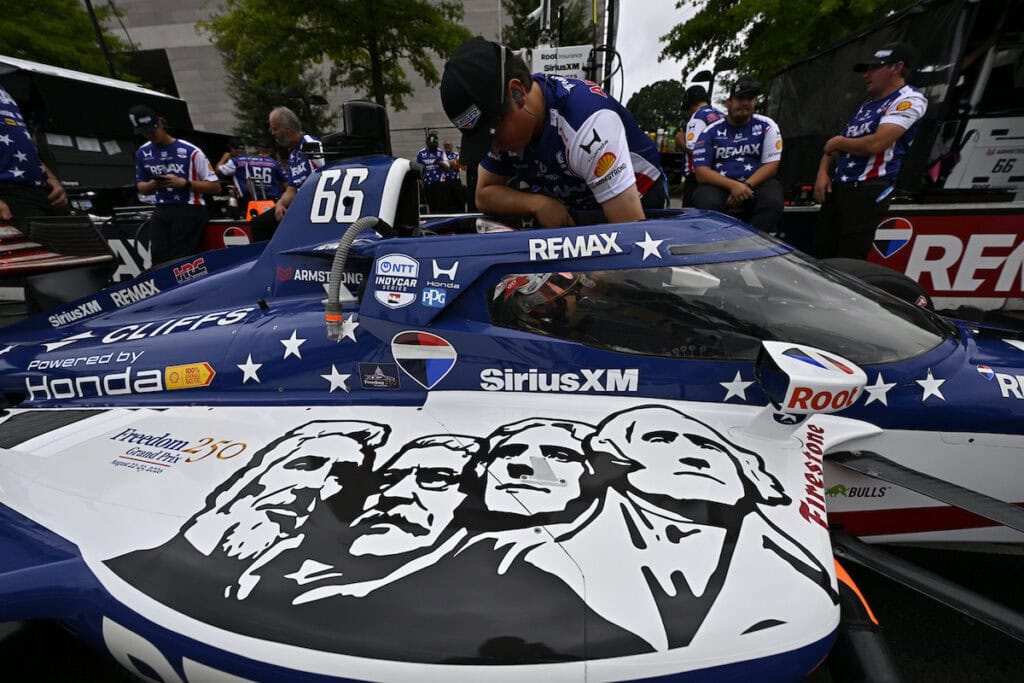
Still, a crowd exceeding 215,000 gives the series a powerful in-person proof point. It also suggests something about modern American motorsport. Fans increasingly respond to events that feel like experiences rather than appointments. Formula One has leaned heavily into destination races. NASCAR has experimented with city streets and new formats. IMSA turns Daytona and Sebring into endurance gatherings with their own cultures. WRC has been exploring a path back to the United States. IndyCar’s opportunity is to do all of that without losing the directness that makes it distinctly American.
You may also enjoy: WRC Could Return to America as U.S. Motorsport Booms
What IndyCar Should Keep, and What It Should Fix
The danger after a weekend this photogenic is confusing a brilliant launch with a finished formula. Washington was complicated. Drivers discovered a circuit filled with severe bumps and brick-lined pedestrian crossings, and crews had to work on portions of the street surface during the weekend. Street courses are supposed to be imperfect, but the quality of the competition still depends on giving drivers a surface that is challenging rather than needlessly disruptive.
The fan experience also needs refinement if the race returns. Local reporting found spectators in some areas had difficulty following the actual contest because there was not enough on-site narration or race information. That is a classic street-race problem. A fan may have a spectacular view for five seconds every lap and still have no idea who pitted, who received a penalty, or why the order changed.
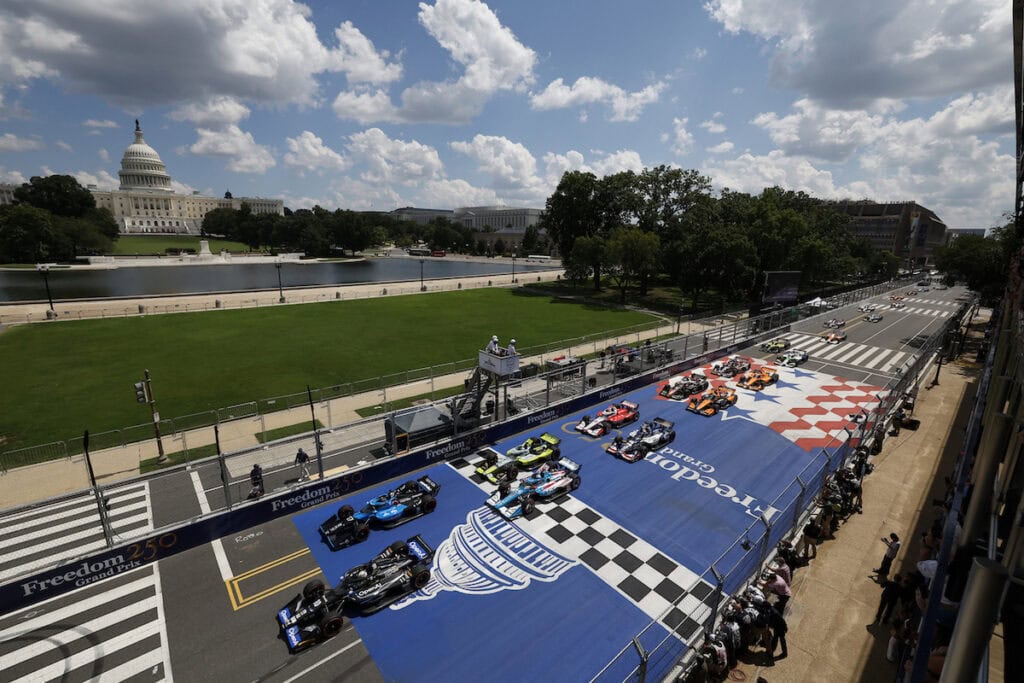
That matters because a new fan is the person least equipped to fill in those gaps. If IndyCar wants a giant civic race to function as an acquisition tool, it should make the competition easier to understand on site than it is at a permanent circuit, not harder. More screens, better public-address coverage, clear live timing, reliable mobile access and simple explanations of strategy would turn curiosity into fandom.
There is a second caution. A recurring Washington race cannot rely forever on the circumstances that created the first one. The inaugural event was tied to America’s 250th anniversary and came together with unusual federal involvement. An annual race would need durable cooperation among the District, federal agencies, residents, sponsors, broadcasters, and the series. At the time of writing, a 2027 edition had not been guaranteed.
That is why the correct reaction is not “do this everywhere.” It is “understand what worked here.” IndyCar should protect its ovals, road courses and established street races because they are the substance of the championship. Then it should identify a small number of occasions where setting can expand the audience without turning the calendar into a collection of expensive temporary circuits.
You may also enjoy: 2026 Rolex 24 at Daytona: How the Penske Porsche #7 Won
American Racing Just Got a New Blueprint
The Freedom 250 Grand Prix matters because it demonstrated that American motorsport does not have to choose between heritage and presentation. The country already has extraordinary traditional races. What Washington added was proof that a new event can borrow the power of a place without pretending that history can be created overnight.
The Indy 500 remains irreplaceable because generations have invested emotion in it. Washington cannot duplicate that, nor should it try. What it can do is complement Indianapolis by giving the series a second type of national moment. Indianapolis says that this is where American open-wheel racing has always mattered. Washington showed where American open-wheel racing is capable of going.
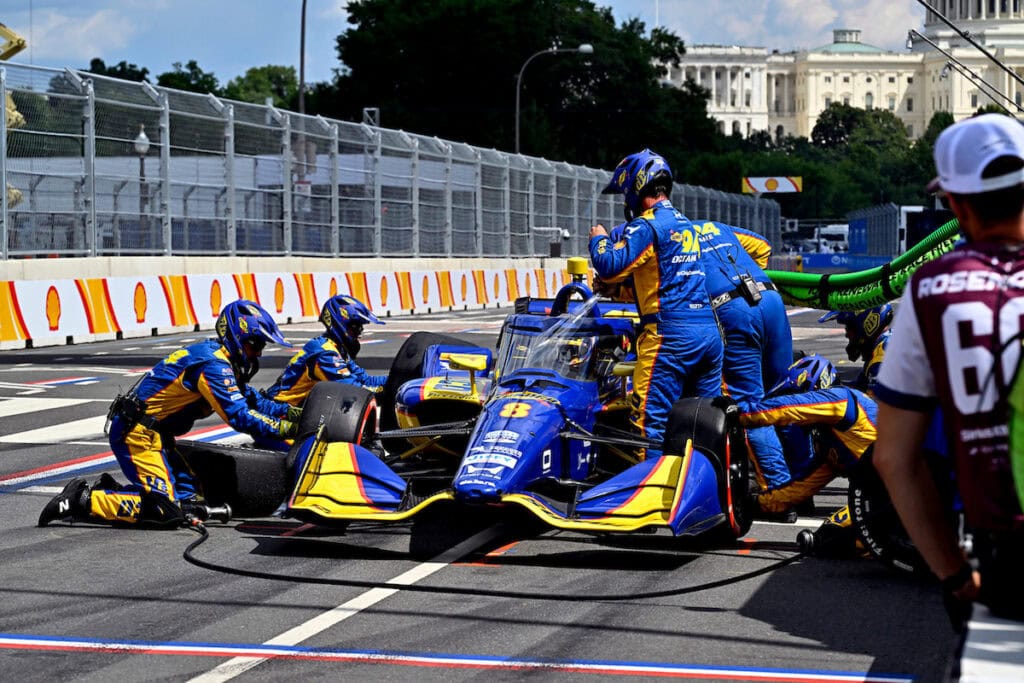
That is important for a series whose strengths have occasionally been easier for dedicated racing fans to understand than for the broader public. IndyCar has high speeds, excellent drivers, strategic complexity, close competition and one of the world’s most valuable motorsport institutions in the Indianapolis 500. What it has sometimes lacked is enough events that announce their importance visually before the first green flag.
Washington certainly did that.
For automakers and technical partners, the setting also created a useful connection between racing and the wider automotive story. Modern IndyCars use hybrid systems, energy recovery and sophisticated software management. Honda Racing Corporation USA has publicly discussed the value of IndyCar as both a technology-development environment and a place to train engineers. Put those machines outside the Air and Space Museum and the metaphor becomes almost too easy: racing remains one of the places where Americans gather to watch engineers make machines do improbable things in public.
You may also enjoy: How IndyCar Hybrid Tech Boosts Your Next Honda Hybrid
For the rest of American racing, the weekend should be read as a challenge. A series needs more than competition to break out of its core audience. It needs images people remember, an occasion they can explain to friends and a reason for casual viewers to feel they are missing something if they do not tune in.
That does not require monuments every weekend. It requires promoters to understand the identity of a place and use it honestly. Long Beach should feel like Southern California. Daytona should feel like Daytona. Indianapolis should never be polished into anonymity. A future American rally should use its landscape as part of the event. The strongest motorsport venues are not interchangeable.
You may also enjoy: Monterey Car Week Race Guide: Where Historic Motors Roar
Washington was the extreme version of that principle. The most valuable footage was not simply a fast car. It was a fast car in a place where viewers had never expected to see one.
There is also an important difference between spectacle and gimmick. Spectacle amplifies the sport. A gimmick distracts from it. Washington stayed largely on the right side of that line because when the pageantry finished, Kirkwood, Lundgaard, Power, Palou and the rest of the field still had nearly 250 miles of legitimate IndyCar competition to settle.
That distinction should guide whatever comes next. IndyCar does not need to chase increasingly strange locations simply because Washington produced memorable photographs. It needs a calendar where a few exceptional events broaden the audience while the traditional tracks maintain credibility with people who already love the championship.
If the Freedom 250 never happens again, the weekend will remain a remarkable historical curiosity. If it returns and improves, it could become something more important: evidence that IndyCar learned how to turn its racing quality into a national cultural event without changing what happens inside the cockpit.
Kirkwood left Washington with a trophy and a much healthier championship position. IndyCar left with something harder to quantify but potentially more valuable.
For one weekend, the series looked as large as the country it races in.