2026 Ford Mustang Review: EcoBoost or GT?
The 2026 Ford Mustang review comes down to one deliciously awkward question: 315-horsepower EcoBoost or or buy the 480-horsepower Mustang GT?
One promises everyday performance with fewer visits to the gas station. The other delivers a naturally aspirated V8, an available manual gearbox and a soundtrack that makes tunnels considerably more entertaining.
After decades covering the automotive industry, I’ve learned that the fastest car is not necessarily the one you should buy. The real question is whether the extra performance, purchase price and running costs deliver something you’ll actually appreciate every day.
2026 Ford Mustang Review: What’s New?
The seventh-generation Mustang continues into 2026 with its familiar rear-wheel-drive layout and choice of turbocharged four-cylinder or naturally aspirated V8 power.
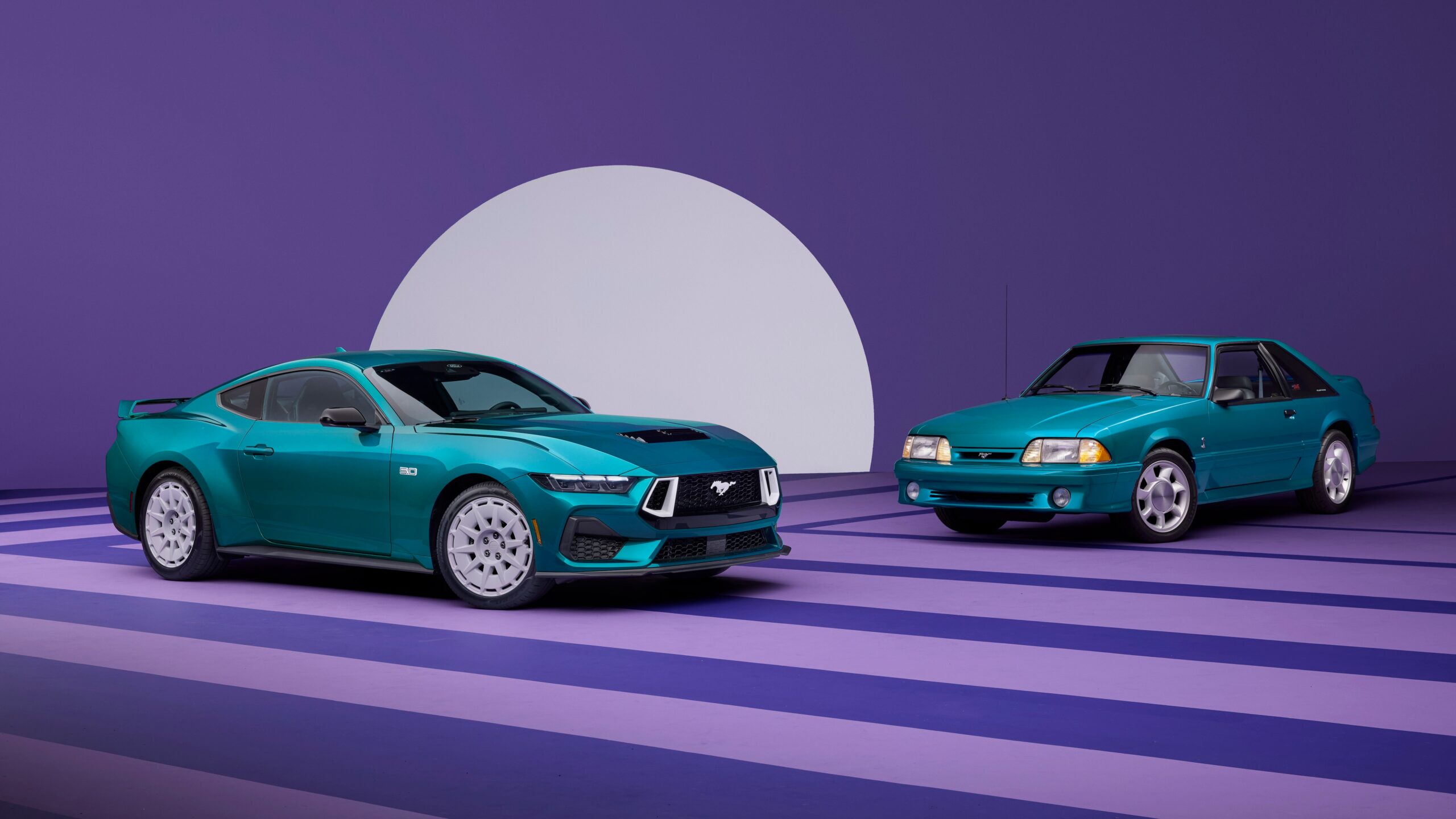
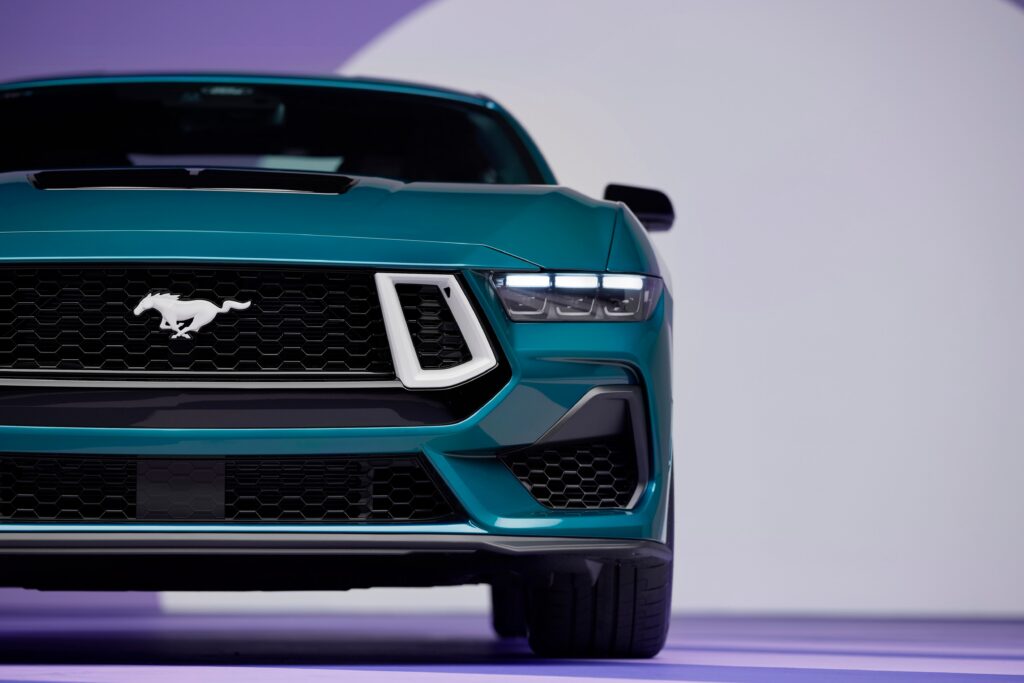
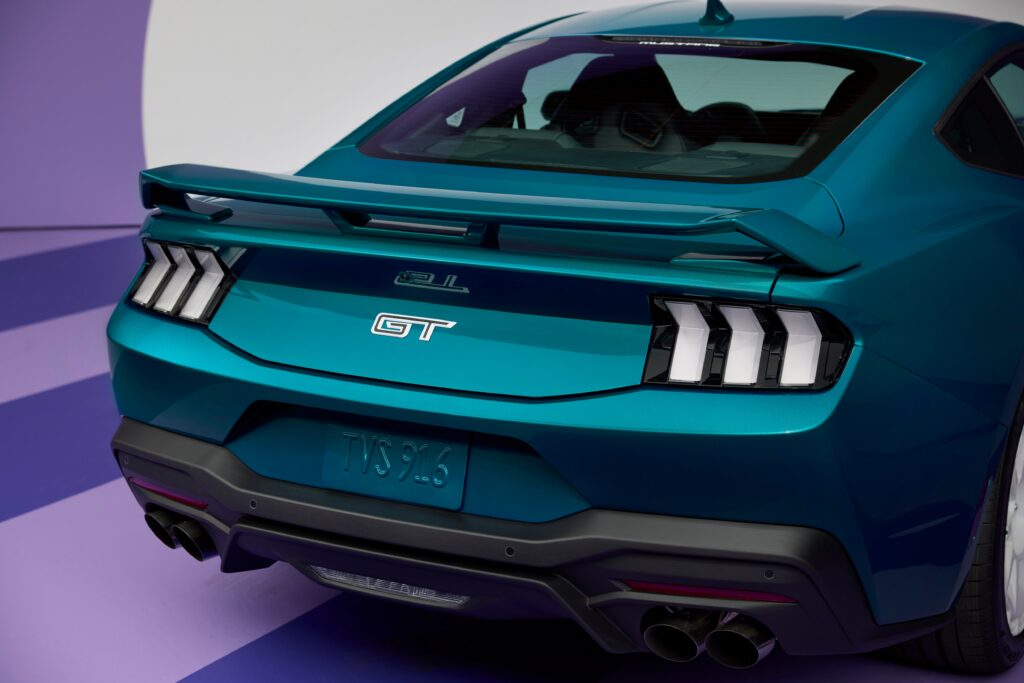
Ford has introduced new paint choices, including Adriatic Blue Metallic and Orange Fury Metallic Tri-coat. Additional seatbelt colors provide cabin personalization, while the GT Premium gains an available FX Package inspired by the Fox-body Mustang era.
Its distinctive exterior details, plaid-trimmed seating and retro-inspired styling offer nostalgic buyers something interesting without changing the car’s fundamental mechanical character.
The Ford Connectivity Package is now standard across the lineup, including an introductory year of eligible connected services. Continued access requires reviewing Ford’s subscription or purchase options.
You may also enjoy: Could a Four-Door Mustang Change Ford’s Playbook?
EcoBoost vs. GT: The Engines Explained
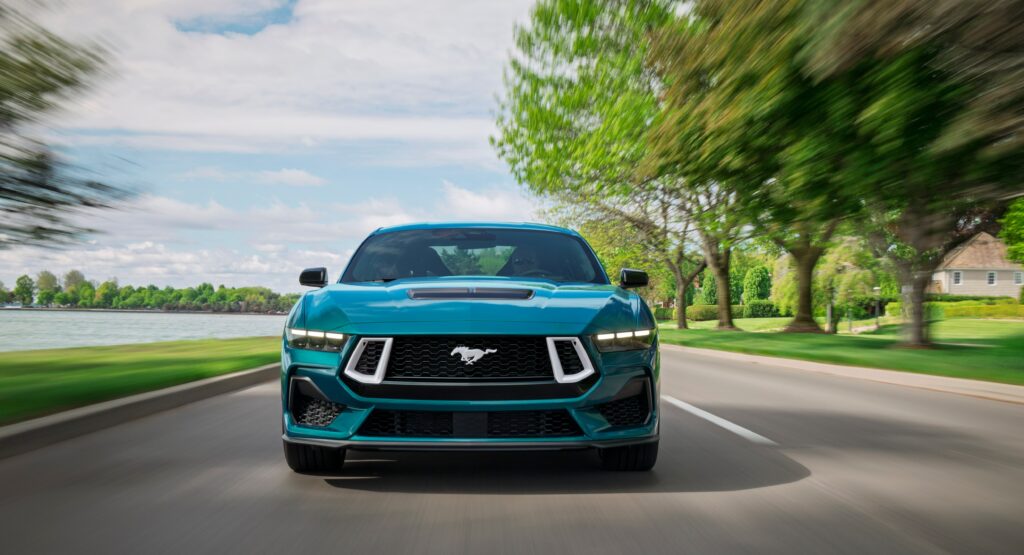
The entry-level Mustang EcoBoost uses a 2.3-liter turbocharged four-cylinder producing 315 horsepower and 350 lb-ft of torque on 93-octane fuel. Every EcoBoost is paired with a 10-speed automatic transmission.
That is not an insignificant amount of performance. Three hundred and fifteen horsepower would have been an extraordinary figure for many performance cars a generation ago. Today, Ford offers it in the least expensive Mustang.
The GT takes a more traditional approach. Its 5.0-liter Coyote V8 produces 480 horsepower and 415 lb-ft of torque. Specify the available active-valve performance exhaust, and output rises to 486 horsepower and 418 lb-ft.
More importantly, the GT retains an available six-speed manual transmission with rev matching. A 10-speed automatic is available for buyers who prefer to let the car handle shifting.
Both engines send their power to the rear wheels through a limited-slip differential. The EcoBoost has a standard 3.15 rear axle ratio, while the GT uses a 3.55 ratio.
Here’s the important distinction: the EcoBoost provides substantial performance without requiring the driver to exploit a V8’s upper rev range. The GT offers more outright power, throttle response and an entirely different mechanical character.
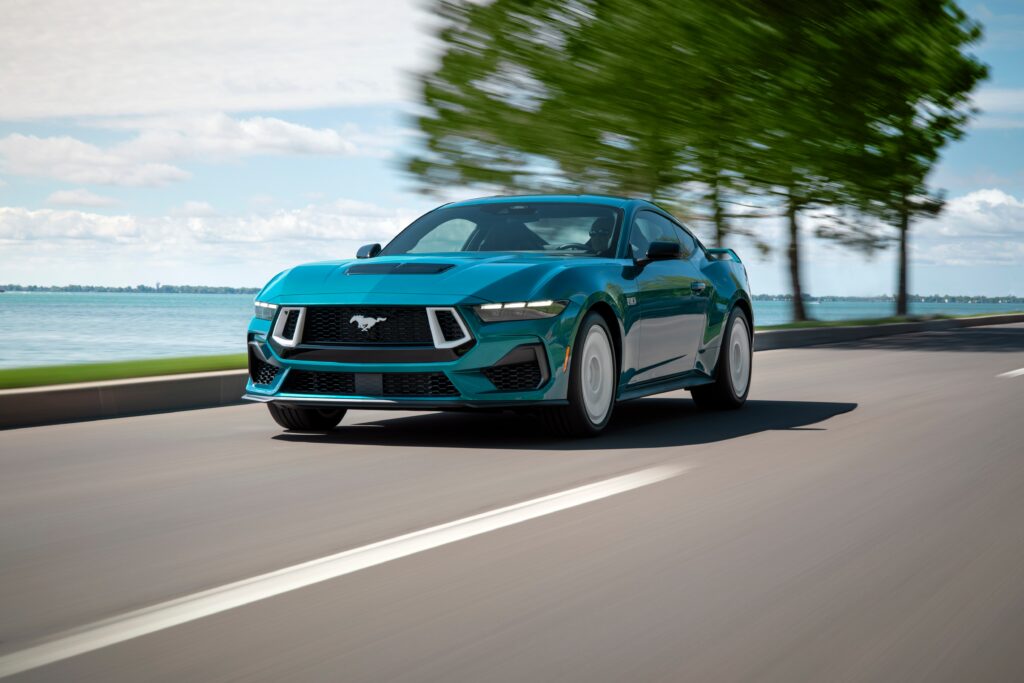
2026 Mustang Pricing: What Does the V8 Cost?
Ford’s published starting prices place the EcoBoost Fastback at approximately $32,995 and the GT Fastback at approximately $47,800, before destination charges, optional equipment, taxes and dealer fees. Buyers should verify the latest vehicle-specific pricing against Ford’s current configurator and window sticker.
| Model | Starting MSRP | Horsepower |
|---|---|---|
| EcoBoost Fastback | $32,995 | 315 hp |
| EcoBoost Premium Fastback | $36,345 | 315 hp |
| EcoBoost Convertible | $40,440 | 315 hp |
| EcoBoost Premium Convertible | $41,845 | 315 hp |
| GT Fastback | $47,800 | 480 hp |
| GT Premium Fastback | $52,080 | 480 hp |
| GT Premium Convertible | $57,580 | 480 hp |
At those advertised prices, the base GT Fastback costs $14,805 more than the base EcoBoost. That makes the EcoBoost a compelling proposition, particularly if the additional money could otherwise go toward insurance, tires or simply enjoying a few weekends away.
For a fuller understanding of dealer pricing and charges, review the Federal Trade Commission’s new-car buying guidance before signing a purchase agreement.
You may also enjoy: Ford Mustang vs Mach-E: Emotion or Everyday Sense?
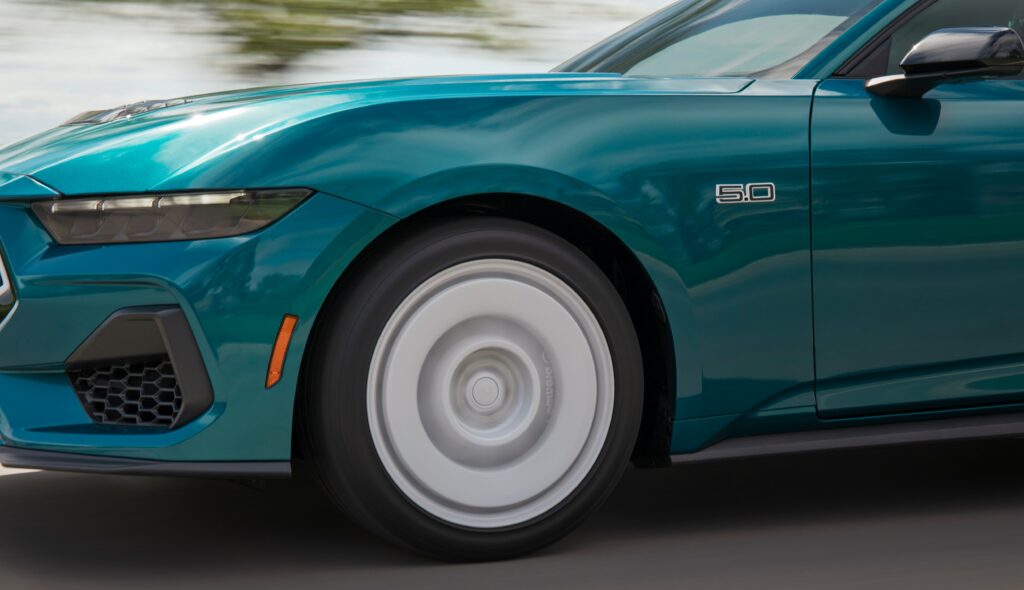
Fuel Economy: The EcoBoost’s Biggest Advantage
Fuel consumption is where the two engines separate most dramatically. The EcoBoost Fastback can achieve an EPA-estimated 22 mpg city and 33 mpg highway, with approximately 26 mpg combined in an applicable configuration.
The Mustang GT’s fuel economy is substantially lower. Depending on transmission and equipment, combined consumption is around 18 to 19 mpg, with certain automatic configurations capable of approximately 16 mpg city and 24 mpg highway.
The difference matters for someone driving 15,000 miles annually. At 26 mpg, the EcoBoost would consume approximately 577 gallons each year. At 18 mpg, the GT would consume approximately 833 gallons.
That is a difference of roughly 256 gallons annually, before allowing for differences in fuel grade, driving behavior and local fuel prices.
Check the specific car’s official EPA fuel-economy rating and the Department of Energy’s advice on efficient driving. Aggressive acceleration, high speeds and tire choice can change the actual cost considerably.
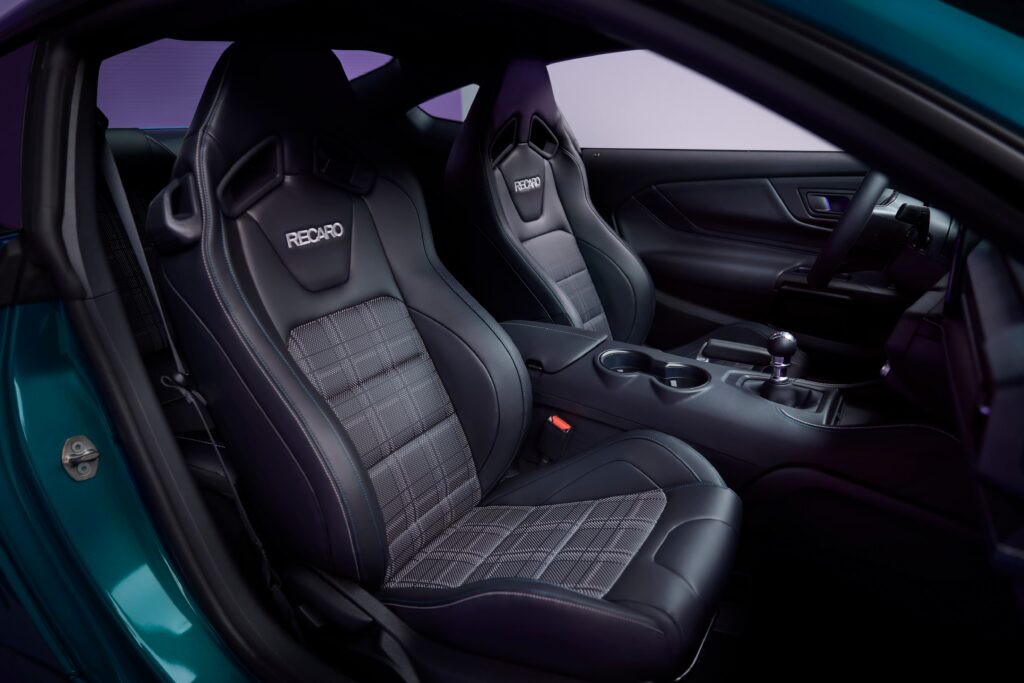
Interior Technology: Both Mustangs Get the Screens
Ford hasn’t reserved the important digital technology for its expensive V8 models.
The 2026 Mustang includes a 12.4-inch digital instrument cluster and a 13.2-inch central touchscreen. These displays provide configurable driving information, infotainment and vehicle controls.
Ford’s SYNC 4 system supports smartphone connectivity, including wireless Apple CarPlay and Android Auto. Available premium equipment adds heated and ventilated front seats, additional cabin personalization and more luxurious trim materials.
My concern is the growing dependence on screens for functions that once required a simple switch. A sports car ought to make it easy to change a setting without conducting a small computer science experiment.
The GT Premium’s optional FX Package gives the interior more historical personality, but its retro appearance does not fundamentally change the Mustang’s technology or packaging.
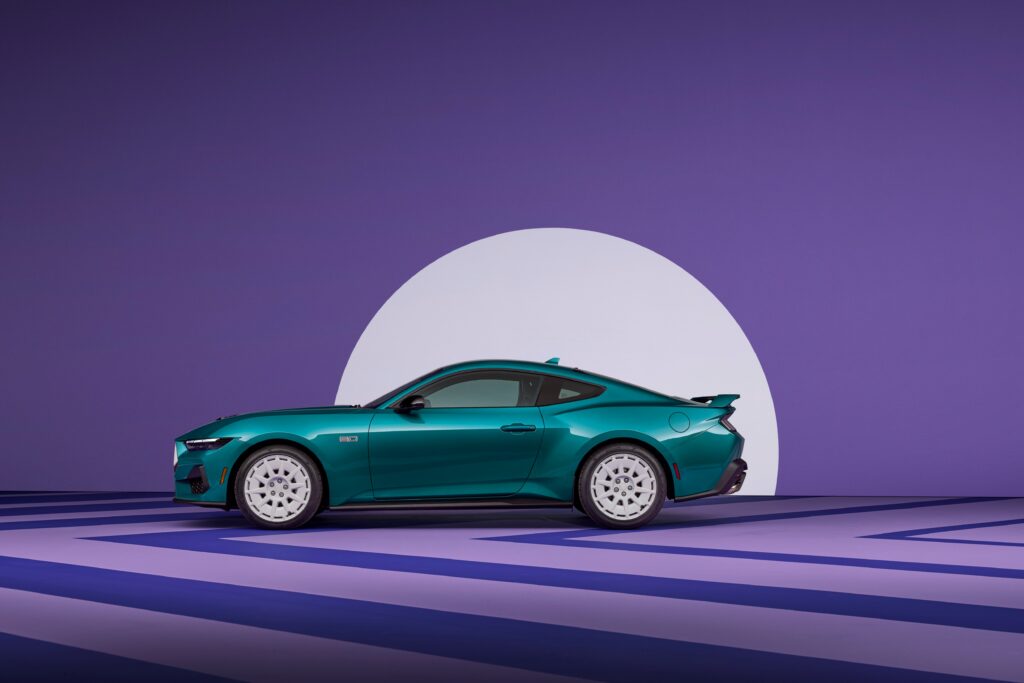
Dimensions, Passenger Space and Cargo Capacity
The Mustang Fastback measures approximately 189.4 inches long, 75.4 inches wide excluding mirrors, and 55 inches high, with a 107-inch wheelbase. Ford also quotes an overall width of approximately 81.9 inches including mirrors.
The Fastback offers approximately 13.5 cubic feet of trunk space. Convertible versions have less cargo room because of their roof mechanism and associated packaging.
That makes the coupe capable of handling ordinary luggage and shopping, although the trunk opening and low roofline are less accommodating than the raw volume might suggest.
The Mustang is configured as a four-seat car, but the rear seats are best regarded as occasional accommodation. Access is limited by the two-door body, and taller passengers are unlikely to find the rear quarters particularly comfortable.
Ford has not provided a verified cargo lift-over height for this review. That is a dimension worth measuring personally if you regularly carry heavy camera cases, luggage or equipment.
From my perspective, a Mustang is not a car for moving six dogs or conducting an Operation Frodo rescue transport. It is a car for getting away from those responsibilities occasionally, ideally with the roof down and no Labrador attempting to occupy the passenger seat.
Safety and Driver Assistance
Ford Co-Pilot360 provides driver-assistance technology including features such as automatic emergency braking, blind-spot monitoring and lane-keeping assistance. Equipment and operation should be checked for the exact vehicle.
The Insurance Institute for Highway Safety’s 2026 Mustang assessment provides available crashworthiness and child-seat installation information.
That matters if you intend to use the rear seats for children. Bring your actual child seat to the dealership and establish whether it can be installed safely and conveniently.
Buyers should also consult NHTSA’s vehicle safety ratings for applicable crash-test information and check the exact vehicle identification number through the NHTSA recall database.
Don’t assume every advanced driving feature is standard or that a collection of electronic assistants compensates for appropriate tires, visibility and sensible driving.
Should You Add the GT Performance Package?
The available GT Performance Package is worth considering for drivers who will regularly use the additional chassis capability.
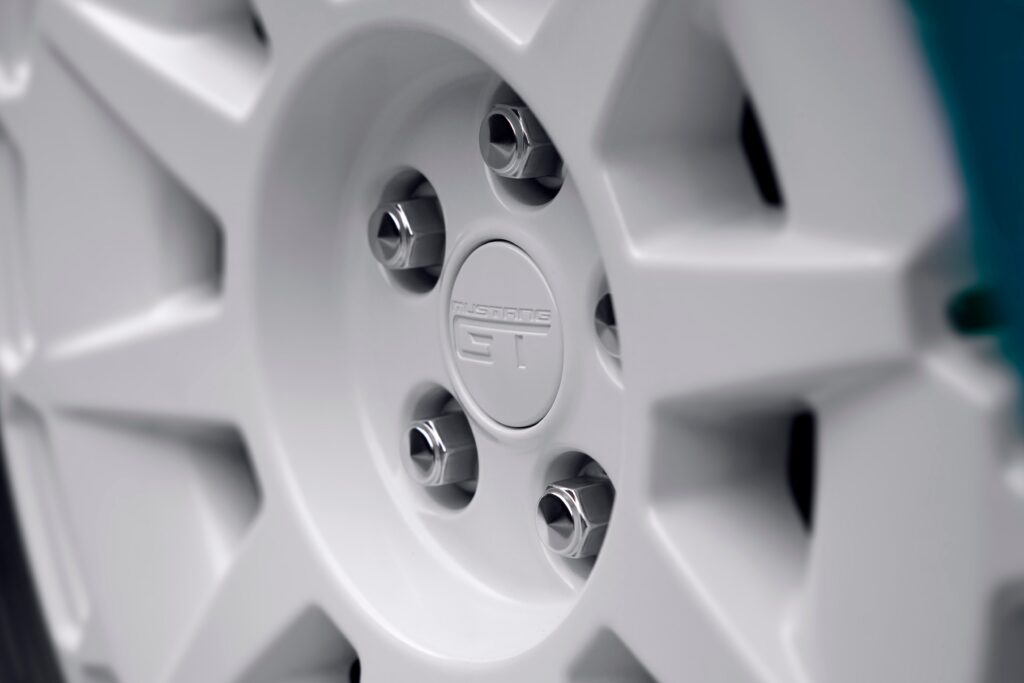
Depending on configuration, it adds performance-focused hardware including upgraded Brembo brakes, a TORSEN limited-slip differential, wider wheels and tires, and additional handling equipment. MagneRide adaptive damping is also available in relevant configurations.
These upgrades have a clearer purpose than decorative options if the Mustang will see demanding roads or organized track events.
For owners who primarily commute, a standard GT or EcoBoost Premium may offer a more sensible balance of comfort and expenditure.
You may also enjoy: Mustang GTD Breaks Records at Nürburgring: Is This America’s Greatest Sports Car Yet?
What About the Dark Horse?
The Mustang Dark Horse offers another step up in performance with a modified 5.0-liter V8 producing 500 horsepower and 418 lb-ft of torque.
It also brings more specialized suspension, drivetrain and performance equipment. The Dark Horse SC occupies an even more expensive and powerful part of the Mustang family, with a supercharged V8 producing 795 horsepower.
These are appealing machines, but they solve a different problem from the one facing an ordinary EcoBoost or GT buyer.
If your priority is everyday driving enjoyment, you don’t necessarily need the most aggressive Mustang Ford can build. Extra capability is only valuable when you can use it.
You may also enjoy: Mustang Dark Horse SC Convertible Wields Unbridled 795 HP
EcoBoost or GT: Which Mustang Should You Buy?
For someone who wants Mustang styling, rear-wheel drive and more than enough performance for ordinary roads, the EcoBoost Premium is an intelligent choice. Its 315 horsepower, automatic transmission and improved comfort equipment make it particularly appealing as a daily driver.
The GT Fastback is the emotional choice. The available manual transmission, 5.0-liter V8 and accompanying exhaust note provide a mechanical experience that cannot be replicated merely by installing a louder audio system.
The trade-off is significant. The V8 costs substantially more to purchase and generally more to fuel, insure and equip with performance tires.
Nor should buyers forget the electric alternative. The Mustang Mach-E offers considerably more passenger and cargo flexibility, although it delivers a fundamentally different driving experience.
You may also enjoy: 2026 Ford Mustang Mach-E Review: Still Ford’s EV Star
Affiliate shopping: If you are shopping for all-weather floor mats, Shop OEDRO directly or Shop OEDRO on Amazon. Use code NIKM20 at the OEDRO official store. Check current code terms and vehicle fitment before ordering. Test Miles may earn a commission from purchases made through these affiliate links.
Final Verdict: The Smart Choice and the One I’d Want
The 2026 Ford Mustang EcoBoost is the better financial decision for most people. It offers substantial performance, the essential Mustang design and broadly similar digital technology without the GT’s higher purchase price and fuel consumption.
For a daily driver, my recommendation is the EcoBoost Premium Fastback. It delivers useful additional comfort and a more approachable ownership proposition.
But if you’re buying a Mustang specifically because you want the sound, character and involvement of a traditional American V8, there is little point pretending the four-cylinder will feel identical.
In that case, I would choose the GT Fastback with the six-speed manual and spend carefully on equipment that improves the actual driving experience.
The EcoBoost is the Mustang your accountant would recommend. The GT is the one that might persuade you to take the long way home.
And sometimes, that is exactly why we buy sports cars.