2026 Kia K5 Review: The GT-Line Is the Smart Buy
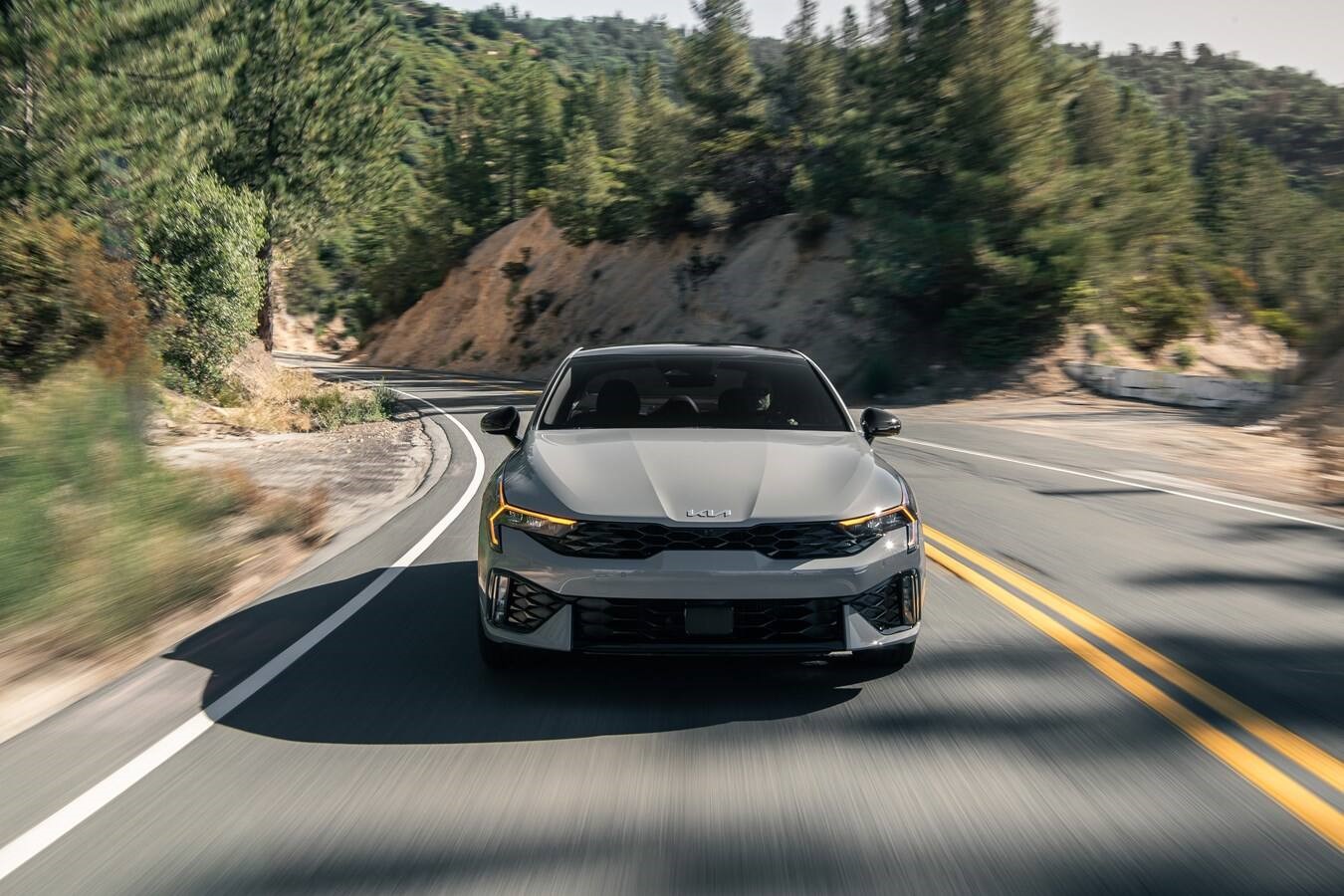
2026 Kia K5 review: Sharp styling, a roomy cabin and two very different engines make the GT-Line the sensible choice and the GT the exciting one.
There was a time when buying a sensible family sedan meant accepting something that looked as though the designer had been instructed not to frighten the accountants. Practicality usually came first, styling was an afterthought, and anything resembling performance was reserved for considerably more expensive machinery. The 2026 Kia K5 has clearly ignored that particular memo. With dramatic front lighting, a low roofline and aggressive proportions, it looks more like a European sports sedan than something intended for the school run. Better still, its starting price of $27,490 before destination makes it accessible to buyers who simply want comfortable transportation without surrendering their sense of style.
The interesting part is that Kia offers two very different interpretations of the same vehicle. Most K5 models use a naturally aspirated 2.5-liter four-cylinder engine producing 191 horsepower, paired with an eight-speed automatic transmission. This combination prioritizes predictable acceleration, reasonable fuel consumption and everyday refinement. The GT, however, receives a turbocharged 290-horsepower engine, a dual-clutch transmission and sportier chassis hardware. It is a considerable performance upgrade in a car that still has four doors, five seats and a useful trunk. Kia has effectively created two personalities without requiring customers to shop for completely different vehicles.
My recommendation for most buyers is the GT-Line with front-wheel drive. It delivers the appearance and useful equipment that make the K5 appealing without asking buyers to spend thousands more on performance they may rarely use. The GT deserves serious consideration if you genuinely enjoy powerful cars, although its firmer suspension and front-wheel-drive layout introduce compromises. Neither version offers a hybrid powertrain, which may disappoint commuters primarily concerned with fuel economy. Buyers who regularly carry bulky cargo may also prefer an SUV or hatchback, but for ordinary family transportation, the K5 makes a surprisingly convincing argument for keeping the traditional sedan alive.
You may also like this video about the KIA K4
2026 Kia K5 Review: Why the GT-Line Makes Sense
The K5’s design is one of its strongest selling points, particularly in a segment where practicality often takes priority over personality. Its low nose, distinctive lighting and fastback-inspired roof create the impression of a considerably more expensive sports sedan. Kia has managed to give the K5 a genuinely athletic appearance without making every version an expensive performance model. The styling also helps the car stand apart from rivals such as the Toyota Camry and Honda Accord, which generally emphasize refinement and efficiency rather than aggressive visual drama. Appearance is subjective, of course, but the K5 certainly doesn’t look like a vehicle designed by committee to avoid offending absolutely everybody.
The GT-Line starts at $28,490 with front-wheel drive, just $1,000 above the entry-level LXS. For that relatively modest increase, buyers receive sportier styling and additional equipment while retaining the standard 191-horsepower engine. All-wheel drive is available on the GT-Line, raising the starting MSRP to $30,090. That option may appeal to drivers who regularly encounter rain, snow or slippery roads, particularly in northern states. However, all-wheel drive improves traction under certain conditions rather than automatically making a vehicle safer in every situation. The National Highway Traffic Safety Administration’s tire safety guidance explains why tire condition, maintenance and appropriate seasonal tires remain essential.
There is also a practical advantage to choosing the GT-Line rather than moving directly to the GT. The regular engine avoids the additional performance hardware and firmer suspension tuning associated with the more powerful model, making it a more natural fit for buyers who spend most of their time commuting or traveling on highways. The GT-Line’s styling communicates performance without requiring the owner to accept every compromise associated with a genuinely sporty sedan. That distinction matters because most people purchase cars to live with every day, not to spend their weekends attempting to set lap records. A car that looks entertaining while remaining comfortable and reasonably affordable is often a better ownership proposition.
I would choose the GT-Line FWD because its balance of appearance, equipment and price makes sense. The additional $1,000 over the LXS is easier to justify than the substantially larger jump to the GT, particularly for someone who doesn’t place a premium on acceleration. Buyers in regions with severe winter weather should consider whether the all-wheel-drive configuration is worth the additional expenditure, remembering that proper tires remain important regardless of drivetrain. For everyone else, front-wheel drive should provide adequate capability for ordinary roads. The GT-Line delivers much of the visual appeal of Kia’s performance flagship without pretending to be something it isn’t, which is a refreshing degree of honesty in modern automotive marketing.
You may also enjoy: 2026 Kia K4 Review: Sedan or Hatchback?
How Does the Regular Kia K5 Drive?
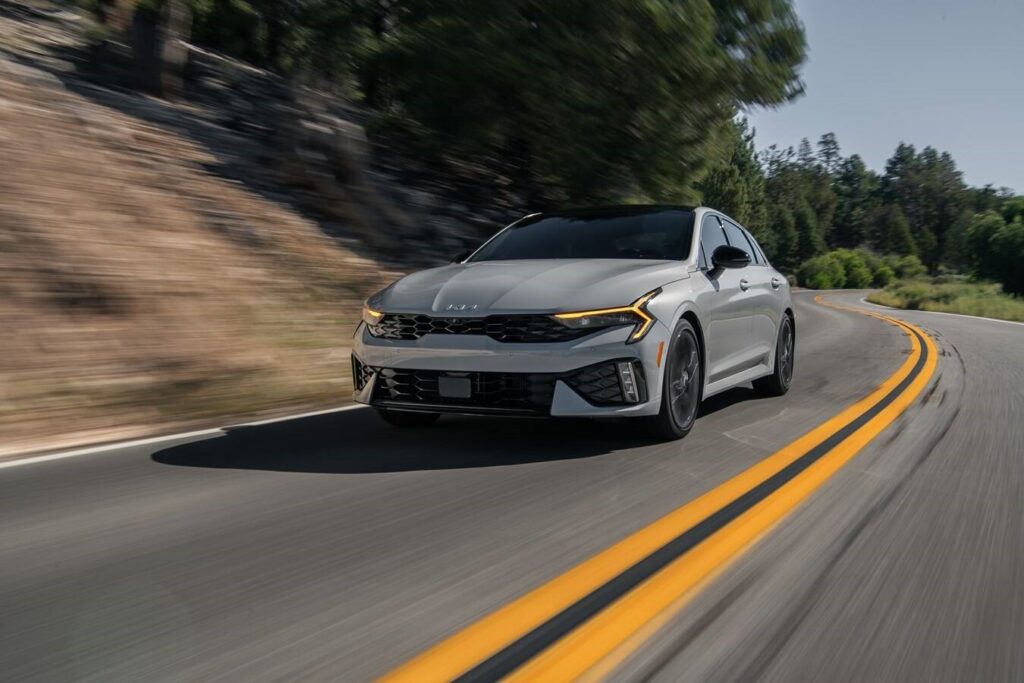
The standard K5 uses a naturally aspirated 2.5-liter four-cylinder engine producing 191 horsepower, paired with a conventional eight-speed automatic transmission. Unlike a turbocharged engine, a naturally aspirated engine draws air into its cylinders without using a compressor to increase intake pressure. That distinction can influence how the engine responds when the driver presses the accelerator, although transmission programming, vehicle weight and throttle calibration are equally important. Kia’s decision to use this engine gives the regular K5 a straightforward mechanical character, with an emphasis on predictable performance rather than dramatic acceleration. For buyers who simply need reliable daily transportation, that approach has considerable appeal.
Consumer Reports recorded a 0-to-60-mph time of 8.6 seconds during independent testing of the standard-engine K5. That is reasonable performance for a family sedan, even if it will not impress someone accustomed to powerful turbocharged engines or electric vehicles. More importantly, most K5 owners will spend their driving lives navigating traffic, joining interstate highways and carrying passengers rather than conducting acceleration tests. A predictable transmission and smooth delivery of power are often more useful than an impressive number printed in a brochure. The regular K5 should therefore be evaluated according to its intended purpose, which is comfortable and competent transportation rather than outright speed.
Independent assessments generally describe the K5 as composed and comfortable, although the ride can become noticeably firmer when fitted with larger wheels and lower-profile tires. Wheel and tire selection is one of those purchasing decisions that seems relatively insignificant in a showroom but can become important after several months of driving on imperfect roads. Larger wheels may improve appearance and influence handling characteristics, but they can also reduce the cushioning provided by the tire sidewall. Drivers who routinely encounter damaged pavement should pay attention to the wheel configuration fitted to the vehicle they test. The NHTSA tire safety guide also provides useful information about tire maintenance, inflation and replacement.
My preference would be one of the smaller wheel configurations where available, particularly for buyers prioritizing comfort over appearance. The K5 already has enough visual personality without requiring enormous wheels to complete the picture. Its conventional automatic transmission and naturally aspirated engine also make the regular model an appealing alternative to vehicles whose performance depends heavily on complicated driving modes or aggressive power delivery. Nothing in the supplied reporting establishes an original Test Miles road-test measurement, so these driving conclusions are based on published specifications and independent assessments rather than an undocumented personal test. The available evidence nevertheless suggests that the standard K5’s greatest strength is its suitability for normal driving, which is exactly what most family sedans are supposed to provide.
The 290-Horsepower K5 GT Is a Different Animal
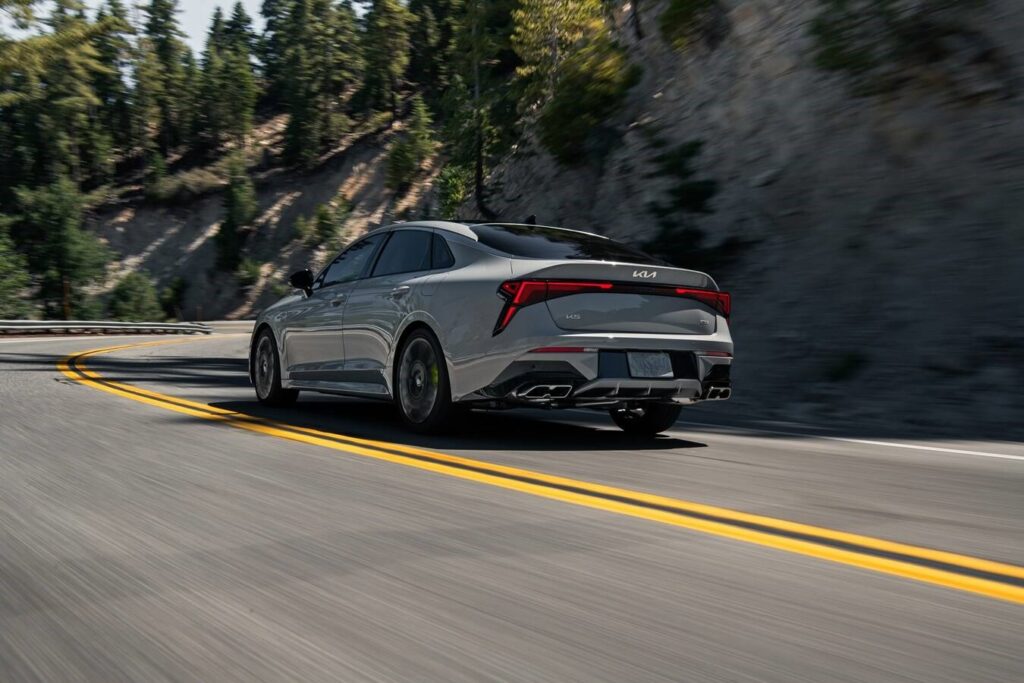
The K5 GT takes the same basic family sedan and introduces considerably more serious performance hardware. Its turbocharged 2.5-liter four-cylinder produces 290 horsepower and 311 pound-feet of torque, representing a substantial increase over the naturally aspirated engine fitted to other trims. Kia also installs an eight-speed dual-clutch transmission, sportier suspension tuning and upgraded braking components. A turbocharger uses energy from the engine’s exhaust gases to compress the incoming air, allowing the engine to produce more power from its displacement. The U.S. Department of Energy’s vehicle technology resources provide additional background on engine efficiency and automotive powertrain development.
The performance difference is substantial rather than merely theoretical. Car and Driver recorded a 0-to-60-mph time of 5.2 seconds during independent testing, which places the GT firmly into the territory of genuinely quick road cars. That is impressive acceleration for a midsize sedan designed to accommodate passengers and luggage. Starting at $33,590 before destination, the GT costs $5,100 more than the front-wheel-drive GT-Line. For enthusiasts, that increase buys considerably more than a styling package or a few extra electronic features. It changes the character of the vehicle and makes the K5 a credible option for drivers who want strong acceleration without purchasing a dedicated sports car.
There are compromises, and they deserve as much attention as the performance figures. The GT sends its 290 horsepower through the front wheels, meaning those tires must manage acceleration, steering and a substantial proportion of the braking load. Aggressive throttle inputs can challenge available traction, particularly on poor surfaces, while the sportier suspension tuning and tire configuration can create a firmer ride. Independent testing has also identified limitations in the standard all-season tires when attempting to exploit the full performance of the chassis. Drivers who intend to make frequent use of the additional power should therefore consider tire selection carefully, along with the effects on comfort, wear and running costs.
I would like Kia to offer a more focused performance tire package for GT buyers who specifically want to enjoy the car’s full potential, while preserving a comfortable configuration for drivers who simply appreciate having additional power available. The GT is appealing because it delivers acceleration normally associated with more expensive vehicles, but it is not automatically the best K5 for every household. Someone spending most of the week in congested traffic may enjoy the occasional burst of speed without appreciating the firmer ride on a daily basis. Buy the GT because you genuinely enjoy driving, not because you think 290 horsepower will somehow make the weekly supermarket trip more dignified. The groceries are unlikely to notice.
You may also enjoy: 2026 Mazda3 Review: The Smart Trim to Buy
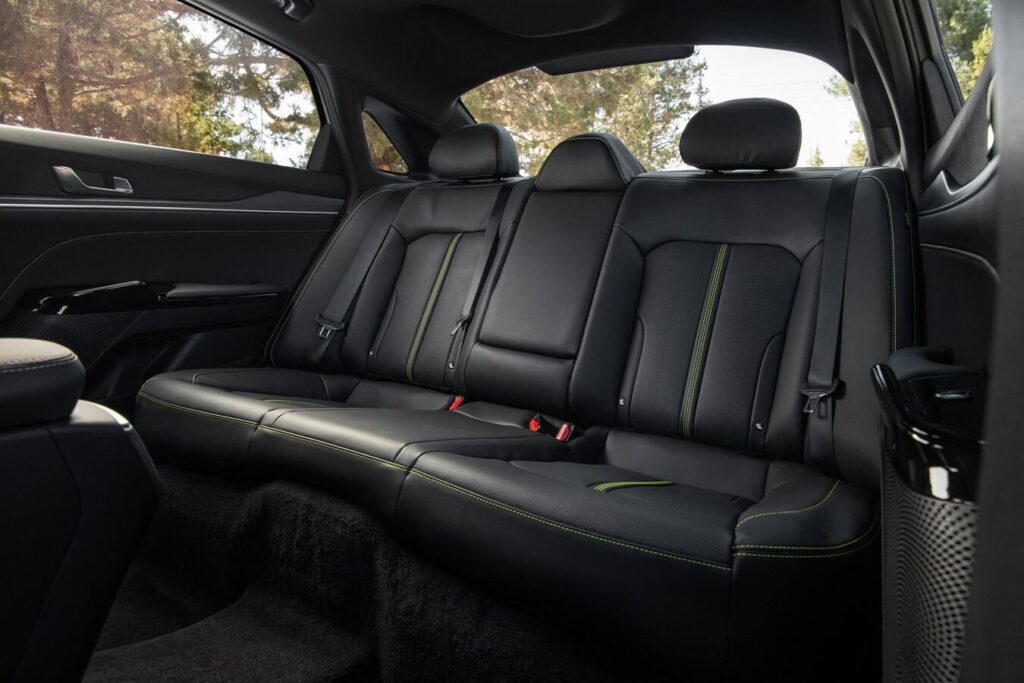
The Kia K5 Interior: More Room Than You Might Expect
The K5’s interior makes a convincing effort to look and feel more expensive than the vehicle’s starting price suggests. A broad dashboard, available digital displays and relatively low seating position create a contemporary environment without requiring the enormous exterior dimensions of an SUV. The overall layout gives the driver a clear sense of being in a sedan rather than a small crossover, which will appeal to buyers who prefer sitting lower in a vehicle. Materials and equipment naturally vary by trim, but Kia has concentrated on making the cabin appear modern and substantial. That is important in a segment where buyers frequently compare not only specifications and pricing but also the impression a vehicle creates when they first sit inside.
Passenger accommodation is one of the K5’s practical advantages. Its midsize proportions provide useful rear-seat room for adults and children, making it suitable for commuting, family journeys and everyday transportation. The trunk offers approximately 15.6 cubic feet of capacity, enough for luggage, groceries and many ordinary household activities. The main limitation is the opening itself, which is less accommodating for tall or awkward cargo than the larger openings found in hatchbacks and SUVs. Passengers must also bend more when entering the relatively low body, particularly in the rear seats beneath the sloping roofline. Buyers who frequently transport older passengers or install child seats should examine those details before deciding that the K5’s attractive shape is necessarily the most practical option.
Technology equipment varies by trim and package, with available features including large infotainment displays, smartphone integration, navigation, upgraded audio and heated or ventilated front seats. These features can make everyday driving more convenient, but the presence of a large touchscreen should not automatically be confused with better usability. Important functions should remain easy to locate and operate without distracting the driver from the road. Kia retains physical controls for several frequently used functions, an approach I prefer to interiors where almost every adjustment requires navigating another menu. The company hasn’t completely surrendered to the belief that changing the cabin temperature should involve a touchscreen expedition and possibly a packed lunch.
Families should pay particular attention to the practical details that are difficult to assess from a specification sheet. A roomy rear seat is useful, but parents also need to consider the width of child restraints, accessibility of mounting points and available space for front-seat passengers when a rear-facing child seat is installed. The National Highway Traffic Safety Administration’s child car seat guidance explains how to select and correctly install suitable restraints. Buyers should also bring their normal luggage or equipment when evaluating the trunk rather than relying exclusively on its published capacity. The K5 is a practical sedan for many households, but its low roofline and conventional trunk create limitations that a similarly sized SUV may avoid.
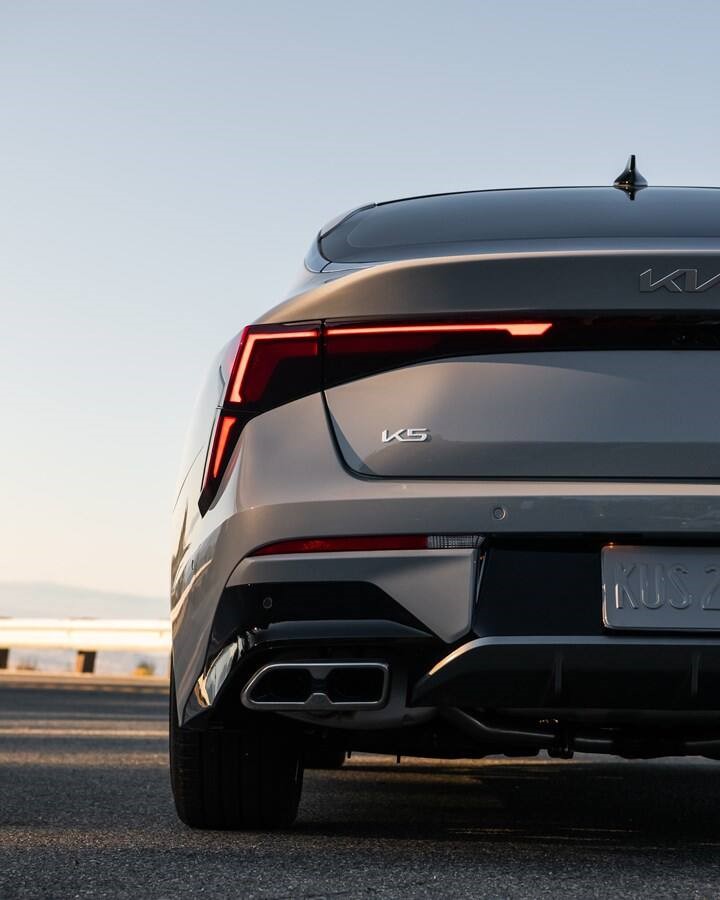
2026 Kia K5 Fuel Economy and Running Costs
The standard K5 delivers respectable fuel economy, although the official figures vary according to drivetrain and equipment configuration. Federal fuel-economy data lists the naturally aspirated front-wheel-drive K5 at 29 mpg combined, with a separate stop-start configuration rated at 30 mpg combined. All-wheel-drive models are rated at 27 mpg combined, while the more powerful turbocharged GT also carries a 27-mpg combined rating. These are EPA estimates rather than original Test Miles measurements, and individual drivers may experience different results. The Environmental Protection Agency explains its fuel-economy testing procedures, including how standardized testing represents different operating conditions.
Drivers can compare the official ratings directly using the government’s FuelEconomy.gov database. The listings include the standard front-wheel-drive K5, the all-wheel-drive model and the turbocharged GT. Consumer Reports recorded 31 mpg overall in its independent testing of a standard-engine K5, demonstrating how real-world testing can produce different results from federal estimates. Actual consumption depends on driving conditions, speed, weather, tire condition and driving habits. The EPA’s transportation information resources provide further context about vehicle efficiency and the factors affecting fuel use.
The most significant omission from the K5 lineup is a hybrid powertrain. Kia does not offer a hybrid K5 in the United States for 2026, leaving efficiency-focused buyers to consider competitors such as the Toyota Camry and Honda Accord. A conventional hybrid combines a gasoline engine with an electric propulsion system, allowing the vehicle to recover energy during braking and use electrical assistance to reduce fuel consumption. The NHTSA guide to electric and hybrid vehicles explains the fundamental differences between these technologies. For drivers covering substantial annual mileage, the fuel savings available from a hybrid can become an important part of the purchasing decision.
My advice would be to calculate realistic ownership costs rather than assuming that the cheapest vehicle at the dealership will necessarily cost the least over several years. Fuel economy, annual mileage, insurance, maintenance and the purchase price all influence the financial picture. Someone driving relatively few miles each year may find the K5’s conventional gasoline engine perfectly reasonable, especially if the initial purchase price is attractive. A commuter covering a much greater distance could benefit from comparing the K5 against a hybrid alternative using expected annual fuel consumption. The K5 remains a sensible gasoline sedan, but the absence of a hybrid is one area where Kia gives competing manufacturers a genuine advantage.
You may also enjoy: 2026 Toyota Camry Goes All-Hybrid, All-Attitude
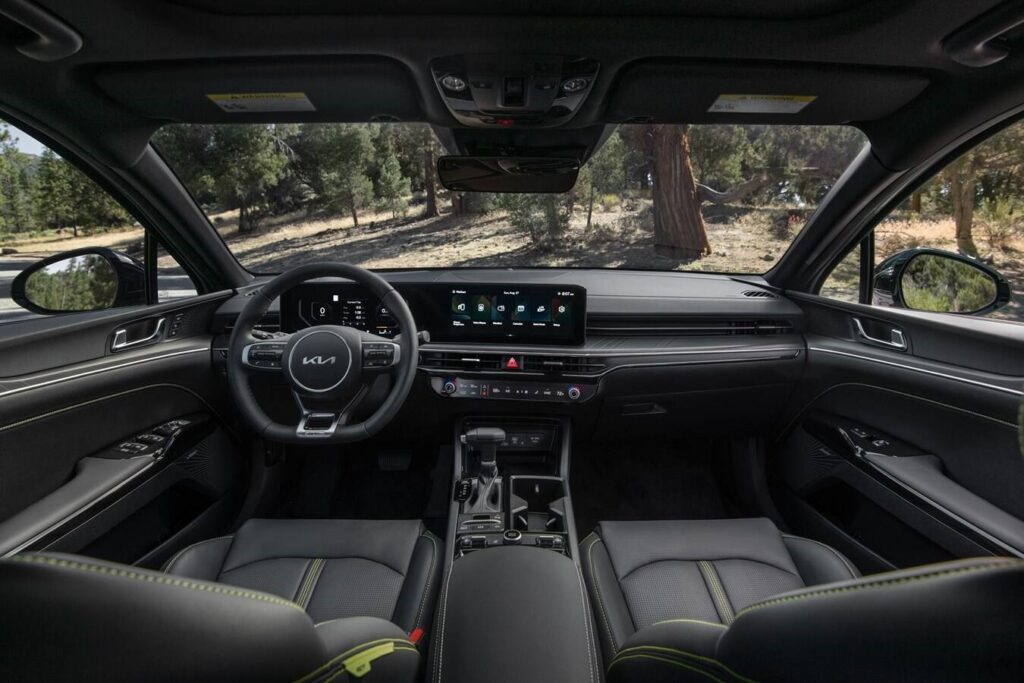
2026 Kia K5 Price and Trim Comparison
Kia offers five principal K5 configurations for 2026, beginning with the LXS at $27,490 before destination. The GT-Line FWD costs $28,490, while the GT-Line AWD increases the price to $30,090. Buyers seeking substantially greater performance can choose the GT at $33,590, while the more luxurious EX starts at $34,990. Kia lists a destination charge of $1,245, which must be added to these advertised prices before accounting for taxes, options and dealer fees. These figures come from Kia America’s official 2026 K5 pricing information and provide a useful starting point for comparing equipment and value.
| Trim | Starting MSRP | Engine | Drivetrain |
|---|---|---|---|
| LXS | $27,490 | 191 hp 2.5L | FWD |
| GT-Line | $28,490 | 191 hp 2.5L | FWD |
| GT-Line AWD | $30,090 | 191 hp 2.5L | AWD |
| GT | $33,590 | 290 hp 2.5L turbo | FWD |
| EX | $34,990 | 191 hp 2.5L | FWD |
The LXS represents the most affordable way into the K5, but the modest $1,000 increase to the GT-Line FWD makes the sportier version particularly attractive. For that amount, buyers receive the appearance and additional equipment that help distinguish the K5 from more conventional midsize sedans. The all-wheel-drive GT-Line is worth considering in regions where traction is a frequent concern, although the additional expense should be weighed against individual driving conditions. The EX takes a different approach, placing greater emphasis on comfort and convenience rather than performance. At almost $35,000 before destination, however, it begins competing with several well-equipped hybrid sedans whose operating costs may be lower.
The GT presents perhaps the most interesting pricing argument because it costs only $5,100 more than the GT-Line FWD while providing almost 100 additional horsepower. That difference is meaningful for enthusiasts, especially when compared with the prices of some dedicated performance sedans. Yet the GT’s added power is only a worthwhile investment if the buyer actually wants the accompanying driving characteristics. A person who values a quiet, comfortable commute may appreciate the additional luxury equipment available on the EX more than the GT’s stronger acceleration. Neither approach is universally correct, and that is why Kia’s range of trims makes sense. The important decision is identifying which equipment genuinely improves the owner’s daily experience.
Before purchasing, buyers should compare the complete transaction price rather than focusing exclusively on the manufacturer’s suggested retail price. Optional equipment, dealer-installed accessories, financing terms and additional charges can materially change the amount paid. The Federal Trade Commission’s guide to buying a new car explains how consumers can evaluate prices, financing arrangements and optional products before signing a contract. I would also obtain written quotations from more than one dealership and compare them on the same basis. The K5’s attractive starting price is one of its strongest advantages, and there is little point surrendering that advantage through unnecessary extras or poorly understood financing arrangements.
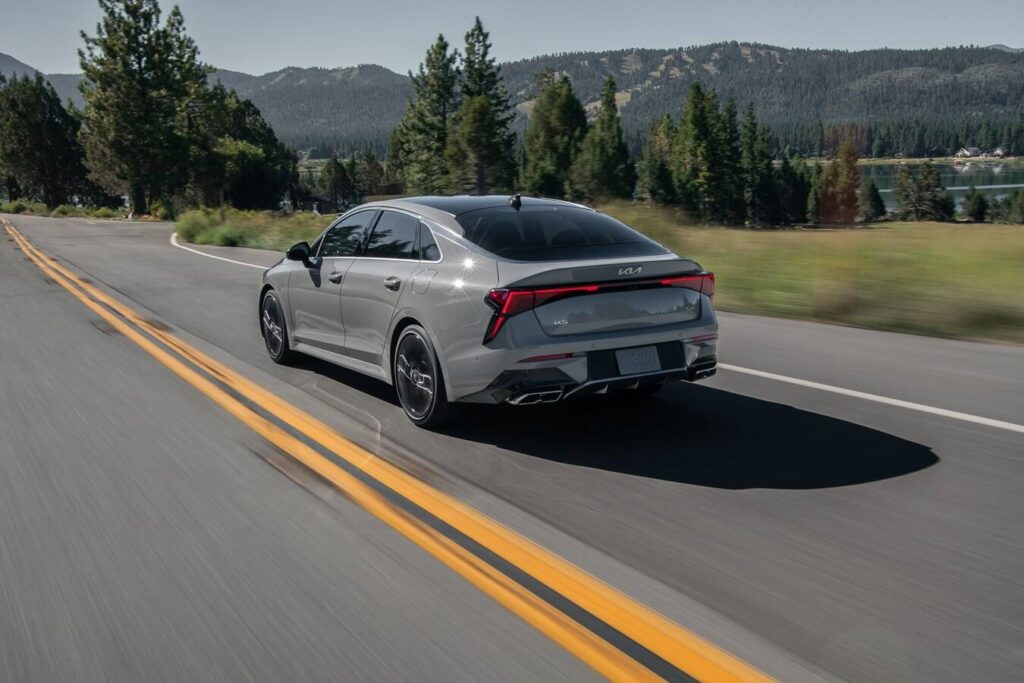
Safety: More Than a Long Equipment List
Kia says the 2026 K5 offers 17 standard collision-avoidance and driver-assistance features, providing a substantial collection of electronic systems designed to help drivers recognize or respond to potential hazards. Depending on trim and equipment, these include forward collision avoidance, lane-keeping assistance, blind-spot monitoring and adaptive cruise control. Such systems can be particularly useful during everyday driving, whether assisting with maintaining a safe distance in traffic or warning the driver about a vehicle approaching from another lane. However, the usefulness of driver assistance depends on system limitations, road conditions and the driver’s understanding of what the technology is designed to accomplish.
The distinction between driver assistance and automated driving is especially important. Adaptive cruise control can help manage speed and following distance, while lane-centering assistance may help maintain the vehicle’s position within marked lanes. Neither capability means the driver can stop paying attention or surrender responsibility for controlling the car. The NHTSA driver-assistance technology guide explains the functions and limitations of these systems. Buyers should review the owner’s manual, understand when each feature operates and avoid assuming that a vehicle can handle situations beyond its intended capabilities.
Electronic safety equipment is only one part of the overall picture. Crashworthiness, occupant protection and the vehicle’s performance in different collision scenarios remain essential considerations. Shoppers can consult the Insurance Institute for Highway Safety vehicle ratings and the NHTSA five-star safety ratings to examine independent evaluations. Results should be checked for the exact model year and configuration rather than assuming that a rating for an earlier vehicle automatically applies to the current model. A long equipment list may be reassuring, but independently verified safety performance provides a different and equally important category of information.
Owners and used-vehicle shoppers should also check for outstanding safety recalls before purchasing or servicing a vehicle. The NHTSA recall lookup allows consumers to search using a vehicle identification number and identify applicable open recalls. This is particularly important when purchasing a specific car from dealer inventory, since the VIN provides more precise information than a general search for the model name. My approach to vehicle safety is straightforward: welcome useful technology, understand its limitations and verify the independent evidence. The K5’s driver-assistance features are valuable, but they should complement careful driving rather than encourage complacency.
Kia K5 vs. Toyota Camry and Honda Accord
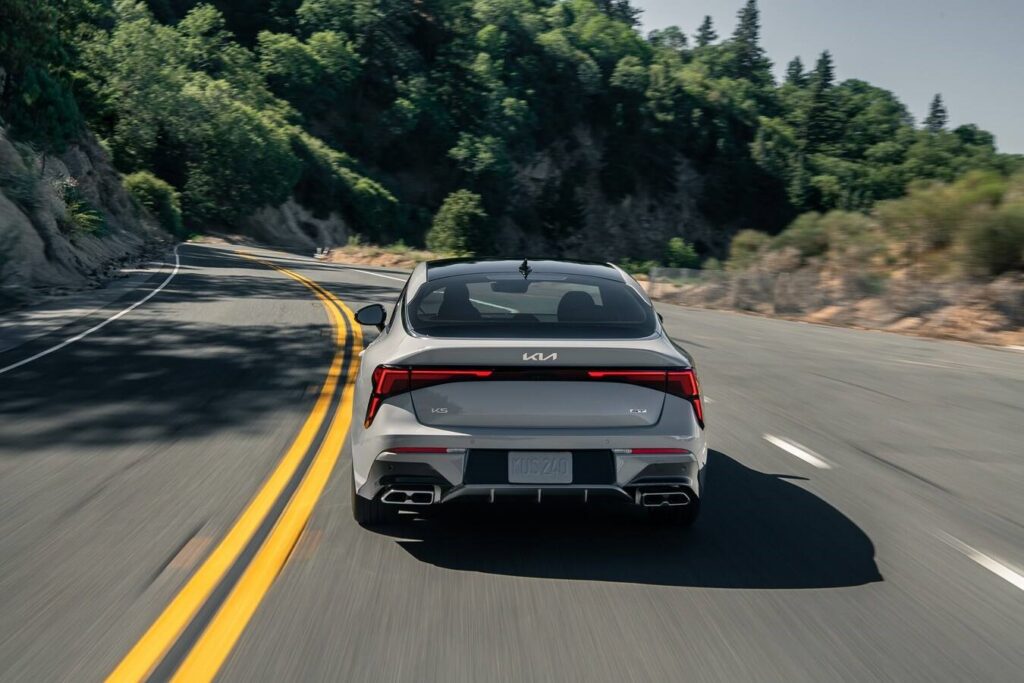
The Kia K5 competes in a midsize sedan market that has become considerably smaller as manufacturers concentrate on SUVs and crossovers. Toyota’s Camry and Honda’s Accord remain two of its most important rivals, and both offer compelling alternatives for shoppers who still prefer a traditional four-door car. The Camry emphasizes efficiency through its hybrid-only powertrain strategy, while the Accord combines generous passenger accommodation with available hybrid technology. The K5 takes a somewhat different approach, concentrating on striking styling, competitive pricing and a choice between conventional gasoline performance and a genuinely powerful turbocharged GT. Each vehicle offers a different answer to the question of what buyers should expect from a modern family sedan.
The Toyota Camry is particularly attractive for buyers whose priorities include fuel economy and daily commuting. Its hybrid system is designed to reduce gasoline consumption, making it worth examining for households that drive substantial annual mileage. The Honda Accord also deserves consideration, especially for shoppers seeking a spacious interior and available hybrid efficiency. Neither comparison should be reduced to a single fuel-economy number, because purchasing decisions also involve price, comfort, technology and personal preference. The best approach is to compare similarly equipped versions and calculate the potential difference in fuel expenses against the amount required to purchase each vehicle.
The K5’s strongest argument is that it provides distinctive styling and an accessible starting price without forcing buyers into a hybrid powertrain. Some drivers prefer the familiarity of a conventional gasoline engine and automatic transmission, and Kia continues to offer that combination. The GT also occupies a particularly interesting position because its 290-horsepower turbocharged engine delivers substantially more performance than buyers may expect from a practical family sedan at this price. That makes it appealing to enthusiasts who want one vehicle to accommodate both ordinary transportation and entertaining driving. The drawback is that the GT’s power, front-wheel-drive configuration and sportier suspension may not suit someone whose primary concern is comfort.
My recommendation would depend on how the vehicle will actually be used. Someone driving long distances every day should examine the Camry and Accord hybrids carefully, particularly if reducing fuel consumption is a major priority. A buyer who values styling, conventional gasoline power and a reasonable purchase price may find the GT-Line more attractive. Enthusiasts seeking stronger acceleration without moving into a substantially more expensive performance car should investigate the GT. None of these vehicles is automatically the correct answer for every household. The important thing is choosing the car that best matches daily requirements rather than the one with the most impressive collection of numbers on a brochure.
You may also enjoy: 2026 Honda Accord Review: Buy the EX-L Hybrid
What Kia Should Improve Next
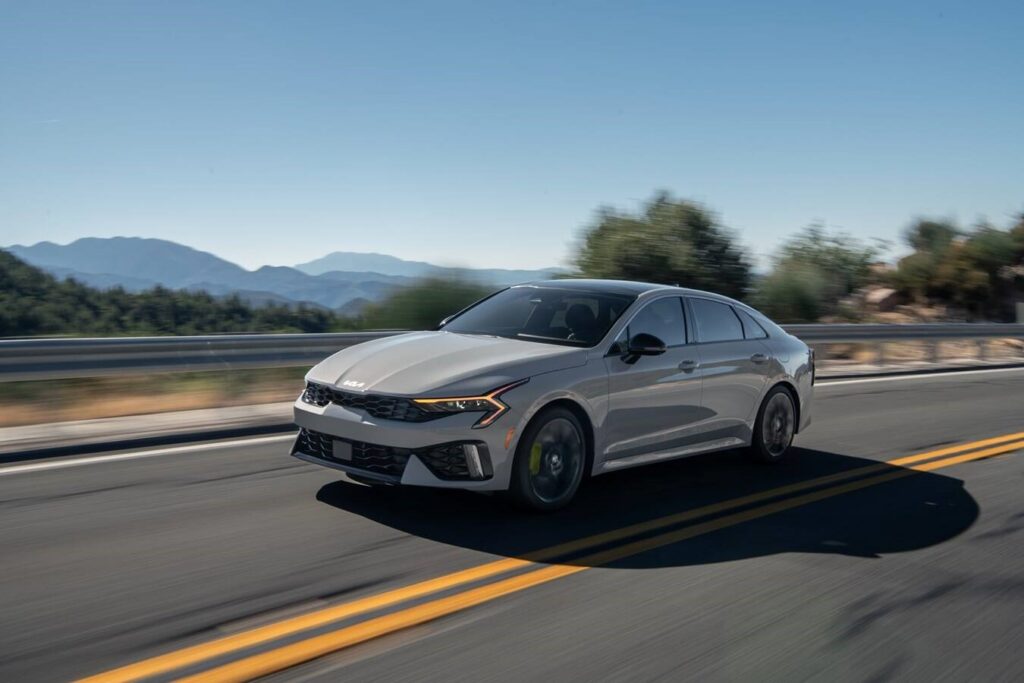
My first request for the next generation of K5 would be a hybrid version. The existing car already offers attractive styling, useful passenger space and relatively accessible pricing, making it a logical candidate for buyers who want an efficient commuter. A hybrid could broaden its appeal considerably, particularly among shoppers comparing it directly with the Toyota Camry and Honda Accord. Kia has considerable experience developing hybrid powertrains across its wider lineup, so the idea is hardly outside the company’s engineering capabilities. The challenge would be introducing such a system without sacrificing the characteristics that make the K5 appealing or pushing its price beyond what buyers are prepared to pay.
Second, I would concentrate on ride comfort, particularly in configurations fitted with larger wheels. The K5’s design already does an excellent job of attracting attention, and it shouldn’t need unnecessarily firm road manners to reinforce its sporty appearance. Most owners will spend far more time negotiating imperfect roads than exploring the limits of the car’s cornering ability. Tires, suspension tuning and wheel size all influence how comfortably a vehicle deals with bumps and damaged pavement. Kia could preserve the visual appeal of the sportier trims while ensuring that daily comfort remains a priority. Looking impressive in a showroom is one thing; living with potholes every day is something else entirely.
The GT also deserves a more carefully considered tire offering to complement its considerable engine output. With 290 horsepower directed through the front wheels, the tires have an unusually demanding combination of responsibilities. A properly matched performance tire option could help enthusiasts make more effective use of the engine and chassis, although it would also introduce compromises in wear, weather capability and potentially ride comfort. Ideally, Kia would offer buyers a meaningful choice between a comfortable road-oriented configuration and a more focused performance package. That would allow drivers to select equipment suited to how they actually use the vehicle instead of expecting one tire specification to satisfy every requirement.
Finally, Kia should preserve the straightforward cabin controls that make its current interiors relatively easy to operate. Larger screens and additional software functions are now common selling points, but technology should simplify ownership rather than create more work for the driver. Physical controls remain particularly useful for frequently adjusted features such as temperature, fan speed and audio volume. The K5 already strikes a better balance than some vehicles whose designers appear determined to place every function behind another touchscreen menu. I would rather Kia concentrate on genuinely useful improvements in efficiency, comfort and performance than replace a perfectly serviceable button with an elaborate digital solution to a problem nobody actually had.
My Verdict: Buy the GT-Line Unless You Love Performance
The 2026 Kia K5 succeeds because it gives ordinary family transportation a sense of character that many competing vehicles struggle to match. Its design is distinctive, its passenger accommodation is useful and its pricing makes a convincing argument for buyers who don’t necessarily want another SUV. The regular 191-horsepower engine offers reasonable performance for everyday driving, while the available technology provides a modern ownership experience. The biggest weakness is the absence of a hybrid option, particularly when major competitors have made fuel efficiency such an important part of their appeal. Buyers prioritizing low fuel consumption should take that omission seriously before making a decision.
For most people, I would choose the GT-Line with front-wheel drive. At $28,490 before destination, it offers the appearance and equipment that make the K5 particularly appealing without requiring a substantial additional investment. The regular engine should provide enough performance for ordinary transportation, and the conventional automatic transmission suits the car’s everyday purpose. Drivers who regularly encounter difficult winter conditions may prefer the all-wheel-drive GT-Line, although tires and appropriate driving habits remain essential. The EX offers greater luxury, but its higher price makes comparisons with well-equipped hybrid competitors increasingly important.
The GT is a different proposition and the version that interests me most as an enthusiast. Its 290-horsepower turbocharged engine provides genuinely strong acceleration, and the $5,100 increase over the GT-Line FWD is not unreasonable considering the additional performance equipment. The firmer suspension, front-wheel-drive layout and tire limitations deserve attention, but they do not erase the car’s appeal for someone who enjoys a powerful sedan. Buyers should simply be clear about what they’re purchasing. The GT is a performance-oriented family car with corresponding compromises, not merely an ordinary K5 fitted with a more impressive engine badge.
Ultimately, Kia has produced a sedan with two appealing but distinct personalities. The GT-Line makes sense for buyers who want everyday comfort, striking design and useful equipment at a competitive price. The GT appeals to drivers willing to accept some compromises in exchange for substantially greater performance. Neither is the obvious choice for someone who wants hybrid efficiency or SUV-style cargo flexibility, but both demonstrate why traditional sedans still deserve a place on American roads. Buy the GT-Line because it’s sensible. Buy the GT because you enjoy driving. Just don’t confuse the two. Kia certainly hasn’t.
You may also enjoy: 2026 Honda Civic Review: Hybrid Is the Smart Buy
Frequently Asked Questions About the 2026 Kia K5
Is the 2026 Kia K5 a good car?
The K5 is a strong choice for buyers seeking a stylish and spacious midsize sedan with competitive pricing and useful equipment. Its main advantages are its distinctive design, practical interior and choice of conventional or high-performance gasoline engines. The principal disadvantages are the absence of a hybrid powertrain, the firmer ride associated with some wheel configurations and a conventional trunk opening that is less versatile than an SUV’s cargo area.
Does the 2026 Kia K5 have all-wheel drive?
Yes. All-wheel drive is available on the GT-Line, which starts at $30,090 before destination. The more powerful 290-horsepower GT uses front-wheel drive despite its performance-oriented character. All-wheel drive can improve traction during acceleration on slippery surfaces, but it does not eliminate the need for suitable tires or careful driving. Buyers living in regions with severe winter conditions should consider those factors together.
What is the difference between the Kia K5 GT and GT-Line?
The GT-Line concentrates on sporty styling and additional equipment while retaining the regular 191-horsepower naturally aspirated engine and eight-speed automatic transmission. The GT uses a 290-horsepower turbocharged engine, an eight-speed dual-clutch transmission and additional performance hardware. It accelerates considerably more quickly but introduces compromises in ride comfort and traction. The GT-Line is generally the more practical everyday choice, while the GT is intended for drivers who place a higher priority on performance.
Which 2026 Kia K5 should I buy?
For most buyers, the front-wheel-drive GT-Line offers the strongest combination of equipment, appearance and price. It costs only $1,000 more than the entry-level LXS and retains the regular engine’s everyday character. Buyers seeking more performance should consider the GT, while those prioritizing additional luxury can examine the EX. The LXS remains a reasonable choice for shoppers working within a firm budget, particularly if the extra GT-Line equipment is not essential.
Does the 2026 Kia K5 come as a hybrid?
No. Kia does not offer a hybrid version of the 2026 K5 in the United States. Buyers who prioritize fuel economy should compare it with hybrid versions of the Toyota Camry and Honda Accord. The K5’s conventional gasoline engine remains a reasonable choice for many drivers, but people covering substantial annual mileage should calculate potential fuel expenses over several years before deciding whether the Kia offers the best overall value.
How much does the 2026 Kia K5 cost?
The 2026 Kia K5 starts at $27,490 for the LXS, followed by the GT-Line FWD at $28,490, GT-Line AWD at $30,090, GT at $33,590 and EX at $34,990. Kia lists a destination charge of $1,245, which is additional to those figures. Taxes, options, dealer fees and financing arrangements can further change the final purchase price, so buyers should request a complete written quotation before signing a contract.