2026 Kia K4 Review: Sedan or Hatchback?
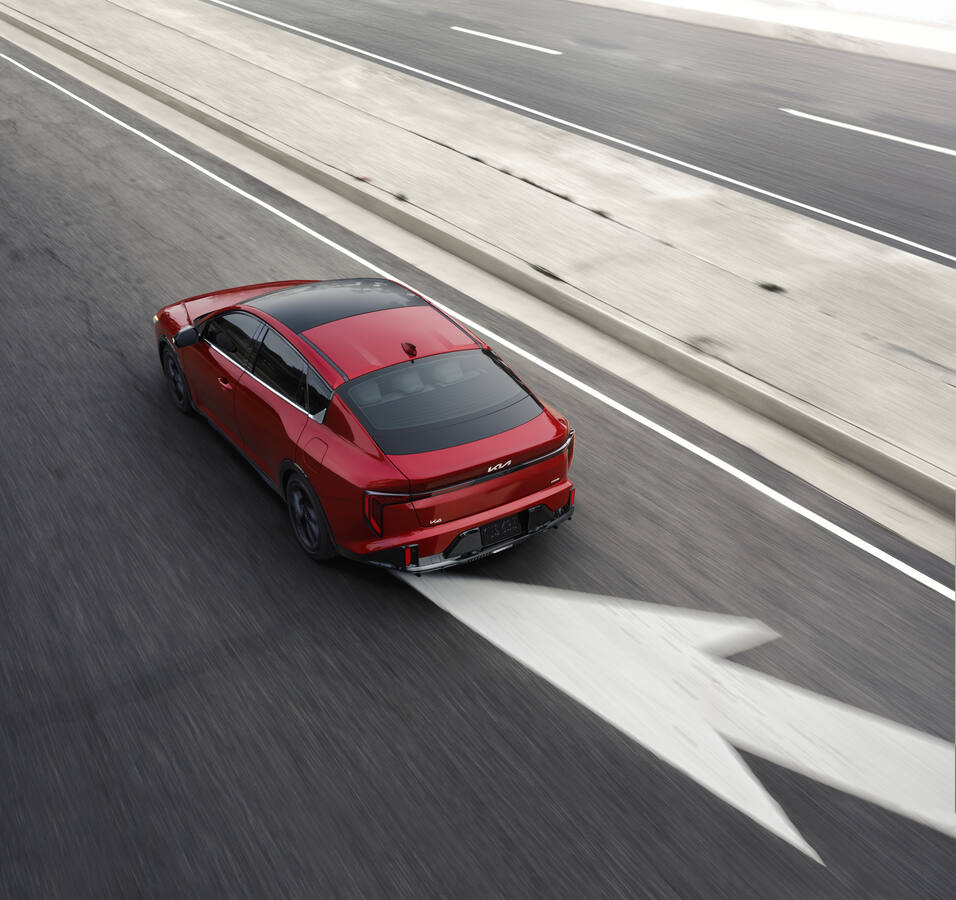
This 2026 Kia K4 review compares the sedan and new hatchback, explaining which engine, trim and body style offer the best everyday value.
By Nik J. Miles
Americans have developed a peculiar habit of buying SUVs to carry things that would quite happily fit inside a hatchback. A suitcase, a stroller, perhaps a dog. Before long, a simple trip to the supermarket apparently requires something the size of a small aircraft carrier.
Kia has an alternative.
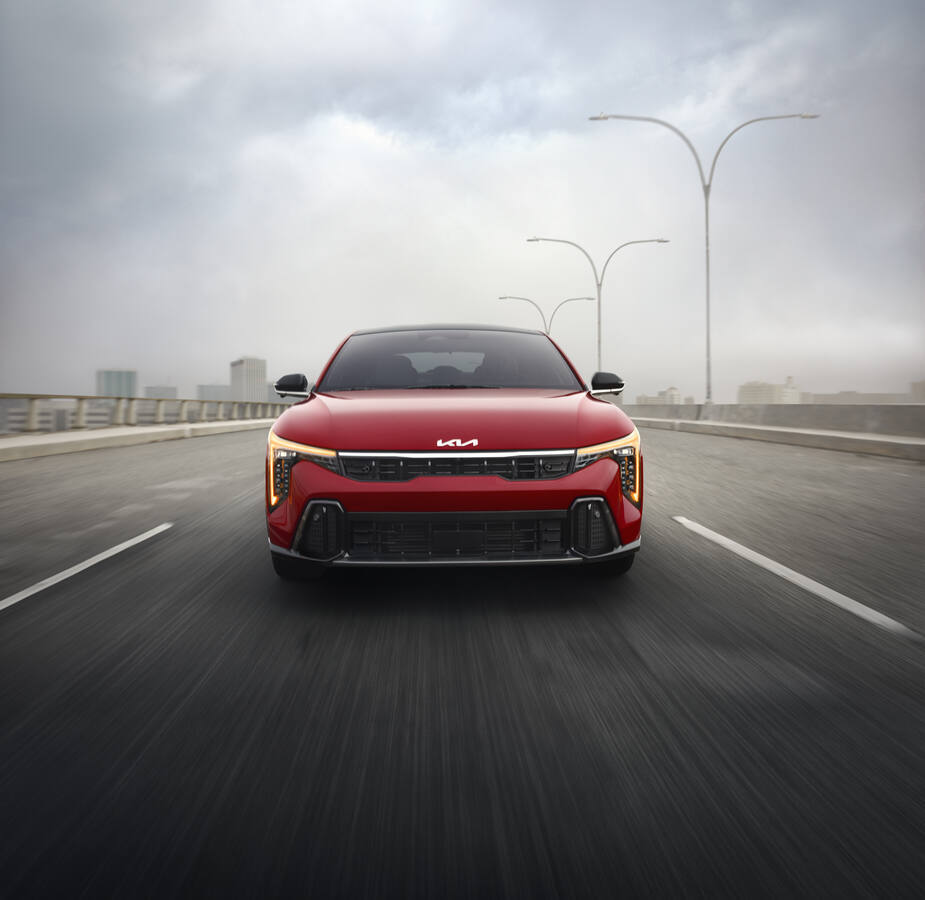
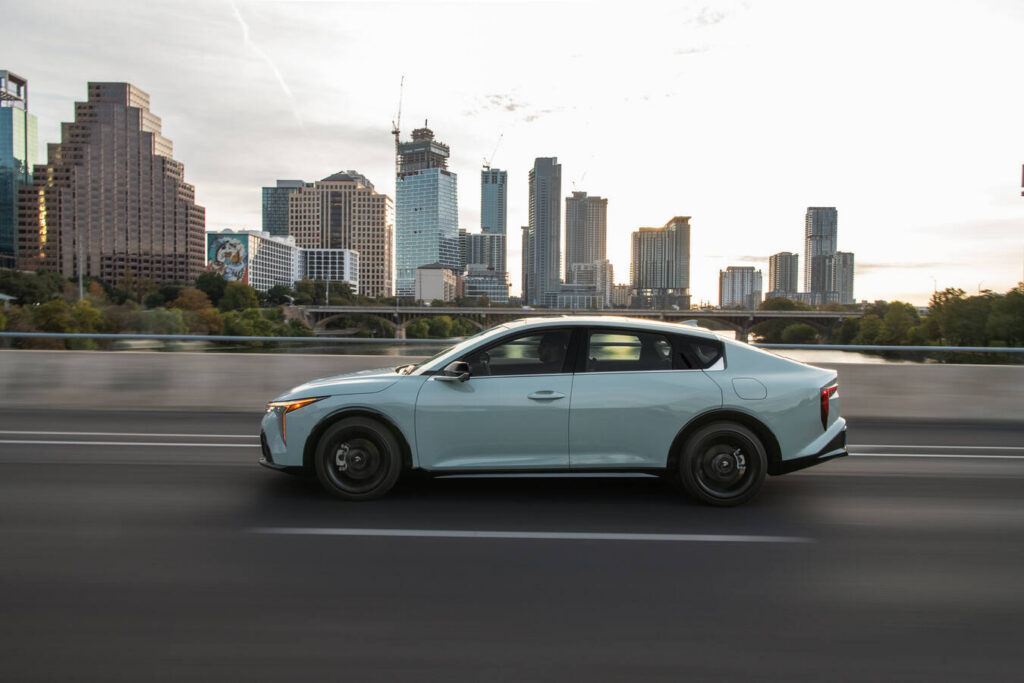
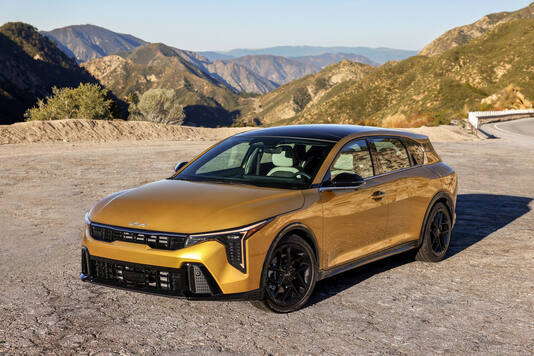
The 2026 Kia K4 is offered as a conventional sedan or a new, considerably more practical hatchback. Both feature surprisingly generous rear passenger space, useful technology and starting prices that remain below many compact SUVs.
The sedan begins at $22,290. The hatchback starts at $24,990.
My recommendation is the K4 Sedan EX for buyers who mainly commute, and the K4 Hatchback GT-Line for those who need more versatile cargo space.
The GT-Line Turbo adds a genuinely worthwhile performance upgrade, although I would not pay the additional money unless stronger acceleration was high on my list of priorities.
This article is a researched vehicle analysis using Kia’s official 2026 specifications, independent road-test evidence and published safety assessments. No original Test Miles test-drive notes or measurements were supplied for either body style.
2026 Kia K4 Review: Which Version Wins?
Best for: Commuters, young families, first-time new-car buyers and drivers who want generous equipment without paying luxury-car prices.
Skip if: You require all-wheel drive, maximum hybrid fuel economy or the ground clearance of a conventional crossover SUV.
What works
- Competitive pricing across both body styles.
- 38 inches of rear legroom.
- Hatchback offers up to 59.3 cubic feet of cargo capacity with rear seats folded.
- Available 190-horsepower turbocharged engine.
- Useful digital cockpit and available camera-based driver-assistance features.
What could be better
- Standard 147-horsepower engine delivers modest acceleration.
- No hybrid or all-wheel-drive configuration.
- Some desirable technology requires expensive upper trims.
- The hatchback’s updated moderate-overlap crash-test result is Marginal.
- GT-Line models prioritize sporty appearance over significant performance improvements unless you select the Turbo.
Why the Hatchback Is Worth the Extra $500
Comparing the least expensive K4 sedan with the least expensive hatchback isn’t especially fair.
The sedan starts with an LX trim priced at $22,290. The hatchback starts higher in the equipment range, with an EX costing $24,990.
Compare EX against EX, however, and the difference is only $500.
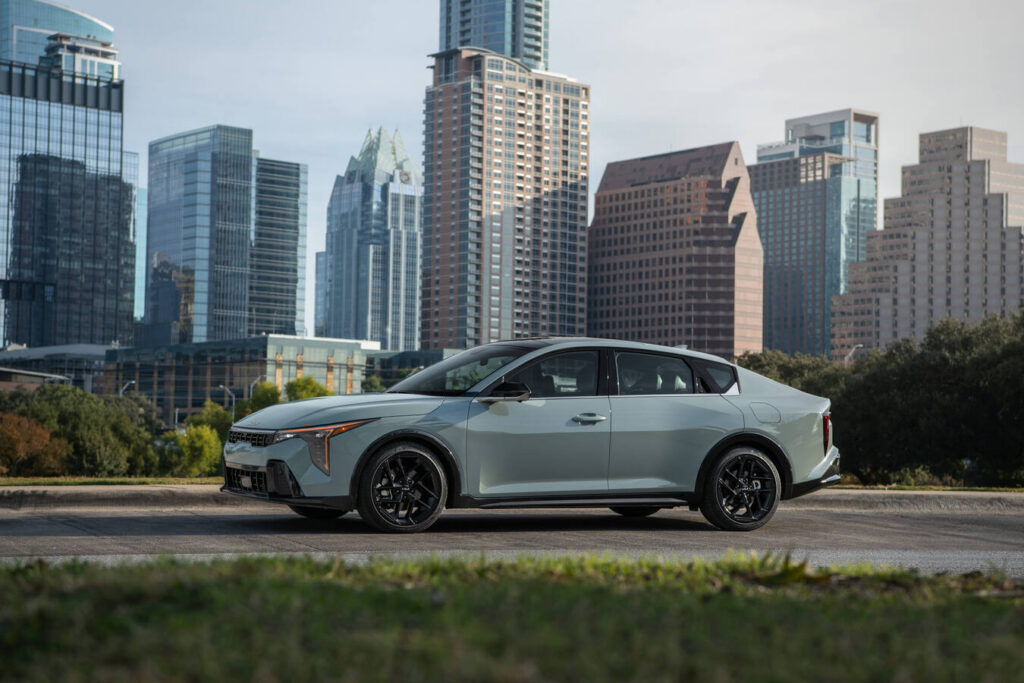
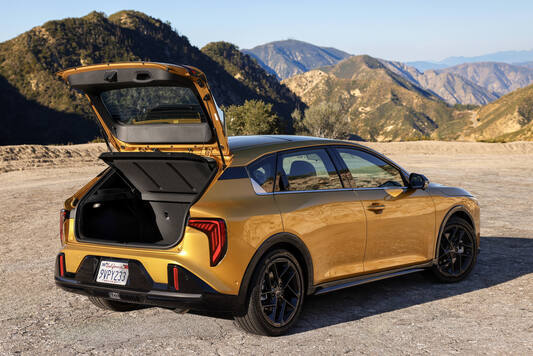
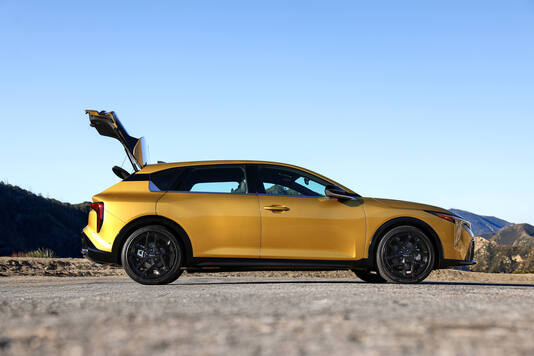
For that money, the hatchback replaces the conventional trunk lid with a large rear opening and a much more flexible cargo area.
The sedan provides approximately 14.6 cubic feet of trunk capacity. That’s useful for shopping bags, luggage and everyday commuting requirements.
The hatchback offers 22.2 cubic feet behind the rear seats, expanding to 59.3 cubic feet when those seats are folded.
This isn’t merely a difference in numbers. A hatchback allows taller objects to be loaded without trying to force them through the comparatively narrow opening of a conventional trunk.
That makes a difference for strollers, sports equipment, luggage and dog carriers.
The hatchback is also about 11 inches shorter than the sedan, depending on trim. That makes it easier to accommodate in tight parking spaces without sacrificing its 38 inches of rear legroom.
Kia says rear headroom improves by approximately one inch.
In practical terms, the shorter K4 is the more flexible one.
It’s rather like discovering that a smaller suitcase somehow holds more clothing. If only the airlines would approve.
For more on why hatchbacks deserve attention, see our Hatchbacks in America: The Smart Car Comeback.
What the K4’s Two Engines Mean in Daily Driving
Both the sedan and hatchback offer the same basic powertrain choices.
| Engine | Horsepower | Transmission | Best for |
|---|---|---|---|
| 2.0-liter four-cylinder | 147 hp | Intelligent variable transmission | Value-focused commuting |
| 1.6-liter turbocharged four-cylinder | 190 hp | 8-speed automatic | Stronger acceleration |
The standard engine is the economical purchase. It provides enough performance for ordinary traffic, but nobody should expect remarkable acceleration.
The continuously variable transmission is designed to keep the engine operating efficiently. Under strong throttle applications, however, independent evaluations report that the engine can become more audible.
This is particularly noticeable when joining a fast-moving highway or overtaking slower traffic.
The 190-horsepower turbo engine produces a substantial improvement in acceleration.
It also replaces the continuously variable transmission with a conventional eight-speed automatic, which provides more familiar gear changes and stronger response when the driver needs extra performance.
On the road, the turbo engine’s advantage is most relevant during short highway merges, passing and climbing hills with several passengers aboard.
The extra power isn’t essential, but it makes the K4 feel considerably more relaxed when asked to accelerate quickly.
Neither engine is a hybrid.
Buyers who spend significant time in stop-and-go traffic should compare the Kia’s economy with dedicated hybrid alternatives rather than assuming the lowest purchase price will produce the lowest overall running cost.
Official engine information is available through Kia’s K4 sedan specifications and K4 Hatchback specifications.
Driving the Sedan and Hatchback: What the Evidence Shows
There is a noticeable difference between looking sporty and actually delivering a sporting driving experience.
The K4 is an excellent example.
Independent road evaluations of the standard sedan describe predictable steering, comfortable suspension tuning and generally composed behavior over ordinary pavement.
The steering is light enough to make parking easy without becoming excessively vague at normal highway speeds.
The suspension emphasizes comfort, and the body remains reasonably controlled during normal cornering.
That makes the sedan a sensible daily driver. It does not punish occupants for encountering potholes, expansion joints and the ordinary deterioration of American roads.
The 147-horsepower engine is its weakest dynamic feature. It delivers adequate everyday performance but needs more effort during urgent acceleration.
The GT-Line Turbo is a different proposition.
Its additional power and conventional automatic transmission improve responsiveness, while its multi-link rear suspension offers more sophisticated wheel control than the simpler torsion-beam arrangement in lower trims.
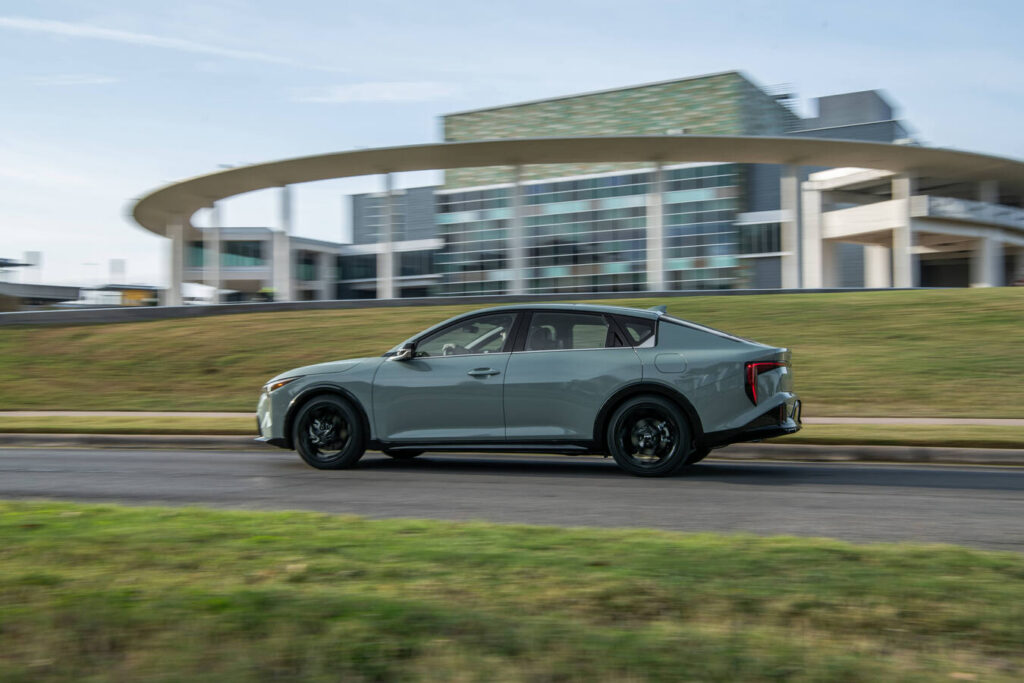
The hatchback shares these broad characteristics but feels more compact because of its shorter rear body.
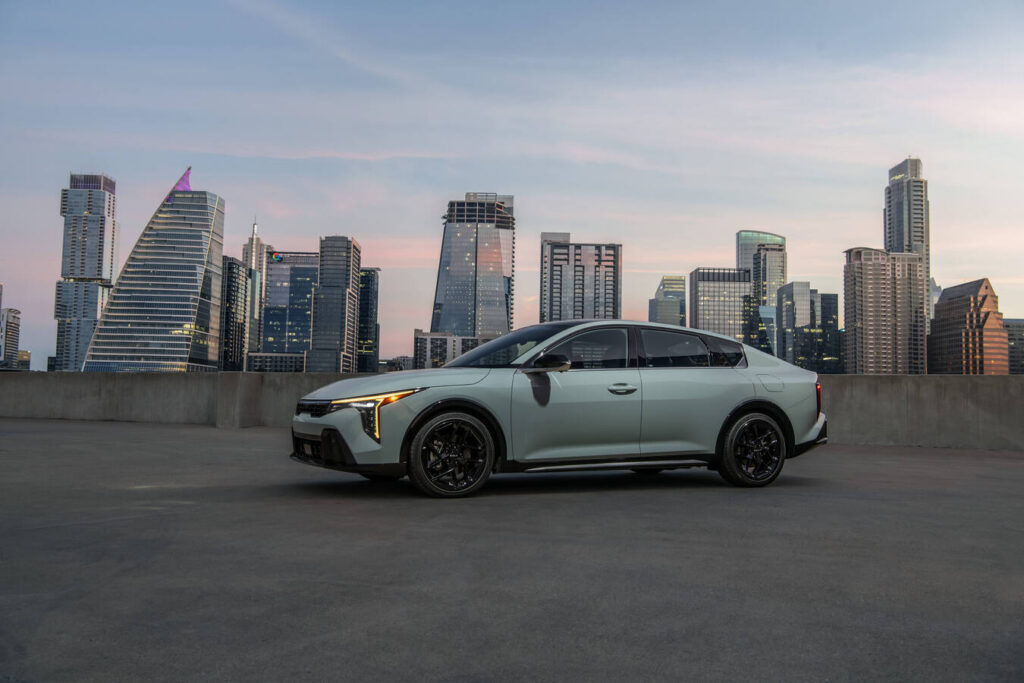
Published evaluations of the GT-Line Turbo Hatchback describe secure cornering, reasonably agile responses and confidence through sweeping bends.
The suspension is generally comfortable, although the 18-inch wheels can transmit more of the road surface into the cabin than buyers might expect from a family-oriented vehicle.
Some evaluations have also noted an abrupt response from the rear suspension over larger bumps.
The steering can feel heavier in Sport mode without providing a corresponding improvement in information reaching the driver’s hands.
That is worth remembering when the badge says GT-Line Turbo. The additional engine performance is useful, but this remains a comfortable compact car rather than a dedicated performance hatchback.
For someone primarily commuting, the regular EX is likely to provide sufficient performance. For buyers who enjoy driving and frequently use fast highways, the Turbo deserves a proper back-to-back test.
None of these impressions represents a firsthand Test Miles drive. Original testing would be needed to verify ride comfort, braking response, steering feel and road noise in the exact trims recommended.
Interior Space: Kia Has Made a Compact Car Feel Larger
One of the K4’s biggest advantages is its rear passenger accommodation.
Both versions offer 38 inches of rear legroom. That’s a generous figure for a compact car and makes the K4 particularly attractive to families who regularly carry adults or teenagers.
The hatchback adds rear headroom, helping taller passengers feel less confined beneath the roof.
The front cabin uses a wide digital dashboard layout with available dual 12.3-inch displays and a smaller climate display.
The design gives the interior a modern appearance without requiring the driver to look at an enormous tablet perched above the dashboard.
Climate adjustments have dedicated controls, although some functions are positioned within the digital display area.
It’s a compromise between a fully touchscreen-dependent interior and a traditional dashboard.
Seat materials and equipment depend heavily on trim.
Higher specifications provide options such as heated and ventilated front seats, a power driver’s seat and upgraded synthetic upholstery.
For a family, I would prioritize supportive seats, rear ventilation, easily cleaned materials and an accessible cargo area over decorative trim.
The K4’s generous rear legroom helps, but families should still test their child seats in the actual vehicle before purchasing.
How Useful Is the Hatchback for Dogs and Families?
The hatchback is the more versatile choice for households that regularly transport awkward equipment.
The rear liftgate makes loading a folded stroller, luggage or suitable pet carrier considerably easier than using the sedan’s trunk.
The lower overall height compared with many SUVs may also help owners whose dogs struggle with a particularly high jump.
But a large opening doesn’t automatically mean every dog crate will fit.
Buyers should measure the crate’s height, width and depth, then check the available opening and the usable floor space with the seats in their intended positions.
A carrier needs to be properly secured and the animal must have appropriate ventilation and temperature protection. A dog should never be transported in the sedan’s enclosed trunk.
Families using the rear seats for passengers may find that the hatchback’s 22.2 cubic feet behind the second row is sufficient for everyday luggage but not for a particularly large crate.
If you regularly transport multiple large dogs, a compact SUV may still be the better answer.
For ordinary family duties, however, the hatchback offers an appealing alternative to purchasing something taller and more expensive.
Technology: Impressive Equipment, but Check the Trim
Kia has become particularly good at making affordable cars look technologically sophisticated.
The K4 offers an available digital cockpit stretching approximately 29.6 inches across its combined display surfaces.
Wireless smartphone connectivity, available connected navigation and Kia’s connected-car operating system provide modern functionality.
Higher trims can also offer a Harman Kardon audio system, ventilated front seats, a wide sunroof and wireless phone charging.
One of the most useful available features is the Blind-Spot View Monitor.
Instead of relying entirely on a warning symbol, the system can display a live camera view of the adjacent lane when the corresponding turn signal is activated.
That is useful technology because it gives the driver additional information rather than simply creating another notification.
The available surround-view camera system can also make parking easier.
These features are not standard across the range, and some require option packages. Buyers should verify the precise vehicle specification before assuming the equipment shown in advertisements is included.
There is little benefit in purchasing an expensive technology package containing features you’ll rarely use.
For buyers comparing technology and affordability, our 2026 Honda Civic Hybrid review explores another compact-car approach.
2026 Kia K4 Prices and Trims
| Body style | Trim | Starting MSRP |
|---|---|---|
| Sedan | LX | $22,290 |
| Sedan | LXS | $23,390 |
| Sedan | EX | $24,490 |
| Sedan | GT-Line | $25,490 |
| Sedan | GT-Line Turbo | $28,390 |
| Hatchback | EX | $24,990 |
| Hatchback | GT-Line | $25,990 |
| Hatchback | GT-Line Turbo | $28,890 |
All prices are Kia’s published U.S. starting MSRPs before destination, taxes, dealer charges and optional equipment.
The sedan’s LX offers the lowest entry price, but I recommend comparing it with the EX before deciding.
The EX adds equipment that may be worth the difference for everyday ownership.
The hatchback GT-Line costs $25,990. Compared with the hatchback EX, it adds sportier styling, larger wheels and a multi-link rear suspension.
That makes it my preferred all-around hatchback trim, provided buyers are comfortable with the firmer tire-and-wheel package.
The GT-Line Turbo costs another $2,900 and brings the 190-horsepower engine.
It’s an appealing upgrade for drivers who value stronger acceleration, but it isn’t essential for ordinary family transportation.
Safety: The Sedan and Hatchback Are Not Identical
The Insurance Institute for Highway Safety has published evaluations covering both K4 body styles.
For the sedan, the updated moderate-overlap frontal test received a Good rating for applicable vehicles built after January 2025.
That result reflects changes made to improve rear-seat restraint performance.
The hatchback’s separate updated moderate-overlap evaluation received a Marginal rating.
Rear-passenger restraint performance was an important factor in that result.
Both body styles receive Good ratings in the applicable small-overlap frontal and updated side-impact evaluations.
This distinction matters because two vehicles sharing a platform and many interior components can still perform differently in individual crash tests.
Families carrying children should read the exact ratings and confirm the manufacturing date and equipment of the vehicle they intend to purchase.
Review the IIHS K4 sedan results and the separate 2026 K4 Hatchback assessment.
Automatic emergency braking, lane-keeping assistance and other collision-avoidance technologies may help reduce certain risks.
They do not make either K4 an autonomous vehicle.
K4 vs. Honda Civic, Toyota Corolla and Mazda3
The Honda Civic is probably the K4’s most obvious rival.
It offers a sophisticated driving experience and an available hybrid powertrain with a substantial fuel-economy advantage over the gasoline-only Kia.
The Civic Hatchback also offers flexible cargo space, although its purchase price can be higher depending on trim.
The Toyota Corolla offers another approach to affordable transportation. Its available hybrid powertrain provides excellent official fuel economy, and certain configurations offer all-wheel drive.
The Mazda3 attracts drivers who prioritize cabin design and an engaging driving experience. Its rear passenger space is less generous than the K4’s, making it a less obvious choice for families regularly carrying adults in the back.
The K4’s advantage is the combination of price, rear-seat accommodation and available technology.
The hatchback strengthens that position with considerably more useful cargo access.
For an additional efficiency comparison, see our 2026 Toyota Corolla Hybrid review.
Final Verdict: Buy the Hatchback for Practicality, the Sedan for Value
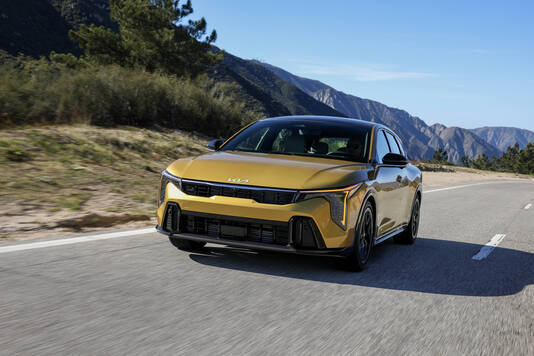
My preferred K4 sedan is the EX. It offers a sensible balance of purchase price and equipment without pushing the cost unnecessarily close to more expensive vehicles.
My preferred K4 Hatchback is the GT-Line. At $25,990 before destination, it delivers useful cargo flexibility, attractive equipment and a more sophisticated rear suspension.
The GT-Line Turbo is worth considering if stronger acceleration and an eight-speed automatic transmission are important to your driving experience.
For families and dog owners, the hatchback is the more flexible vehicle. For commuters who mainly transport people and conventional luggage, the sedan offers a lower-cost solution.
The K4’s primary limitations are the lack of a hybrid option, modest acceleration from the standard engine and the hatchback’s less favorable updated moderate-overlap crash-test result.
Those considerations should be weighed against generous passenger space, useful equipment and competitive pricing.
The best car isn’t necessarily the one with the tallest roof or the largest monthly payment.
Sometimes it’s the one that carries everything you need without charging you for a great deal of vehicle you don’t.
Frequently Asked Questions About the 2026 Kia K4
Is the 2026 Kia K4 Hatchback more practical than the sedan?
Yes, particularly for buyers transporting bulky cargo. The hatchback provides 22.2 cubic feet of cargo capacity behind the rear seats, expanding to 59.3 cubic feet when they are folded. The sedan has a conventional trunk of approximately 14.6 cubic feet. The hatchback’s larger opening makes loading awkward items easier.
Which 2026 Kia K4 trim is the best value?
The sedan EX is my preferred value choice because it adds useful equipment while maintaining a starting MSRP below $25,000. For the hatchback, the GT-Line offers an appealing balance of practicality, appearance and suspension equipment. Buyers who prioritize the lowest price should still examine the sedan LX.
Does the 2026 Kia K4 come as a hybrid?
No. U.S. buyers choose between a 147-horsepower 2.0-liter gasoline engine and a 190-horsepower 1.6-liter turbocharged gasoline engine. Neither is a hybrid. If fuel economy is your primary consideration, compare the K4 with the Honda Civic Hybrid, Toyota Corolla Hybrid and Hyundai Elantra Hybrid.
How much is the 2026 Kia K4 Hatchback?
Kia lists the hatchback EX at $24,990, GT-Line at $25,990 and GT-Line Turbo at $28,890 before destination, optional equipment, taxes and dealer charges. The comparable sedan trims are each $500 less expensive. Actual transaction prices vary according to inventory, incentives and dealer pricing.
Does the K4 Hatchback have the same rear seat as the sedan?
Both vehicles offer 38 inches of rear legroom. Kia says the hatchback provides approximately an additional inch of rear headroom. That gives taller passengers a useful advantage without making the hatchback longer than the sedan. Families should still check child-seat installation and passenger comfort in the exact version they intend to purchase.
Is the K4 GT-Line Turbo a performance car?
The 190-horsepower turbo engine gives the K4 substantially stronger acceleration than the standard 147-horsepower engine. It also uses a conventional eight-speed automatic transmission. The Turbo is more enjoyable to drive, but independent evaluations indicate that its suspension and steering remain oriented toward everyday usability rather than dedicated high-performance driving.