Porsche 550 J Brings a Racing Legend Down to Size
By Robert R Guio
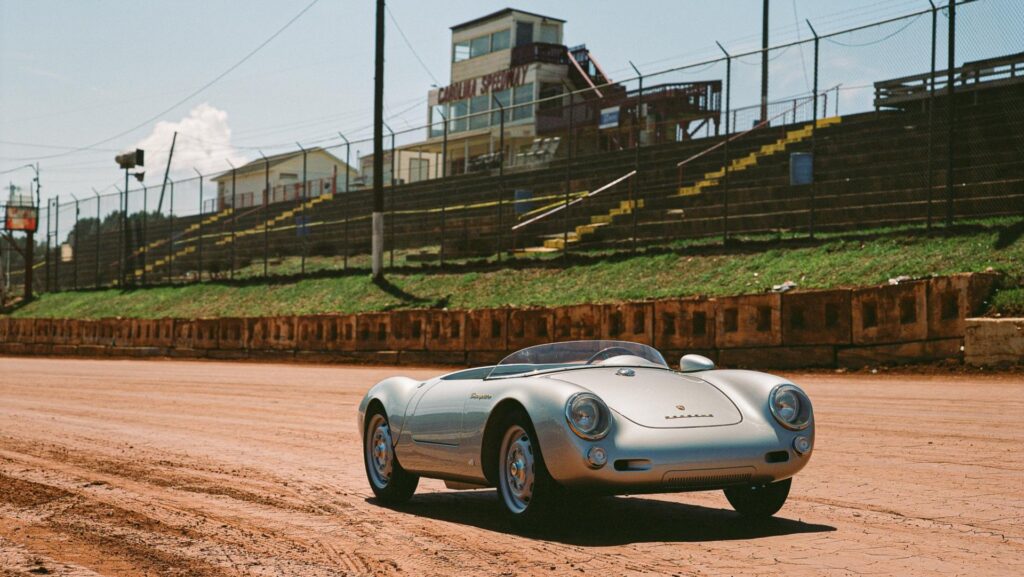
The Porsche 550 J is an 80-percent-scale electric tribute to the 550 Spyder, built for collectors with Porsche-backed historical detail.
The Porsche 550 J is the sort of product that makes perfect sense only after you stop judging it as a car.
It has four wheels, seats two people and can reach roughly 50 mph, but Porsche and Hedley Studios are not presenting it as transportation. The 550 J is an officially licensed, hand-built, 80-percent-scale interpretation of the 550 Spyder, one of the cars that helped establish Porsche’s motorsport identity. Production is capped at 250 examples, the drivetrain is electric, and the vehicle is not road legal.
For a shopper or collector, those facts matter more than the nostalgic bodywork. The interesting question is not whether the 550 J can duplicate the original 550. It cannot, and does not claim to. The better question is whether Porsche and Hedley Studios have created something with enough historical discipline and physical substance to stand on its own.
Porsche 550 J starts with the right history
The original Porsche 550 Spyder was not merely a pretty early sports car. Porsche developed it specifically for racing, and its engineering priorities were visible immediately: low mass, a mid-engine layout and a compact body designed to make the most of relatively modest power.
The 1954 Carrera Panamericana became one of the defining moments. Porsche records Hans Herrmann and Jaroslav Juhan finishing third and fourth overall, while also taking the class victory. The race covered 3,077 kilometers, and after five days Herrmann led Juhan by only 36 seconds.
That result helped make the 550 an enduring part of Porsche mythology. It also contributed to the later use of the Carrera name across Porsche’s road-car range. More broadly, the car helped establish a formula Porsche would revisit for decades: performance through efficiency, weight control and chassis intelligence rather than engine size alone.
For anyone considering the 550 J, that history is the reason the project has value. Without it, this would simply be a beautifully made miniature electric roadster. With it, the car becomes a physical interpretation of a specific chapter in Porsche’s early competition story.
You may also enjoy: Porsche 911 GT3 Bergsport Is Built for Mountain Roads
You may also enjoy: 2026 Rolex 24 at Daytona: How the Penske Porsche #7 Won
The scale changes the experience more than the shape
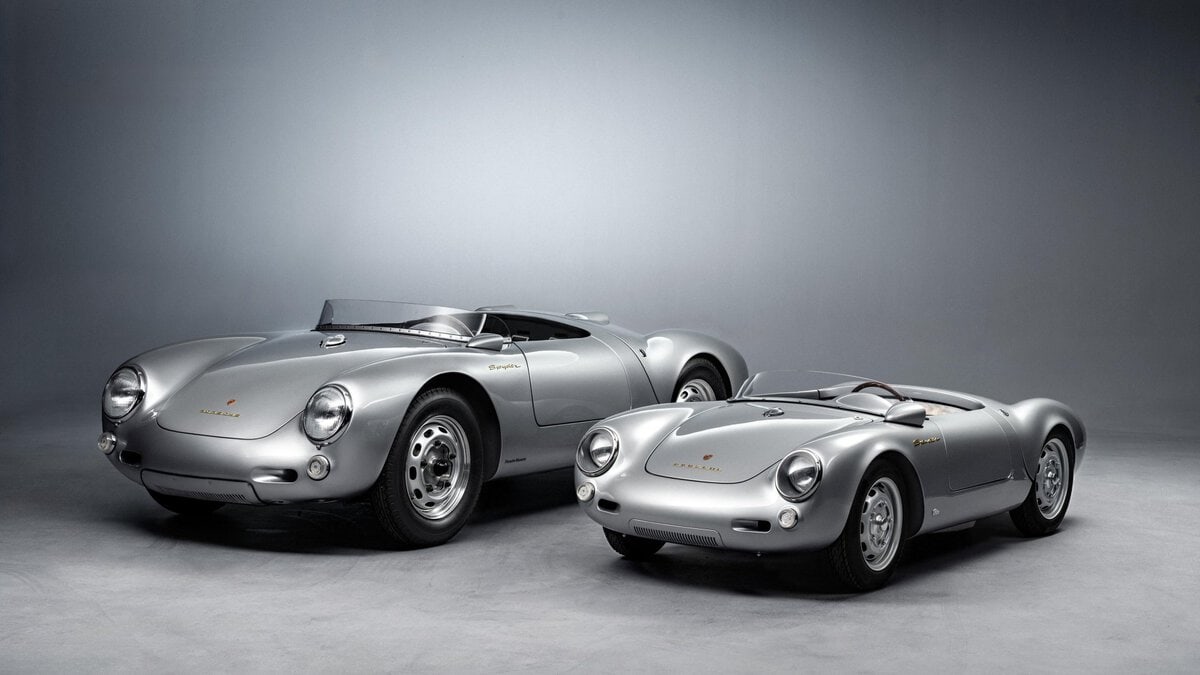
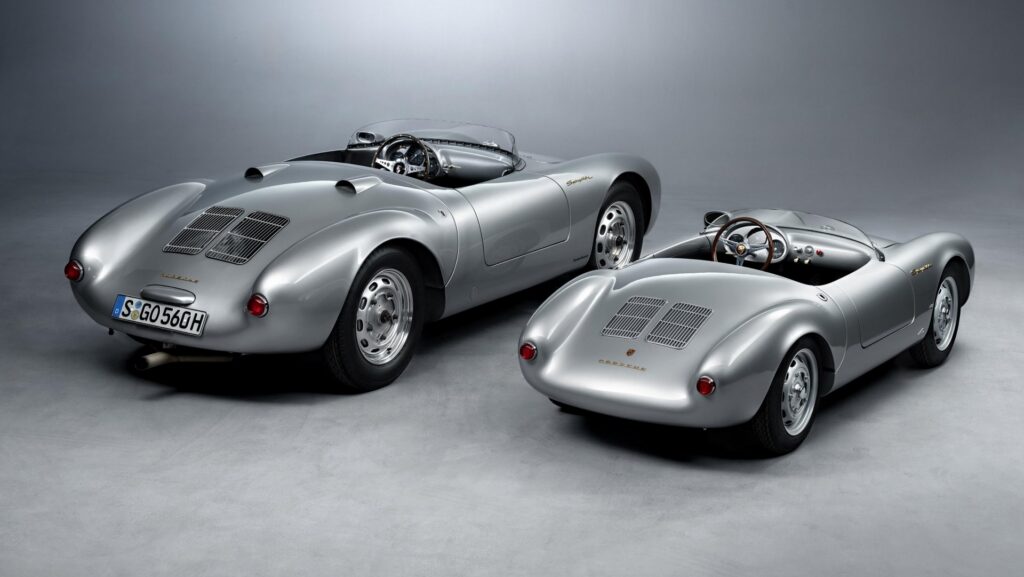
The 550 J is approximately 2.9 meters long and 1.2 meters wide, which makes it about 80 percent of the size of the original. It can carry two people, so this is not a one-seat display toy, but its dimensions immediately separate it from conventional modern cars.
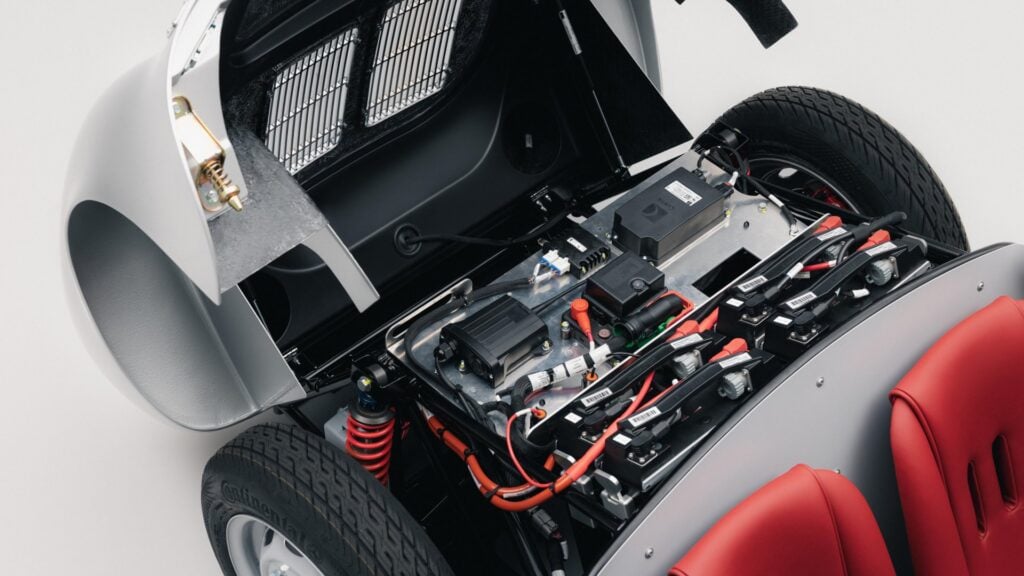
The drivetrain reinforces that separation. A 48-volt electric system produces about 8 kW in standard specification and up to 16 kW with the RS Package. Porsche lists a top speed of approximately 80 km/h.
Those figures tell you what not to expect. Nobody should buy a 550 J expecting the acceleration, braking or cornering envelope of a current Porsche sports car. The appeal is in the interaction with a compact machine and the ability to experience the shape and seating relationship of a classic racing design at a more approachable scale.
The electric drivetrain is also a sensible way to avoid false authenticity. The original 550’s four-cylinder boxer engine is inseparable from its historical identity. A small modern gasoline engine would not make the junior car authentic; it would merely make it noisier. Electric propulsion allows the 550 J to be honest about what it is: a contemporary collectible inspired by an old racing car rather than a mechanical replica.
For readers who want the fundamentals behind electric propulsion, the U.S. Department of Energy Alternative Fuels Data Center explains how battery-electric drivetrains work. Its broader Electric Vehicle Basics guide is also useful background, although the 550 J is clearly a far more specialized machine than the road-going EVs those resources primarily address.
The biggest buyer caveat is road legality
The most important sentence in the Porsche release may be the least romantic one: the Porsche 550 J is not road legal.
That should shape every buying decision. In the United States, a vehicle’s ability to operate on public roads depends on its classification and compliance with applicable federal and state rules. NHTSA’s federal low-speed-vehicle definition, for example, covers qualifying four-wheeled vehicles with an attainable speed above 20 mph but not more than 25 mph. The 550 J’s approximately 50-mph top speed is well above that ceiling, and Porsche is not marketing the car as a federally certified road vehicle.
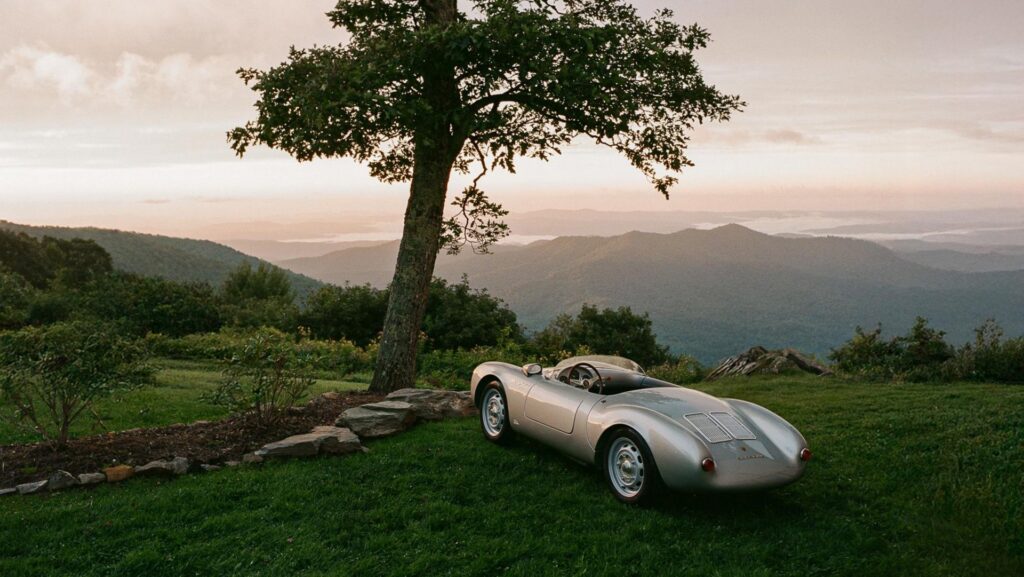
That does not make the 550 J less interesting, but it changes the ownership proposition. A buyer needs an appropriate place to use it and a realistic plan for transport, storage and insurance. The absence of road legality also means its usefulness will vary dramatically depending on where the owner lives and what private facilities are available.
This is one place where the 550 J differs sharply from the original 550 Spyder. Porsche’s own historical material notes that the original was road legal and could be driven to and from competition. The modern tribute therefore preserves the look and philosophy of the old car more faithfully than its original dual-purpose freedom.
You may also enjoy: Porsche Built a $275K 911 You Can’t Drive Home
Archive access matters more than another heritage badge
One detail gives the Porsche 550 J more credibility than the average retro recreation: Hedley Studios did not work from photographs alone.
Porsche says it opened its corporate archives to the Hedley team and provided guidance during development. That is significant because miniature recreations are unforgiving. A slightly wrong windshield angle, wheel position or body contour can make a familiar shape look like a caricature.
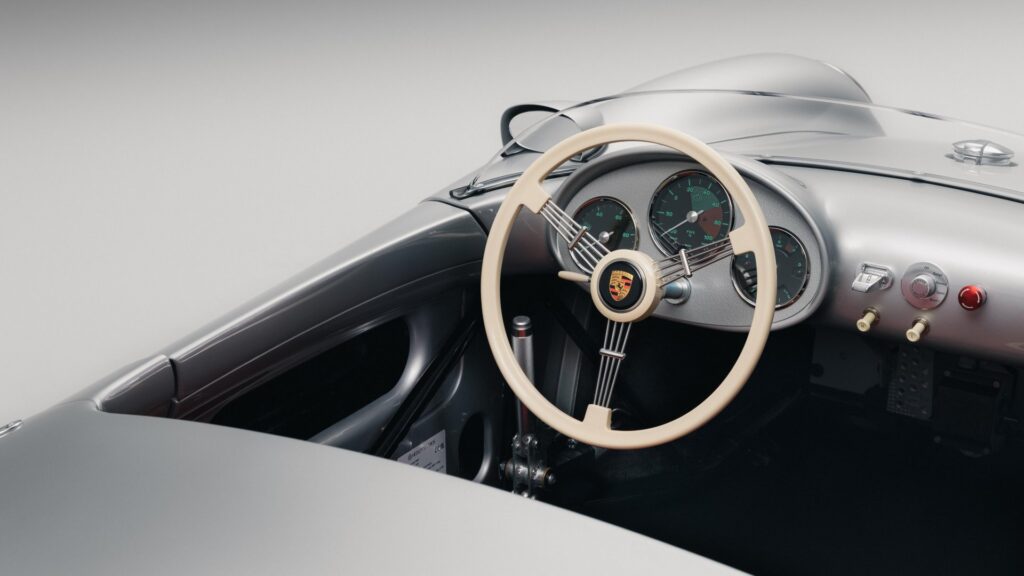
The photographs Porsche supplied with the announcement show how closely the 550 J follows the broad visual logic of the original. The junior car keeps the low windscreen, rounded tail, open cockpit and compact proportions instead of trying to modernize the silhouette with contemporary lighting signatures or aggressive aerodynamic decoration.
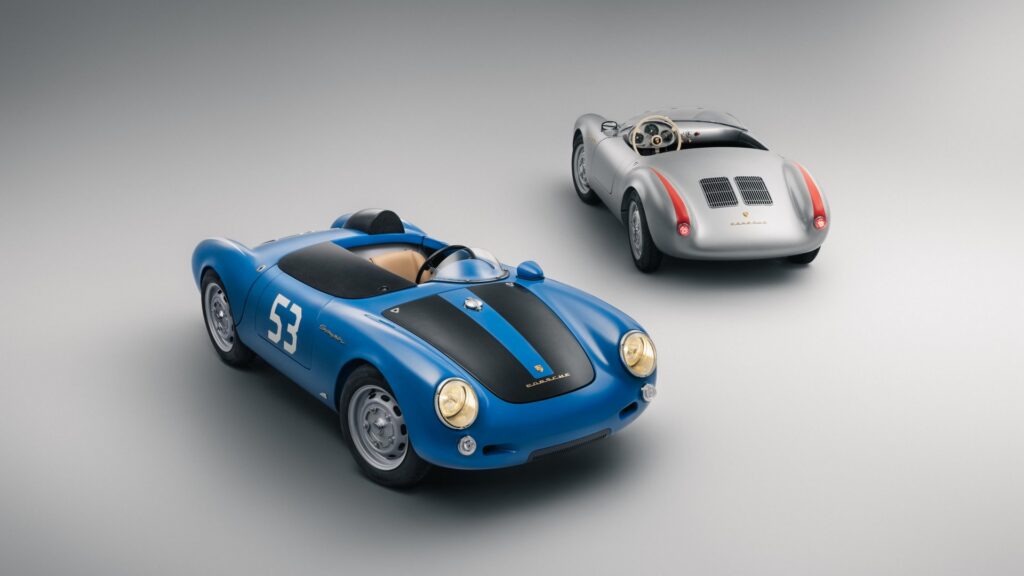
Ben Hedley says the team wanted to preserve the original car’s lightness, driver focus and clear design language. That objective is more persuasive than a claim of perfect replication. The 550 J is smaller, electric and built for a different purpose, so literal authenticity is impossible. Proportion and restraint are the more useful standards.
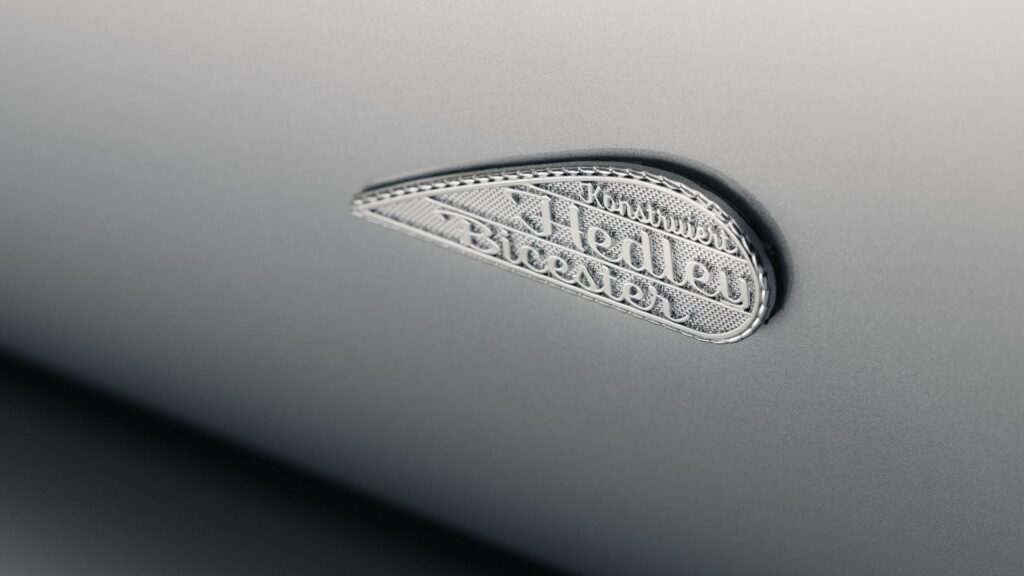
Hedley Studios will build only 250 examples, and each car is handcrafted in Bicester, England. Porsche says buyers can choose classic Porsche Silver or a selection of heritage-inspired finishes in blue, white, yellow and red.
There is also a Bespoke program offering substantially broader personalization. Buyers can select historic or contemporary colors, motorsport-inspired liveries and other details.
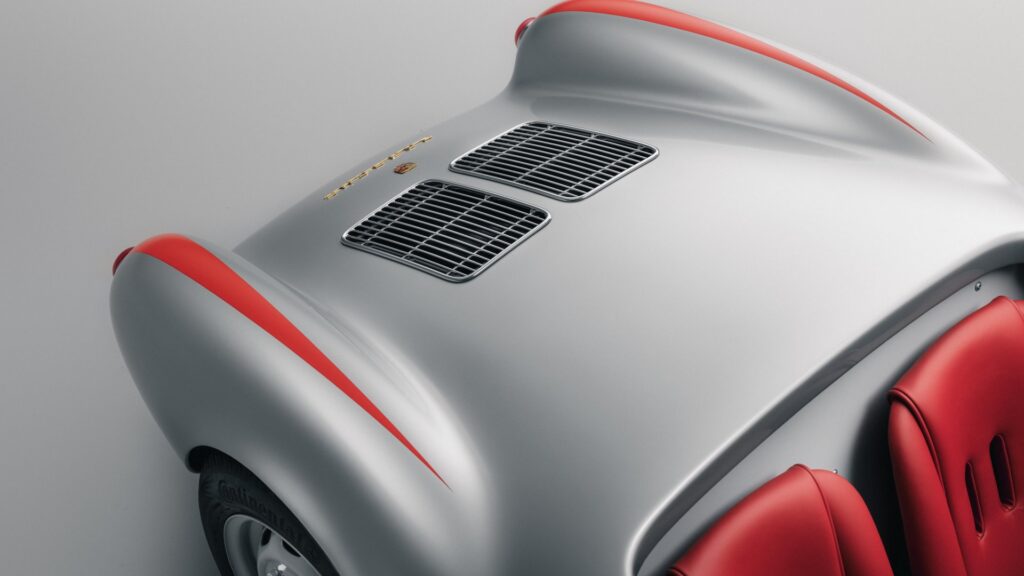
That sounds like decoration, but on a limited collector product it is part of the value equation. A buyer is not choosing between trim levels based on heated-seat content or driver-assistance packages. They are deciding how closely the car should echo a historical Porsche, or whether it should become a personal interpretation.
There is also a risk. Too much personalization can weaken the historical clarity that makes the car appealing in the first place. I would be inclined toward a specification that looks convincingly period-correct rather than one designed to prove that every available option was selected. The 550 shape is strong because it is simple. A busy livery can turn a racing reference into costume.
You may also enjoy: Monterey Car Week Race Guide: Where Historic Motors Roar
You may also enjoy: Lamborghini Miura Tribute: Only 99 Will Ever Exist
The unanswered questions matter to Porsche 550 J buyers
Porsche’s announcement does not list a price. That is a meaningful omission because the Porsche 550 J cannot be evaluated using normal new-car math.
There is no meaningful fuel-economy comparison, no cargo-space advantage and no commuting use case. Performance specifications are deliberately modest. The value proposition rests instead on the Porsche license, access to factory archives, hand construction, limited production and the quality of the finished object.
That places the 550 J closer to collectible design than conventional transportation. Buyers should therefore ask different questions: How is the body finished? How durable are the drivetrain and battery components? What service support will exist over time? How easily can wear items be replaced? What documentation accompanies each car? What restrictions apply to operation, storage and transport?
The press material answers the heritage story more thoroughly than the ownership story. That is understandable at launch, but collectors spending serious money should want both.
For some useful technical background, the Department of Energy’s guide to electric-vehicle batteries explains the role of energy storage in electric drivetrains, while DOE’s battery explainer covers rechargeable-cell fundamentals. Neither answers Hedley-specific service questions, which is precisely why those questions need to be asked before purchase.
The Porsche 550 J ultimately works best when viewed as an officially sanctioned piece of interactive automotive sculpture.
Its strongest attributes are clear. The project is tied directly to Porsche, the company provided archival access, the production run is genuinely limited, and Hedley Studios is hand-building the cars rather than mass-producing a novelty item. The proportions and historical inspiration are rooted in a car that genuinely changed Porsche’s motorsport trajectory.
The compromises are just as clear. It is not road legal, it does not reproduce the original powertrain, its performance is modest and Porsche has not published pricing in the launch material.
For the right collector, none of those points will necessarily be disqualifying. In fact, the honesty of the concept may be the best thing about it. Hedley Studios has not tried to disguise a miniature electric collectible as a continuation car or a road-going sports car. It has made something different.
The original 550 Spyder built its reputation by competing above its weight. The 550 J has no such burden. Its success will be measured more quietly: whether it looks right in person, feels carefully made and gives its owner a convincing physical connection to Porsche history.
That is a narrow mission, but a coherent one. And in a collector market crowded with anniversary badges and cosmetic special editions, coherence is worth something.