Porsche Built a $275K 911 You Can’t Drive Home
By Robert R Guio
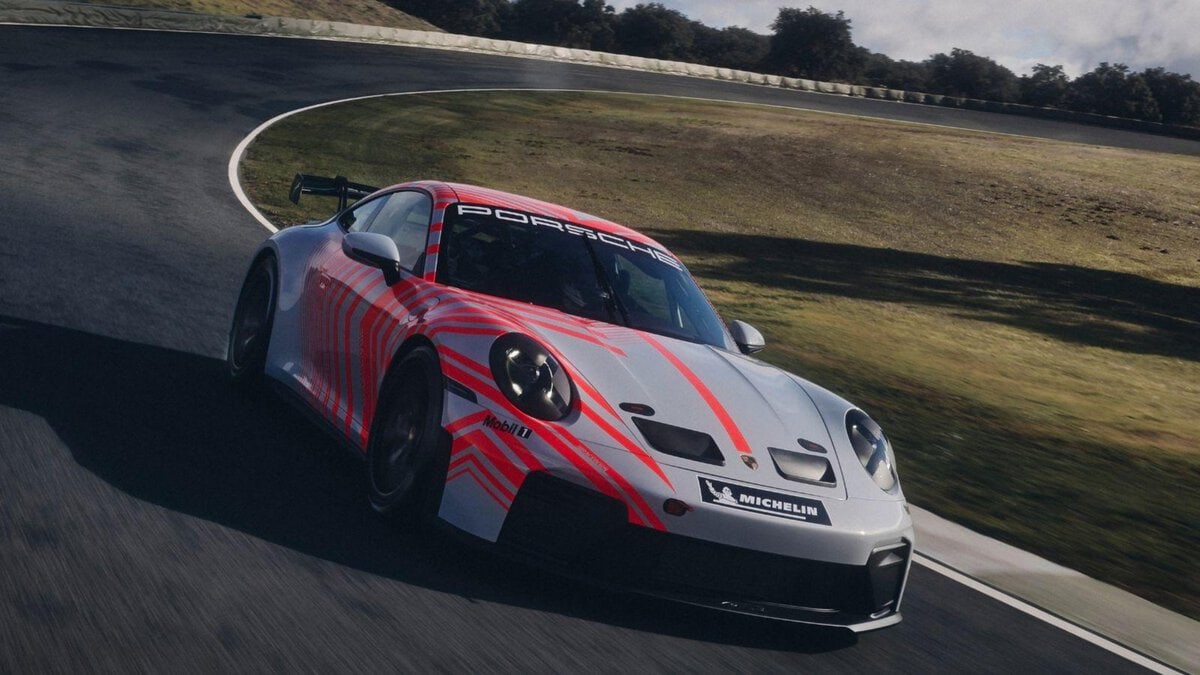
The Porsche 911 Challenge costs $275,000 and turns familiar GT3 hardware into a purpose-built race car with a surprisingly clear value case.
By Robert R Guio
The Freedom 250 Grand Prix gave IndyCar an unforgettable national stage, drawing 215,000 fans and offering a blueprint for American racing.
The Freedom 250 Grand Prix Solved a Visibility Problem
IndyCar has spent years proving that it can produce terrific racing. Washington proved something else: the series can make people stop and look before they know who is leading the championship.
That is a bigger strategic breakthrough than it sounds. Motorsports competes for attention in an entertainment market where viewers can watch almost anything, anywhere, at any time. A race can be technically excellent and still disappear outside its established fan base. The Freedom 250 Grand Prix attacked that problem with geography. Instead of asking Washington to come to an IndyCar circuit, IndyCar brought a circuit into the civic imagery Washington already owns.
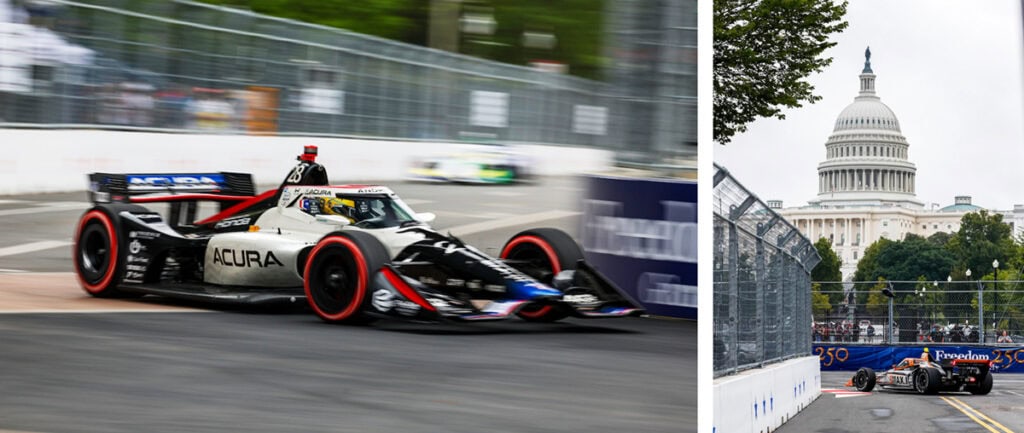
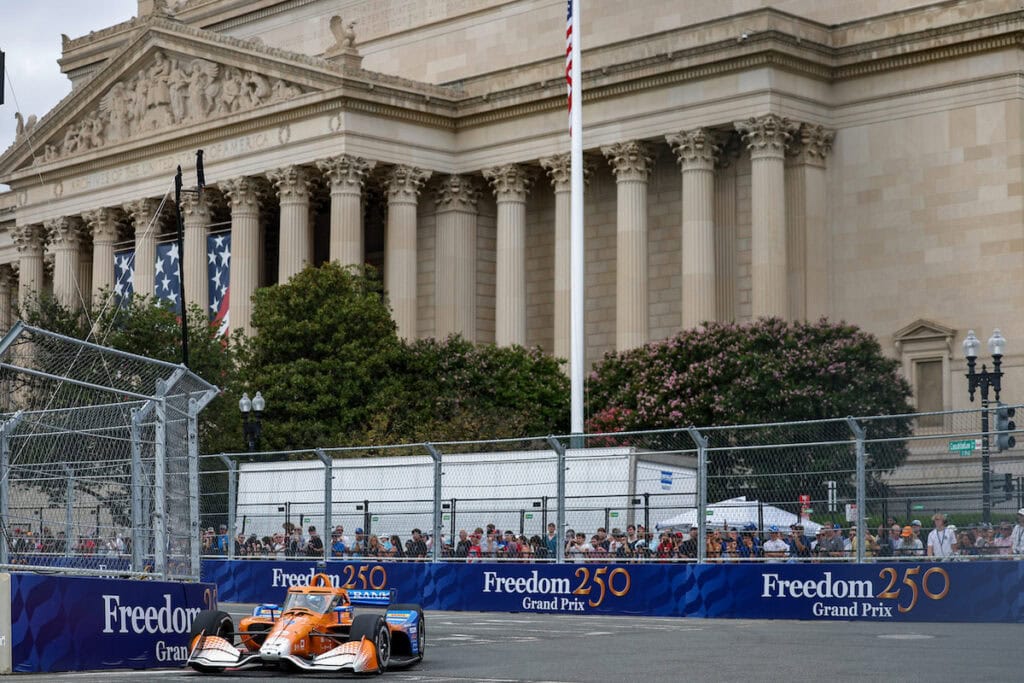
On August 23, 2026, the 1.7-mile, seven-turn course ran beside the National Mall and down Pennsylvania Avenue, with the U.S. Capitol and Washington Monument becoming part of the visual grammar of the race. The National Park Service describes the National Mall as "America's Front Yard." The Washington Monument rises 555 feet above the city, while the U.S. Capitol is both a working institution and a national symbol. Those are not generic city backdrops. They carry instant meaning.
The route also passed institutions that made the event feel almost absurdly concentrated with American history and technology. The Smithsonian National Air and Space Museum sits beside a course filled with another expression of engineering ambition, while the nearby National Archives is the permanent home of the Declaration of Independence. That setting gave a race celebrating the country's 250th anniversary an authenticity a temporary festival site could never manufacture.
That was the strategic win. The series made the place explain the significance of the event before the broadcast had to explain the rules.
You may also enjoy: Why the Indy 500 Still Defines America’s Summer
The Monument Shot Was Part of the Product
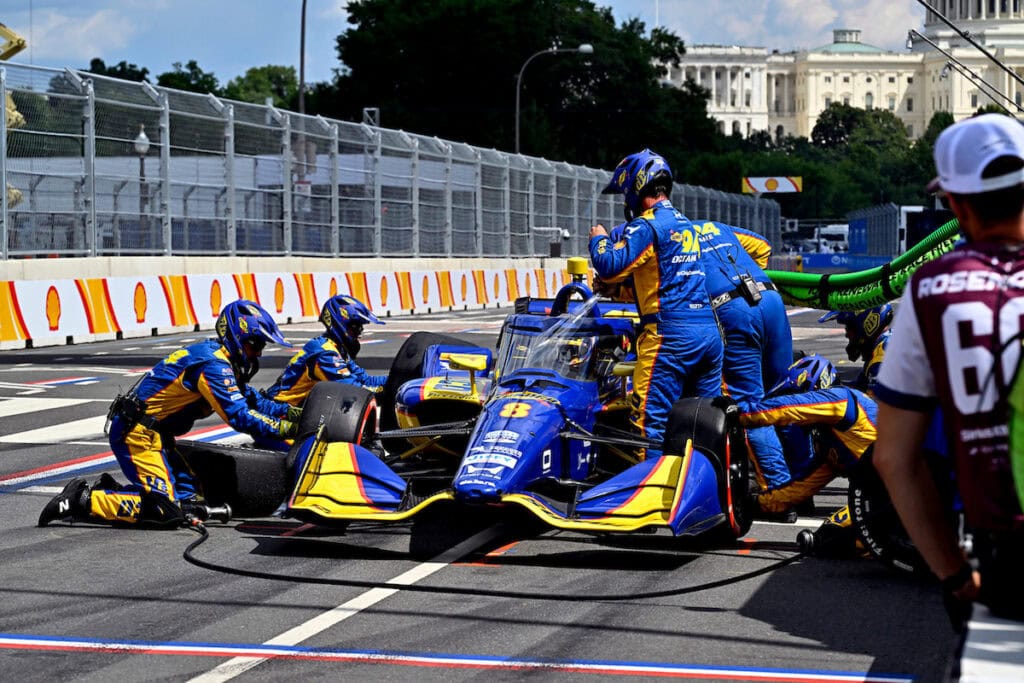
Motorsport is visual, and Washington understood that at a level many race promoters never quite reach. FOX deployed 90 cameras across the street course and in the cars. One camera was mounted at the top observation level of the Washington Monument, which FOX said was a first for a sporting event. Another sat on a 70-foot crane. The point was not merely to record the cars. It was to keep reminding the audience where those cars were.
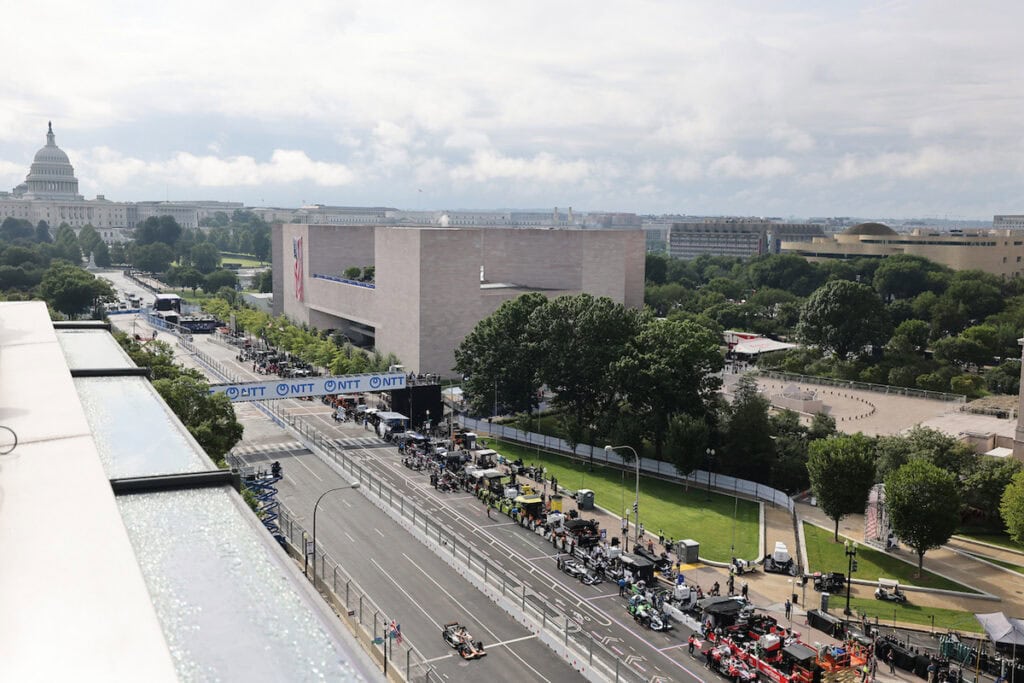
That distinction matters. Television coverage sometimes compresses street racing into anonymous concrete canyons. Washington did the opposite. The wider shots were the selling point. When a field of IndyCars appeared with the Capitol behind it, the viewer was getting two stories at once: an elite racing series was competing, and it had somehow been allowed to do so in one of the most symbolically loaded pieces of urban real estate in the United States.
The event added seven military flyovers, marching bands, a presidential motorcade lap and ceremonial involvement from federal and District officials. Some of that pageantry was unique to the country's 250th anniversary. It should not all be treated as a template for every future race. The useful lesson is that IndyCar let the location have a starring role instead of treating it as scenery.
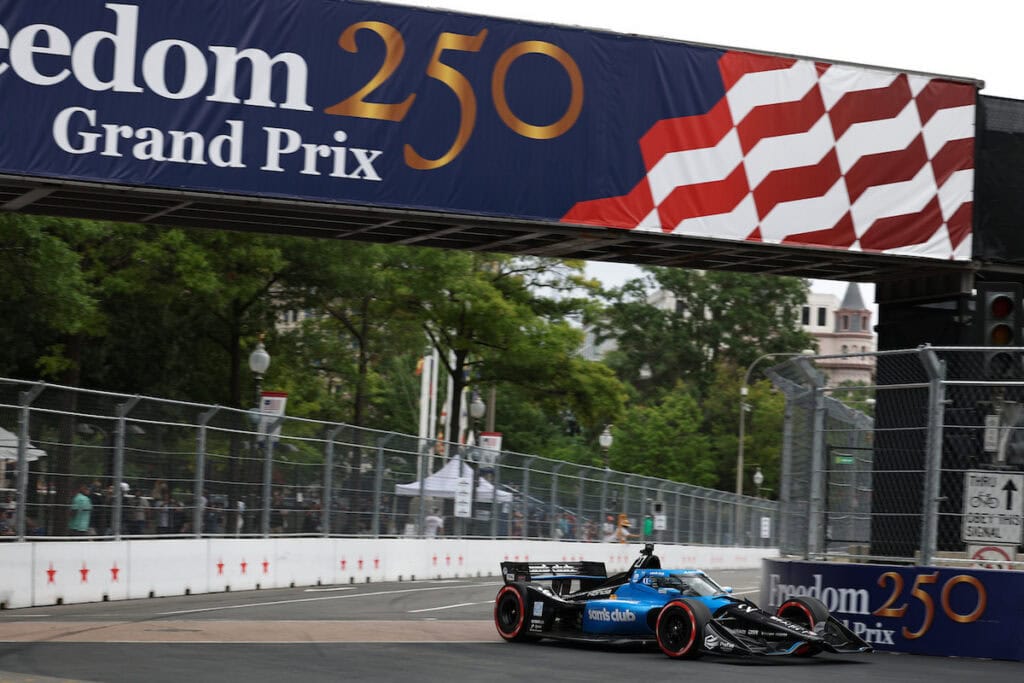
Kyle Kirkwood understood what that did to the emotional weight of the weekend. After winning, he said, "Outside of the Indy 500, I don't think there's another race that you'd want to win." That is an extraordinary comparison from an IndyCar driver because Indianapolis is the series' unquestioned center of gravity.
The competitive result supported the drama. Kirkwood beat Christian Lundgaard by 3.0906 seconds after controlling much of the 147-lap race. Will Power finished third and Marcus Ericsson fourth. Alex Palou's difficult afternoon left him 20th and reduced his championship advantage over Kirkwood from 133 points to 91. Washington therefore managed to be both a made-for-television spectacle and a consequential sporting event.
You may also enjoy: Why Indy 500 Is Nothing Like F1, According to Takuma Sato
Washington Proved Street Racing Can Be a Civic Event
The crowd figure deserves attention. Organizers reported more than 215,000 spectators across the two-day weekend. General admission had been offered free through the event's ticketing system, which lowered the barrier for people who might never buy a ticket to a conventional race.
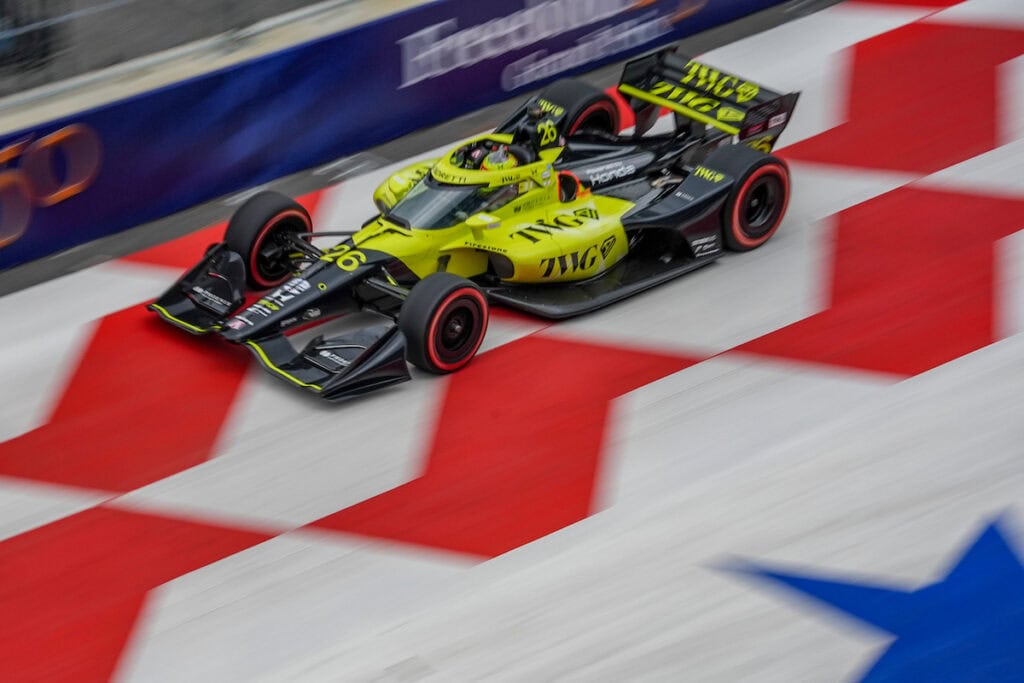
That approach changes what a promoter is trying to achieve. A traditional track sells a destination to racing fans. A public street event can sell racing to people who are already in the destination. Families, tourists, local residents and casual sports fans do not have to begin by identifying as motorsport enthusiasts. They can encounter the event, hear it, see it and decide whether they want more.
For IndyCar, that could be particularly valuable. The series has a product that often converts people once they watch it, but awareness has been the difficult first step. FOX's audience was already moving in the right direction before Washington. Through the opening 14 races of 2026, the network's IndyCar broadcasts averaged 1.731 million viewers, 16 percent higher than 2025 and 53 percent above 2024. The final Freedom 250 television number was not yet available when this story was prepared, so the D.C. weekend should not be credited with a ratings result that has not been published.
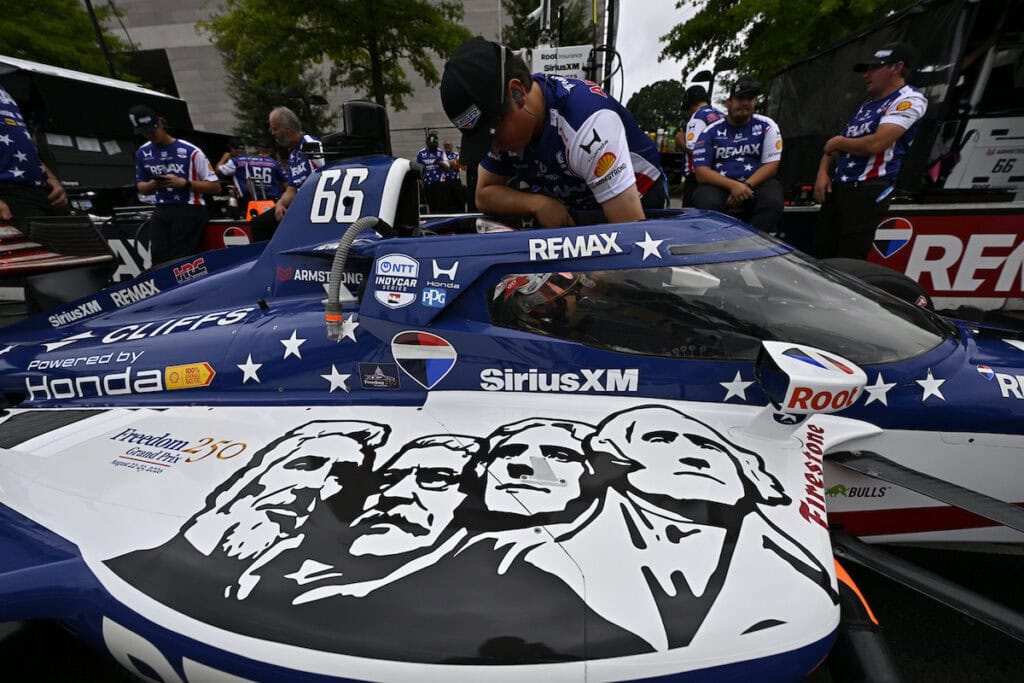
Still, a crowd exceeding 215,000 gives the series a powerful in-person proof point. It also suggests something about modern American motorsport. Fans increasingly respond to events that feel like experiences rather than appointments. Formula One has leaned heavily into destination races. NASCAR has experimented with city streets and new formats. IMSA turns Daytona and Sebring into endurance gatherings with their own cultures. WRC has been exploring a path back to the United States. IndyCar's opportunity is to do all of that without losing the directness that makes it distinctly American.
You may also enjoy: WRC Could Return to America as U.S. Motorsport Booms
What IndyCar Should Keep, and What It Should Fix
The danger after a weekend this photogenic is confusing a brilliant launch with a finished formula. Washington was complicated. Drivers discovered a circuit filled with severe bumps and brick-lined pedestrian crossings, and crews had to work on portions of the street surface during the weekend. Street courses are supposed to be imperfect, but the quality of the competition still depends on giving drivers a surface that is challenging rather than needlessly disruptive.
The fan experience also needs refinement if the race returns. Local reporting found spectators in some areas had difficulty following the actual contest because there was not enough on-site narration or race information. That is a classic street-race problem. A fan may have a spectacular view for five seconds every lap and still have no idea who pitted, who received a penalty, or why the order changed.
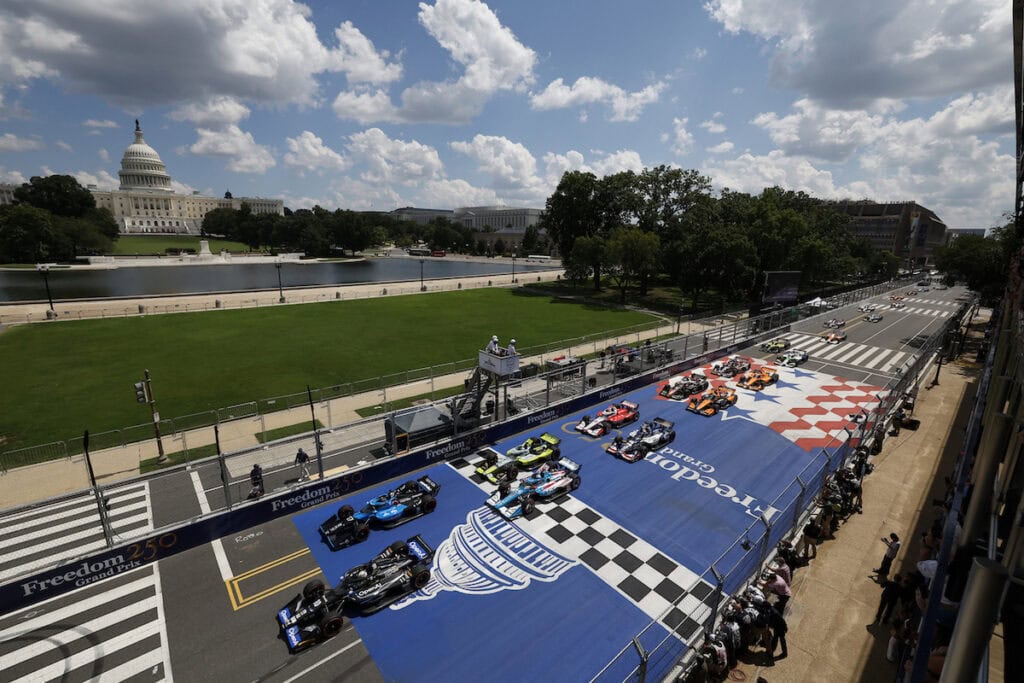
That matters because a new fan is the person least equipped to fill in those gaps. If IndyCar wants a giant civic race to function as an acquisition tool, it should make the competition easier to understand on site than it is at a permanent circuit, not harder. More screens, better public-address coverage, clear live timing, reliable mobile access and simple explanations of strategy would turn curiosity into fandom.
There is a second caution. A recurring Washington race cannot rely forever on the circumstances that created the first one. The inaugural event was tied to America's 250th anniversary and came together with unusual federal involvement. An annual race would need durable cooperation among the District, federal agencies, residents, sponsors, broadcasters, and the series. At the time of writing, a 2027 edition had not been guaranteed.
That is why the correct reaction is not "do this everywhere." It is "understand what worked here." IndyCar should protect its ovals, road courses and established street races because they are the substance of the championship. Then it should identify a small number of occasions where setting can expand the audience without turning the calendar into a collection of expensive temporary circuits.
You may also enjoy: 2026 Rolex 24 at Daytona: How the Penske Porsche #7 Won
American Racing Just Got a New Blueprint
The Freedom 250 Grand Prix matters because it demonstrated that American motorsport does not have to choose between heritage and presentation. The country already has extraordinary traditional races. What Washington added was proof that a new event can borrow the power of a place without pretending that history can be created overnight.
The Indy 500 remains irreplaceable because generations have invested emotion in it. Washington cannot duplicate that, nor should it try. What it can do is complement Indianapolis by giving the series a second type of national moment. Indianapolis says that this is where American open-wheel racing has always mattered. Washington showed where American open-wheel racing is capable of going.
That is important for a series whose strengths have occasionally been easier for dedicated racing fans to understand than for the broader public. IndyCar has high speeds, excellent drivers, strategic complexity, close competition and one of the world's most valuable motorsport institutions in the Indianapolis 500. What it has sometimes lacked is enough events that announce their importance visually before the first green flag.
Washington certainly did that.
For automakers and technical partners, the setting also created a useful connection between racing and the wider automotive story. Modern IndyCars use hybrid systems, energy recovery and sophisticated software management. Honda Racing Corporation USA has publicly discussed the value of IndyCar as both a technology-development environment and a place to train engineers. Put those machines outside the Air and Space Museum and the metaphor becomes almost too easy: racing remains one of the places where Americans gather to watch engineers make machines do improbable things in public.
You may also enjoy: How IndyCar Hybrid Tech Boosts Your Next Honda Hybrid
For the rest of American racing, the weekend should be read as a challenge. A series needs more than competition to break out of its core audience. It needs images people remember, an occasion they can explain to friends and a reason for casual viewers to feel they are missing something if they do not tune in.
That does not require monuments every weekend. It requires promoters to understand the identity of a place and use it honestly. Long Beach should feel like Southern California. Daytona should feel like Daytona. Indianapolis should never be polished into anonymity. A future American rally should use its landscape as part of the event. The strongest motorsport venues are not interchangeable.
You may also enjoy: Monterey Car Week Race Guide: Where Historic Motors Roar
Washington was the extreme version of that principle. The most valuable footage was not simply a fast car. It was a fast car in a place where viewers had never expected to see one.
There is also an important difference between spectacle and gimmick. Spectacle amplifies the sport. A gimmick distracts from it. Washington stayed largely on the right side of that line because when the pageantry finished, Kirkwood, Lundgaard, Power, Palou and the rest of the field still had nearly 250 miles of legitimate IndyCar competition to settle.
That distinction should guide whatever comes next. IndyCar does not need to chase increasingly strange locations simply because Washington produced memorable photographs. It needs a calendar where a few exceptional events broaden the audience while the traditional tracks maintain credibility with people who already love the championship.
If the Freedom 250 never happens again, the weekend will remain a remarkable historical curiosity. If it returns and improves, it could become something more important: evidence that IndyCar learned how to turn its racing quality into a national cultural event without changing what happens inside the cockpit.
Kirkwood left Washington with a trophy and a much healthier championship position. IndyCar left with something harder to quantify but potentially more valuable.
For one weekend, the series looked as large as the country it races in.
There is a wonderfully irrational sentence hidden inside Porsche’s latest racing announcement: for $275,000, you can buy a 911 that is less practical than a 911 GT3, impossible to drive legally on the street, and specifically designed to spend its life consuming tires on racetracks.
And yet, the new Porsche 911 Challenge may be one of the most logically positioned customer race cars Porsche has offered in years.
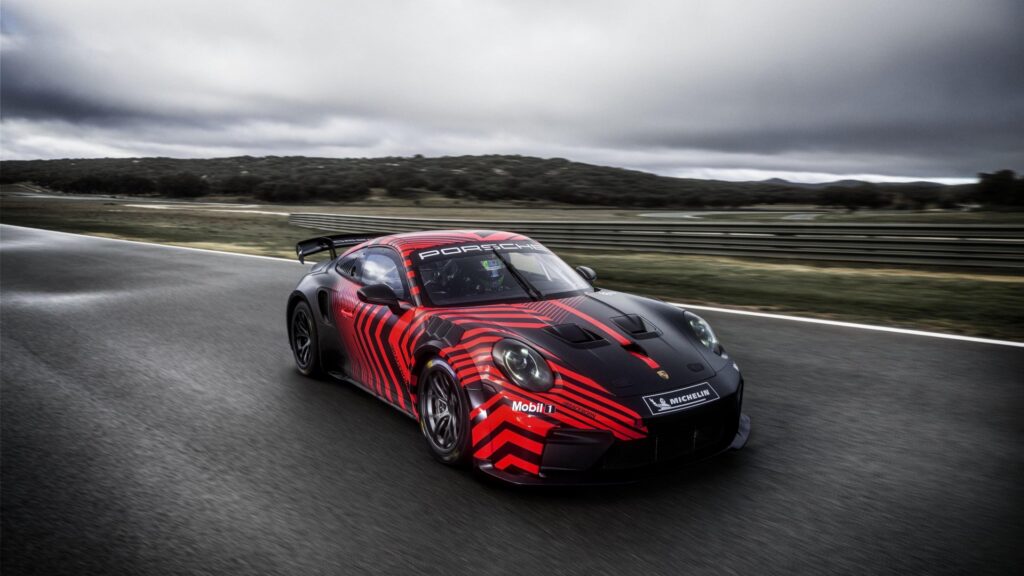
The reason is not raw speed. Porsche gives the Challenge 508 horsepower from a naturally aspirated 4.0-liter flat-six, only a modest increase over the 502 horsepower listed for the current 2027 road-going 911 GT3. The real story is what Porsche has chosen to keep from the street car and what it has replaced with proper competition hardware.
That combination tells us exactly who this car is for. It is aimed at the person who already understands a GT3, already spends time at track days, and now wants to move into organized racing without immediately adopting every complication of a higher-level race car.
Why the Porsche 911 Challenge price matters
Porsche Motorsport North America says the Challenge will cost $275,000 including import and delivery to the United States. Put that beside Porsche’s current published starting price of $235,800 for a 2027 911 GT3, before the road car’s delivery fee and options, and the race car is only $39,200 more at the base-price level.
That comparison needs a large disclaimer. These are completely different ownership propositions. One is a street-legal sports car with a warranty, registration and the ability to take you to dinner. The other needs a trailer, a place to store it, racing consumables, track support and, if you are serious, a budget that makes the purchase price look like chapter one.
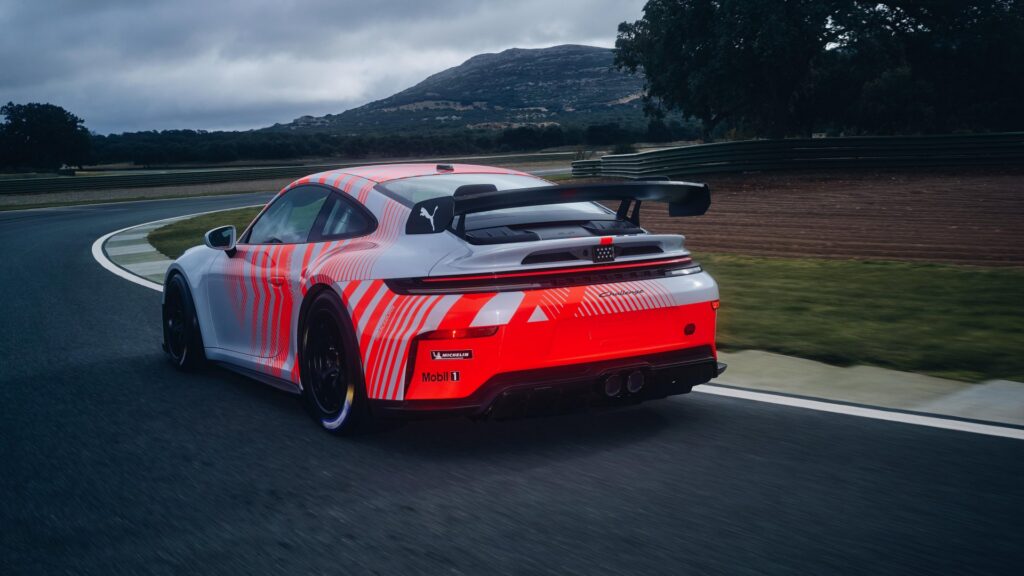
Still, the gap is useful because it shows what Porsche is really selling. Buyers are not paying a huge premium for an exotic engine. They are paying for a GT3-shaped car that has already been converted into a factory race machine with the safety systems, fuel system, cage, air jacks, racing suspension and track hardware integrated from the start.
The next rung makes the positioning even clearer. Porsche lists the new 911 GT4 R at $375,500 including U.S. import and delivery. That puts the Challenge $100,500 below it. Porsche also says the Challenge is intended to have a lower purchase price and lower running costs than both the GT4 R and 911 Cup.
The unanswered number is the one racers care about after the car arrives: annual operating cost. Porsche has not published a season budget, expected tire consumption, brake-pad budget, scheduled overhaul cost or crash-repair estimate for the Challenge. Until those figures exist in the real world, “lower cost” should be read as Porsche’s design objective, not a guarantee that anyone has discovered affordable motorsport.
You may also enjoy: 5 Vehicles That Miserably Refuse to Depreciate
The clever part is what Porsche did not replace
A dedicated racing car often becomes intimidating because nearly every familiar road-car interface disappears at once. Porsche has resisted that temptation here.
The Challenge uses a seven-speed PDK transmission rather than a more specialized sequential dog gearbox. Drivers can let it shift automatically or use paddles. The steering wheel is derived from the GT3 RS and gains race-specific controls. Air conditioning remains. The car also retains adjustable ABS, traction control and electronic stability control, plus multi-stage Porsche Torque Vectoring Plus.
That does not mean those electronic systems make racing safe or easy. They are tools. The National Highway Traffic Safety Administration’s material on electronic stability control explains the basic road-car principle: ESC uses braking intervention and engine control to help a driver maintain directional stability. Porsche’s racing application is adjustable because a driver may want different levels of intervention as skill, tires, weather and setup change.
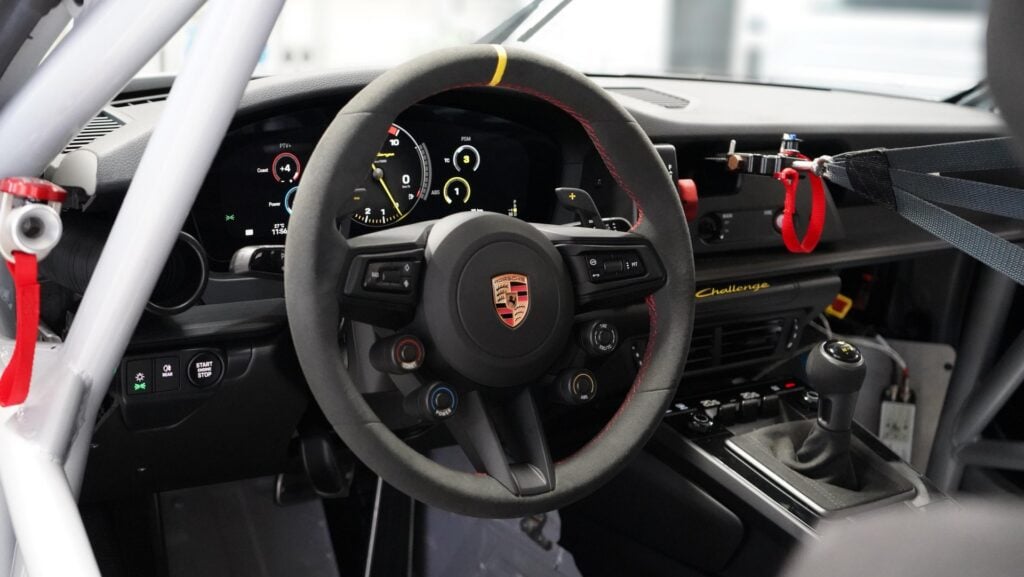
This is where the Challenge makes the most sense to me as a product. A driver moving out of a road-going GT3 has enough to learn already: slick tires, race starts, traffic, flags, setup changes, data review, pit procedure, tire temperatures and the reality that a minor mistake can produce an invoice. Familiar controls reduce cognitive load.
Porsche follows the same logic with the wheels. The Challenge uses 18-inch racing wheels with a conventional five-bolt mounting pattern instead of the center-lock arrangement found on more specialized Porsche racers. Its steel brake discs measure 380 millimeters at both ends. The anti-roll bar has three positions, and the dampers use motorsport-specific tuning.
These choices are not glamorous, but customer racing is won or lost in boring details. Hardware that is easier to source, service and replace can keep a team running. A slightly simpler wheel change or a less exotic component can matter more over a season than a specification-sheet bragging right.
You may also enjoy: Race Car Tech Hiding in Your Daily Driver
This is still a real race car, not a GT3 track package
The closer you look inside, the less the Challenge resembles something you would collect from a Porsche Center and drive home.
Carpets, trim and sound insulation are gone. A welded roll cage becomes part of the structure. The driver gets an adjustable racing bucket seat and six-point harness. There is a fire-extinguishing system and a 29-gallon, 110-liter FIA FT3 fuel cell. Porsche also fits an FIA-certified rain light.
Those FIA references are more than alphabet soup. The FIA motorsport safety regulations and FIA homologation lists provide the standards framework behind approved seats, harnesses, fuel-tank materials and other competition equipment. The FIA also publishes specific guidance for approved race-car rain lights, while Appendix J contains technical and safety regulations used across many forms of international motorsport.
The body dimensions and major exterior pieces remain the same as the GT3, but the details are pure paddock. Three integrated air jacks allow the car to be raised quickly for service. The hood uses quick-release fasteners. The rear wing has four mechanical adjustment positions.
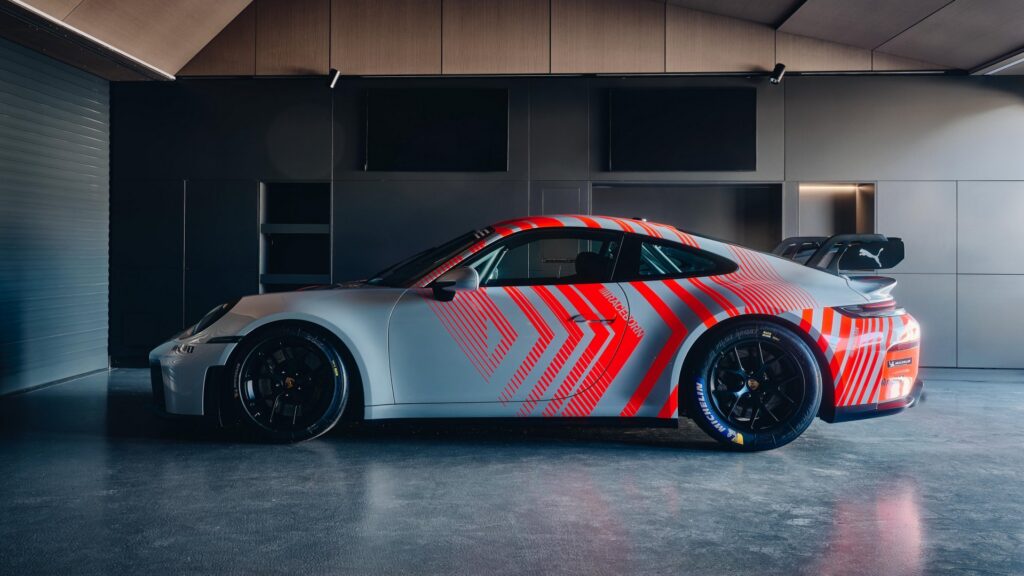
Most importantly, Porsche states plainly that the Challenge is not street legal. That matters because the car’s value cannot be justified the way someone justifies an expensive road-going GT3. You cannot talk about weekend usability, depreciation protection or the pleasure of taking the long way home. The return is track time, competition and driver development.
For the right customer, that is enough. For everyone else, this is a reminder that a race car is not an upgraded sports car. It is a piece of sporting equipment.
You may also enjoy: Watch This: Ford Mustang GTD Rips Through the Nürburgring in 6:52—Here’s What Makes It the Fastest American Muscle Car Ever
Porsche has turned the entire racing ladder into a 911 story
The Challenge also marks the end of a particularly useful Porsche era. Its predecessors were the Cayman GT4 Clubsport and 718 Cayman GT4 RS Clubsport, cars that gave customers a relatively approachable route into factory-built Porsche racing machinery.
Now the 911 takes over that job. Porsche’s current customer-racing hierarchy starts with the Challenge, moves to the GT4 R for international GT4 competition, then to the 911 Cup for faster one-make series, and finally to the GT3 R for top-level GT3 racing.
That consolidation is commercially smart. A customer who begins in a Challenge can progress while staying inside a familiar 911 ecosystem. Teams can build knowledge around a single basic vehicle family. Porsche can create a clearer connection between the road-going GT3 customer, the club racer and the professional customer-racing ladder.
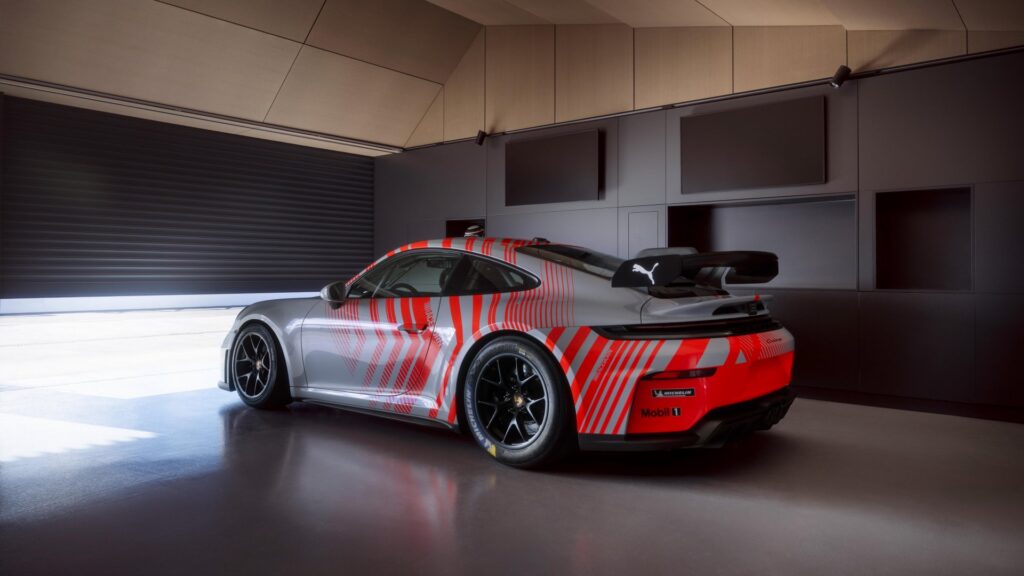
It also strengthens the road-car story. Porsche has spent decades telling customers that racing improves its street cars. The Challenge turns that message around. Here, production GT3 technology is being used to make the race car less daunting.
Porsche Motorsport North America says full-season competitors in its one-make championships will have priority for early allocations. In the United States, the Challenge is intended for Porsche Sprint and Endurance Challenge North America by Yokohama, Porsche Sprint Trophy Porsche Club of America by Yokohama, and the newly announced Porsche Sprint Trophy Porsche Owners Club, subject to each series’ regulations. Later in 2027, Porsche expects availability to expand to private track-day, testing and driver-development customers.
That order of priority is encouraging. The first cars are meant to race. In an era when limited performance models can become garage ornaments before their tires have even been heat-cycled, Porsche is signaling that the Challenge should earn its name on a circuit.
You may also enjoy: Why IMSA Racing Is America’s Best Racing Show
Who should actually consider one?
The obvious buyer is not simply a wealthy Porsche enthusiast. It is a GT3 owner who already uses the car hard enough to understand what repeated track use demands and who wants to move from laps to competition.
That buyer should look at the Challenge for three reasons. First, familiarity: engine character, PDK logic, steering-wheel concepts and electronic aids make the transition less abrupt. Second, support: the car sits inside Porsche Motorsport’s organized one-make structure rather than existing as an orphaned track special. Third, cost control: Porsche has deliberately used production-derived components and less exotic service items where it believes they can reduce ownership expense.
The reasons not to buy one are equally clear. It cannot be driven on public roads. It does not eliminate the need for transport, storage, coaching, crew or consumables. The launch material does not tell us what a full season will actually cost. And if a driver already has the pace, team infrastructure and ambition for open GT4 competition, the GT4 R may be the more appropriate tool despite its much higher purchase price.
You may also enjoy: 2026 Rolex 24 at Daytona: How the Penske Porsche #7 Won
The most revealing specification, then, is not 508 horsepower or 9,000 rpm. It is the amount of road-car thinking Porsche deliberately left in place.
The Porsche 911 Challenge is a bridge. On one side is the GT3 owner who knows track days, instructors and lap timers. On the other is a genuine race program with rules, competitors and consequences. Porsche has built the bridge out of familiar hardware, then added the safety and serviceability needed to survive the trip.
At $275,000, nobody should call it cheap. But in the strange economy of customer racing, value is not measured by whether a car costs less than a house. It is measured by whether the machine makes it easier to spend your money on driving instead of complexity. That is the promise the Challenge has to prove when the first cars reach North American grids in 2027.