Matte Black Ferrari Enzo: What Collectors Are Buying
By Robert R Guio
The Matte Black Ferrari Enzo is a one-off factory specification, but restoration, provenance, and import status matter as much as color.
The Matte Black Ferrari Enzo Is About Specification
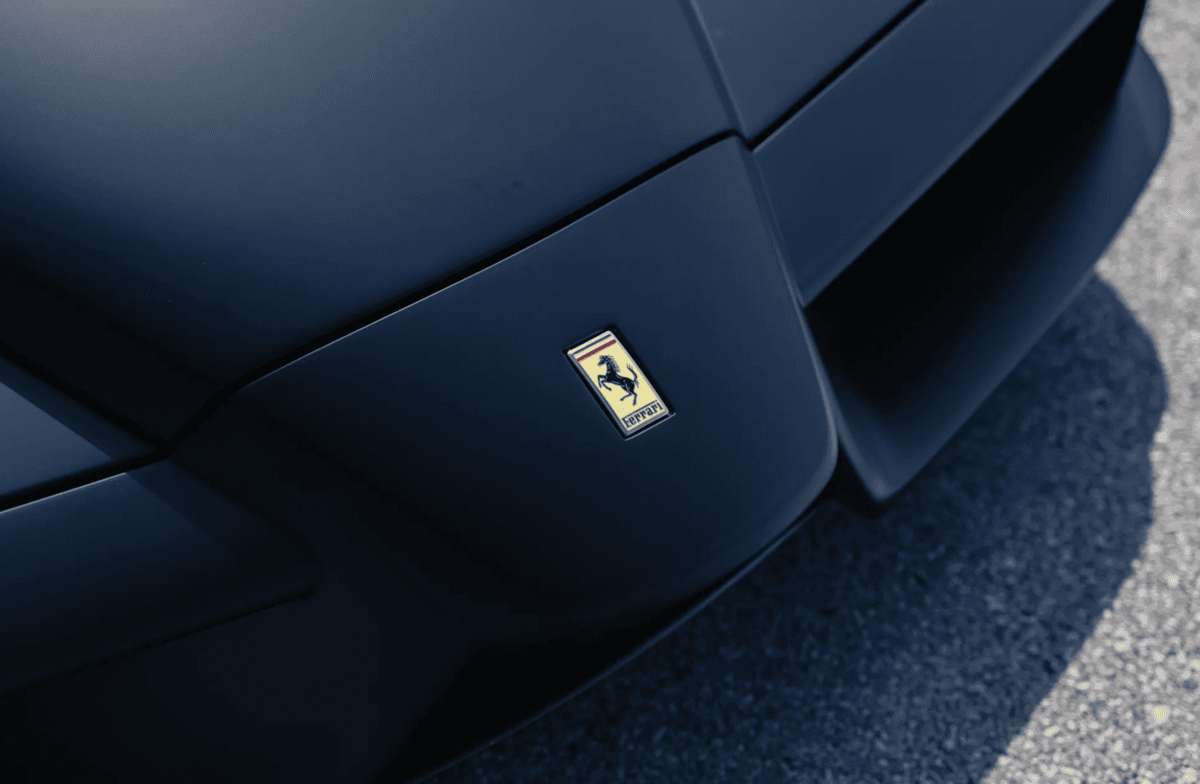
There is one sentence that can make a collector-car listing sound almost impossibly simple: this is the only Ferrari Enzo that left the factory in matte black. The sentence is accurate, according to RM Sotheby’s current catalog, but the interesting part begins after the word “only.”
Chassis ZFFCZ56B000136069 was commissioned for Brunei royalty in Nero Opaco and completed in 2004. The exterior choice was paired with a black leather cabin, red gauges and large seats. The car was delivered to London, and RM Sotheby’s says it was based at the family’s residence there before later moving to the Asia-Pacific region.
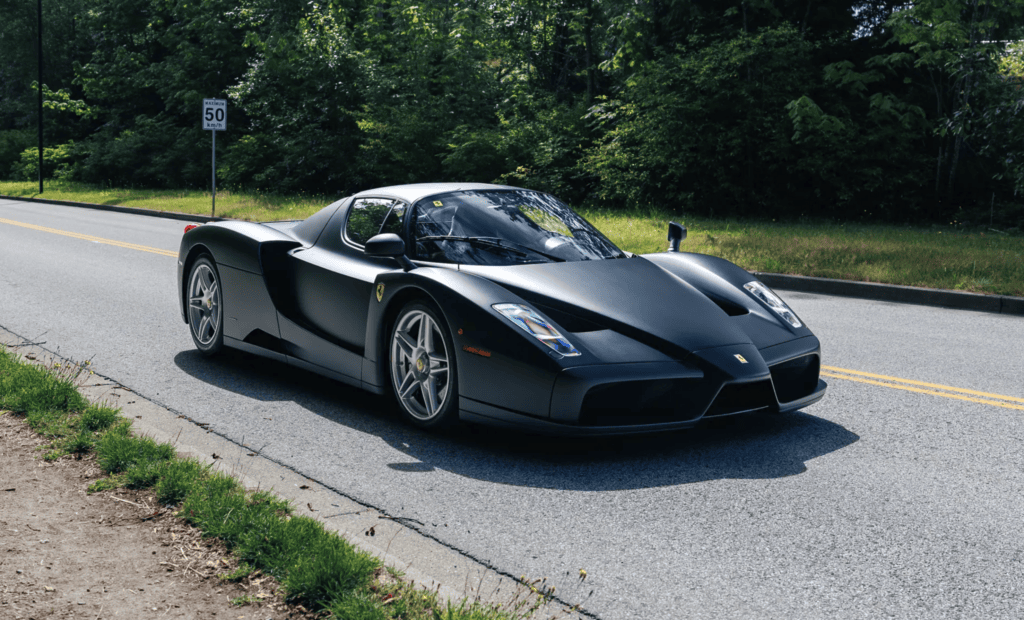
That specification matters because matte paint had not yet become an easy way to make an expensive car look more expensive. Today, a buyer can find factory matte finishes across a surprisingly broad slice of the market. In 2004, putting Ferrari’s flagship V12 supercar in a non-gloss black finish was genuinely abnormal. The provenance and the paint therefore reinforce each other: a famously adventurous royal collection requested an unconventional finish at exactly the moment when Ferrari was allowing a little more individual expression on its top road car.
Its recorded distance is similarly significant. RM Sotheby’s lists 5,763 kilometers at cataloging, which converts to about 3,581 miles. That is worth spelling out because several retellings of the story have turned the kilometer figure into miles. At this end of the market, a unit error can materially change how readers understand a car.

The auction opens for bids Sept. 23 at 2 p.m. EDT and begins closing Sept. 30 at 2 p.m. EDT. RM has withheld a public estimate. More unusually, the company’s Sealed program keeps the final transaction price confidential, so the sale may influence private expectations without supplying another public auction result.
You may also enjoy: Ferrari Enzo Drives Broad Arrow to a $97.4M Record
Original Identity Does Not Mean Untouched Paint
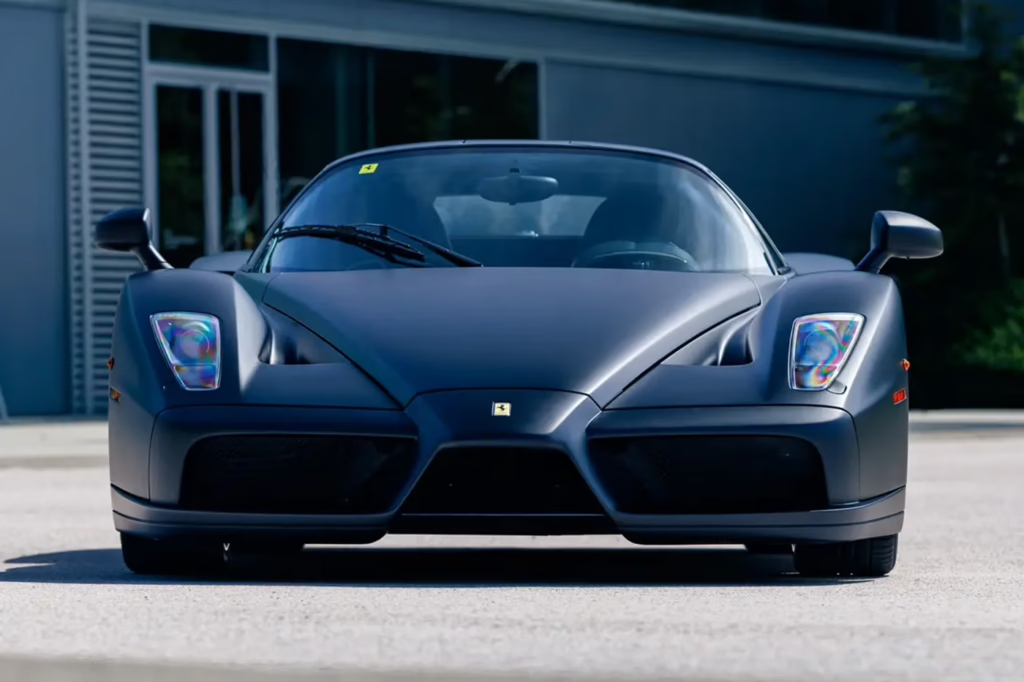
The detail I would put near the top of any serious collector conversation is the 2022 cosmetic restoration. This Enzo is unique because Ferrari built it in Nero Opaco, not because the paint on the body today has remained untouched since 2004.
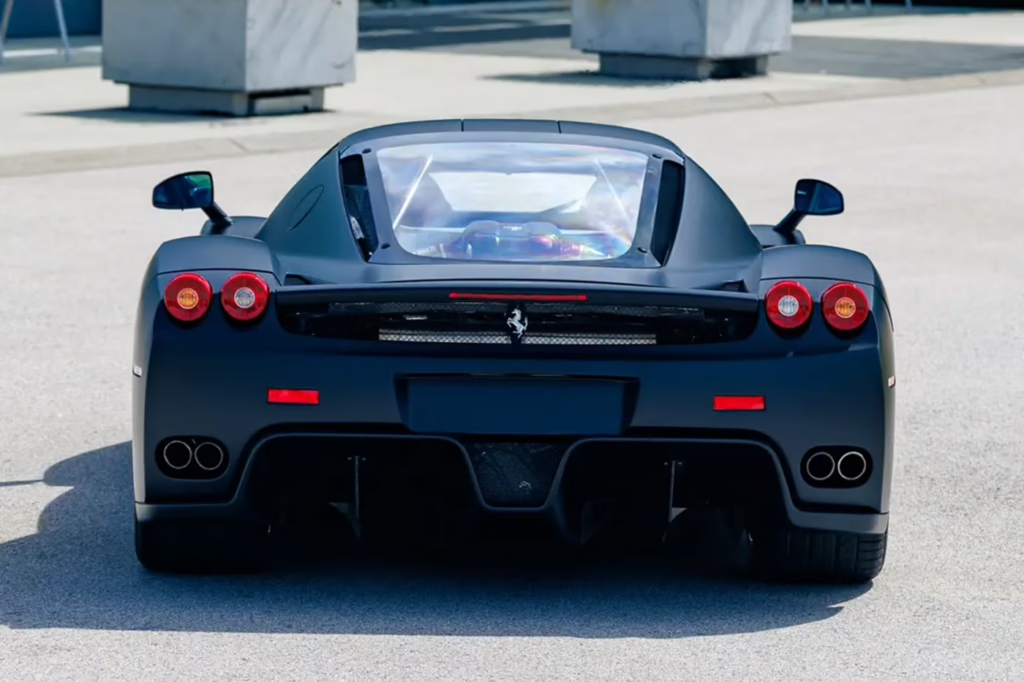
RM Sotheby’s says the car went to Carrozzeria Zanasi in 2022, where invoices exceeded €110,000. Work included new front and rear lighting, replacement of the rear bonnet glass, attention to the familiar sticky interior switches and a complete repaint in the original matte-black color. That distinction should not be treated as a flaw hidden in the fine print. It is disclosed history, and sophisticated buyers will decide how they value the combination of factory specification and later refinishing.
Ferrari Classiche certification followed in 2022. RM states that the Enzo still carries its original chassis, engine, gearbox and bodywork. Ferrari’s own explanation of Classiche certification is useful here: the process compares a car with factory records and checks major assemblies and components against its original specification. Certification is therefore evidence about authenticity and configuration; it should not be misread as a claim that every cosmetic surface is factory-applied and untouched.
This is why documentation becomes so valuable once a modern supercar crosses into the top tier of collecting. A one-off paint specification, a factory archive, restoration invoices, matching major components and a known ownership chain tell different parts of the same story. The best cars do not simply have a dramatic headline. They have paperwork that lets a buyer test the headline.

The maintenance file also tells us that low mileage did not mean zero needs. At 5,742 kilometers in August 2024, the recorded work at Ron Tonkin Gran Turismo included a replacement clutch, two fuel pumps and a left-side valve-cover gasket. The listing also records service under current ownership by Ferrari of Vancouver. Those are exactly the sorts of details a buyer should want to see on a 22-year-old exotic that has spent much of its life being preserved rather than commuting.
You may also enjoy: HRC Heritage Racing Program Sells More Than Old Cars
Why the Enzo Has Become an Eight-Figure Car
The matte car is arriving at auction in a market that has become dramatically more enthusiastic about the Enzo. That enthusiasm is easier to understand if you stop treating the car as an obsolete performance number and start treating it as a technological marker.
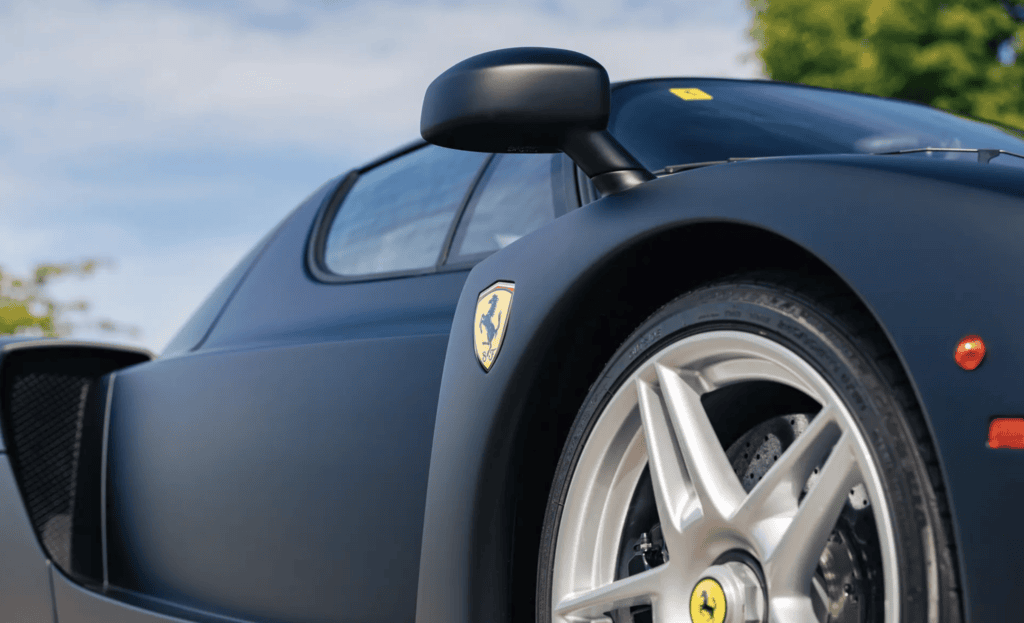
Ferrari’s official history says the Enzo was unveiled at the Paris Motor Show in October 2002. The company originally made 399 cars, then produced a 400th in 2005 for Pope John Paul II; that car was subsequently auctioned for charity. The Enzo used a carbon-fiber structure, carbon-ceramic brakes, pushrod suspension and electronics informed by Ferrari’s Formula 1 work.
Its 6.0-liter naturally aspirated V12 develops 660 metric horsepower, roughly 651 hp in SAE terms, and drives through a six-speed electrohydraulic transmission. Ferrari quoted more than 350 km/h for top speed and 3.65 seconds from 0 to 100 km/h. Those figures were enormous in the early 2000s. Today, the fascination is less about whether an Enzo can beat a current EV to 60 mph and more about the particular engineering moment it preserves: naturally aspirated V12 power before Ferrari’s halo-car lineage moved to hybrid assistance with LaFerrari.
Recent money confirms that collectors are assigning serious value to that moment. A low-mile 2003 Enzo brought $9.3 million at RM Sotheby’s Arizona sale in January. At The Quail Auction in August, a Nero D.S. 2003 Enzo sold for $10.675 million including premium. Earlier in 2026, the Bachman Collection Enzo sold at Mecum Kissimmee for $17.875 million including buyer’s premium, establishing an extraordinary high-water mark for the model.

Those numbers do not mean the Brunei car “should” sell for a particular amount. Its one-off color can add desirability, while its repaint may be interpreted differently by different collectors. Mileage, documentation, mechanical preparation, taxes, import complexity and the anonymity of a sealed process all change the equation. What the comparables do establish is that the market is now willing to put exceptional Enzos firmly into eight-figure territory.
You may also enjoy: Inside the Rolls-Royce Scarcity Strategy
What a U.S. Buyer Needs to Solve Before Bidding
The most practical part of this story is hidden in the auction addendum. The Enzo is physically in Blenheim, Ontario, but it is being sold under a temporary Canadian import bond and carries New Zealand registration. A U.S. buyer cannot responsibly treat the winning bid as the complete acquisition cost.
RM specifically warns that the car is older than 21 years but younger than 25 and will require federalization for U.S. import and registration. The age distinction exists because the federal safety and emissions systems do not use exactly the same threshold. The National Highway Traffic Safety Administration’s import FAQ explains the 25-year treatment for vehicles that were not originally manufactured to comply with applicable U.S. safety standards. NHTSA also maintains a list of Registered Importers approved to handle eligible nonconforming vehicles.
The emissions side needs separate attention. The Environmental Protection Agency’s vehicle-import guidance explains its rules and exemptions, including the framework that can apply to vehicles more than 21 years old when the engine is in its original configuration. U.S. Customs and Border Protection also publishes guidance for importing classic and antique vehicles, including the forms and entry requirements that can apply at the border.
None of that should be interpreted as a do-it-yourself checklist for a multimillion-dollar Ferrari. It is a reason to engage a qualified importer, customs specialist and appropriate legal or tax advisers before bidding. The car’s auction terms place duties, tariffs, taxes, registration costs and related charges on the buyer. On an acquisition of this size, a mistake in import planning can be considerably more expensive than flying an expert to inspect the car first.
There is also a timing wrinkle. Eventually, this Enzo will reach the 25-year safety threshold, but a prospective owner bidding in September 2026 has to deal with the rules that apply when the car is imported, not the rules that will become easier later. Waiting has an economic value; so does taking possession sooner. That calculation belongs in the bid.
You may also enjoy: Lamborghini Miura Tribute: Only 99 Will Ever Exist
My Collector Take: Rarity Needs Documentation
The easiest way to misunderstand this Enzo is to reduce it to three words: one-of-one paint. That phrase gets attention, but it is not the entire value proposition and it should not be.
A strong collectible has layers that survive inspection. Here, the unusual specification can be traced to Ferrari production. The royal-family connection is part of the documented history presented by the auction house. Ferrari Classiche certification supports the identity of the major components. The cosmetic restoration is disclosed rather than disguised. Mechanical work is recorded. The mileage is low and stated in kilometers. Even the import complication is plainly identified before the sale.
The counterweight is equally important. This is a repainted car, regardless of how faithfully the work returned it to its factory color. The estimate is private. The sale price is expected to remain private. A U.S. purchaser faces additional compliance and import work. No amount of social-media excitement should make those facts disappear.
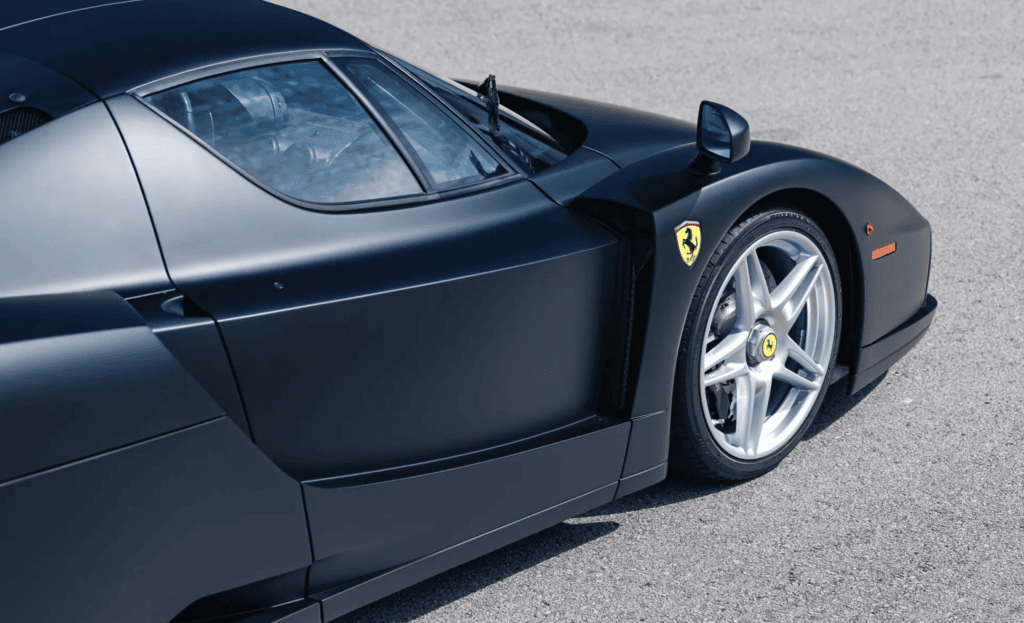
That tension is exactly why the car is interesting. Collector markets increasingly reward rarity, but rarity can be manufactured through marketing if buyers are not careful. This Ferrari’s strongest argument is different: the unusual choice happened when the car was new. The current scarcity story begins on its build specification rather than on a retrospective “limited edition” badge added years later.
For anyone watching the broader luxury market, the Enzo also shows why customization can become provenance. A color choice that may have seemed eccentric in 2004 is now inseparable from the car’s identity. Ferrari has since developed far more formal personalization operations, just as other luxury manufacturers have invested heavily in bespoke commissions. The collector lesson is that the most valuable personalization tends to be the kind that is both genuinely unusual and thoroughly documented.
You may also enjoy: Ferrari Luce Reveal Divides Fans: What the Bold New Look Means for the Brand
For this sale, the best question is not simply how much someone will pay for a matte-black Enzo. It is what combination of factory rarity, famous provenance, restoration transparency and mechanical history a buyer is willing to reward when public market results for Enzos are already running into eight figures.
We may not receive a public answer in dollars because RM Sotheby’s Sealed transactions are designed to remain confidential. We do, however, have a useful case study in how serious collectors should read a modern-supercar auction listing. Start with the headline, then verify the specification. Separate factory identity from present cosmetic condition. Read the service history. Price the paperwork and import burden. Finally, decide whether the story attached to the car is supported strongly enough to remain valuable after the excitement of the auction has gone.