Hyundai vs Tesla: Who Can Make Robots Useful?
Hyundai vs Tesla: Who Can Make Robots Useful?
Hyundai vs Tesla is becoming a robot race, with Atlas and Optimus facing the same hard question: can humanoids earn their place at work?
Hyundai vs Tesla needs a better scoreboard
A humanoid robot earns its place in a car factory by getting work done repeatedly. A few impressive movements will not settle the Hyundai vs Tesla contest. For drivers, the interesting question is whether these machines eventually improve manufacturing without adding costly complexity. For workers, it is what changes around their jobs.
You may also enjoy: Hyundai Robots Could Turn Dealers Into Tech Stores
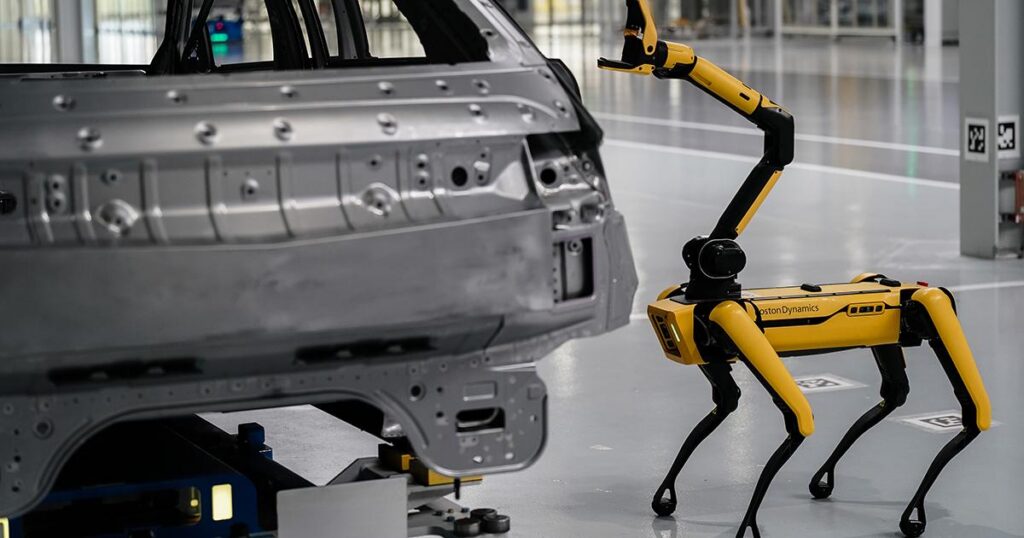
Hyundai Motor Group is pursuing that opportunity through Boston Dynamics and Atlas. Tesla is developing Optimus as part of its broader artificial-intelligence strategy. This is an assessment of their published plans and capabilities, not a new announcement from the past 48 hours or a hands-on comparison of the robots.
The group behind Hyundai, Kia and Genesis has an obvious testing ground in automotive production. Tesla does too. My judgment is that factory usefulness provides a more revealing early comparison than promises about a robot’s eventual life inside somebody’s home.
You may also enjoy this video:
Hyundai has named the first job
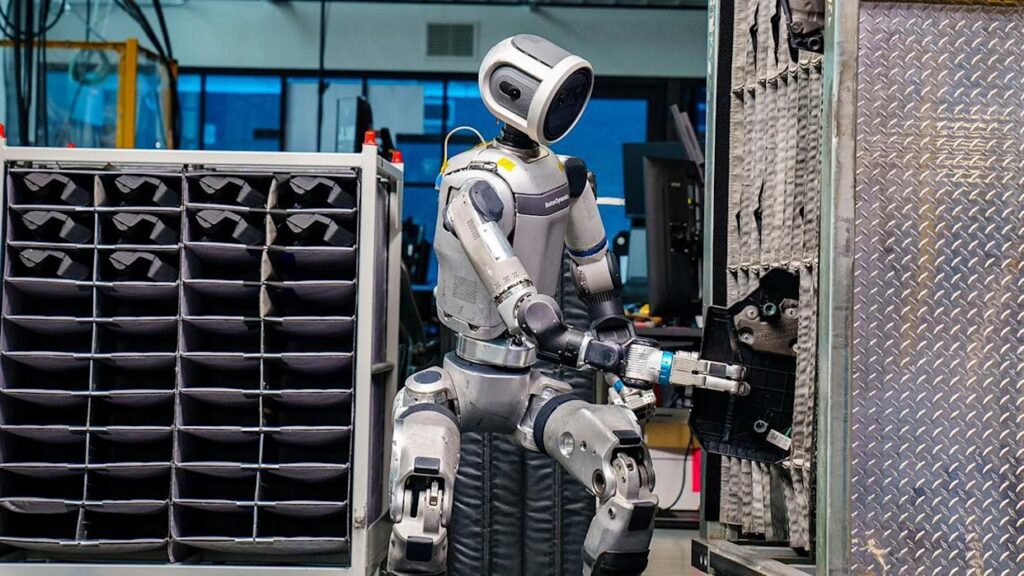
Hyundai’s January 2026 roadmap set out parts sequencing at its Georgia Metaplant beginning in 2028, with component assembly targeted for 2030. Its July statement repeated those dates while making deployment conditional on validation, readiness and business requirements. Sequencing means organizing the correct parts for the work that follows.
You may also enjoy: Hyundai AI Data Center: What Will Drivers Actually Get?
That is a task with a measurable outcome. A robot either delivers the right item in the right order, within the required time, or it creates another problem for the production line. The published dates are targets. They do not establish that Atlas already performs those duties at commercial scale.
Hyundai’s July update also described shareholders pursuing SoftBank’s remaining stake in Boston Dynamics through existing agreements. It would be inaccurate to convert a contemplated transaction into a claim of completed ownership. The strategic direction is clear; the statement’s approval conditions still matter.
Tesla is building toward a broader machine
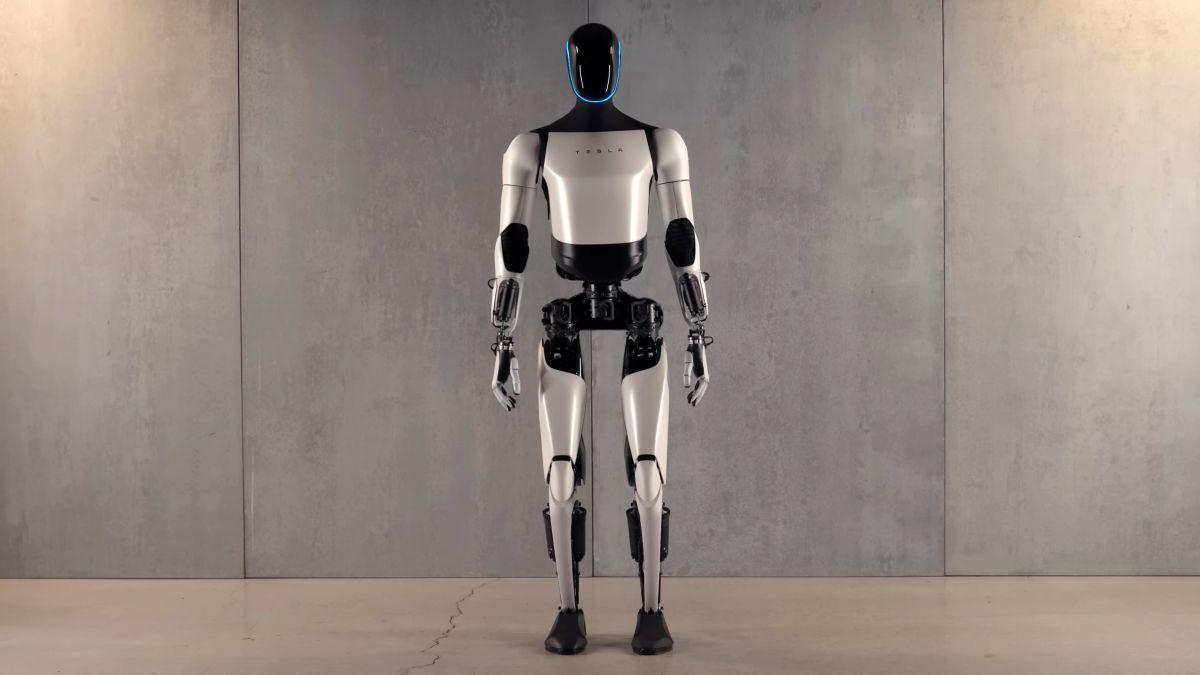
Tesla describes Optimus as a general-purpose humanoid intended for unsafe, repetitive or tedious tasks. Its second-quarter 2026 SEC filing says it is preparing and investing for large-scale production. That filing supports a serious development effort, but it does not supply a directly comparable count of productive factory hours for Optimus and Atlas.
You may also enjoy: Genesis GV90 Puts Hyundai’s Smart Factory to the Test
The attraction of a general-purpose robot is flexibility. A machine that can learn different jobs could serve more customers than equipment built around one narrowly defined operation. The difficulty is proving that breadth without making deployment, supervision and maintenance more expensive.
NIST’s voluntary AI risk management guidance offers a useful discipline: evaluate the system in its intended setting. A successful demonstration does not establish performance across every object, layout, lighting condition or human interaction a factory may present.
The battery swap matters more than a dance
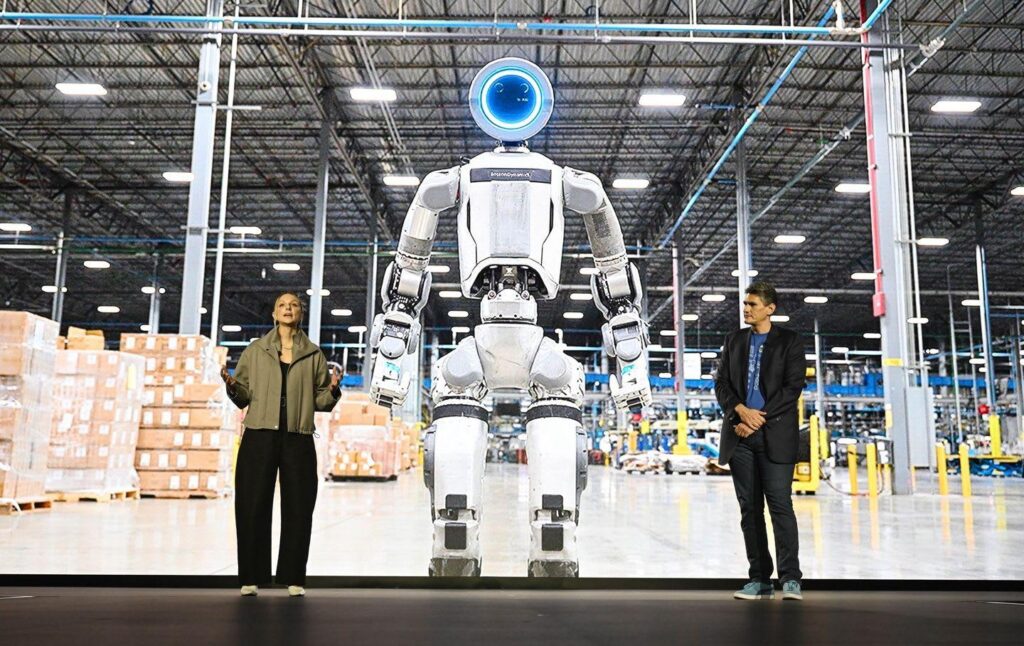
Boston Dynamics publishes a four-hour battery-life figure for Atlas, along with autonomous battery swapping and integration with factory information systems through Orbit. Those are company specifications, rather than results from a Test Miles endurance test. Still, they address questions a production manager actually needs answered.
You may also enjoy: Hyundai Profit Plan: Will Buyers Share the Savings?
A battery change can determine whether a robot remains available through a shift. Software integration can determine whether it knows which part comes next. Service access can determine how long a stopped machine stays stopped. Useful engineering often looks less dramatic than the clip that reaches social media.
Humanoid form has a plausible advantage where workstations and access routes were designed around people. That does not make it the cheapest solution for every task. Fixed equipment, conveyors or other mobile machines may be a better fit when the job does not require legs and hands.
A shared workplace needs more than confidence
OSHA’s discussion of robot hazards is a reminder that an adaptable machine still operates around vulnerable people. A factory needs to understand movement, reach, loads and failure behavior before deciding how workers and robots share space.
You may also enjoy: Hyundai Robotaxis: Why Waymo and Motional Both Matter
Appropriate machine guarding and other safeguards depend on the application. Servicing also brings hazardous energy into the discussion. Calling a robot collaborative does not by itself answer how a technician safely repairs it.
Connected fleets add another responsibility. Access controls, updates and incident response are part of cybersecurity management, not optional finishing touches. One centrally distributed skill update might improve a fleet; an inadequately controlled change could also spread a mistake.
What buyers and workers should watch next
Neither company has supplied, in the materials examined here, enough comparable operating data to name an overall winner. Watch for completed deployments, correct-task rates, human interventions, maintenance time and cost per successful operation. Those measures would make the comparison much more meaningful.
For car shoppers, a more efficient plant does not guarantee a lower sticker price. A manufacturer can use any saving to improve margins, absorb other costs or support new investment. Quality improvements also need evidence from production and ownership, rather than an assumption that greater automation makes every vehicle better. For drivers choosing their next car, well-fitted floor mats are a simple way to help protect its carpet. Shop the OEDRO Official Store or OEDRO on Amazon; use code NIKM20 at the official store. Test Miles may earn a commission from purchases through these links.
Employees deserve equally concrete answers about training, staffing and supervision. A plan to reduce physically demanding work should explain how people transition into the changed operation. The benefits cannot be assessed solely from a machine’s lifting capacity.
Hyundai currently offers the clearer published description of an initial Atlas job and deployment pathway. Tesla is pursuing a broader Optimus ambition. That is a comparison of strategy, not a verdict on robot intelligence. The next useful chapter will arrive when the machines can be judged by an ordinary day’s work.