Hyundai Profit Plan: Will Buyers Share the Savings?
The Hyundai profit plan targets margins above 9% by 2030, but shoppers need to know whether lower costs will improve prices or just profits.
SEOUL, South Korea — Hyundai’s most revealing Investor Day number may not have been 58 North American launches or a 600-mile electric vehicle. It was three percentage points: the amount Hyundai says it can remove from its cost-of-sales ratio by 2030.
I was in the room as Hyundai Motor Company laid out the plan. The company wants a consolidated operating profit margin above 9 percent, up from its earlier 8-to-9-percent target. That sounds like a shareholder story, yet it reaches directly into the vehicles customers will buy: their materials, powertrains, factories, option packages and prices.
The essential consumer question is wonderfully impolite. If Hyundai makes each car cheaper to develop and build, how much of that saving reaches the driveway?
you may also like this Hyundai video:
The Hyundai profit plan has three cost levers
Hyundai assigns 1.5 percentage points of its proposed saving to innovation across the vehicle lifecycle, one point to lower material expense and half a point to localization. In ordinary language: design cars more efficiently, pay less for what goes into them and build more of the vehicle near the customer.
Lifecycle savings can come from shared platforms, common electronics, fewer component variations and quicker development. Those choices are not automatically bad. One excellent switch used in several models is preferable to six mediocre switches ordered separately. Trouble begins when “simplification” means deleting a useful control or fitting a cheaper seat where owners touch the saving every day.
You may also enjoy: Hyundai Alexa Built-in: Useful or One Assistant Too Many?
The material target deserves the closest inspection. Hyundai can reduce expense through engineering, purchasing scale and supplier negotiations, but a spreadsheet cannot measure whether a cabin feels less substantial after 40,000 miles. Buyers should compare production vehicles—not just specifications—and look for changes in trim durability, sound insulation, seat comfort and standard equipment.

Hybrids could fund the promise
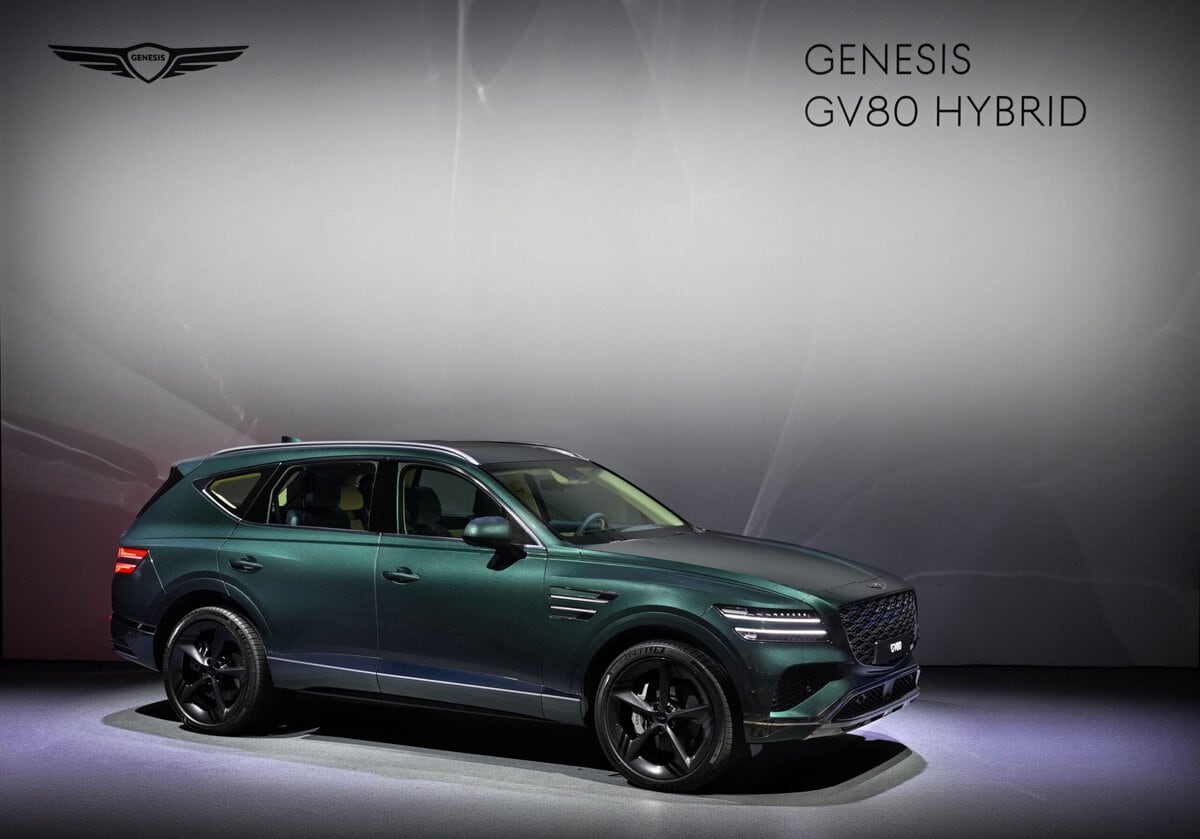
Hyundai links the margin goal to a much larger hybrid lineup, from compact cars through premium Genesis vehicles. A conventional hybrid adds motors and a battery without requiring the owner to plug in. That makes it an easier step for mainstream customers than a battery EV, particularly where home charging is unavailable.
North America is expected to receive more than 10 Hyundai hybrids by 2030, and the company wants them to reach 50 percent of its regional mix. If higher volume lowers component costs while customers continue paying a premium for fuel savings and stronger performance, hybrids can improve profit from both directions.
You may also enjoy: Genesis GV80 Hybrid: The Numbers Buyers Need
That premium still has to make sense. A buyer should compare the hybrid’s added price with realistic fuel savings, insurance and expected ownership period. Hyundai’s margin can improve on the day of sale while the owner’s household budget takes years to break even. The two calculations are related, but they are not the same calculation.
Genesis may contribute disproportionately because luxury vehicles can support richer pricing. Its first hybrid, new flagship and broader global retail network could lift revenue per vehicle. The risk is spending heavily to chase volume while customer service trails established luxury brands.

Local production may protect supply, not cut stickers
Hyundai attributes half a point of the cost reduction to localization. In North America, it is adding 500,000 units of capacity and targeting more than 80 percent local parts sourcing. The federal parts-content label gives shoppers a vehicle-specific way to check U.S. and Canadian content, final assembly, and the origin of the engine and transmission.
You may also enjoy: Move Over Jeep and Ford: Hyundai Plotting $26B Offensive
More local sourcing can shorten delivery routes, reduce currency risk and make production less vulnerable to an overseas disruption. It may improve availability before it lowers a window sticker. Factories also need high utilization to be economical; unused capacity remains expensive even when the building is close to the showroom.
Federal rules also use different tests for assembly and domestic content. The FTC says unqualified Made in USA claims require a product to be “all or virtually all” American-made, while automobiles carry their own statutory label. Hyundai’s corporate localization target should therefore be treated as a strategy, not a consumer label that applies automatically to every model.
You may also enjoy: Hyundai Santa Fe EREV: What 600 Miles Really Means

Shareholders already have a clearer promise
Hyundai reported a 5.6-percent operating margin for the first half of 2026 and is maintaining full-year guidance of 6.3 to 7.3 percent. Reaching more than 9 percent is a substantial climb, especially while the company funds factories, batteries, software, autonomous vehicles and more than 100 global launches and refreshes.
Investors have defined commitments: a total payout ratio of at least 35 percent, a minimum annual dividend of 10,000 won per share and quarterly payments of 2,500 won. Hyundai also says it will cancel most treasury shares, except those approved for employee compensation.
You may also enjoy: Hyundai Robots Could Turn Dealers Into Tech Stores
Customers have no matching promise of lower transaction prices. Savings may instead fund better warranties, technology, incentives or protection against commodity and tariff shocks. Those can all create value, but Hyundai should make the trade visible rather than asking buyers to admire a corporate percentage.
The verdict will arrive one model at a time. Watch whether redesigns hold their materials and standard features, whether hybrid premiums shrink, and whether locally built vehicles become easier to find. The fuel-economy label will help test efficiency claims; the window sticker will reveal who receives the cost saving.
The Hyundai profit plan is disciplined and plausible. It could finance better products while keeping prices competitive. It could also produce excellent shareholder returns while drivers discover that the least expensive component is the one they now touch every day. Above 9 percent is Hyundai’s target. Preserving value must be the buyer’s.