Move Over Jeep and Ford: Hyundai Plotting $26B Offensive
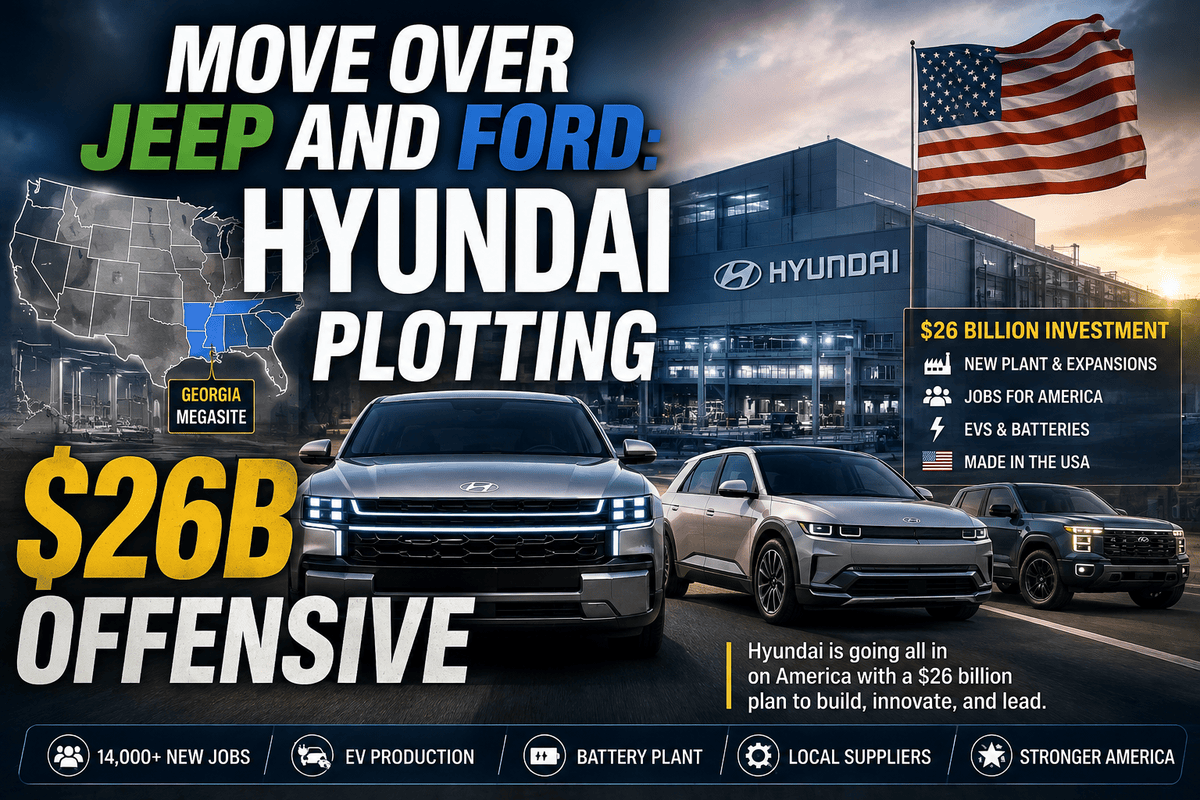
Move Over Jeep and Ford: Hyundai Plotting $26B Offensive with new rugged SUVs and body-on-frame trucks aimed at American buyers.
Forty Years of Evolution Reaches a New Horizon
Forty years after arriving in the United States with a budget-minded hatchback, Hyundai is preparing its most ambitious strategic expansion in American automotive history. Backed by a staggering $26 billion capital injection, the South Korean automaker is moving beyond mainstream sedans and family crossovers to target the most lucrative, fiercely guarded segment in the domestic market: heavy-duty off-road SUVs and body-on-frame pickup trucks.
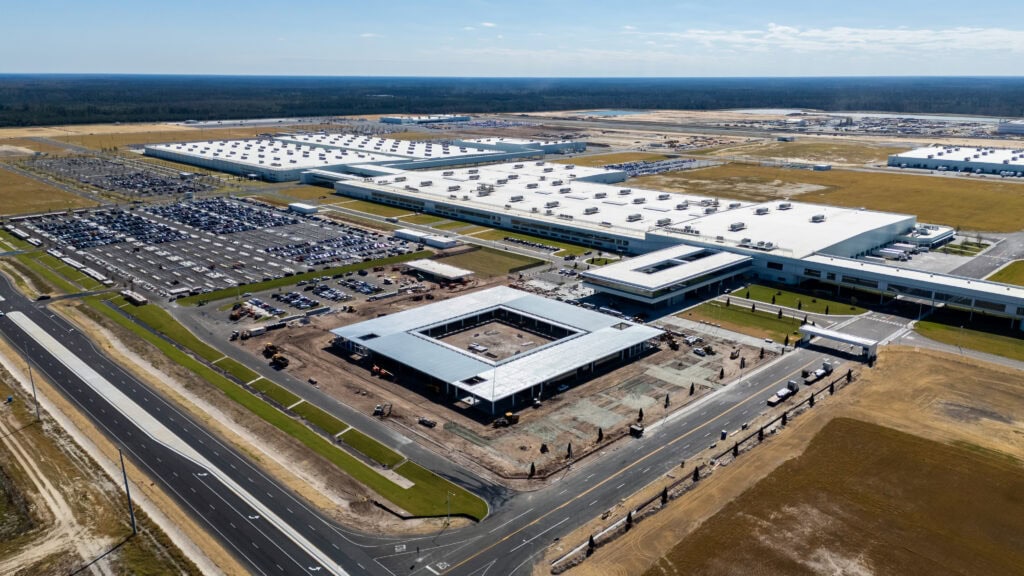
This product push represents a fundamental shift in how Hyundai views its future in North America. Rather than competing solely on price or consumer technology, the brand is building dedicated hardware designed to take on iconic off-road staples like the Ford Bronco and Jeep Wrangler. The movement signals a mature manufacturer confident enough to enter the rugged utility space where brand loyalty runs deep and mechanical durability is paramount.
You may also enjoy: Most American-Made Cars You Want
The Shift Toward Authentic Off-Road Capability
For decades, Hyundai built its U.S. reputation through steady value, expanding warranties, and sharp crossover styling. While models like the Santa Cruz demonstrated consumer appetite for lifestyle vehicles, that unibody pickup remains closer to a comfortable car than a heavy-duty workhorse. The upcoming product offensive changes that structural approach by introducing true body-on-frame construction.
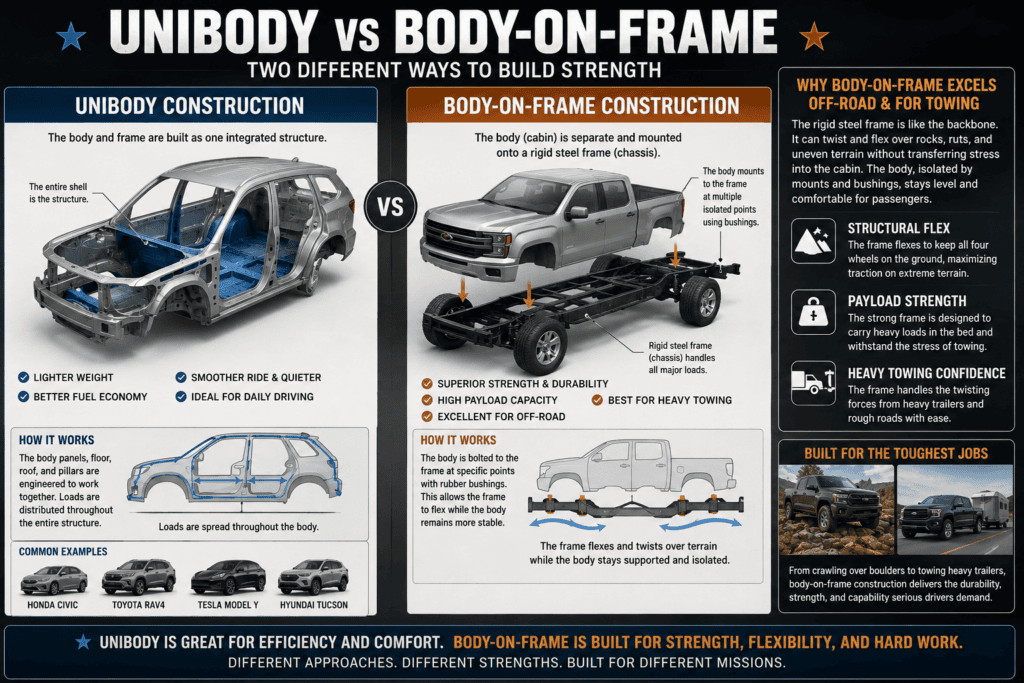
A unibody vehicle combines the body and frame into a single structure to maximize interior space and fuel economy. In contrast, body-on-frame construction mounts a separate cabin onto a rigid steel chassis, providing the structural flex and payload strength required for severe off-road travel and heavy towing.
You may also enjoy: Vehicle Safety Recalls: Do Not Drive
Concept Reality and Domestic Assembly Plans
Design direction for the new off-roader traces directly to the striking Crater concept. Featuring a high beltline, substantial ground clearance, and massive tires, the concept established a visual language built around functional utility rather than urban sleekness. The production model inspired by this concept is planned for U.S. assembly around 2030, sharing its underlying frame with an upcoming body-on-frame pickup truck.
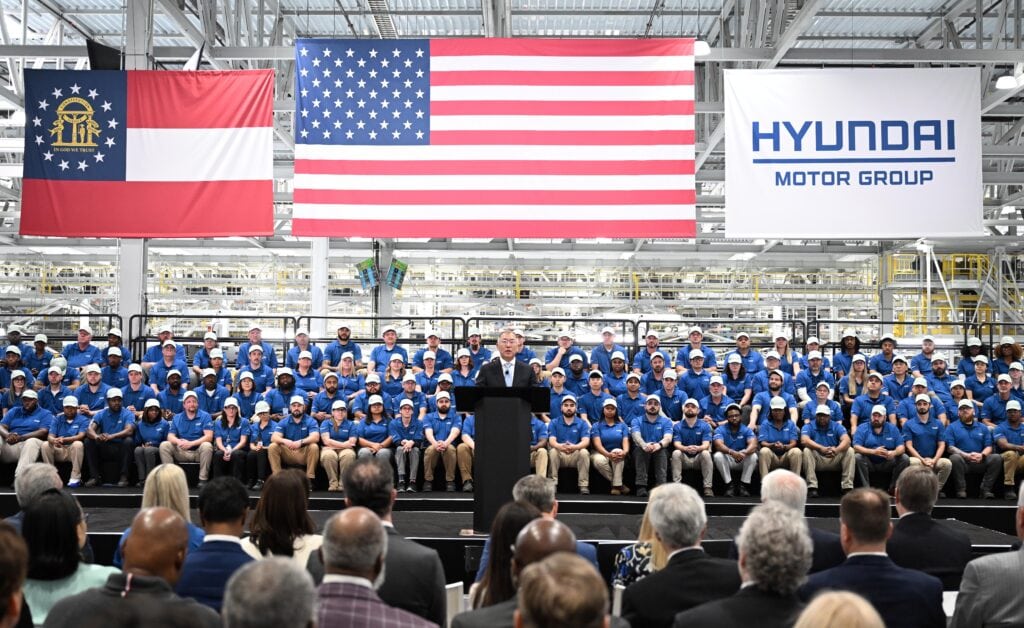
Building these utility vehicles within North America allows Hyundai to avoid heavy import tariffs while ensuring the product aligns with regional driving habits and federal standards overseen by the Environmental Protection Agency. Manufacturing locally also protects supply chains and strengthens dealer distribution across states where truck sales dominate total market share.
You may also enjoy: 5 New SUVs Under $25,000 That Are Actually Worth Buying
Why Detroit Should Watch South Korea Closely
Detroit automakers have long considered traditional truck and rugged SUV segments as protected strongholds. While foreign rivals have successfully captured compact sedan and crossover sales, true body-on-frame dominance has largely remained with domestic brands. Hyundai’s multi-billion-dollar investment directly challenges that dynamic by pairing established manufacturing efficiency with heavy-duty architecture.
The financial scale of this product push suggests Hyundai is not testing the waters with a single niche vehicle. Instead, the company is developing modular platforms capable of supporting multiple body styles and various powertrain options evaluated under strict safety frameworks from the U.S. Department of Transportation. As consumer preference continues leaning toward versatile, trail-capable utility vehicles, Hyundai’s entry adds aggressive competition to a market segment that has enjoyed high pricing power.
You may also enjoy: 2027 Kia Seltos Brings Big-SUV Ideas Below $25,000
Strategic Timing and Long-Term Market Impact
The timing of Hyundai’s expansion reflects a calculated transition period for the wider auto industry. As buyers weigh the practical realities of daily commuting alongside weekend utility, vehicle versatility has become a primary purchasing driver. Developing a dual-purpose platform capable of handling daily highway miles while delivering true trail capability gives Hyundai a broader market reach while adhering to safety mandates enforced by the National Highway Traffic Safety Administration.

When Hyundai first arrived in North America in 1986 with the modest Excel, few industry observers anticipated the company would eventually build world-class electric vehicles, luxury sedans, and heavy-duty trucks. This $26 billion investment confirms that Hyundai no longer views itself as an alternative choice, but rather as an industry leader ready to compete in every corner of the American driveway.
You may also enjoy: 2024 Subaru Outback Review: The Smart SUV Alternative