Rimac Nevera STEM Kit Lets You Build a Hypercar

The Rimac Nevera STEM kit lets you build a hypercar, drive it, and program its systems while learning practical engineering.
A full-size Rimac Nevera is the kind of machine most people experience through videos, auto-show ropes or a highly optimistic lottery ticket. The new Rimac Nevera STEM kit offers a more accessible route into the electric hypercar’s engineering, although it still requires patience, curiosity and a willingness to work through the instructions.
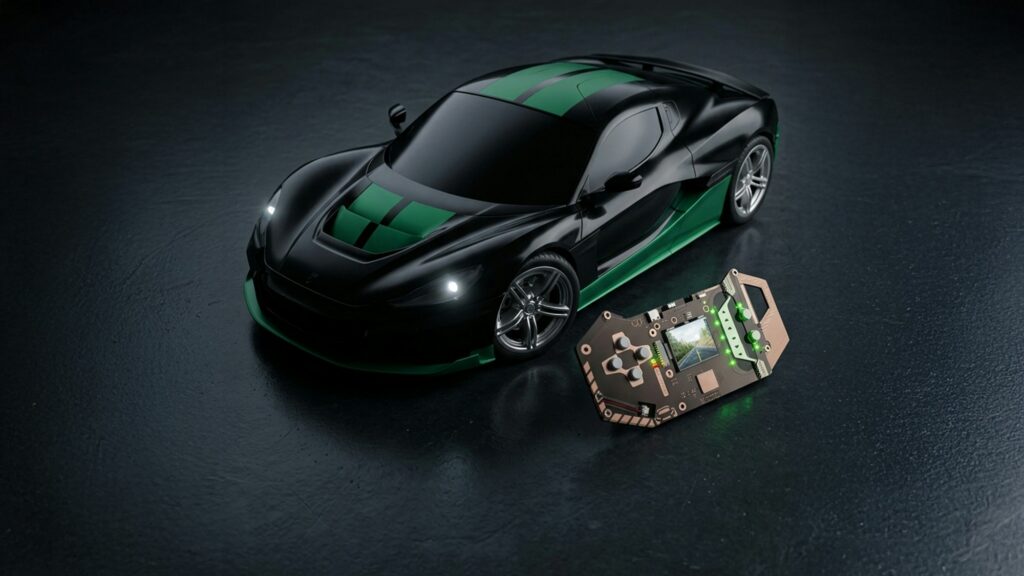
Created by Rimac Automobili and Croatian education-technology company CircuitMess, the functional 1:28-scale model is designed to be assembled from the chassis upward. Builders install the electric motors, wheels, tires, steering servo, LED headlights, battery hardware and control electronics needed to make the miniature Nevera move.
Once completed, the car can drive, steer and illuminate its headlights. It can also connect to a computer for programming, making the finished model an ongoing engineering project rather than another licensed collectible destined to gather dust.
Hyundai Fuels STEM for Future Auto Careers
You may also enjoy this Video:
A Tiny Nevera That Teaches Real Engineering
The most useful part of the kit is the way it exposes systems that are usually hidden. Installing motors before fitting the body helps builders see that an electric vehicle is a network of mechanical, electrical and software-controlled components.
CircuitMess says no soldering is required. The official kit listing includes the model body, vehicle circuit board, motors, steering servo, wheels, tires, battery holders, controller components, LED headlights, tools and accessories. A photo-based guide walks users through the assembly process.
That approach turns abstract ideas into visible results. Steering becomes a direct relationship between a controller input and servo movement. Lighting becomes software translated into an electrical response. Forward motion becomes the combined product of battery power, motor control and traction.
The kit is not a technical replica of every system found in a production Nevera. That would be impossible at this size and price. Its purpose is to make the basic relationships understandable.
GM Says Eyes-Off Driving Is Coming Soon

Programming Turns the Model Into More Than a Toy
The project continues after the final screw is tightened. Builders can use CircuitMess’s visual CircuitBlocks environment to create custom driving behavior and lighting sequences. More experienced users can work in C++, giving the kit room to become more challenging as their skills improve.
CircuitMess provides resources with additional build and coding material for its products. That makes the Nevera useful for different experience levels. A younger builder can concentrate on physical assembly and block-based programming, while an adult hobbyist can explore more advanced instructions.
The included Time Attack controller is also part of the lesson. It has a joystick, buttons and a Boost Mode feature. After building and programming the model, the owner gets the satisfying final step of driving it.
BMW’s Electric M3 Has to Prove It Has a Soul
Why Rimac Is the Right Hypercar for This Lesson
Rimac is an unusually appropriate subject for a hands-on engineering kit. The full-size Nevera uses four independent electric motors, one for each wheel, with software-controlled torque vectoring. The official Nevera specifications list 1,914 horsepower, a 120-kWh battery and a 0-to-60-mph time of 1.74 seconds with a one-foot rollout.
The small model does not recreate that performance, but it demonstrates the same broad relationship between hardware and software. Motors generate movement. A battery stores energy. Electronics distribute commands. Programming changes how the physical components respond.
That distinction matters as modern vehicles become increasingly software-driven. Traditional mechanical knowledge remains valuable, but understanding today’s cars also means understanding sensors, electronic control systems and code.
Why Adults Chase the 7-Eleven Hot Wheels GT-R

Rimac Nevera STEM Kit Price and Availability
CircuitMess’s U.S. storefront currently lists the limited-edition Rimac Nevera STEM kit as a $149 preorder, reduced from $199. The page still shows an estimated June 2026 shipping date. Because that date has passed, buyers should confirm current fulfillment timing before ordering.
At $149, this is not an inexpensive toy. It is easier to understand as a model car, remote-controlled vehicle, coding platform and introductory electronics course combined in one package.
The most interesting thing about this miniature Nevera is not simply that it resembles a famous electric hypercar. By the time it moves across the floor, the person holding the controller should understand a little more about why it moves at all.