Mercedes-AMG CLE 646 Spezialanfertigung Goes Full V8
By Robert R Guio
Mercedes-AMG CLE 646 Spezialanfertigung turns the CLE into a 637-hp rear-drive track car—and a revealing statement about AMG’s priorities.
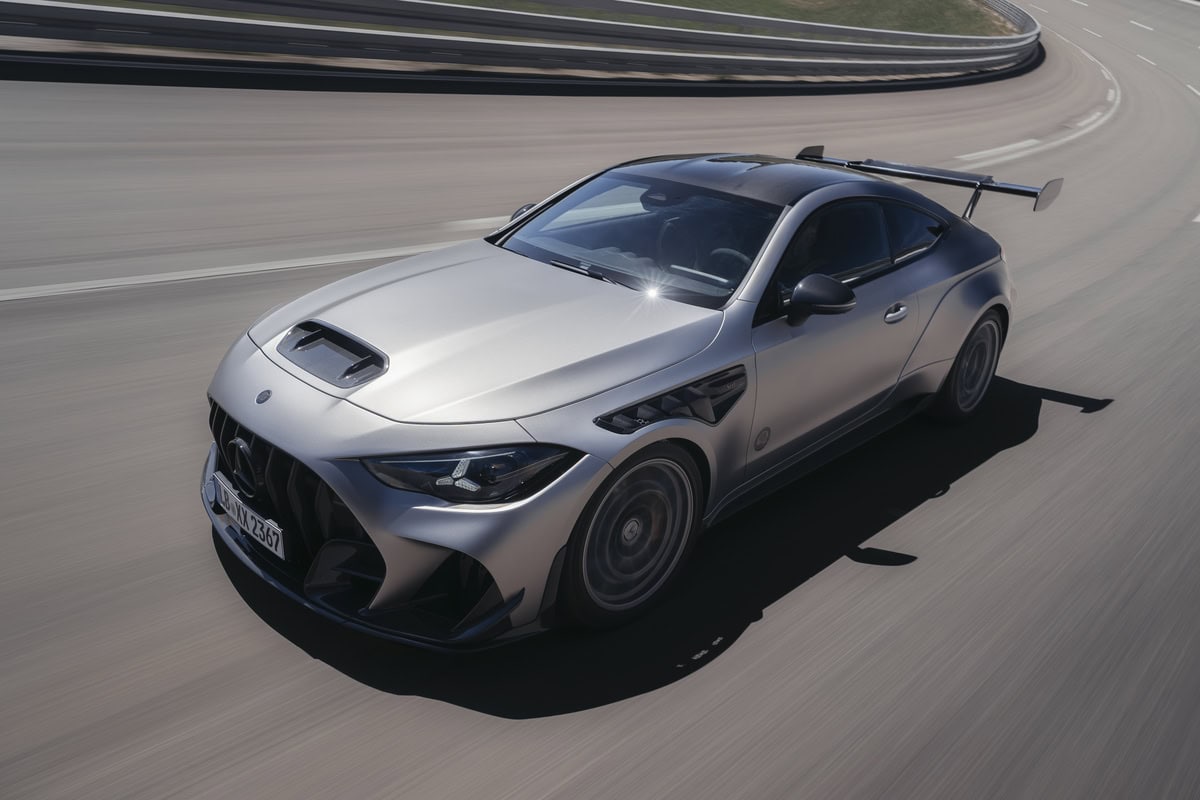
The easiest way to misunderstand the Mercedes-AMG CLE 646 Spezialanfertigung is to call it a more powerful CLE. Power is the least surprising thing here. AMG can make horsepower. What matters is that engineers took a modern luxury coupe, removed its all-wheel drive, deleted rear seats and convenience equipment, widened the body, fitted a highly adjustable coilover suspension, added manually configurable aerodynamics and put a flat-plane-crank V8 under the hood.
That is a much stronger statement than a limited-edition paint package.
Only 30 examples will be built, every one hand-built in Affalterbach, and Mercedes says the entire production run was sold before the public premiere. The company did not include a price or a U.S. allocation in the press material. So this is not a normal buyer guide. Nobody reading this can simply walk into a Mercedes dealer and order one.
Der neue Mercedes-AMG CLE 646 Spezialanfertigung. Energieverbrauch kombiniert: 15,8l/100 km | CO₂-Emissionen kombiniert: 359 g/km | CO₂-Klasse: G Die Angaben sind vorläufig. Es liegen bislang weder bestätigte Werte von einer amtlich anerkannten Prüforganisation noch eine EG-Typgenehmigung noch eine Konformitätsbescheinigung mit amtlichen Werten vor. Abweichungen zwischen den Angaben und den amtlichen Werten sind möglich
What shoppers and enthusiasts can do is look at what AMG chose to prioritize. That matters because the performance brand is simultaneously working out how to preserve emotion in an increasingly electrified lineup. Test Miles has already covered AMG’s electric GT strategy, including simulated V8 sound and haptic feedback. The CLE 646 takes the opposite route: rather than recreating combustion character electronically, it concentrates it into one exceptionally scarce machine.
Why the Mercedes-AMG CLE 646 Spezialanfertigung Matters
Start with the engine. The M177 EVO 4.0-liter twin-turbo V8 produces 646 PS, which Mercedes lists as 637 hp in the U.S. technical sheet, along with 627 lb-ft of torque from 2,500 to 4,500 rpm. A flat-plane crankshaft reduces rotating mass and is intended to improve the engine’s willingness to rev and sharpen throttle response. A 23-hp integrated starter-generator is also part of the 48-volt system.
Mercedes has given the V8 three separate cooling circuits. One handles the engine, while low-temperature circuits serve the charge-air and transmission-oil cooling as well as the 48-volt components. That detail is more important than the badge because track performance depends on repeatability. An engine that makes a big number for a few seconds is easy to celebrate; one that keeps operating under sustained thermal load is a harder engineering problem.
Mercedes-AMG CLE 646 Spezialanfertigung
The exhaust is similarly purposeful. Akrapovič worked on the cold-end design, titanium helps cut mass, and AMG describes the sound tuning as deliberately emotional. That feels particularly significant when set beside the company’s work on electric performance cars. A V8 like this is not simply an old technology hanging around. In this application, it is part of the user interface.
You may also enjoy: Mercedes-AMG Electric GT 4-Door Coupe Sounds and Feels Like a Real V8
You may also enjoy: New Head of Mercedes Design Shares How AMG Keeps Its V8 Soul Alive in the Electric Age
The U.S. Department of Energy’s work on lightweight vehicle materials is useful context for the other half of AMG’s engineering effort. Carbon fiber, polycarbonate and titanium are expensive ways to save mass, which helps explain why they tend to appear first in low-volume performance cars. Mercedes spreads carbon fiber across the roof, hood, widened fenders, side sills, redesigned nose, rear diffuser, trunk lid and adjustable wing. The rear side windows and rear window are polycarbonate.
AMG says it removed about 375 pounds compared with the donor vehicle. Yet the finished Spezialanfertigung still weighs 4,178 pounds. That number deserves attention. This is lighter than the car it came from, but it is not a lightweight sports car in the traditional sense. The engineering challenge is making a large, front-engined coupe react with precision despite its mass.
Der neue Mercedes-AMG CLE 646 Spezialanfertigung. Energieverbrauch kombiniert: 15,8l/100 km | CO₂-Emissionen kombiniert: 359 g/km | CO₂-Klasse: G Die Angaben sind vorläufig. Es liegen bislang weder bestätigte Werte von einer amtlich anerkannten Prüforganisation noch eine EG-Typgenehmigung noch eine Konformitätsbescheinigung mit amtlichen Werten vor. Abweichungen zwischen den Angaben und den amtlichen Werten sind möglich
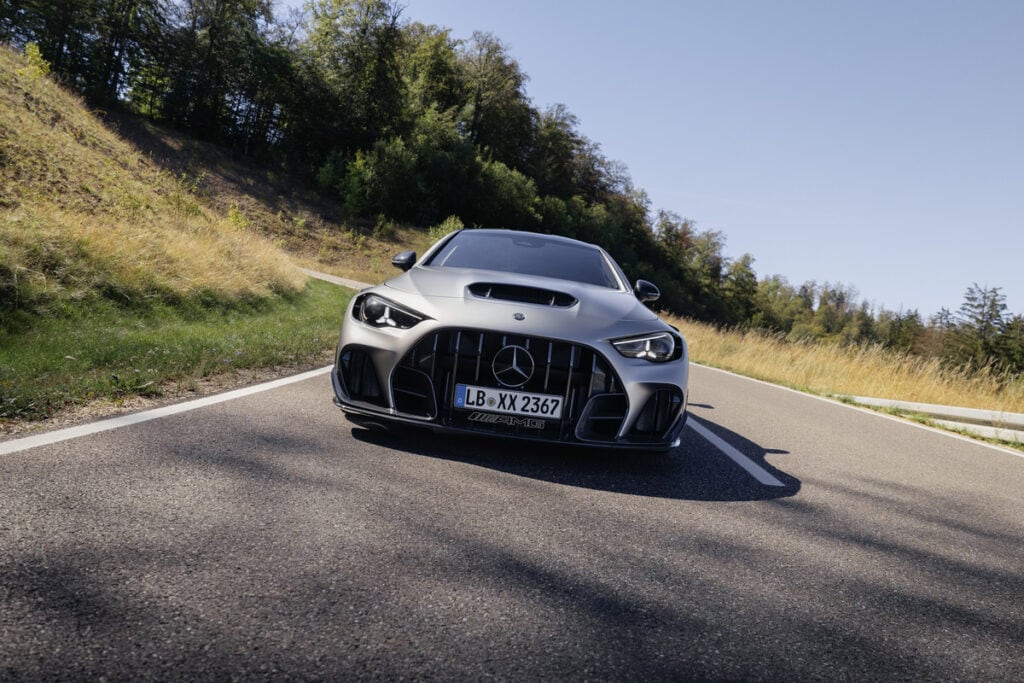
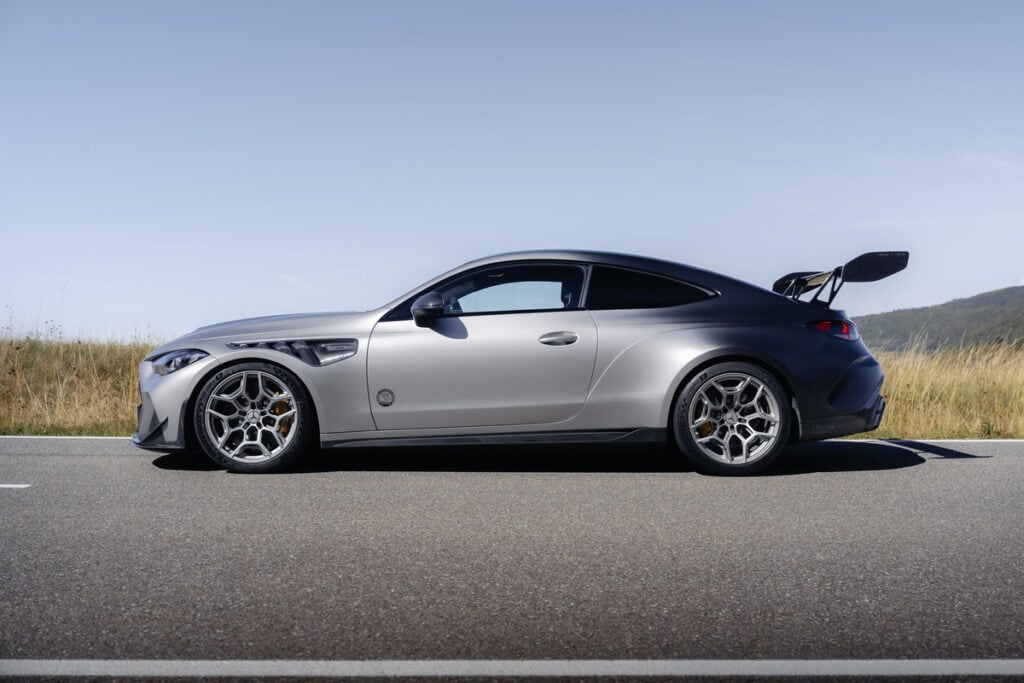
That also explains the enormous footprint. The body is 2.4 inches wider at both axles. Forged 20-inch wheels measure 11 inches wide up front and 12 inches at the rear, carrying 305/30 ZR20 and 335/30 ZR20 tires. NHTSA’s TireWise material is a worthwhile reminder that tire size, load capability, heat resistance and condition matter enormously on any performance vehicle. Here, Mercedes says the tire technology was developed from work originally created for the AMG ONE.
The result is a car that looks extreme because the underlying hardware demands the space. Bastian Baudy, chief design officer of Mercedes-Benz Group AG, put it this way: “The Mercedes-AMG CLE 646 Spezialanfertigung sets new benchmarks with its uncompromising presence and driving dynamics. Through the extensive use of carbon fiber, we were able to create a particularly distinctive appearance. Its bold proportions and the sheer size of the grille underscore the ambition to present a vehicle of extremes. The result is a masterpiece, full of performance and character.”
The Real Story Is What AMG Removed
The most interesting engineering decision is not adding the V8. It is deleting 4MATIC+.
The CLE 53 platform begins with all-wheel drive, which is excellent for deploying power in poor conditions and for producing impressive acceleration numbers with minimal drama. AMG threw that system away for the Spezialanfertigung and sends everything to the rear wheels through an electronically controlled limited-slip differential.
That decision costs traction in one sense and creates involvement in another. AMG says the differential can vary its locking behavior according to the driving situation, improving stability and traction while also enabling controlled drifting when conditions allow. Launch control was recalibrated specifically for rear-wheel drive. The official figures are 3.9 seconds from 0 to 62 mph, 11.4 seconds to 124 mph and 193 mph flat out.
You may also enjoy: 2027 Mercedes-AMG GLC 53 Adds Drift Mode to Family SUV
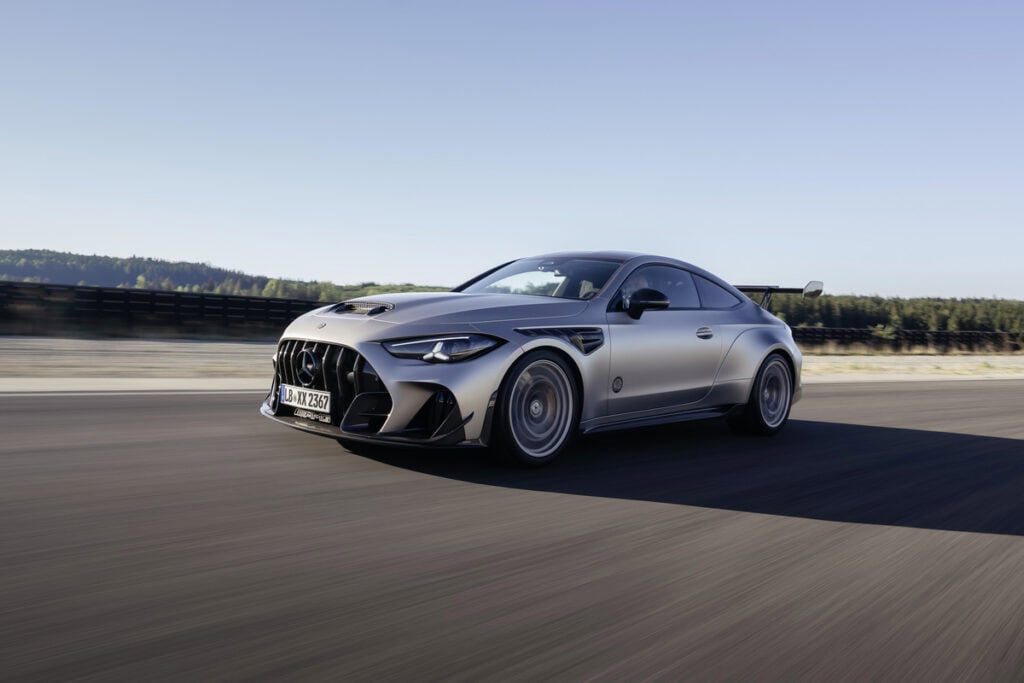
Der neue Mercedes-AMG CLE 646 Spezialanfertigung. Energieverbrauch kombiniert: 15,8l/100 km | CO₂-Emissionen kombiniert: 359 g/km | CO₂-Klasse: G Die Angaben sind vorläufig. Es liegen bislang weder bestätigte Werte von einer amtlich anerkannten Prüforganisation noch eine EG-Typgenehmigung noch eine Konformitätsbescheinigung mit amtlichen Werten vor. Abweichungen zwischen den Angaben und den amtlichen Werten sind möglich
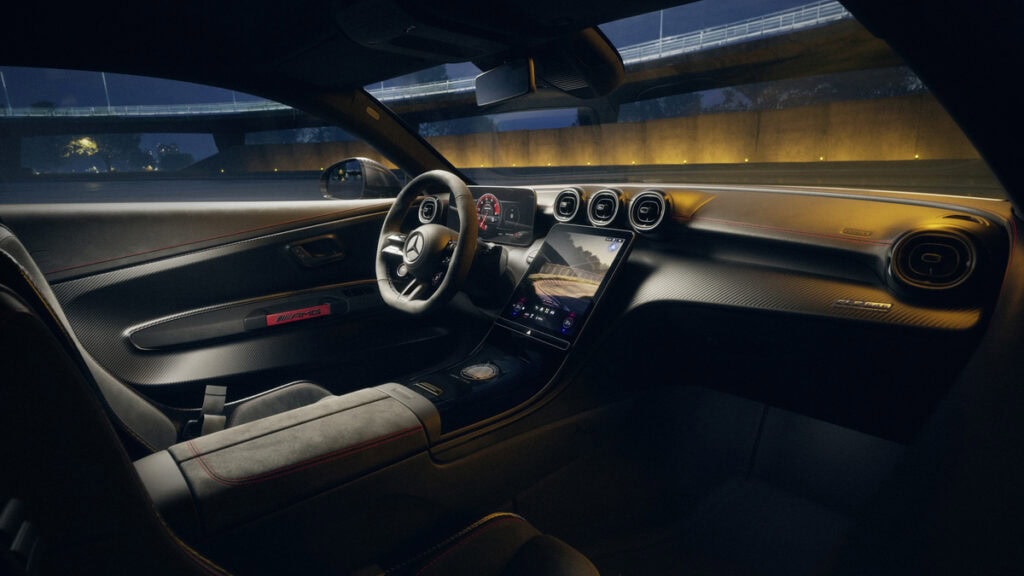
The removal theme continues inside. There are no rear seats. Acoustic insulation has been stripped out. The sound system is simplified. PARKTRONIC parking assistance is gone, and Mercedes says other assistance and comfort features have also been reduced. Ultra-light racing buckets and carbon-fiber door panels replace the usual luxury emphasis, while a roll bar adds rigidity. An optional Performance Package adds six-point harnesses.
For a normal CLE buyer, that would be a terrible trade. For this car, it is the point.
The suspension was developed with KW automotive and uses four-way adjustable dampers. Low-speed and high-speed compression and rebound can be adjusted independently, allowing the chassis to be tuned for different circuits, surfaces and driver preferences. “Low speed” in damper language refers to the speed of suspension movement, not the speed of the car, so those settings help manage pitch, roll and weight transfer under braking, acceleration and turn-in. High-speed damping deals more with rapid wheel movement over bumps, curbs and surface irregularities.
The brake system is equally serious: 16.5-inch front ceramic composite discs with six-piston fixed calipers, and 14.2-inch rear discs with single-piston floating calipers. Mercedes designed additional air routing specifically to control brake temperature. NHTSA publishes the federal test procedures used for light-vehicle braking systems, useful background for understanding how regulated road-car braking requirements differ from the additional durability demands created by repeated track use.
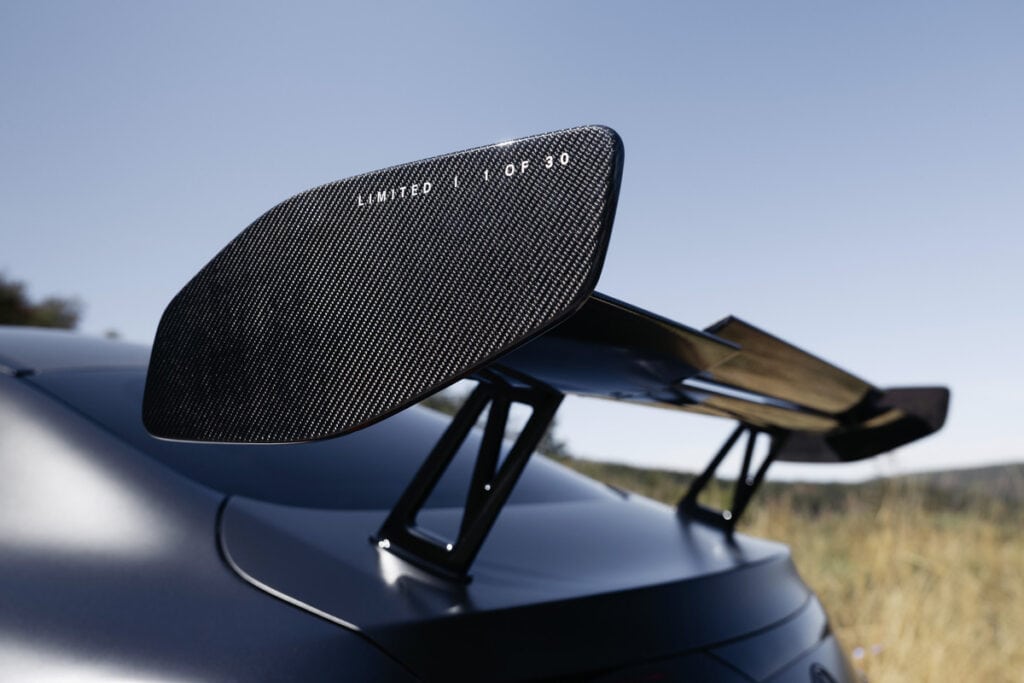
Der neue Mercedes-AMG CLE 646 Spezialanfertigung. Energieverbrauch kombiniert: 15,8l/100 km | CO₂-Emissionen kombiniert: 359 g/km | CO₂-Klasse: G Die Angaben sind vorläufig. Es liegen bislang weder bestätigte Werte von einer amtlich anerkannten Prüforganisation noch eine EG-Typgenehmigung noch eine Konformitätsbescheinigung mit amtlichen Werten vor. Abweichungen zwischen den Angaben und den amtlichen Werten sind möglich
Then there is the aero. The front diffuser has Street and Race positions, adjusted manually with fasteners. The Race position is explicitly for closed-course use. The center section of the carbon rear wing can also be changed to restore aerodynamic balance. Channels around the headlights feed air through the wheel arches, fender louvers reduce pressure, and the underbody is shaped with fins to manage flow.
NASA’s explanation of the drag equation is helpful here because aerodynamic load is never free. Drag rises with the square of speed, and Mercedes’ own data shows the trade. The car’s drag coefficient is 0.402 in Street form and 0.417 in Race form. AMG says the complete aero package produces more than 550 pounds of aerodynamic downforce at maximum velocity.
The specification sheet adds an amusing detail. Mercedes lists 0 to 186 mph at 36.8 seconds in Race setup but 36.2 seconds in Street setup. The company does not explicitly say the six-tenths difference is caused by added aero drag, so it would be wrong to present that as a confirmed explanation. But the numbers neatly illustrate the central compromise: maximum downforce is not the same thing as maximum straight-line efficiency.
Thirty Cars, One Loud Message About AMG
The Spezialanfertigung is the second Mercedes-Benz Mythos Series model. The first, the PureSpeed, was limited to 250 cars. This one cuts production to 30, and that scarcity changes how it should be judged.
A conventional performance coupe must balance warranty exposure, daily comfort, noise, weather capability, manufacturing cost and the preferences of thousands of buyers. A 30-car collector model gives engineers permission to make different compromises. Removing parking assistance becomes plausible. Manual aero adjustment becomes charming rather than inconvenient. A four-way coilover system becomes appropriate instead of intimidating.
You may also enjoy: Mercedes-AMG’s GT 63 “APXGP Edition” Puts Hollywood in the Fast Lane — But Is It More Than a Movie Car?
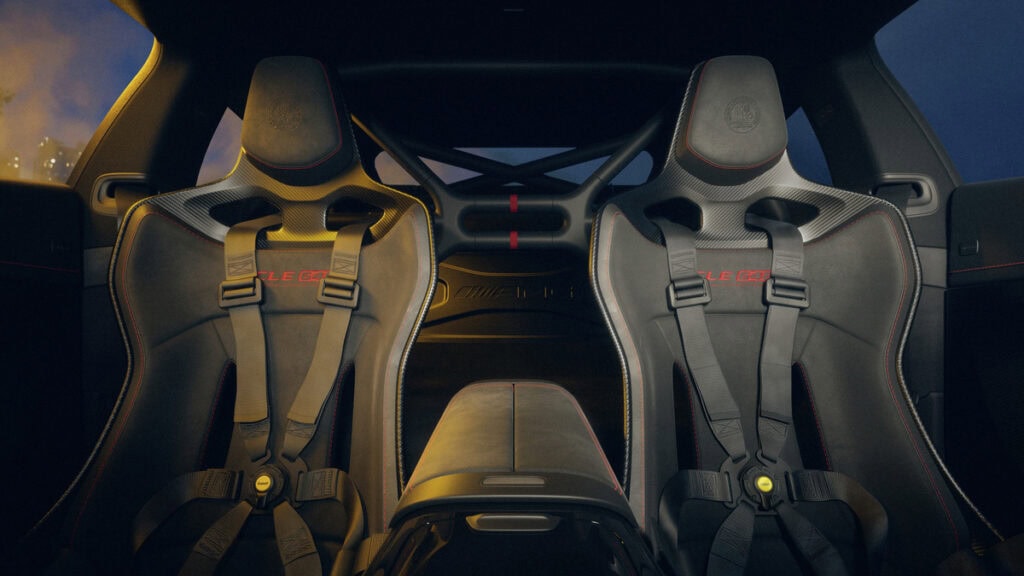
Der neue Mercedes-AMG CLE 646 Spezialanfertigung. Energieverbrauch kombiniert: 15,8l/100 km | CO₂-Emissionen kombiniert: 359 g/km | CO₂-Klasse: G Die Angaben sind vorläufig. Es liegen bislang weder bestätigte Werte von einer amtlich anerkannten Prüforganisation noch eine EG-Typgenehmigung noch eine Konformitätsbescheinigung mit amtlichen Werten vor. Abweichungen zwischen den Angaben und den amtlichen Werten sind möglich
Mercedes also invokes the AMG 300 CE 6.0 “The Hammer,” a machine that helped establish the company’s reputation for turning a regular Mercedes into something outrageous. The CLE 646 is not a retro remake, but the philosophy is recognizable. It starts with a production car, then allows a small group of engineers to push well beyond what would make sense for volume production.
That history is useful because AMG’s identity is under pressure from two directions. Regulations and electrification are changing what high-performance cars look and sound like, while buyers still associate the letters AMG with large engines, rear-tire abuse and a certain amount of mechanical theater. The brand’s electric products are trying to reproduce some of that emotional vocabulary with software, sound design and haptic effects. The CLE 646 shows the other extreme: real V8 pulses, a real nine-speed transmission, rear-wheel drive and hardware you physically adjust with tools.
You may also enjoy: 2027 Mercedes-AMG GT 4-Door Coupe Recreates Signature V8 Thrills
The U.S. Department of Energy notes in its carbon-fiber research that advanced composites can deliver major component weight savings but remain costly for mainstream use. That economic reality helps make sense of cars like this. The technology is not valuable because 30 wealthy collectors get exotic body panels. It is valuable because low-volume programs can serve as laboratories for materials, thermal management, aero solutions and chassis ideas that may influence less exotic products later.
The buyer advice is therefore simple, if slightly absurd: there is no new-car buying decision left to make. They are gone. If a CLE 646 eventually appears on the secondary market, the sensible questions will be provenance, track use, condition of the ceramic brakes, setup history, aero hardware, tire condition and whether all original components and documentation are present. This is closer to buying a collectible competition-influenced machine than choosing between option packages on a normal CLE.
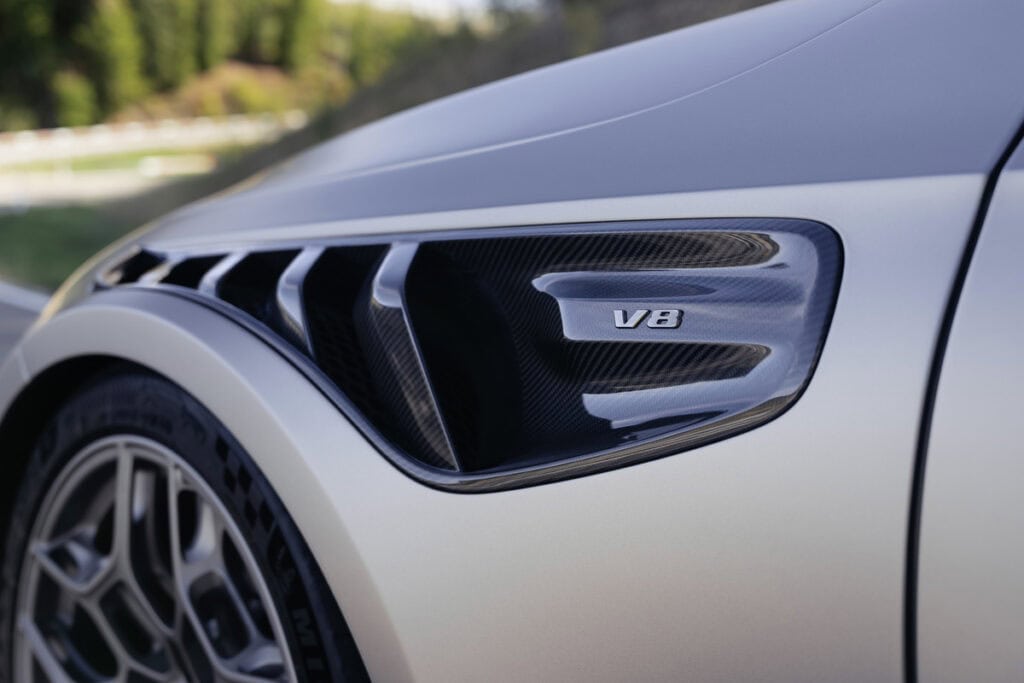
Der neue Mercedes-AMG CLE 646 Spezialanfertigung. Energieverbrauch kombiniert: 15,8l/100 km | CO₂-Emissionen kombiniert: 359 g/km | CO₂-Klasse: G Die Angaben sind vorläufig. Es liegen bislang weder bestätigte Werte von einer amtlich anerkannten Prüforganisation noch eine EG-Typgenehmigung noch eine Konformitätsbescheinigung mit amtlichen Werten vor. Abweichungen zwischen den Angaben und den amtlichen Werten sind möglich
You may also enjoy: Why the 603-HP Mercedes-AMG GLS 63 Still Matters
What should ordinary AMG shoppers take from it? First, rear-wheel drive still matters enough to the company that engineers were willing to remove a sophisticated all-wheel-drive system from an already capable coupe. Second, weight still matters even when the final number remains above two tons. Third, AMG sees adjustable mechanical systems—not just drive-mode graphics—as part of a serious performance car. And finally, the V8 is still powerful branding currency.
That last point is why the Mercedes-AMG CLE 646 Spezialanfertigung matters more than its production number suggests. It cannot tell us what the next mainstream AMG will be, and Mercedes has made no such promise. It does show what the company’s engineers choose when rarity gives them freedom: less isolation, less assistance, more mechanical involvement and a V8 at the center of it all.
Thirty customers get the car. Everyone else gets the message.