IONNA Charging Network Doubles Size, Tops JD Power
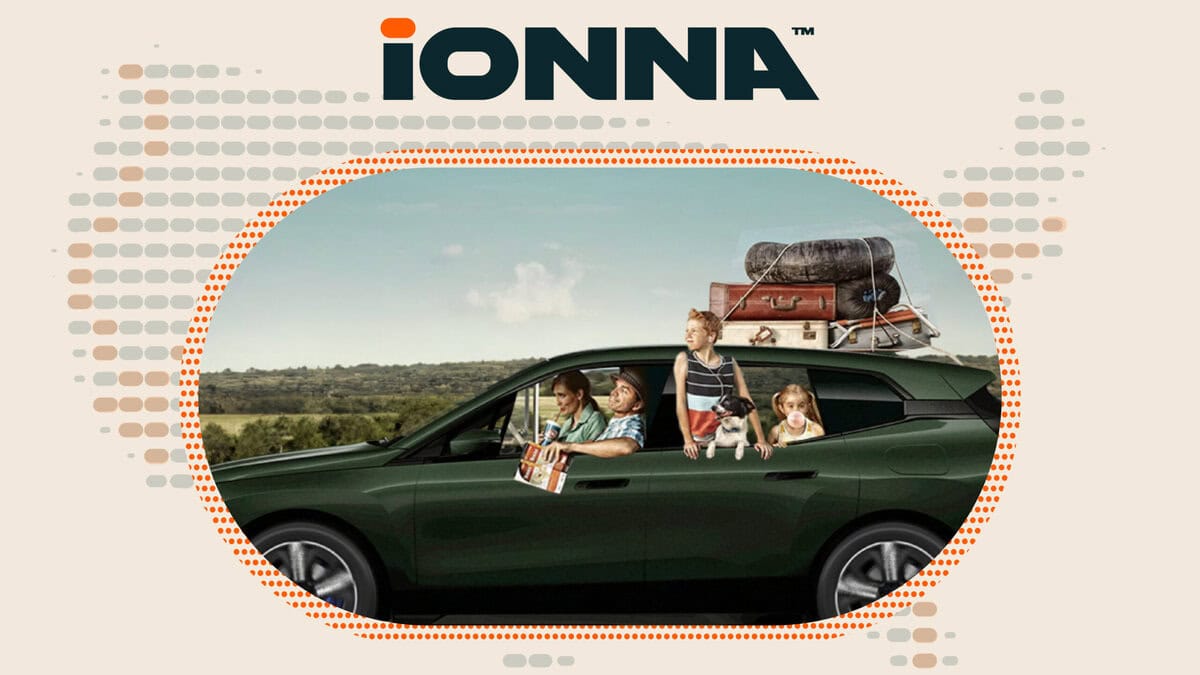
The IONNA charging network passed 180 sites and topped JD Power’s fast-charger ranking, with Plug & Charge coming to certain Toyota and Lexus models.
Why the IONNA charging network result is bigger than a trophy
Charging has been the EV argument that never quite ends. You can make the case for range, price and software, but the conversation usually circles back to one question: will the charger work when I get there? That is the gap the IONNA charging network was built to close, and its first showing in JD Power’s public-charging ranking suggests it is pointed in the right direction.
Start with Wednesday’s announcement. IONNA, the joint venture formed by BMW, General Motors, Honda, Hyundai, Kia, Mercedes-Benz, Stellantis and Toyota, says it has passed 180 live sites, more than double its size at the start of the year. Toyota’s version of the news calls it the largest 400-kilowatt network in the country. Treat that as a company claim until someone audits it, though the direction of travel is hard to argue with.
You may also enjoy: Toyota C-HR 2026 EV: 287 Miles, 338 HP, Real Cargo
A 400-kilowatt label is a ceiling, not a promise. How fast DC fast charging feels depends on what the vehicle’s battery will accept at that moment, so a powerful charger can still deliver a modest session to a car built for less. The label matters because it leaves headroom as faster-charging models arrive.
Ten points, one year, and a moving target
Here is where I’d slow down before calling this a coronation. IONNA scored 807 on JD Power’s 1,000-point scale. The Mercedes-Benz Charging Network finished second at 797, and the Rivian Adventure Network took third at 755. Ten points over Mercedes-Benz is a genuine lead but not a landslide, and it arrived in IONNA’s first year of award eligibility.
Timing matters too. JD Power fielded the study from January through June among 6,594 battery-electric and plug-in hybrid owners, during a year when IONNA has been more than doubling its footprint. The score reflects the network as those owners used it, not necessarily the 180-plus sites announced today. Growth can move those numbers either way, so the next reading will say more than this one.
The piece I’d underline is reliability. JD Power says the industry’s non-charging visit rate, meaning an owner arrives and cannot charge, fell to 12% in the latest quarter, the lowest in the study’s history, with newer OEM-backed networks posting the lowest failure rates. JD Power’s Brent Gruber said those networks are “raising expectations with high-performing equipment, strong locations and smooth sessions.” A dead charger is the failure shoppers fear most, so this is the metric I’d track.
What Toyota and Lexus drivers actually get
For Toyota and Lexus owners, the practical news is software rather than concrete. IONNA says it now works with 19 partner apps, including new Toyota and Lexus integrations alongside Presto, ChargeHub and EV Connect, and that Plug & Charge is coming soon for certain Toyota and Lexus models. Plug & Charge lets the car identify itself to the charger and handle payment automatically, so nothing needs tapping or swiping.
You may also enjoy: 2027 Toyota Highlander goes electric as a three-row EV
Thibaut de Barros Conti, vice president of business development at Toyota Motor North America, offered the expected congratulations: “IONNA’s agility and customer-centricity align with Toyota’s goals of creating truly world-class experiences and enabling mobility for all.” Corporate praise is easy to write. The more telling decision is IONNA’s choice to skip a proprietary app and lean on the ones drivers already carry.
Plug & Charge is the feature to hold them to. The announcement says only that it’s coming soon for certain models. It names no models and no date, so don’t plan a road trip around it yet.
You may also enjoy: 2027 Lexus TZ Revealed: Lexus’ Quietest Electric SUV Yet
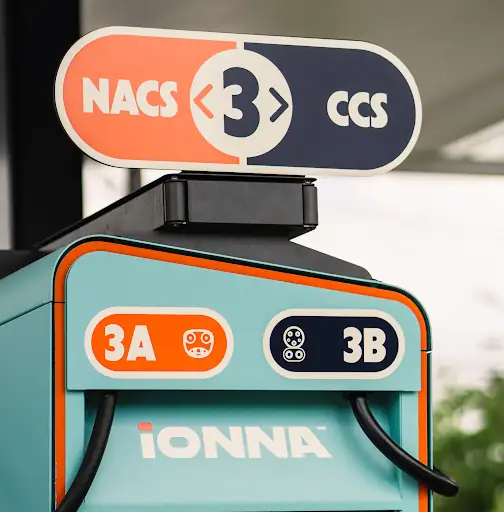
Connectors are the other practical question. IONNA’s support pages say its sites provide both NACS and CCS plugs and that adapters bought from a dealer are supported. NACS, formalized as SAE J3400, is the port on the newer Toyota and Lexus electric models we’ve covered.
How to shop with charging in mind
So what should a shopper do with all this? Start by testing the network against your own routes. Open the Department of Energy’s Alternative Fueling Station Locator, trace the trips you actually take, and note which networks and plug types appear along the way.
Next, look at where the chargers sit. JD Power found satisfaction highest at DC fast chargers located at hotels (692), gas stations and convenience stores (689) and restaurants (688), while dealership chargers scored 570 and stand-alone lots 606. The pattern suggests a site you’d actually want to wait at counts for a lot. IONNA’s roughly 40 Circle K locations fit that mold.
You may also enjoy: 2026 Ford Mustang Mach-E review: Still Ford’s EV star
Then be honest about what the ranking leaves out. Only the DC fast charging segment was award-eligible this year, and Level 2 public chargers moved the other way, sliding 12 points to 595. If your plan leans on slower public stations rather than home charging and fast stops on trips, this good-news story applies to you less.
Finally, keep the scale in perspective. Passing 180 sites is quick progress for a young network, but it is still early. IONNA has said it wants 30,000 charging bays by the end of 2030, and the Department of Energy’s quarterly charging infrastructure trends reports break growth down by network, which gives you an independent way to check whether the pace holds. Federal programs like NEVI have also helped states fund fast chargers, so the map is filling in from several directions.
You may also enjoy: 2027 Mitsubishi Eclipse Sportback EV Now Plug and Play
My read: give the IONNA charging network credit for the results, then verify the stops along your own routes before you sign any paperwork. A leading score, a falling failure rate and an app-friendly approach point toward charging designed around drivers instead of hardware, and that is a fair reason to keep an EV on your shortlist.