Honda SEMA 2026: Racing Power You Could Actually Buy
By Robert R Guio
Honda SEMA 2026 brings a 1,300-hp hybrid Baja truck, a U.S. bound Civic Type R, HRC Concept, and performance upgrades for Honda and Acura owners.
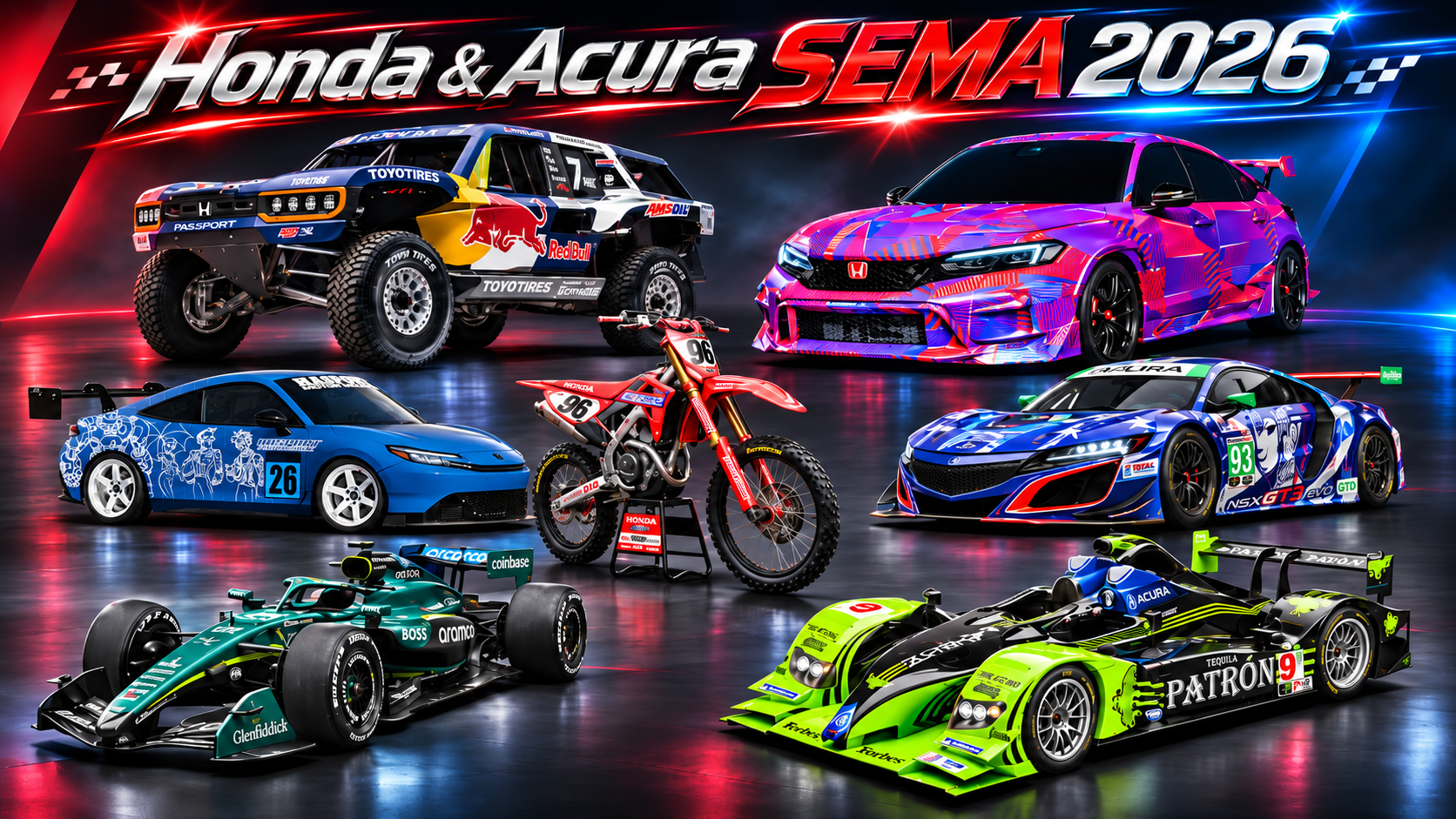
Honda has brought a rather interesting collection of machinery to the 2026 SEMA Show. There’s a desert racing truck with more than 1,300 horsepower, a Civic Type R concept being developed for America, and a Honda Prelude that has acquired a turbocharged engine and a proper manual gearbox. There is also an Acura racing car with a remarkable competition history, a tiny 35-horsepower Honda that once tackled Baja, and enough motorsport memorabilia to make a collector reconsider the family savings account. But the biggest news for Honda and Acura drivers may be sitting beside the racing cars, rather than underneath their hoods.
Honda Racing Corporation is preparing to sell genuine HRC-developed performance components through Honda and Acura dealerships beginning in March 2027. For the first time, owners will have access to a growing range of performance accessories created with direct involvement from the engineers responsible for Honda’s competition machinery. That raises an important question. Can Honda turn its considerable racing experience into improvements that owners will appreciate on an ordinary road?
Honda SEMA 2026: The Real News Is in the HRC Parts
Let’s begin with the development that could actually affect a car in your driveway. Honda Racing Corporation is introducing lightweight forged-aluminum wheels, specially tuned exhaust systems, and additional performance accessories for selected Honda and Acura models.
The initial applications include the Honda Civic Type R, Acura Integra Type S, Honda Passport, and Honda Pilot. The new 19-by-10-inch forged-aluminum wheel for the Civic Type R and Integra Type S is developed with 2Elle-engineering, a company involved in supplying wheels for Acura’s ARX-06 racing program. According to Honda, the new wheel weighs just 20.8 pounds, approximately 5.5 pounds less than the factory wheel. It is also half an inch wider. That saving matters because wheels contribute to a vehicle’s unsprung weight, the mass that the suspension must control as the tires follow the road. Reducing that weight can improve suspension response, although the overall result depends on wheel construction, tire selection, and suspension tuning.
These are meaningful changes rather than merely fitting a different finish to an otherwise identical wheel. Honda also has an 18-by-8-inch forged off-road wheel developed with Titan 7 for the Passport and Pilot. The company says its load capacity increases by 100 kilograms over the original wheel. For owners traveling with passengers, camping equipment, or heavy loads, wheel strength and correct load ratings deserve serious attention. The National Highway Traffic Safety Administration’s tire-safety guidance provides useful information about proper tire sizing, loading, and maintenance.
The other interesting component is a new Borla-developed exhaust for the Passport and Pilot. Honda claims the system increases exhaust flow by up to 6 percent while using technology intended to minimize unpleasant cabin drone during highway driving. More significantly for off-road owners, its compact design can increase ground clearance at the exhaust by up to 1.9 inches. That does not mean the entire SUV gains almost two inches of ground clearance. It means a particular component can sit higher and become less vulnerable to obstacles. That distinction is exactly the sort of detail shoppers need when evaluating aftermarket performance claims.
You may also enjoy: 2027 Honda Civic Type R: Honda Fixed the Right Things
Why the Passport Baja Spec Is More Than a Horsepower Contest
Honda’s most outrageous machine at SEMA is undoubtedly its Passport Baja Spec Trophy Truck!
Honda Racing Corporation and Mason Motorsports have created a vehicle with a 2.4-liter twin-turbocharged V6 working alongside an 800-volt hybrid-electric system. The combined output exceeds 1,300 horsepower, a figure that puts the vehicle into an entirely different category from anything available in a Honda showroom. The engine also has an interesting family connection. Honda says the competition V6 is based on the engine used in Acura’s ARX-06 endurance-racing prototype, a powerplant developed to survive sustained racing demands. That is more meaningful than simply installing an enormous engine in a truck and hoping for the best. Engine durability, cooling, power delivery, and vehicle-control software are central to endurance competition. Those same engineering disciplines become extremely important in desert racing, where vehicles operate under severe loads for prolonged periods.
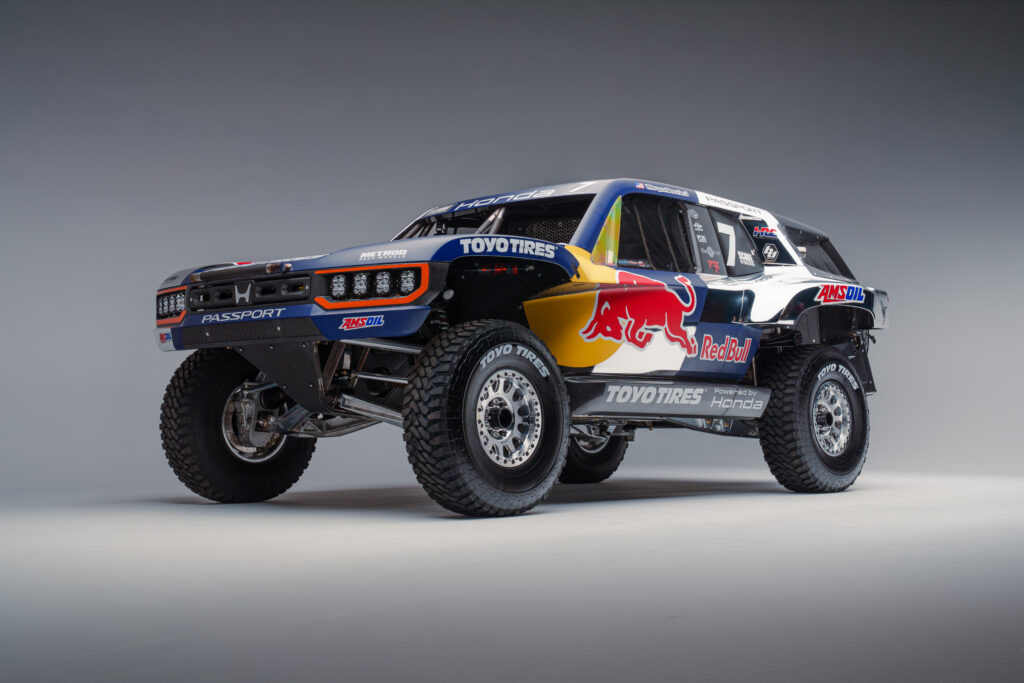
The hybrid system adds another layer of capability, but it also presents new thermal-management and packaging challenges. For readers unfamiliar with the technology, the U.S. Department of Energy explains hybrid-electric powertrains and how combustion engines and electric motors can work together. Honda’s racing system has very different priorities from a fuel-saving family hybrid. Its purpose is competitive performance rather than maximizing commuting economy. In other words, nobody should interpret this announcement as confirmation that the next production Passport will produce four figures of horsepower. Honda plans to race the Trophy Truck in the 2027 SCORE World Desert Championship with Bryce Menzies, a two-time Baja 1000 winner. The partnership provides an experienced driver, but the unusual powertrain still has to prove that it can perform reliably over the complete race distance. Honda has plenty of competition history to support its ambitions. What it has not yet demonstrated is an overall Baja victory with this particular hybrid vehicle.
You may also enjoy: Honda Engines: What Racing Really Means for Your Car
What the Civic Type R HRC Concept Could Mean for Buyers
Honda’s confirmation that the Civic Type R HRC Concept is being developed for the American market deserves particular attention. Originally revealed at the 2026 Tokyo Auto Salon, the concept draws on input from HRC engineers and professional racing drivers. The important word is development. Honda has not announced a final American price, customer delivery date, or complete production specification. It would therefore be premature to describe this as a new Civic Type R trim that customers can order today. Nevertheless, there is a compelling opportunity. Honda already has a performance hatchback that combines extraordinary practicality with a direct, driver-focused personality. The 2027 Civic Type R retains 315 horsepower and a six-speed manual transmission. Honda has also worked on cooling, chassis behavior and refinement. That is a useful foundation for a more specialized HRC project, but an HRC badge should have to earn its place.
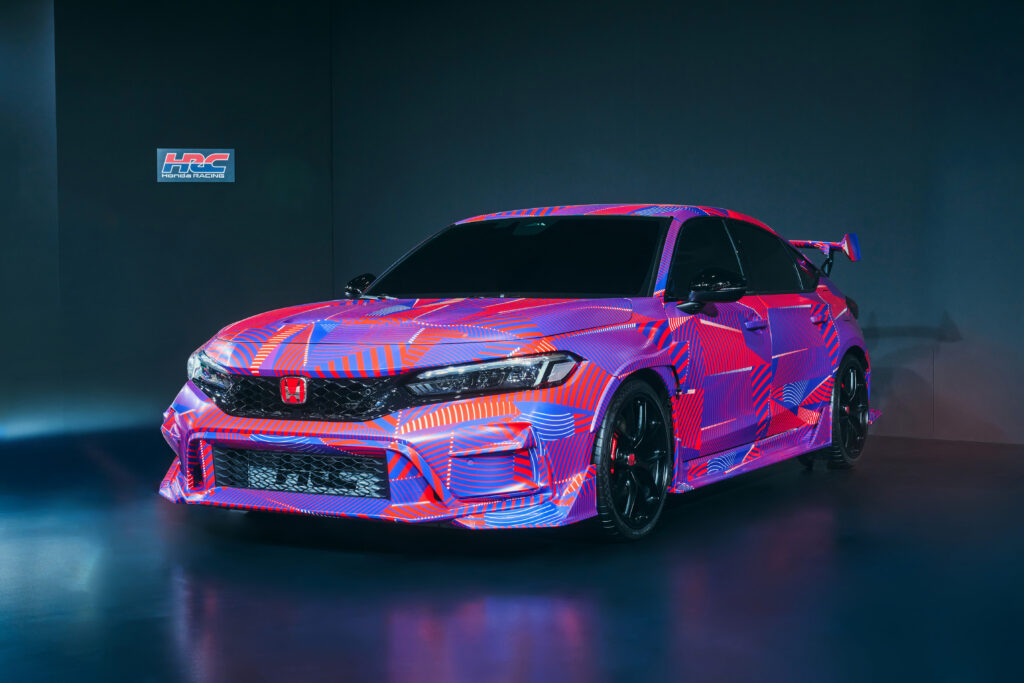
Before recommending a production version, I would want to know whether any changes improve steering response, braking consistency, cooling, suspension control, and durability during repeated hard driving. A little more peak horsepower would be entertaining. Better performance over a complete track session might be considerably more valuable. The distinction between a dramatic concept and a useful production car is important. A racing-inspired suspension can improve precision on smooth circuits while becoming unpleasant on broken public roads. Honda’s engineers will have to find the right compromise if this model is intended to remain usable as an everyday vehicle. There is also the cost question. The latest Type R already commands a substantial price premium over the ordinary Civic. Further engineering work would need to produce a meaningful return for buyers rather than an expensive collection of special badges.
You may also enjoy: 2026 Honda Civic Review: Hybrid Is the Smart Buy
The Prelude Club Racer Shows Honda’s Other Personality
The Hasport Prelude Club Racer may be the most entertaining example of what happens when engineers are allowed to ignore a production car’s original mission. The standard Honda Prelude returned as an efficient hybrid grand-touring coupe with an emphasis on everyday usability and driver engagement. Its two-motor hybrid system delivers 200 horsepower, and its S+ Shift technology creates simulated gear changes to give drivers a more involved experience. Honda has designed that car for a very particular purpose. It is an economical coupe that makes ordinary driving more interesting.
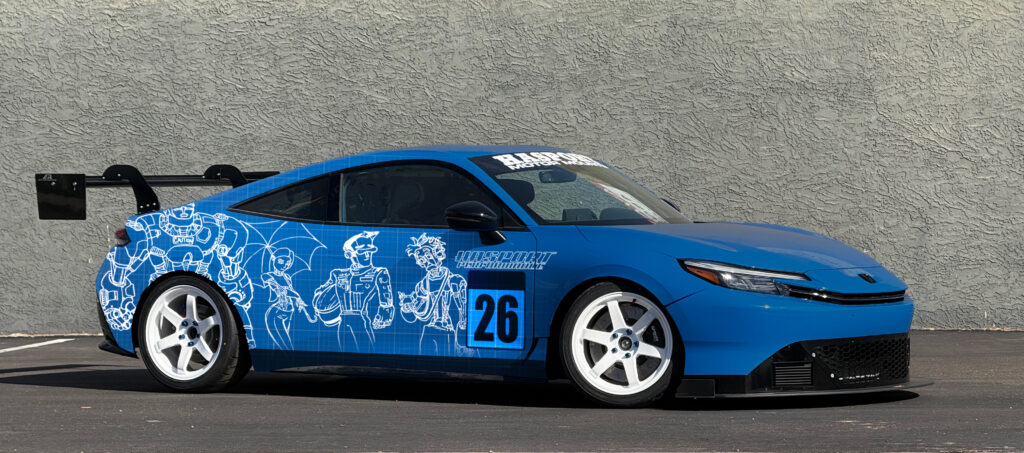
Hasport Performance has taken a different approach. Its dedicated time-attack racer uses a turbocharged 2.0-liter Civic Type R engine, a six-speed manual transmission, and suspension tuning drawn from Acura Integra Type S TCX racing experience. It also features a custom Borla exhaust and styling that celebrates an earlier Hasport Prelude racing project. Some enthusiasts will inevitably ask why Honda doesn’t simply build a road-going Prelude with this engine and transmission. The answer is that a one-off race car and a mass-produced automobile face very different requirements. A production model must meet applicable emissions certification requirements, safety standards, durability expectations, and warranty obligations. It also has to function in traffic, start reliably on cold mornings, and satisfy owners who never visit a racetrack. As a demonstration of what the Prelude platform might accommodate when extensively modified, the Hasport project is fascinating. As evidence of a future factory Prelude Type R, it proves nothing. That doesn’t make the car any less entertaining. Quite the opposite.
You may also enjoy: 2026 Honda Prelude Review: Is Slower More Fun?
Acura’s Racing History Makes the Technology Story Credible
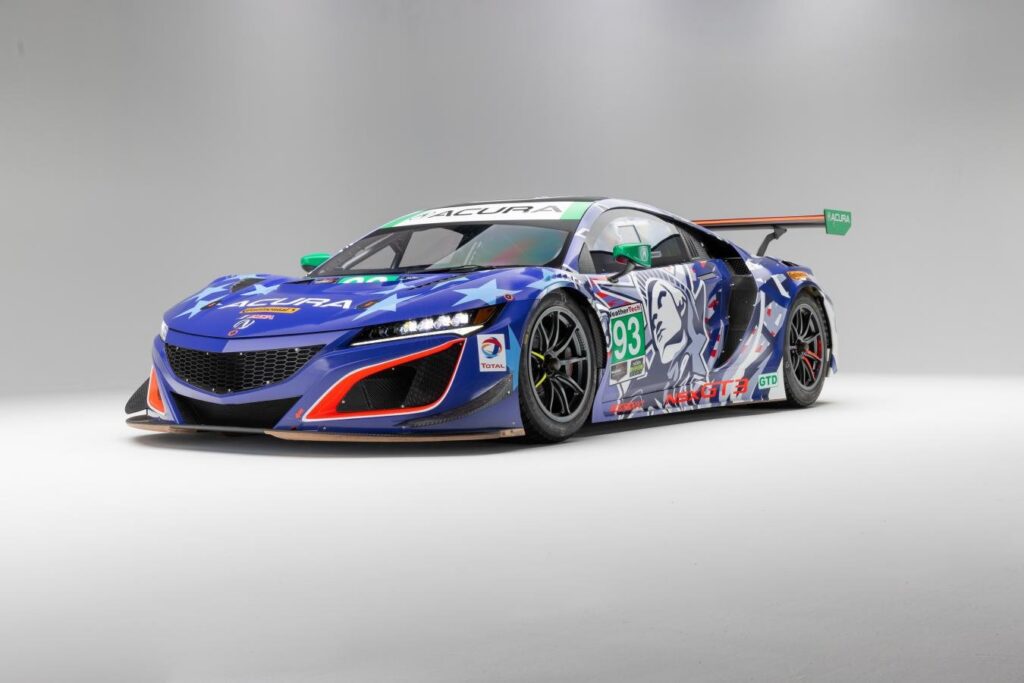
Honda’s performance ambitions carry more weight when considered alongside Acura’s endurance-racing history. The 2026 Acura ARX-06 GTP prototype appears at SEMA in a commemorative livery following the conclusion of its latest competition campaign. Its hybrid powertrain provides a useful connection to Honda’s increasingly sophisticated racing programs. Acura’s record includes 33 victories and 43 pole positions during the period being commemorated by HRC, along with major championship success.
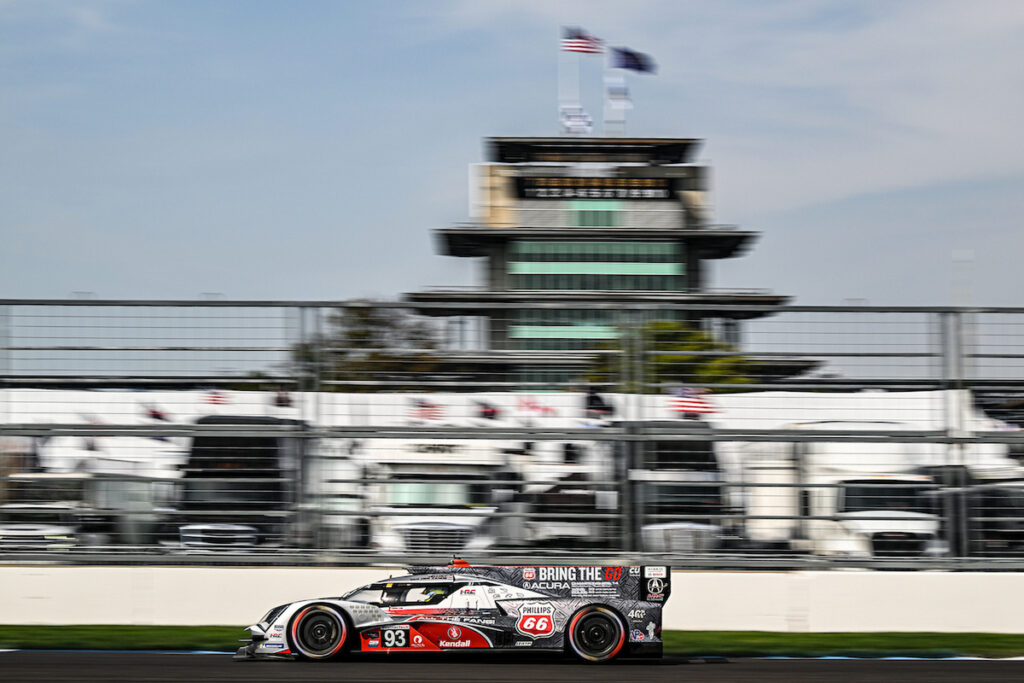
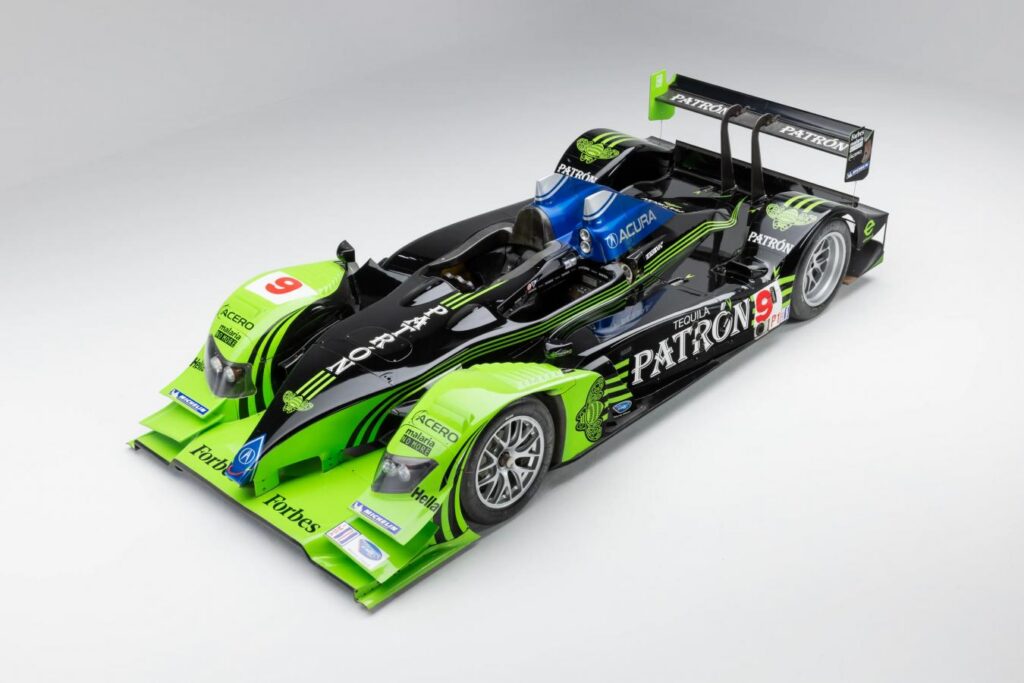
Honda is also exhibiting the 2009 Acura ARX-02a Patrón and the 2017 NSX GT3 No. 93. The ARX-02a represents the era when Acura competed with a V8-powered prototype against formidable opposition in the American Le Mans Series. The NSX GT3 is another particularly interesting machine, having accumulated 38 class wins over several seasons of professional competition. These vehicles illustrate the range of engineering work behind the Acura name, from purpose-built prototypes to production-derived racing machinery.
Yet racing success should not become a substitute for evaluating the vehicle a customer is buying. What matters is whether the lessons from competition translate into a better product. For an Integra Type S owner, lighter wheels may improve responsiveness. Better-designed brakes could provide more consistent performance. Properly validated suspension components could offer greater control. Those are plausible benefits, not automatic guarantees. Independent testing, complete specifications, and reasonable prices will ultimately determine whether HRC accessories offer good value. Honda’s experience makes its claims worth investigating. It does not make verification unnecessary.
You may also enjoy: Honda Passport and Acura Integra Type S Head to Japan from US
The Off-Road Accessories Could Have Everyday Benefits
For Passport and Pilot owners, the HRC program raises questions that are different from those facing someone who drives a Civic Type R. Most SUV owners do not need better lap times. They need tires that survive damaged roads, wheels capable of supporting their intended loads, suspension that remains comfortable, and sufficient clearance to avoid damaging expensive components. The HRC off-road wheels and revised exhaust therefore offer a more practical direction than the spectacular Baja racing truck might initially suggest. The Passport already has a serious off-road identity, particularly in TrailSport form. Honda has continued developing that package, including substantial suspension revisions announced for the 2027 model.
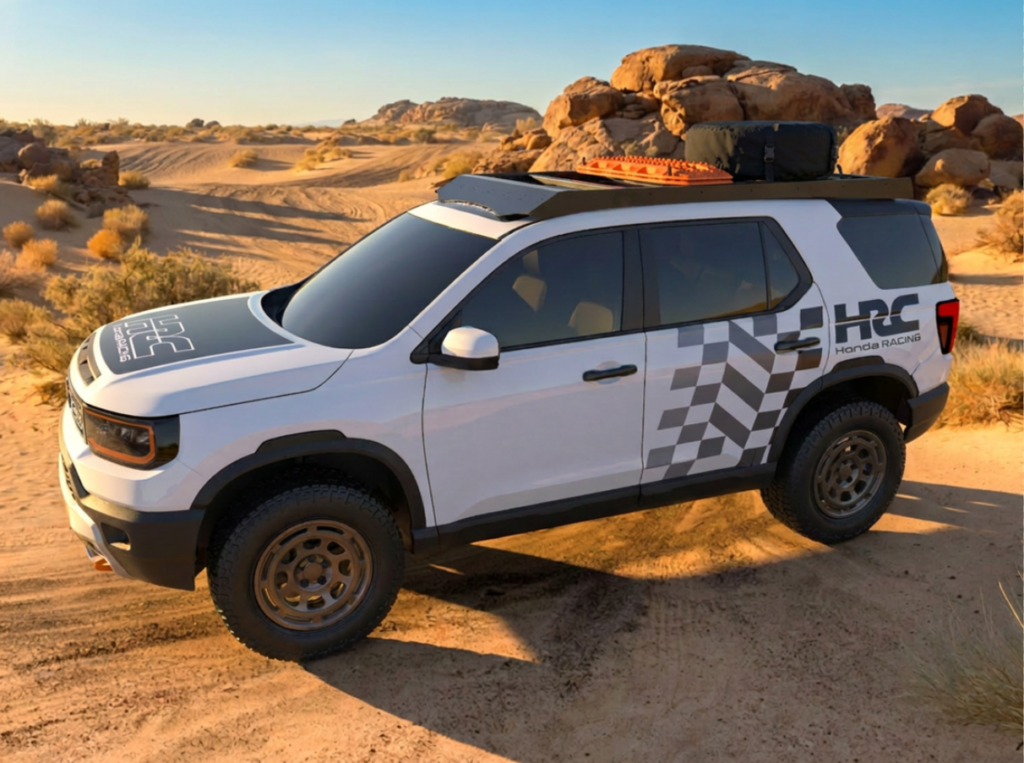
The HRC program could give owners additional ways to customize their vehicles without relying entirely on unrelated aftermarket suppliers. However, before buying any upgrade, I would ask several basic questions. Does it fit the exact model year? Are factory tire-pressure sensors retained? Does the modification affect ride comfort or require alignment changes? What warranty applies to the accessory and its installation? Those questions are more useful than deciding whether bronze wheels look better than black ones, although that argument will probably occupy the internet for several weeks. The NHTSA’s tire guidance is worth consulting before changing wheel or tire sizes. Owners should also remember that the EPA explains how driving conditions, additional weight, and modifications can affect fuel economy. The sensible approach is to buy accessories because they solve a genuine problem, not because the racing department has developed an attractive logo.
You may also enjoy: 2027 Honda Passport TrailSport Gets a Serious Lift
Honda’s Racing Museum Is Part of the SEMA Attraction
Beyond the new projects, Honda has assembled a collection that demonstrates just how broad its competition history has become. A Formula One car from its partnership with Aston Martin appears alongside a Honda-powered Indianapolis 500 winner and a Civic Type R TCR touring car. The display also includes a wonderfully improbable 1969 Honda N600 Baja. With just 35 horsepower, the tiny car competed in the 1970 Baja 1000. Put it beside the new hybrid Trophy Truck, and the scale of Honda’s engineering development becomes rather obvious. Hunter Lawrence’s 2026 Honda CRF450RWE and Jett Lawrence’s 2025 championship-winning motorcycle bring the company’s motocross achievements into the exhibition.
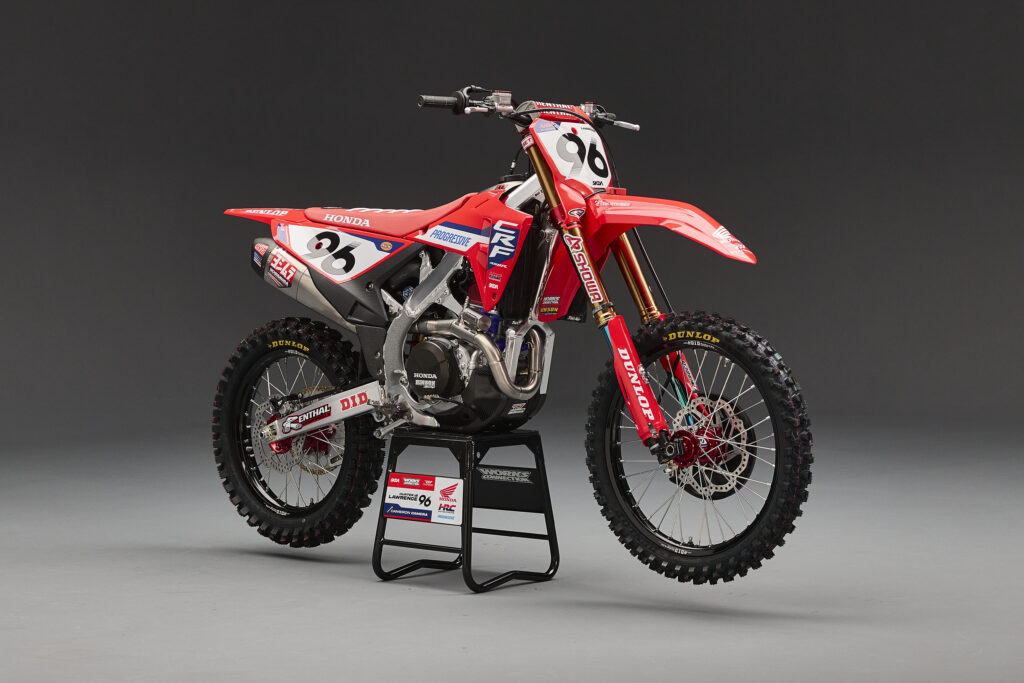
Honda is also selling selected racing memorabilia at SEMA, including historic Formula One engine components and collectible models. For enthusiasts, the heritage machines are more than decorations. They help explain why a manufacturer with a reputation for practical family transportation continues to spend considerable resources competing in some of the world’s most demanding racing categories. They also provide an important historical connection between competition, engineering, and the corporate identity Honda has built over decades.
Looking Beyond the 1,300 Horsepower
The Passport Baja Spec deserves its headlines. A 1,300-plus-horsepower hybrid Trophy Truck is an extraordinary engineering project, and Honda’s decision to challenge the established formula of big V8 desert racers makes it particularly interesting. The Civic Type R HRC Concept deserves attention too, especially now that Honda has confirmed American development. But I suspect the more enduring significance of Honda’s 2026 SEMA presentation will be found in its performance-parts business. Honda has spent decades developing racing engines, chassis systems and the expertise required to make them work under extreme conditions. Now the company is creating a clearer route for ordinary customers to buy selected products derived from that engineering knowledge. Whether the program succeeds will depend on three things: measurable benefits, sensible pricing, and confidence that the accessories work properly with the vehicles they are intended to improve.
There is no reason every driver needs racing parts. A Civic Hybrid remains an excellent choice for someone who simply wants comfortable, efficient transportation. But owners who enjoy enthusiastic driving or regularly take their SUVs onto demanding terrain may appreciate having more carefully developed options. That is Honda’s real opportunity. The racing cars demonstrate what its engineers can build when performance is the overriding priority. The new HRC accessories will have to demonstrate what those engineers can improve when the customer still needs to drive home afterward. And that, rather than the inevitable horsepower contest, is the story worth following after SEMA closes.