Honda Engines: What Racing Really Means for Your Car
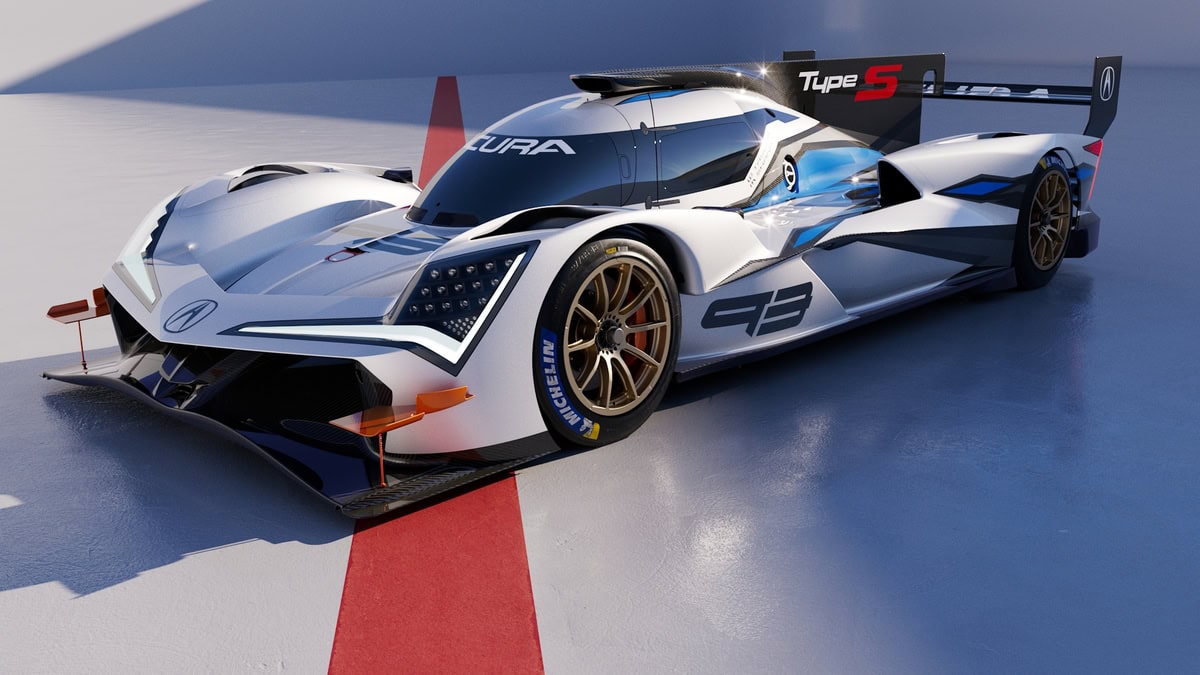
Honda engines connect Acura racing, boats, and jets, but Integra Type S buyers should judge the road car on evidence that matters to ownership.
From the passenger seat of an Acura Integra Type S on a circuit, the familiar equipment takes on a slightly ridiculous quality. There are license plates, air conditioning and room for shopping. The car is occupied with something considerably more entertaining than bringing groceries home. That contrast is a useful starting point for understanding Honda’s engine business.
The temptation is to draw a straight line from the Acura prototype in the paddock to the car in a showroom. That would make a tidy sales pitch. The engineering relationship deserves a more careful explanation, particularly for anyone deciding whether motorsport heritage should influence a purchase.
Honda engines deserve a closer look than the badge
Honda identifies itself as the world’s largest engine manufacturer. Attribute that description to the company, and remember what is being counted: engines across motorcycles, automobiles and equipment, rather than cars alone. The breadth is striking even without treating the claim as an independently audited ranking.
General-purpose engines also power products sold by other equipment makers. Honda’s work includes generators, pumps, construction machinery and lawn-equipment applications, alongside its marine and automotive operations. An engine business can therefore reach customers who never visit one of its car dealerships.
You may also enjoy: Honda’s Next Move: Hybrids, EVs, and Supply
The revealing point is how differently those customers define success. A contractor values productive working hours. A family wants predictable transport. A boat owner needs propulsion available when returning to shore. Engine output matters in each case, but reliability, maintenance and operating costs determine whether that power is useful.
The machinery also faces different emissions requirements. The EPA distinguishes on-road and nonroad applications; engineering an engine for one assignment does not automatically qualify it for another. Corporate experience offers context, while each product still needs its own development and validation.
What an endurance prototype can actually demonstrate
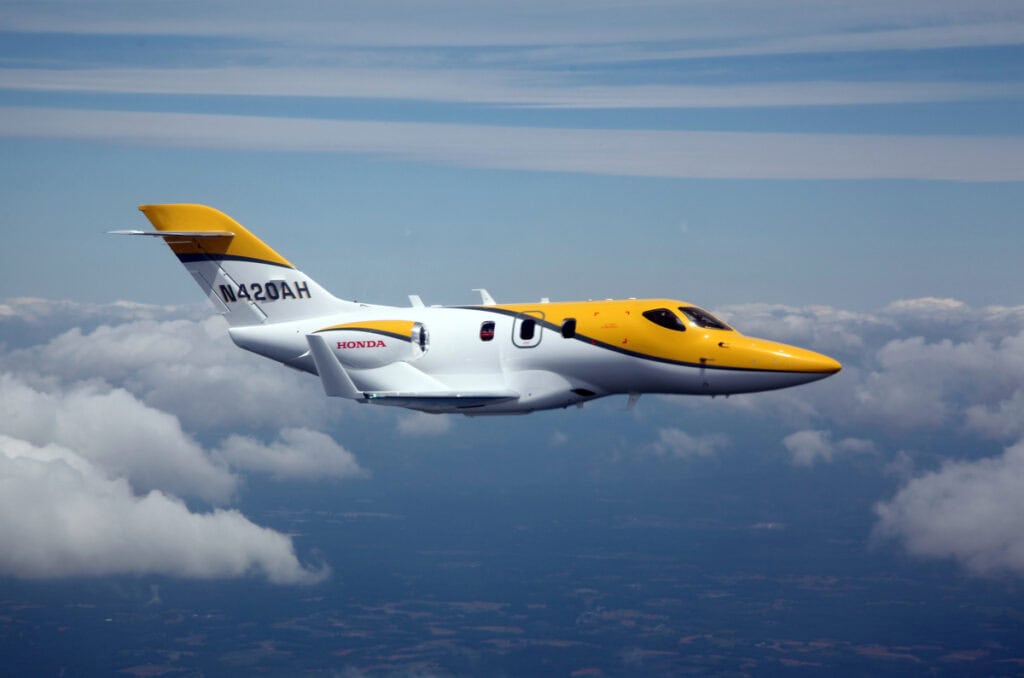
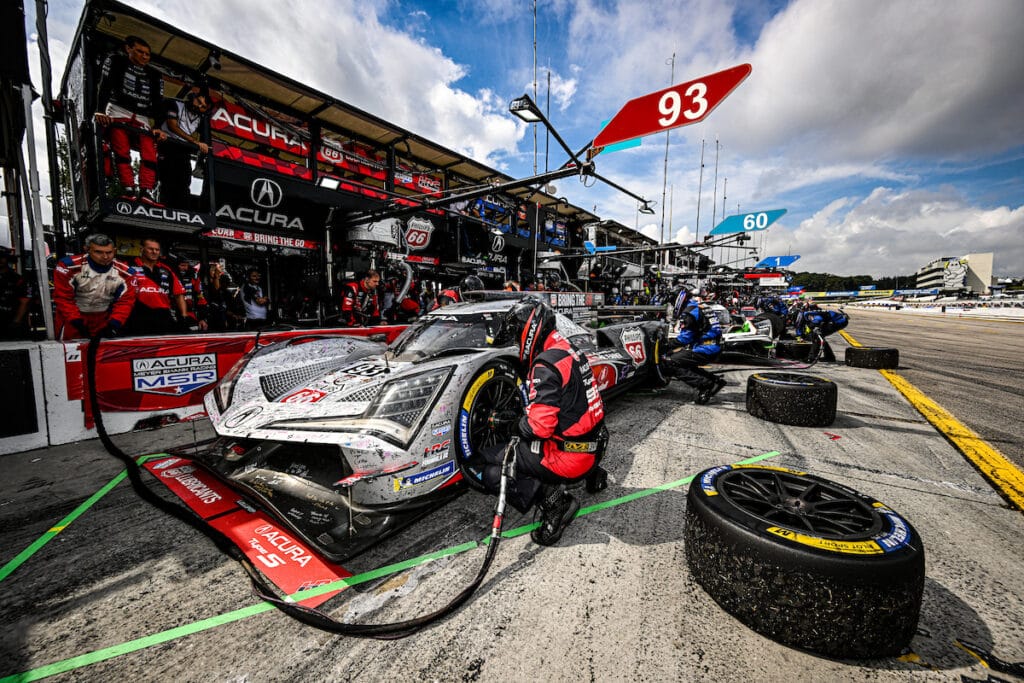
The Acura ARX-06 competed with a bespoke 2.4-liter twin-turbo V6 and a hybrid powertrain. Its engine originated with Honda Performance Development, now Honda Racing Corporation USA. Calling it bespoke matters: this was an engine designed for competition, not a family-car powerplant with a louder exhaust.
Endurance racing exposes the difficulty of sustaining performance. Cooling, oil circulation, mechanical friction and control software all have to support repeated demands over hours. One successful acceleration run tells engineers much less than operation through changing loads and temperatures. The challenge is to retain useful performance without exhausting the machine’s margins.
You may also enjoy: 2026 Honda Prelude Review: Is Slower More Fun?
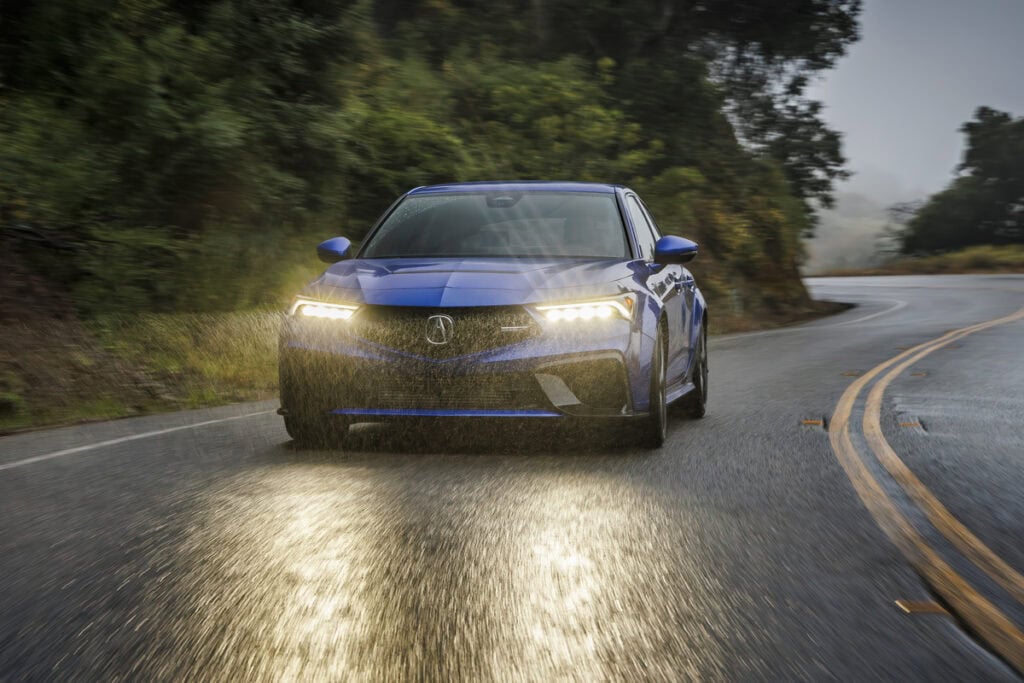
The presence of a hybrid powertrain creates a familiar category, but not identical hardware or objectives. In a road-going hybrid, an engine and electric motors can reduce fuel consumption while providing everyday propulsion. A racing hybrid must deliver competitive performance within its rulebook. Buyers should ask what their specific system accomplishes rather than assume the word “hybrid” means the same experience everywhere.
There is a timing qualification, too. Acura described the 2026 Petit Le Mans as the last event for this GTP program before a pause. The ARX-06 remains a worthwhile example of Honda’s engineering scope, but presenting it as an unchanged ongoing commitment would miss the company’s stated position.
Racing establishes what a competition program achieved under defined conditions. It cannot establish how much a commuter will spend on repairs in year eight. Porsche, BMW and Cadillac have their own engineering credentials, and buyers deserve the same distinction between competition achievement and ownership evidence from every brand.
The bigger surprise is beyond the racetrack
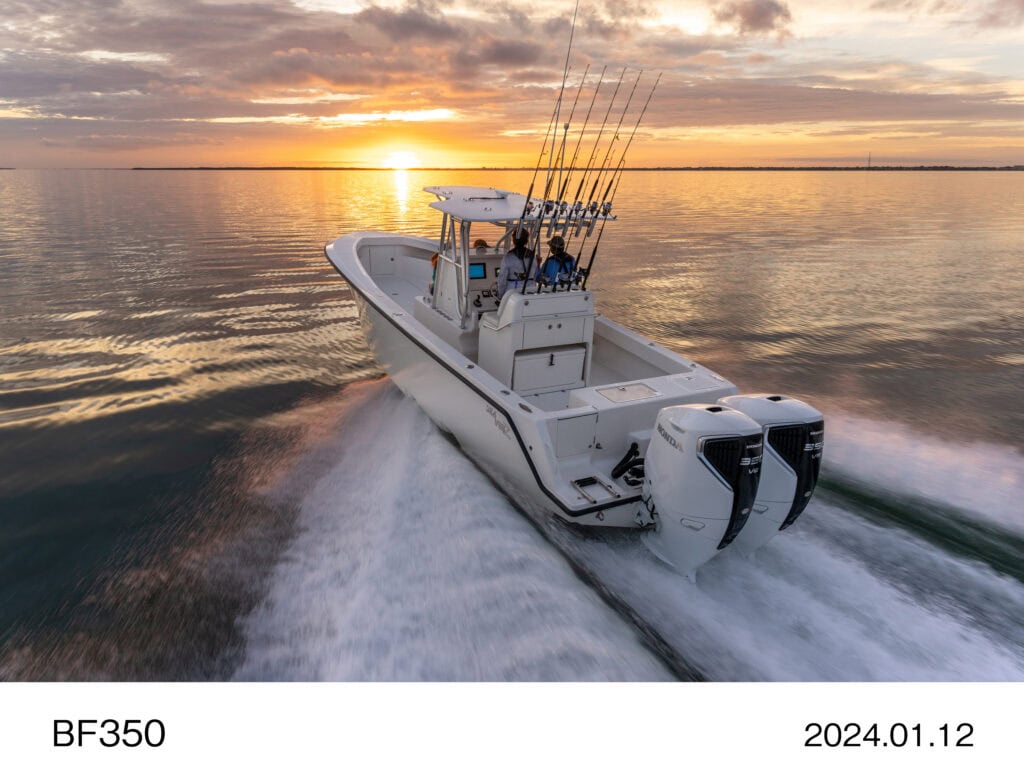
My reporting moved from Road Atlanta to Lake Lanier, where Honda’s marine operation supplied an entirely different setting for the engine story. On a boat, dependable propulsion feels less abstract. When the shoreline is somewhere else, an engine that keeps running is more immediately interesting than a clever advertising slogan.
The aircraft connection stretches the comparison further. Honda worked with GE through their joint venture on the HF120 turbofan used by HondaJet. That is a separate engineering undertaking, with partners and aviation requirements that should remain visible in the telling.
You may also enjoy: Acura NEXERA Vision Makes Simplicity Feel Radical
NASA’s explanation of gas turbine propulsion helps show why the distinction matters. A jet’s compressor, combustor and turbine arrangement differs fundamentally from the reciprocating engine in an automobile. Shared engineering questions about heat and efficiency should not be confused with a shared engine design.
For a shopper, the practical conclusion is modest. A manufacturer’s range can explain its identity and technical interests. It provides no shortcut around checking the actual vehicle, its service requirements and its suitability for the work you expect it to do.
The Integra Type S makes the useful connection
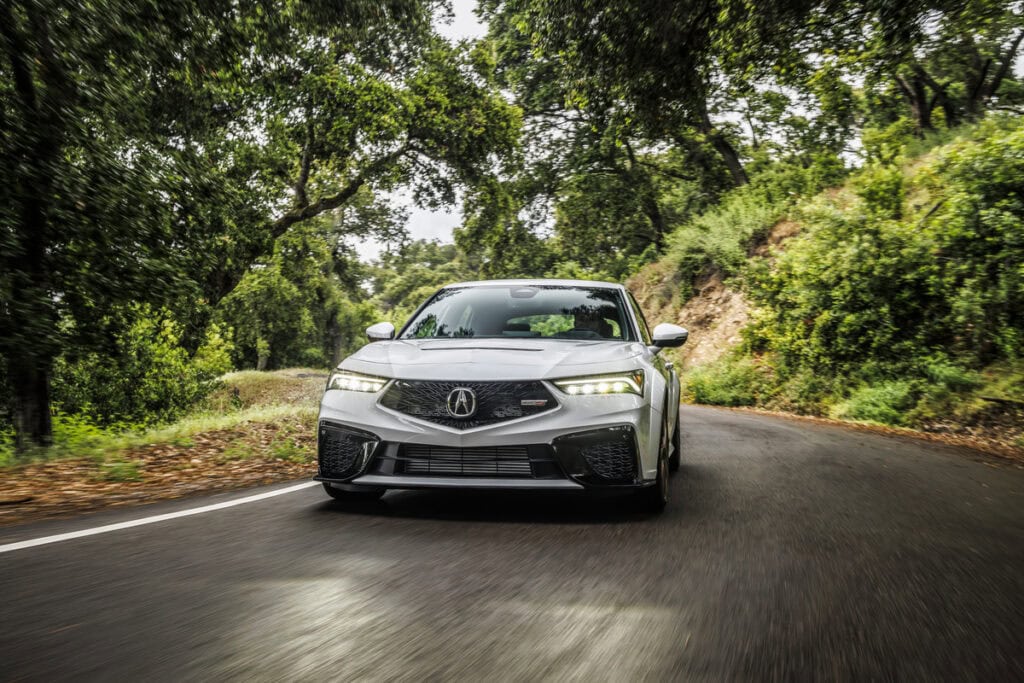
The Integra Type S puts performance within an everyday body shape. Its 320-horsepower turbocharged 2.0-liter four-cylinder, manual gearbox and chassis hardware serve a road car that also carries people and luggage. That balancing act is more relevant to a potential owner than a prototype’s resemblance to something in a brochure.
The EPA explains how turbocharging allows a smaller engine to provide greater output when required. It does not follow that every turbocharged performance car will be economical in every driver’s hands. Driving conditions and use still matter, particularly when the attraction is exploiting the available performance.
You may also enjoy: 2026 Honda Civic Review: Hybrid Is the Smart Buy
My recommendation is to choose according to the journeys you actually make. Someone seeking manual-transmission involvement has a reason to consider the Type S. A driver mainly interested in reducing commuting costs should compare efficient alternatives before paying for capability that may rarely be used.
For a used example, inspect maintenance records, tire condition and signs of hard use. Check its VIN for safety recalls, and confirm whether any required work was completed. A manufacturer’s reputation cannot replace evidence about the individual car.
You may also enjoy: Acura MDX Type S: Can Smart Safety Keep You Engaged?
Honda’s reach from working equipment to aircraft is extraordinary enough without promising that a race engine somehow lives inside every family car. The stronger connection is the repeated task of making power dependable under very different conditions. Appreciate the breadth, enjoy the racing and then buy the car that proves useful in your own life. The paddock explains part of the company. Your driveway supplies the final examination.