BYD Folding Steering Wheel Disappears in 10 Seconds
The BYD folding steering wheel disappears into the Tai 9 SUV’s dashboard in 10 seconds, bringing futuristic cabin technology into production.
By Nik J. Miles
For years, automotive designers have been showing us concept cars with steering wheels that disappear into dashboards. Usually, somewhere between the glamorous motor show presentation and the production line, the clever bits disappear instead. Chinese automaker BYD has decided to do things the other way around.
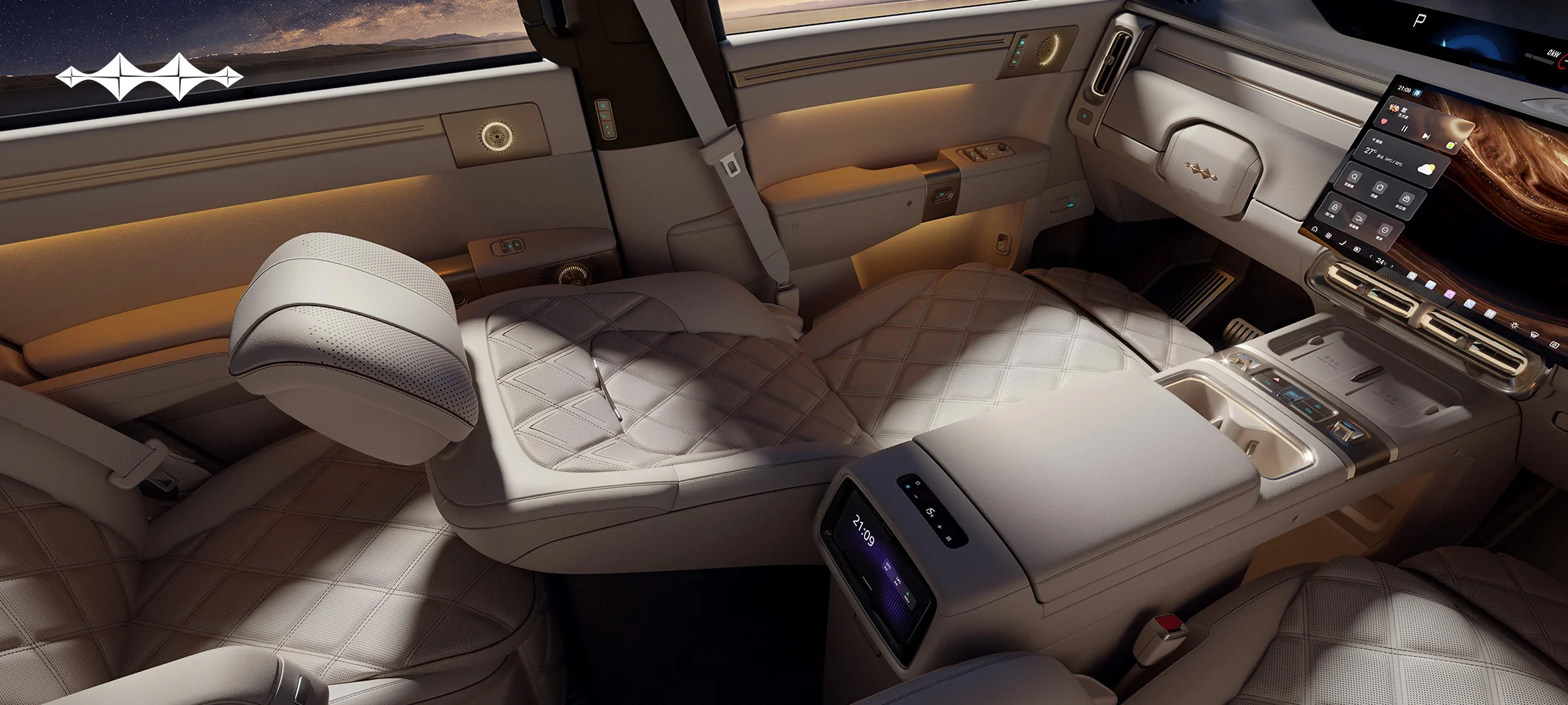
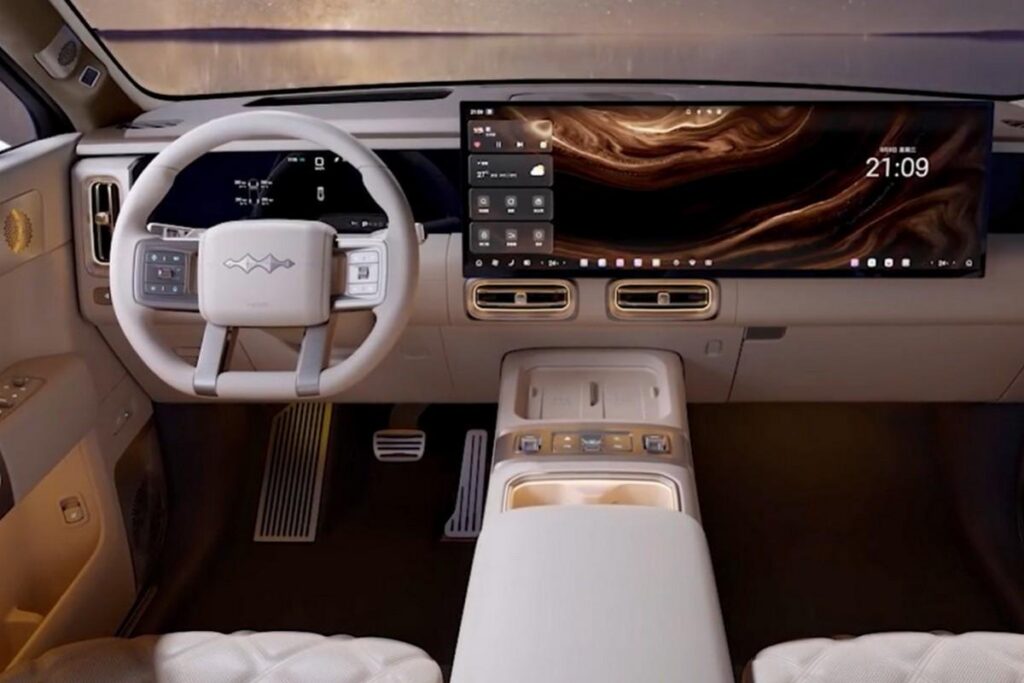
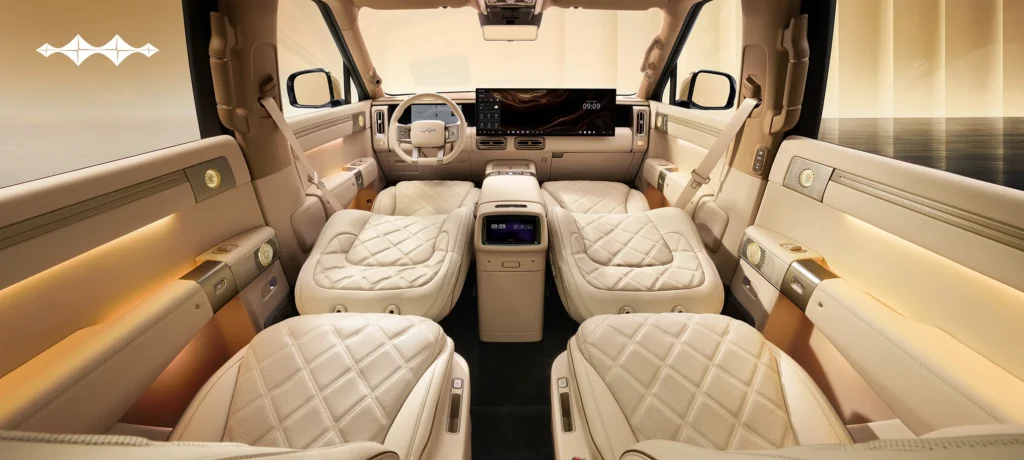
Its Fang Cheng Bao brand launched the Tai 9 in China on November 19, a substantial six-seat luxury SUV with a steering wheel that folds away when the vehicle is stationary. The entire operation takes approximately 10 seconds. A motorized cover then conceals the mechanism, leaving the driver with considerably more personal space.
The most interesting part is that customers can actually buy one. According to Fang Cheng Bao, the folding steering wheel is part of a broader effort to rethink how people use their vehicles when they aren’t driving.
You may also enjoy this video:
How the BYD Folding Steering Wheel Works
The engineering behind this disappearing act is steer-by-wire, which replaces the traditional mechanical connection between the steering wheel and the road wheels with electronic controls. Sensors detect the driver’s steering inputs, computers interpret them, and electric actuators turn the wheels accordingly.
Removing the conventional mechanical connection gives engineers considerably more freedom when designing the dashboard. BYD uses that freedom to incorporate a powered folding mechanism capable of rotating through 180 degrees before retracting into the dashboard.
There is even a connection to robotics. The company has reportedly adapted motor technology developed for humanoid robots to operate the folding assembly. Fang Cheng Bao claims the mechanism is designed to withstand 80,000 operating cycles, although independent long-term reliability results aren’t yet available.
American drivers have already encountered steer-by-wire technology in the Tesla Cybertruck. BYD’s innovation demonstrates how the same fundamental engineering principle can serve an entirely different purpose.
You may also enjoy: 2026 Tesla Cybertruck Review: Brilliant but Expensive
A Living Room Where the Driver Used to Sit
Before anyone imagines disappearing the steering wheel at 70 mph on Interstate 5, the folding feature is intended for stationary use. It doesn’t turn the Tai 9 into a self-driving car, and the steering wheel retains physical controls for conventional driving.
The more immediate benefit is comfort. Once the wheel has been stored, the driver’s seat can recline to approximately 165 degrees. That transforms a space normally dedicated to operating a vehicle into somewhere to relax, read or take a break.
For an American driver who regularly spends time waiting outside a school, sitting at a charging station or arriving considerably too early for an appointment, the appeal is understandable. Anyone who has attempted to eat lunch behind a conventional steering wheel will appreciate the additional room.
The distinction between cabin convenience and automated driving matters. A vehicle’s ability to move its physical controls says nothing about its ability to navigate traffic independently.
You may also enjoy: Tesla Cybercab Hits Dallas: No Wheel, Now With Starlink
Approximately $49,000 Buys the Clever Version
The Fang Cheng Bao Tai 9 starts at 279,900 Chinese yuan, equivalent to approximately $41,700 at the exchange rate reported around its launch. The range-topping version equipped with the folding steering wheel costs 329,900 yuan, or roughly $49,100.
Those figures represent Chinese-market pricing, not projected American sticker prices. Import costs, regulatory compliance, distribution and market-specific equipment would substantially complicate any direct comparison.
Nevertheless, the hardware included at that price deserves attention. Measuring approximately 207.5 inches long, the Tai 9 is a large three-row plug-in hybrid SUV with a turbocharged 1.5-liter gasoline engine and electric motors powering both axles.
Reported combined output is approximately 536 horsepower, with a manufacturer-claimed acceleration time of 4.8 seconds from zero to 62 mph. A 66.48-kWh battery provides substantial energy storage for a plug-in hybrid, with the company claiming approximately 249 miles of electric driving under China’s CLTC testing procedure.
That figure should not be confused with an American EPA range rating. Differences in testing procedures make direct comparisons unreliable.
The combination of a substantial traction battery, gasoline backup and extensive cabin technology makes the Tai 9 particularly interesting beyond its disappearing steering wheel.
You may also enjoy: Hyundai Alexa Built-in: Useful or One Assistant Too Many?

What Happens When Something Goes Wrong?
As entertaining as a folding steering wheel might be, steering remains one of the least appropriate places in a vehicle to discover a software bug.
Electronic steering systems require careful engineering to manage component failures, electrical interruptions and communication errors. A retractable assembly introduces additional questions about mechanical durability, position sensors and the safeguards preventing the mechanism from operating while the vehicle is being driven.
There are also questions surrounding repair costs and long-term ownership. A conventional steering wheel rarely requires an electric motor to put it back where it belongs.
Manufacturers must also ensure that sophisticated cabin features don’t encourage drivers to misunderstand the capabilities of their vehicles. Existing driver assistance technologies can provide valuable support, but they don’t automatically remove the driver’s responsibilities.
The National Transportation Safety Board has repeatedly emphasized the importance of effective driver monitoring and appropriate safeguards in partially automated vehicles.
You may also enjoy: BYD Shark 6 Hack Exposes a Much Bigger Car Risk

Why American Automakers Should Pay Attention
There is no confirmed American retail launch for the Fang Cheng Bao Tai 9. But dismissing the vehicle simply because it isn’t available at a dealership in Ohio would overlook the significance of what BYD has accomplished.
American manufacturers compete in an increasingly international market for engineering talent, battery technology and automotive software. Chinese manufacturers are demonstrating that unconventional cabin features can make the transition from motor show display to commercially available equipment.
That doesn’t mean every innovation deserves copying. Manufacturers should still prioritize intuitive controls, dependable engineering and reasonable ownership costs. A complicated solution to a problem nobody has is simply another opportunity for an expensive repair.
You may also enjoy: Mercedes-Benz Takes On Tesla FSD With New Hands-Free Tech
What makes the Tai 9 compelling is that its designers have considered what customers do inside a vehicle when it isn’t moving. As cars become more electrified, connected and comfortable, that could become an increasingly important consideration in automotive interior design.
Would I pay extra for a steering wheel that disappears? That would depend on the cost, reliability and how much time I spent sitting in the car rather than driving it. But I would certainly like to see one demonstrated in person.
For decades, automotive companies have promised us the interior of the future. BYD has delivered one particularly entertaining piece of it, complete with a price tag and a production vehicle attached.
I’d just like the steering wheel to come back every time I ask it to.