Hennessey Blackbird: $2.5 Million and Zero Screens
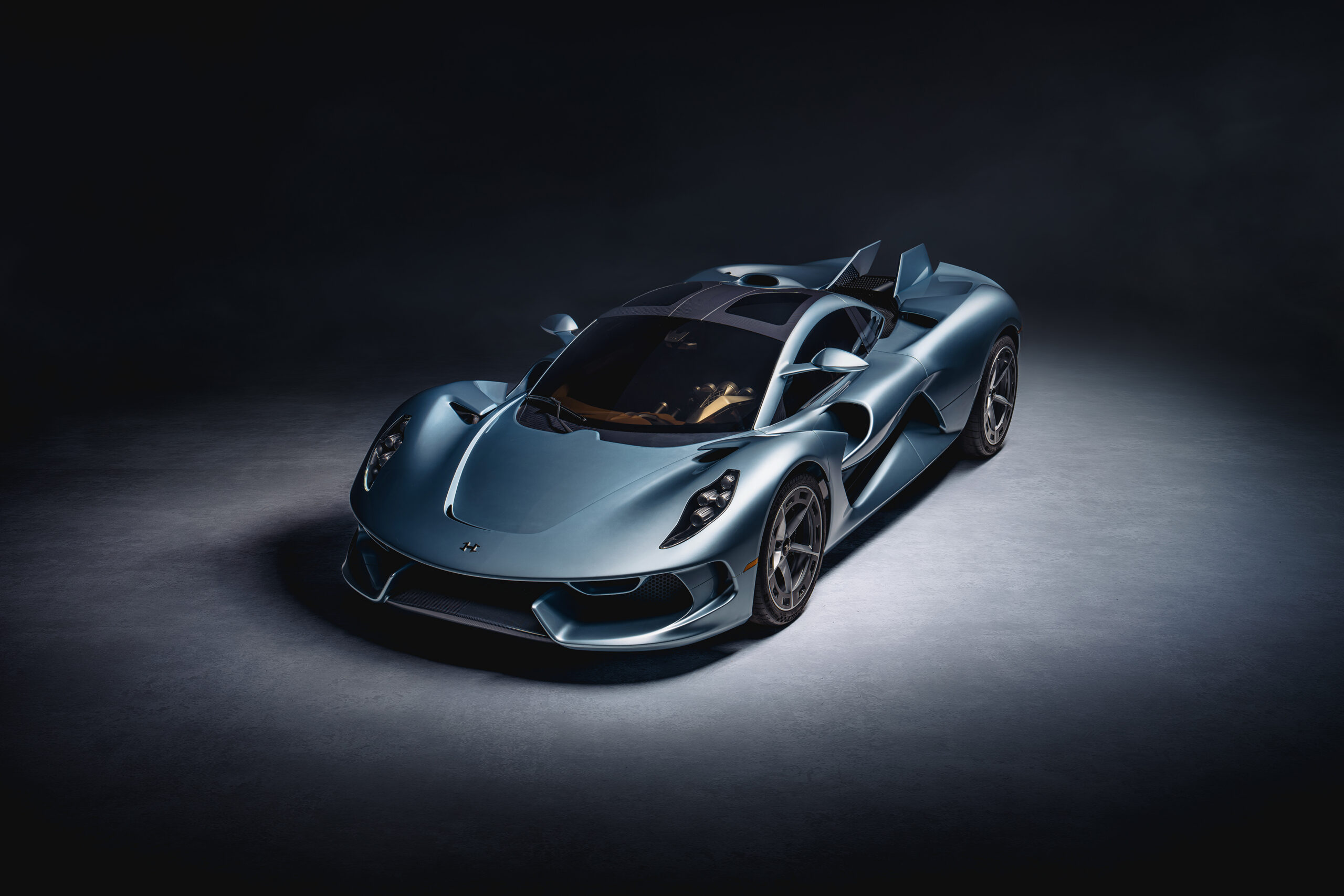
The Hennessey Blackbird brings an 850-hp target, fighter-jet styling, a six-speed manual and no dashboard screens to the $2.5 million hypercar market.
Imagine spending $2.5 million on a brand-new car, climbing through its gullwing door, and discovering there’s no touchscreen.
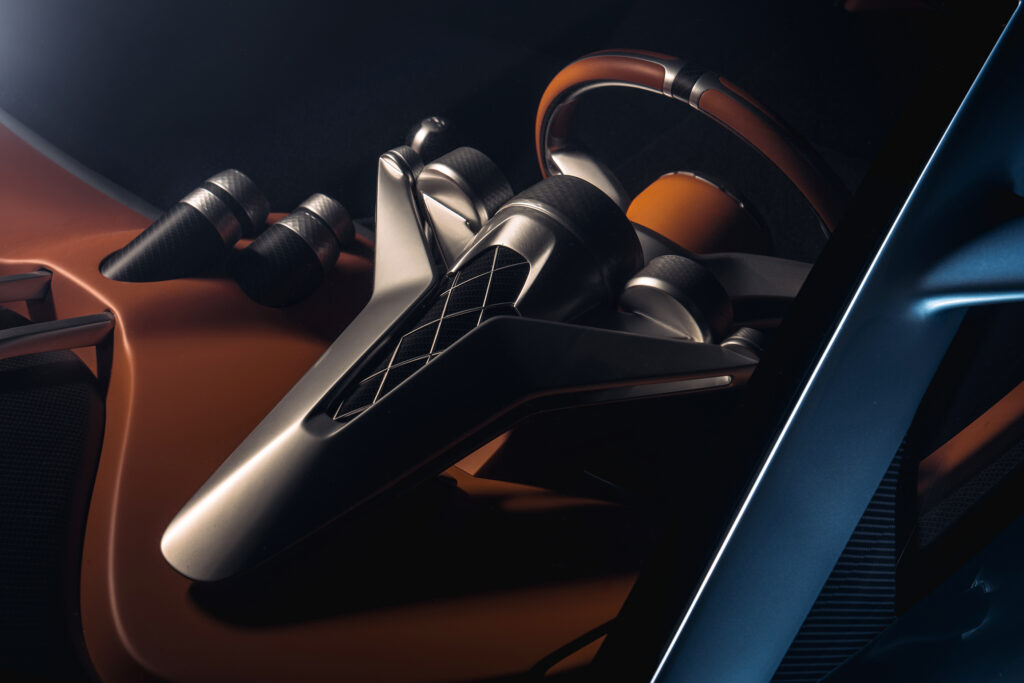
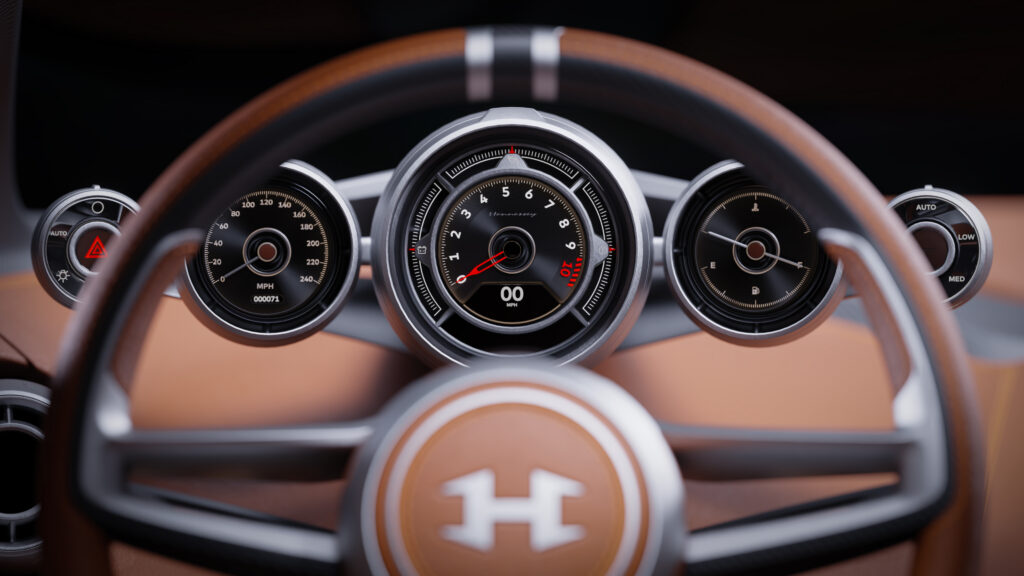
No giant display. No digital dashboard. No steering-wheel buttons. Just a proper ignition key, an enormous tachometer and a manual gear lever demanding your attention.
Welcome to the Hennessey Blackbird, perhaps the most gloriously expensive argument against the modern automotive dashboard.
Designed in Texas and inspired by one of America’s most extraordinary aircraft, this new hypercar is expected to produce as much as 850 horsepower without turbochargers or electric assistance.
There is one complication for anyone hoping to purchase one. All 71 planned examples have already been reserved, according to Hennessey.
And production isn’t expected to begin until 2029 or 2030.
You may also like this video:
Hennessey Blackbird: The $2.5 Million Screen-Free Hypercar
We’ve spent years watching the automotive industry turn dashboards into enormous tablets. Some manufacturers now seem determined to eliminate every physical button, presumably because finding the heated-seat control was becoming too straightforward.
Hennessey has made the opposite decision.
The Blackbird’s cockpit centers on a large analog tachometer, conventional switches, exposed gear-shift linkage and a physical key. Navigation and smartphone connectivity remain possible, but there is no permanently installed infotainment screen dominating the cabin.
For drivers who enjoy operating machinery, the attraction is obvious. You’re buying the experience of changing gears, managing engine speed and listening to a mechanical V8 doing something extraordinary.
Hennessey believes there are enough wealthy customers who want precisely that experience.
The remarkable response to its limited production allocation suggests the company has identified a genuine niche.
We’ve already explored the company’s original strategy in our first look at the Hennessey Blackbird. The more interesting development is what its reception tells us about collectors and the future of expensive performance cars.
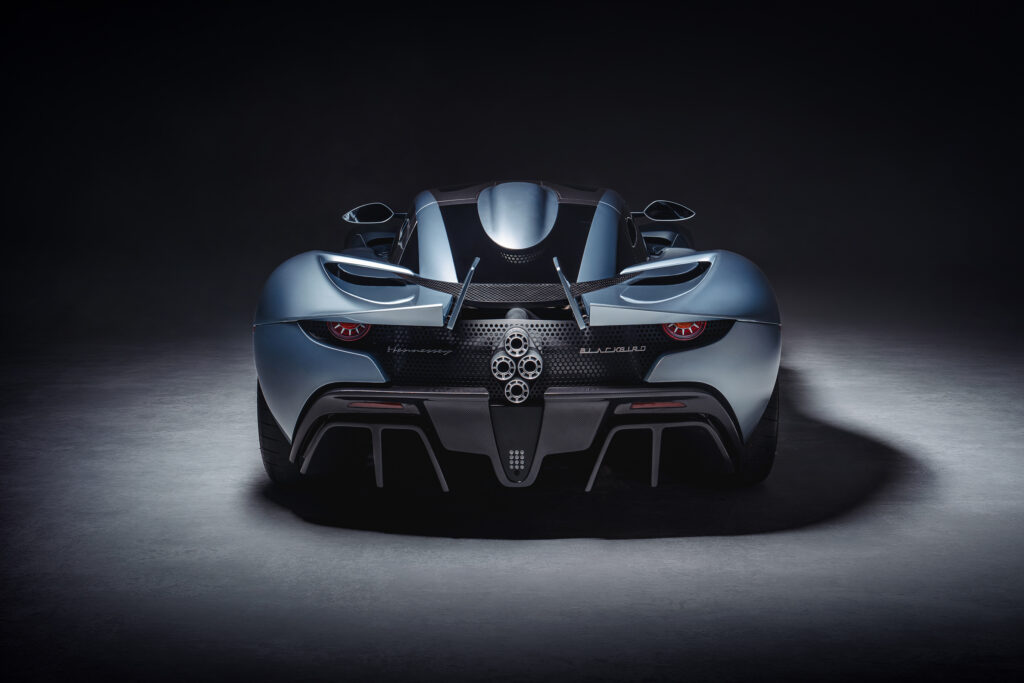
Inspired by a Spy Plane That Flew Above 85,000 Feet
The Lockheed SR-71 Blackbird was designed to travel at astonishing speeds while operating at extreme altitudes.
Hennessey’s interpretation borrows more than a memorable name.
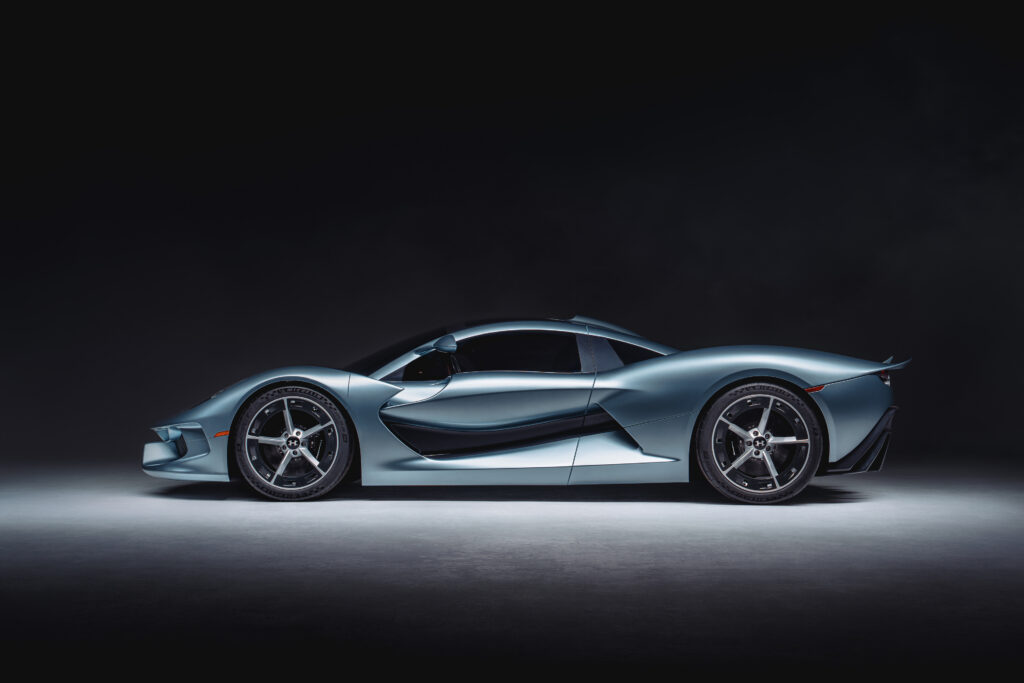
The car features an elongated body, sharply defined surfaces and active vertical stabilizers that deploy automatically at 71 mph. The angle of those stabilizers also incorporates the number 71.
It is an imaginative piece of automotive theater, although the actual aerodynamic contribution will need to be assessed when production cars are available.
Other details borrow from aviation and motorsport. Diamond-shaped exhaust outlets reference the Bell X-1, while the sculpted side sections draw inspiration from racing prototypes.
The aerospace connection is genuine design inspiration rather than a suggestion that this car possesses aircraft performance.
For context, NASA’s aeronautics research explores the science behind aircraft design, flight performance and aerodynamic efficiency.
And Hennessey isn’t alone in finding inspiration beyond ordinary road cars. The 830-horsepower Cadillac V-ONE concept takes a similarly dramatic approach, drawing directly on endurance racing rather than aviation.
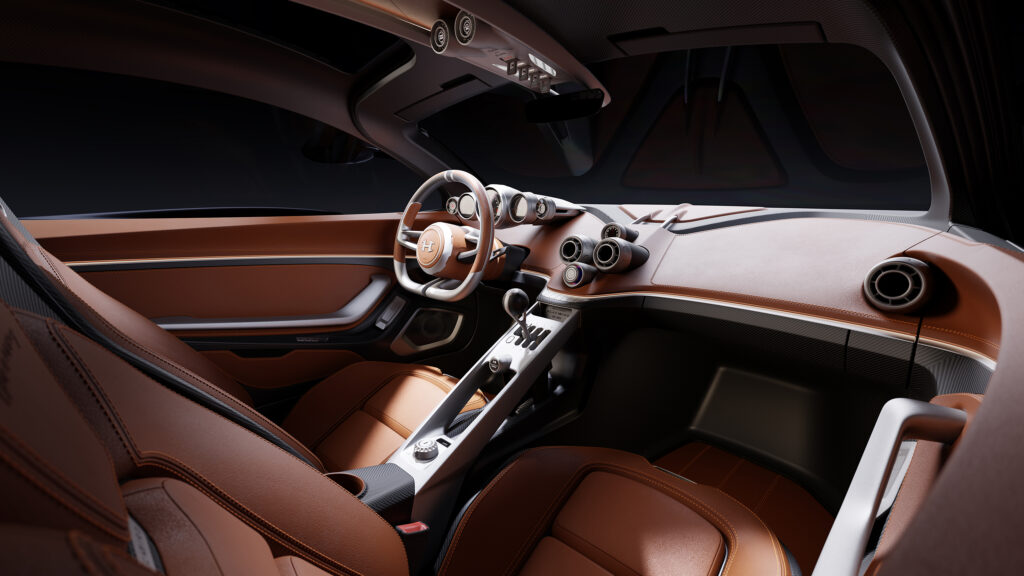
850 Horsepower, a Manual Gearbox and No Hybrid System
Beneath the Blackbird’s dramatic bodywork sits an all-new 6.2-liter naturally aspirated V8 being developed with Ilmor Engineering.
Hennessey is targeting between 800 and 850 horsepower, with engine speeds exceeding 9,000 rpm.
Those are substantial numbers for a road-car engine without forced induction.
The company expects the Blackbird to reach 60 mph in approximately 2.5 seconds and achieve a top speed of 220 mph. These are development projections, not verified production performance figures.
More importantly, power goes exclusively to the rear wheels through a six-speed gated manual transmission.
No automatic option. No all-wheel-drive safety net. No electric motor silently filling in the gaps.
There will, however, be modern anti-lock brakes, traction control and adaptive suspension. This is a performance machine with conventional driver controls, rather than a car stripped of electronic safety systems.
For a fascinating contrast, see the 838-horsepower Aston Martin Valen, which also pursues spectacular combustion performance without hybrid assistance, but uses a different powertrain philosophy.
Ilmor’s extensive engine-development experience gives the proposed V8 an interesting technical foundation. Ilmor Engineering specializes in high-performance engine design and development.
Whether Hennessey delivers the intended power, refinement and durability will be among the defining tests of the production vehicle.
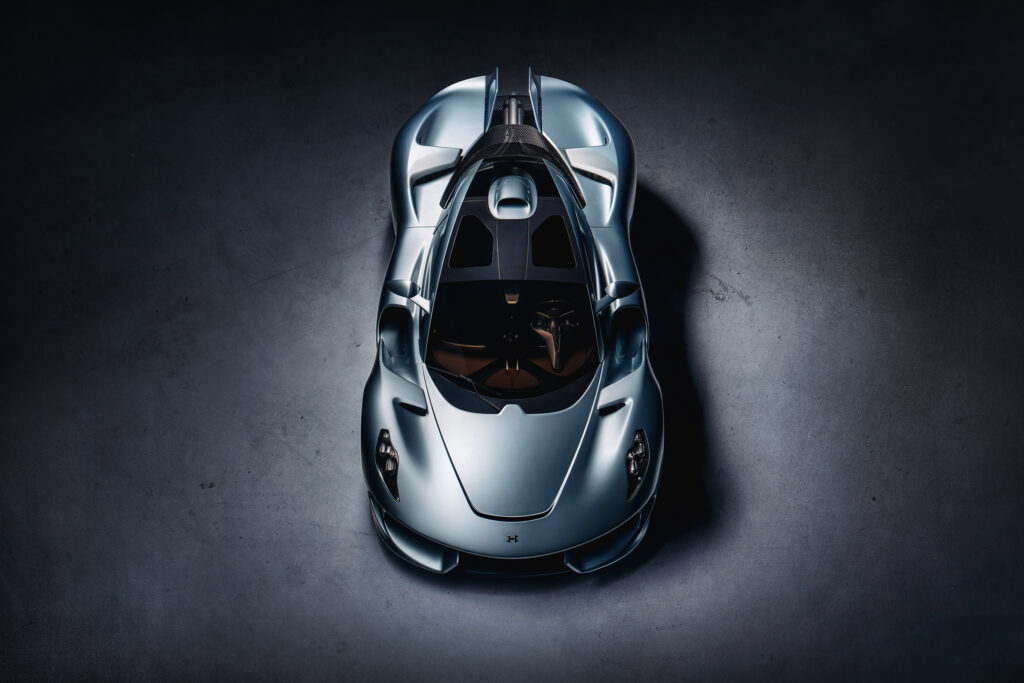
Four Cupholders in a Fighter-Jet-Inspired Hypercar
Here’s the detail I particularly enjoy.
This extraordinary machine, designed to resemble a legendary reconnaissance aircraft, includes four cupholders.
Four!
Apparently, even the world’s wealthiest enthusiasts need somewhere to put a large coffee.
Hennessey also intends to provide enough storage for two full-size carry-on bags, additional luggage compartments and a larger cabin than the Venom F5.
Its engineers are targeting comfortable journeys exceeding 800 miles in a day.
That ambition creates an intriguing challenge. A car with an engine capable of more than 9,000 rpm, aggressive performance tires and extremely lightweight construction must still manage highway noise, ride quality and temperature over long distances.
Michelin Pilot Sport Cup 2 tires are part of the planned specification. Michelin’s official tire information provides additional context about high-performance road tires and their operating characteristics.
Hennessey has also specified adaptive suspension, intended to accommodate different driving conditions.
It’s sensible engineering on paper. The finished car must prove it works outside a design studio.
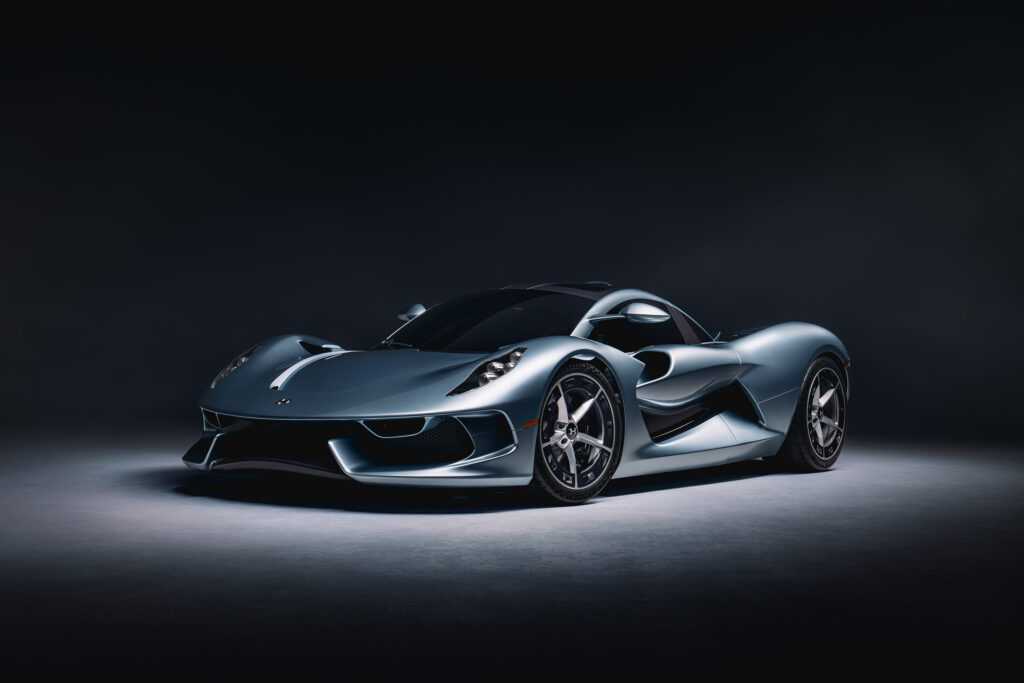
Why Wealthy Collectors Want Cars Like This
The Blackbird’s reception raises a larger question about automotive luxury.
Is the ultimate expensive car defined by how much technology it contains, or by the experience that technology creates?
Modern hypercars can produce enormous power through electric assistance, sophisticated drivetrains and increasingly complex electronics. That engineering is remarkable.
But wealthy collectors have another option: purchase something mechanically distinctive, extremely rare and deliberately challenging to drive.
That sentiment helps explain why historic high-performance machinery continues to command extraordinary prices. Our report on the Ferrari Enzo and Monterey’s $97.4 million auction examines the growing appetite for collectible performance cars.
It also explains why exclusivity remains such a powerful selling point. Lamborghini’s Monterey Car Week history demonstrates how limited editions, distinctive engineering and design can become central to a luxury performance brand.
Hennessey says all 71 Blackbird allocations were reserved following its August debut. However, a deposit-backed reservation is not equivalent to delivery of a completed vehicle.
For now, the company has demonstrated considerable interest among a small group of exceptionally wealthy buyers.
What Buyers Still Need to Know
The Hennessey Blackbird remains an ambitious development program.
Its planned carbon-fiber chassis and body target a weight below 3,000 pounds. Combined with projected horsepower, that could produce an extraordinary power-to-weight ratio.
But engineering targets have a habit of meeting uncomfortable realities: emissions certification, crash regulations, cooling requirements, durability testing and manufacturing complexity.
Hennessey says the vehicle is being developed for important international markets. Buyers should still confirm final country-specific certification and registration eligibility before delivery.
The National Highway Traffic Safety Administration provides information about U.S. vehicle safety requirements and manufacturer responsibilities.
And while removing dashboard screens may be appealing, it doesn’t automatically simplify ownership. The Blackbird still depends on sophisticated engine management, chassis electronics and specialist servicing.
The real test will come when finished customer vehicles start accumulating miles.
Test Miles Gear Pick: OEDRO
For more everyday adventures, explore OEDRO vehicle accessories, including selected cargo liners, floor mats, and utility equipment. Shop OEDRO directly or Shop OEDRO on Amazon. Use code NIKM20 at the OEDRO official store. Check current code terms and vehicle fitment before ordering. Test Miles may earn a commission from purchases made through these affiliate links.
My Take: America’s Most Expensive Anti-Touchscreen Protest
The Hennessey Blackbird fascinates me because its defining feature isn’t necessarily its horsepower, dramatic bodywork or astonishing price.
It’s the decision to make the driver work.
There’s something wonderfully defiant about developing an 850-horsepower manual car when much of the industry is moving toward greater automation.
Would I enjoy driving one? The engineering brief certainly sounds appealing. Would I declare it one of the greatest driver’s cars before getting behind the wheel? Absolutely not.
That verdict belongs to the finished machine, not the press release.
For now, Hennessey has demonstrated that at least 71 buyers are willing to reserve a $2.5 million American hypercar built around a wonderfully old-fashioned proposition.
Six gears. Two pedals? No, three. One enormous V8. Zero dashboard screens.
And four cupholders, because apparently even fighter-jet-inspired hypercars have priorities.