
Aston Martin Valen Delivers 838 HP With No Hybrid Help
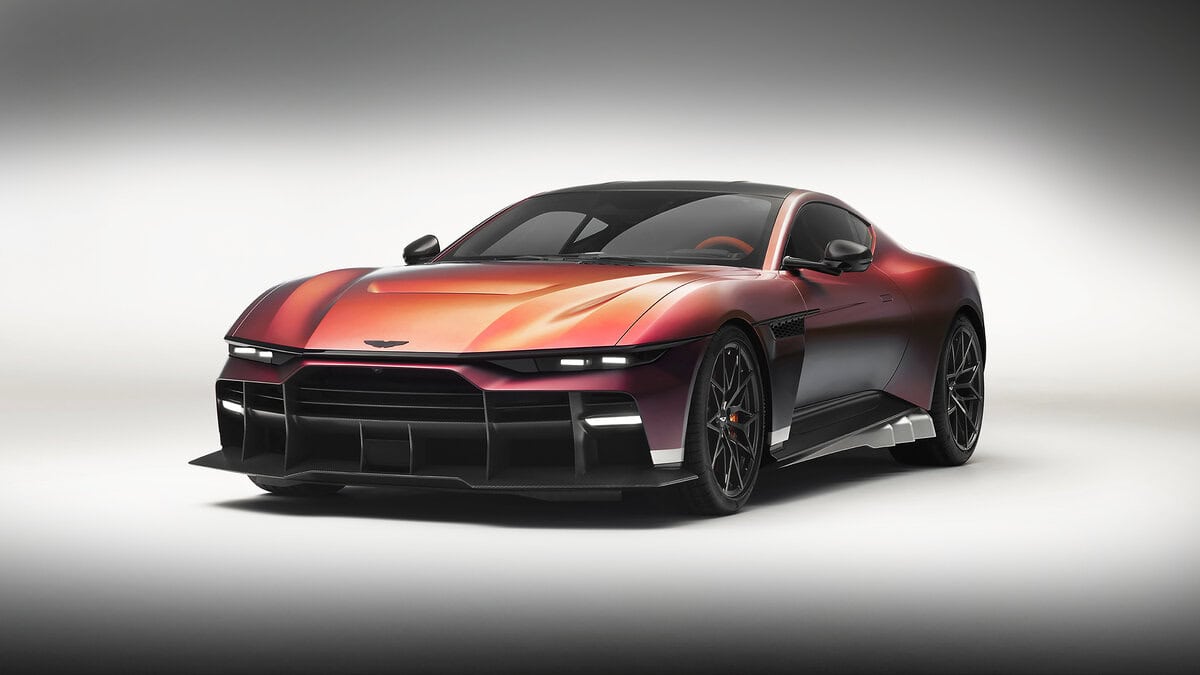
The Aston Martin Valen pairs an 838-hp twin-turbo V12 with a carbon-fiber body, 214-mph speed and production limited to 150 cars.
Why the Aston Martin Valen Matters Now
Aston Martin has chosen Monterey Car Week to introduce Valen, a front-mid-engine, rear-wheel-drive V12 special created by Q by Aston Martin and the company’s new Special Vehicle Operations department. Production is capped at 150 cars worldwide, with first deliveries scheduled for the second quarter of 2027. Pricing has not been announced.
That scarcity is only part of the pitch. Aston Martin calls Valen the world’s most powerful front-engined production car and the strongest front-engined model in its 113-year history. That is a company claim, but the engineering intent is clear.
This is a defiant brief in 2026. As performance cars adopt electric motors, Valen instead relies on V12 output and lower mass. The Department of Energy explains the role of lightweight materials. In a run of 150 cars, broad appeal is hardly the assignment.
You may also enjoy: Aston Martin Valhalla Review: 1,064 HP Hybrid Supercar
You may enjoy this video from Aston Martin:
A V12 With Less Weight and Sharper Reactions
Valen’s 5.2-liter twin-turbocharged V12 produces 850 metric horsepower, equivalent to 838 bhp, and 738 pound-feet of torque. Peak torque arrives at 2,500 rpm and holds through 5,000 rpm. Aston Martin targets 0–60 mph in 3.0 seconds and electronically limits top speed to 214 mph; the acceleration figure remains subject to final confirmation. Both numbers place Valen squarely in modern supercar territory.
Power reaches the rear wheels through a rear-mounted eight-speed ZF automatic and an electronic limited-slip differential. Shift programming borrows from the Vantage GT4 race car, while the carbon-fiber driveshaft and rear-mounted transmission help produce a claimed 53:47 weight distribution. There is no manual or all-wheel drive.
The more revealing number may be the claimed reduction of up to 243 pounds versus Aston Martin’s core V12 platform. Standard magnesium wheels reduce unsprung mass, while carbon fiber, aluminum, titanium and magnesium appear throughout. An optional package adds machined aluminum suspension parts and titanium chassis bolts, saving another claimed 37 pounds. Final curb weight remains an important unanswered question. Valen also uses additive manufacturing, a process supported by NIST research and standards work, for intricate cabin and exhaust components.
You may also enjoy: 2026 Aston Martin Vanquish Volante: £600 K of British Excess
You may enjoy this Aston Martin Video from Nik Miles:
Chassis, Tires and Brakes Work as a System
Valen uses model-specific springs, helper springs and Bilstein DTX semi-active dampers, along with a solid-mounted rear subframe. Aston Martin says it altered lateral stiffness, steering effort, wheel camber and electronic calibration to make the car respond like something shorter and lighter. Five drive modes—Wet, Sport, Sport+, Track and Individual—change the drivetrain, steering and chassis settings.
The throttle mapping is more thoughtful than a progression from mild to wild. Sport and Sport+ deliver more power earlier in pedal travel. Track uses a longer, progressive map for finer control near the tire’s limit, potentially making an extreme car easier to drive quickly.
Carbon-ceramic brakes measure 16.1 inches front and 14.2 inches rear. Pirelli P Zero R tires measure 275/35 ZR21 up front and 325/30 ZR21 at the rear. Pirelli’s Cyber Tyre can share real-time data with the car’s stability, braking and traction-control systems. NHTSA explains how electronic stability control uses computer-controlled braking to help a driver maintain control, although availability varies by market.
You may also enjoy: 656 HP, Rear-Wheel Drive, and No Apologies: 2025 Aston Martin Vantage
Carbon-Fiber Drama With a Usable Side
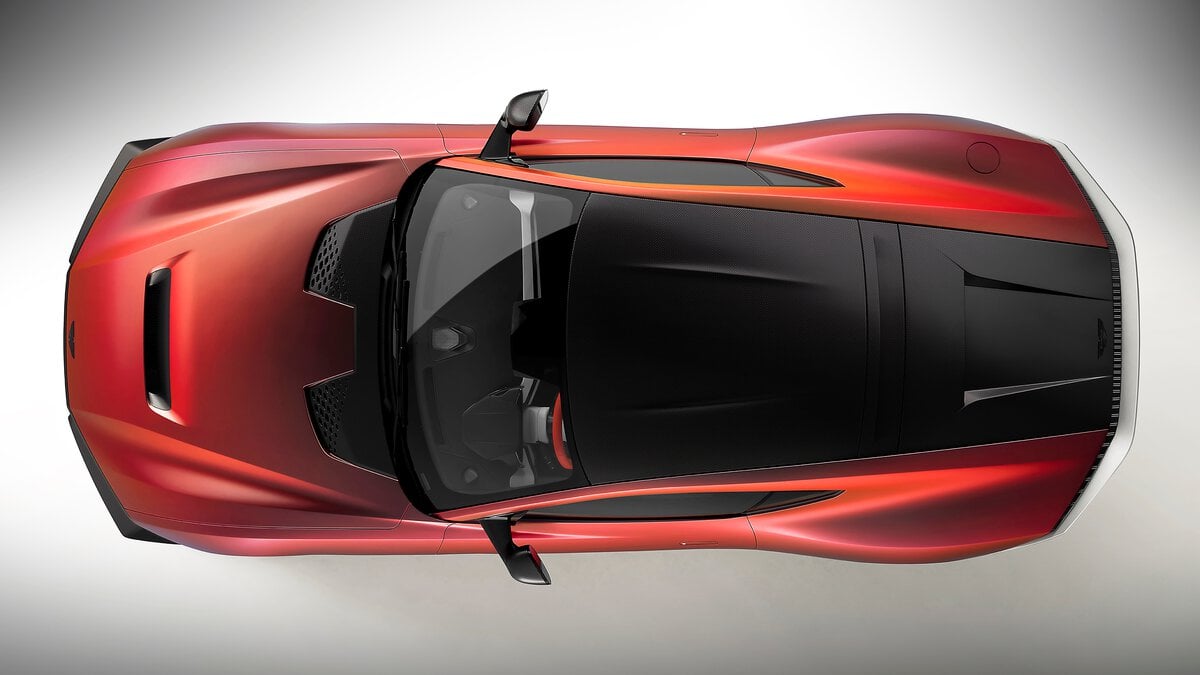
Valen’s full carbon-fiber body is no restrained variation of an existing Aston Martin. Slim lamps sit beneath a plunging hood, front-arch vents feed air along the flanks, and stepped sills carry saw-tooth vortex generators. An upswept tail acts as a Gurney flap without requiring a towering wing.
The show car’s Satin Andromeda Red finish shifts among red, copper, gold and blue. Buyers can expose the carbon weave, tint it and choose satin or gloss. The herringbone weave runs down the centerline. NASA describes composite materials as strong, light and customizable; on Valen, the body material becomes part of the visual identity.
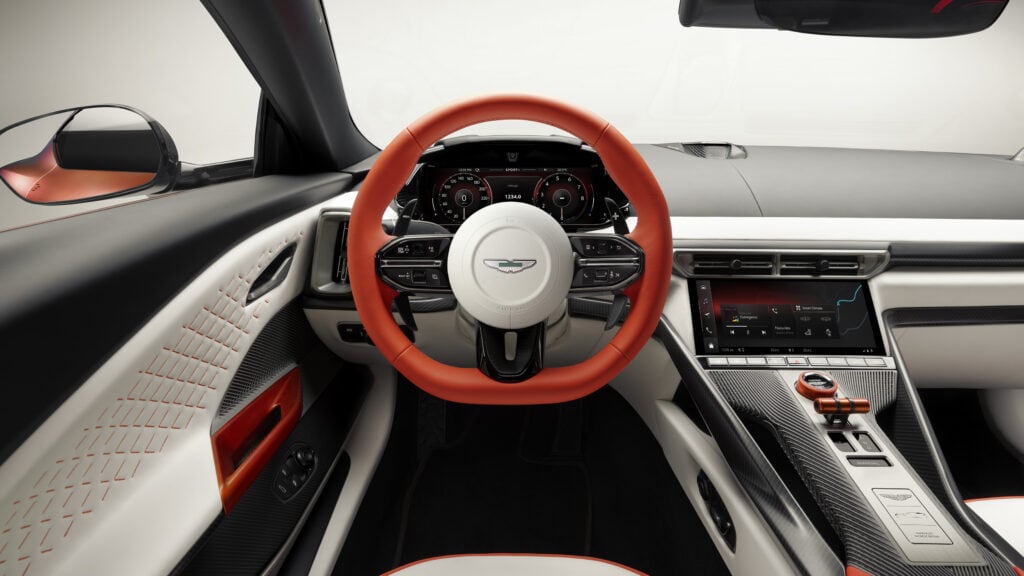
A solid tailgate replaces conventional rear glass and a trunk lid, yet opens to a 6.0-cubic-foot luggage area. An optional touring set suggests some owners may travel beyond the nearest concours lawn. Inside, a slim, driver-angled console is paired with Sports Plus or carbon-fiber performance seats.
The titanium exhaust may be Valen’s least subtle feature. Four 3D-printed finishers sit in upper and lower pairs; the upper outlets remain open, while valves control the lower pair. Aston Martin says the outlets create organ-pipe-like resonance as engine speed rises.
You may also enjoy: Aston Martin Heritage Edition Revives Five Classic Colors
Only 150 Cars, and Several Important Unknowns
Valen continues the Q division’s series of low-volume specials after projects including Valour, Valiant and DBR22. Its name comes from the Latin “valens,” referring to strength or power, and preserves Aston Martin’s long-running preference for model names beginning with V. The lineage matters because these cars sell a story as deliberately as they sell speed.
For collectors, 150 units and a theatrical V12 make the proposition easy to understand. Drivers must discover whether the weight reduction, steering work and Track throttle deliver the promised connection. Low mileage also does not eliminate maintenance; NHTSA specifically warns that collector cars can face tire-aging risks when they are not driven regularly.
The missing figures are significant. Aston Martin has not disclosed price, final curb weight, fuel-economy data or certified acceleration results. Those gaps should prevent the press release from becoming the verdict.
Valen is a 214-mph answer to the idea that the next performance leap must place a motor between engine and road. It will not settle that debate, and 150 cars cannot change the market. It can make one loud argument for the front-engined V12.
You may also enjoy: Aston Martin DB12 S VMF Trio Revives 1951 Racers