GM EV Batteries: Cheaper Electric Trucks by 2028?
GM EV batteries are taking a new direction as the company prepares manganese-rich cells that promise 400-mile electric trucks with lower battery costs.
There is a rather expensive problem sitting underneath America’s electric pickup trucks. It is large, heavy, packed with complicated chemistry, and can cost an extraordinary amount of money to manufacture.
I’m talking about the battery.
General Motors believes it has found a way to improve that equation. The company and LG Energy Solution are preparing to manufacture lithium manganese-rich battery cells at their Ultium Cells factory in Spring Hill, Tennessee, with commercial production targeted for 2028.
GM says the new technology could provide approximately 33 percent greater energy density than leading lithium iron phosphate batteries at a comparable cell cost. It also believes the technology could support electric pickups delivering more than 400 miles of range.
Those are potentially important developments, but here’s the question that matters to American buyers: will GM use the savings to build more affordable vehicles, or simply improve its own margins?\You may also like this Video:
GM EV Batteries Could Change the Price of Electric Trucks
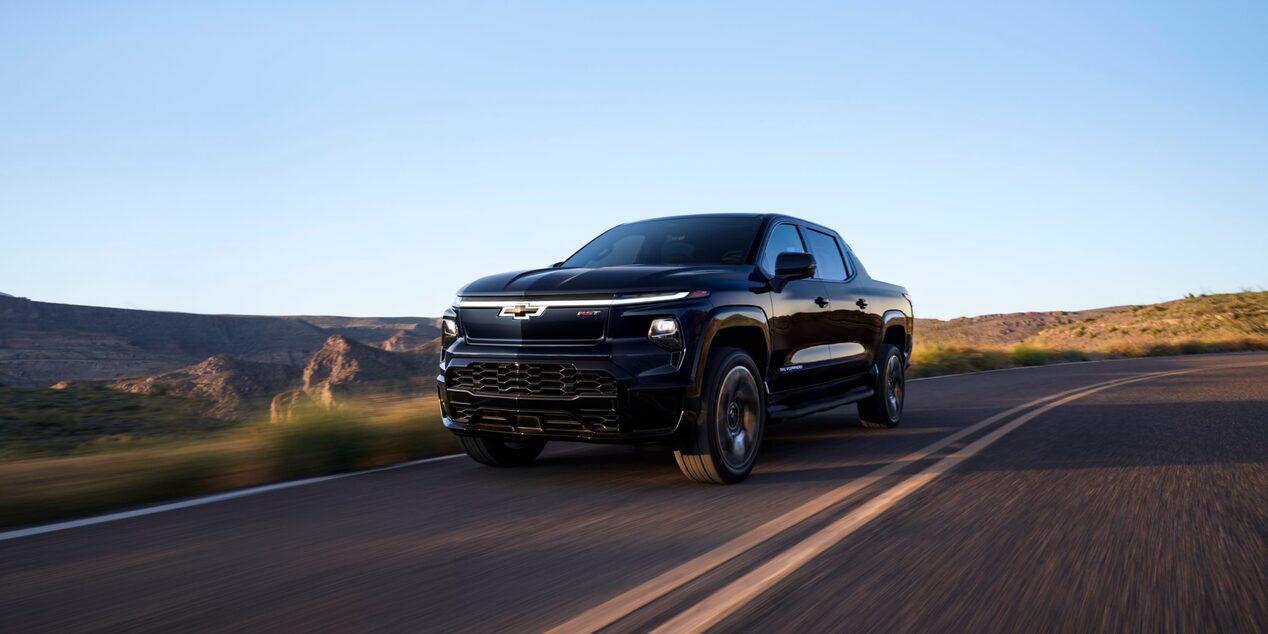
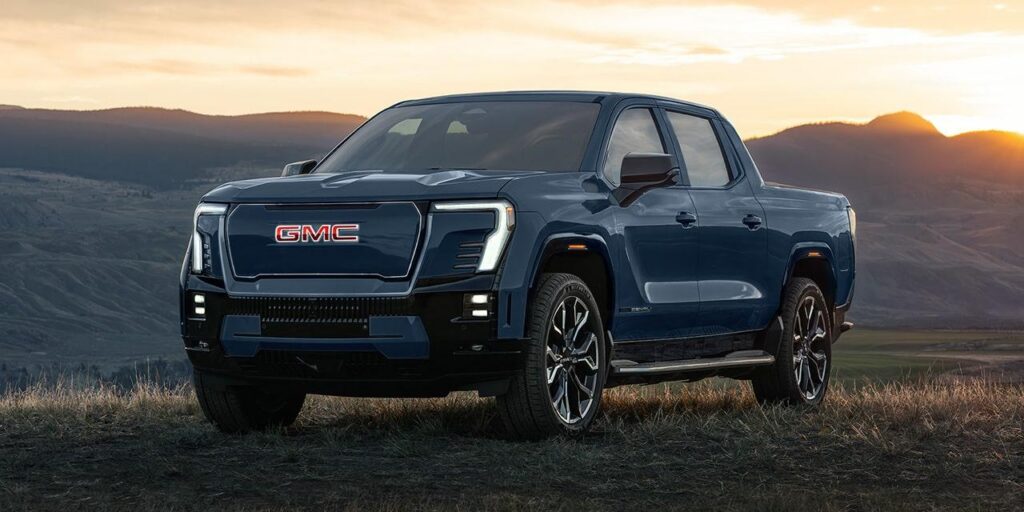
Consider the Chevrolet Silverado EV and GMC Sierra EV. Both demonstrate how much technology and battery capacity can be packed into a modern electric pickup. They also reveal the cost challenge facing manufacturers.
Providing hundreds of miles of range in a full-size truck requires a substantial amount of stored energy. Simply adding more battery cells increases cost and weight.
The Silverado EV shows why range has become such an important selling point. Some versions offer more than 400 miles of manufacturer-estimated driving range, although actual results depend on vehicle configuration and driving conditions.
What GM wants is to retain much of that capability while making the battery less expensive to produce.
The Department of Energy’s battery cost research illustrates how much progress has already occurred. Its estimates show that light-duty EV battery pack costs fell by approximately 90 percent between 2008 and 2023.
Further reductions could influence vehicle prices, but a lower-cost cell does not automatically produce an equally large reduction in a complete battery pack or finished vehicle.
You may also enjoy: 2026 Chevrolet Silverado EV Trail Boss: The Off-Road Electric Truck With Physics-Defying Range

Why GM Is Betting on Manganese Instead of More Nickel
Most buyers have never considered the materials inside their vehicle’s battery. That is entirely understandable. People purchase cars to get somewhere, preferably without conducting a chemistry experiment first.
However, battery chemistry influences almost everything that matters in an EV, including range, cost, weight, durability and charging performance.
Today’s lithium-ion battery systems use several different chemical compositions, each offering particular advantages.
High-nickel batteries can provide excellent energy density. Lithium iron phosphate, or LFP, batteries generally offer lower material costs and favorable durability characteristics, although typically with lower energy density.
GM’s proposed lithium manganese-rich chemistry attempts to occupy the space between those approaches.
Manganese can reduce the requirement for certain expensive cathode materials while allowing engineers to pursue higher energy density than conventional LFP cells.
But manganese-rich technology is not a discovery made last Tuesday. Researchers have spent decades investigating it, and previous designs struggled with voltage decay and limited battery life.
GM began its own research in 2015. Alongside LG Energy Solution, its engineers have developed changes to cathode materials, electrolytes and cell construction intended to overcome those limitations.
According to GM, its prototype testing had accumulated the equivalent of approximately 1.4 million miles of EV driving by the end of 2024. That is encouraging engineering evidence, but it is not equivalent to independently documented longevity across thousands of customer vehicles.
You may also enjoy: GMC Sierra EV Proves Utility Beats Hype
What Does 33 Percent More Energy Density Actually Mean?
This is the number GM would understandably like everyone to remember.
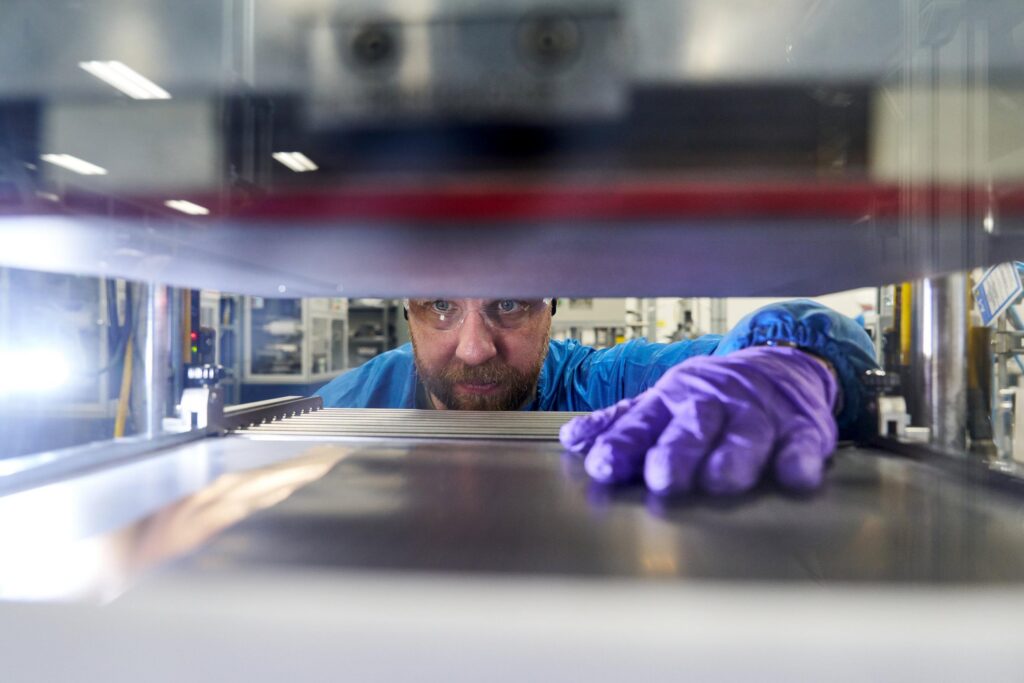
Its LMR cell design is intended to provide approximately 33 percent more energy density than leading LFP cells while maintaining a comparable cost at the cell level.
That doesn’t mean a vehicle currently capable of 300 miles will automatically travel 399 miles after receiving the new battery.
Vehicle range depends on efficiency, aerodynamics, weight, usable battery capacity, tires and driving conditions. Engineers must also consider the packaging and thermal-management requirements of the complete battery pack.
The new cells use a rectangular prismatic design that can improve packaging efficiency. That may help manufacturers use the available battery space more effectively.
For truck owners, the interesting potential is reducing battery cost without sacrificing the range that makes electric pickups practical for longer journeys.
I would still want to see independent range testing, cold-weather performance, charging curves and evidence of durability before declaring any new chemistry superior.
Long range on a specification sheet is useful. Predictable range after several winters is considerably more valuable.
You may also enjoy: 2027 Chevrolet Bolt: America’s Affordable Long-Range EV
Why Tennessee Is Becoming Important to GM’s Battery Strategy
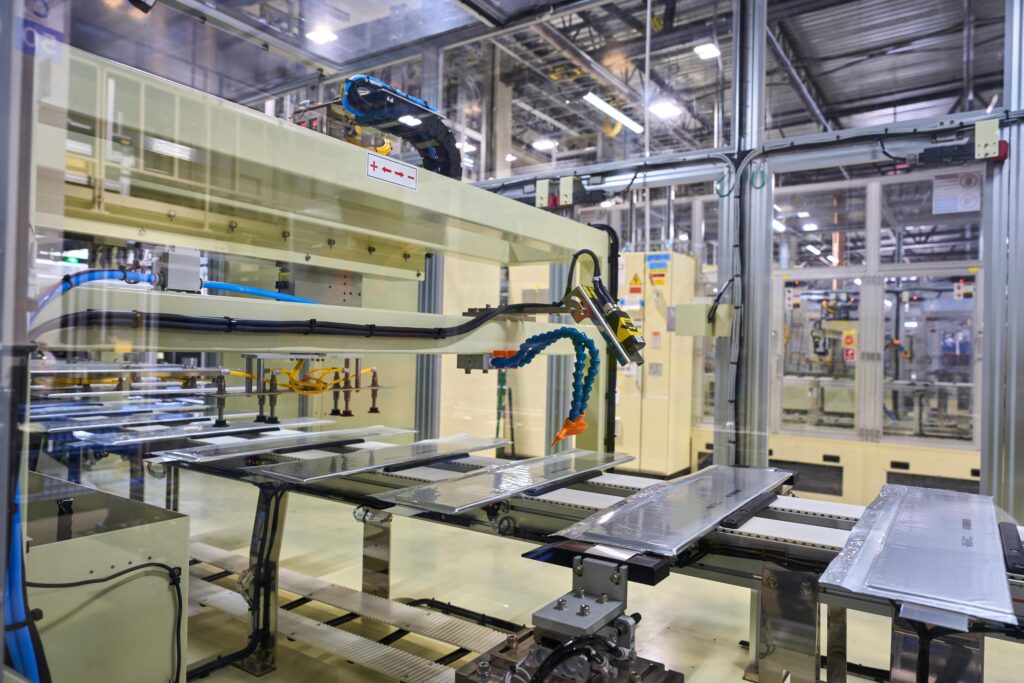
GM has confirmed that its Ultium Cells facility in Spring Hill, Tennessee, will manufacture the new LMR prismatic cells.
The project is expected to add approximately 500 jobs to an existing workforce of around 1,200. Facility construction and upgrades are expected to finish in 2028.
Meanwhile, GM’s battery research centers in Warren, Michigan, are helping move new cell technologies from laboratory prototypes toward commercial production.
The company has described nearly $900 million of investment across its Wallace Battery Cell Innovation Center and Ancker-Johnson Battery Cell Development Center.
These facilities have different responsibilities from the Tennessee manufacturing operation. Research and validation take place in Michigan, while Spring Hill is being prepared for commercial production.
Domestic manufacturing is only part of the equation. The Department of Energy’s critical minerals initiatives demonstrate the importance of establishing domestic capacity for materials processing and battery production.
A vehicle assembled in America can still contain battery materials sourced from overseas. That makes supply-chain resilience an additional consideration beyond the location of the final factory.
You may also enjoy: Ford’s Michigan Plant Backed by Tax Credits After Reboot
Could Sodium-Ion Batteries Make Electric Cars Even Cheaper?
There is another technology worth watching, although it needs to be separated from GM’s confirmed EV battery plans.
In June 2026, GM announced development work with Peak Energy involving sodium-ion cells for stationary electricity storage.
Sodium is abundant, making it attractive for large-scale energy applications where battery weight and packaging are less restrictive.
However, GM has not announced those particular sodium-ion cells for production Chevrolet, GMC or Cadillac vehicles.
For the foreseeable future, its confirmed automotive strategy involves a mixture of high-nickel, LFP and the forthcoming LMR chemistries.
Another important development is battery recovery. Federal programs supporting domestic battery recycling are intended to return valuable materials to the supply chain rather than relying entirely on newly extracted resources.
The Department of Energy’s Ultium Cells project also illustrates the scale of investment required to build domestic cell manufacturing capacity.
You may also enjoy: 2026 Cadillac OPTIQ-V: The Electric V-Series With Bite
Should You Wait Until 2028 to Buy an Electric GM Vehicle?
For most buyers, I wouldn’t postpone a necessary vehicle purchase solely because a new battery technology is approaching production.
GM has not announced the final prices, complete model lineup or individual vehicle specifications for its first LMR-powered products.
The 2028 target is for commercial battery-cell production, and vehicle introductions may follow their own schedules.
Instead, evaluate the EVs available when you need a vehicle. Compare real-world range, charging performance, battery warranty coverage, purchase price and the cost of installing home charging equipment.
If you’re buying an electric truck, pay particular attention to what happens to range when towing and traveling in cold weather.
And remember that a supposedly inexpensive battery technology is useful to buyers only when the finished vehicle delivers a meaningful financial or practical advantage.
OEDRO FLOOR MAT OFFER: Protecting the cabin is another part of long-term vehicle ownership. Shop OEDRO directly or Shop OEDRO on Amazon. Use code NIKM20 at the OEDRO official store. Check vehicle fitment and promotional eligibility before ordering. Disclosure: Test Miles may earn a commission from purchases made through these affiliate links.
The Bottom Line: Battery Savings Must Reach the Buyer
GM’s investment in new battery chemistry could become one of its most important electric vehicle developments of the decade.
The combination of manganese-rich materials, prismatic cell packaging and American manufacturing offers a plausible route toward less expensive long-range electric trucks.
But the success of this investment should ultimately be measured by the vehicles customers can purchase, rather than the capabilities of laboratory prototypes.
GM must demonstrate that the new cells remain durable, perform consistently and allow the company to offer better value.
If the technology succeeds, buyers could gain more range for their money. If the savings remain entirely inside the manufacturer’s balance sheet, consumers will have considerably less reason to celebrate.
The chemistry is impressive. Making it affordable is the real assignment.