AI Car Redesigns: Five Bestsellers Reimagined
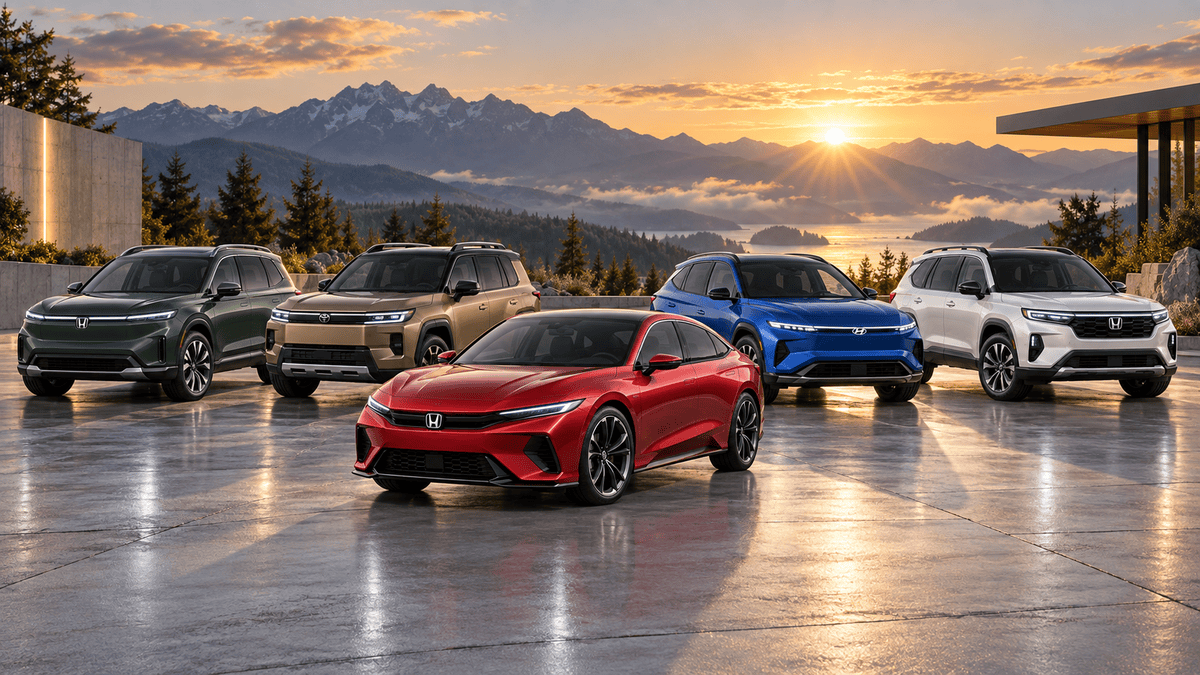
These AI car redesigns transform five heavily researched 2026 vehicles while preserving the practicality that made shoppers notice them.
You may also like this Video:
What AI Car Redesigns Can—and Cannot—Tell Us
Give artificial intelligence a photograph of a successful family vehicle and ask it to make the car prettier. It will happily lower the roof, enlarge the wheels and remove every inconvenient object that helps the vehicle survive production. That produces a splendid poster and, quite often, a dreadful car.
We imposed a harder brief. Starting with Edmunds’ current list of its five most-researched vehicles—the 2026 Honda CR-V, Toyota RAV4, Hyundai Tucson, Honda Civic and Honda Pilot—we asked AI to preserve seating, cargo usefulness and recognizable brand character. The pictures are commissioned AI illustrations, not manufacturer proposals. Even the “current” vehicles in the comparisons are AI-rendered representations, so official photography should remain the authority for exact production details.
Good design also cannot be separated from engineering. Roof pillars, bumpers and body structures must support crashworthiness; a dramatic nose must account for cooling, lighting and pedestrian safety. AI supplied the provocation. Human engineers would still have to make it legal, safe, affordable and repairable.

The CR-V Needs Desire, Not Reinvention
The Honda CR-V is first on Edmunds’ list because its formula is difficult to fault: sensible dimensions, generous room and little unnecessary theatre. Our redesign therefore keeps the upright glasshouse and squared cargo section. It changes the way the mass sits over the wheels.
The green proposal appears wider and lower without actually becoming a low vehicle. Its hood is cleaner, the lighting thinner and the upper grille largely replaced by body-colored structure. Stronger rear haunches and flush handles make the body look calmer. The panoramic roof adds visual lightness, while the cargo-friendly tail remains deliberately conventional.
That last decision matters. Styling that steals space from children, luggage or a large dog would misunderstand why people buy a CR-V. The goal is to add pride of ownership without subtracting the boring virtues that owners rely upon.
You may also enjoy: 50% Canadian Car Tariff: Models and Price Risks
RAV4 Becomes the Small Land Cruiser Toyota Does Not Sell
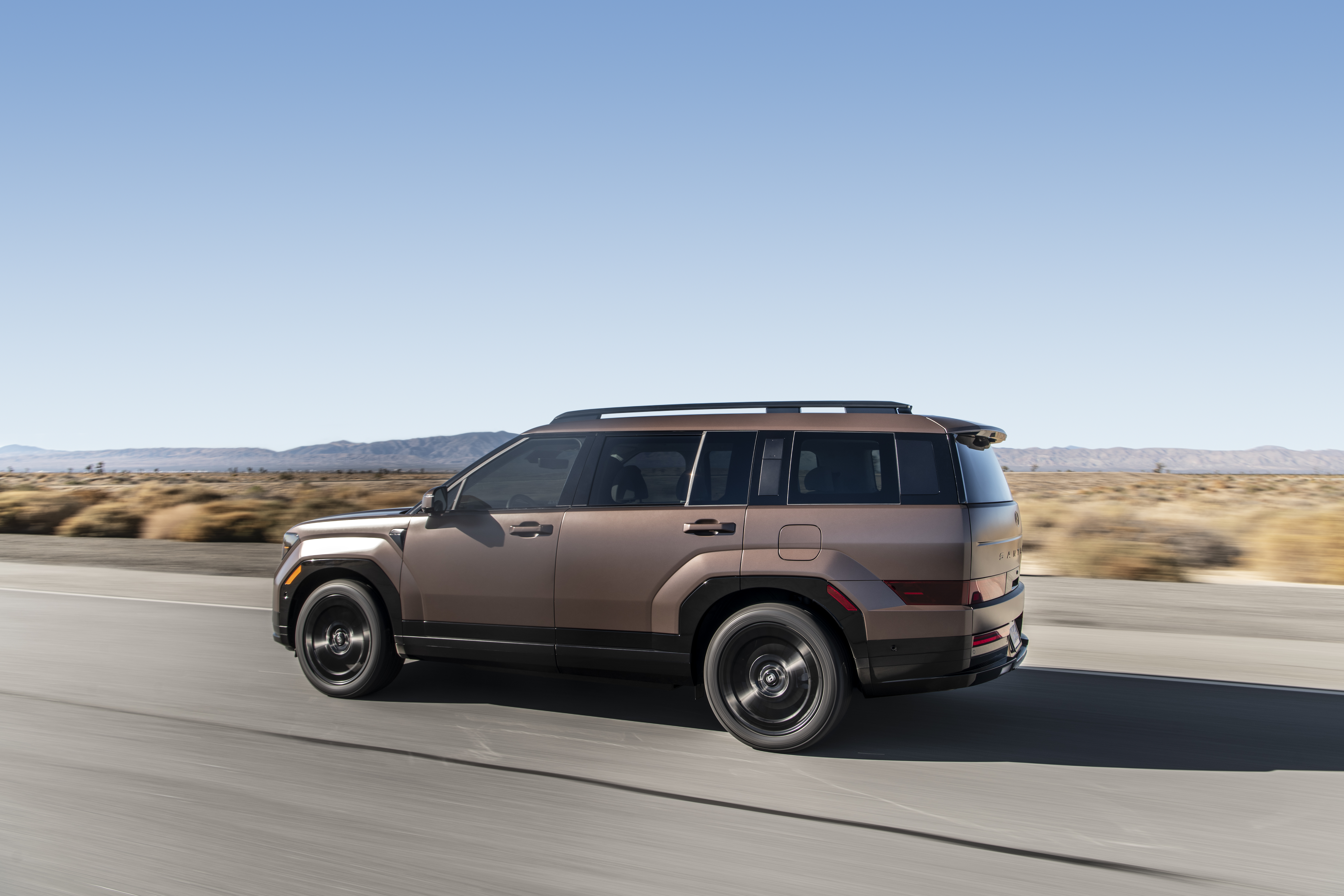
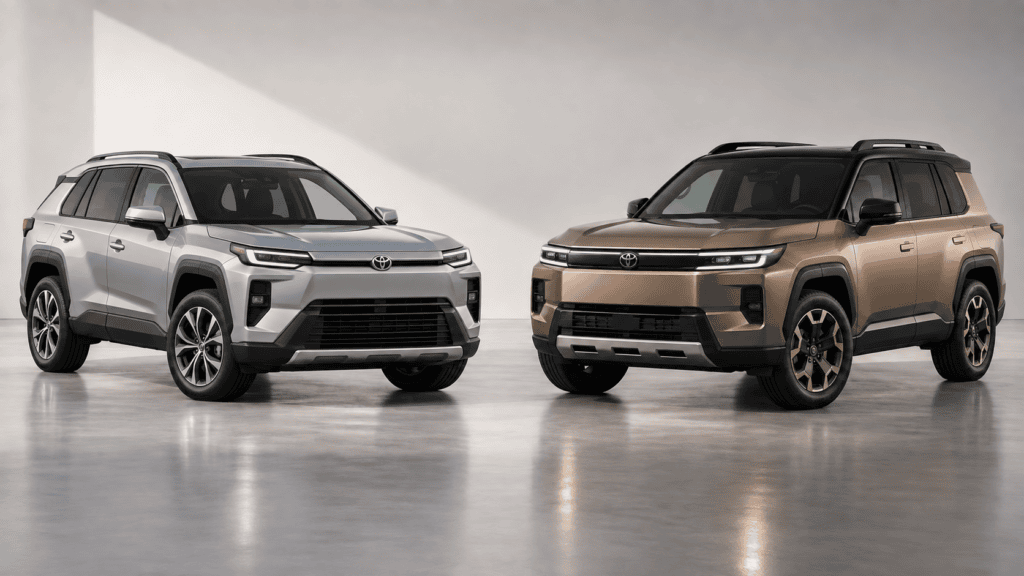
The left side of our corrected comparison represents the all-new sixth-generation 2026 RAV4, with its hammerhead face and more geometric sheet metal. The bronze proposal on the right is intentionally more radical. It moves the RAV4 toward a compact Land Cruiser personality through a taller-looking roof, a broad horizontal nose, squared arches and shorter visual overhangs.
This is not an argument for fake vents, enormous tires or accessories owners will never use. It is an argument for family resemblance. Toyota possesses some of the world’s strongest off-road design equity; allowing the RAV4 to borrow a measured amount would give the crossover more authority and make it immediately identifiable.
The production RAV4 also illustrates why the shape cannot be considered alone. Hybrid and plug-in-hybrid choices can change performance, operating costs and the way an owner uses the vehicle. Federal resources explain how a plug-in hybrid behaves and allow shoppers to compare official fuel economy rather than judging efficiency from aggressive bodywork.
You may also enjoy: 2026 Toyota RAV4 GR Sport Does the Impossible
Tucson Proves Restraint Can Be Dramatic
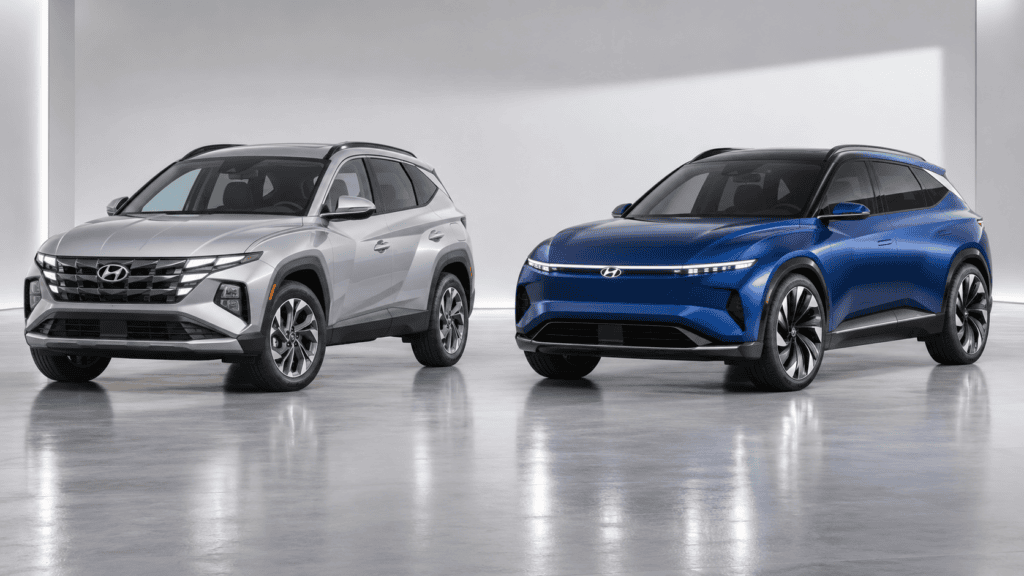
Hyundai’s Tucson already uses design as a competitive weapon. Its concealed lighting and complex side surfaces make it memorable, but visual novelty carries a risk: yesterday’s dramatic gesture can become tomorrow’s timestamp.
Our sapphire-blue redesign removes more than it adds. A single pixel-inspired light blade defines the front, the hood and doors become smoother, and the cabin tapers just enough to suggest a shooting brake. Larger-looking shoulders provide strength without a huge grille. It is futuristic because its volumes are confident, not because every panel is shouting.
A production version should resist the temptation to bury basic controls inside screens. It should also retain clear outward visibility and treat driver-assistance technologies as support systems rather than excuses for obstructive pillars or tiny windows. The visual improvement works only if daily use improves with it.
You may also enjoy: 2027 Mercedes-Benz C-Class Adds AI and More Muscle
Civic Gets the Emotion Back
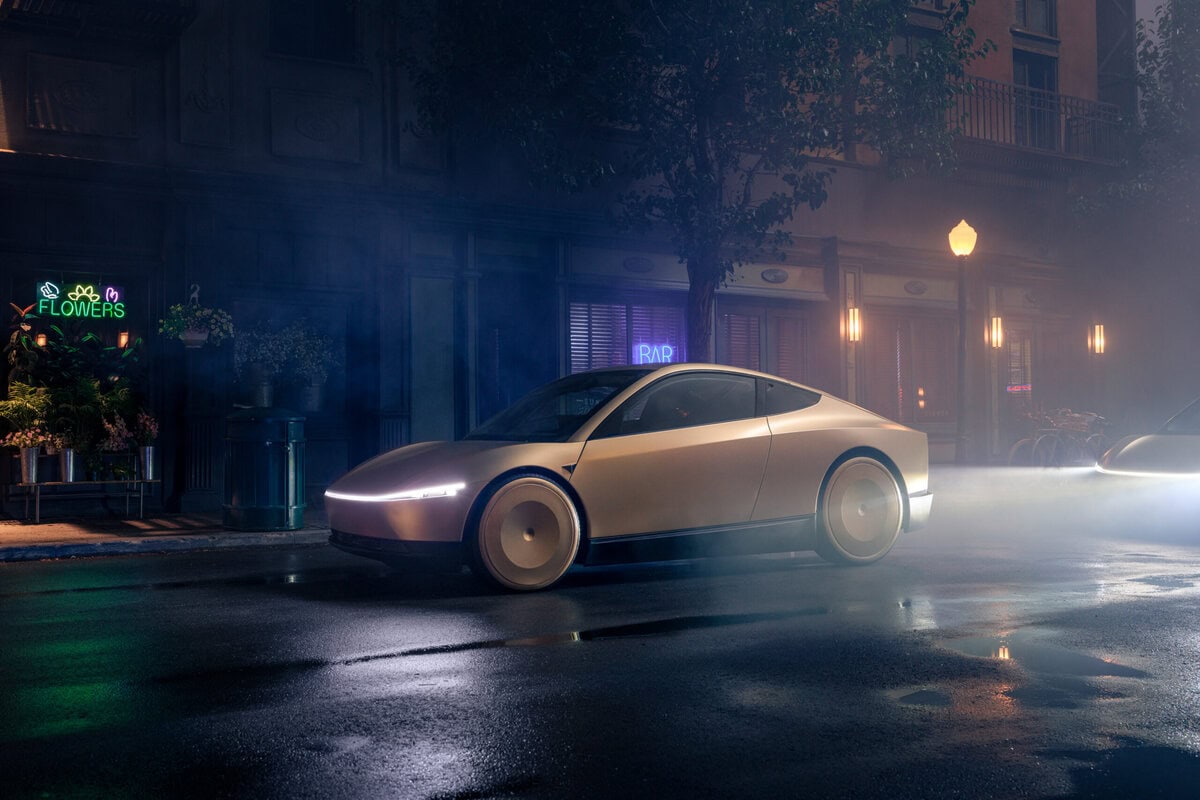
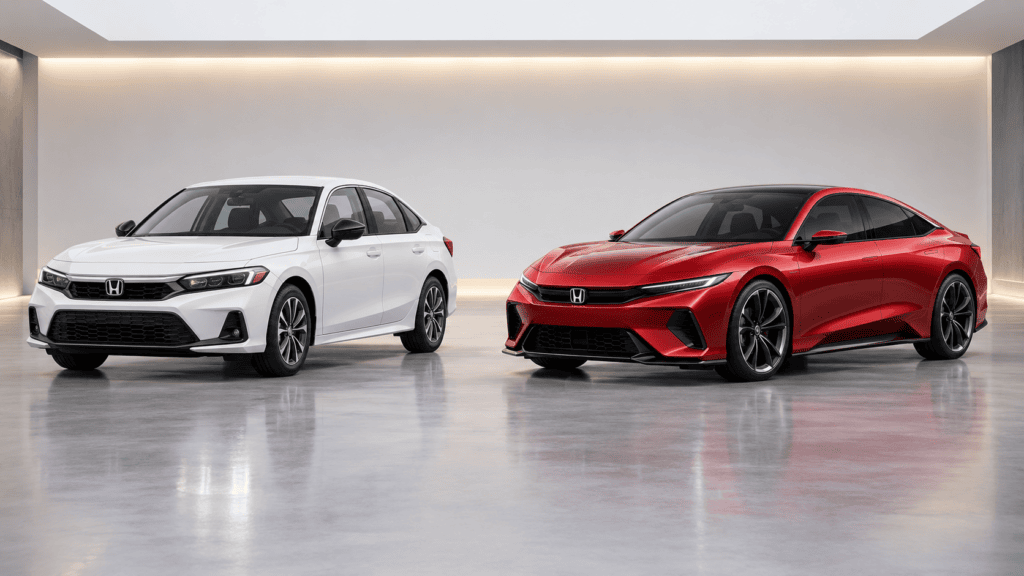
The Civic is the only car among these five crossovers, and our most ambitious proportional experiment. The proposed model remains a practical four-door, but its longer-looking hood, pushed-out wheels, lower fastback roof and pronounced rear shoulders give it the stance of something far more expensive.
Honda should not build the picture literally. Nineteen-inch or larger wheels may photograph beautifully, but tires influence noise, ride quality, replacement expense and wet-weather performance. NHTSA’s tire guidance is a useful reminder that the fashionable black circles are safety equipment, not jewelry.
The opportunity is still real. Affordable cars have spent years being styled as appliances or junior versions of SUVs. A Civic that looks like a four-door Japanese exotic could make younger shoppers want a car again, provided rear headroom, visibility and insurance costs remain sensible.
You may also enjoy: Could a Four-Door Mustang Change Ford’s Playbook?
Pilot Finally Looks Like Honda’s Flagship
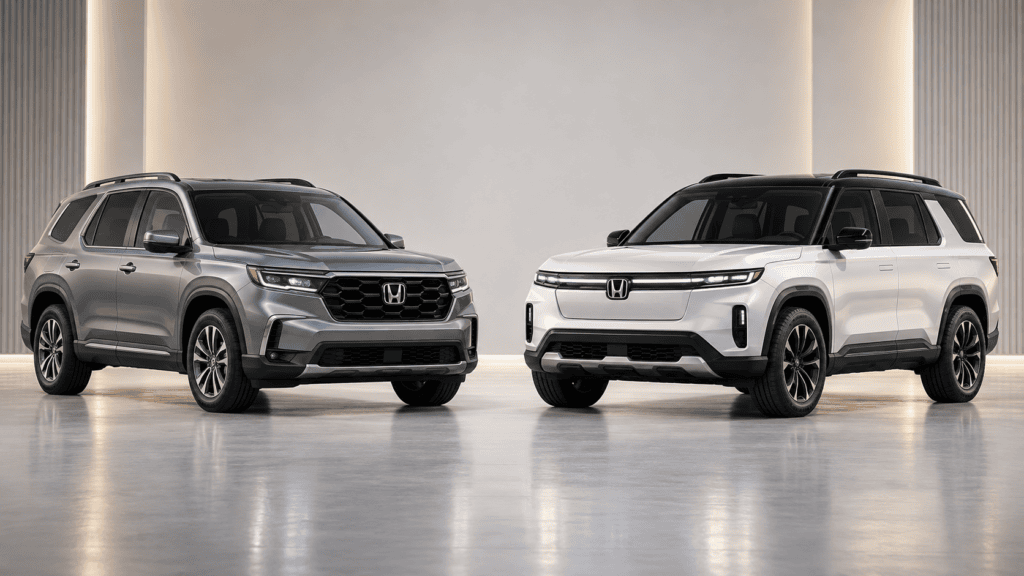
The Pilot carries Honda’s most demanding brief here. A three-row family SUV needs a useful roofline, wide doors, an accessible cargo opening and enough glass to keep the cabin from feeling like a bunker. Our pearl-white redesign preserves those necessities but adds a longer horizontal hood, a wider stance, wraparound glazing and a black floating roof.
The face is simpler and more formal, with thin lighting above a restrained lower intake. Squared arches and underbody protection suggest credible trail ability without turning the Pilot into cosplay. Most importantly for families and dog owners, the rear remains upright. A pretty roofline is a poor bargain if it removes crate space or forces an older dog to crouch.
You may also enjoy: Telluride vs Palisade: Which Rugged SUV Wins?
Across all five AI car redesigns, the software reached a surprisingly human conclusion: simplify the faces, improve the stance and give each vehicle a stronger point of view. Yet an image cannot calculate tooling expense, meet crash standards, protect outward visibility or tell us whether a sculpted panel can be repaired affordably.
That is why these designs should start arguments rather than settle them. The CR-V becomes more desirable, the RAV4 more confident, the Tucson calmer, the Civic more emotional and the Pilot more prestigious. The public can decide whether the pictures are improvements. Automakers must decide whether any of those improvements can survive a factory, a crash laboratory, a family and six dogs.