Range Rover Electric Off-Road: Scotland’s Ultimate Test
Range Rover Electric off-road driving takes us into Scotland’s wild Highlands to discover whether battery power can preserve legendary luxury and capability.
By Nik J. Miles
SCOTTISH HIGHLANDS — There is a point in northern Scotland when the landscape becomes so spectacular that you forget to look at the road. This is generally a mistake. Particularly when that road is narrow, the mountain is substantial, and the Atlantic Ocean appears to have been personally responsible for the weather.
I’ve returned to Scotland to explore one of the most fascinating vehicles Range Rover has ever produced. The first Range Rover Electric promises to preserve everything we associate with Britain’s most aristocratic SUV while eliminating the traditional combustion engine.
It can reportedly wade through 35 inches of water, negotiate extraordinary gradients and tackle muddy hillsides without the familiar soundtrack of a hard-working engine. All while the occupants enjoy the sort of interior normally associated with a very expensive private club.
Scotland seemed the ideal place to find out whether this rather ambitious combination makes sense.
From Loch Ness to the Wild Scottish Highlands
Our adventure began at Aldourie Castle, overlooking Loch Ness. It is an extraordinary setting, with historic Scottish architecture, ancient trees and one of the world’s most famous bodies of water stretching into the distance.
There is something wonderfully appropriate about introducing a new Range Rover here. Scotland’s grand estates, isolated properties and unpredictable countryside have long been natural territory for luxury four-wheel-drive vehicles.
From Loch Ness, the journey took us toward Kylesku Bridge in Sutherland, one of the most spectacular road crossings in the Highlands. Its sweeping curve connects stretches of remote countryside above sea lochs framed by formidable mountains.
Farther north, our driving itinerary included Eriboll and the remarkable landscape around Loch Hope. This is Scotland at its most captivating: vast open hills, exposed rock, isolated stretches of road and scenery that occasionally seems too dramatic to be entirely believable.
We overnighted at Hope Lodge before continuing toward the Novar off-road section. These remote locations gave us a far more revealing environment for examining the Range Rover Electric than a comfortable drive around a fashionable city.
You may also enjoy: 2026 Toyota Tundra Review: Start With the SR5
Range Rover Electric Off-Road: Why Traction Matters
The outstanding feature of the Range Rover Electric isn’t its acceleration, although 542 horsepower and 627 pound-feet of torque are certainly sufficient to rearrange your internal organs when used enthusiastically.
What fascinates me is how precisely its electric motors can manage movement at very low speeds.
Range Rover’s Integrated Traction Management can respond to changing grip in as little as 50 milliseconds. The manufacturer says its wheel-slip management is up to 100 times faster than an equivalent combustion-engine system.
Consider what happens when one wheel encounters wet rock while another remains on firm ground. The available traction changes immediately. A conventional vehicle must coordinate engine response, brakes and other driveline components. Here, the electric propulsion system can adjust motor output almost instantaneously.
That makes particular sense on Highland tracks, where gravel, damp grass, exposed stone and deep ruts can appear in rapid succession.
The advantage isn’t simply greater power. It’s delivering precisely the required amount without wasting energy spinning the wheels. As the U.S. Department of Energy explains in its guide to all-electric vehicles, electric motors provide particularly smooth and responsive operation.
You may also enjoy: Mercedes-Benz NVIDIA Deal: What Drivers Should Know
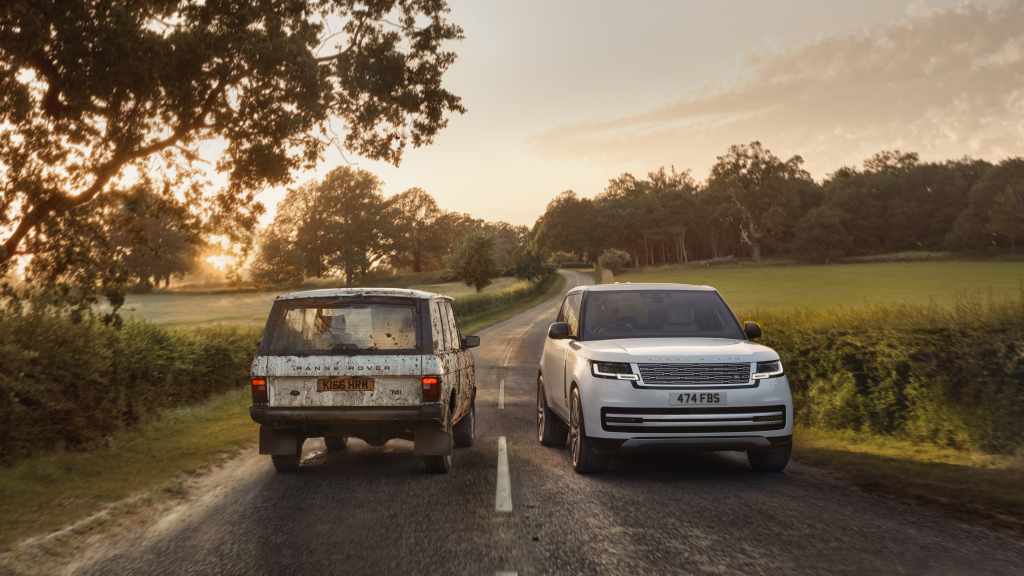
Climbing Mountains With One Pedal
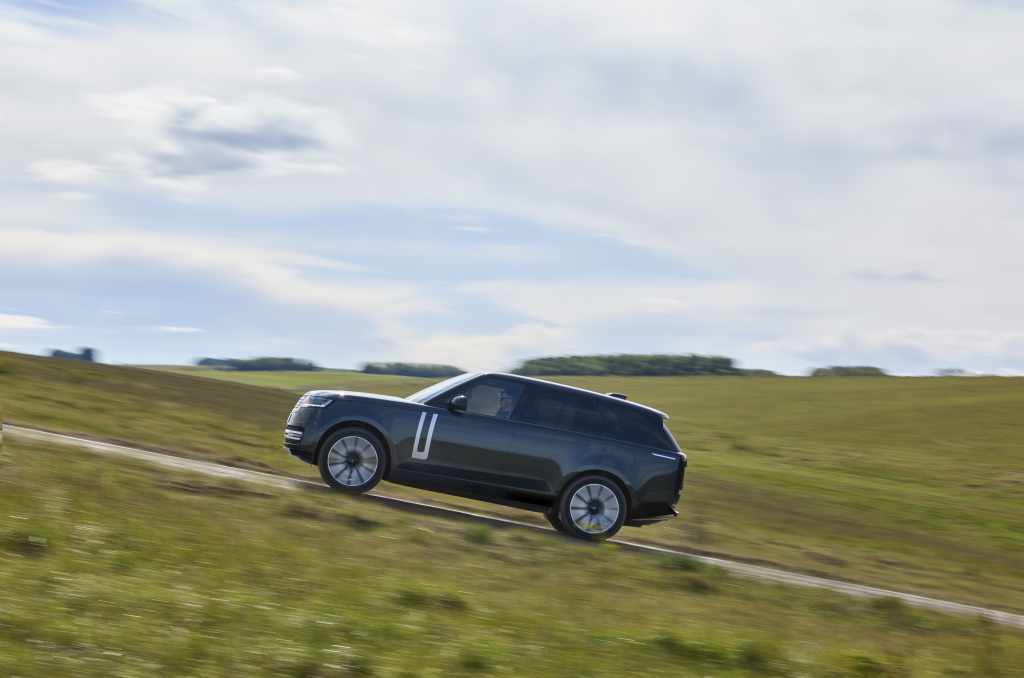
One of the cleverest features is the adaptation of single-pedal driving to genuine off-road conditions.
Range Rover says the vehicle can move away from a standstill on inclines of up to 33 degrees and negotiate rolling climbs of up to 45 degrees under appropriate conditions.
Those figures deserve some perspective. A 45-degree incline represents an exceptionally demanding climb, far beyond what an ordinary passenger vehicle is expected to encounter.
The single-pedal system works alongside traction management and Hill Hold, allowing the driver to concentrate more on steering, vehicle placement and the route ahead.
There is still no substitute for properly evaluating a slope, choosing suitable tires and recognizing when an obstacle is beyond the vehicle’s safe operating conditions. Technology can assist a capable driver. It shouldn’t encourage a foolish one.
Nearly Three Feet of Water and a Very Large Battery
The Range Rover Electric’s quoted maximum wading depth is 35 inches, approximately 2.9 feet.
That is an impressive engineering target given the enormous high-voltage battery beneath the vehicle. The battery uses a protective aluminum enclosure and has undergone extensive testing involving vibration, impact and demanding temperatures.
Our Scottish program included off-road routes in Eriboll and Novar, where uneven terrain and Highland conditions provided an appropriately demanding setting.
However, I would strongly caution owners against treating a wading specification as permission to drive through unknown water. The National Weather Service’s flood safety guidance explains how dangerous moving water and hidden road damage can be.
A carefully managed water crossing and a flooded public highway are entirely different propositions.
And while the engineering is impressive, I suspect most owners will be rather happier knowing the car can ford a stream than regularly proving the point.
You may also enjoy: 2027 Lexus NX: 45 Electric Miles and a Clever New Cabin
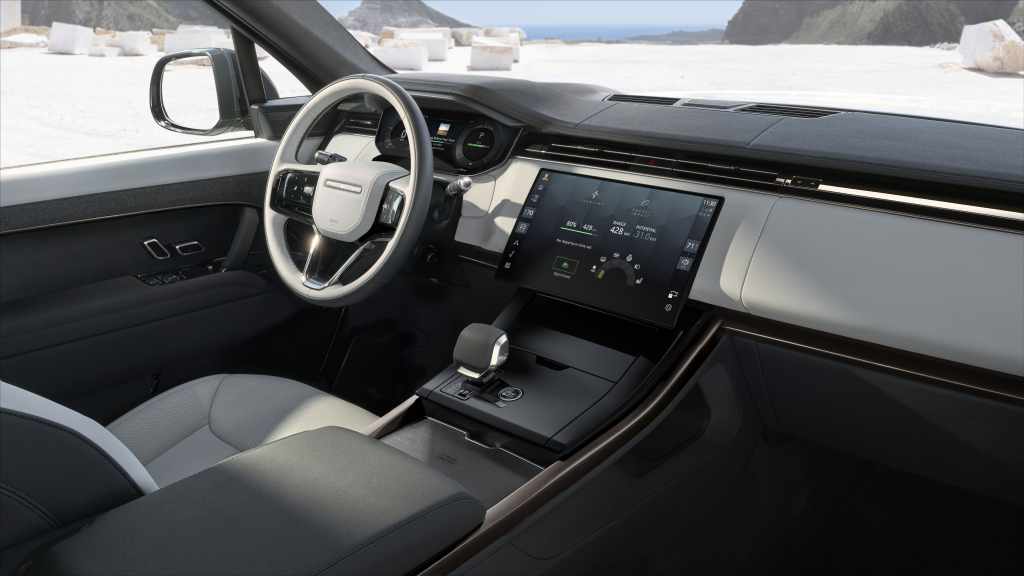
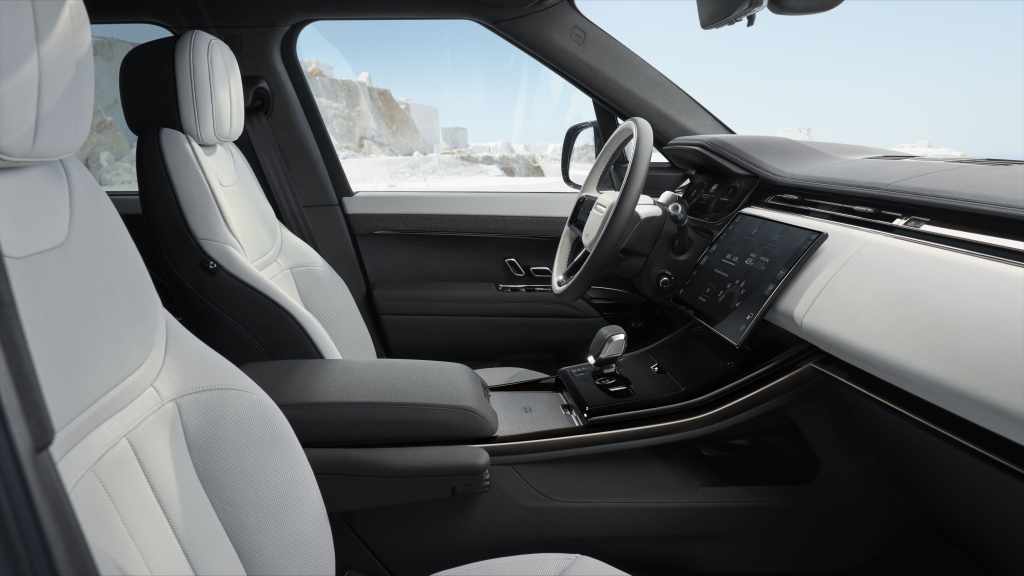
Five-Star Luxury Meets Highland Mud
The most compelling part of the Range Rover proposition is the contrast between the landscape outside and the accommodations inside.
Its twin-chamber air suspension is engineered to manage body movement across broken ground and smooth pavement. The low-mounted battery changes the center of gravity, while the quiet electric motors remove a significant source of vibration.
There is also an interesting change to the cabin materials. The First Edition introduces Light Cloud Ultrafabrics and Kvadrat upholstery, giving customers alternatives to conventional luxury leather treatments.
For families, though, I always return to the practical questions. Can you load wet hiking gear without damaging everything? Is there adequate space for luggage and pets? Are the rear passengers comfortable when the track becomes unpleasant?
My dogs would undoubtedly appreciate the Highland countryside, although I’m reasonably certain they’d be less concerned about the upholstery than the possibility of finding an exceptionally muddy puddle.
One thing no expensive SUV can improve is the wisdom of securing animals properly when traveling.
The Problem With Driving Into the Wilderness
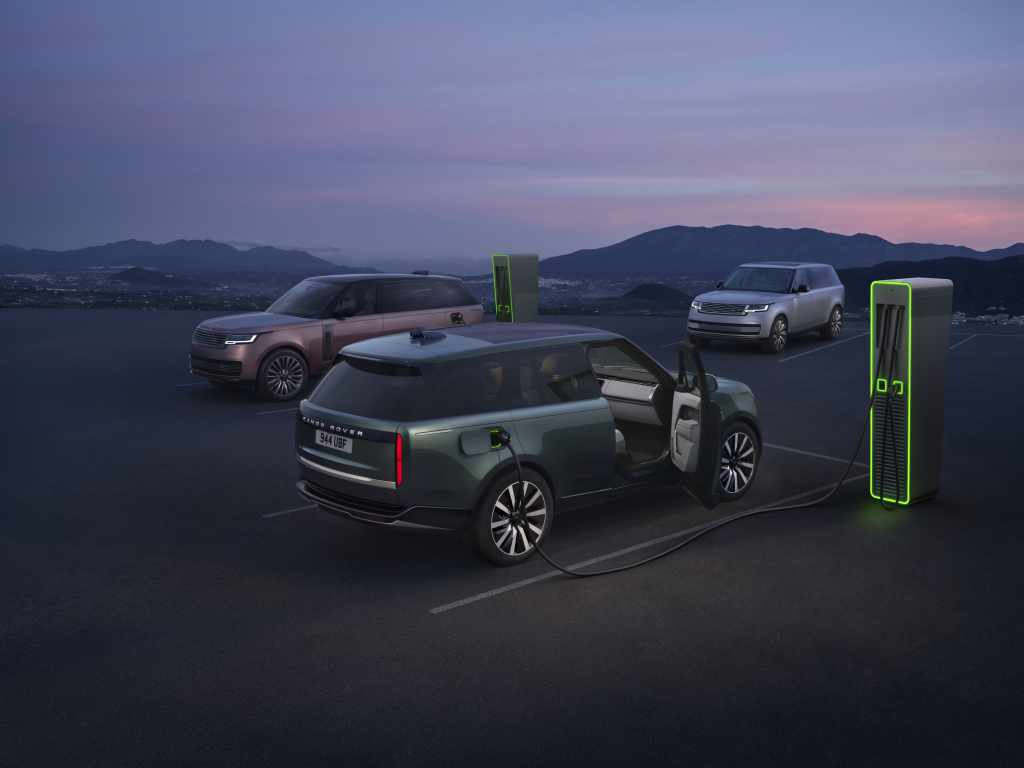
Range Rover estimates up to 333 miles of EPA driving range, courtesy of its 118.5-kWh battery. Its 800-volt architecture can also deliver a 10-to-80-percent DC fast charge in approximately 22 minutes under optimal conditions.
Those are substantial figures, but remote travel changes the conversation.
Driving through mud, climbing gradients, using heating systems in cold conditions and carrying passengers or equipment may all affect electricity consumption. The Department of Energy’s charging infrastructure resources underline the importance of careful charging provision.
Owners planning extended American adventures can consult the government’s charging station locator before heading away from populated areas.
Range Rover has included range-prediction technology to help drivers plan. Nevertheless, I’d want a comfortable battery reserve before exploring somewhere as isolated as the countryside around Loch Eriboll.
The important number isn’t always how far an electric vehicle can travel. Sometimes it’s how far away the nearest functioning charger happens to be.
You may also enjoy: Cost of Car Ownership: What Your Payment Hides
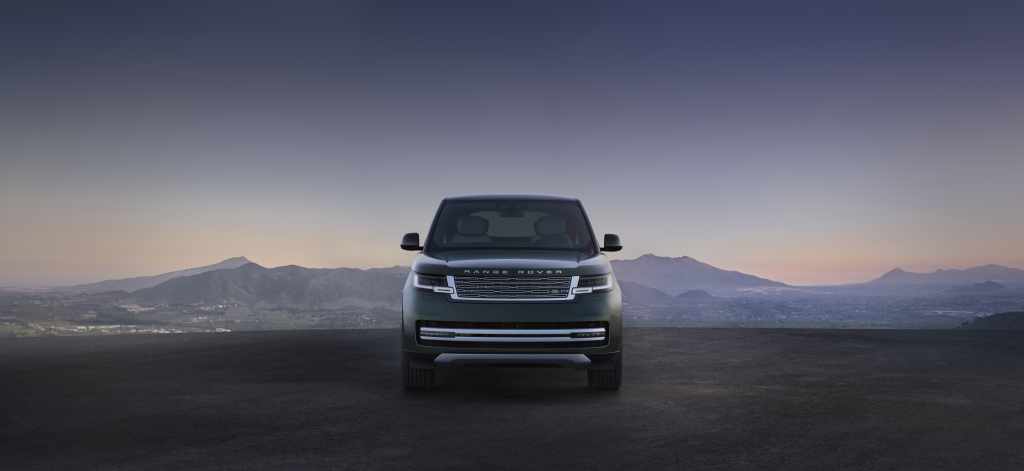
Is the $138,000 Range Rover Electric Worth Considering?
The American starting price of $138,000 places this vehicle firmly in the territory of buyers who expect far more than efficient transportation.
For that money, customers receive the brand’s traditional luxury approach, strong electric performance, sophisticated suspension and a vehicle designed to retain substantial off-road capabilities.
Range Rover also says the Electric completed more than 900,000 miles of physical testing and over 250,000 hours of virtual development, with trials ranging from Arctic Sweden to Dubai.
That commitment is encouraging, although an extensive development program cannot establish long-term reliability on its own. Battery durability, future repairs, tires and insurance will matter to owners well beyond the initial excitement of delivery.
For a family whose journeys rarely extend beyond city streets, a less expensive luxury SUV may prove more sensible. But buyers who genuinely travel into remote countryside have a more interesting decision.
The appeal is the ability to combine proper off-road engineering with refinement, rather than owning an expensive SUV whose adventurous appearance never gets tested.
You may also enjoy: Waymo’s Chinese Cars Reveal a US Import Loophole
For adventurous owners: Practical cabin protection matters when muddy boots, wet jackets and pets accompany the journey. Readers shopping for all-weather floor protection can Shop OEDRO directly or Shop OEDRO on Amazon. Use code NIKM20 at the OEDRO official store. Confirm vehicle fitment before ordering. Test Miles may earn a commission from purchases made through these affiliate links.
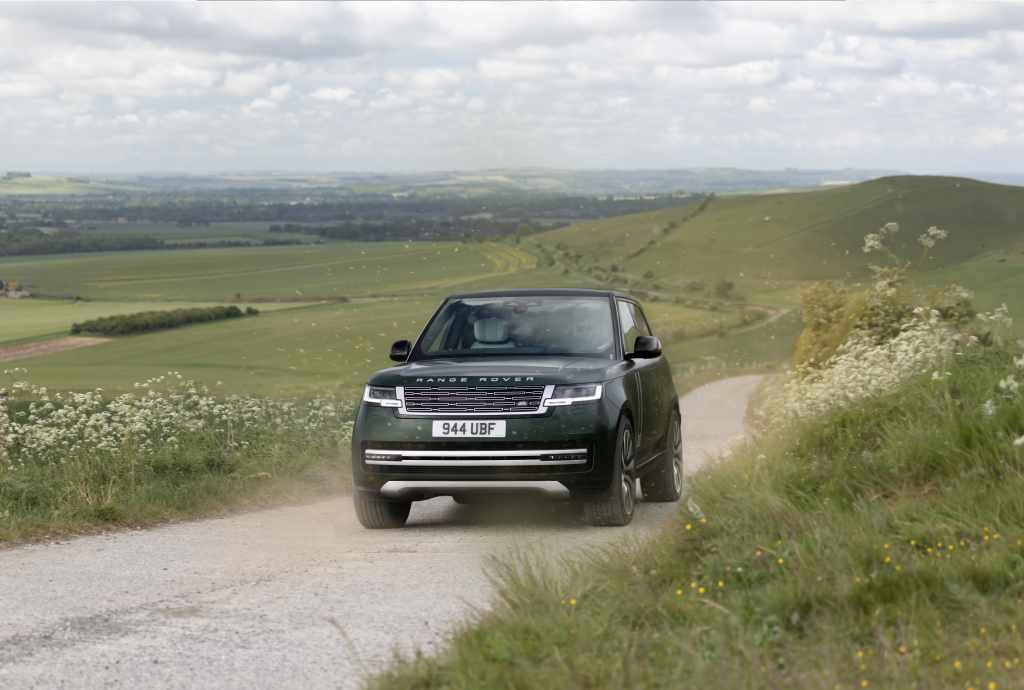
My Verdict From Scotland
My journey through the Highlands reminded me why Range Rover has maintained such a distinctive identity for more than half a century.
The landscape is magnificent, but it demands respect. Loch Ness, Kylesku Bridge, Eriboll and the remote surroundings of Loch Hope offer an extraordinary mixture of history, natural beauty and genuinely challenging country.
What makes the Range Rover Electric particularly interesting is that replacing its engine has given its engineers new ways of controlling the vehicle. Rapid motor response, sophisticated traction management and carefully regulated propulsion are useful tools when the ground becomes difficult.
Of course, buyers must still consider charging logistics, a very substantial purchase price and the responsibilities of operating such a complex vehicle.
But the fundamental idea is persuasive. Electric propulsion and serious off-road capability need not be enemies.
And there is something rather wonderful about experiencing the wild Scottish countryside without having to listen to a combustion engine competing with the wind.
I’m Nik Miles. Scotland has reminded me why I love my job.