Pebble Beach 2026: The Cars That Defined Monterey
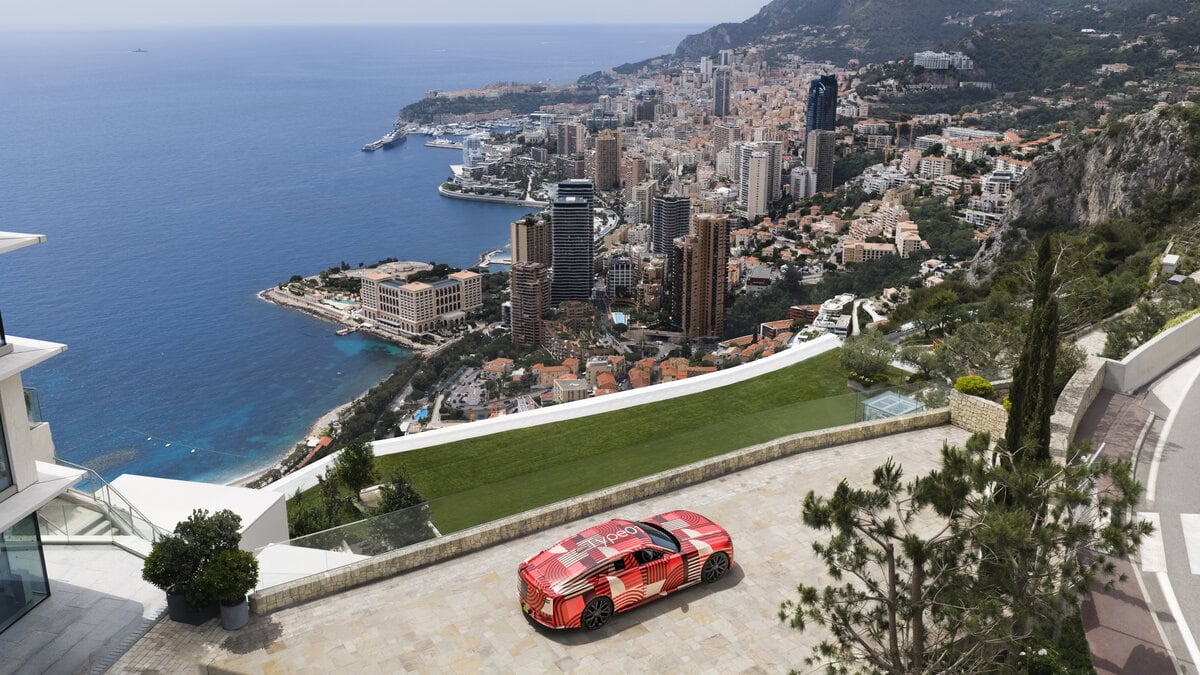
Pebble Beach 2026 brought daring concepts, racing-bred machines and extraordinary one-offs together for Monterey Car Week’s grand finale.
From a Sideshow to the Center of the Car World
The Pebble Beach Concours d’Elegance began in 1950 as a social gathering attached to the Pebble Beach Road Races. Seventy-five celebrations later, it has become the grand finale of America’s most influential automotive week and one of the few places where a prewar masterpiece can come. Not yet; let me work through each thing one by one I’ll get to you. I just sat down at my desk.pete for attention with a 1,600-horsepower Bugatti.
The Concours remains the ceremonial center of the week, but Monterey’s automotive orbit now stretches across the peninsula. The Tour d’Elegance puts more than 150 remarkable cars back on public roads. The Quail positions priceless classics beside future supercars. Historic competition cars return to full voice at Laguna Seca, and the auction houses move extraordinary machinery between collectors for equally extraordinary sums.
Then there are the crowds: designers, executives, collectors, enthusiasts and visitors still trying to understand why their hotel room suddenly costs more than a used Porsche.
That collision of history, commerce, design and theater makes Pebble Beach 2026 more than a beauty contest. Monterey has become a place where manufacturers explain themselves. Heritage provides credibility, new products establish direction, and the most ambitious vehicles reveal what their creators believe wealthy customers will want next.
You may also enjoy: Pebble Beach Tour Can’t Escape America’s Summer of Fire
You may also like this video:
Acura and Lamborghini Make the Future Recognizable
The future arrived through butterfly doors at Acura. The NEXERA Vision was designed in California as a manifesto for the brand’s next generation, using restrained surfaces, forged-carbon details and lighting elements that virtually disappear when switched off.
I first saw the car inside a private Los Angeles warehouse, away from the crowds and carefully choreographed displays of Monterey. That setting made the concept’s real purpose easier to understand. NEXERA is not simply a proposal for another low-volume sports car. It is an effort to establish a recognizable design vocabulary that can survive the transition to practical production vehicles.
The first showroom model expected to inherit those ideas will be the fourth-generation RDX Hybrid. A low, wide concept car can afford butterfly doors and dramatic proportions; a family crossover must accommodate passengers, luggage, crash structures and regulatory requirements. Acura’s challenge will be preserving NEXERA’s visual clarity without turning the next RDX into a watered-down imitation.
The hidden lighting may become its most recognizable influence. Modern vehicles increasingly use elaborate daytime-running lamps to announce their identity from across a parking lot. Acura is proposing something more disciplined: technology that creates drama when needed and visually retreats when it is not. Readers interested in electrified powertrains can review the EPA’s explanation of electric and plug-in-hybrid vehicles.
You may also enjoy: Acura NEXERA Vision Makes Simplicity Feel Radical
Lamborghini approached the future through one of its most important historical cars. The Revuelto Miura 60° Homage commemorates six decades of the Miura by applying heritage-inspired colors, liveries and interior details to Lamborghini’s modern V12 hybrid flagship. Production is limited to 99 examples.
The tribute worked because Lamborghini did not attempt to recreate the original. The Revuelto remains visibly and mechanically a product of its own time. Its naturally aspirated V12 works with three electric motors, while the special colors and details connect that technology to the car widely credited with establishing the mid-engine supercar formula.
On Pebble Beach’s third fairway, 43 original Miuras formed an extraordinary timeline of Lamborghini design. Seeing that many together provided more than a convenient anniversary photograph. It demonstrated how a car introduced in 1966 could influence proportions, engineering and automotive culture for generations.
You may also enjoy: Lamborghini Miura Tribute: Only 99 Will Ever Exist
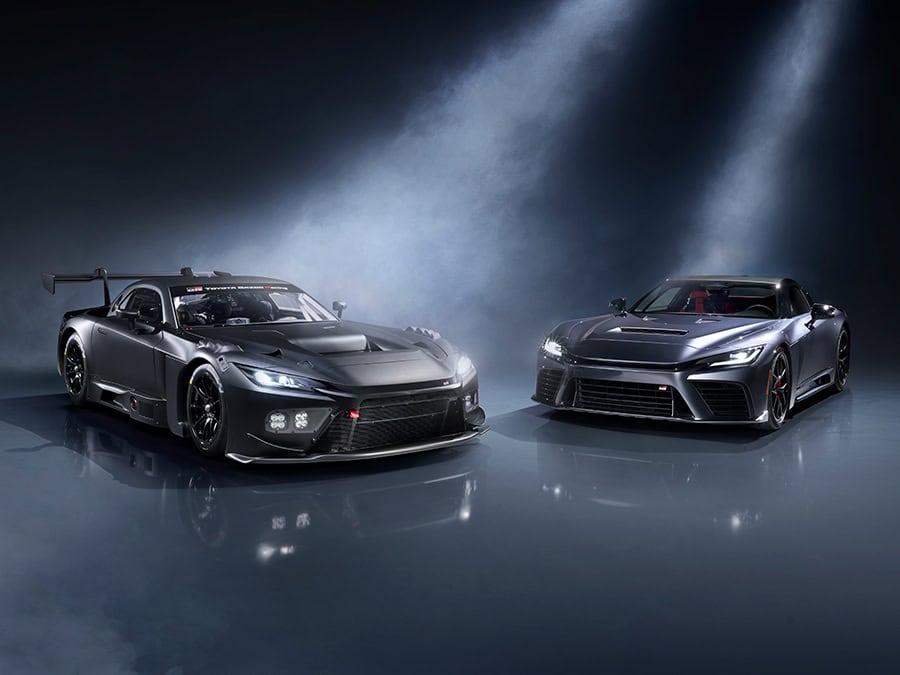
Toyota Gazoo Racing Brings the Noise
Toyota brought its future to Monterey and, importantly, put it on track. The GR GT road car and GR GT3 race car completed their first public, uncamouflaged North American hot laps during the Rolex Monterey Motorsports Reunion at Laguna Seca.
The GR GT is expected to arrive around 2027 with a twin-turbocharged 4.0-liter V8, a single-motor hybrid system and at least 641 horsepower. Power travels to the rear wheels through a carbon-fiber torque tube and rear-mounted eight-speed automatic transaxle.
Those details matter because the GR GT is not being presented as a regular production coupe with a performance package applied afterward. Toyota Gazoo Racing developed the road car alongside the GR GT3, using an aluminum structure, a low center of gravity and packaging influenced directly by competition requirements.
The GR GT3 uses the same basic twin-turbo V8 architecture but replaces the road car’s automatic transmission with a purpose-built racing gearbox. It is being developed for international customer racing under FIA GT3 technical regulations, meaning private teams should eventually be able to purchase and compete with it.
Running both vehicles at Laguna Seca was more meaningful than placing them beneath lights at an indoor reveal. The sound, speed and strain of a racetrack give people something that specifications cannot. They also expose whether a manufacturer’s claims about a racing connection have mechanical substance.
Lexus provided a more polished presentation around Monterey, but the message from the wider Toyota organization was consistent. Performance is no longer being treated as an occasional styling exercise. Gazoo Racing is becoming part of the way Toyota develops vehicles and communicates engineering credibility.
The GR GT also presents an interesting showroom question. Although it carries GR identity and Toyota engineering, the company expects the road car to be sold through selected Lexus dealerships. That arrangement places it in a luxury retail environment while allowing Gazoo Racing to retain the vehicle’s competition-focused character.

Range Rover, Jaguar and Defender Take Different Roads
Range Rover transformed a boutique Carmel hotel into the Residence at Range Rover House, an immersive presentation of the lifestyle surrounding the vehicles. Private lounges, wine, champagne, jewelry-making, massages, shopping, music, a pizza oven and exceptional cuisine created an experience that felt less like lodging and more like a carefully curated instruction manual for how Range Rover believes its clients should live.
The new Range Rover Electric made its first U.S. appearance there. Its assignment is deceptively difficult: deliver battery-electric propulsion without losing the quietness, long-distance comfort and all-terrain capability buyers associate with a full-size Range Rover. Range, charging performance and verified real-world efficiency will matter more once the production vehicle reaches customers. The EPA explains how official figures are established through fuel-economy and EV-range testing.
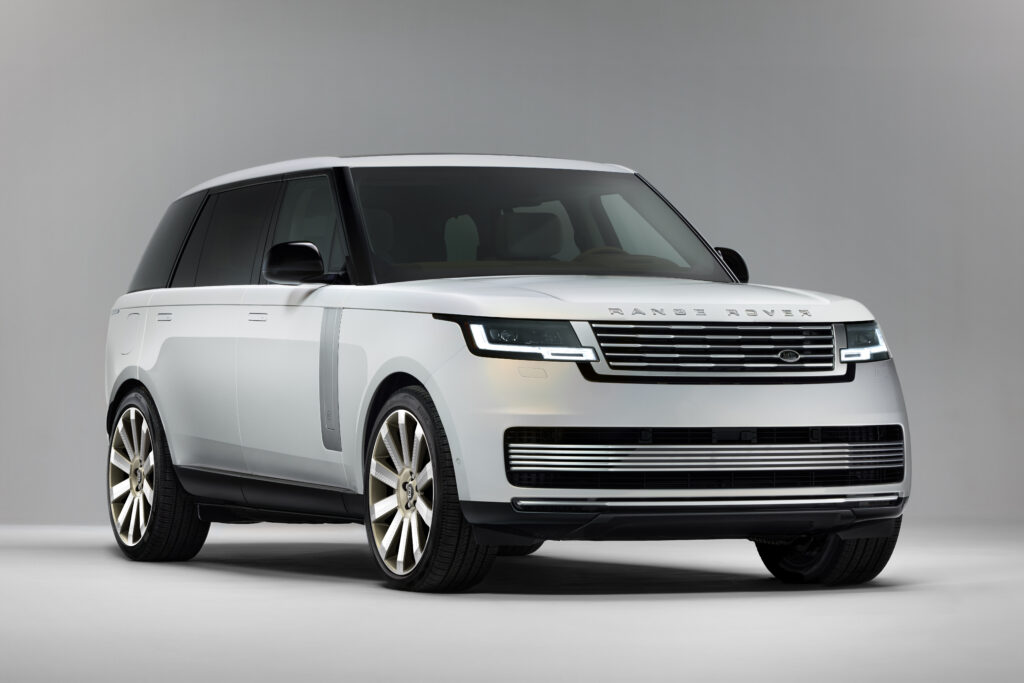
The centerpiece was the one-of-one Range Rover SV Pearl Luster. Inspired by white abalone pearls found along the California coast, it combines Bespoke White Pearl Gloss paint with Orchid leather, Mother of Pearl inlays and engraved 23-inch wheels. Guests received the first opportunity to register purchase interest, with a contribution from the sale intended to support the Monterey Bay National Marine Sanctuary.
Apparently, regular metallic paint is what happens when you have stopped trying.
You may also enjoy: Range Rover Pearl Luster Is a One-Off Pebble Beach Gem
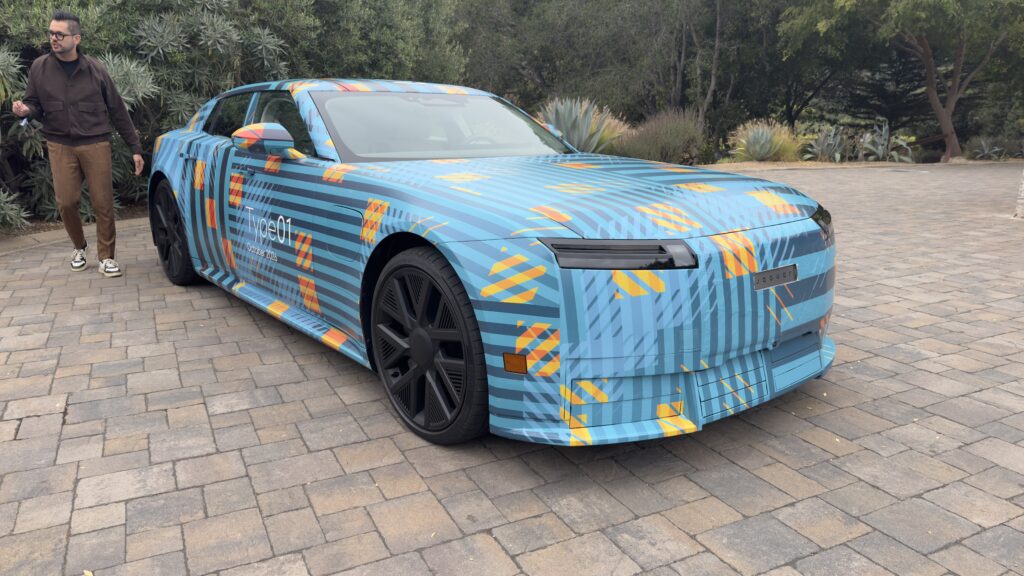
Jaguar used Monterey to provide a closer look at the Type 01 electric GT. I had already driven a camouflaged prototype at the company’s Gaydon facility. Jaguar told me 150 mph; I saw 160. The cabin is considerably calmer.
A central spine runs through the interior and creates four individual spaces. The low seating position, travertine-inspired palette, artisan textiles, brass finishes and technology that remains hidden until required deliberately avoid the familiar luxury-EV formula of covering the dashboard with screens.
That restraint is important. The Type 01’s exterior has been designed to provoke a reaction, but owners must live inside the car. The cabin needs to turn Jaguar’s dramatic new identity into something comfortable, intuitive and credible over long distances. The complete vehicle is scheduled to be revealed in New York on October 6.
Modern electric vehicles use several battery chemistries with different cost, range and durability characteristics. The National Highway Traffic Safety Administration provides an overview of electric- and hybrid-vehicle batteries, charging and safety.
You may also enjoy: Jaguar Type 01 Interior Turns Luxury Sideways
Defender took the most literal route from competition to showroom. After winning the Stock category of the 2026 Dakar Rally on its first attempt, the company revealed a road-legal evolution of the successful D7X-R.
The limited-run Defender Dakar retains key elements of the competition vehicle’s architecture, transmission and driveline, along with a 4.4-liter twin-turbocharged V8 producing 626 horsepower without racing restrictions. It also receives 35-inch tires, Bilstein dampers, Dunes and Gravel settings and a Flight Mode intended to control the vehicle when it lands after leaving the ground.
That is not a feature normally found between heated-seat instructions and the towing-capacity chart in an SUV brochure.
The Dakar Sand and Yanbu Turquoise colors preserve a direct visual link to the rally program, while the bodywork shown at Monterey still carried authentic competition damage. Reservations are expected to open in early 2027.
Luxury, Finance and the New Performance Ceiling
Monterey’s cars may encourage emotional decisions, but somebody still has to make the numbers behave. Chase Auto used its presence at The Quail to discuss personalization, convenience, market knowledge and the financial relationships behind major vehicle purchases.
I spoke with Renee Horne, Chief Marketing Officer of Chase Auto, about helping clients balance an emotional luxury purchase with a responsible financial decision. The subject can feel slightly practical among one-off Bugattis and limited-production Lamborghinis, but that is precisely why it matters.
The purchase price is only one part of an exotic or collector vehicle transaction. Financing structure, insurance, taxes, transport, maintenance, storage and potential resale value all influence the real cost. The Consumer Financial Protection Bureau advises buyers to compare dealer-arranged financing with bank or credit-union offers. Even at Monterey, the head should be invited before anyone signs the paperwork.
Aston Martin supplied another powerful temptation with the Valen. Unveiled at The Quail, the front-mid-engine, rear-wheel-drive special uses a 5.2-liter twin-turbocharged V12 producing 850 metric horsepower, equivalent to 838 bhp, and 738 pound-feet of torque.
Aston Martin targets a 3.0-second sprint to 60 mph and an electronically limited 214-mph top speed. Production is capped at 150 cars, with first deliveries planned for the second quarter of 2027.
The Valen matters beyond its numbers. It represents the work of Q by Aston Martin and the company’s Special Vehicle Operations organization, showing how the brand can create increasingly specialized vehicles without abandoning the proportions and visual cues that make an Aston Martin identifiable.
I spoke with Chief Creative Officer Marek Reichman about that tension. Moving an established luxury brand forward requires novelty, but too much novelty can erase the recognition and emotional history that buyers are paying to access. Valen pushes the surfaces, aerodynamics and cabin treatment further while retaining the long-hooded character expected of a front-engined Aston Martin.
You may also enjoy: Aston Martin Valen Delivers 838 HP With No Hybrid Help
Audi used the Nuvolari to make a different kind of statement. The limited-production plug-in-hybrid supercar made its first U.S. appearance with 987 horsepower, a claimed top speed exceeding 217 mph and production restricted to 499 vehicles.
Its carbon-fiber structure, active aerodynamics, quattro all-wheel-drive technology and high-performance hybrid system make it a halo car for Audi’s next design era. The Nuvolari’s purpose is not simply to become the fastest and most powerful production Audi. It must also prove that the brand can recover some of the emotional boldness that once separated its most ambitious products from conventional luxury machinery.
You may also enjoy: Audi Nuvolari Brings 987 HP to Monterey Car Week
Bugatti pushed exclusivity to its logical conclusion with the Destrier, the third one-of-one creation from Programme Solitaire. It uses the carbon-fiber structure and 1,600-horsepower W16 engine of the Bolide but removes the track car’s enormous wings and aerodynamic appendages.
The resulting body stands only one meter tall. Its purpose is not to disguise the Bolide but to uncover a different interpretation of the same extreme mechanical package. Where the track car uses every surface to manipulate air, the Destrier uses proportion, material and craftsmanship to create rolling sculpture.
I spoke with Clark Wu, Bugatti’s lead exterior designer for Programme Solitaire, about the challenge of turning a machine engineered around downforce into something intended to remain visually compelling for the next 50 years. That long view is central to coachbuilding. Performance establishes what a car can do today; design determines whether people will still care when today’s numbers have been surpassed.

What Pebble Beach 2026 Means for the Industry
Pebble Beach 2026 revealed an industry moving in several directions at once. Acura used a concept to argue for visual simplicity. Toyota connected its next road car directly to international racing. Range Rover translated electrification into familiar luxury, while Jaguar used an electric GT to break deliberately with its recent past.
Lamborghini showed that hybrid technology does not require a brand to abandon its heritage. Defender converted a Dakar victory into a road vehicle. Aston Martin, Audi and Bugatti demonstrated that scarcity, customization and narrative have become as important as raw performance at the highest end of the market.
The common thread was identity. Horsepower has become relatively easy to purchase in the modern performance market. Distinction is harder. Manufacturers now need to explain why their vehicle exists, what history supports it and why a buyer should care after the initial specifications stop being surprising.
The mechanical theater does not eliminate practical questions about electrification. Charging speeds depend on the vehicle, battery condition and equipment being used; the EPA’s guide to plug-in vehicle charging explains the differences among common charging levels.
That is why Monterey remains so influential. It compresses the entire automotive world into one week and one small section of the California coast. The history is judged, the present is sold, and the future waits beneath silk covers, behind warehouse doors and occasionally inside a Lamborghini Lounge.
Yesterday, today and tomorrow share the same very expensive parking lot. For anyone trying to understand where the automobile is heading next, Pebble Beach remains one of the best places to look.