2027 Lexus RX: Four Powertrains, One Tough Choice
By Robert R Guio
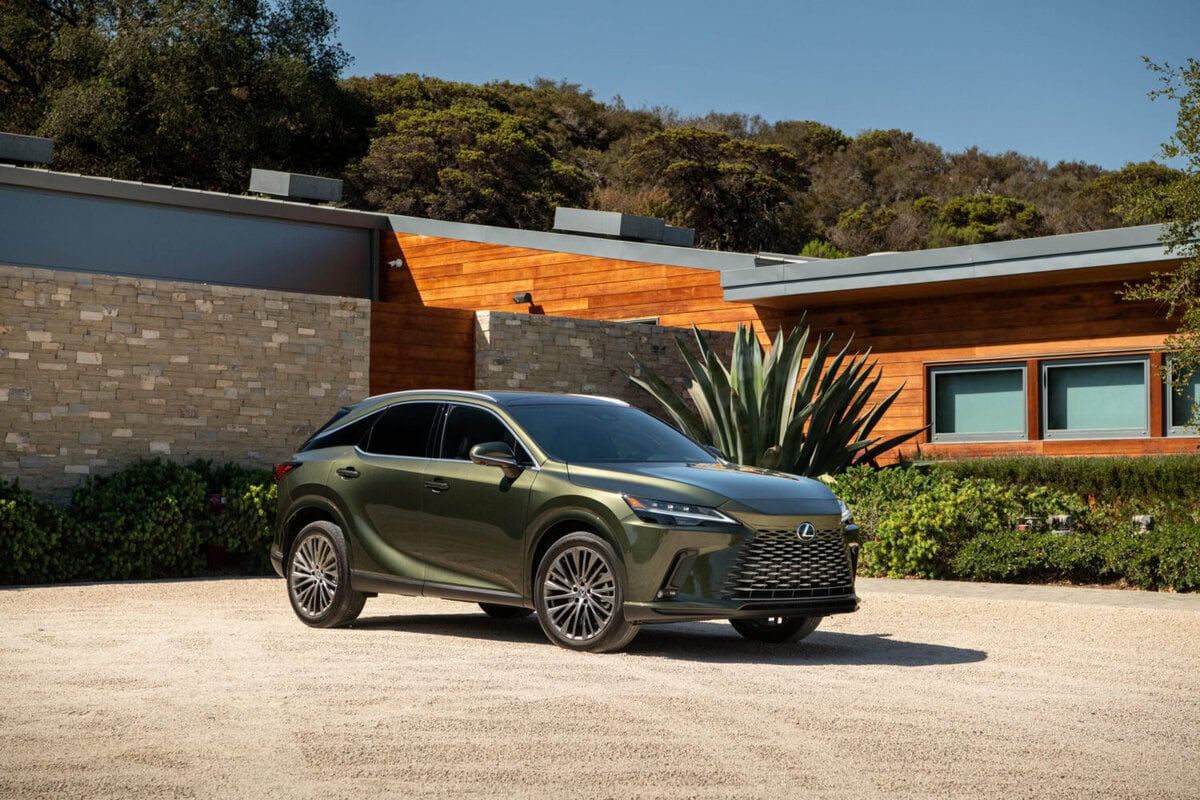
The 2027 Lexus RX keeps four powertrains and six grades, making the real buyer decision about how you drive, charge, and spend.
The most important thing about the 2027 Lexus RX is not the new red brake calipers. They look good, certainly, and the F SPORT crowd now has one more reason to linger over the configurator. But the real story is that Lexus has preserved four very different ways to power the same luxury crossover, and that turns a familiar model-year update into a useful shopping exercise.
Lexus says the RX will reach dealerships this fall. The 2027 range includes the turbocharged RX 350, the non-plug-in RX 350h hybrid, the RX 450h+ plug-in hybrid, and the RX 500h F SPORT Performance. Prices span from $55,450 for the RX 350 Premium FWD to $73,510 for the RX 450h+ Luxury AWD, with Lexus stating that those figures include a $1,550 delivery, processing, and handling fee.
Test Miles has not driven the 2027 model-year RX, so there is no road-test verdict hiding in this story. What we can do is separate the specifications that matter from the ones that merely make a brochure heavier, and identify which powertrain deserves a closer look depending on how you actually live.
2027 Lexus RX pricing changes the shopping question
The RX range is no longer a simple ladder in which spending more automatically buys the “better” version. The least expensive 2027 RX 350 Premium FWD is $55,450. Adding all-wheel drive to that grade brings the price to $57,050. The RX 350h Premium AWD starts at $57,750, only $700 beyond the gasoline Premium AWD according to Lexus’ published pricing.
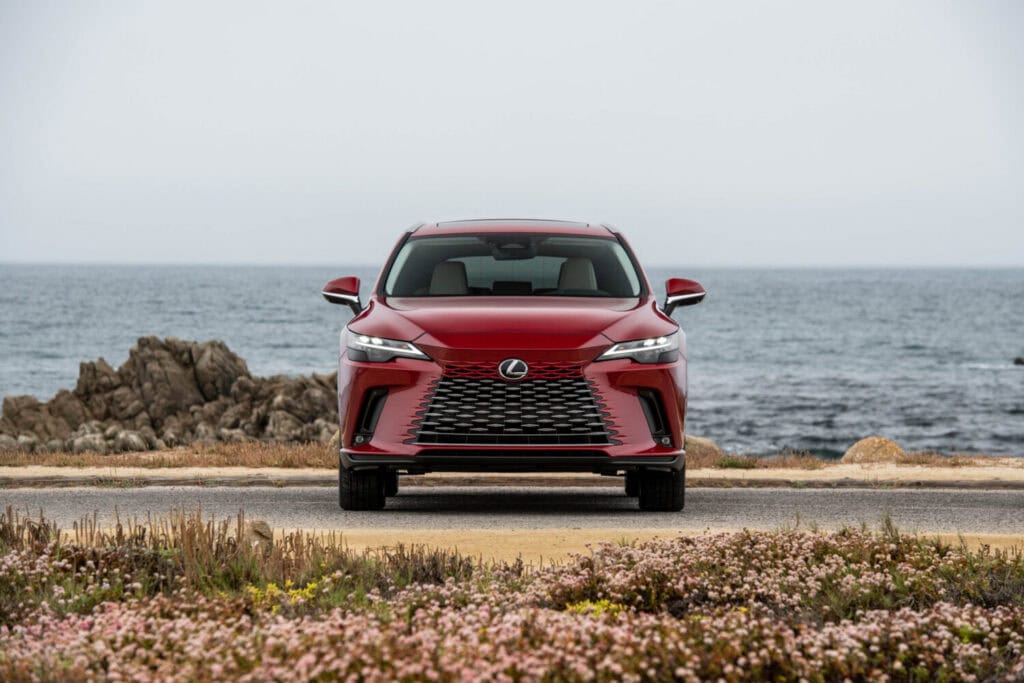
That $700 gap is worth noticing because it changes the first comparison shoppers should make. If you already planned to buy an all-wheel-drive Premium, the conventional hybrid is not sitting in a separate financial universe. Its 246-horsepower system is less powerful on paper than the 275-horsepower RX 350, but the hybrid’s reason for existing is efficiency and smooth everyday electrified operation rather than winning a spec-sheet sprint.
The plug-in hybrid requires a much larger jump. The RX 450h+ Premium AWD starts at $66,880, while the Luxury AWD version is $73,510. That premium buys a lithium-ion battery, external charging capability, and an EPA-estimated 38 miles of electric-only range. Whether that is a sensible use of money depends heavily on whether you can charge where you park.
Then there is the $68,950 RX 500h F SPORT Performance AWD. Its 366-horsepower hybrid system, DIRECT4 all-wheel drive, larger braking hardware and performance focus make it a different proposition from the 350h. This is why buyers should stop thinking of “hybrid” as one character type. In the RX family, electrification is being used for efficiency, electric commuting, and performance in three different ways.
You may also enjoy: Luxury SUV Buying Checklist to Avoid Remorse
Choose the RX powertrain around your daily routine
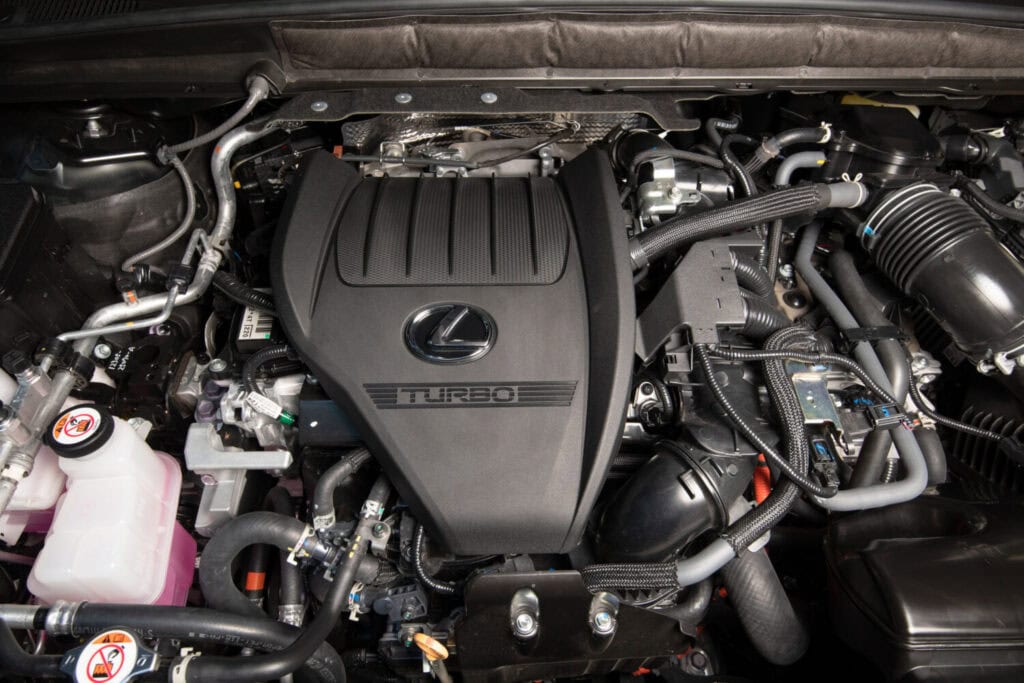
The RX 350 is the straightforward option. Its turbocharged 2.4-liter four-cylinder makes 275 horsepower and works with an eight-speed automatic transmission. Front-wheel drive is available on several grades, while the all-wheel-drive system can vary the front-to-rear drive-force split as conditions change. If you want a conventional gasoline luxury crossover and do not want charging to enter the conversation, this is the least complicated answer.
The RX 350h is more interesting for the driver who wants fewer fuel stops without changing behavior. Its 2.5-liter Atkinson-cycle four-cylinder works with electric motors for 246 total system horsepower. Lexus places the nickel-metal hydride battery beneath the rear seat and uses its E-Four arrangement to put an electric motor at the rear axle. There is no cord to remember and no home charger to install.
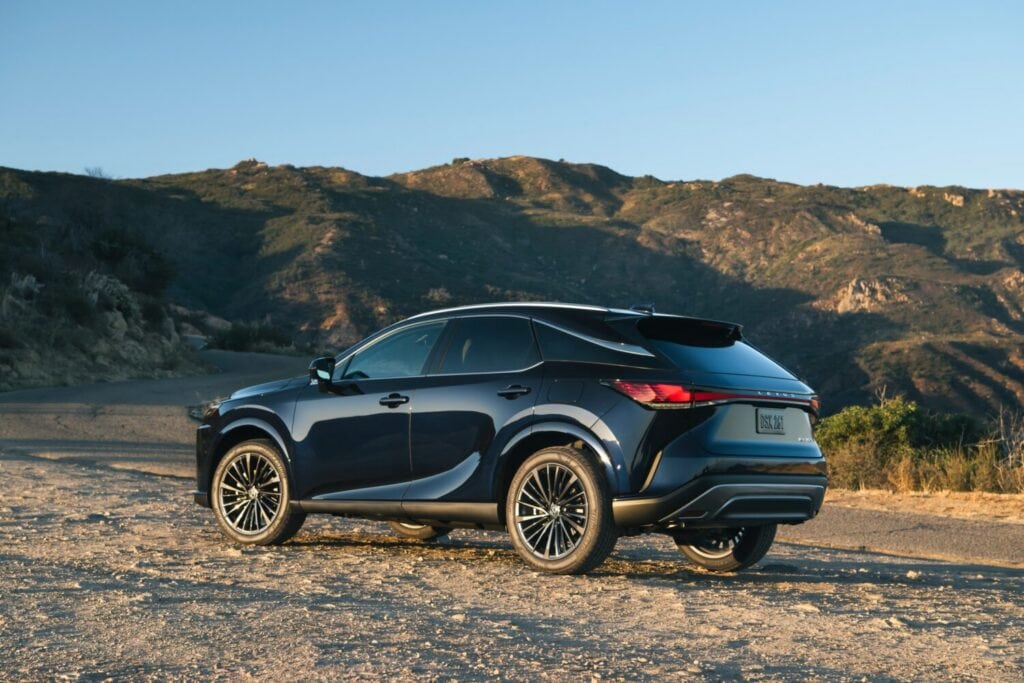
The RX 450h+ is where habits matter most. Lexus lists an EPA-estimated 38 miles of electric range and 85 MPGe combined. The EPA explains how fuel-economy and EV-range testing works, including why MPGe is an energy-equivalence measure rather than a promise that a plug-in vehicle literally travels that many miles on a gallon of gasoline. That distinction is important when comparing a PHEV with a conventional hybrid.
Lexus includes a dual-voltage charging cable and uses a J1772 Type 1 inlet. The SAE J1772 standard defines the common conductive charging interface used by many EVs and plug-in hybrids in North America. Lexus says a 240-volt supply can fully charge the RX 450h+ in about two and a half hours under ideal conditions using its 6.6-kW onboard charger.
If your normal weekday driving fits inside roughly 38 miles and the vehicle can be plugged in overnight, the 450h+ can make a lot of local travel electric while keeping gasoline for longer journeys. The EPA’s PHEV guidance helps explain why a plug-in hybrid’s real-world gasoline use depends heavily on how often the battery is charged. Buy a PHEV and rarely plug it in, and you have paid for hardware you are not fully using.
You may also enjoy: Toyota’s Most Overlooked Hybrid SUV Is Actually Brilliant
The performance RX is about chassis hardware, not red paint
Lexus’ new optional red front and rear brake calipers on F SPORT Handling and F SPORT Performance models will get attention because people can see them. The more meaningful story is the equipment behind the color.
F SPORT Handling and F SPORT Performance can use Adaptive Variable Suspension, which adjusts damping in response to vehicle operation and road conditions. The RX 500h F SPORT Performance can also be equipped with Dynamic Rear Steering. At lower speeds, the rear wheels can turn opposite the front wheels to aid maneuverability; at higher speeds, they can turn in the same direction to support stability. Lexus says the system allows as much as four degrees of rear steering angle.
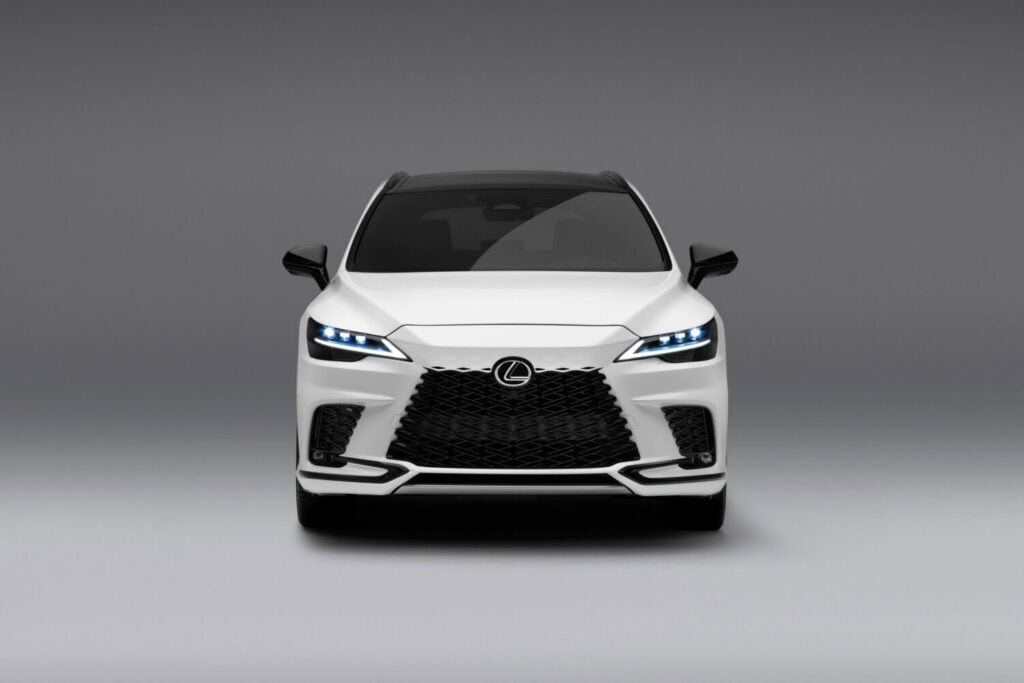
The brakes are also materially different. Regular RX models use two-piston calipers with 13.39-inch rotors. F SPORT Handling and F SPORT Performance receive opposed six-piston aluminum front calipers and 15.74-inch front rotors. So the red caliper option is cosmetic, but it is being applied to substantial braking hardware rather than disguising a basic setup with a brighter coat of paint.
The RX 500h’s powertrain also deserves to be understood separately from the 350h. It combines a turbocharged 2.4-liter four-cylinder, electric motors, a six-speed automatic, and an 80-kW rear eAxle for 366 total system horsepower. DIRECT4 coordinates drive force between the axles. None of that tells us how engaging the 2027 model feels on a road; Lexus’ claims still need to be judged behind the wheel. It does tell us the Performance grade has real mechanical differences beneath the black trim and 21-inch wheels.
Those 21-inch wheels wear model-specific Michelin Pilot Sport tires on the F SPORT Performance. Tire choice can affect ride, noise, grip, and replacement cost, so shoppers should treat it as ownership equipment rather than styling. NHTSA’s TireWise guidance is a useful primer on tire labeling, inflation, wear and maintenance.
You may also enjoy: Lexus LX 700h Review: A Grown-Up’s Luxury SUV
Cabin luxury now includes a subscription checklist
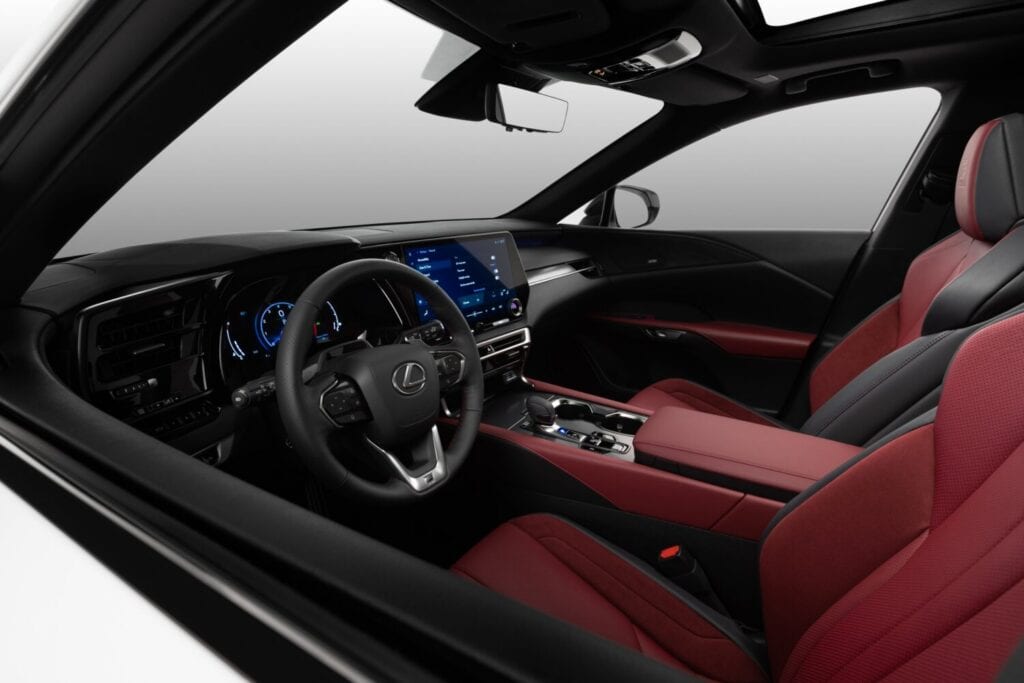
The RX interior remains built around a 12.3-inch multi-information display plus either a 9.8-inch touchscreen or an available 14-inch screen. Wireless Apple CarPlay and Android Auto compatibility are included, and a Qi-compatible wireless phone charger is standard. There are six USB ports, while a head-up display and 21-speaker Mark Levinson system are available.
The more important shopping detail is that several connected functions are tied to trials or subscriptions. Cloud Navigation and Intelligent Assistant rely on Drive Connect. Digital Key and certain remote functions rely on Remote Connect. Lexus lists a three-month Drive Connect trial on vehicles with the 14-inch multimedia system, while several Remote Connect functions carry longer trial periods.
This is where a showroom demonstration should become slightly less glamorous and more practical. Ask which features continue without a paid plan. Ask what the subscription costs after the trial. Ask whether the feature you care about depends on cellular service. A luxury vehicle should reduce friction, not surprise its owner later with a feature that moved behind a recurring payment.
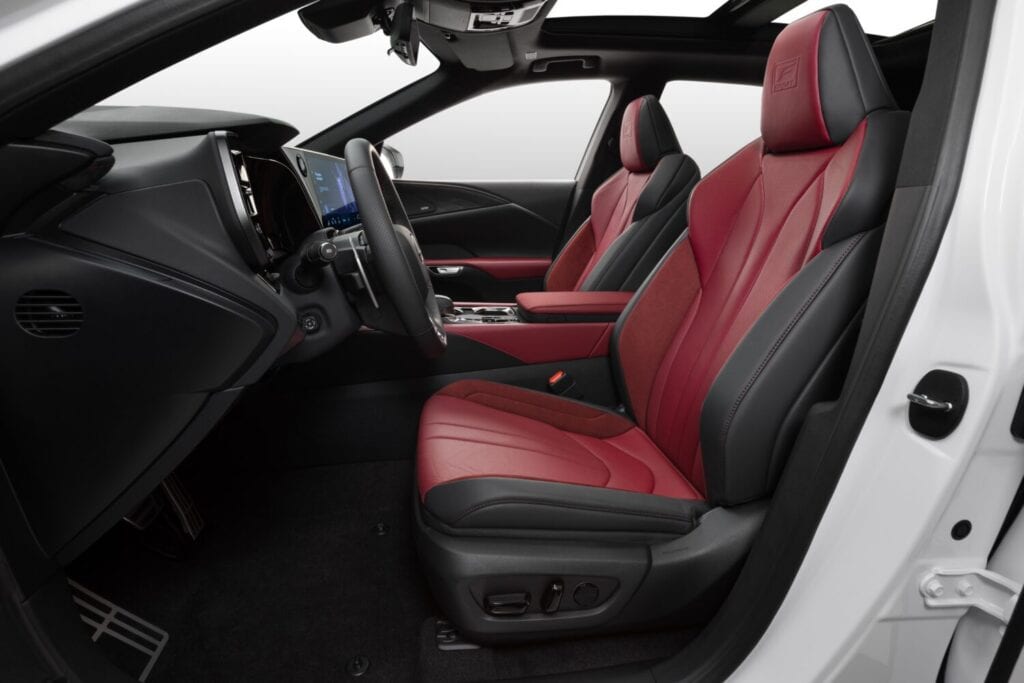
The physical details still matter. The console box can open from either the driver or passenger side. Available 40/20/40 power-folding rear seats can add heating and cooling depending on configuration. Ambient lighting offers 64 colors and 14 themes. Lexus also provides six interior color choices and four ornamentation styles across the lineup.
The broader Lexus strategy is worth watching because the brand is balancing familiar comfort with increasing electrification and software dependence. The RX is not the only Lexus doing that work.
You may also enjoy: Lexus Just Broke Its Own Luxury Rulebook With the New ES
Safety tech is useful only when its limits are understood
Lexus Safety System+ 3.0 remains standard on the 2027 RX. It includes a pre-collision system with pedestrian detection, dynamic radar cruise control, lane tracing assistance, lane departure alert with steering assist, road sign assist, automatic high beams and Proactive Driving Assist. Available Traffic Jam Assist can help control speed in low-speed congestion on limited-access roads while the driver actively supervises.
That last phrase matters. NHTSA explains technologies such as adaptive cruise control, lane centering and automatic emergency braking as driver-assistance systems. Their presence does not turn a vehicle into a self-driving car, and the driver remains responsible for monitoring the road and operating the vehicle safely.
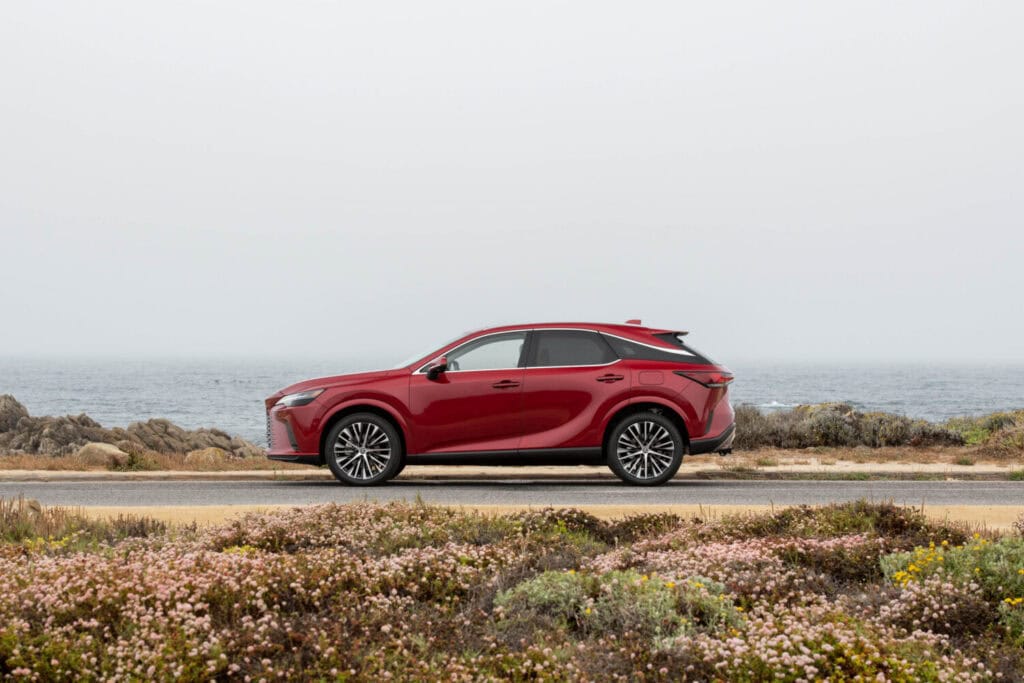
The RX also includes Digital Latch with Safe Exit Assist, designed to help keep a door from opening when a vehicle or bicycle is approaching from behind. The pre-collision system is designed to detect several road-user types, including pedestrians and bicyclists, under specified conditions. Research summarized by the Insurance Institute for Highway Safety shows why pedestrian-detection braking can matter while also documenting that system performance can vary by lighting and circumstances.
Advanced Park with Remote Park is available as well, using four cameras and 12 ultrasonic sensors to support steering, accelerator, brake and shift operations during certain parking maneuvers. Again, shoppers should learn what the feature can and cannot do before trusting the name on the menu.
You may also enjoy: 2026 Lexus Lineup Preview: New Electrics, Old-School Charm, and a V8 Farewell Worth Toasting
The 2027 RX is therefore a disciplined update rather than a reinvention. That is not a criticism. A model this established does not need a new personality every twelve months. What it needs is a lineup that lets buyers understand what they are paying for.
For many shoppers, the first serious comparison should be RX 350 AWD versus RX 350h AWD because their starting prices are close enough to make the powertrain decision meaningful. The 450h+ deserves consideration when home charging is realistic and enough daily mileage can be moved onto electricity to justify its higher price. The 500h F SPORT Performance is the choice to investigate when chassis technology and added power matter more than maximizing efficiency.
The unresolved question is not whether Lexus offers enough versions. It may offer almost too many. The job for the buyer is to ignore the badges for a moment, map a normal week of driving, decide whether a plug is genuinely convenient, and then price the equipment that will still matter after the first month. That is how the 2027 Lexus RX makes sense: not as one luxury SUV, but as four different ownership strategies sharing the same body.