2027 Hyundai Elantra: AI and a Hybrid Targeting 53 MPG
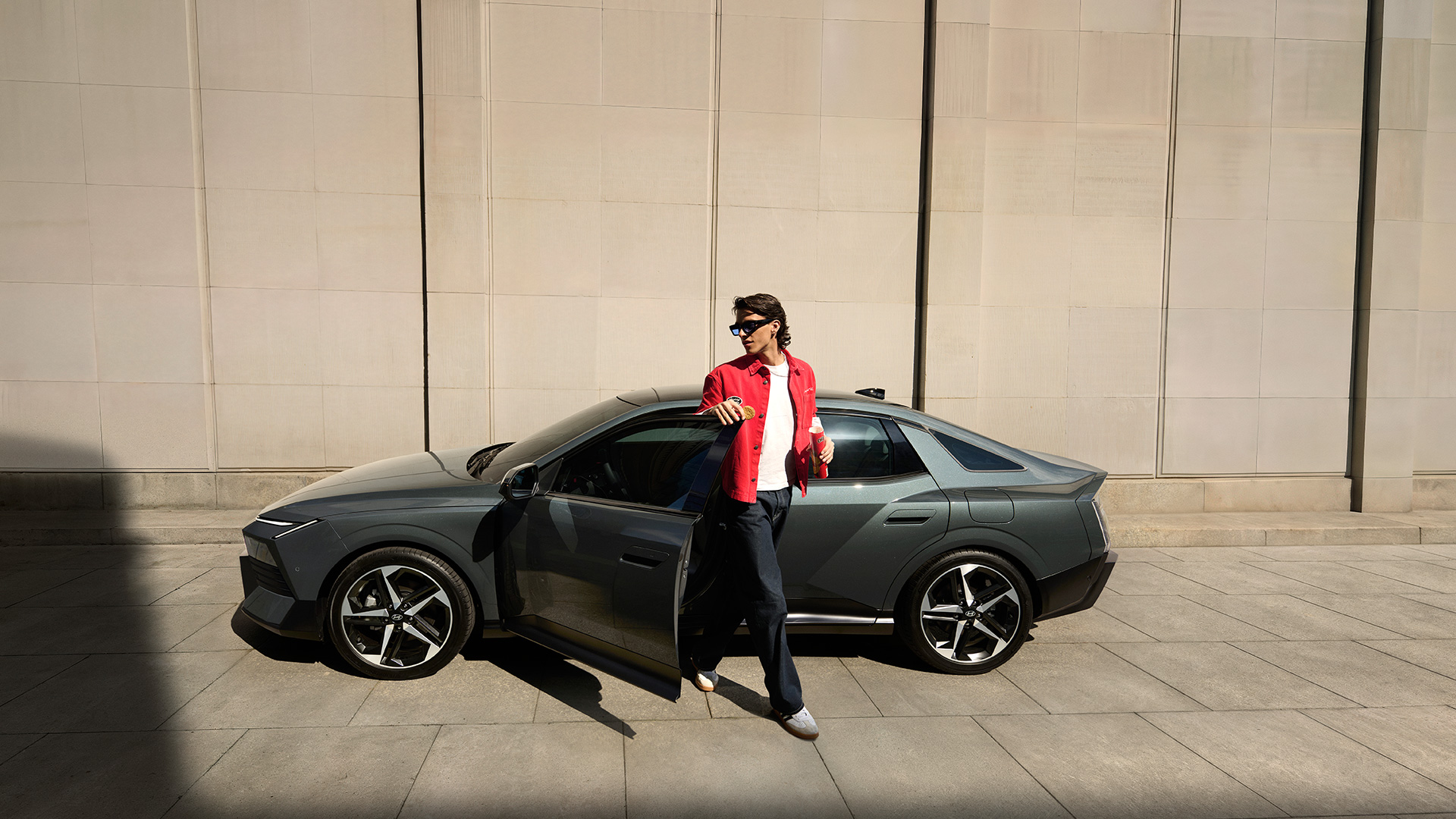
The redesigned 2027 Hyundai Elantra has arrived with a rather ambitious idea: make a compact sedan feel like a larger car, introduce artificial intelligence and targeting 53 miles per gallon.
Unveiled at the 2026 Los Angeles Auto Show, the eighth-generation Elantra introduces Hyundai’s Art of Steel design language, an expanded passenger compartment, and a digital interior built around its new Pleos Connect operating system.
The accompanying 2028 Elantra Hybrid adds more horsepower, intelligent regenerative braking and an unusual feature called Stay Mode, which can keep certain cabin systems running without continuously operating the gasoline engine.
For drivers who want modern technology without moving into a large SUV or committing to a fully electric vehicle, this could be one of Hyundai’s most interesting new products.
But the details matter. Here’s what American buyers should know.
2027 Hyundai Elantra Gets Hyundai’s Art of Steel Design
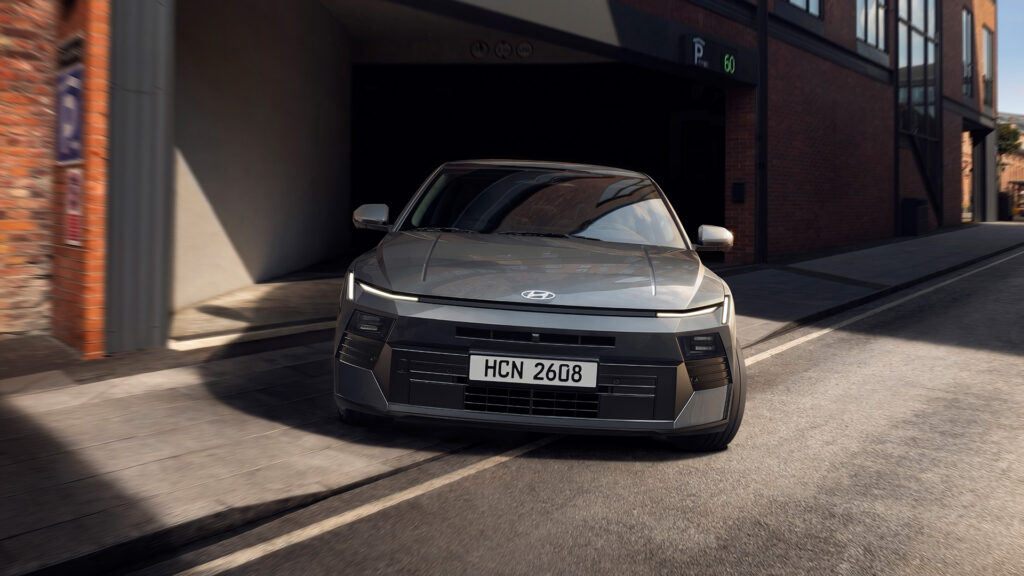
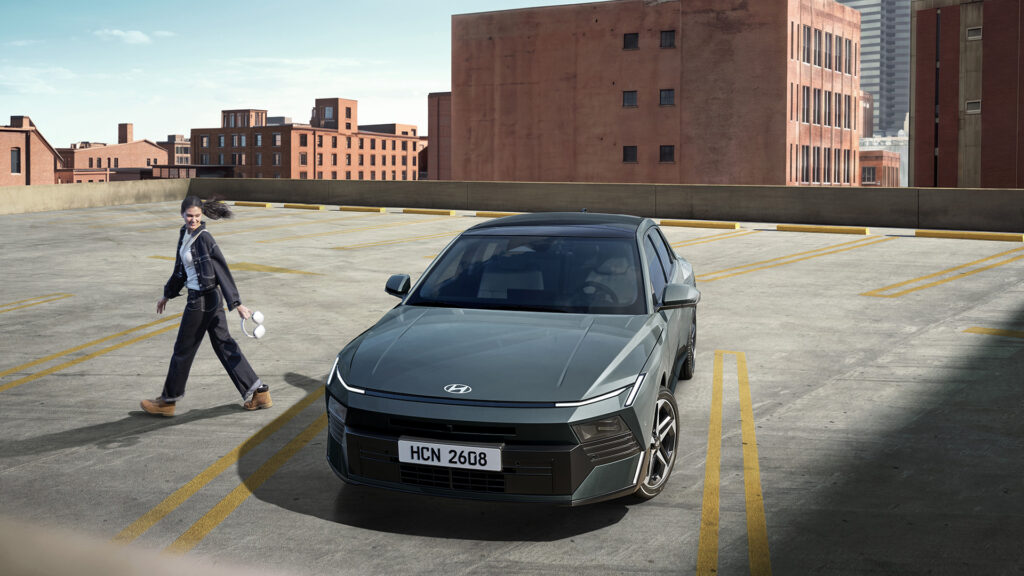
The new Elantra looks substantially different from its predecessor.
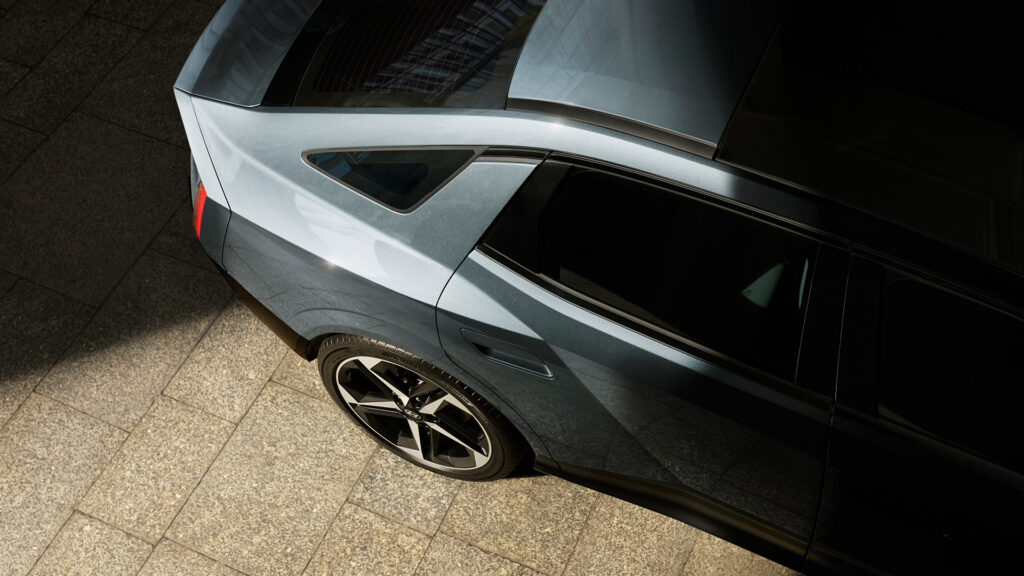
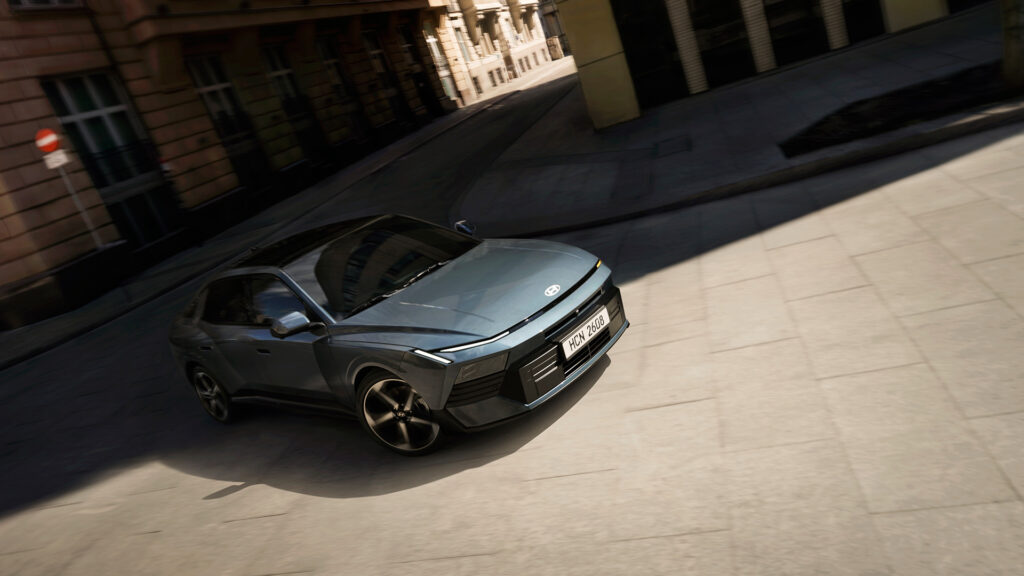
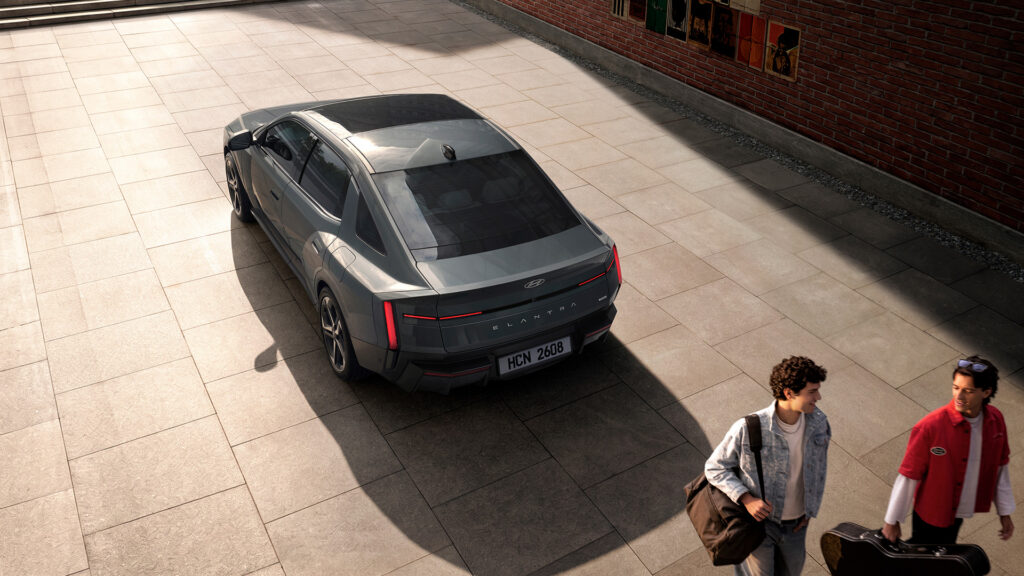
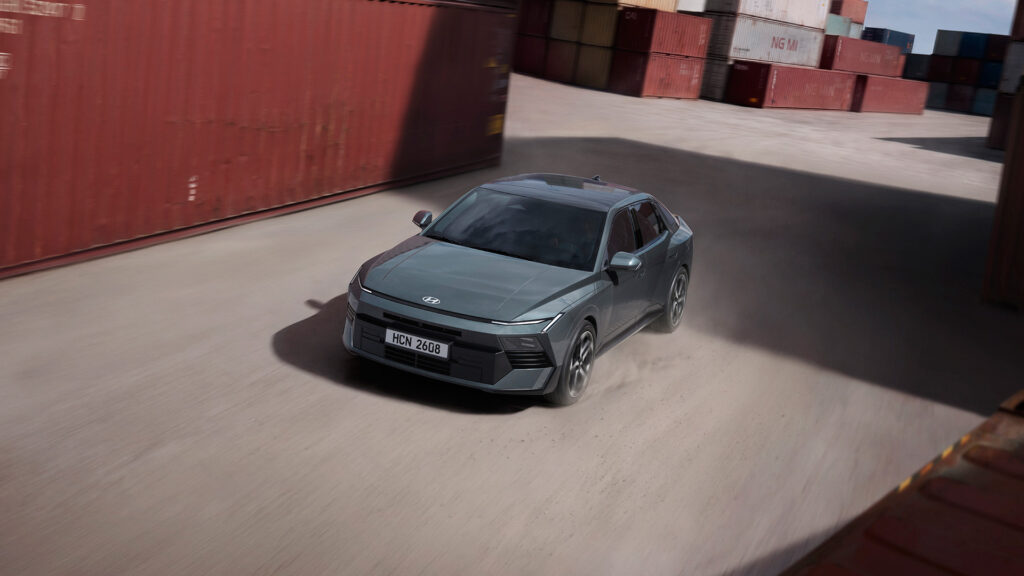
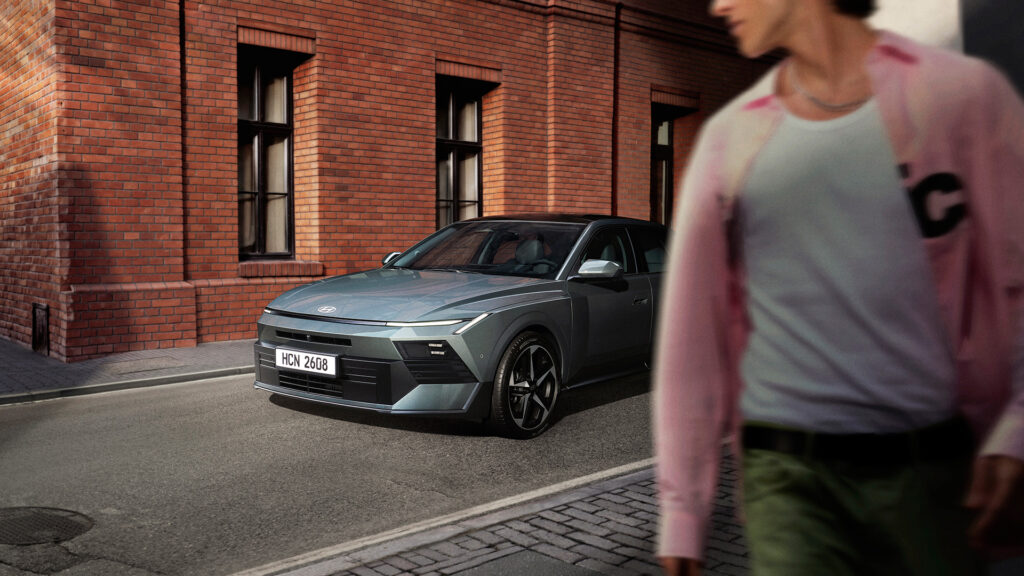
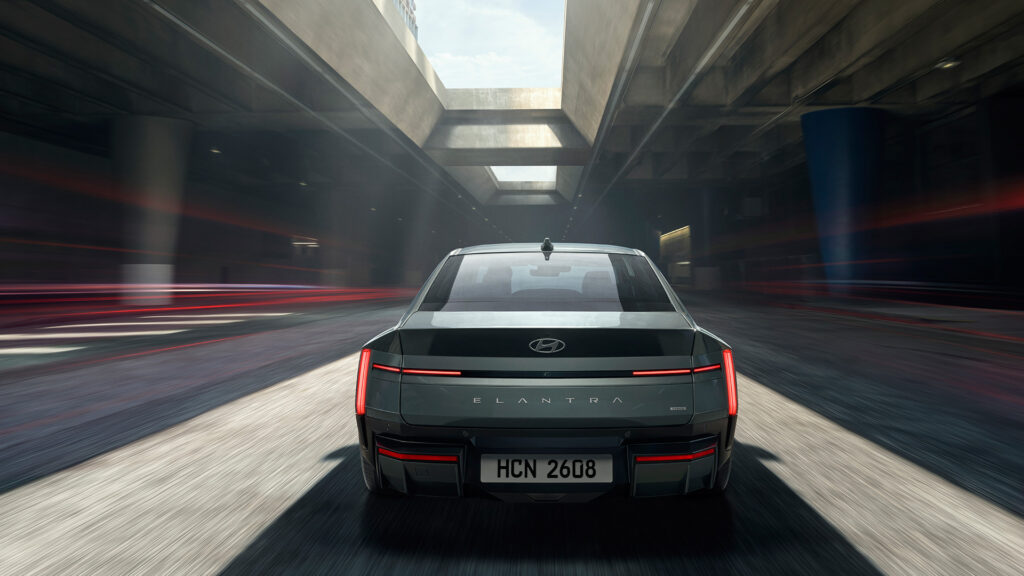
Hyundai’s Art of Steel design language emphasizes sculpted metal surfaces, pronounced wheel arches, a longer hood and more defined body proportions.
The front features distinctive H-Edge lighting, while the rear uses similarly dramatic lighting elements to emphasize the car’s width.
Flush-style door handles and slim exterior mirrors contribute to the cleaner appearance.
The new Elantra measures 188.8 inches long, 73 inches wide and has a 108.3-inch wheelbase. Compared with the previous generation, the body grows approximately 3.4 inches in length, 1.2 inches in width and 1.2 inches between the axles.
That additional length isn’t simply a styling exercise. It creates a more accommodating passenger compartment while preserving the manageable dimensions buyers expect from a compact sedan.
Hyundai has also introduced new exterior colors, including Graphene Green Pearl and Kodiak Blue Pearl, although availability will vary by market and trim.
Nearly 40 Inches of Rear Legroom
One of the most interesting 2027 Hyundai Elantra specifications is rear legroom.
The redesigned sedan offers 39.1 inches of space for rear passengers, an increase of approximately 1.1 inches over the previous generation.
Hyundai describes this as best-in-class rear-seat legroom among compact sedans.
That’s significant because the Elantra competes with the Honda Civic and Toyota Corolla, vehicles frequently purchased by commuters, young families and buyers who simply want reliable everyday transportation.
A compact sedan with generous rear legroom is especially useful when adults regularly travel in the back.
The rear-seat headroom also improves, reaching approximately 37.7 inches in the conventional model and 37.5 inches in the hybrid, based on Hyundai’s published dimensions.
The redesigned interior uses a more symmetrical dashboard layout, upgraded materials and improved sound insulation.
Hyundai has not yet confirmed every final U.S. trunk measurement or trim-specific interior specification. Buyers who regularly carry bulky equipment should check the luggage opening as well as total capacity.
You may also enjoy: 2026 LA Auto Show: 7 Stops Worth Your Time
2027 Elantra Engine: 147 Horsepower and 35 MPG
The standard 2027 Hyundai Elantra uses a 2.0-liter four-cylinder gasoline engine producing approximately 147 horsepower.
It is paired with Hyundai’s Intelligent Variable Transmission, a continuously variable automatic designed to provide smooth acceleration and efficient operation.
Hyundai lists 35 mpg combined for the applicable North American configuration equipped with 16-inch wheels.
The gasoline Elantra may make the most financial sense for buyers who travel relatively few miles annually or simply want the lowest available purchase price.
However, because Hyundai has not announced final U.S. pricing, the actual savings compared with the hybrid remain unknown.
Before selecting either version, shoppers should compare official EPA fuel-economy ratings and their own annual driving patterns.
2028 Hyundai Elantra Hybrid Targets 53 MPG
The most interesting powertrain belongs to the 2028 Elantra Hybrid.
It combines a 1.6-liter gasoline engine with an upgraded electric motor to produce approximately 155 horsepower.
That’s 16 horsepower more than the previous-generation hybrid.
Unlike the gasoline Elantra, which uses a continuously variable transmission, the hybrid employs a six-speed dual-clutch automatic.
The hybrid battery grows from approximately 1.32 to 1.49 kilowatt-hours, supporting a more sophisticated approach to electric assistance and energy recovery.
Hyundai is targeting 53 mpg combined, but final EPA certification remains outstanding.
It’s important to understand that this does not represent an improvement over every outgoing Elantra Hybrid. The 2026 Elantra Hybrid Blue already earns an EPA combined rating of 54 mpg.
The new model’s improvements are better understood as a combination of additional power, greater passenger space and more sophisticated technology.
Like other conventional hybrid vehicles, the Elantra Hybrid charges its battery while driving. Owners do not need to plug it into an external charger.
The U.S. Department of Energy’s hybrid vehicle guide explains how gasoline and electric power work together.
You may also enjoy: Hyundai Wants Hybrids to Be Half Its North American Sales
Smart Regenerative Braking Makes the Hybrid More Intelligent
Hyundai is introducing Smart Regeneration System 3.0 in the redesigned Elantra Hybrid.
Regenerative braking captures energy that would otherwise be lost as heat when the vehicle slows down. Instead, the electric motor helps convert some of that energy into electricity stored in the hybrid battery.
The system can adjust energy recovery according to driving conditions, reducing unnecessary energy loss.
Hyundai also introduces predictive hybrid controls intended to anticipate upcoming driving demands.
These systems coordinate engine operation, electric assistance and energy recovery to improve overall efficiency.
Steering-wheel paddles let the driver adjust the regenerative braking level.
For drivers accustomed to a conventional gasoline sedan, the objective is to deliver more efficient operation without requiring complicated changes to everyday driving habits.
The Department of Energy provides a useful explanation of hybrid vehicle technology, including the role of energy recovery.
Stay Mode: Climate Control Without Running the Engine
One of the more unusual features of the 2028 Hyundai Elantra Hybrid is Stay Mode.
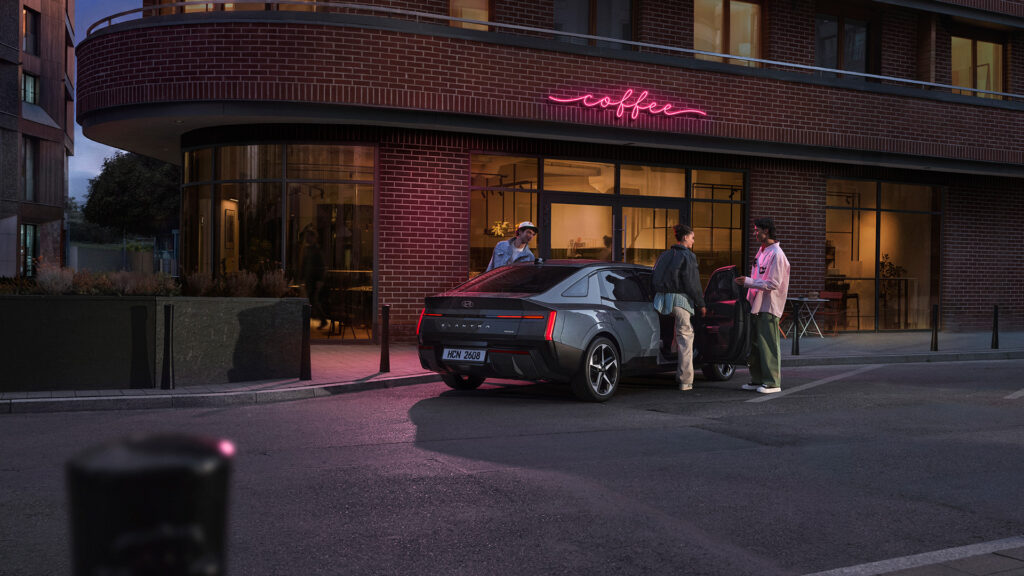
While parked, the system uses electricity stored in the hybrid battery to operate climate control, audio, lighting and selected electrical accessories without continuously running the gasoline engine.
Hyundai says the feature can operate for approximately 20 to 30 minutes under suitable conditions.
That could be useful when waiting for someone at an airport, sitting in a school pickup line or taking a short break on a road trip.
Of course, anyone who has waited for a perpetually late passenger will appreciate a vehicle designed to make the experience slightly more civilized.
The limitation is battery capacity.
Operating time will vary with battery charge, outside temperature and the electrical demands of the vehicle.
Stay Mode is not intended to provide continuous unattended climate control, and children or animals must never be left unattended in a parked car.
Hyundai Pleos Connect Brings Gleo Artificial Intelligence
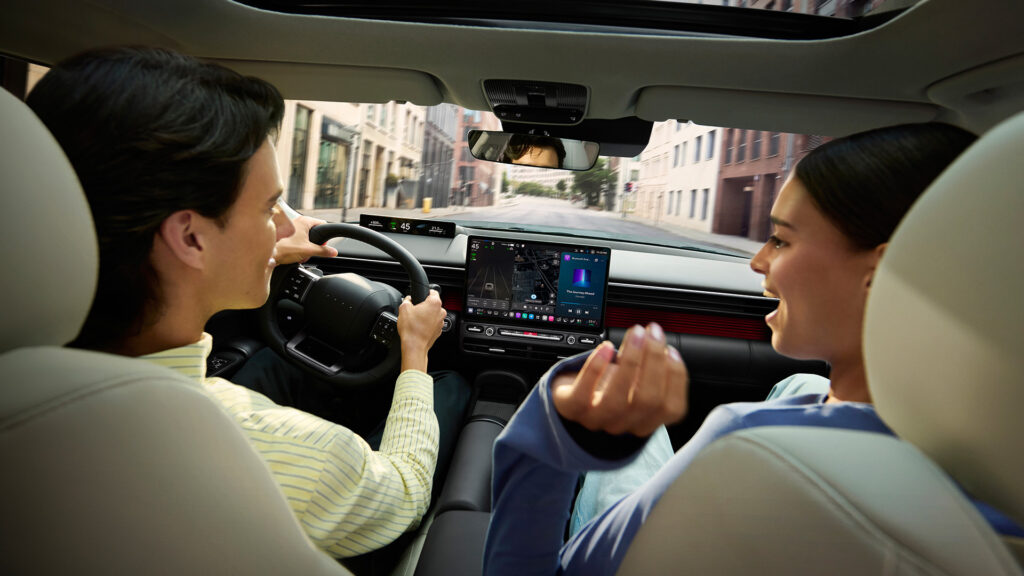
The 2027 Hyundai Elantra introduces Pleos Connect, Hyundai’s new infotainment system based on Android Automotive OS.
At the center of the dashboard is a standard 12.9-inch touchscreen, accompanied by a slim information display closer to the driver’s natural line of sight.
Wireless Apple CarPlay and Android Auto are supported, along with over-the-air software updates.
Perhaps the most interesting addition is Gleo, Hyundai’s new conversational artificial intelligence assistant.
Instead of requiring drivers to memorize commands, Gleo is designed to understand normal conversational requests and remember the context of earlier instructions.
For example, a driver could ask for a hiking trail within a certain distance and then request the fastest route to one of the results.
The assistant is intended to understand that the second request relates to the original conversation.
Hyundai also plans to expand functionality through its Pleos App Market.
Exactly which services will be available in the United States, whether individual functions require subscriptions, and how they operate without a data connection remain important ownership questions.
Fortunately, Hyundai has retained physical buttons for frequently used climate and audio controls.
Technology should make driving less distracting, not turn adjusting the temperature into an elaborate software exercise.
As the National Highway Traffic Safety Administration explains, electronic driver assistance should support attentive driving, not replace it.
You may also enjoy: Hyundai Driving AI in 2028: What Will Drivers Get?
Other Interior Features and Driver Assistance
The new Elantra offers an expanded technology package, with equipment varying by trim and market.
Available features include dual 15-watt wireless charging pads, USB-C ports capable of supporting up to 100 watts, Hyundai Digital Key 2 and an upgraded Bang & Olufsen audio system.
The safety equipment includes available Forward Collision-Avoidance Assist 2, Blind-Spot Collision-Avoidance Assist, Lane Keeping Assist and Lane Following Assist 2.
These features can help drivers respond to certain hazards or maintain their position on the road, but they do not make the Elantra self-driving.
Final U.S. trim availability and standard equipment lists will be important when comparing prices.
Buyers can use NHTSA’s safety ratings to compare independently evaluated crash protection once results for the redesigned car are published.
2027 Hyundai Elantra vs. Honda Civic and Toyota Corolla
The two most important competitors are the Honda Civic and Toyota Corolla.
Both offer hybrid technology and long-established reputations in the compact-car market.
The Elantra’s 39.1 inches of rear legroom could be an important advantage for buyers regularly carrying adult passengers.
Its conversational AI assistant and expanded connected technology may also appeal to drivers who want modern digital convenience.
However, buyers should not evaluate the three vehicles on screen size and headline fuel economy alone.
Real-world ride comfort, visibility, control layout, insurance premiums, purchase price and long-term operating costs all deserve consideration.
You may also enjoy: 2026 Honda Civic Review: Hybrid Is the Smart Buy
When Will the New Elantra Arrive and How Much Will It Cost?
Hyundai plans to introduce the eighth-generation Elantra to the North American market in early 2027.
The accompanying hybrid is designated a 2028 model, with its specific U.S. launch timing and final trim information still to be confirmed.
Hyundai has not announced complete U.S. pricing or destination charges for the redesigned lineup.
Final hybrid EPA fuel-economy figures are also pending.
Until those details are available, it is too early to declare which model offers the best value.
The gasoline Elantra could remain the sensible choice for buyers prioritizing affordability. The hybrid is likely to interest higher-mileage commuters looking for lower fuel consumption and more sophisticated powertrain technology.
You may also enjoy: Hyundai Affordability: Planning Cars Buyers Can Pay For
Test Miles Verdict: A Compact Sedan With Bigger Ambitions
Hyundai has concentrated on the features that could make the Elantra more enjoyable to own: a roomier back seat, stronger hybrid performance, useful energy-management technology and a dashboard that combines artificial intelligence with the reassurance of physical controls.
The 2028 Elantra Hybrid looks particularly promising because it offers greater performance while targeting genuinely impressive fuel economy.
Stay Mode is an appealing addition, although its limited operating time means buyers should understand exactly what it can and cannot do.
Final pricing, independent fuel-economy testing and time behind the wheel will determine whether Hyundai has delivered a class leader.
For now, the redesigned Elantra demonstrates that a compact sedan doesn’t have to feel like a compromise.
And with a 53-mpg target, it may be one of the few vehicles capable of making a trip to the gas station feel almost pleasant.